
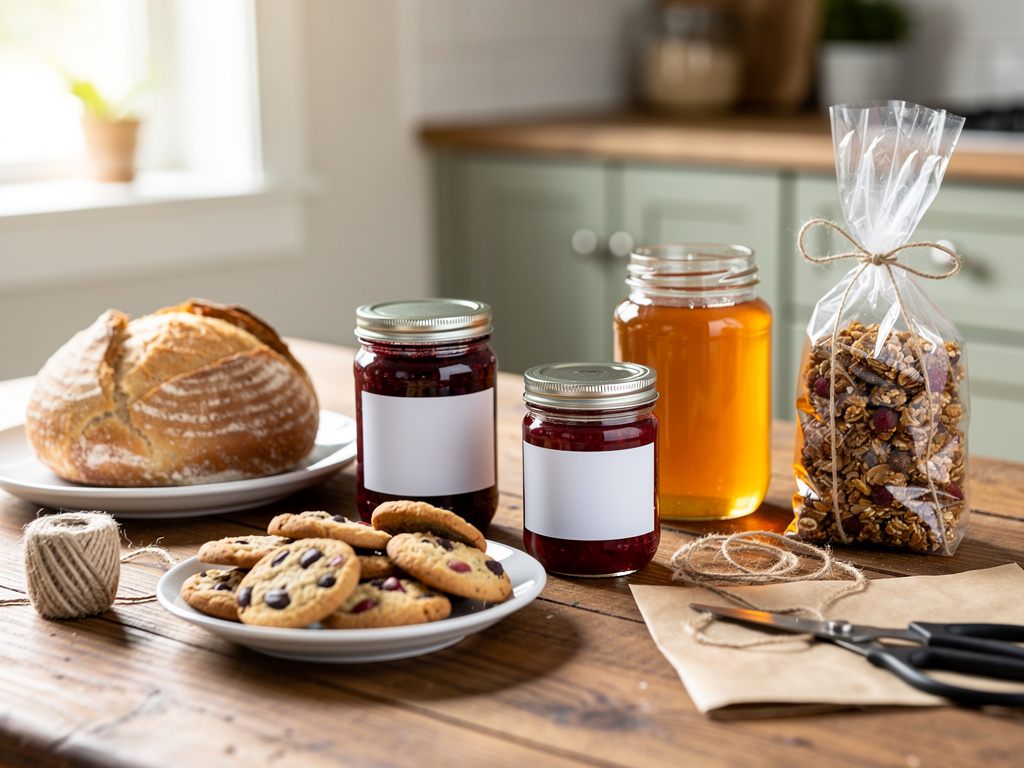


The short version: Cottage food laws let you sell low-risk homemade foods like bread, cookies, jam and candy from your home kitchen without a commercial kitchen, and every state has some version, each one in the table below. 19 states cap yearly sales, with overall caps from $30,000 in Vermont to $250,000 in Florida and Wyoming (Colorado's limit is $10,000 per product until 2027); 22 set no overall cap on baked goods, and the other 9 do not list one on the state's page. Online ordering is allowed in some form in 33 states, banned under the basic cottage food path in 5 (Delaware, Mississippi, Nevada, South Dakota and Washington), and not confirmed on the state's own page in the other 12. Meat, seafood, low-acid canned foods and anything that needs a refrigerator are left out of traditional cottage food laws, though Texas, Arizona, Nebraska and a few others now allow some refrigerated foods with extra steps.
Checked on each state's agency page, statute or land-grant extension guide, September 30, 2026: the caps, permits and online rules in this post come from those pages, one or more per state, and where one disagreed with our older state guide, the state's page won. Rules change often, so verify your state's current rules before your first sale.
Once you know your state's rules, you can set up a Homegrown storefront so local customers can order ahead, and try it free for 7 days.
Cottage food laws let you sell certain homemade foods without a commercial kitchen, but not every food qualifies, and the rules change at the state line. What you can sell, how much you can earn, whether you need a permit and whether you can take orders online all depend on where you live.
This guide puts all 50 states in one table, then explains which foods are typically allowed, which are almost always excluded, and why the line is drawn where it is. For the full start-to-finish walkthrough, see our complete guide to starting a cottage food business. If you are wondering whether your recipe qualifies, start here.
Find your state in the table below for its yearly sales cap, whether you need a license or registration, and what it says about online orders and shipping. Each state name links to our full guide for that state, with the allowed food list, the required label statement and how to get started.
Scroll sideways to see every column.
| State | Yearly sales cap | License, permit or registration | Online orders and shipping |
|---|---|---|---|
| Alabama cottage food law | No cap | No state permit; your county reviews your food safety certificate and labels (county fee varies) | Online and phone orders OK for buyers in Alabama; delivery in person or by mail inside Alabama |
| Alaska cottage food law | No statewide cap | No state food permit | Sales must happen in Alaska; no interstate sales; the law does not mention online orders |
| Arizona cottage food law | No cap | Register with the state health department and get a food handler card | Online OK; products without dairy, meat or poultry can go by a third-party carrier; dairy, meat and poultry products are delivered in person |
| Arkansas cottage food law | No cap | None (optional ID number for your label) | Online, mail and parcel delivery OK; out-of-state sales only if you follow federal law |
| California cottage food law | Class A $88,878; Class B $177,756 (2026) | County registration (Class A) or county permit with an inspection (Class B), renewed yearly, county fee | Online and phone orders OK; delivery in person, by mail or by a delivery service |
| Colorado cottage food law | $10,000 per product through 2026; $150,000 total from January 1, 2027, adjusted for inflation each year | No license today (food safety course required); yearly state registration from 2027 | Online OK; delivery arranged with the buyer, inside Colorado only |
| Connecticut cottage food law | $50,000 | $50 state license, renewed every year | Online orders OK; you deliver in person inside Connecticut, no mail |
| Delaware cottage food law | No cap | $30-a-year state registration permit, food safety course, inspection | Online sales not allowed (online ads are); direct sales in Delaware only |
| Florida cottage food law | $250,000 | None | Online and mail order OK; delivery in person or by USPS or a mail carrier, including across state lines (UF/IFAS); no wholesale |
| Georgia cottage food law | No cap | No license since July 1, 2025; food safety course required | Online and mail order OK to buyers in Georgia; stores and restaurants can buy from you |
| Hawaii cottage food law | No cap | No permit; food safety certification required | Online, phone, mail and shipping OK under rules in effect since August 24, 2025 |
| Idaho cottage food law | No cap | None (law in effect March 20, 2026) | Every sale and delivery must happen inside Idaho |
| Illinois cottage food law | No cap | Yearly local health department registration, fee capped at $50 | Online OK; shelf-stable foods can ship inside Illinois, never out of state |
| Indiana cottage food law | No cap | None; food handler certificate required | Online and phone OK; mail or carrier delivery inside Indiana only |
| Iowa cottage food law | No cap | None | Online and phone OK; delivery by you, an agent or mail |
| Kansas cottage food law | No cap | No license for listed shelf-stable foods; sales tax certificate required | Online OK, and you can ship to the customer's home |
| Kentucky cottage food law | $60,000 | $50-a-year state registration (home-based processor) | Online orders OK; pickup or delivery inside Kentucky |
| Louisiana cottage food law | $100,000 (since August 1, 2026) | No permit; parish sales tax certificate required | The law does not address online orders or shipping; no selling baked goods to stores for resale |
| Maine cottage food law | Not listed | $20-a-year Home Food License with a first inspection | License holders can sell from home and wholesale across Maine and the US |
| Maryland cottage food law | $100,000 (from October 1, 2026; was $50,000) | None for direct sales; free state review to sell to stores | Personal delivery and mail delivery inside Maryland; the state's guidelines put nationwide internet sales under a separate local Food Service Facility license and do not say whether in-state online orders count as cottage food; no out-of-state sales |
| Massachusetts cottage food law | Not listed | Permit from your local board of health | Internet and mail sales count as direct sales; out-of-state buyers must also meet federal law and their state's law |
| Michigan cottage food law | $50,000 ($75,000 if every product sells for $250 or more) | None | Internet and mail order OK if the buyer can talk to you before buying |
| Minnesota cottage food law | $78,000 | State registration: free up to $7,665 in sales, $50 above; $30 for everyone from August 1, 2027 | Online orders OK, handed over in person in Minnesota; in-state shipping allowed from August 1, 2027 |
| Mississippi cottage food law | $35,000 | None | No online sales; direct to consumers in Mississippi (online advertising is fine) |
| Missouri cottage food law | No cap | None | Online OK only when you and the buyer are both in Missouri |
| Montana cottage food law | No cap | None under the Local Food Choice Act | Direct to the informed end consumer in Montana; no interstate sales |
| Nebraska cottage food law | Not listed | State registration (not needed for shelf-stable foods sold only at farmers markets), food safety course | Online OK; shelf-stable foods can go by mail or carrier, including to other states where the buyer's state allows it, and refrigerated foods are hand-delivered |
| Nevada cottage food law | $100,000 a year, inflation-adjusted | Register with your local health authority (Clark County charges $220) | The statute bans phone and internet sales until June 30, 2027, but the Southern Nevada Health District lets you take phone or internet orders that you deliver in person; mail and delivery services allowed from July 1, 2027 |
| New Hampshire cottage food law | Not listed | None to sell from home, a farm stand, a farmers market or a retail store (15 self-inspecting cities and towns may require a local license); $150 Homestead license for more | Internet and mail order need the $150 Homestead license |
| New Jersey cottage food law | $50,000 | $100 permit, good for 2 years | Online orders and payment OK; hand-off in person in New Jersey; no shipping |
| New Mexico cottage food law | Not listed | No permit; food handler card required | Online sales and mail delivery inside New Mexico only |
| New York cottage food law | Not listed | Free home processor registration, no expiration | Internet sales inside New York only; no out-of-state shipping |
| North Carolina cottage food law | Not listed | Home kitchen inspection by the state; no permit is issued | Labeled products can be shipped by USPS or FedEx; the state page does not say whether that is in-state only |
| North Dakota cottage food law | No cap | None | Online, mail and out-of-state sales allowed since 2025, except poultry; the buyer's state law still applies |
| Ohio cottage food law | No cap | None | Sales inside Ohio only; out-of-state sales are prohibited |
| Oklahoma cottage food law | $75,000; $250,000 from November 1, 2026 | None (optional $15-a-year registration number) | Online and phone OK; shelf-stable foods can go by a parcel service |
| Oregon cottage food law | $52,700 (2026) | None; food handler training required | Online and mail OK; out-of-state sales depend on the buyer's state |
| Pennsylvania cottage food law | Not listed | $35 Limited Food Establishment registration plus a state inspection | Internet sales OK; selling across state lines may also need FDA registration |
| Rhode Island cottage food law | $50,000 | $65-a-year state registration; food safety course | Online, mail and phone orders OK, delivered in person inside Rhode Island |
| South Carolina cottage food law | No cap | None (optional ID number for your label) | Online and mail order OK; retail stores can sell your products |
| South Dakota cottage food law | No cap | Nothing for direct sales; $40 training for canned, fermented and perishable foods | Internet sales count as indirect and need a state license; personal delivery only |
| Tennessee cottage food law | No cap | None (Food Freedom Act) | Shelf-stable foods: online, phone and carrier delivery inside Tennessee; perishable foods in person |
| Texas cottage food law | $150,000, adjusted for inflation | None; food handler training required; state registration only for refrigerated (TCS) foods | Online OK when you, an employee or a household member delivers in person; no shipping |
| Utah cottage food law | Not listed | Registration with a nonrefundable fee, a food handler permit and an inspection | Sales inside Utah only, direct or to stores for resale |
| Vermont cottage food law | $30,000 (exemption) | No license; yearly online training and an exemption form filed before January 15 | The state page does not address online sales |
| Virginia cottage food law | None for low-risk foods; $9,000 for pickles and acidified vegetables | None | Online and phone OK; delivery in person, by mail or by delivery service to buyers in Virginia |
| Washington cottage food law | $35,000 | $355 state permit for 2 years, with a home kitchen inspection | The statute (RCW 69.22.020) says cottage food "may not be sold by internet"; WSDA's FAQ allows taking orders online, with payment and hand-off in person; ask WSDA in writing before taking payment online; no shipping or mail |
| West Virginia cottage food law | No cap | None for shelf-stable foods; new permit for perishable (TCS) foods since June 12, 2026 | Remote sales OK; delivery by you, an agent, a store or a carrier |
| Wisconsin cottage food law | No cap on baked goods; $5,000 for home-canned foods | None | Baked goods direct to consumers; home-canned foods only at markets and events, no internet |
| Wyoming cottage food law | $250,000 and 250,000 products | None | Inside Wyoming only; delivery at a place you and the buyer agree on |
We checked every row on September 30, 2026 against the state's own agency page, its statute, or its land-grant university extension guide. Where a state page does not mention a cap, the row says "Not listed" rather than guessing. "No cap" means the state's source says there is none or sets no limit. Online rules describe the basic cottage food path; several states offer a separate license that allows more.
Four of these rows change within the next year: Oklahoma's cap rises to $250,000 on November 1, 2026, Colorado swaps its $10,000-per-product cap for a $150,000 total on January 1, 2027, Nevada allows online sales from July 1, 2027, and Minnesota allows in-state shipping from August 1, 2027. Maryland's cap rose to $100,000 on October 1, 2026 under HB 535. We checked these against each state's bill or agency page on September 30, 2026.
A cottage food law is a state rule that lets you make certain low-risk foods in your home kitchen and sell them without a commercial kitchen, a food establishment license or, in many states, any inspection at all. "Cottage food" means the food itself: shelf-stable things like bread, cookies, jam, candy, granola and dried herbs that are safe at room temperature.
Every state now lets home cooks sell some homemade food, and each row in the table above comes from that state's own rule. The National Agricultural Law Center keeps a state-by-state compilation of cottage food statutes if you want to read the legal text itself; it was last updated in April 2025, so check recent changes against your state's agency page.
The laws go by different names, which is why searches for them can be confusing:
The name matters less than three facts about your state's version: what foods it allows, how much you can sell, and how you are allowed to get the food to the customer. Those three are the columns in the table.
19 states cap yearly cottage food sales, and the overall caps run from $30,000 in Vermont to $250,000 in Florida and Wyoming, while Colorado limits each product to $10,000 a year until 2027. 22 states put no overall limit on baked goods, though Virginia caps pickles and acidified vegetables at $9,000 and Wisconsin caps home-canned foods at $5,000. The last 9 (Maine, Massachusetts, Nebraska, New Hampshire, New Mexico, New York, North Carolina, Pennsylvania and Utah) do not mention a cap on the state's own page, which usually means there is none, but ask the agency before you count on it.
Yearly cottage food sales caps, in dollars
Source: each state's agency page, statute or extension guide, checked September 30, 2026. 18 of the 19 states that cap sales; Colorado caps each product at $10,000 until January 1, 2027, so it is left off. Maryland is shown at its October 1, 2026 figure and Oklahoma at its figure until November 1, 2026, when it rises to $250,000.
A few caps need a closer read:
Caps usually count gross sales, the money customers pay you before costs, not profit. Colorado is the exception for now: its $10,000 limit counts net revenue for each type of product until its $150,000 gross cap starts on January 1, 2027. If you sell $40,000 of cookies and spend $15,000 on ingredients, you have used $40,000 of a $50,000 cap. Our cottage food revenue cap guide covers what to do when you get close.
In 18 states the cottage food law requires a license, permit, registration or inspection, from the state or from your county or town, before your first sale; in the other 32 you can start selling the standard shelf-stable foods without one (Utah, counted in the 18, also has a no-permit path for direct sales, covered below). The 32 still often ask for a lighter step, one that issues you no permit and sends no inspector to your kitchen: a food safety course in Georgia and Colorado, a food handler card in Indiana, New Mexico and Texas, a county review of your food safety certificate and labels in Alabama (no kitchen inspection, and the fee varies by county), a yearly exemption form in Vermont, or a parish sales tax certificate in Louisiana.
These are the 18 states that require a license, permit, registration or inspection before you sell, with the fee where the state publishes one:
Scroll sideways to see every column.
| State | What you need | State fee |
|---|---|---|
| Arizona | State registration and a food handler card | Not listed on the state page |
| California | County registration (Class A) or county permit with inspection (Class B) | Set by each county |
| Connecticut | State license | $50, renewed every year |
| Delaware | State registration permit, food safety course and inspection | $30 a year |
| Illinois | Local health department registration | Up to $50 a year |
| Kentucky | State registration as a home-based processor | $50 a year |
| Maine | Home Food License with a first inspection | $20 a year |
| Massachusetts | Local board of health permit | Not listed on the state page (your local board of health sets any fee) |
| Minnesota | State registration | $0 up to $7,665 in sales, $50 above |
| Nebraska | State registration and a food safety course | $0 (registration is free, per UNL Extension); the food safety course is about $20 to $25 |
| Nevada | Local health authority registration | $220 in Clark County |
| New Jersey | State permit | $100, good for 2 years |
| New York | Home processor registration | $0, no expiration |
| North Carolina | State home kitchen inspection | No permit is issued |
| Pennsylvania | Limited Food Establishment registration and inspection | $35 a year |
| Rhode Island | State registration and a food safety course | $65 a year |
| Utah | State registration, food handler permit and inspection | Nonrefundable fee, amount not published |
| Washington | State permit with a home kitchen inspection | $355 for 2 years |
Fees from each state's agency page or statute, checked September 30, 2026. Local business licenses, food handler cards and sales tax registration can apply on top of these in any state.
Of the state fees that are published, Washington's is the highest at $355, which covers two years. California leaves the fee to each county and renews its permits every year, so a California seller can pay more over two years: Los Angeles County's 2026-27 fee schedule lists $292 for a Class B permit. New Hampshire is a special case: you need nothing to sell from home, a farm stand, a farmers market or a retail store, but online and mail order sales need its $150 Homestead license. Utah has a second path outside its cottage food registration: under its Home Consumption and Homemade Food Act, food you make at home and sell directly to an informed customer inside Utah needs no state or local food permit or inspection, only a label with your name, address and allergens and a note that it is not for resale and was made without state or local inspection, plus any business license your city or county requires. You must also tell the buyer the food is not licensed or inspected by the state, county or city. That path does not cover raw dairy or meat other than small-flock poultry and, pending USDA approval, rabbit. Our guide to cottage food license costs breaks down the full startup bill, and our guide to whether you need a business license to sell food from home covers the local side.
You can sell cottage food directly to customers in every state, from your home, at farmers markets and at events, and 33 states allow online ordering in some form. Online sales are banned for ordinary cottage food vendors in 5 states, need an extra $150 license in New Hampshire, and are not confirmed on the state's own page in 12 more.
Here is how the online rules split, from the table above:
Online ordering is not the same as shipping. Many states that allow online orders still want the food handed over in person. Connecticut, New Jersey, Rhode Island and Texas all allow online orders but require in-person delivery inside the state, and Minnesota does the same until August 1, 2027. In our table, eight states clearly allow sales into other states in some form (Arkansas, Florida, Maine, Massachusetts, Nebraska, North Dakota, Oregon and Pennsylvania), and even there the buyer's state law and federal law still apply. Our guide on whether you can ship cottage food goes deeper on shipping.
The Texas Department of State Health Services says cottage food may be sold online only when "the operator, an employee, or a household member personally delivers the food to the consumer," and you must post your label information on your website before you take payment. That personal delivery rule is why Texas cottage food cannot be shipped, even inside Texas, and Senate Bill 541 also dropped mail-order sales from the law in 2025. We checked that page on September 30, 2026.
Once you know your foods qualify and where you are allowed to sell, the next job is taking orders in a way that fits your state's rules. Only eight of the 50 states in our table clearly allow cottage food sales into other states, and many want you to hand the food to the customer yourself. That makes a local pickup or local delivery setup the natural fit, and it is exactly what Homegrown is built around.
A Homegrown storefront costs $10 per month billed annually ($12.50 billed month to month), plus 2.9% + $0.30 card processing on each order, with no percentage fees beyond standard payment processing. Customers order and pay from one link and choose a pickup time from the schedule you set, or local delivery inside the radius you choose, and every order lands in one dashboard before your baking day.
Compare that with the two setups most new cottage food vendors try first:
Homegrown does not make a sale legal or decide whether your food qualifies. That part is your state's law, and your label, your recipes and your sales cap are still yours to manage. Customers also create a Homegrown account to place their first order, and there is no limited-release "drops" feature. Your storefront is listed on the Homegrown marketplace, but plan on most orders coming from people you send to your own link.
Only certain foods qualify because cottage food laws are built for foods that stay safe at room temperature. The core idea is the same in every state: let people sell from a home kitchen when the food carries the lowest food safety risk.
Non-potentially hazardous foods are the foundation. These are foods that do not support fast bacterial growth because of two natural properties: how acidic they are (their pH) and how much free water they hold (their water activity).
A food with a low pH, a low water activity, or both can sit on a shelf without becoming unsafe. That is the basic test cottage food laws use to decide what belongs on the cottage food list. Food safety people call the risky group "TCS foods", short for foods that need time and temperature control for safety.
Why this matters for you: with the 4.6 pH and 0.85 water activity lines in mind, you can judge a recipe even when your state's list does not name it. If your product needs a refrigerator to stay safe, it is almost certainly not a cottage food under a traditional law. At least 10 states (Alaska, Texas, Arizona, Idaho, Illinois, Nebraska, Oklahoma, Tennessee, West Virginia and Wyoming) have opened some refrigerated foods to home cooks, and we cover those further down.
Shelf-stable baked goods are allowed in all 50 states we checked, and jams, candy, dry mixes and similar foods are on the list in many of them, though not all. Rhode Island's law limits cottage food to baked goods that do not need refrigeration. Individual states add their own limits, so treat the lists below as the common ground, then read your state's guide for the exact list.
Baked goods are the largest and most widely approved cottage food category; every one of our 50 state guides lists them as allowed, and in Rhode Island they are the only cottage food.
Commonly allowed:
The key restriction: baked goods with fillings or frostings that need refrigeration, like cream cheese frosting, custard, whipped cream or meringue, are usually excluded. Buttercream made with butter, powdered sugar and flavoring is allowed in many states because it is shelf-stable, but not all of them. New York's home processor rules ban homemade buttercream that contains dairy or eggs, and Colorado's health department does not allow buttercream made with butter (it allows buttercream made with ghee or vegetable oil). Maryland's health department guidelines bar buttercream icings and fillings unless laboratory testing shows the recipe is shelf-stable. Our cinnamon roll rules check covers Colorado's rule and Michigan's two lab-tested buttercream recipes.
If baked goods are your plan, the how to sell baked goods guide covers pricing and packaging.
In a pull of the Homegrown catalog on October 8, 2026, 1,476 of the 2,907 products listed by 310 vendors were in the Bakery category, or 51%, from 183 vendors. We counted by the category each vendor chose for the listing, not by words in product names. Baked goods are the one cottage food category every state allows, so it is no surprise they are half of what Homegrown vendors list.
Jams and preserves are one of the most popular cottage food products, and fruit jams made with high-acid fruit are on the allowed list even in strict states like New York.
Commonly allowed:
Why they qualify: high sugar, high acidity (a low pH) and water bath canning together make these products safe at room temperature.
What to watch for: some states require tested recipes from a source like the National Center for Home Food Preservation, and pepper jellies and vegetable jellies are treated more strictly. New York's home processor list bans pepper jellies, wine jellies and vegetable jellies outright, and New Hampshire requires a process review for jams and jellies that do not follow the center's standardized recipes. Michigan's agriculture department does not allow apple butter, pumpkin butter or other fruit butters as cottage foods.
Honey is naturally shelf-stable and is one of the easiest foods to sell from home, either under the cottage food law or under a separate honey rule.
Commonly allowed:
Note: some states handle honey under their own beekeeping or honey rules rather than the cottage food law, so the label and the sales rules can differ from your baked goods. Check how your state classifies it before you print labels.
Shelf-stable candies like caramels, toffee, brittle and hard candy are allowed under cottage food laws, and New York's strict list still includes fudge, toffees, caramels and hard candies.
Commonly allowed:
What to watch for: candies made with fresh cream or a high share of dairy can fall into a gray area in some states. Chocolate dipping and coating is allowed in many states when the thing being dipped is shelf-stable, but New York bans melted or tempered chocolate for dipping and coating.
Dried goods have very low water activity, which makes them naturally shelf-stable.
Commonly allowed:
Pickled products are allowed in many states, but this is the category where states differ the most.
Commonly allowed where acidified foods are permitted:
Important: the pH of an acidified product must be 4.6 or below. Some states require a pH test, a tested recipe, or both, and some do not allow acidified foods at all. Massachusetts prohibits acidification in a home kitchen and names pickled products, relishes and salad dressings as foods a home kitchen may not make. Alabama allows pickles and salsa once a pH check confirms they are acidic enough. Virginia caps pickles and acidified vegetables at $9,000 a year. Wisconsin allows home-canned pickles and salsas only under a separate exemption capped at $5,000 a year, sold at farmers markets and community events, with no internet sales. Fermented foods like sauerkraut and kimchi are treated differently from vinegar pickles in some states.
Meat, seafood, dairy, foods that need refrigeration, low-acid canned foods and alcohol are the six groups traditional cottage food laws leave out. They need refrigeration, carry a higher safety risk, or fall under separate federal rules.
Meat is excluded from cottage food laws almost everywhere, because federal law requires inspection for meat that is sold. Texas, which now allows almost any food, still bans meat and poultry. The USDA's Food Safety and Inspection Service runs that inspection, and our guide on whether you can sell homemade beef jerky walks through the inspected paths.
Not allowed under cottage food:
The exception: a few states, most of them food freedom states, allow small amounts of home-raised poultry. Wyoming and North Dakota both allow a producer who slaughters no more than 1,000 of their own birds a year to sell the poultry, and Wyoming also allows domestic rabbit meat, according to each state's statute. Tennessee's Food Freedom Act, Montana's Local Food Choice Act, Utah's Home Consumption and Homemade Food Act, Idaho's 2026 law and Arizona's cottage food law allow poultry under the same federal 1,000-bird exemption, and Idaho's law also allows domestic rabbit meat. Utah's law lists domesticated rabbit meat too, pending USDA approval. Beef and pork must come from an inspected plant, though Alaska, Arizona and Idaho let a home cook make products from meat that meets federal law, North Dakota's law bars only products made from uninspected meat, and Tennessee's Food Freedom Act bans meat only in foods that need refrigeration (see the jerky question in the FAQ below).
If you want to sell meat: outside the few states above, selling meat means working with a USDA-inspected facility, a state-inspected plant where your state runs its own meat inspection program, or a licensed retail store.
Eggs are a different case. Many states let small flocks sell eggs under their own egg rules rather than the cottage food law; our guide on how to sell eggs from your backyard flock covers them.
Dairy products are excluded under traditional cottage food laws because they support bacterial growth at room temperature. New York, for example, bans cheese, yogurt, fluid dairy and butters from home processing. Butter shows how far apart the states are: Maryland names it on its not-allowed list, while Texas left it off its list of excluded cottage foods in 2025 but its dairy rules still require a permit to make it. Our nine-state breakdown of whether you can sell homemade butter shows where each rule lands.
Usually not allowed under cottage food:
What this means for baked goods: you can use butter, milk and eggs as ingredients in baked goods, because baking makes the finished product shelf-stable. You just cannot sell the dairy products themselves.
Fish and shellfish are excluded from traditional cottage food laws and fall under separate federal and state seafood rules. Wyoming's Food Freedom Act and Idaho's 2026 law are the exceptions we found: both allow farm-raised fish other than catfish. Texas, which now allows almost everything, still lists seafood on its short banned list, according to the Texas Department of State Health Services.
Any food that needs to stay cold to be safe is excluded under a traditional cottage food law:
A few states now carve out some of these. Texas allows refrigerated foods like cream pies, cheesecakes and fresh salsa once you register with the state. Illinois allows refrigerated foods its law does not ban, like hummus and dips, under its standard registration if you store, transport and sell them at 41 degrees F or colder, according to the University of Illinois Extension cottage food guide; cheesecakes and cream pies stay on its banned list. Colorado will allow one type of refrigerated food, like tamales, from January 1, 2027. Maryland is a useful contrast: its health department's guidelines, last updated in November 2025, list cheesecakes, cream and custard pies, and cakes with cream cheese or buttercream fillings among the foods that cannot be cottage foods.
Low-acid canned foods like green beans, corn, soups and stocks are excluded under traditional cottage food laws, and Texas lists "low-acid canned goods" on its short banned list even after its 2025 expansion. They need pressure canning, and a mistake can cause botulism. High-acid foods processed in a water bath canner, like jams and pickles, are a different category and are generally fine.
Alcoholic drinks like wine, beer and spirits are regulated separately and are not covered by cottage food laws. Some states also exclude foods that contain alcohol as an ingredient; New York's home processor rules, for example, ban products containing alcohol, so check before you sell rum cake or bourbon caramels.
A cottage food label needs the product name, your name and address (or a state ID number in some states), the ingredients with allergens, and a statement that the food was made in a home kitchen that is not inspected. Most states set the exact statement word for word, so copy it from your state's guide rather than writing your own.
Here are 3 states' exact statements, each copied from the state's own law or agency page on September 30, 2026, to show how different the wording is:
Which states review your label before you sell? In Alabama, the county health department reviews your food safety certificate and your product labels; it does not inspect your kitchen. Registration states often ask for label samples too, so have a printed label ready when you apply. Kansas goes the other way: a Kansas State University extension guide says Kansas products do not need a "homemade" statement at all, though you can add one.
Our cottage food labeling requirements guide has templates and the allergen rules.
At least 14 states changed their cottage food rules, or scheduled a change, between July 2025 and August 2027, and most of those changes made selling easier. Higher caps, fewer permits, refrigerated foods and online sales are the four directions they moved in.
Food freedom states go furthest. Wyoming, North Dakota, Montana, Oklahoma, Tennessee, Utah (since 2018), Idaho (since 2026) and Alaska (since 2024) let you sell a much wider range of foods directly to an informed customer with no license, and Wyoming, North Dakota, Montana, Tennessee, Utah and Idaho allow some home-raised poultry under the federal 1,000-bird exemption. Our food freedom states list compares them.
States that allow some refrigerated (TCS) foods are growing too. Texas allows them after you register, Alaska allows them with no license when the cook sells them directly, Arizona allows dairy and meat products if you deliver them in person, Idaho allows them sold directly inside Idaho with no license, Illinois allows the ones its law does not ban under its standard registration if you keep them at 41 degrees F or colder, Nebraska allows them hand-delivered, Oklahoma allows them sold directly and delivered by you after food safety training, Tennessee allows them sold in person, West Virginia added a permit for them in 2026, and Wyoming's Food Freedom Act allows them when the cook or the cook's designated agent sells them. These paths come with extra steps like training, registration or in-person delivery, so read your state's guide before you add cheesecake to your menu.
You check your state's rules in 4 steps, and the whole thing takes about an hour. The allowed list varies by state and changes often, so do it before your first sale and again every January.
If you are ready to start, our guide on how to start a cottage food business walks through the full process, including licensing requirements and labeling rules.
You stay within the rules by sticking to tested recipes, labeling every package, keeping simple records and tracking your sales against your state's cap. None of it takes long once it is a habit.
Keep a running sales total in the same spreadsheet or app you use for orders, and check it on the first of each month. If your state caps sales at $50,000, that is about $4,167 a month on average; a vendor who sells $6,000 a month in November and December has used $12,000, nearly a quarter of the year's room, in two months.
If your food is not allowed under your state's cottage food law, you still have 5 legal routes, and the cheapest one, changing the recipe, often costs nothing. People searching for how to "get around" cottage food laws usually need one of these, not a loophole.
Once you have confirmed your products qualify, the next step is getting them in front of buyers in a way your state allows. A Homegrown storefront lets you list your approved products, take orders and collect payment for local pickup or local delivery, which fits the in-person handoff that states like Texas, Connecticut and New Jersey require.
Under a traditional cottage food law, no. Cream cheese frosting needs refrigeration, which makes it a TCS food that traditional cottage food laws exclude. Texas allows it once you register with the state and add a safe-handling statement, while Maryland's health department guidelines list cream cheese icings and fillings among the foods that cannot be cottage foods. Buttercream made with butter and powdered sugar is the usual swap, but check your state's list, because Colorado does not allow buttercream made with butter.
Not on the standard cottage food lists, but five of the states whose rules we read open a path for it: Colorado from 2027, Pennsylvania, Alaska, Arizona and Idaho. On January 1, 2027, Colorado's Tamale Act adds beef, turkey and pork jerky to its approved cottage foods for registered cooks, made from USDA-inspected meat, not vacuum packed, and not cured or smoked to preserve it; until then, Colorado's current cottage food page lists jerky as ineligible. Pennsylvania's home kitchen registration packet for a limited food establishment has a "Beef/Meat Jerky" checkbox. Arizona's cottage food law lets a registered cook make products from meat that comes from an inspected source under the federal retail store exemption; the cook sells them, online or in person but not through a delivery app, and hands them over in person. Idaho's 2026 law names jerky products as a shelf-stable food, and the meat must come from cattle, sheep, pigs or goats inspected by the USDA or another approved inspector, sold directly to the customer inside Idaho. Alaska's 2024 homemade food law lets a home cook prepare and sell meat products and homemade food containing meat, "subject to the requirements of federal law," sold inside Alaska with no interstate sales. Arizona's law and Alaska's do not name jerky. Two more states leave the door open without naming jerky: North Dakota's cottage food law bars only products made from uninspected meat, and Tennessee's Food Freedom Act bans meat only in foods that need refrigeration. Texas, which lets home cooks sell almost any food, still leaves out meat and meat products. Beef and pork also fall under federal meat inspection law, and its retail store exemption never says whether a home kitchen can count as that store. Arizona's law points home cooks to that exemption by name; in Colorado, Pennsylvania, Alaska, Idaho, North Dakota or Tennessee, get the agency's answer in writing first. The paths that need no special ruling are a USDA-inspected plant, a state-inspected plant where your state runs its own meat inspection program, or a licensed retail store working under that federal exemption.
In most states, no, not under the cottage food law itself, because cottage food laws cover food for people. Minnesota is the exception: its cottage food law covers certain baked or dehydrated pet treats (Minn. Stat. 25.391), according to the Minnesota Department of Agriculture. Elsewhere, dog treats are pet food, and states handle them through the department of agriculture's pet food or feed program, often with a registration fee for each product. New York's home processor page, for example, says pet foods and treats can be made at home but need a separate registration. Our dog treat guide found that three flavors cost $150 to register in Colorado and $300 in New York in October 2026, and that California does not allow dog treats from a home kitchen at all. Our guide on how to sell dog treats from home covers the steps.
Not low-acid canned vegetables like plain green beans, corn or plain tomato sauce. They need pressure canning, and a processing mistake can cause botulism, so Texas bans them even under its broad 2025 law. High-acid foods processed in a water bath canner, like jams, fruit preserves and properly acidified pickles, are a different category, though some states, like Massachusetts, bar pickled products from home kitchens too.
It depends on your state: 19 states cap yearly cottage food sales, 22 have no overall limit for baked goods, and 9 do not list a cap on the state's page. Vermont's $30,000 exemption is the lowest overall cap and Florida and Wyoming share the highest at $250,000, with Texas at $150,000 and California's Class A at $88,878 for 2026. Caps usually count gross sales, not profit; Colorado's $10,000-per-product limit counts net revenue until its $150,000 gross cap starts January 1, 2027. Once you pass your state's cap, you usually need a commercial kitchen and a food manufacturing license to keep selling that year, though a California Class A operator can move up to Class B and keep working from home.
In 33 states, yes, in some form: 32 allow online orders for ordinary cottage food vendors and New Hampshire allows them with a $150 Homestead license. Delaware, Mississippi, Nevada (until July 1, 2027), South Dakota and Washington do not allow online sales under the basic path, though the health district for the Las Vegas area accepts phone and web ordering when the cook makes the delivery personally. Washington's statute bans internet sales, but WSDA's FAQ allows taking orders online when payment and delivery happen person to person, so Washington cooks should get a written answer from WSDA before they take payment online. Many states that allow online orders still require you to hand the food over in person, so check the delivery rule as well as the ordering rule. Our guide on cottage food shipping rules covers the differences.
Yes, in many states, because buttercream made with butter, powdered sugar and flavoring is shelf-stable. It is not universal. New York bans homemade buttercream that contains dairy or eggs, Colorado does not allow buttercream made with butter, and Michigan allows homemade buttercream only from two lab-tested recipes, according to New York's agency page, Colorado's health department and Michigan's agriculture department. Maryland's health department guidelines, last updated in November 2025, do not allow buttercream icings or fillings as cottage foods without laboratory testing. Our cinnamon roll rules check covers the Colorado and Michigan rules. Buttercream that uses cream cheese, whipped cream or fresh cream is treated like a refrigerated frosting.
Once you know your state's rules, these guides cover the parts that apply almost everywhere:
Your state's rules decide what you can make and how it reaches the customer; the ordering setup is the part you choose. If your state allows online orders with pickup or local delivery, you can set up a Homegrown storefront in about 15 minutes for $10 per month billed annually, plus 2.9% + $0.30 card processing per order.
Selling at a market? These laws cover home-kitchen production. For the permits you need on market day, see our farmers market vendor permits by state guide.
*This article is for informational purposes and does not constitute legal advice. Cottage food laws vary by state and change frequently, so verify your state's current rules on its agency page before you sell.*



