
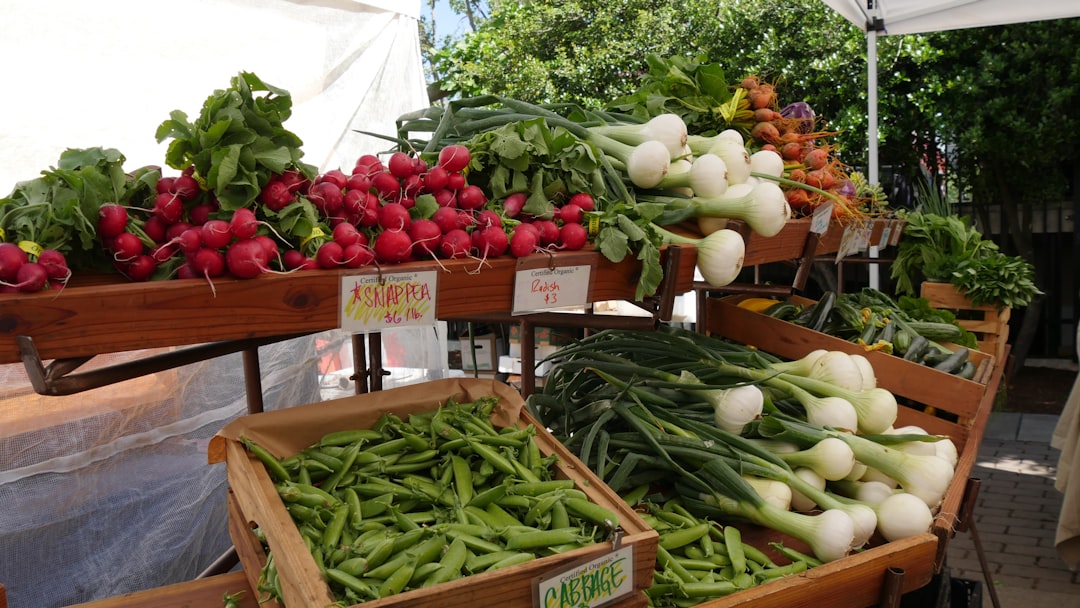


The short version: Of the 10 states on our food freedom list, 8 let you sell homemade food with no food license and no kitchen inspection: Wyoming, North Dakota, Utah, Montana, Oklahoma, Tennessee, Arkansas, and Maine (only where a local ordinance covers it). None of the 8 lets you sell home-slaughtered beef, pork, lamb or goat over the counter, because federal meat inspection still applies, so the legal route is for the buyer to own the animal before slaughter. Home-raised poultry from a small flock is allowed in six of the 8, but Oklahoma's and Arkansas's acts leave out all meat and poultry. Raw milk has a legal route in all 8, either under the food freedom law itself (Wyoming, Montana, and Maine where the ordinance includes it) or under a separate dairy law, which in Tennessee means herd shares only. Under every statewide law that allows perishable foods, they must go straight from you, or in some states your agent, to your customer, except that Wyoming lets a store sell your eggs and dairy, and Tennessee and Utah want that sale made in person, so plan on farmers markets, farm stands, and pickup or delivery you handle yourself.
Checked in each state's statute or agency page, October 14, 2026: the Wyoming Food Freedom Act (W.S. 11-49), North Dakota Century Code 23-09.5 and the state's raw milk guide, Utah Code 4-5a, the Montana Local Food Choice Act (MCA 50-49-2), Maine's Food Sovereignty Act (7 MRSA 281-286), Oklahoma HB 3720, Tennessee Code 53-1-118, the Arkansas Department of Health guide and Arkansas Act 698 of 2025, the Utah Department of Agriculture and Food's raw milk page, Oklahoma SB 2028, the Tennessee Department of Health's herd share guidance, Maine's milk law (7 MRSA 2902-B), Iowa Code 137D and 137F, New Hampshire DHHS, and 9 CFR 381.10 and 303.1. Homegrown prices were checked on findhomegrown.com/signup the same day; Homegrown customers create an account to place their first order. This is general information, not legal advice.
If you sell in a food freedom state and want local customers to order ahead, you can set up a Homegrown storefront and try it free for 7 days.
A food freedom law lets you sell homemade food straight to the person who will eat it, with no food license, permit or kitchen inspection. Wyoming passed the first one in 2015. Since then, North Dakota, Utah, Maine, Montana, Oklahoma, Tennessee and Arkansas have passed their own versions, and Texas widened its cottage food law in 2025 to cover almost everything except meat. The catch most lists skip is meat: no state law can override federal meat inspection, so "sell almost anything" never means home-butchered beef sold over the counter. This guide walks through what each state actually allows, state by state, with the statute linked in each row.
A food freedom law is a state statute, first passed in Wyoming in 2015 and now on the books in 8 states, that exempts homemade food sold directly to the person who eats it from state licensing, permitting and inspection. Instead of treating home food as a regulated food business, it treats the sale as a private deal between you and an informed buyer. You tell the buyer the food was not inspected, and the state stays out of the kitchen.
Traditional cottage food laws work the opposite way. They start from the idea that all food production is regulated, then carve out a list of "low-risk" foods (bread, cookies, jam, dry mixes) you may make at home. A cottage food vendor usually has to follow a set label format, stay under a sales cap, and sell only foods on the list. A food freedom vendor in Tennessee, for example, has no sales cap at all in the statute.
Here is the key distinction in one sentence: cottage food laws list what you can sell, and food freedom laws list what you cannot. In a food freedom state the allowed list is long and the banned list is short, but the banned list always includes meat that federal law covers.
If you want the legal background on how these laws were passed and why they exist, our companion article on food freedom law explained walks through the policy history in plain language.
Eight states have laws that skip food licensing and inspection for direct sales, listed here by the year they passed: Wyoming, Maine, North Dakota, Utah, Arkansas, Montana, Oklahoma and Tennessee. Iowa and New Hampshire often show up on these lists too, but when we read their statutes, Iowa splits home food into a no-license shelf-stable track and a licensed track, and New Hampshire allows only foods that do not need refrigeration. Here is each state with the year its law passed, what it covers, and what it says about meat.
Swipe left to see the meat rule and the cap for each state.
| State | Law name | Year | What you can sell without a license | Meat and poultry | Yearly cap |
|---|---|---|---|---|---|
| Wyoming | Wyoming Food Freedom Act (W.S. 11-49) | 2015 | Shelf-stable and perishable foods, eggs and dairy products, sold in Wyoming only | No meat, except poultry (1,000 birds a year of your own raising), domestic rabbit, farm-raised fish other than catfish, portions of live animals sold before slaughter, and animal shares. Home-slaughtered beef, pork, lamb and goat stay off until federal law changes | $250,000 and 250,000 products |
| North Dakota | Cottage Food Act (NDCC 23-09.5) | 2017 | Homemade foods; anything that needs refrigeration must be kept and delivered frozen | No uninspected meat. Poultry only from birds you raised, 1,000 a year at most, and never across state lines | None in the statute |
| Utah | Home Consumption and Homemade Food Act (Utah Code 4-5a) | 2018 | Homemade food sold in Utah, in person, to an informed buyer; a business license is still required | No meat, except poultry under the USDA 1,000-bird exemption and domestic rabbit "pending approval" from USDA | None in the statute |
| Maine | Maine Food Sovereignty Act (7 MRSA 281-286) | 2017 | Whatever a local food sovereignty ordinance covers, sold directly to consumers there; a town or plantation can pass one, and a county can pass one for its unorganized territory | Meat and poultry still fall under the state inspection program "without exception"; a farmer can still sell fewer than 1,000 of their own birds a year, whole, under the state's small-flock exemption (22 MRSA 2517-C) | Set by the town ordinance |
| Montana | Montana Local Food Choice Act (MCA 50-49-2) | 2021 | Homemade food, plus raw milk if you run a small dairy, sold in Montana for home use or a community event | No meat at all, even meat from an inspected plant; poultry only if you slaughter fewer than 1,000 birds a year | None in the statute |
| Oklahoma | Homemade Food Freedom Act, renamed the Local Food Freedom Act from November 1, 2026 (HB 3720) | 2021 | Shelf-stable and perishable foods; perishable foods need a food safety course and personal delivery; from November 1, 2026 the law also covers businesses at any location except restaurants, not only home kitchens | No meat, poultry or seafood | $75,000, rising to $250,000 on November 1, 2026 |
| Tennessee | Tennessee Food Freedom Act (T.C.A. 53-1-118) | 2022; perishable foods added July 1, 2025 | Shelf-stable foods sold any way inside Tennessee; perishable foods sold in person | Perishable foods may not contain meat, fish or shellfish; poultry only under the federal 1,000-bird or retail exemption | None in the statute |
| Arkansas | Arkansas Food Freedom Act (Act 1040 of 2021; state guide) | 2021 | Shelf-stable foods only, sold in person, by phone or online | No meat, poultry or seafood under the act | None listed in the state guide |
| Iowa | Cottage food (Iowa Code 137F.20) plus home food processing (137D) | 2022 expansion | Shelf-stable foods with no license; perishable foods only with a $50 yearly license and inspection | Cottage food excludes meat and poultry. The licensed track allows inspected meat and 1,000-bird poultry | Under $50,000 for the licensed track |
| New Hampshire | Homestead food operations (NH DHHS) | Not a food freedom law | Shelf-stable foods only; a $150 license is needed for internet or mail order sales | No perishable foods at all | None listed by the state |
We read each statute or agency page on October 14, 2026. "Shelf-stable" means a food that does not need refrigeration for safety; "perishable" means one that does (agencies call these TCS foods, for time and temperature control for safety). Caps can change: Oklahoma's rises on November 1, 2026.
Wyoming's 2015 Food Freedom Act was the first of these laws and still has the widest product list. It lets you sell perishable meals, eggs and dairy products, and it even lets a retail shop or grocery store sell your shelf-stable foods, eggs and dairy for you. The limit is a cap: under the Wyoming statute, a vendor may not make more than 250,000 food or drink products or more than $250,000 in gross revenue a year.
Most of the laws that followed borrow Wyoming's basic structure: the sale goes straight to your customer, you tell them about the home kitchen, and most of them keep the food out of restaurants.
No, not beef, pork, lamb or goat from animals you raise and slaughter at home, in any of the 8 food freedom states we read, apart from Wyoming's two buy-before-slaughter routes, a portion of a live animal or an animal share, where a customer owns a stake in the animal before it is slaughtered. Every one of them either keeps meat out of the law or allows only narrow exceptions: small-flock poultry under the federal exemption for up to 1,000 birds a year in five of them, domestic rabbit, farm-raised fish and animal shares in Wyoming, and rabbit pending USDA approval in Utah. Maine leaves all meat and poultry to its state inspection program, which has its own small-flock exemption for a farmer's own birds. That is because the federal meat and poultry inspection laws apply no matter what a state passes. Under federal rules, meat from a custom slaughter is stamped "Not for Sale" (9 CFR 303.1), so it can go to the animal's owner but not to a customer. That is the legal route in any state: sell the animal while it is alive, and the buyer who owns it has it custom-slaughtered for their own household (9 CFR 303.1(a)(2)).
Here is what each state's text says about meat:
Wyoming's law has a paragraph that would allow home-slaughtered beef, pork, lamb and goat, which is why some lists say meat is legal there. Read the next one: W.S. 11-49-103(o) says that paragraph only takes effect once the governor certifies a federal law or court ruling allowing uninspected meat sales. Federal inspection law still requires inspection for meat sold to the public, so until that certification happens, treat red meat as off the table unless the buyer owns the animal before slaughter (a live-animal portion or an animal share). We read it on October 14, 2026.
The federal poultry exemption these states borrow is narrow. Under 9 CFR 381.10(c), a farmer can skip federal inspection for birds "of his own raising on his own farm" only if they slaughter "not more than 1,000 poultry during the calendar year," do not buy or sell other poultry, and none of the birds move across state lines. If you want to sell beef or pork, you need a USDA- or state-inspected processor, and our guide to selling smoked meats from home explains which inspection reaches which buyer.
The 1,000-bird limit counts every bird you slaughter in a calendar year, not just the ones you sell. Spread across a year, that is about 19 birds a week, so a pasture flock that does three batches of 300 meat birds (900 total) leaves room for up to 100 more birds, such as stewing hens, before you hit the line.
Raw milk depends on the state and on which law you read. Wyoming's act names dairy products without carving out raw milk, Montana's covers raw milk from a small dairy, and a Maine town ordinance can cover it. North Dakota, Utah, Oklahoma, Tennessee and Arkansas leave raw milk out of their food freedom laws, but each has a separate raw milk route: direct sales to consumers in North Dakota; farm, farmers market, natural food store and farm delivery sales in Arkansas; farm, agent delivery and inspected store sales in Utah; farm sales in Oklahoma; and herd shares only in Tennessee. Maine also licenses raw milk sales statewide.
Swipe to see the source for each raw milk rule.
| State | Under the food freedom law | Separate raw milk route | Source |
|---|---|---|---|
| Wyoming | Covered: the act covers eggs and dairy products and does not exclude raw milk; dairy may even be sold through a third-party store | None needed; the act is the route | W.S. 11-49-103(c)(i) |
| Montana | Covered from a "small dairy" of no more than 5 milking cows, 10 goats or 10 sheep, with milk tests every 6 months and yearly brucellosis tests | None needed; the act is the route | MCA 50-49-202, 50-49-203(8) |
| North Dakota | Not addressed by the cottage food act | A separate raw milk law has made sales direct to the consumer legal since 2023, now including cream, cheese and yogurt; no sales to stores | NDCC 23-09.5; ND Department of Agriculture guide |
| Maine | A town ordinance can cover "milk or milk products" and herd-share agreements | Statewide, licensed dairies can sell raw milk at the farm, at farmers markets and in stores, labeled "not pasteurized" | 7 MRSA 282; 7 MRSA 2902-B; Maine Department of Agriculture |
| Utah | Excluded: the act does not apply to "raw dairy or raw dairy products" | Utah's dairy law allows raw milk sales on the farm, by direct delivery through a designated agent, and, with a state inspection, in inspected retail stores | Utah Code 4-5a-105; Utah Code 4-3-608 and 4-3-602; Utah Department of Agriculture and Food raw milk rules |
| Oklahoma | Excluded: a homemade food product does not include "unpasteurized milk" | Oklahoma's milk law allows incidental sales of raw milk and raw milk products directly to consumers at the farm where they are produced, with a warning label | HB 3720, 2 O.S. 5-4.2; 2 O.S. 7-414 as amended by SB 2028, approved May 7, 2026 |
| Tennessee | Excluded from perishable homemade foods | Herd shares only: a buyer owns a share of the cow or herd and takes the raw milk for personal use; retail sale of raw milk is illegal | T.C.A. 53-1-118(b)(3)(A); TN Department of Health herd share guidance, Aug. 12, 2025 |
| Arkansas | Not covered: the Food Freedom Act allows only shelf-stable foods | Raw milk and raw milk products can be sold directly to consumers at the farm, a farmers market, a natural food store or by farm delivery, with a warning label and, for products sold off the farm, a signed risk acknowledgment | ADH Homemade Food Guide, May 21, 2026; Act 698 of 2025 |
| Iowa | A licensed home food processing establishment may not sell raw milk | Iowa handles raw milk under a separate chapter (195) | Iowa Code 137D.2A |
Read October 14, 2026. Federal law bans raw milk in final package form from crossing state lines (21 CFR 1240.61), in every state.
North Dakota is the clearest example of why you read more than one law. The state's raw milk guide says House Bill 1515 made raw milk sales to the end consumer legal on August 1, 2023, and that a later session added cream, cheese and yogurt. That law, not the cottage food act, is what covers a North Dakota raw milk sale, and it bans donations and sales to stores. For every state's raw milk rule, not just these, see our raw milk laws by state guide.
Food freedom and cottage food laws both let you sell from a home kitchen, but food freedom laws usually cover perishable foods and skip the license, while cottage food laws stick to a list. The meat rule is the same under both, because it comes from federal law. Here is a side-by-side comparison of what changes when you move from a cottage food state to a food freedom state.
Scroll sideways to compare both systems.
| Rule | Traditional cottage food | Food freedom |
|---|---|---|
| Allowed products | A list of shelf-stable foods (Florida's starts with loaf breads, cakes, candies, honey and jams) | Most homemade foods sold directly, including perishable meals in six of the 8 states (North Dakota's kept frozen) |
| Revenue cap | Varies: $78,000 for Minnesota's top tier, $150,000 in Texas, $250,000 in Florida | None in the Tennessee, Utah, Montana or North Dakota statutes; $250,000 in Wyoming; $75,000 in Oklahoma until November 1, 2026 |
| Inspection required | Sometimes (Iowa inspects its licensed home food kitchens) | No routine inspection; health departments can still investigate an illness report |
| License required | Sometimes (Minnesota registration, New Hampshire's $150 license for online sales) | No food license; Utah still requires a business license |
| Labeling required | Yes, in a set format | Usually a short "not inspected" statement; Montana's law bars the state from requiring a label at all |
| Sales channels allowed | Varies; some allow mail and online orders | Direct to the end customer; Wyoming, Oklahoma, Tennessee and Arkansas also allow a third-party store for shelf-stable foods (Wyoming adds eggs and dairy) |
| Meat and poultry | Not allowed under most cottage food laws (Colorado's Tamale Act will allow meat from an inspected or exempt source from January 1, 2027) | Red meat not allowed in any of the 8 unless the buyer owns the animal before slaughter (a Wyoming live-animal portion or animal share, or federal custom slaughter for the owner's household); home-raised birds under the federal small-flock rule in five states, and under Maine's own small-flock exemption |
| Dairy | Florida's and New Hampshire's lists stick to shelf-stable foods, so fresh dairy is out | Foods made with pasteurized dairy in Montana, Oklahoma, Tennessee, Utah and Wyoming, plus North Dakota if kept frozen; raw milk under the act only in Wyoming, Montana (from a small dairy) and Maine places with a local ordinance that includes it; the other five acts leave raw milk out, but all five of those states allow it under separate dairy laws (Tennessee through herd shares only), and licensed Maine dairies can also sell it statewide |
| Cooked meals | Not on Florida's or New Hampshire's lists | Allowed in Wyoming, Utah, Montana, Oklahoma and Tennessee (no meat), and frozen in North Dakota; not in Arkansas |
Cottage food figures come from the Florida Department of Agriculture page, the University of Minnesota Extension cottage food page and the Texas DSHS page; food freedom figures from each state's statute. All read October 14, 2026.
The products you gain in a food freedom state are the ones that can carry a real price. A Wyoming vendor can sell a frozen lasagna or a quart of chili made with beans at a farmers market stand. A Florida cottage food vendor works from a list of shelf-stable foods, and the Florida Department of Agriculture cottage food page starts that list with loaf breads, cakes, candies, honey and jams. A Montana vendor can sell raw milk from a small herd. A Utah vendor can sell chicken from a backyard flock under the 1,000-bird exemption.
This matters because cookies, jam and granola are allowed under nearly every cottage food law, so home vendors everywhere can make them. Prepared meals and dairy foods are open to home kitchens in far fewer states, so fewer home vendors can offer them.
You can sell most foods you make at home, as long as you sell them directly to your customer and say they were made in an uninspected home kitchen. Four states also let a store sell your shelf-stable foods for you, and Wyoming adds eggs and dairy. The exact list depends on the state. Here is what the 8 food freedom laws allow, with the states that limit each one.
Commonly allowed under food freedom laws:
Products that stay off-limits even in food freedom states:
The federal restrictions on meat are non-negotiable. Even Wyoming's food freedom law does not let you sell home-slaughtered beef to the public today, because that is a federal inspection issue, not a state one; its live-animal-portion and animal share routes work only because the customer already owns part of the animal when it is slaughtered, the same buy-before-slaughter logic behind the federal custom exemption that applies in every state (9 CFR 303.1). Poultry is the exception because federal law has its own small-flock exemption for birds you raise on your own farm.
For a full state-by-state breakdown of which products are allowed in each traditional cottage food state, our cottage food laws by state guide covers the rules everywhere else in the country.
In a pull of the Homegrown catalog on October 14, 2026, 114 of the 2,927 products listed by 322 vendors sat in the Meat and Poultry category, from 16 vendors. Most were beef cuts, pork and pasture-raised chicken, with a few bundles, live birds and tallow. Not one of the 2,927 product names or descriptions mentioned USDA, and none of the 114 meat listings mentioned inspection. If you sell meat, say which inspection it went through on the listing, because that is the question a careful buyer asks.
No, Texas is not a food freedom state in the legal sense, but since September 1, 2025 its cottage food law lets home kitchens sell almost any food. Under Senate Bill 541, the Texas DSHS cottage food page says allowable foods "now include any foods, except" meat and poultry, seafood, ice and ice cream, low-acid canned goods, CBD or THC products, and raw milk.
What makes Texas a cottage food state rather than a food freedom state:
So a Texas home cook can sell bean chili, cheesecake or frozen vegetable soup, but not chicken soup. Our Texas cottage food law guide walks through every rule.
Most food freedom states require a short statement that the food was made in a home kitchen and not inspected, plus your contact details, and a few require nothing printed at all. The point of food freedom is a lighter load, not zero consumer protection, so every statewide law here requires you to tell the buyer about the home kitchen; in Maine, the local ordinance decides.
Swipe to read each state's exact wording.
| State | Required statement or notice | Other label details |
|---|---|---|
| Wyoming | Tell the buyer the food is not certified, labeled, licensed, packaged, regulated or inspected. In a store: "this food was made in a home kitchen, is not regulated or inspected and may contain allergens" | No state label format for direct sales |
| North Dakota | A sign at the point of sale or a label: "This product is made in a home kitchen that is not inspected by the state or local health department." | Refrigerated products need safe handling instructions and a note that they were transported and kept frozen |
| Utah | Not for resale, and processed and prepared without state or local inspection | Your name and address, and a list of common allergens |
| Montana | Tell the buyer the food has not been licensed, permitted, certified, packaged, labeled or inspected | The law bars the state from requiring a label |
| Oklahoma | "This product was produced in a private residence facility that is exempt from government licensing and inspection." | Name, phone and address (or a $15-a-year registration number in place of all three), description, ingredients and allergens, in 10-point type |
| Tennessee | "This product was produced at a private residence that is exempt from state licensing and inspection. This product may contain allergens." | Name, address, phone, the food's common name and ingredients |
| Arkansas | "This product was produced in a private residence that is exempt from state licensing and inspection. This product may contain allergens." | Date made, name, address and phone (or a state ID number), the food's name and ingredients |
| Maine | Set by each town's ordinance; small-flock poultry sold without inspection must say "Exempt under the Maine Revised Statutes, Title 22, section 2517-C NOT INSPECTED" | Varies by town; small-flock poultry also carries the farm name, the producer's name, the farm address with zip code, and the safe handling instructions the statute spells out |
Statement wording is quoted from each statute or agency guide, read October 14, 2026. Utah's agriculture department words it "Not for Resale – Processed and prepared without the benefit of state or local inspection."
Typical label contents across these states:
Record-keeping is usually lighter than in cottage food states, but four rules require records. Montana's small dairies keep milk and brucellosis test results for 2 years. Montana poultry vendors follow the federal poultry record rule (9 CFR 381.175). Maine's small-flock poultry sellers give every bird sold a lot number and keep a record of lot numbers and where each was sold (22 MRSA 2517-C). Arkansas pickle makers keep a batch number, the recipe source or pH reading, and the date for every batch.
The University of Minnesota Extension cottage food page shows the other end of the scale. Minnesota cottage food vendors register with the state every year, and those selling $7,665 to $78,000 a year complete a food safety course every three years. That is the gap between a cottage food state and a food freedom state, and it shows up in how much paperwork you carry every year.
Compare that with Florida, a cottage food state with no permit at all: the Florida Department of Agriculture lets cottage food vendors sell "without obtaining a food permit" up to $250,000 a year, the same dollar cap as Wyoming. What Florida limits is the product list and the label, which must say "Made in a cottage food operation that is not subject to Florida's food safety regulations."
You start by reading your state's statute, then labeling your product honestly and selling directly to customers. No state on our list of 8 requires a state food license or a kitchen inspection. Utah still requires a business license, Oklahoma requires a food safety course before you sell perishable foods, and in Maine the town ordinance sets the terms.
Here is the typical setup, in order:
The biggest mistake new food freedom vendors make is assuming the rules match across states. They do not. Chicken soup made with your own birds can be legal in Wyoming and illegal in Oklahoma, and a third-party store can sell your cookies in Tennessee but your perishable meals must go hand to hand. Always check your own state's statute before launching.
If you want the full walkthrough on the business side of launching, our complete guide to starting a cottage food business covers pricing, packaging, labeling, and first-customer tactics that apply in any state.
You can sell at a farmers market, a farm stand, your home, or a place you and the buyer agree on in all 8 states, but online orders, delivery and third-party stores vary. The rule underneath all of it is the same: the sale ends with the person who will eat the food.
Swipe to see every sales channel by state.
| State | Online or phone orders | Who can deliver | Third-party store | Across state lines |
|---|---|---|---|---|
| Wyoming | Not addressed; the sale must be direct, except that a store can sell your shelf-stable foods, eggs and dairy | You or a named agent, at a place you agree on; the agent can be a consignment market or food freedom store, which sells for you without owning the food | Yes for shelf-stable foods, eggs and dairy | No |
| North Dakota | Not addressed; sales may happen through delivery | Through delivery, from you to the buyer | No | Poultry may not; the statute does not bar other foods |
| Utah | Sold in person at an agreed location | You or a designated representative | No | No |
| Montana | Not addressed; the sale must be direct | You or your agent | No | No |
| Oklahoma | Yes, internet and phone | Shelf-stable: you, an agent or a parcel service. Perishable: you only | Yes for shelf-stable, with a posted placard | Only if packaged and labeled under federal law |
| Tennessee | Yes for shelf-stable foods | Shelf-stable: you, an agent or a carrier. Perishable: in person only | Yes for shelf-stable | No, intrastate sales only |
| Arkansas | Yes, in person, phone or online | You, an agent, a store, or mail and parcel | Yes, kept apart from inspected food | Only if you follow federal law |
| Maine | Set by the town ordinance | Includes deliveries, buying clubs and CSAs | Set by the town ordinance | Not covered |
From each statute or agency guide, read October 14, 2026. "Not addressed" means the statute does not mention it; ask your state agriculture department before relying on it.
Utah adds one more wrinkle for markets. Under Utah Code 4-5a-103, homemade food has to be sold in a "direct-to-sale farmers market" area that is separated from the regular farmers market and marked with signs. Ask the market manager where that area is before you book a booth.
Food freedom laws are the loosest home food rules in the country, but they come with three real limits every vendor should understand before growing.
Limitation 1: Direct to the end customer. Four statutes (Montana, Utah, North Dakota, Wyoming) bar restaurant sales outright, and Arkansas's state guide does too. Wyoming, Oklahoma, Tennessee and Arkansas let a retail store sell your shelf-stable foods for you, and Wyoming adds eggs and dairy, but other perishable foods still have to go from you, or in some states your agent, straight to the buyer. That is the biggest scaling limit: outside Wyoming's eggs and dairy, you cannot wholesale a perishable food freedom product.
Limitation 2: State lines. Wyoming, Utah, Montana and Tennessee laws end at the state border, so shipping to another state is out there. Arkansas and Oklahoma allow out-of-state sales only if you follow federal law, and North Dakota's statute bars only poultry from crossing the line. To sell across state lines regularly, plan on federal food rules, which usually means a licensed kitchen.
Limitation 3: Federal meat and poultry rules. Food freedom does not override federal inspection of red meat. Poultry (chicken, turkey, duck) is the exception under the federal small-flock rule, or in Maine under the state's own exemption for fewer than 1,000 of a farmer's own birds, and Oklahoma's and Arkansas's acts allow neither. Montana goes further and bars meat from inspected plants too.
Here is what this means in practice. A Wyoming vendor can:
A Wyoming vendor cannot:
Once you understand the limits, you can design a business that works inside them. A farmers market booth, a farm stand and pickup orders from your own ordering page are the direct sales these laws are built around, and none of them needs a middleman (in Tennessee and Utah, read the in-person rule below before you take payment online).
Food freedom changes what you can build because it removes the short product list that holds list-based cottage food vendors to baked goods and jam, and in Tennessee, Utah, Montana and North Dakota it removes the yearly sales cap too. With access to perishable meals, eggs, small-flock poultry and, in a few states, dairy, a home vendor can sell what people eat every week, not just weekend treats (eggs and small-flock poultry also have separate permit routes in some other states, as the farm-to-door model below shows).
Here are the business models that work under food freedom rules but not under list-based cottage food laws like Florida's or New Hampshire's:
The business models food freedom unlocks are the ones most home vendors cannot legally run. A home cookie business can start in any cottage food state. A weekly dinner pickup for ten families needs a law that allows perishable meals.
For soups and stews specifically, our guide to selling homemade soup goes state by state on which versions are legal, since a chicken noodle soup and a lentil soup fall under different rules.
Use one ordering page that lists this week's meals, takes payment up front and tells each customer when to pick up, because food freedom laws push every meal sale through you, or in some states your agent (in Tennessee and Utah, read the in-person rule below before you take payment online). Taking weekly meal orders through Instagram DMs gets messy fast once you are matching payments to messages and counting portions by hand.
Homegrown is $10 per month with no percentage fees beyond standard payment processing ($10 billed annually, or $12.50 billed monthly, with a 7-day trial and no charge until day 8). Card processing is 2.9% + $0.30 per order, paid by you, with no fee added to your customer's total. It fits a food freedom vendor in four specific ways:
Tennessee's law says perishable homemade food must be sold by you or your agent "in person" (T.C.A. 53-1-118(b)(3)(C)), and Utah's agriculture department says everything sold under its act "must be sold in-person." Homegrown takes card payment online at checkout, so an order a customer pays for online before pickup may not match that wording for Tennessee perishable foods or for anything sold under Utah's act. In those two states, ask the state agency before you take paid online orders for those foods.
Compare that with Etsy, which is built for shipping shelf-stable products to strangers, something four of the 8 states (Tennessee, Montana, Utah, Wyoming) do not allow across state lines. Etsy has no required monthly plan (Etsy Plus is an optional $10 a month) but charges a 6.5% transaction fee, 3% + $0.25 processing, and a $0.20 listing renewal each time a product sells. Shopify Basic is $29 a month billed yearly ($39 monthly) and is built for online retailers who ship, not a home vendor handing 20 meal orders a week to neighbors.
Swipe to compare all three options.
| Option | Monthly plan | Platform or transaction fee | Card processing | Customer pays on a $20 order | You pay on a $20 order | You pay in a month of 50 orders at $20 |
|---|---|---|---|---|---|---|
| Homegrown | $10 billed annually ($12.50 monthly); 7-day trial, no charge until day 8 | None, 0% commission | 2.9% + $0.30, paid by you | $20.00 | $0.88 plus the plan | $54.00 ($56.50 on monthly billing) |
| Etsy | $0 (a one-time set-up fee may apply), no trial | 6.5% transaction fee, plus a $0.20 listing renewal for each product sold | 3% + $0.25, paid by you | $20.00 | $2.55 (two $10 products) | $127.50 |
| Shopify Basic | $29 billed yearly ($39 monthly); 3-day trial, then $1 a month for 3 months | None with Shopify Payments | 2.9% + 30¢ online, paid by you | $20.00 | $0.88 plus the plan | $73.00 ($83.00 on monthly billing) |
Checked October 14, 2026 on findhomegrown.com/signup, Etsy's Fees and Payments Policy and Etsy Payments Policy (US rate), and shopify.com/pricing. Processing is figured on the $20 price; sales tax and tips are left out. The Etsy figure is $0.40 in listing renewals, $1.30 transaction fee and $0.85 processing.
Homegrown customers create an account to place their first order, and while your storefront is listed on the Homegrown marketplace, plan on most orders coming from people you send to your own link. Homegrown does not tell you what your state's food freedom law allows, write your label, or drive your deliveries. It gives you the ordering page that turns scattered DM orders into a list you can cook from.
If you already sell at a market and want those regulars to order between market days, set up a Homegrown storefront and put the link on your booth sign this weekend.
Federal law still controls meat, poultry, raw milk across state lines, and any food you package for interstate sale, no matter how loose your state's law is. North Dakota's raw milk guide notes the interstate ban on raw milk has stood since 1987. State food freedom laws can only release you from state rules, and several of them say so in their own text.
The federal rules that matter most for a home vendor:
Utah's act also says the state keeps running its meat inspection program at a level "at least equal to" the standards of the federal Meat and Poultry Products Inspection Act. Read with the federal rules above, it means "food freedom" and "home-butchered beef" do not go together in Utah.
Watch your legislature's bill list each session, because most recent changes widened existing laws rather than creating new ones. The last few years show the pattern: states keep adding perishable foods and raising caps, and none we read lets you sell uninspected red meat over the counter; Wyoming's two routes are selling portions of a live animal before slaughter (W.S. 11-49-103(c)(v)(C)) and an animal share (W.S. 11-49-104), in which the meat goes only to people who bought into the herd, and they cannot resell it.
What to watch:
Recent changes we confirmed in the statutes and agency pages:
Two states that sometimes appear on wish lists are moving more slowly. New Mexico's Homemade Food Act covers only foods that do not need refrigeration, and Nebraska's cottage food law excludes "any part of an animal," which its agriculture department says means meat, lard, tallow and bone broth.
If you want to push your state toward food freedom, the most effective step is to contact your state representative with a concrete example of a business you would like to start that your current rules make illegal. Specific stories from real vendors carry more weight with legislators than general arguments.
Ready to start selling locally? The easiest way to take local orders and get paid is an online storefront. See the best platform to sell food from home, or set up a Homegrown storefront in about 15 minutes ($10 a month billed annually, 0% commission).
Eight states have laws that let you sell homemade food directly with no food license or kitchen inspection: Wyoming, North Dakota, Utah, Montana, Oklahoma, Tennessee, Arkansas, and Maine in places that adopt a local food ordinance. Iowa and New Hampshire often appear on food freedom state lists, but Iowa licenses perishable home food and New Hampshire allows only shelf-stable foods. Texas widened its cottage food law in 2025 but still has a cap, a course and registration for perishable foods.
Cottage food laws allow a list of low-risk homemade foods, usually with a set label format and a revenue cap. Food freedom laws allow most homemade foods sold directly to your customer, often including perishable meals, with a short "not inspected" statement. Neither one lets you sell home-slaughtered beef or pork over the counter, because federal inspection law covers meat in every state. Wyoming's law names two narrow routes, selling part of a live animal before slaughter and an animal share, where the buyer co-owns the animal and may not resell the meat. In any state, a buyer who owns the live animal can have it custom-slaughtered for their own household (9 CFR 303.1), but that meat is marked "Not for Sale".
Usually not. Wyoming, Utah, Montana and Tennessee limit sales to their own state, and federal law bans packaged raw milk and small-flock poultry from crossing state lines. Arkansas and Oklahoma allow out-of-state sales only if you meet federal food rules, and North Dakota's statute restricts only poultry, though the buyer's state law still applies.
Not a food license in the 8 food freedom states, though there are exceptions to know. Utah requires a business license, Oklahoma requires a food safety course before you sell perishable foods, and Iowa requires a $50 yearly license for perishable home food. You still label your products, follow any meat or poultry limits, and report the income on your taxes.
Restaurants are out in four states whose statutes bar homemade food from being sold to or used by one (Montana, Utah, North Dakota, Wyoming), and Arkansas's state guide says the same. Grocery stores are different in four states. Wyoming, Oklahoma, Tennessee and Arkansas let a retail store sell your shelf-stable foods for you, and Wyoming adds eggs and dairy, as long as the store tells buyers the food is uninspected.
Raw milk is covered by some food freedom laws and left out of others, but each of the 8 states has some legal route to it. Wyoming's act covers dairy products without excluding raw milk, Montana allows it from a small dairy of up to 5 cows, 10 goats or 10 sheep, and a Maine town ordinance can cover it. North Dakota, Utah, Oklahoma, Tennessee and Arkansas leave raw milk out of their food freedom laws but handle it under separate dairy laws: North Dakota allows direct sales to consumers, Utah allows farm, agent delivery and inspected store sales, Oklahoma allows sales at the farm, Arkansas allows farm, farmers market, natural food store and farm delivery sales, and Tennessee allows herd shares only. Maine also licenses raw milk sales statewide, and federal law bans packaged raw milk from crossing state lines.
Wyoming has the widest product list, covering perishable meals, eggs, dairy, small-flock poultry and rabbit, and it lets stores sell your eggs, dairy and shelf-stable foods, but it caps sales at $250,000 a year. Tennessee has no cap in its statute and allows perishable foods without meat. For raw milk under the food freedom law itself, Wyoming and Montana are the friendliest, and for shelf-stable foods sold online and by mail, look at Arkansas and Oklahoma.
These 7 guides pick up where this list stops, each on a question food freedom readers ask next. Start with the first one if you want the history behind the 8 laws, or jump to your own product.
If you live in one of the 8 food freedom states, from Wyoming (2015) to Tennessee (perishable foods since July 1, 2025), you already have more legal room than most home vendors in the country, as long as you leave red meat to inspected processors. The bottleneck is rarely the law; it is order management. A vendor who moves off DMs and onto a simple ordering page can see every order, payment and pickup time in one place, which makes it far easier to grow a weekly dinner pickup past the first 10 families.
Start with the steps that take a day: read your state's statute, write your label statement, and pick the three products you make best. Then set up your ordering page and start selling what your state already allows you to make.
*This guide is general information, not legal advice. Food freedom laws change, so verify the current rules in your state's statute or with your state agriculture department before you start selling. Last verified: October 14, 2026.*



