

The short version: You can sell granola and dry mixes from your home kitchen in Michigan, Texas and Arizona, the three states whose rules we read in full, without a commercial kitchen, though each state has its own label, sales and registration rules. Homemade granola tastes its best for about 7 days to 2 weeks at room temperature in a sealed bag, so bake close to the sale, print a bake date on every bag, and freeze sealed bags when you need a longer hold for gift sets. On Homegrown, 6 vendors who list a 7-to-9-ounce bag with the weight stated charge $5 to $10, with a median of $8. Take orders before you bake, at your farmers market booth or through a pre-order link, so every batch is already sold.
Checked October 14, 2026: the shelf-life windows come from the University of Minnesota Extension granola recipe (up to 2 weeks) and the pecan granola recipe West Virginia University and Montana State both publish (up to 7 days), the same sources behind our guide to how long homemade granola lasts. State rules come from the Michigan, Texas and Arizona agency pages and statutes, prices from a pull of 2,927 Homegrown listings, and platform fees from each company's own pricing page, all loaded that day. Cottage food rules differ by state, so verify your state's current rules before you sell a bag. On Homegrown, a first-time customer creates an account to order, there is no drops feature, and most orders come from people you send to your own link.
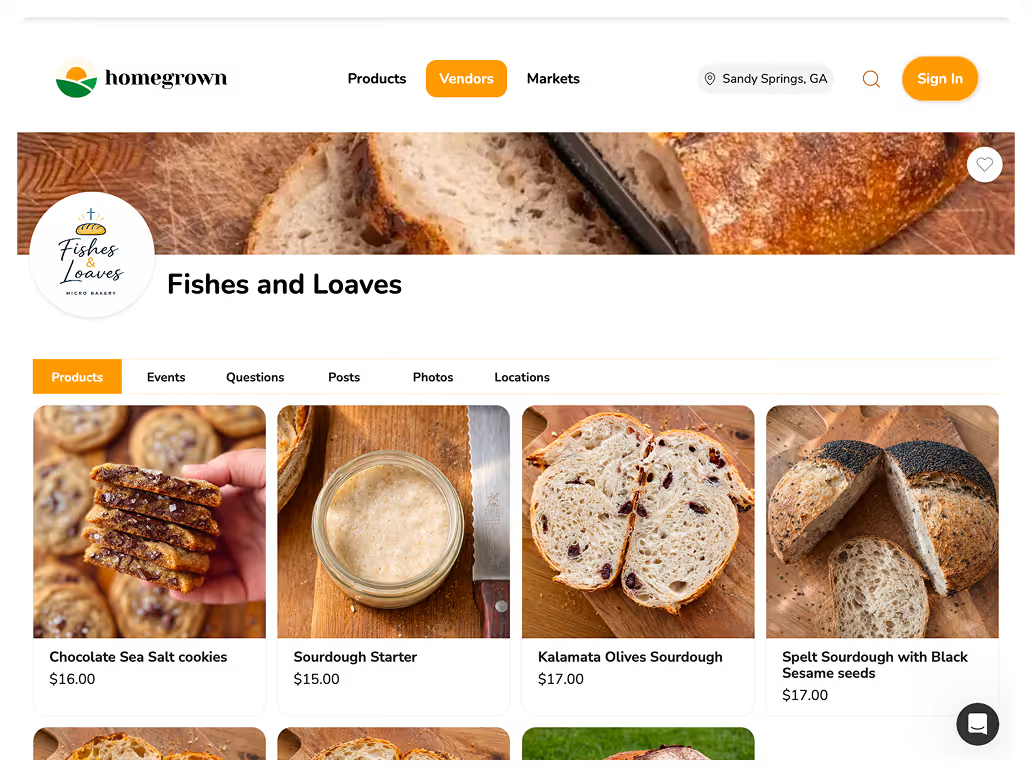
If you want local customers to order your granola ahead, you can set up a Homegrown storefront and try it free for 7 days.
You've been making your honey almond granola for years. Friends ask for the recipe. Family requests it at the holidays. Someone at work offered to pay you for a bag. At some point the math becomes obvious: you should be selling this.
Granola and dry mixes are among the best products to start a cottage food business with. They're shelf-stable, batch easily, and appear by name on the allowed-food lists in Michigan and Arizona, so you can make them without a commercial kitchen. A sealed bag of homemade granola stays at its best for about 2 weeks at room temperature, or about 7 days if it's heavy on chopped, toasted nuts, and our guide to how long homemade granola lasts lays out a bake and selling schedule built around that window.
The gap between giving this stuff away and selling it is smaller than you think. If people already love your granola, the product is proven. This guide covers the rest: what's legal, what goes on the label, how long a bag stays fresh, how to price and package it, what it costs to start, and where to sell it.
Yes, in all three states we read in full: Michigan and Arizona name granola on their allowed-food lists, and Texas allows any food except a short list that does not include granola. These products hit every marker that makes something cottage-food-friendly: shelf-stable, no refrigeration required, and low spoilage risk compared to meat, dairy, or canned goods.
Cottage food laws let home producers sell certain low-risk foods directly to consumers without a commercial kitchen. Each state writes its own version, and the details differ more than most guides show. Here is what the three agencies say about granola and dry mixes, checked on October 14, 2026:
What's typically allowed under cottage food, based on those three lists:
What varies by state:
Swipe the table sideways to compare all three states.
| Requirement | Michigan | Texas | Arizona |
|---|---|---|---|
| Revenue caps | $50,000 a year in gross sales, or $75,000 if your products sell for $250 or more per unit | $150,000 annual gross income threshold | No dollar cap in the statute; you "may sell cottage food products to the maximum extent allowed by federal law" |
| Sales channels | Direct to the customer, including internet or mail order, if the customer can talk with you before the sale; only within Michigan | In person, or online if the food is personally delivered by you, an employee or a household member | Foods with no dairy, meat or poultry can be sold through an agent or a store and delivered by a third-party carrier |
| Labeling requirements | Name and home address, product name, ingredients by weight, net weight with metric, allergens, and a home-kitchen statement | Your name, address or state ID number, product name, major allergens, and a private-residence statement | Your name and registration number, all ingredients, the production date, a home-kitchen statement and the department's website |
| Registration or permits | No registration and no license from the state | A food handler training course; registration only for foods that need temperature control, or to use a state ID number on the label | Registration with the state health department and an accredited food handler course |
| Selling to stores | Not allowed: "Sales by consignment or at wholesale are prohibited" | Only at wholesale to a registered cottage food vendor | Allowed through a third-party vendor, in a separate section with a sign |
We checked these rules on October 14, 2026 on Michigan's cottage food FAQ and labeling page, the Texas health department's cottage food page, and Arizona's statute, A.R.S. 36-932, and cottage food program page.
Three states is not fifty. Check your state's specific rules before your first sale. Forrager, a private site that summarizes each state's cottage food law, is a good first stop, but your state agency's own page is the final word. For a full walkthrough of what it takes to sell food legally from your home kitchen, how to sell food from home covers the cottage food framework in detail. If you sell in one of the three states above, our state guides go deeper: Michigan cottage food law, Texas cottage food law and Arizona cottage food law.
One practical note: even where cottage food law is broad, you still need to label your products correctly. The label is what shows you followed the rules, and it's worth getting right before your first market day.
In Michigan you need no license at all, in Texas you need a food handler course but no permit for shelf-stable granola, and in Arizona you register with the state and take a food handler course. So 2 of the 3 states we read on October 14, 2026 require a food handler course, and 1, Arizona, requires every cottage food preparer to register.
A market can ask for more than the state does. Michigan's FAQ says plainly that "some farmers markets or other direct marketing venues may require vendors to have a food establishment license or to meet other requirements." Ask each market manager what they need from a cottage food vendor before you pay a booth fee. We read that on Michigan's FAQ on October 14, 2026.
You may also need a local business registration, a "doing business as" name filing or a sales tax permit, depending on your city, county and state. Michigan's FAQ, for example, says a DBA "may be a requirement of your county or local municipality." Those are separate from cottage food rules, so call your county clerk once and ask.
A dry mix is any shelf-stable blend of dry ingredients that the customer eats as is or finishes at home: granola, trail mix, baking mixes, spice blends and hot drink mixes. The category is broader than most people realize, and Arizona's approved list names every one of those five groups. If you make any of the following, you're likely working with a cottage-food-eligible product.
Granola and baked grain products. This is the core category: oats mixed with oil, honey or maple syrup, nuts, seeds, and dried fruit, then baked until golden and crunchy. Granola is named on both the Michigan and Arizona lists. Neither list names granola bars on their own, but Arizona's approved list includes "Brownies & Bars" and Michigan allows "Baked goods, cookies," so a baked granola bar likely fits; ask your state agency before you sell a no-bake bar. Muesli (an unbaked oat mix with dried fruit and nuts) is not named on either list. Michigan's dry mix items are baking, dip, soup and bread mixes, not cereal mixes, so ask your state agency before you sell muesli.
Trail mix and nut mixes. Combinations of nuts, dried fruit, seeds, chocolate chips, and other shelf-stable ingredients. Trail mix is straightforward because you're combining shelf-stable ingredients without cooking. If you roast or candy your own nuts, check that your state lists them: Michigan allows "coated or uncoated nuts" and Arizona lists "Roasted & Candied Nuts." Nuts are also a major allergen, which matters for the label (more on that below).
Baking mixes. Pancake and waffle mix, muffin mix (blueberry, corn, chocolate chip), biscuit and scone mix, brownie and cookie mix, bread mix. These are dry ingredient blends that the customer adds wet ingredients to at home. They're popular cottage food products because they're shelf-stable, lightweight, and have strong gift appeal. The "cookie mix in a jar" idea, with layered ingredients visible through glass, is a classic holiday market gift.
Spice and seasoning blends. Dry rubs for grilling, soup and chili seasoning packets, everything bagel seasoning, herbes de Provence, taco seasoning, chai spice blend. Spice blends are small in size but high in value per ounce. Kansas State University's food storage guide gives herb and spice blends 2 to 3 years in the cupboard, so they are the longest-keeping product in this whole family. A customer who loves your dry rub will buy it again and again.
Hot beverage mixes. Hot cocoa mix, chai spice blend, mulled cider spice mix, golden milk powder. These are especially strong during fall and winter markets and make excellent gift products. Michigan lists "Powdered drink mixes" and "Dry tea mixes"; Arizona lists "Hot Cocoa Mixes" and "Dry Drink Mixes."
If you make more than one of these, you can build a cohesive product line from a single cottage food operation. Same kitchen, similar labeling requirements, complementary products at a market booth. A customer who buys your granola sees your pancake mix and picks that up too. A gift shopper grabs a bundle of three different products. The variety works in your favor.
On Homegrown, other vendors already list these. In the October 14, 2026 catalog pull, Our Little Country Place lists a jar of pancake mix for $8 that "Make[s] eight 4 inch pancakes," All Rosey lists a drop biscuit mix for $10, BlackRose Farms lists half-pint jars of hot chocolate mix for $8 and $12, and Health Nutz lists trail mixes from $5 to $6. Those are listing prices, not sales, but they show where the shelf sits.
Package granola and dry mixes in a sealed, resealable bag or jar that shows the product, and put a label on it that meets your state's list. Those two jobs overlap: the bag keeps the granola crisp, and the label is where you show you followed the rules.
Your packaging is your first sales pitch, and for granola it is also your freshness system. At a farmers market, a customer usually can't taste your granola before buying. They're deciding based on what they see: the bag, the label, the window into the product, and how it compares to everything else on the table.
Good packaging does selling work for you. Bad packaging, such as a zip-lock bag with a handwritten label, undermines even the best product. You don't need expensive custom packaging, but you do need something that looks intentional and clean, and that seals. Moisture getting in is what turns granola soft, so a zipper top matters more than a pretty print.
Packaging options compared:
Swipe across to see the price and notes for each package.
| Packaging Type | Cost Per Unit | Best For | Notes |
|---|---|---|---|
| Stand-up kraft bags with window | About $0.27 (8 oz size, 1,000 per case) | Granola, trail mix | Uline pitches it at "the fruit and granola crowd"; shows product texture; zipper top; stands up for display |
| Clear zip-top stand-up bags with printed label | About $0.21 (6 by 9.5 inch, 1,000 per case) | Trail mix, spice blends | Clean look; shows full contents; label carries the brand |
| Mason jars | About $1.17 (pint jar with lid, case of 12) | Layered mixes, gift products | Unbeatable gift presentation; heavy and breakable, a poor fit for shipping |
| Compostable or recyclable bags | Ask your supplier; we did not price these | Eco-conscious customers | A selling point for some shoppers; check the barrier rating so the granola stays crisp |
Prices loaded October 14, 2026: Uline lists 1,000 of its kraft paper stand-up barrier pouches with window (8-ounce size) for $272 a carton (in stock that day), WebstaurantStore lists 1,000 clear 6 by 9.5 inch zip-top stand-up pouches for $214.99, and Fillmore Container lists a case of 12 Ball pint jars for $14.05. A case of 1,000 is a lot for a new vendor; smaller packs cost more per bag.
Budget about $0.27 per bag, or about $1.17 per jar. Labels add a little more; we budget 10 cents a bag for a front and back label, which is our allowance, not a checked price. Start with bags. You can always upgrade packaging as your business grows. For more ideas, our roundup of packaging ideas for farmers market vendors compares more formats.
Every label needs what your state's list asks for, and those lists differ more than you might expect. Here is what Michigan, Texas and Arizona ask for on a bag of granola. We checked all three pages on October 14, 2026.
Scroll sideways to see each state's label rules.
| Label item | Michigan | Texas | Arizona |
|---|---|---|---|
| Your name and address | Name and physical address of the home kitchen (no PO box), or an MSU Product Center registration number plus phone | Name of your cottage food operation, and its address or a state ID number | Name and state registration number |
| Product name | Required | Required ("common or usual name") | Not on the health department's list; put it on anyway |
| Ingredient list | Required, in descending order by weight, with sub-ingredients | Not on the state's list, but major allergens must be listed | Required: "A complete list of all ingredients used in the product, including those in its components" |
| Net weight | Required, with the metric equivalent | Not on the state's list | Not on the health department's list, but its page says a product sold through a store also needs a "Declaration of Quantity" under Arizona weights and measures rules |
| Allergens | Federal allergen labeling; name each tree nut | Any major allergen, such as tree nuts, wheat, milk, peanuts, soy, eggs and sesame | Covered by the full ingredient list, plus the allergen warning in the statement |
| Home-kitchen statement | "Made in a home kitchen that has not been inspected by the Michigan Department of Agriculture & Rural Development," at least 11-point | "THIS PRODUCT WAS PRODUCED IN A PRIVATE RESIDENCE THAT IS NOT SUBJECT TO GOVERNMENTAL LICENSING OR INSPECTION." | "This product was produced in a home kitchen that may come in contact with common food allergens and pet allergens and is not subject to public health inspection." |
| Date | Not on the state's list | Only for foods that need temperature control, or food sold through a cottage food vendor | Required: the production date |
Sources, loaded October 14, 2026: Michigan's cottage food labeling page, the Texas health department's cottage food page, and the Arizona health department's Labeling Requirements tab and A.R.S. 36-932. Arizona's label also needs the department's website, www.azdhs.gov/CottageFood. Texas and Arizona also require label information on an online listing before the customer pays; see the online section below.
Whatever your state requires, a complete label for a bag of granola covers these elements:
For dry mixes that need additional preparation (pancake mix, muffin mix, cookie mix), also include:
What's usually NOT required for cottage food:
Add a best-by date even if it's not required. It communicates product quality and tells customers how long they have to enjoy peak freshness. For granola, print the bake date and "Best within 14 days," and change the 14 to 7 on nut-heavy flavors. The next section shows where those numbers come from and what to print on dry mixes.
The allergen statement deserves extra attention. Only 3 of the 37 Homegrown granola listings in our October 14, 2026 catalog pull named the allergen in the description, and your label needs it either way. If your granola contains almonds, that's a tree nut allergen, and Michigan's labeling page says you "must identify which tree nut you are using," so "almonds," not just "nuts." If your pancake mix contains wheat flour, that's a wheat allergen. If you make products in a kitchen that also processes peanuts, note that: "Made in a kitchen that also processes peanuts." Allergen disclosure protects both your customers and you. Our guide to the big 9 allergens on a cottage food label has more examples, and cottage food labeling requirements covers the rest of the label by state.
Print a best-by date of 14 days from the bake date on a mostly-oat granola and 7 days on a nut-heavy one, and freeze sealed bags if you need them to last longer. Those numbers are not a lab test of granola, because no storage chart we checked has a row for it. They come from university extension recipes, which we loaded again on October 14, 2026, and one storage chart.
Those windows are about flavor and crunch. Granola rarely turns unsafe in that time; it goes soft from moisture or tastes stale as the oils in the nuts go rancid. A bag that is heading to a holiday gift basket two weeks from now is a freezer job, not a shelf job.
For dry mixes, date each product by its shortest-lived ingredient, and stay well under the times Kansas State gives for factory-packed versions, since a homemade bag is not sealed the same way:
Swipe sideways for the Kansas State figures and our planning date.
| Product | Kansas State cupboard guide, at 70 °F | What we would print on a homemade bag |
|---|---|---|
| Granola, mostly oats | No granola row; opened ready-to-eat cereal 2 to 3 months; opened nuts 2 weeks | Best within 14 days of the bake date (University of Minnesota recipe) |
| Granola, nut-heavy | No granola row; opened nuts 2 weeks | Best within 7 days of the bake date (WVU and Montana State recipe) |
| Trail mix | Nuts, package opened: 2 weeks | Best within 14 days of mixing |
| Pancake or biscuit mix | Pancake mix 6 to 9 months; biscuit, brownie, muffin mix 9 months; flour 6 to 8 months | Best within 6 months, or 14 days if you stir in nuts |
| Hot cocoa mix | Cocoa mixes 1 year | Best within 6 months |
| Spice or herb blend | Herb and spice blends 2 to 3 years | Best within 1 year |
Kansas State University, Safe Food Storage: The Cupboard, MF3131, revised June 2026, loaded October 14, 2026. Its rows describe store-bought products. The right-hand column is our planning number, set at or under the low end of each Kansas State row; no extension service has tested homemade mixes for this.
Kansas State's freezer guide adds one rule that matters for vendors: "Don't depend on maximum storage time. Label and date the package for easy identification." A bag with a bake date answers the customer's question before she asks it.
Bake granola no more than 2 days before you sell it, and sell each bag within the first half of its window: within a week of baking for a mostly-oat flavor and within 3 days for a nut-heavy one. That leaves your customer the second half of the window at home, which is the half she judges you by.
Here is a weekly rhythm that fits that window:
Freezing is how you stretch the window for gift sets and holiday markets. Freeze sealed bags the day you bake them, and the clock mostly stops. No one has published a freezer test for granola, so our shelf-life guide uses about 3 months as a planning number for good texture. Thaw each bag sealed so the cold granola does not pull in moisture, then label it honestly: the bake date, the freeze date, the thaw date, and "Best within 14 days of thawing" (7 on nut-heavy flavors). The window counts from the thaw date. How long homemade granola lasts walks through the freezer steps and the add-ins that shorten the window most, and our guide to extending shelf life without preservatives covers the same idea for other products.
Bake to orders, not to hope. If 30 bags are pre-ordered and your market usually moves 12 more, bake 42, not 60. With a 7-day selling window on most flavors and 3 days on nut-heavy ones, a surplus of 18 bags is not inventory, it is next week's markdown. Freeze extras the day you bake them instead of leaving them on the counter.
Price an 8-ounce bag of granola around $8 to $10: that is where 6 Homegrown vendors who list a 7-to-9-ounce bag with its weight put theirs, from $5 to $10 with a median of $8, in a catalog pull on October 14, 2026. Dry mixes price well, and handmade, locally produced versions with a story behind them command a fair price. Premium ingredients (organic oats, local honey, pecans or pistachios) justify the upper end.
What Homegrown vendors list these products for:
Scroll across to see every listed price and the vendors behind it.
| Product | Size | Listed prices on Homegrown | Notes |
|---|---|---|---|
| Granola | 7 to 9 oz bag | $5 to $10, median $8 (6 vendors) | Sonkissed Shire $6.50, LubaBakes $7, 12 Paws Farmstand $9, Calli-Land and Mon Petit Bouchon $10, D&D Bees $5 |
| Granola | 10 oz bag | $12 | Crumb and Clove Bakeshop, three flavors |
| Granola | 16 oz bag | $15 to $20 | Gary's Granola $15; Calli-Land $20, which is the same $1.25 an ounce as its 8-ounce bag |
| Trail mix | 3 to 5 oz | $3 to $6 | Linds' Little Oven 3 oz $3; Health Nutz $5 to $6; KairosGO 5 oz $5.99 |
| Baking mixes | One batch or jar | $8 to $10 | Our Little Country Place and Mothers Love Homestead pancake mixes $8; All Rosey drop biscuit mix $10 |
| Spice blends and rubs | 4 oz where stated | $5 to $11 | Kickimor Kitchens BBQ rub $5; Smoky Butts 4 oz shaker $6; Rise and Salt 4 oz jar $10; Deal Family $11 |
| Hot chocolate mix | Half-pint jar | $8 to $12 | BlackRose Farms, original $8 and Mexican $12 |
| Gift sets | 3 bags | None listed | No granola gift sets were listed. Our example, not a listing: $27 to $28 for three $10 bags, a little under the $30 they cost separately |
From a pull of 2,927 Homegrown listings on October 14, 2026. A listing price is what a vendor asks, not proof of a sale. Granola prices count one price per vendor for the 7-to-9-ounce row; Fix Foods lists small, medium and large bags at $8, $12 and $16 without stating weights, so it is left out of that row.
Listed price of a 7-to-9-ounce bag of granola on Homegrown
Source: Homegrown catalog pull, October 14, 2026. One price per vendor for a bag with a stated weight of 7 to 9 ounces (Sonkissed Shire says "8 or 9 oz"; Calli-Land's 7-ounce and 8-ounce bags are both $10). Listing prices, not sales.
How to calculate your price: Add up your ingredient cost per unit, packaging cost per unit, and label cost per unit. That's your cost of goods. Multiply by 3 to 4 to get a starting price. Then check it against the market. If the result is below what other vendors charge for the same size, price closer to theirs. If it's above, either find ways to reduce cost or reconsider whether that product makes sense at the scale you're producing. Our granola pricing guide costs a full batch from bulk ingredient prices and turns it into prices for 2-ounce, 8-ounce, 12-ounce, and 1-pound bags.
Example: Say a batch of granola uses $18 in ingredients and yields 12 eight-ounce bags. That's $1.50 per bag in ingredients. Add about $0.27 for a kraft window pouch and our $0.10 label allowance, and your cost of goods is about $1.87 per bag. Three to four times that is $5.62 to $7.49, which sits at the low end of what Homegrown vendors list, so the market supports a higher price. At $10 retail, your gross margin is about 81%, before your time, booth fees and card fees. Your own batch cost will differ; nuts are usually the biggest line.
If your products are consistently selling out at a farmers market, raise your price by $1. If you're bringing inventory home, either adjust the price slightly or reduce your production volume. The market will tell you what to charge.
A home granola business starts with a few hundred dollars, not the cost of a plant. In our example, three batches of ingredients ($54), a case of 1,000 pouches ($272 from Uline) and labels for 36 bags ($3.60) come to $329.60, before any state training or registration and your booth fee. The pouches are $272 of that, and one case covers far more than these first 36 bags. A granola manufacturing plant is a different business, a licensed commercial food facility with its own permits and inspections, and cottage food rules do not cover it.
Here is a starter list, with prices where we could check them on October 14, 2026.
One limit to know before you grow: Michigan's FAQ says the cottage food exemption covers only "foods made in the kitchen of your primary residence," and that renting a licensed kitchen means you "would need a food establishment license." If your goal is grocery shelves across the region, cottage food is a starting line, not the finish. The cost to start a food business from home guide breaks down more startup costs.
Start a granola business in 7 steps: confirm your state allows it, take any required training, fix your recipe by weight, price it, package and label it, pick where to sell, and take orders before you bake. The list assumes one kitchen, one recipe and one market to start.
If you want to write it up as a plan, our guide to a cottage food business plan has a one-page template, and setting up a cottage food business walks through registration and setup in more detail.
Sell granola where you can hand it to the customer yourself first: your farmers market, holiday markets, and pre-orders picked up at your home. Stores and shipping come later, and only where your state allows them. All 3 states we read allow direct sales to the person who eats it, and each limits stores and shipping in its own way.
Farmers markets are the best starting point for most vendors selling granola from home. Your products have excellent booth presence: they stack well, display attractively, photograph well, and hold up in outdoor conditions that would wilt fresh produce. While the vendor next to you is worried about keeping their lettuce from wilting, your sealed bags of granola look the same at 2pm as they did at 8am. Keep the box of bags in the shade, though, because heat speeds up the nut oils going stale.
What works well at a farmers market for dry products:
For more on setting up a booth and running a successful market day, how to sell at a farmers market covers the operational side in detail.
Online pre-orders work by letting customers order and pay for a set pickup day before you bake, so you make exactly what sold. Dry mixes suit pre-orders because they store easily and hold up between order and pickup, as long as the pickup lands inside the freshness window. You can take orders for weekly or biweekly batches, produce everything in one session, and organize pickups on a set day.
A simple model works like this:
Customers browse your current flavors, order online, pay, and pick up from your home or porch. Check your state before you use a third location. Michigan's FAQ says a farm stop or small market may not hold pre-sold cottage food for customers to collect, because the law requires sales "directly from the cottage food operation to the consumer." Baking to orders also means you never build up a pile of granola that is drifting toward the end of its 7-to-14-day window.
Two of the three states also set rules for the online listing itself. Texas lets you sell online only when you post all the label information on your website "before the operator accepts payment," and the food is then handed over in person by you, an employee or a household member. Arizona requires "a prominent notification" on an online offer with your name and registration number, all the ingredients, the production date and the home-kitchen statement. Michigan allows internet orders when the customer has "an opportunity to speak to the cottage food operator" before the sale, and only within Michigan.
The question is how customers place those pre-orders. A common start is posting on Instagram and fielding DMs, which works until 12 people are texting "two honey almond and one dark chocolate please" and you are mentally tallying bag counts while mixing your next batch.
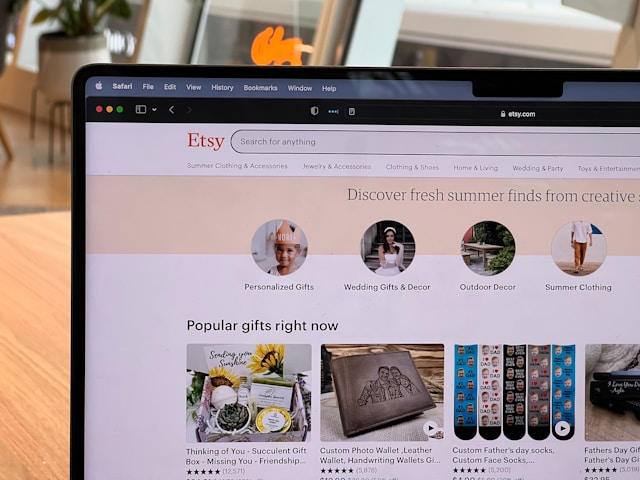
Etsy works if you want to ship granola, and if your state lets you. Customers search "homemade granola" and find your listing. But Etsy charges a $0.20 listing fee, a 6.5% transaction fee on the price plus shipping, and 3% + $0.25 for payment processing on each sale, and the platform is built around shipping. Texas's personal-delivery rule rules shipping out, and Michigan limits mail order to buyers in Michigan. For customers who pick up at your porch or your Saturday booth, you are paying marketplace fees for a local handoff.
Homegrown is $10 a month billed annually, or $12.50 billed monthly, plus 2.9% + $0.30 card processing on each sale, which you pay. List your flavors and bag sizes, set your pickup days and the prep time you need before each one, and share the link. Customers order and pay before you measure a single cup of oats. You see a clean list of orders, not a thread of DMs, with exact bag counts by flavor. Homegrown does not ship bags to customers across the state; for that, Etsy is the better fit where your state allows it. But for local pre-orders and market pickup, it turns "did she want two bags or three?" into a list you check once. Shoppers can order for pickup or, if you offer it, local delivery within the radius you set.
Plan your biggest push for November and December: holiday gift shoppers buy granola and dry mixes in gift-ready packaging, and gift sets let you sell three products at once. Treat it as a planned season, not an afterthought, and use the freezer to bake ahead without selling stale bags.
The strongest gift seasons for cottage food products:
Gift sets are where the money is. Bundle two or three products into a box or bag with ribbon: granola, trail mix, and hot cocoa mix, or pancake mix, maple granola, and a small jar of local honey. Three $10 bags are $30 bought separately, so a set at $27 or $28 still reads as a deal. Gift buyers care about presentation, so a jar or a boxed set earns its extra cost here. Hot cocoa mix and spice blends are the easiest add-ons for a gift set because Kansas State gives cocoa mixes a year and spice blends 2 to 3 years in the cupboard, far longer than the granola beside them.
Holiday granola has one catch: the gift may sit under a tree for a week. Freeze sealed bags the day you bake them, thaw them sealed just before the market, and print the thaw date with "Best within 14 days of thawing," or 7 days for a nut-heavy flavor. That way the person who opens the gift still gets good granola.
Holiday craft fairs and gift markets are worth applying to separately from your regular farmers market. The buying intent at these events skews toward gifts, and your products fit the category well. Our guide on how to choose a holiday craft fair covers booth fees and what to ask before you apply, and holiday gift boxes for a food business has packaging ideas.
Arizona allows cottage food sales through a store, Texas allows them only through a registered cottage food vendor, and Michigan does not allow wholesale or consignment at all, so 1 of the 3 states we read lets you sell straight to a store. Once your product is consistent and your packaging looks professional, local retail can make sense where it is legal.
Here is what each state's own page or statute says, in the versions we loaded October 14, 2026.
Retail channels that work for granola and dry mixes, where your state allows them:
Direct vs. wholesale sales compared:
Swipe sideways to see the wholesale column.
| Direct Sales (Farmers Market, Pre-Orders) | Wholesale (Retail Stores) | |
|---|---|---|
| Price per unit | Full retail ($10 a bag) | What the store pays you: $6 if it keeps 40% of a $10 shelf price, $5 if it keeps 50% |
| Left per bag after the $1.87 example cost | $8.13, before card and booth fees | $4.13 or $3.13, before delivery and your time |
| Effort per sale | Active (you're at the booth) | Less per bag (drop off and restock), but you track dates on the shelf |
| Customer relationship | Direct, personal | Through the retailer |
| Legal in | All three states we read | Arizona through a store; Texas only through a registered cottage food vendor; not Michigan |
| Best for | Starting out, building brand | Scaling volume once established |
Store margins vary; ask each store what share of the shelf price it keeps. The 40% and 50% rows are examples, not quotes. The $1.87 cost is the example batch from the pricing section.
Start with farmers market and direct-to-consumer sales to establish your product and pricing before approaching retail stores. Granola's short best-flavor window matters more on a store shelf than at your booth, because you no longer control how long a bag sits, so agree on a pull date with the store. Having a track record and professional packaging makes the conversation with a store owner much easier, and how to sell food products in local stores covers the rest.
On a $20 granola order, a Homegrown vendor pays about $0.88 in card processing plus a plan of $10 a month billed annually, a Hotplate vendor on the default setting pays about $0.88 to $0.92 while the customer pays a $1.55 fee, and an Etsy vendor pays about $2.55 on an order of two $10 bags. Over a month of 50 orders that works out to $54.00, $44.00 to $46.25, and $127.50. Here is the full stack for each, checked on each company's pricing page on October 14, 2026:
Scroll sideways to see all eight columns of the fee table.
| Platform | Monthly plan | Trial | Platform fee | Card processing | Customer pays on a $20 order | Vendor pays on a $20 order | Vendor pays in a month of 50 orders at $20 |
|---|---|---|---|---|---|---|---|
| Homegrown | $10 billed annually ($12.50 billed monthly) | 7 days (no charge until day 8) | None, 0% commission, no shopper fee | 2.9% + $0.30, paid by the vendor | $20.00 | $0.88 plus the plan | $54.00 ($56.50 on monthly billing) |
| Hotplate, default | $0 | No plan to try; no setup cost or contract | 5% + $0.55 on the subtotal, paid by the customer | 2.9% + $0.30, vendor pays | $21.55 | About $0.88 to $0.92 | About $44.00 to $46.25 (customers pay $77.50 in fees) |
| Hotplate, vendor covers the fee | $0 | No plan to try; no setup cost or contract | 5% + $0.55, paid by the vendor | 2.9% + $0.30, also the vendor | $20.00 | $2.43 | $121.50 |
| Etsy | $0 | No plan; a one-time set-up fee may apply | $0.20 listing fee for each item sold (two bags here) plus 6.5% transaction fee | 3% + $0.25 with Etsy Payments | $20.00 plus shipping | $2.55 | $127.50, plus 15% on any order Etsy's offsite ads bring in |
We checked these on Hotplate's pricing page, Etsy's Fees & Payments Policy and payments page, and the Homegrown signup page on October 14, 2026. Hotplate's vendor cost is a range: $0.88 if the 2.9% + $0.30 card fee is figured on the $20 order alone, which is how Hotplate's own pricing example figures it (on the order and tip, not on Hotplate's fee), and about $0.92 if the card fee is figured on everything the customer pays, Hotplate's fee included. Monthly totals use the unrounded fee, so the top of that range is $0.925 times 50, or $46.25. Etsy's 15% offsite ads fee applies only to orders those ads bring in, and shops under $10,000 a year in sales can opt out. Etsy figures assume no shipping charge; Etsy's transaction fee also applies to shipping.
Which one fits depends on how you sell:
For a deeper platform comparison focused on granola, see the best platform to sell granola online.
Granola's short freshness window is the reason pre-orders matter: when you bake only what is already sold, every bag reaches the customer near the start of its 7-to-14-day window. Homegrown gives you an ordering page for exactly that, for $10 a month billed annually ($12.50 billed monthly) with no percentage fees beyond standard payment processing, and a 7-day trial (no charge until day 8).
What it does for a granola vendor, from the rows the signup page marked "Included" when we loaded it on October 14, 2026:
Compared with the alternatives on the same $20 order: Homegrown costs you $0.88 in card processing, plus the plan. Hotplate's default costs you about $0.88 to $0.92 in card processing and adds a $1.55 fee to your customer's order, so the customer pays $21.55; its strength is timed drops. Etsy costs you about $2.55 on two $10 bags and is built for shipping, which Texas cottage food rules leave out. Instagram DMs cost nothing, but you do the counting, the payment chasing and the reminders yourself.
What Homegrown does not do: it does not ship bags, so it is not the tool for sending granola across the state. Customers create a Homegrown account to place a first order. There is no drops or countdown-timer feature, and no release date to share. Your storefront is listed on the Homegrown marketplace, but plan on most orders coming from people you send to your own link. Card processing (2.9% + $0.30) is paid by you, with no option to pass it to the customer. And it does not check your label or your state's rules; that part is still yours.
We can't tell you how many shoppers buy homemade granola, because we have no count of demand. What we can show is the competition, and on Homegrown it is thin: in the October 14, 2026 catalog pull, 17 of the 322 vendors (about 5%) listed loose granola, and those were 37 of the 2,927 listings (about 1.3%). 13 of those 17 vendors also list bread, cookies, pies or other baked goods, so granola is often an add-on to a bakery menu, which is the easiest way in.
In a pull of the Homegrown catalog on October 14, 2026, 37 of 2,927 listings were loose granola, from 17 of 322 vendors. We searched every listing's name, description and options for "granola" and "muesli" as whole words, read all 42 matches, and left out granola bars and listings that only mention granola, such as a bag of roasted hazelnuts "ready for snacking, adding to salads, granola." Then we read every other listing from those 17 vendors for granola sold under a flavor name and found none. Two vendors list the most: Fix Foods, with four flavors in small, medium and large (12 listings), and Calli-Land Hospitality Group, with 8 flavors. None of the 37 tells the shopper how long the granola keeps or how to store it, and only 3 put a "Contains" or "Allergens" line naming the allergen in the description (Homegrown's separate allergens field is not in the public listing data, so some vendors may fill that in instead). Stated bag sizes run from 5 ounces (KairosGO, $2.99) to 36 ounces (Calli-Land, $40).
That gap is an easy win. A shopper choosing between your bag and a grocery store box with a printed date wants to know yours will still taste good when she reaches the bottom of the bag. Put your bake date habit and a storage line in the listing ("Keep sealed, away from heat. Tastes best for 14 days after baking. Freezes well.") and you answer the question before she asks it.
A few things the catalog shows about how granola vendors sell:
Build a product line by starting with 1 to 3 products you already sell well, then adding complementary dry mixes until you have 4 to 8 that share one kitchen and one label style. One of the biggest advantages of working with dry mixes is how naturally a product line develops. From a single home kitchen, you can offer a range of complementary products without fundamentally changing your production process.
A cohesive lineup might look like:
That gives a farmers market booth 6 to 10 products without requiring different equipment or dramatically different skills. Customers who buy your granola notice the pancake mix. Gift shoppers pull from multiple categories. Repeat customers try new products each visit. The longer-keeping products also balance the short-lived one: a pancake mix or a spice blend can wait on your shelf for months while the granola sells in days.
Keep your line cohesive. A brand that does granola, spice blends, cookie mix, hot cocoa, trail mix, soup mix, dog treats, and candles is trying to be a general store. Pick 4 to 8 products that make sense together, do those well, and let your line feel curated rather than scattered. A focused product line looks more professional and is easier to produce, stock, and display.
Introduce new flavors seasonally. A pumpkin spice granola in October, a peppermint hot cocoa mix in December, a berry muesli in summer. Seasonal flavors create urgency, give regulars something new to try, and provide social media content that drives attention to your brand.
Mind your nuts as the line grows. Every nut flavor shortens the window and adds an allergen line. A flavor with no nuts in the recipe keeps closer to 2 weeks, but if the same kitchen handles nuts, never call it nut-free; label it "Made in a kitchen that also processes tree nuts" so allergic shoppers can decide for themselves.
No, not in Michigan, Texas or Arizona, the states whose rules we checked on October 14, 2026. Michigan and Arizona list granola by name as a cottage food, and Texas allows any food except a short list that leaves granola in. You make it in your own home kitchen and sell it directly to customers, though Texas and Arizona require a food handler course and Arizona requires registration. Check your own state's cottage food page before your first sale.
It depends on your state. In Michigan you can sell by internet or mail order if the customer can speak with you before the sale, but only to buyers in Michigan. Texas allows online sales only when the granola is handed over in person by you or someone on your staff or in your household, which leaves out shipping. Arizona lets cottage foods that contain no dairy, meat or poultry go out with a third-party carrier. Granola ships well where it's allowed because it is light, shelf-stable and not fragile, but keep the 7-to-14-day freshness window in mind for transit time.
A bag of homemade granola stays at its best for about 2 weeks at room temperature in an airtight bag or jar, and about 7 days if it is nut-heavy. Those windows come from the University of Minnesota Extension's granola recipe ("up to two weeks") and the pecan granola recipe West Virginia University and Montana State both publish ("up to 7 days"). Sell mostly-oat flavors in the first week after baking and nut-heavy flavors within 3 days, so your customer gets the rest at home. For longer holds, such as gift sets, freeze sealed bags the day you bake and count the window from the thaw date.
Missing the allergen statement. Only 3 of the 37 Homegrown granola listings we read on October 14, 2026 named the allergen in the description. If your granola contains tree nuts (almonds, pecans, cashews, walnuts), that's a major allergen that must be disclosed, and Michigan wants each tree nut named, so "almonds," not "nuts." The FDA's list of nine major allergens includes wheat and sesame too, so a mix with wheat flour or sesame seeds needs them on the label. "Contains: almonds, wheat" should appear clearly after your ingredient list. Also copy your state's home-kitchen statement word for word instead of using a generic one.
Track every ingredient that goes into one full batch of your product. Add up the cost of everything: oats, honey, oil, nuts, dried fruit, salt, whatever goes in. Divide that total by the number of bags or jars you produce from that batch, weighing the finished granola so the count is real. Add your packaging cost per unit (about $0.27 for a kraft window pouch bought by the 1,000, plus a label). Then multiply your total cost of goods by 3 to 4 and check the result against what other vendors charge for the same size.
Use an ordering page where customers pick a flavor, a size and a pickup day and pay before you bake. A Homegrown storefront costs $10 a month billed annually with no commission, plus 2.9% + $0.30 card processing on each sale, paid by you. It lets you list your products, set your pickup schedule, and get paid before you start production, without building or maintaining a full e-commerce site. Share a single link with your customers, and you get a clean order list instead of a stack of DMs and texts. Customers create a Homegrown account for their first order, and Homegrown does not ship, so it fits local pickup and delivery best.
Start with one to three products that you already make well and that people already ask for. A good first menu is a signature granola flavor or two, then you add complementary products like trail mix or a baking mix once you have a steady customer base. Trying to launch with ten products on day one stretches your production time, increases packaging costs, and dilutes your brand before you've proven what sells. With granola's 7-to-14-day window, fewer flavors also means fewer bags going stale.
Six more Homegrown guides answer what granola vendors usually ask next: how long a bag stays fresh, what to charge, which ordering tool to use, what the label needs, and how to set up the business.
If you only read one, make it the freshness guide: it turns the 7-to-14-day window into a weekly bake and selling schedule you can copy.
Granola and dry mixes make one of the most accessible cottage food businesses you can start. The products are shelf-stable, allowed in all three states we read, hold up well at farmers markets, and have built-in gift appeal that brings a second wave of sales every holiday season. The one thing to plan around is freshness: bake close to the sale, date every bag, and freeze what has to wait. From there, package it, price it, and put it in front of buyers.
If you also sell baked goods or are thinking about expanding into a broader product range, how to sell baked goods covers the adjacent territory and shares a lot of common ground with the dry mix business. And if you are ready to formalize your home food operation, from registering with your state to building a reliable customer base, our cottage food startup guide walks through every step of that process.
When you're ready to take pre-orders and manage local pickup without building a full e-commerce site, a Homegrown storefront lets you list your flavors, open orders for the days you bake, and get paid before you start production, for $10 a month on annual billing plus standard card processing (2.9% + $0.30 per sale). Share a link with your regulars instead of managing DMs, and bake only what is already sold, so every bag goes out fresh.
The people who've been eating your granola already know they like it. Open your first pre-order and give them a way to buy it.