
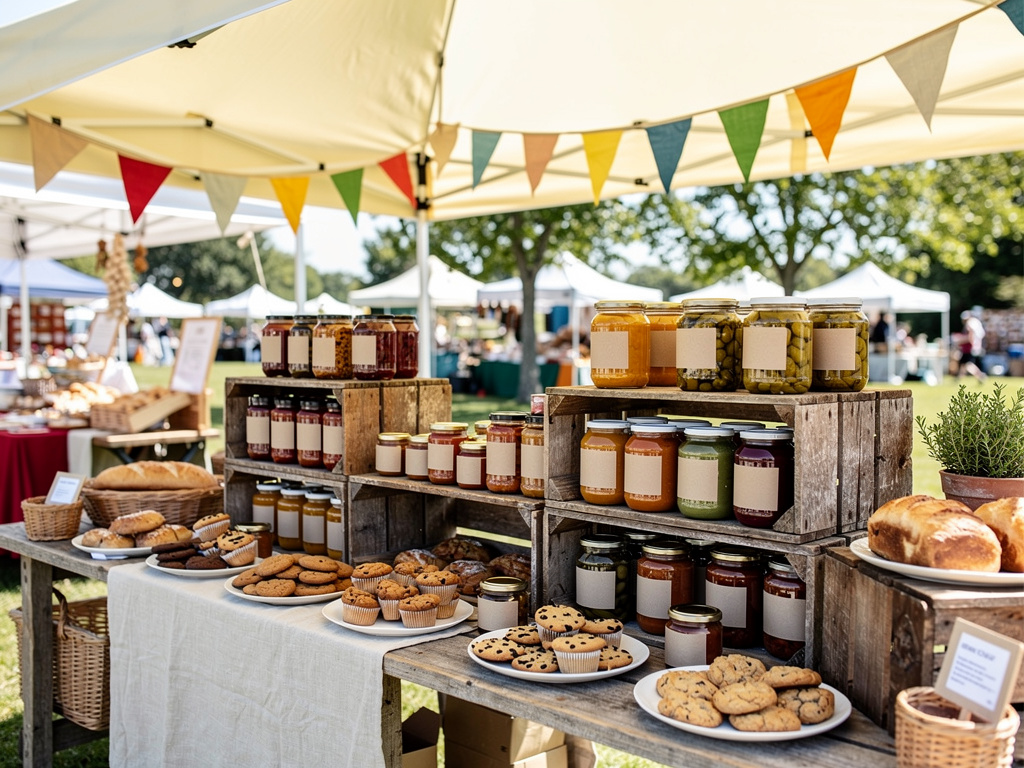


The holiday season is prime time for food vendors, shoppers are buying gifts, treats, and party foods, and craft fairs multiply to meet the demand. But you can't do them all, and they're not all worth it. Some holiday fairs draw huge, eager, gift-buying crowds; others are poorly attended, badly organized, or a bad fit for your product, and a wasted weekend during the busiest season is costly. Choosing which fairs to do, and which to skip, is one of the most important decisions you make each holiday season. This guide explains how to evaluate a holiday craft fair, the factors that predict whether it's worth it, how to weigh the costs, and how to build a smart holiday fair schedule.
The short version: Not every holiday craft fair is worth your time, so evaluate each one before committing. The key factors: expected attendance and crowd quality (are there enough serious, gift-buying shoppers?), fit with your product (does the fair's audience want what you sell?), the costs (booth fee plus your time and product), the fair's reputation and organization (is it well-run and well-promoted?), and your realistic sales potential versus those costs. Prioritize fairs with strong attendance, good fit, solid reputation, and reasonable costs, and be willing to skip ones that don't add up. During the busy holiday season, doing a few great fairs beats spreading yourself thin across mediocre ones.
This guide covers the factors that make a fair worth it, how to weigh costs, how to research fairs, and how to build your schedule.
A holiday craft fair is worth it when it has strong attendance of serious gift-buying shoppers, good fit with your product, a solid reputation and organization, and reasonable costs relative to your sales potential. These factors predict a good day.
The key factors that make a fair worth it:
What these factors add up to:
A holiday craft fair is worth it when the combination of strong, high-quality attendance, good product fit, solid organization, and reasonable costs points to sales that comfortably exceed what it costs you to be there. The biggest driver is attendance and crowd quality, you need enough of the right shoppers (serious, gift-buying attendees), because even a huge crowd doesn't help if they don't want your product or aren't there to buy. Fit matters just as much: a giftable food product thrives with a gift-focused holiday crowd. And a well-run, well-promoted fair with a good reputation draws those crowds and runs smoothly. Weighing all of this against the costs is the core of the decision, which is really about sales potential versus cost. Evaluating opportunities this way is part of knowing your market, which the U.S. Small Business Administration's guidance on market research supports.
You weigh the costs by totaling everything a fair requires, the booth fee plus your time and the product you'll make, and comparing it to your realistic expected sales. The fair is worth it only if sales comfortably exceed total costs.
The costs to total:
How to compare:
Why weighing costs matters:
Weighing the costs means totaling everything a fair requires, the booth fee, your time (event plus setup, teardown, and travel), the product and materials you'll make, travel costs, and the opportunity cost of that busy-season weekend, and comparing it honestly to your realistic expected sales. A fair is only worth it if your realistic sales comfortably exceed the total cost, with margin for a day that goes slower than hoped. Two things vendors often forget: first, weigh your profit (sales minus your product cost), not just revenue, since the product costs money to make; and second, account for opportunity cost, during the holidays your time is scarce and valuable, so a mediocre fair means missing a better use of that weekend. Being honest and thorough about costs keeps you from committing to fairs that look busy but don't actually pay.
You research a fair by looking into its attendance, reputation, organization, audience fit, and past vendor experiences before committing, so you're deciding on evidence, not hope. A little research prevents wasted weekends.
How to research a fair:
Where to find this information:
The best way to avoid a wasted weekend is to research a fair before committing, so you're deciding on evidence rather than hope. Look into its attendance history (a strong predictor of your sales potential), its reputation and organization (well-run, well-promoted fairs draw crowds), and its audience (do the attendees match your product?). One of the most valuable sources is other vendors who've done the fair, they'll tell you honestly about attendance, sales, and whether it was worth it. For church and school bazaars, the vendor form is evidence too: 3 of the 13 we read for 2026 barred homemade food or sweet treats outright, and how to get invited to a school or church bazaar shows the fee, deadline and food rule on each one. Check the practical details too (location, date, fee, what's included) and the vendor mix (for quality and whether you'd fit and stand out). This research, from the fair's own materials, past vendors, and local knowledge, turns your decision from a gamble into an informed choice, which is exactly what you want during the high-stakes holiday season.
You build a smart holiday schedule by prioritizing the best-fitting, highest-potential fairs, being selective rather than doing them all, and balancing your fair commitments with your production capacity and other channels. Quality over quantity wins.
How to build your schedule:
Why quality over quantity wins:
A smart holiday fair schedule prioritizes quality over quantity: rather than doing every fair you can, commit to the strongest, best-fitting, highest-potential ones and skip the rest. This matters because your time and production capacity are finite, especially during the demanding holiday season, so spending them on a few great fairs yields far more than spreading yourself thin across many mediocre ones, which drains your resources for little return and risks burning you out or hurting your product quality. Match your fair commitments to what you can realistically supply with quality product, balance them with your online and other holiday sales channels, and build a sustainable schedule that doesn't exhaust you. Being selective and strategic about which fairs you do is one of the highest-leverage decisions of your holiday season. Planning your season this way is part of managing your business, which the U.S. Small Business Administration's guidance on managing your business addresses.
Craft fairs are one holiday channel, and an online storefront lets you sell to holiday shoppers who aren't at any fair, and to the shoppers you meet there afterward. Homegrown is $10 a month with no percentage fees beyond standard payment processing, giving you an online storefront, built for local food vendors, to capture holiday sales beyond the fair.
How it compares to the alternatives:
What Homegrown does well: an online storefront that captures holiday orders around the clock, lets fair shoppers reorder for the rest of the season, configurable to your local area with pickup and delivery, clean payment handling, and a fifteen-minute setup. During the holidays, an online channel alongside your fairs can meaningfully grow your sales. When you're ready to extend your holiday sales online, you can set up your storefront today.
The biggest mistakes are doing too many fairs and committing without research. Because holiday time and capacity are precious, the errors that matter most involve overcommitting and deciding blindly.
Mistakes to avoid:
Getting these right means being selective, researching before committing, prioritizing fit and profit, and matching your schedule to your capacity, so your holiday fairs actually pay off.
A fair is worth it when strong, high-quality attendance (enough serious, gift-buying shoppers), good product fit, solid reputation and organization, and reasonable costs point to sales that comfortably exceed what it costs you to be there. The biggest driver is attendance and crowd quality, but fit matters just as much, since even a big crowd doesn't help if they don't want your product. Ultimately, it's about sales potential versus cost: estimate your realistic profit (not just revenue) against the total cost (booth fee, time, product), and the fair is worth it if profit comfortably exceeds costs with margin for a slow day. Research before committing.
Beyond the booth fee, consider your time (the event plus setup, teardown, and travel, valuable especially during the busy season), the cost of the product and materials you'll make to sell, travel and incidentals (gas, parking), and the opportunity cost of that holiday weekend (what else you could do with the time and product, another fair, online orders, or rest). Also weigh your profit, not just revenue, since your product costs money to make. Totaling all these real costs, and comparing them honestly to your realistic expected sales, tells you whether a busy-looking fair will actually pay off or quietly lose money.
Look into the fair's attendance history (a strong predictor of your sales potential), reputation, organization and promotion (well-run, well-promoted fairs draw crowds), and audience (do attendees match your product?). One of the best sources is other vendors who've done the fair, ask them honestly about attendance, sales, and whether it was worth it. Check the practical details (location, date, fee, what's included) and the vendor mix. You can find this information on the fair's website and materials, from past vendors and local vendor communities, and through local knowledge about which fairs are well-attended. Researching turns your decision from a gamble into an informed choice.
No, quality beats quantity. Rather than doing every fair you can, commit to the strongest, best-fitting, highest-potential ones and skip the rest, because your time and production capacity are finite, especially during the demanding holiday season. Spreading yourself thin across many mediocre fairs drains your resources for little return and risks burning you out or hurting your product quality across all of them. A few great fairs yield far more than many mediocre ones. Be selective, match your commitments to what you can realistically supply with quality product, and leave capacity for your online and other holiday sales channels.
There's no single right number, it depends on your production capacity, the quality of the available fairs, and your other commitments and channels. The key is to match your fair schedule to how many you can supply with quality product without burning out, while leaving capacity for online and other holiday sales. Prioritize the best-fitting, highest-potential fairs and do as many of those as you can sustainably handle, rather than filling every weekend. A sustainable schedule of great fairs performs better than an exhausting one packed with mediocre ones. Build in some flexibility too, the holiday season is hectic and unpredictable.
Prioritize fit alongside attendance, because a busy fair whose crowd doesn't want your product won't translate into sales for you. Attendance only helps if the shoppers are there to buy what you sell, so a large but mismatched crowd can mean a disappointing day despite the traffic. Evaluate the fair's audience and whether they'd want your giftable food product, and weigh that fit as heavily as the raw attendance numbers. A well-attended fair with a gift-focused holiday crowd is ideal for giftable food; a busy fair aimed at a different kind of shopping may not be worth it for you, even with big numbers.
The holiday season is prime time for food vendors, but not every craft fair is worth it, so evaluate each one on attendance and crowd quality, product fit, reputation, and costs versus your realistic profit. Be selective, research before committing, and prioritize a few great fairs over many mediocre ones. And to capture holiday sales beyond the fair, set up a Homegrown storefront built for local food vendors.



