


The short version: No, you do not need an LLC to sell food from home: if you sell under your state's cottage food law without forming a company, you are a sole proprietor, and that is allowed. An LLC is about liability and cost, not permission: it costs $40 to $890 in state fees for the first year in the 8 states we priced (not counting New York's newspaper publication cost), and $800 a year after that in California, plus a $20 report every other year. It also does not cover harm from food you made yourself, which is why a liability policy (FLIP's cottage food policy starts at $299 a year) usually protects a small vendor better than an LLC does.
Checked October 8, 2026: filing fees, yearly fees and the California $800 tax in this post come from each state's Secretary of State or tax agency page or its statute, and the insurance price from FLIP's cottage food page the same day. California defines a cottage food operator as an individual, and Texas as an individual or a nonprofit, so check your state's rule before you put a permit or registration in an LLC's name, and treat this as general information, not legal advice.
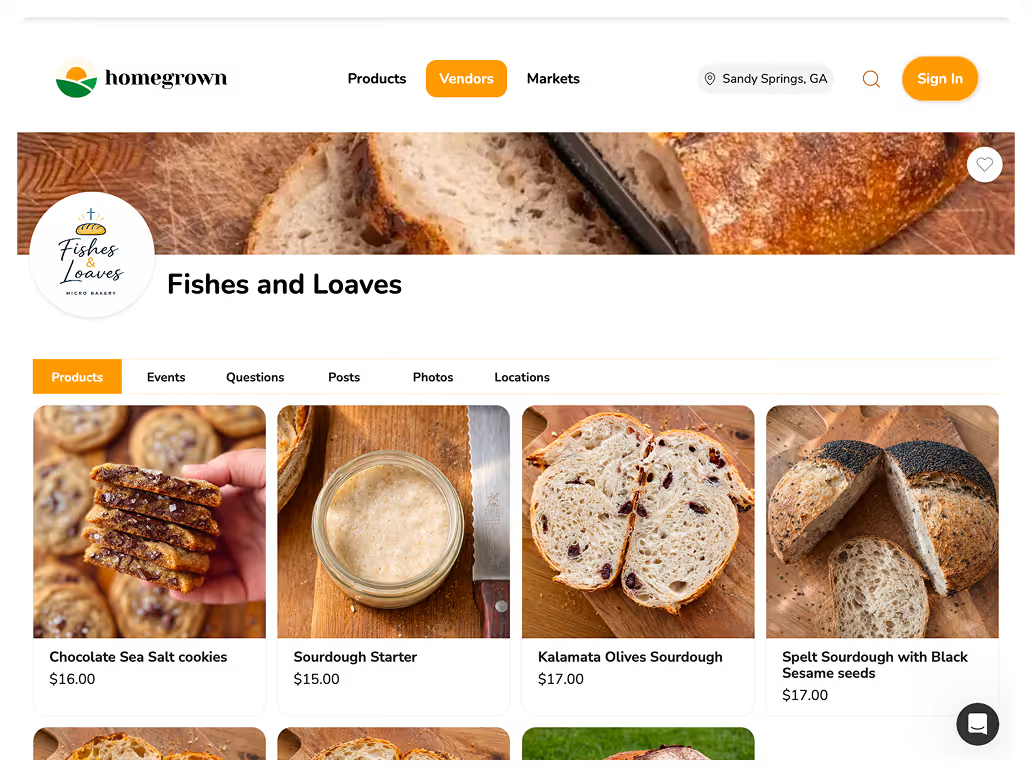
You can start selling as a sole proprietor today: set up a Homegrown storefront and try it free for 7 days.
Selling homemade food at farmers markets or through local delivery doesn't require an LLC. Many cottage food vendors start as sole proprietors. On October 8, 2026, only 22 of the 408 store names in Homegrown's vendor directory included "LLC". But there are situations where an LLC makes sense, and situations where your money is better spent on insurance.
This guide breaks down what business structure cottage food vendors actually use, what an LLC costs in 8 states, whether your state even lets a cottage food business be an LLC, and what other legal steps matter more when you're just getting started.
Most people selling food from home use one of two structures: sole proprietorship or LLC. A sole proprietorship is the default and costs nothing to start; an LLC is a company you register with your state for a fee. Here's what each one means in plain terms.
A sole proprietorship is what you already are the moment you start selling food for money, with $0 to pay and nothing to file. It isn't something you apply for. The U.S. Small Business Administration puts it this way: you're automatically a sole proprietorship "if you do business activities but don't register as any other kind of business." There's no paperwork to create one, no formation fee, and no annual report to file with the state.
You report business income on your personal tax return using Schedule C, which the IRS lists as the income tax form for sole proprietors. You can open a business bank account, get a business license, and operate under your own name or a DBA (doing business as) name, all without forming an LLC.
The tradeoff is liability. As a sole proprietor, there's no legal separation between you and your business. The SBA says sole proprietors "can be held personally liable for the debts and obligations of the business." If someone sued your business, your personal assets (home, car, savings) could be at risk.
For a cottage food vendor selling jars of jam at a Saturday market, that risk is real but limited, and it is the kind of risk a liability insurance policy is built to cover. The SBA itself says a sole proprietorship "can be a good choice for low-risk businesses and owners who want to test their business idea before forming a more formal business."
An LLC creates a legal wall between your personal assets and your business's debts. If your salsa business owes money or loses a lawsuit, the people it owes can go after business assets but generally not your personal savings or home, assuming you've kept the two separate.
Forming an LLC requires:
To keep the protection working after you form it:
One concrete difference shows up when you borrow: the SBA says "banks are hesitant to lend to sole proprietorships," which matters if you plan to finance equipment or a commercial kitchen lease.
Corporations (S-corp, C-corp) and partnerships exist but rarely make sense for cottage food vendors. These add complexity, cost, and paperwork that only pays off at much higher revenue levels. If you're reading this article, you almost certainly don't need either one.
One warning on partnerships: if you and a friend split a booth and the profits with no paperwork, you may already be partners, because Cornell's Legal Information Institute explains that no express agreement is needed and courts don't weigh whether you meant to become partners. The SBA's business structure guide lists a partnership as carrying "unlimited personal liability" unless it is set up as a limited partnership. Two people selling together should write down who owns what, whether or not they form an LLC.
Scroll sideways to see every column.
| Question | Sole proprietorship | Single-member LLC |
|---|---|---|
| Do you file anything to start? | No | Yes, articles of organization with your state |
| State cost to start (our 8-state table) | $0 | $40 (Kentucky) to $890 in year one (California), not counting New York's newspaper publication cost |
| Yearly state cost | $0 | $0 (Texas, Ohio) to $800, or $820 in report years (California) |
| Federal income tax form | Schedule C on your Form 1040 | Schedule C on your Form 1040, unless you elect corporate tax treatment |
| Need an EIN? | No, unless you hire or owe certain taxes | Not for income tax if you have no employees and no excise tax; banks often ask for one |
| Business debts reach your home and savings? | Yes | Generally no, if you keep finances separate |
| Covers harm from food you made yourself? | No | No; you can still be sued personally for your own conduct |
Sources: SBA business structure guide and IRS sole proprietorship and single-member LLC pages, checked October 8, 2026; state fees from the cost table further down.
Yes in some states, and maybe not in others: of the 3 states below, Minnesota says yes in writing, while California and Texas write their cottage food laws for an individual (Texas adds nonprofits), not a company. Your state food agency decides who can hold the cottage food permit or registration, and your Secretary of State decides who can form an LLC. Those are two separate questions, and the answer to the first one is not the same everywhere.
Three examples from the laws themselves:
The cottage food definition names an individual or a nonprofit organization, not a company (Texas Health and Safety Code 437.001 and the DSHS cottage food page, checked October 8, 2026). If you form an LLC in Texas for other reasons, ask DSHS or a Texas attorney how your cottage food sales should be set up before you move them into the LLC.
If your state's law is written for an individual, an LLC can still make sense for the parts of your business that are not cottage food, like a co-packed product made in a licensed kitchen. What it may not do is let the LLC itself hold the home-kitchen exemption.
An LLC isn't a universal requirement, but it's worth considering in a few specific situations. The common thread: you have more to lose, or the LLC costs little where you live.
Your revenue is growing past $25,000 to $50,000 per year. That range is our rule of thumb, not a legal line. At that level, you have meaningful assets in the business worth protecting, and the cost of keeping an LLC is a smaller share of your revenue.
You're selling at events with higher liability risk. Large festivals, catering jobs, and events where you're serving food directly to large groups carry more risk than a Saturday farmers market booth. A liability policy is what covers a guest who gets sick from your food; an LLC adds a layer of protection for the debts and contracts these jobs bring, like a catering deposit or a tent rental signed in the business's name.
Your state has low LLC costs. In Kentucky ($40 to file, $15 a year) or Ohio ($99 to file, no yearly report listed), the math works even at low revenue. In California, where every LLC owes an $800 tax each year, that same math looks very different for a vendor earning $15,000 a year.
You're scaling beyond cottage food. If you're moving into a commercial kitchen, hiring employees, or selling wholesale to stores, an LLC becomes more important. The complexity and liability of a commercial food operation justify the structure.
You have significant personal assets to protect. If you own a home and have savings you want to shield from business debts and lawsuits against the company, an LLC provides that separation, as long as you maintain it properly. The SBA calls LLCs "a good choice for medium- or higher-risk businesses, owners with significant personal assets they want protected."
Most cottage food vendors reading this article fall into one or more of these categories, and each one points to waiting.
You're earning under $25,000 per year. The yearly cost of an LLC ($0 to $820 a year in our cost table) eats into already thin margins. If you're making $500 a month selling cookies at a farmers market, that is $6,000 a year, and California's $800 LLC tax would take 13.33% of it before you buy a single bag of flour.
You're operating under cottage food exemptions with sales caps. Many states cap cottage food sales, and the caps range widely (see the next section). If your state limits how much you can sell, it also limits how big the business can get, so a yearly LLC fee takes a bigger share of the most you can earn. Check your cottage food laws for your state's specific cap.
You're just getting started and testing the market. Don't let LLC formation delay your first sale. You can always form one later once you know the business is viable. Staying a sole proprietor has no deadline: you can switch to an LLC in whichever year the costs start to make sense, or never switch at all.
The LLC cost is a significant chunk of your profit. If you're netting $5,000 per year in Massachusetts, the $500 yearly report fee is 10% of your profit going to a legal structure. In California the $800 tax would be 16%. That money might do more for you as liability insurance or better equipment.
What you need is a good product, the right permits, and customers. The legal structure can come later. Our guide to how to sell food from home covers the legal requirements, where to sell and how to take orders.
Yes: a low sales cap means the LLC fee is a bigger share of the most you can ever earn under that law. In the 5 states we read, the caps run from $35,000 a year in Washington to $250,000 in Florida.
Swipe left to see the source for each cap.
| State | Cottage food sales cap per year | Who it applies to | Source |
|---|---|---|---|
| Washington | $35,000 | Per home, not per person | RCW 69.22.050 |
| Minnesota | $78,000 | Per individual | Minnesota Department of Agriculture |
| California | $88,878 (Class A) or $177,756 (Class B) for 2026 | Per cottage food operation, adjusted for inflation each January | CDPH adjusted sales limit table |
| Texas | $150,000 | Per cottage food operation; the statute has DSHS adjust it for inflation each year, but DSHS still lists $150,000 | Texas DSHS (SB 541) |
| Florida | $250,000 | Per cottage food operation | Florida Statutes 500.80 |
We checked each cap on the state's own page on October 8, 2026. California's statute still prints $75,000 and $150,000; the California Department of Public Health's 2026 table raises them to $88,878 and $177,756.
Here is how that plays out in California. A Class A vendor who sells right up to the $88,878 cap and also keeps an LLC open pays the same $800 LLC tax as everyone else, which is about 0.9% of those sales. A vendor selling $6,000 a year pays that same $800, which is 13.33%. The cap tells you the most you can earn under the law; the LLC fee does not shrink to match a small year.
Forming an LLC costs $40 to $500 in state filing fees across the 8 states we priced, and the yearly cost after that ranges from $0 to $800 a year, with California adding its $20 Statement of Information every two years. Over five years, that is $99 in Ohio and $4,130 in California, before any lawyer or filing service.
Swipe left for the yearly fees and five-year totals.
| State | Filing fee to form | Other year-one state cost | Each later year | Five-year state total |
|---|---|---|---|---|
| California | $70 | $800 tax plus $20 Statement of Information | $800 tax, plus $20 every two years | $4,130 |
| Massachusetts | $500 | None | $500 annual report | $2,500 |
| Florida | $125 ($100 filing plus $25 registered agent) | None | $138.75 annual report ($538.75 after May 1) | $680 |
| Texas | $300 | None | $0 tax under $2,650,000 in revenue; a no-fee Public Information Report | $300 |
| Georgia | $100 online ($110 by mail) | None | $50 annual registration | $300 |
| New York | $200 | $50 Certificate of Publication, plus newspaper costs | $9 every two years | $268, plus newspapers |
| Kentucky | $40 | None | $15 annual report | $100 |
| Ohio | $99 | None | None listed on the fee schedule | $99 |
We checked each fee on October 8, 2026, on the California Franchise Tax Board and California Secretary of State LLC pages, Mass.gov, Florida's Division of Corporations, the Texas Secretary of State's Form 205 instructions and the Texas Comptroller, Georgia.gov and Georgia Code 14-11-1101, the New York Department of State, the Kentucky Secretary of State and the Ohio Secretary of State. Five-year totals add the filing fee, year-one costs and four later years, with every report filed on time. They leave out city licenses, lawyers and filing services.
Five-year state cost of keeping an LLC
Source: each state's fee pages, checked October 8, 2026. New York's figure leaves out newspaper publication costs, which vary by county.
California's Franchise Tax Board says every LLC "doing business or organized in California must pay an annual tax of $800," and it stays due "even if you are not conducting business, until you cancel your LLC." The first payment is due by the 15th day of the 4th month after you file. In New York, the LLC must publish a notice in two newspapers for six weeks and file proof within 120 days, or its authority to do business is suspended. We checked both on October 8, 2026.
An LLC protects your personal assets from the company's debts and from claims against the company. It does not protect you from claims about what you personally did, and in a one-person food business, you personally made the food.
What an LLC protects:
What an LLC does NOT protect:
The American Bar Association's Business Law Today explains the reason: the LLC shield exists to stop owners from being liable just because they own the business, and it "has nothing to do with liability arising from a person's own conduct". For a baker who does every step alone, that is most of the risk.
The biggest misconception: Many people think forming an LLC means they can't be sued. That's not true. An LLC limits what's at stake if the company loses a lawsuit. You can still be sued, and defending a lawsuit still costs money regardless of your business structure.
Piercing the corporate veil: If you mix personal and business finances, paying personal bills from your business account, not keeping separate records, or treating business money as your own, a court can ignore your LLC protection. This is called "piercing the corporate veil," and Cornell's Legal Information Institute lists "intermingling of personal and corporate assets" among the misconduct that leads to it. Your personal assets are back on the table. An LLC only works if you actually operate it like a separate entity.
For a small cottage food vendor, a liability insurance policy usually provides more practical protection than an LLC, because it pays claims and legal bills, including claims about food you made yourself.
A cottage food liability policy from FLIP (the Food Liability Insurance Program) starts at $25.92 a month or $299 a year, according to its cottage food page on October 8, 2026, and the price rises with your revenue and add-ons. That policy lists coverage for:
Many farmers markets require vendors to carry liability insurance anyway. Seattle Neighborhood Farmers Markets' FAQ, for example, says all of its vendors "have product liability insurance." So you may end up paying for this protection either way.
Your homeowners policy probably doesn't cover it. FLIP's page notes that most homeowners policies "specifically exclude business activities from coverage." Call your insurer and ask before you assume you're covered.
Insurance protects you even as a sole proprietor. You don't need an LLC to have insurance. A sole proprietor with good liability coverage is better protected than an LLC owner with no insurance.
Insurance pays for your defense. Even if you have an LLC, you still need to pay a lawyer if someone sues you. Insurance covers those costs for covered claims. An LLC without insurance means you're paying legal fees out of pocket.
In California, the first year of an LLC costs $890 in state fees alone, which is $591 more than that $299 policy. Our guide to cottage food business insurance walks through what to buy.
Before you buy a policy, ask each market you sell at whether the certificate has to name the market as an "additional insured." FLIP's page says it adds unlimited additional insureds at no extra cost, so one $299 policy can cover four markets' paperwork instead of four separate asks.
The practical approach for most cottage food vendors: start as a sole proprietor, get liability insurance, and consider an LLC later if your revenue justifies the cost.
What protects a sole proprietor day to day is clean records: what sold, to whom, for how much, and when. That record is what you hand your tax preparer for Schedule C, and it is what keeps your money separate if you do form an LLC later.
Homegrown is $10 per month (billed annually, or $12.50 month to month) with no percentage fees beyond standard payment processing of 2.9% + $0.30 per order, and it gives you an ordering page where customers browse, order, and pay upfront, with no LLC required to start. Every order lands in one dashboard with the payment attached, so your sales history is already written down when tax time comes. Your exact home address shows only after someone buys, which matters to home bakers who sell under their own name.
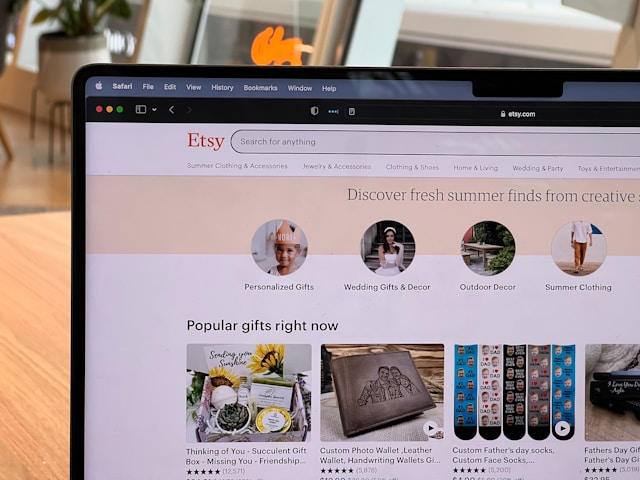
Compare that to Etsy, where a $20 order costs you $2.35 (a $0.20 listing fee, a 6.5% transaction fee and 3% + $0.25 payment processing, per Etsy's fee pages on October 8, 2026), plus a one-time set-up fee if Etsy charges you one, or to coordinating everything through Venmo and text messages, where the payments and the order details sit in different apps and a $20 payment to a Venmo business profile costs you $0.48 (1.9% + $0.10, per Venmo's fee page on October 8, 2026). On Homegrown the same $20 order costs $0.88 in card processing plus the monthly plan.
Homegrown does not file your income taxes, form your LLC or handle your permits. It does calculate sales tax at checkout and file and remit it on orders placed through Homegrown, per its signup page on October 8, 2026. Your customers need a Homegrown account before their first order goes through. Homegrown has no drops or countdown-release feature. Shoppers can find you on the Homegrown marketplace, but expect most of your orders to come from regulars you text or post your link to. New vendors get 7 days with no charge until day 8.
For most single-owner food businesses, nothing changes on your federal income tax return. The IRS treats a one-member LLC as a "disregarded entity," which means its income still goes on Schedule C, the same form a sole proprietor uses, unless you file to be taxed as a corporation.
What that means in practice:
The Schedule C guide for cottage food vendors covers the form line by line. The short answer: forming an LLC does not lower your federal tax bill by itself.
If you've weighed the costs and decided an LLC makes sense for your food business, here's the process. In every state we priced, you can file it yourself without a lawyer; New York's Department of State says there is no requirement to use one, and New York adds a six-week newspaper publication step after you file.
You'll typically form your LLC in the state where you live and operate. Forming in Delaware or Wyoming rarely helps a cottage food business. You would still have to register in your home state as an out-of-state LLC and pay that state's fees too: Ohio, for example, charges $99 to register an out-of-state LLC, the same as forming one there.
Your LLC name has to be distinguishable from the companies already on file with your state (New York's Department of State checks it against the other LLCs, corporations and limited partnerships on file), so search your state's business name database (usually on the Secretary of State website) before you pay the filing fee. The name usually must include "LLC" or "Limited Liability Company"; New York's Department of State, for example, accepts "Limited Liability Company," "LLC" or "L.L.C."
Filing articles of organization costs $40 in Kentucky to $500 in Massachusetts in our cost table, and you file them with your state's Secretary of State office. Most states let you file online. Texas calls the same document a certificate of formation and charges $300 for it.
You'll need to provide:
An EIN (Employer Identification Number) is a tax ID for your business. It's free, and the IRS online tool issues it "immediately online" if approved. The tool runs 6 a.m. to 1 a.m. Eastern on weekdays, 6 a.m. to 9 p.m. on Saturday and 6 p.m. to midnight on Sunday, and the session expires after 15 minutes of inactivity.
You may not strictly need one. The IRS says a single-member LLC "that does not have employees and does not have an excise tax liability does not need an EIN" and can use the owner's Social Security number. In practice, banks often ask for an EIN to open an LLC account, and the IRS says a single-member LLC can get one for exactly that reason.
Take your articles of organization and EIN to any bank and open a business checking account. This is not optional in practice: keeping business and personal money separate is what keeps your LLC protection working.
Seven of the eight states in our cost table make an LLC file a report or pay a tax on a schedule after it forms:
Miss these deadlines and your state can administratively dissolve your LLC, which puts your liability protection at risk until you reinstate it; Kentucky's fee schedule lists a $100 reinstatement penalty after administrative dissolution. Florida's late fee alone is $400.
An EIN isn't required for most sole proprietors with no employees and no excise tax filings; you can use your Social Security number for income tax. But getting one costs $0, and the IRS says its online tool can issue one in minutes, in a single session. There's little reason not to.
Benefits of getting an EIN as a sole proprietor:
Apply at the IRS's EIN page; the IRS warns, "You never have to pay a fee for an EIN," and you can apply for one per responsible party per day. Our guide to getting an EIN as a sole proprietor covers the form questions.
You do not need an LLC to sell at a farmers market or farm stand. Markets ask for a vendor application, your food permits, and often a certificate of insurance, which is where FLIP's $299 policy comes in. Seattle Neighborhood Farmers Markets is a typical example: its FAQ says vendors "must carry all applicable licenses and permits from the Health Dept, WSDA, Fire Marshall and other monitoring agencies" and have product liability insurance, with no mention of a business structure.
What a market usually asks for instead:
A farm stand works the same way: the stand needs the right permits for what you sell, not a company behind it. Our farmers market vendor permits by state guide lists what each state asks for, and farm stand business license covers roadside stands.
Five things matter more than an LLC: a cottage food permit, a local business license, sales tax registration, a food safety course and correct labels. These are the legal requirements that actually decide whether you can sell food from home, so handle them before you worry about business structure.
Cottage food permit or registration. Many states require a permit or registration to sell homemade food, though Texas requires neither for most cottage foods, and Forrager's state-by-state directory tracks the specific requirements for each. Some require a food safety course. Check your state's cottage food laws for more details.
Business license. Many cities and counties require a general business license to sell anything, including cottage food, and the fee is set locally. Learn more about whether you need a license to sell food from home.
Sales tax registration. If your state charges sales tax on food you sell, you'll need a sales tax permit. Some states exempt certain foods from sales tax. Check with your state's department of revenue.
Food handler certification. Many states require at least one food safety course. ServSafe's Food Handler online course and assessment lists at $15, but some states name a specific course, so check yours before you buy.
Proper labeling. Cottage food products typically need specific label information: your business name, address or registration number, ingredients, allergens, and your state's cottage food statement. Getting your labels right is a legal requirement, not optional.
These steps are what actually let you sell food legally. An LLC is about business structure, not food safety compliance. Handle the food-related requirements first.
If you're just getting started, our guide to starting a cottage food business walks through all of these steps in order.
In a pull of Homegrown's public vendor directory on October 8, 2026, 22 of the 408 vendor storefronts had "LLC" in the store name, and 20 of those 22 were among the 307 directory vendors with products listed. We counted store names containing LLC or L.L.C. as a whole word. A vendor with an LLC who leaves it out of the store name is not counted, so the real share is at least 5.39%.
Set up an ordering page and start selling your homemade food products today, with no LLC needed to get started.
Ready to turn this into a real business? The easiest way to take local orders and get paid is an online storefront. See the best platform to sell food from home, or set up a Homegrown storefront in about 15 minutes ($10/mo billed annually, 0% commission, plus 2.9% + $0.30 card processing).
The most expensive LLC mistakes are paying for one you didn't need yet and then letting it lapse. These come up again and again:
Many vendors turn their food hobby into a business as sole proprietors and add an LLC only when revenue justifies the cost. Focus on making great food and finding customers first. The legal structure is the easy part.
No. You can sell baked goods from home as a sole proprietor; the SBA says you are one automatically if you do business without registering as anything else. You need your state's cottage food permit or registration and proper labeling, but an LLC is not a legal requirement for selling baked goods. In some states, like Texas, the cottage food law is written for an individual or a nonprofit, not a company.
In the 8 states we priced on October 8, 2026, the filing fee runs from $40 (Kentucky) to $500 (Massachusetts). Yearly costs run from $0 (Texas and Ohio) to $800 (California, where the $800 tax is due every year, plus a $20 Statement of Information every two years). Over five years, state fees total $99 in Ohio and $4,130 in California, before any filing service.
Yes. Farmers markets require vendor applications, food permits, and often liability insurance, but not an LLC. Seattle Neighborhood Farmers Markets, for example, lists permits and product liability insurance in its FAQ, not a business structure. The market cares that your products are legal and insured.
A DBA (doing business as) is just a business name registration. It lets you operate under a name other than your legal name, like "Sarah's Kitchen" instead of "Sarah Johnson." A DBA provides zero liability protection. An LLC is a legal business entity that separates your personal and business assets. You can have a DBA with or without an LLC.
It's not legally required for sole proprietors, but it's strongly recommended. A separate account makes bookkeeping easier, simplifies your Schedule C, and looks more professional. If you form an LLC, a separate business bank account is essential, because mixing personal and business funds can cost you your liability protection.
For most new cottage food vendors, after. Start selling first, unless you already have a co-owner, a commercial kitchen lease or a large catering contract on day one. See if you enjoy the work, if customers want your products, and if the business is viable. You can always form an LLC later, and in a state like California, forming early means paying the $800 tax from year one whether or not you sell anything. To skip that first year's tax you would have to cancel within 12 months with California's short form cancellation, and the Secretary of State's Form LLC-4/8 allows that only if the LLC has not conducted any business since its Articles of Organization were filed.
The LLC question stays the same: it's about liability and cost, not permission. What changes is your food permit, because a product made in a licensed kitchen by a co-packer is not cottage food (California's Health and Safety Code 113758, for example, limits a cottage food operation to "the registered or permitted area of a private home where the cottage food operator resides"), so cottage food caps and home-kitchen rules don't apply to it. If you sell a co-packed product like a spice rub through an LLC in California, the $800 yearly LLC tax still applies.
If you're sorting out the legal side of selling food from home, these answer the next questions:
_An ordering page takes about 15 minutes to set up, with no LLC or business structure required to start selling._