
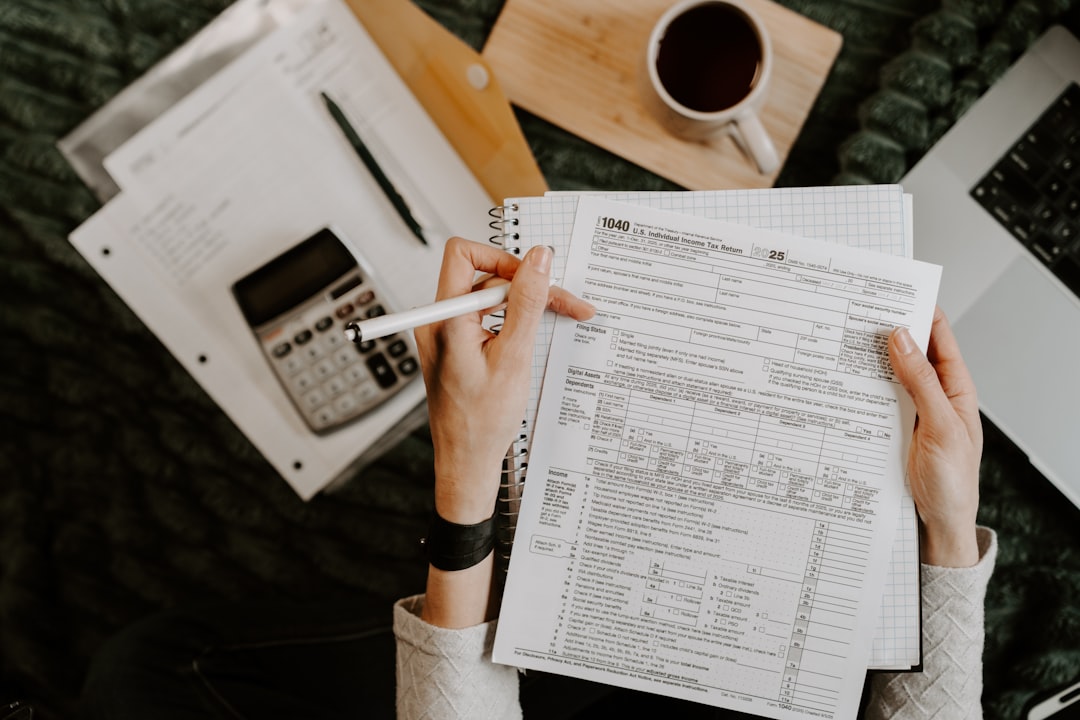


The short version: Cottage food sales go on Schedule C, the two-page IRS form a sole proprietor uses to report profit or loss, and you attach it to your regular Form 1040. You report every dollar you took in (cash, Venmo, card and online orders), subtract ingredients, packaging, market fees, mileage and other business costs, and the profit left over is what gets taxed. Once your net earnings reach $400, you also owe self-employment tax of 15.3% on 92.35% of that profit, figured on Schedule SE. If you expect to owe at least $1,000 for tax year 2026 after any withholding, and that withholding covers less than both 90% of this year's tax and 100% of last year's, the IRS expects quarterly estimated payments, and the last one for 2026 is due January 15, 2027.
Checked on IRS.gov, October 1, 2026: the 2026 Form 1040-ES (estimate rules, due dates, the $184,500 Social Security wage base), the standard mileage rates page (72.5 cents a mile for January to June 2026, 76 cents for July to December 2026) and the Form 1099-K page ($20,000 in more than 200 transactions). This is general information, not tax advice. A CPA or enrolled agent can apply it to your own return.
If you want every order recorded in one place by tax time, you can set up a Homegrown storefront and try it free for 7 days.
If you sell homemade food as a business, the IRS treats the profit as self-employment income, and you report it on Schedule C with your regular tax return. Schedule C is one of the simpler IRS forms, and with clean records most of it is copying your totals into the right lines. If you do not track your income and expenses during the year, filling it in turns into a week of digging through bank apps and leaves deductions on the table. Set up a basic system in January, and Schedule C becomes a quick paperwork task in April.
Sales tax is separate from income tax. Our cottage food sales tax lookup covers whether you need to collect it at all, and the sales tax section further down explains how it touches your Schedule C.
Yes, once your net earnings from self-employment reach $400 you have to file, and any return you file has to include all cottage food income, including cash sales, whether or not you ever registered a business. The $400 line people hear about is not a sales number. It is net earnings from self-employment, meaning your profit after expenses (and after a small adjustment on Schedule SE). If those net earnings are $400 or more, you file Schedule SE and pay self-employment tax. If they are under $400, you do not owe self-employment tax. Whether you file a return at all then depends on the rest of your income: the IRS's Self-Employed Individuals Tax Center says that under $400 you "still have to file an income tax return if you meet any other filing requirement listed in the Form 1040 and 1040-SR instructions." If you do file, the profit goes on Schedule C and you pay income tax on it.
The IRS's self-employment tax page puts it plainly: you must pay self-employment tax and file Schedule SE if "Your net earnings from self-employment (excluding church employee income) were $400 or more."
Four cases to know for tax year 2026:
The IRS does not care whether you call yourself a "business" or a "hobby." If you sold cookies for money, that money is income. The only question is whether the IRS treats your activity as a business (Schedule C) or a hobby (Schedule 1, with no expense deductions). Per the Schedule C instructions, an activity is a business "if your primary purpose for engaging in the activity is for income or profit and you are involved in the activity with continuity and regularity." A baker who takes orders every week to make money fits that description, even part-time.
According to the IRS guidance on hobby vs. business classification, the agency lists 11 factors when deciding which category your activity falls into, and says no one factor matters more than another. The ones that fit a cottage food vendor best are: do you run it in a businesslike way with complete records, do you put in the time and effort that shows you intend to make a profit, and do you change how you operate to improve profit. If you can say yes to these, you look like a business in the IRS's eyes, and that is a good thing because it lets you deduct expenses.
Schedule C is a two-page form that reports profit or loss from a sole proprietorship, and IRS instructions add that a single-member LLC files it too unless you elected to treat the LLC as a corporation. You attach it to your regular Form 1040. If you sold cottage food to make a profit and you are not set up as an S corporation, a partnership or a multi-member LLC, Schedule C is almost certainly the right form for you.
Here is what Schedule C asks for, using the 2025 form, the latest final version on IRS.gov on October 1, 2026:
Every Schedule C needs Parts I and II. Part IV applies if you claim car expenses at the standard mileage rate and do not have to file Form 4562 for another reason. Part III is the one people get stuck on. The Schedule C instructions say a business where producing or selling merchandise "was an income-producing factor" generally has to account for inventory, but a small business taxpayer (average annual gross receipts of $31 million or less over the 3 prior years) "can choose not to keep an inventory" and instead treat it as non-incidental materials and supplies. For a home baker who buys flour and butter and uses them within weeks, that usually means you deduct ingredients as you use them for products you sell, and leftover stock at year-end waits for next year. Ask your preparer which method to pick the first year, then stay consistent.
The hard part of Schedule C is not the math. It is having clean records of what you sold and what you spent.
For the deeper picture of which expenses you can actually claim, our companion guide to tax deductions for home food vendors walks through every category that applies to a cottage food business with examples.
The table below covers the 13 of Schedule C's 48 lines a home baker or jam maker is most likely to use. It maps everyday cottage food costs to the line where they go, using the line names printed on the 2025 form.
Scroll sideways to see every column.
| Schedule C line | What the form calls it | Cottage food examples |
|---|---|---|
| Line 1 | Gross receipts or sales | Every order paid by cash, Venmo, Zelle, card, check or online storefront |
| Line 2 | Returns and allowances | Refunds for a dropped cake or a missed pickup |
| Line 4 (from Part III) | Cost of goods sold | Ingredients and packaging that went into products you sold, if you account for them through Part III |
| Line 8 | Advertising | Business cards, a printed market banner, paid social posts |
| Line 9 | Car and truck expenses | Business miles times the IRS standard rate, plus parking fees and tolls |
| Line 10 | Commissions and fees | Fees a sales channel charges you, depending on how your preparer classifies them |
| Line 15 | Insurance (other than health) | Product liability or general liability insurance |
| Line 18 | Office expense | Printer ink for labels, label sheets, postage |
| Line 22 | Supplies (not included in Part III) | Parchment, gloves, sanitizer, small tools and ingredients you deduct as supplies |
| Line 23 | Taxes and licenses | Cottage food registration or permit fee, local business license |
| Line 27b (from Part V) | Other expenses | Market booth fees, ordering software, food safety classes, equipment such as a label printer deducted under the de minimis safe harbor |
| Line 30 | Expenses for business use of your home | A storage area or room that qualifies (see the home section below) |
| Line 31 | Net profit or (loss) | The number that flows to Schedule 1 and Schedule SE |
Line names from the 2025 Schedule C (Form 1040) and its instructions, loaded from IRS.gov on October 1, 2026. Where a cost could fit two lines (card processing fees are the common one), pick one and use it every year; the total profit is the same either way.
The line that matters most is line 31. Everything above it exists to get you to an accurate net profit, and that single number decides both your income tax and your self-employment tax.
Your gross income on Schedule C is the total amount of money you received from cottage food sales during the year, before any expenses. This includes cash, Venmo, Zelle, Cash App, Square, online ordering, and any other payment method. The IRS expects you to report every dollar, not just the ones that hit a bank account.
Step-by-step income calculation:
Example calculation for a home baker:
If you only track Venmo, or only the card sales in Square, you will underestimate your gross sales, because cash you never rang up and direct customer pickups are missing from that record. The IRS considers all of it income, and your bank statements alone are not a complete record, because cash that went straight into your wallet never shows up there.
The trick is to track sales as they happen, not at tax time. A simple spreadsheet with date, customer, amount, and payment method takes 30 seconds per sale and gives you a clean record at year-end. If you try to rebuild a year of sales in April, the cash sales and one-off pickups are the ones that go missing, which sounds like a tax savings until the IRS asks for backup that you cannot produce.
Probably not from a payment app or online marketplace below $20,000 in sales, but card payments are different, and either way you still have to report every dollar of the income. A payment app or online marketplace has to send you a Form 1099-K only when your payments for goods or services pass a threshold, which the IRS's Form 1099-K page, checked October 1, 2026, states as "over $20,000 in more than 200 transactions." The same page warns that apps "may send you a Form 1099-K with lower amounts and/or transactions." It also says that if customers pay you directly by credit, debit or gift card, "you'll get a Form 1099-K from your payment card processor no matter how many payments you got or how much they were for."
Here is what that means for a cottage food vendor:
In a pull of the Homegrown catalog on October 1, 2026, the 1,399 products listed in the Bakery category by 179 vendors had a median starting price of $12 (for products sold in more than one size or flavor, the lowest option's price). If every order were one $12 product, reaching $20,000 would take more than 1,666 orders in a year, about 32 a week. A baker selling well below that pace may never get a 1099-K from a payment app, and every dollar of those sales still has to be reported. Counting rule: every product whose category field is Bakery, priced as listed; no keyword filtering was used.
Our breakdown of the 1099-K threshold for food vendors covers what to do when a form shows the wrong amount, such as personal payments mixed in.
You can deduct any "ordinary and necessary" business expense that is reasonable for a cottage food operation. Mileage, packaging, marketing, equipment and sometimes part of your home are the deductions that are easy to forget, and every one you miss leaves money on the table.
Common cottage food deductions:
Less obvious but legitimate deductions:
In the worked example further down, a vendor with $14,000 in sales after refunds ends up with $7,500 in net profit after $6,500 in costs, and every one of those $6,500 needs a receipt or a log entry behind it.
Run business groceries as a separate checkout from your family's groceries. One receipt per business shop means you can photograph it in the parking lot and you are done, instead of splitting a $140 mixed receipt line by line in April. Twenty market weeks is twenty clean receipts instead of twenty puzzles.
For tax year 2026 you use two rates, because the IRS raised the standard mileage rate in the middle of the year. Miles driven for business from January 1 to June 30, 2026 are worth 72.5 cents each, and miles from July 1 to December 31, 2026 are worth 76 cents each, according to the IRS standard mileage rates page (sources IR-2025-128 and IR-2026-29), checked October 1, 2026.
IRS standard mileage rate for business use (cents per mile)
Source: IRS standard mileage rates page, all-years table, loaded October 1, 2026.
Here is how it works for a vendor who drives 24 miles round trip to a Saturday market:
What the log needs for each trip: the date, where you went, the miles and the business reason. The Schedule C instructions add a rule that trips people up: you can use the standard rate only if you used it the first year the car was in service for business (or for the whole lease on a leased car). If you switch from actual expenses later, the standard rate is off the table for that car.
Tax software and older guides may show a single 2026 rate. The IRS page we loaded on October 1, 2026 lists two 2026 business rates, split at July 1. Keep your mileage log dated so you can total each half of the year separately.
Our walkthrough of the mileage deduction for food vendors covers which trips count, including bank runs and ingredient pickups.
Sometimes: a storage area can qualify at $5 per square foot even when your kitchen cannot. The home office deduction normally requires a space you use "only for your trade or business" on a regular basis, which IRS Publication 587 calls the exclusive use test. A kitchen you also cook family dinners in fails it.
Storage is the exception. Publication 587 (2025) says you can deduct expenses for storing inventory or product samples "without meeting the exclusive use test" if all of these are true:
Example: you keep packaged cookies, boxes and labels on a 6 by 8 foot shelving area in the basement and use it every week. With the IRS simplified option, which allows "$5 per square foot of home used for business (maximum 300 square feet)," that is 48 x $5 = $240 on line 30. The simplified option tops out at $1,500 a year, and the IRS notes the deduction cannot be more than the gross income from the business use of your home minus your other business expenses. Whether a market booth counts as a second "fixed location" is a fact question worth asking your preparer about.
Our guide to the home office deduction for cottage food businesses compares the simplified and regular methods in more depth.
For tax year 2026, a single filer in the 12% bracket with $7,500 of cottage food profit owes about $1,729 in federal tax on that profit: about $1,060 in self-employment tax and about $669 in income tax. The exact number depends on three things: your net profit after deductions, your overall income tax bracket, and the self-employment tax rate.
Here is the example worked out with 2026 figures from the IRS's 2026 Form 1040-ES:
Swipe the table sideways to see how each line is figured.
| Item | Amount | How it is figured |
|---|---|---|
| Sales after refunds (line 3) | $14,000 | $14,150 received minus $150 refunded |
| Cost of ingredients | $4,200 | Ingredients used for products sold |
| Packaging, supplies, mileage, fees | $2,300 | Lines 8 to 27b |
| Net profit (Schedule C, line 31) | $7,500 | $14,000 minus $4,200 minus $2,300 |
| Self-employment tax | about $1,060 | $7,500 x 92.35% = $6,926; $6,926 x 15.3% = $1,059.72 |
| Deduction for half of SE tax | about $530 | $1,059.72 / 2, taken on Schedule 1, not Schedule C |
| Qualified business income (QBI) deduction | about $1,394 | 20% of ($7,500 minus $530) |
| Income tax (12% bracket example) | about $669 | ($7,500 minus $530 minus $1,394) = $5,576 x 12% |
| Total federal tax on the cottage food profit | about $1,729 | $1,060 + $669 |
Assumes a single filer whose day-job wages already use up the 2026 standard deduction ($16,100) and whose taxable income stays inside the 12% bracket ($12,400 to $50,400 for single filers in 2026). Rates, brackets and the 92.35% step come from the 2026 Form 1040-ES; the 20% QBI rate from the IRS's qualified business income deduction page. Both loaded October 1, 2026. State income tax is not included.
The self-employment tax (Social Security and Medicare) is easy to miss if you have only ever had a W-2 job. It is 15.3 percent on top of regular income tax, and it applies once your net earnings reach $400. That is why vendors who fail to track expenses end up overpaying. Every $100 in unclaimed deductions costs about $23 in extra federal tax in the 12% bracket and about $30 in the 22% bracket ($14.13 of SE tax plus income tax on the rest, after the half-SE and QBI deductions).
If you have a regular W-2 job already paying into Social Security, the cottage food self-employment tax stacks on top of your existing payroll tax. For 2026, the Social Security part (12.4 percent) stops once your wages and net earnings together reach $184,500, according to the 2026 Form 1040-ES, but the Medicare part (2.9 percent) has no cap.
The qualified business income deduction is easy to miss because it is not on Schedule C. The IRS's QBI page says eligible sole proprietors can deduct "up to 20 percent of their QBI," and the 2026 Form 1040-ES says recent legislation made the deduction permanent and added a minimum deduction of $400 that you may be able to claim if you have at least $1,000 of qualified business income from an active business, starting in 2026. Tax software claims it on Form 8995 when you answer its questions.
You need to pay quarterly estimated taxes for 2026 if you expect to owe at least $1,000 in tax after subtracting withholding and refundable credits, and your withholding will be less than the smaller of 90% of your 2026 tax or 100% of your 2025 tax (110% if your 2025 adjusted gross income was over $150,000, or $75,000 if married filing separately). Those are the words of the 2026 Form 1040-ES, which you can download from the IRS's Form 1040-ES page. With no extra withholding from a day job, a vendor in the 12% bracket reaches $1,000 of tax at roughly $4,400 of net profit ($4,400 x about 23 cents of combined SE and income tax per dollar).
Quarterly tax deadlines for tax year 2026 are:
Swipe sideways for the months each payment covers.
| Payment | Due date for tax year 2026 | Income it covers |
|---|---|---|
| Q1: 1st payment | April 15, 2026 | January 1 to March 31 (covers January, February, March) |
| Q2: 2nd payment | June 15, 2026 | April 1 to May 31 (covers April, May) |
| Q3: 3rd payment | September 15, 2026 | June 1 to August 31 (covers June, July, August) |
| Q4: 4th payment | January 15, 2027 | September 1 to December 31 (covers September, October, November, December) |
Due dates from the 2026 Form 1040-ES; the periods each payment covers from the IRS page on the underpayment of estimated tax penalty. Both loaded October 1, 2026. You can skip the January 15, 2027 payment if you file your 2026 return by February 1, 2027 and pay the full balance with it.
If you missed the April, June or September 2026 payments, pay what you can now. The IRS page on the underpayment penalty says it is figured on the amount of the underpayment and the period it stayed unpaid, so a late payment still cuts the penalty.
The simplest way to estimate quarterly payments: take your projected annual net profit, multiply by 23 to 31 percent (more if your state taxes income), and divide by 4. In the 12% bracket the combined SE and income tax works out to about 23 percent of profit, and in the 22% bracket about 30.5 percent, so 31 percent covers federal tax through the 22% bracket. Set aside more if your income reaches the 24% bracket, which the 2026 Form 1040-ES puts above $105,700 of taxable income for a single filer.
Example:
You can pay quarterly estimates online through IRS Direct Pay, through your IRS Online Account, through the Electronic Federal Tax Payment System (EFTPS), through the IRS2Go mobile app, or by mailing a Form 1040-ES voucher with a check. Direct Pay works for all four payments. If you also have a W-2 job, the 1040-ES notes you can raise your paycheck withholding instead of making estimated payments.
The penalty for not paying quarterly is figured like interest. The IRS charges it at the quarterly underpayment rate, which its interest rates page lists as 7% for the first, third and fourth quarters of 2026 and 6% for the second (checked October 1, 2026). It adds up if you owe a lot in April, but the bigger problem with skipping quarterly payments is the cash flow shock of writing one big check instead of four small ones. Our guide to quarterly estimated taxes for food vendors has a worksheet for picking your payment amount.
The IRS says to keep records that support every line on your Schedule C until the period of limitations runs out, which for most returns is 3 years after you file. That stretches to 6 years if you leave out income that is more than 25% of the gross income shown on your return. For most cottage food vendors, this means saving receipts, payment records, and a log of sales. Digital copies are fine: photos, scans and app exports all work as long as they are legible.
Records to keep:
Records made at the time of a sale carry far more weight than records rebuilt later. A spreadsheet entry from the day of a sale is much stronger evidence than a memory entered 11 months later. This is one of the reasons bookkeeping during the year matters more than the bookkeeping you do in April. The simplest way to keep records made at the time is to let your ordering system do it for you: an ordering platform that timestamps every order, every payment and every customer in one list means that when April rolls around, most of the sales side of your Schedule C is already done.
For the practical side of setting up a daily tracking system, our guide to bookkeeping for food vendors covers the simplest spreadsheet approach that works for most cottage food businesses, plus apps that automate most of the work. If you also collect sales tax at markets, our guide to sales tax at farmers markets covers that side, which is separate from your federal Schedule C but still has to be tracked.
Waiting until April to look at your numbers is the costly mistake. By then, half the receipts are gone, the cash sales are forgotten, and the deductions you could have claimed are invisible. The fix is simple: track every sale as it happens, in a place that keeps the record for you.
Your Schedule C starts with one number, line 1, and that number is only as good as your sales record. Homegrown costs $10 per month billed annually ($12.50 billed monthly) with no percentage fees beyond standard payment processing of 2.9% + $0.30 per order, which you pay and which is not passed to your customer. Every order placed through your Homegrown storefront lands in a payout ledger that, in the words of Homegrown's signup page (checked October 1, 2026), explains every transaction: "sale, fee, tax, reserve, refund, payout, subscription." That ledger shows your line 1 sales, your line 2 refunds and your processing fees in one place. Homegrown also calculates sales tax at checkout and files and remits it for you, and the ledger lists that tax separately from your sales, so you can apply your state's rule from the income steps above without digging.
Compare that with three common setups. Venmo gives you a pile of payments with only the note each customer typed, so you are guessing which payments were for cookies and which were a friend paying you back for dinner when your preparer asks for a breakdown. Square's reports cover the card sales and any cash you ring up in Square, but orders paid through Venmo or other apps outside Square still live somewhere else, and you merge them by hand in April. A spreadsheet you update manually works until you forget three weeks in February and your Schedule C has a suspiciously quiet month.
Homegrown does not calculate your income tax, file your Schedule C, or track your ingredient receipts and mileage; this guide and your preparer cover those. Sales you take outside Homegrown, like cash at the market table, are not in the ledger, so you still log those yourself. Customers create a Homegrown account to place their first order, and while your storefront is listed on the Homegrown marketplace, plan on most orders coming from people you send to your own link. There is a 7-day trial with no charge until day 8.
The difference is that Schedule C lets you deduct business expenses against your income, while hobby income goes on Schedule 1 (Form 1040), line 8j, with no deduction for the expenses at all. IRS Publication 529 says that for an activity you don't carry out to make a profit, "the expenses you pay for the activity are miscellaneous itemized deductions and can no longer be deducted." That holds whether you itemize or take the 2026 standard deduction of $16,100 for single filers. The one thing a hobby seller can still subtract is the cost of the goods sold: Treasury Regulation 1.183-1(e) lets you figure hobby gross income "by subtracting the cost of goods sold from the gross receipts" as long as you do it consistently. For a baker, that means the ingredients and packaging in the products you sold. Booth fees, mileage, insurance and every other expense get no deduction.
The IRS's hobby-or-business tax tip lists these factors, among others, for telling a business from a hobby:
You do not have to meet all of these to qualify as a business. The IRS says no single factor decides it. Most cottage food vendors who sell repeatedly, with the intent to make money, fit the Schedule C description even if they only do it part-time and only made $2,000 in their first year.
Take a vendor with $5,000 in sales and $3,000 in expenses, single, in the 12% bracket, for tax year 2026. Of the $3,000, $1,800 is ingredients and packaging in products sold and $1,200 is booth fees, mileage and other costs. As a hobby, only the $1,800 cost of goods sold comes off, so $3,200 is taxed: about $384 of income tax ($3,200 x 12%). As a business, only the $2,000 profit is taxed: about $283 of self-employment tax ($2,000 x 92.35% x 15.3%) plus about $175 of income tax after the half-SE deduction and the new $400 minimum QBI deduction for an active business, or about $458 in total. In this example the hobby route costs about $74 less this year, because hobby income carries no self-employment tax. The business route deducts every expense and pays Social Security and Medicare tax on the profit; the hobby route skips that tax but loses every expense except ingredients and packaging in products sold. Which one you are follows the IRS factors above, not which one costs less.
If you are unsure how to classify yourself, look at how you actually run it against the IRS factors: complete records, the time you put in, and changing what is not profitable all point to a business. Then ask your preparer which form fits. Records that show businesslike intent are exactly what the IRS's own factors look for, and deducting only legitimate expenses keeps the rest of the return easy to defend.
You fill Schedule C from the top down, then carry the profit to two other forms. Here is the order a cottage food vendor works through it for tax year 2026:
Tax software asks these same questions in plain language, so this order also tells you what to have open before you start.
Whether you charge sales tax is set by your state, not the IRS, and it is a separate question from Schedule C. Sales tax is a state and local tax on the sale, and each state decides whether homemade baked goods, candy or jam are taxable. Federal income tax is about your profit. The two meet in one place: tax you collect from the buyer and pass to the state does not count as your income, per the Schedule C instructions, as long as the state imposes it on the buyer.
What to do about it:
If you would rather not file sales tax returns at all, a Homegrown storefront calculates sales tax at checkout based on the pickup location and remits it for you wherever tax is due. Its signup page says it files and remits in all 50 states, collects no tax in AK, DE, MT, NH and OR, and treats qualifying food items as exempt. That covers orders placed through Homegrown; sales at your market table still follow your state's rules.
No, your state's cottage food law does not change your federal Schedule C or the 15.3% self-employment tax. It decides what you can sell, where you can sell it, what goes on the label, and sometimes how much you can sell in a year. It does not change how the IRS taxes the profit. A baker in Ohio and a baker in Texas both report their sales on the same federal Schedule C. (A cottage bakery, the term behind many of these searches, is simply a baker selling from a home kitchen under a state's cottage food law instead of from a licensed commercial kitchen.)
The law touches your taxes in three small ways:
Washington has no tax on wage and salary income, but the Washington Department of Revenue's business and occupation tax page says most businesses there are subject to "a gross receipts tax known as business and occupation (B&O) tax," figured on gross income with no deduction for costs, and offers a small business B&O tax credit. Checked October 1, 2026. A Washington cottage food vendor checks this in addition to Schedule C.
To find what your own state allows, our cottage food laws by state guide links to a page for every state, and how to start a cottage food business walks through registering before your first sale.
Yes, if you file a return, and anyone with $400 or more of net earnings from self-employment must. Every dollar of cottage food income goes on it, including cash payments. Cash sales are taxed exactly the same as Venmo or Square sales on Schedule C. If you leave out income that is more than 25% of the gross income on your return, the IRS has 6 years instead of 3 to assess more tax, plus penalties and interest. The smart move is to log every sale the day it happens.
No. You can file Schedule C as a sole proprietor using your Social Security number. An EIN (Employer Identification Number) is free from the IRS, which says "You never have to pay a fee for an EIN," and the IRS lists hiring employees, operating a partnership or corporation, and paying sales and excise taxes among the reasons you generally need one. An EIN keeps your Social Security number off forms you hand to others, and it can make opening a business bank account easier. For the question of whether you also need an LLC (which is separate from getting an EIN), our guide on whether you need an LLC to sell food from home covers when it makes sense for cottage food vendors and when it does not.
Probably not. The IRS home office deduction requires the space to be used "exclusively" and on a "regular basis" for business. A kitchen used for both family meals and cottage food production fails the exclusive use test. A storage area for packaged products can qualify without exclusive use under IRS Publication 587, but only if you meet all five of its tests: you sell products at wholesale or retail as your business, you keep the inventory in your home for the business, your home is the only fixed location of your business, you use the storage space regularly, and it is a separately identifiable space suitable for storage. The simplified method allows $5 per square foot for up to 300 square feet, or $1,500 a year at most.
Usually, if your state has an income tax. The Tax Foundation's 2026 state individual income tax table shows eight states with no individual income tax at all (Alaska, Florida, Nevada, New Hampshire, South Dakota, Tennessee, Texas and Wyoming), plus Washington, which taxes capital gains only. Vendors in those nine states owe no state income tax on their cottage food profit, though Washington's B&O tax is a separate gross receipts tax, and New Hampshire's 7.5% Business Profits Tax reaches a sole proprietor with more than $109,000 of gross business income. If your state does tax income, your state return will include the same Schedule C profit. Some cities tax it too. In Ohio, for example, the Revised Code lets a city levy an income tax (section 718.04) and counts a resident's "net profit" as income (section 718.01), so check your city or county tax office as well. State rules change, so check your state revenue department's current page before you file.
You can file an amended return (Form 1040-X) to add a missing Schedule C if you catch the mistake later. The IRS amended return page says to amend and pay the tax by the April due date to avoid penalties and interest. After that date, leave interest and penalties off the 1040-X, because the IRS figures them for you. If you never filed the return at all and you owe tax, the IRS failure-to-file penalty is 5% of the unpaid tax for each month or part of a month the return is late, up to 25%. The failure-to-pay penalty is 0.5% a month, also capped at 25%, plus interest. In a month when both apply, the IRS cuts the failure-to-file penalty by the failure-to-pay amount, so the two together come to 5%. For returns due in 2026 and more than 60 days late, the minimum failure-to-file penalty is $525 or 100% of the tax owed, whichever is less. The IRS has raised that minimum most years ($485 for returns due in 2024, $510 for 2025), so check the current figure for a return due in 2027.
Yes, if your cottage food activity is a business. A Schedule C loss can offset other income on your 1040, such as W-2 wages from a day job, which is one of the biggest advantages of being classified as a business. The IRS says that if you are not trying to make a profit, you "can't use a loss from the activity to offset other income." A long run of losing years is one of the factors the IRS weighs, so keep records that show businesslike effort if you claim losses several years in a row.
For your first year, a CPA or enrolled agent is often worth it. They will set up your Schedule C correctly, pick your ingredient method, spot deductions you missed, and explain how to track records for the following year. After year one, you may be comfortable filing on your own with tax software. IRS Free File guided software was open to filers with $89,000 or less in adjusted gross income on the IRS Free File page we loaded October 1, 2026, and Free File Fillable Forms work at any income level.
These guides go deeper on the pieces of a cottage food tax return:
A Schedule C goes fast when every sale already sits in one list. A Homegrown storefront records every order, fee and refund in your payout ledger and handles sales tax for $10 per month billed annually ($12.50 billed monthly), 0% commission, plus 2.9% + $0.30 card processing you pay, so the Homegrown part of your line 1 is ready before tax season starts.



