
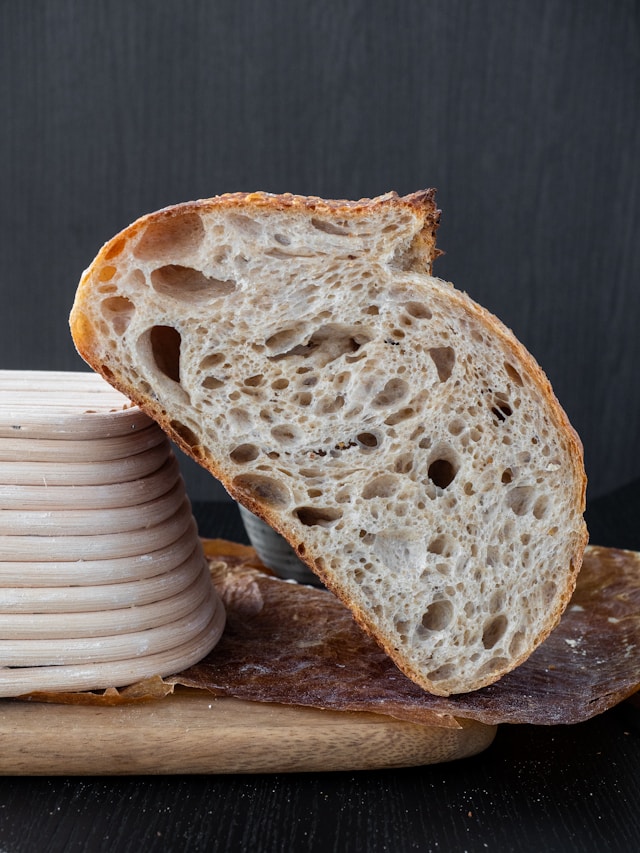


The short version: Yes, you can sell sourdough bread from home in most states under a cottage food law, with no commercial kitchen. Four of the seven state pages we read cap yearly gross sales, from $35,000 in Washington to $250,000 in Florida, while Colorado caps net revenue at $10,000 per product type and South Carolina and Utah add rules just for sourdough starter. Price a plain loaf around $11 and a flavored loaf around $13, which is where the 237 sourdough loaves listed by 72 small vendors on Homegrown sat on September 30, 2026, with $12 as the typical vendor's price. Flour, salt, a bag and a label cost about $1.80 a loaf, so your time is the real cost, and pre-orders that close two or three days before bake day are what keep that time from going to waste.
Checked on the Texas, Florida, California, Colorado, Washington, South Carolina and Utah agency pages, Homegrown's catalog and findhomegrown.com/signup, September 30, 2026: state food law changes between legislative sessions, so verify your own state's current rules on its own agency page before you sell a loaf. Homegrown is $10 a month billed annually, customers create a Homegrown account to place a first order, and there is no timed drop or countdown release feature.
Selling sourdough from home is one of the more workable cottage food businesses you can start. People seek it out, it sells well at a farmers market and through pre-orders, and all seven state agency pages we read allow bread in some form. People love good sourdough, and they will pay for the handmade, locally baked version: 64 of the 72 sourdough vendors on Homegrown price their typical loaf at $10 or more.
But sourdough has logistics that other baked goods don't. The long fermentation schedule means you can't just bake more on short notice when demand picks up. A single loaf needs planning that starts two days before you bake it. Getting the production workflow and sales setup right from the beginning is what makes the difference between a sustainable home bread business and one that burns you out within a few months.
This guide covers the legal requirements for selling sourdough from your home kitchen, the state rules that only apply to sourdough, how to price your loaves so you actually make money, what a loaf costs to make, whether you can sell starter too, where to find buyers, how to manage orders, and what scaling looks like when demand outgrows your home oven.
Ready to actually start selling? Take orders and get paid online in about 15 minutes. Set up a Homegrown storefront ($10/mo billed annually, 0% commission, plus 2.9% + $0.30 card processing paid by you), or compare the best platforms to sell food from home.
Yes, sourdough is legal to sell from a home kitchen in most states, and all 7 state agency pages we checked on September 30, 2026 allow bread in some form. Bread is one of the most commonly permitted cottage food products in the country. A cottage food law is the rule that lets a home baker make and sell certain low-risk foods without a commercial kitchen license, and plain bread, sourdough included, is the textbook example because it does not need a refrigerator to stay safe. Florida's Department of Agriculture puts "loaf breads, rolls, biscuits" first on its approved list, California's approved list names bread, and Washington's list of baked goods starts with "Loaf breads, rolls, biscuits, quick breads and muffins." Texas allows any food outside its short excluded list, Colorado and Utah allow baked goods, and South Carolina allows sourdough bread made with a commercial starter.
The specific rules vary by state, and those details matter. Some states list bread with few restrictions. Others have specific rules about certain ingredients, fillings, or toppings that may affect specialty sourdough varieties. A plain sourdough boule is permitted almost everywhere, but a sourdough loaf with a cream cheese filling might not be, depending on how your state classifies perishable fillings. Colorado names cream, custard and meringue fillings on its ineligible list by name, and the bread permission guide sorts 14 common loaves, from a plain boule to a bacon loaf to bread pudding, into allowed, depends and not allowed with the reason each one lands there.
Registration requirements differ a lot from state to state. Some states require a simple cottage food registration or permit before you can sell, and some require a food handling course. Others require nothing beyond following the labeling rules. Our state-by-state cottage food license cost guide counts 38 states where the standard cottage food path costs $0 and 12 that charge between $30 and $355, though Utah's agriculture department bills a registration fee (no amount printed) and California's fee is set by each county. Washington sits at the top: its Department of Agriculture charges $355 for a two-year permit and inspects your kitchen first, and it also requires a Master Business License from the state Department of Revenue, which charges $50 to open a new business plus any city or county endorsement fees. Check your own state's rules, because your state agency's website is the authoritative source.
Annual sales caps exist in many states. A cap is the most you can sell in a year and still count as a home producer. In the four states we read that cap yearly gross sales, all your cottage food sales count toward it, so if you sell sourdough plus jams plus cookies, those revenues add up together. Colorado works differently: its $10,000 net revenue limit applies to each product type. Where that ceiling lands varies a lot from state to state. Texas now sets a $150,000 annual gross income threshold, Florida a $250,000 cap, California $88,878 for a Class A operation selling directly to the public in 2026, and Washington $35,000. The permission guide for selling homemade sourdough carries the state figures alongside the product-level rules on fillings.
Where you can sell also varies. Most states allow in-person sales at farmers markets, from your home, and through community events. Some states also allow online orders and shipping within the state. Others let you take the order online but make you hand the loaf over in person, which still works for pre-orders with pickup. Washington goes further: its Department of Agriculture lets you take orders over the internet, but payment and delivery must pass person to person from you to the customer, never by mail or courier, so ask the department before you collect payment online. Knowing your state's rule on sales channels before you print a pickup sign prevents problems later.
So four things change from one state to the next:
Look up your state's cottage food law before you invest time in labels, packaging, or marketing. The legal requirements are usually straightforward to meet, but you need to know what they are for your specific situation.
Yes, you can buy sourdough bread from a cottage bakery, which is a home baker selling under their state's cottage food law, and in Florida each one can sell up to $250,000 a year. Buying a loaf from one is legal wherever that baker is selling within the rules. You will usually buy directly from the baker: on their porch, at a farmers market booth, through a pre-order link, or by local delivery. Look at the label. A Texas cottage loaf has to say "THIS PRODUCT WAS PRODUCED IN A PRIVATE RESIDENCE THAT IS NOT SUBJECT TO GOVERNMENTAL LICENSING OR INSPECTION," and Colorado and South Carolina require a similar line. Your state may too, and its labeling guide will say. That statement is the sign you are buying from a home kitchen, not a licensed bakery. In some states, such as South Carolina and Florida, the baker can also take your order on a website, though Florida bars wholesale, so you will not find a Florida cottage loaf on a grocery shelf.
Two of the seven states we read write rules aimed at sourdough itself, and the rest treat it like any other bread. South Carolina wants the bread made from a commercial starter, and Utah wants an accredited lab's acidity reading on any homemade starter before it signs off on sourdough products. In the other five states we read, the rules that trip up sourdough bakers are the general ones: the sales cap, the label, the fillings, and how an online order has to reach the customer.
Both rules sit in paperwork most guides never quote. South Carolina's 2026 home-based food production sheet allows sourdough bread only when it is "made with commercial sourdough starter," and Utah's Cottage Food Establishment Application asks for a lab pH result before it approves sourdough made from a homemade starter. Here is what each state's own page said when we loaded it.
Swipe left to see the sourdough rule for each state.
| State | Yearly sales ceiling | Permit or fee for bread | What matters for a sourdough baker |
|---|---|---|---|
| Texas | $150,000 gross income | No registration for bread; food safety training required | Online orders must be delivered in person by you, an employee or a household member, and the full label must be posted before you take payment |
| Florida | $250,000 gross sales | No state food permit | Loaf breads are first on the approved list; you may sell on a website, by mail order and in person, but not wholesale |
| California | $88,878 Class A, $177,756 Class B (2026) | Register or get a permit from your county environmental health office, and complete the Cottage Food Operator Training within three months | A direct sale can be filled in person, by mail or by a delivery service; the caps rise with inflation every January |
| Colorado | $10,000 net revenue per product type | No state license or inspection; a food safety course first | Cream, custard and meringue fillings or toppings are excluded, and so is any meat |
| Washington | $35,000 gross sales | $355 for a two-year permit, after a kitchen inspection ($125 more for a re-inspection if you fail), plus a Master Business License ($50 for a new business) and a $10 Food Worker Card | Fruit or vegetables must be baked into the dough, never added as a fresh garnish; orders may be taken online, but payment and delivery must be person to person, with no shipping or courier |
| South Carolina | None printed on the state's sheet or guidance | No state retail food permit | Sourdough bread must be made with a commercial starter; selling starter is not allowed; online sales only to South Carolina addresses |
| Utah | None printed on the application | Cottage food permit with recipes attached (label samples checked at the inspection), plus a nonrefundable registration fee (amount not printed on the application); food handler permit; a pre-operational kitchen inspection, including a separate refrigerator used only for the business | Sourdough products need a pH result for a homemade starter from an accredited lab |
We checked each row on that state's agency page on September 30, 2026: Texas DSHS, Florida FDACS, the California CDPH page and its 2026 adjusted sales limit PDF, Colorado CDPHE's Cottage Foods Act page and FAQ, the Washington State Department of Agriculture, South Carolina's 2026 Home-Based Food Production sheet and the SCDA guidance (version 1.4), and Utah's Cottage Food Establishment Application (revised July 2026). Colorado's FAQ says the $10,000 allowance applies to each product type, so a plain and a seeded loaf may count separately; ask your agency before you rely on that.
The state's 2026 home-based food production sheet lists "Sourdough bread (made with commercial sourdough starter)" on its allowed list. The department's longer guidance goes further: the starter should come from a commercial culture and be replaced every fourth generation, and starter itself, fresh or dehydrated, sits on the not-allowed list. If you have kept the same starter alive for three years, that is the rule to read twice. Checked September 30, 2026.
Utah's Cottage Food Establishment Application has a checkbox for sourdough products with one condition printed beside it: "Must submit pH of homemade starter from an accredited laboratory." The department's cottage food page sets the bar at a pH of 4.0 or less from a certified laboratory, and a commercially made starter needs no test. If your starter is homemade, budget for that test before you plan your first bake day. Send your recipes with the application, and have label samples ready for the pre-operational kitchen inspection. Checked September 30, 2026.
In Texas, the delivery rule is the one to read before you take a single online order. The Texas Department of State Health Services cottage food page allows online sales only when the operator, an employee or a household member personally delivers the food, and only after the full label is posted where the customer can read it before paying. A customer collecting the loaf at your door is an in-person handoff. Sending it across town with a courier service is not.
An online storefront does not make a sale legal. It only takes the order. Whether that loaf may be shipped, delivered by a friend, or sold to a café is your state's call, and two states can answer it in opposite ways: Texas requires personal delivery for an online order, while California allows mail and delivery services for a direct sale. Washington lets you take the order online but wants both the payment and the handoff to happen person to person. We checked all three pages on September 30, 2026. Verify your own state's current rules before you add a delivery option.
You need three things to start selling sourdough bread from home legally: confirmation that your state permits it, any required registration or permit, and compliant product labeling. Most home bakers can finish those steps in a weekend, except in states that inspect your kitchen first, like Washington, or that inspect it and review your recipes, like Utah.
State rules are not the only paperwork. Your city or county may want a business license or a home-occupation permit (Texas bars local health departments from requiring a permit or fee for a cottage food operation), and Washington's Department of Agriculture tells applicants to check zoning ordinances with their city and county before they apply. If you also bake sandwich loaves, focaccia or quick breads, the same three steps apply, and selling bread from home covers the whole bread menu, not just sourdough.
Many states ask for some version of these six items. Texas asks only for your operation's name, your address or registration number, the product name, any major allergens and its disclosure line:
The exact wording of the home kitchen disclosure varies by state, and your state's cottage food law spells it out. Texas wants "THIS PRODUCT WAS PRODUCED IN A PRIVATE RESIDENCE THAT IS NOT SUBJECT TO GOVERNMENTAL LICENSING OR INSPECTION." South Carolina wants "PROCESSED AND PREPARED BY A HOME-BASED FOOD PRODUCTION OPERATION THAT IS NOT SUBJECT TO SOUTH CAROLINA'S FOOD SAFETY REGULATIONS," printed in all capital letters. Copy your own state's sentence word for word.
Design a simple label that includes all required information and looks clean and professional. You can create a basic template in Canva or similar design software and print labels at home on adhesive label stock. A 100-pack of Avery 2 by 4 inch printable labels was $7.99 on Avery's site on September 30, 2026, which is 8 cents a label when it rides along on an order of $75 or more. Bought alone, Avery's $5.95 flat-rate shipping brings the pack to $13.94, about 14 cents a label. The label goes on the packaging, usually on the bread bag or attached to the outer wrapping. For every field your state can require, see cottage food labeling requirements.
Price your sourdough loaves between $10 and $14 for a standard-size loaf. That is where the middle half of the sourdough sellers on Homegrown priced their typical loaf on September 30, 2026 ($10.06 to $14.38), and it gives you a margin worth your time. Sourdough is consistently underpriced by new vendors. The ingredients are inexpensive (flour, water, salt, and your starter), so it's easy to look at ingredient costs and think you should price low. But the time cost of sourdough is significant and easy to overlook if you're only thinking about what goes into the bowl.
What to factor into your pricing:
Here is what small vendors actually listed on Homegrown, counted from the full catalog on September 30, 2026.
Slide the table sideways to see how each price was counted.
| Product | What vendors listed | Listings (vendors) | How we counted |
|---|---|---|---|
| Plain sourdough loaf (classic, country, original) | Median $11 | 89 (66) | Loaf names with no flavor, grain or add-in word, whether or not the name says sourdough |
| Flavored or specialty loaf (cheese, fruit, herbs, seeds, whole grain) | Median $13 | 148 (54) | Every other full-size sourdough loaf |
| Typical loaf of each vendor, all types | Median $12; middle half $10.06 to $14.38 | 237 (72) | Each vendor's median loaf price, then the median across vendors |
| Sourdough starter | Median $7; $5 to $15 | 13 (13) | Bakery and pantry listings that sell starter itself, found by "starter" in the name, description or size options |
| Sourdough rolls or buns, per pack | $7.99 to $12 | 4 (4) | Too few listings for a median |
Source: Homegrown catalog pull of September 30, 2026, 2,773 products from 311 vendors. A loaf counts when it is a Bakery listing with "sourdough" in its name, description or size options, or a loaf from a shop with "sourdough" in its name. Each listing is priced at its plain full loaf, skipping mini and half-loaf options; cookies, bagels, rolls, focaccia, quick breads, multi-packs and resold loaves are left out. These are listed prices, not what every loaf sold for.
The most common pricing mistake is looking at those numbers and pricing at the bottom. Flour, salt, a bag, a label and card fees take about $2.33 of an $8 loaf, so you're left with about $5.67 per loaf. At four loaves per bake, that's about $22.67 for several hours of work. Price at $12 and those costs come to about $2.45, leaving about $9.55 per loaf, or $38.21 per bake for the same effort. Pricing in the $10 to $14 band puts you next to most small sourdough sellers rather than below them, and it changes your margins a lot. Of the 72 sourdough vendors on Homegrown on September 30, 2026, 64 priced their typical loaf at $10 or more, and 15 sat at exactly $12. Our sourdough pricing guide by loaf type breaks down every tier, from mini loaves to einkorn.
What 72 sourdough vendors charge for their typical loaf
Source: Homegrown catalog pull, September 30, 2026. Each vendor's typical price is the median of its full-size sourdough loaves; 237 listings from 72 vendors.
If you can't price at market rates and still cover your costs, the issue might be your product mix. Consider adding higher-margin specialty products like flavored focaccia, sourdough cinnamon rolls, or seeded loaves where the ingredient upgrade costs you a dollar but the price increase is two to three dollars. Among the 48 Homegrown vendors who list both a plain and a flavored sourdough loaf, the flavored loaf ran a median $2 higher, and 34 of them charged $1 to $3 more. Sourdough bagels are another easy add-on for a bread customer: bagels of every kind listed at a middle price of $2.38 a bagel at each vendor's cheapest listing, across 20 Homegrown vendors on September 30, 2026 (found by "bagel" in the listing name or description; each vendor's lowest listed price divided by the bagel count its listing states, with an unlabeled $1.50 or $2 listing read as one bagel), and the bagel prices and batch costs show what a half dozen earns. For sandwich bread, focaccia and quick breads, what home bakers charge for every type of bread shows the full range by loaf.
In a pull of the Homegrown catalog on September 30, 2026, 72 of the 311 vendors listed at least one full-size sourdough loaf, 237 loaves in all, counted by the word sourdough in the name, description or size options rather than the name alone, or as a loaf from a shop with sourdough in its name. Nim Bakery's menu shows the usual ladder: a plain Sourdough Bread at $12, five flavored and whole wheat loaves at $15 (blueberry lemon, jalapeño cheddar, cranberry walnut, olive and whole wheat), a separate Sourdough Loaf at $15, a $16 flight box and $7 for 5 grams of active starter.
A standard loaf of sourdough costs about $1.80 in flour, salt, a bag and a label, using grocery-store bread flour and supplies priced on September 30, 2026. Card processing on a $12 online order adds $0.65, so the cash cost of a loaf sold through your own ordering link is about $2.45. Everything else in the price pays for your time, your oven and your starter's upkeep.
The example below uses a common home formula: 500 grams of bread flour, 375 grams of water, 10 grams of salt and 100 grams of active starter, which is half flour. That dough makes one loaf of roughly 2 pounds after baking.
Swipe if the cost column is cut off on your phone.
| What you buy | Pack and price | Used per loaf | Cost per loaf |
|---|---|---|---|
| King Arthur Unbleached Bread Flour | 5 lb (2,268 g) for $6.13 | 550 g | $1.49 |
| Morton Salt, non-iodized | 26 oz (737 g) for $3.14 | 10 g | $0.04 |
| Kraft window bread bags, 13.78 x 8.26 in | 58 for $10.99 | 1 bag | $0.19 |
| Avery 2 x 4 in printable labels | 100 for $7.99 | 1 label | $0.08 |
| Total | $1.80 |
Flour, salt and bags priced on Walmart.com, labels on Avery's own site, all on September 30, 2026. The 550 g of flour is 500 g in the dough and 50 g in the starter. Water and the flour you feed your starter between bakes are left out. Re-added: $1.49 + $0.04 + $0.19 + $0.08 = $1.80. The label cost assumes Avery's free shipping on orders of $75 or more; with its $5.95 flat-rate shipping, a label is about 14 cents and the loaf about $1.86.
Flour is $1.49 of the $1.80, about 83%, so your flour choice moves the cost more than anything else in the table. Organic and ancient-grain flours cost more per pound, which is part of why whole grain and spelt loaves sit at the top of the price chart. Inclusions do the same thing: our sourdough pricing guide's example spreads a $6 block of cheddar across four loaves, which is $1.50 a loaf before the extra shaping time, and that is why a flavored loaf runs a median $2 above plain.
Check the bag against your loaf before you buy 58 of them. That 13.78 x 8.26 x 3.5 inch bag holds an oval batard easily, but a tall 8.5 inch round boule will not slide into a 3.5 inch gusset. If you bake rounds, measure the width and height of a finished loaf and buy a bag at least half an inch bigger in both.
Yes, if you price at $10 or more and bake to orders you already have. A bake day of 8 loaves at $12, ordered through your own link, brings in $96. Flour, salt, bags, labels and card processing come to $19.58, which leaves $76.42 before your $10 monthly plan. If those 8 loaves take you about 5 hours of hands-on work, from mixing to handing over the last loaf, that is about $15 an hour.
Here is the working, so you can swap in your own numbers:
Treat that $15 as a ceiling, not a wage. It comes before electricity for a hot oven, wear on your Dutch ovens and bannetons, any insurance, and sales or income tax, and those vary too much from kitchen to kitchen to put one number on.
What moves the number most:
So the honest answer is that sourdough pays like a solid part-time job once you have regulars, and like a hobby before that. The bakers who earn the most are not the ones with the best crumb. They are the ones who sell every loaf they bake.
Sometimes, and it depends more on your state than selling bread does. Starter is a live culture of flour and water, not a baked food, and the Texas, Florida, California, Colorado and Washington pages we read do not mention it at all. Of the seven states we read, South Carolina bars selling starter under its home-based food law, fresh or dehydrated, and Utah will not approve sourdough products made from a homemade starter until a lab has measured its pH. Ask your state agency directly before you list a jar, and get the answer in writing. Three questions cover it:
Where it is allowed, dried starter is the easier product. It is shelf-stable, it weighs almost nothing, and it fits in an envelope. Active starter in a jar is a living thing your customer must feed within days, so it works best as a pickup add-on to a bread order. Cottage food laws generally cover sales inside your state, so mailing starter across state lines is a separate question you should put to your agency.
Sell a small jar or packet of starter for $5 to $10, with $7 as a sensible middle. On Homegrown on September 30, 2026, 13 vendors listed a starter, at least 5 of them dried or dehydrated, at a median of $7 and a range of $5 to $15. The $15 listing included a mason jar, and SunDaze Micro-Bakery listed 50 grams of active starter at $10. A kit with a jar, a printed feeding guide and a first-loaf recipe can go higher, and the starter kit selling guide lays out kit tiers by what goes in the box.
The real value of starter is not the $7. It is the customer who learns to bake and comes back for your flour blend, your bannetons or a baking class, and the regular who buys a loaf and a jar for a friend in the same order.
Choose packaging that keeps your sourdough fresh and makes a professional impression. Poly bread bags preserve moisture best, while kraft paper bags look more artisan but dry the bread faster. Many home bakers use a kraft paper bag with an inner poly liner to get the best of both, and a food-grade kraft bag with a window ran about 19 cents a bag in a 58-pack on Walmart.com on September 30, 2026.
Bread bags are the most common packaging choice, and you have two main options plus a hybrid:
Swipe sideways to compare the three bag types.
| Packaging Type | Pros | Cons |
|---|---|---|
| Food-safe poly bread bags | Preserves moisture, keeps crust from drying | Less artisan appearance |
| Kraft paper bread bags | Artisan, bakery-style look | Bread dries out faster |
| Kraft paper with poly liner | Best of both worlds | Slightly higher cost |
The kraft bag we priced for this guide is sold as food-grade, water- and oil-proof kraft paper with a clear window: 58 bags for $10.99 on Walmart.com, September 30, 2026.
Whichever bag type you choose, make sure it's sized for your loaf shapes. A bag that's too large makes the loaf look smaller, while one that's too tight can damage the crust or make it hard to close.
Labels need to meet your state's cottage food requirements while also looking professional. Print labels on adhesive label stock so they attach cleanly to your packaging. Include all legally required information: product name, ingredients, allergens, your name and address (or registration number where allowed), net weight, and the home kitchen disclosure. A clean, well-designed label communicates quality before the customer even tastes the bread.
Packaging timing matters more for sourdough than most other baked goods. Sourdough must be fully cooled before packaging, which takes several hours after it comes out of the oven. Packaging warm bread creates condensation inside the bag, which speeds up mold growth and makes the crust soggy. Plan your baking schedule so loaves have enough cooling time before they need to be bagged for pickup or delivery.
A storage card is the cheapest upgrade you can make. Print one line on the label or a small card: "Store cut side down on a board for 3 to 5 days, or slice and freeze." Customers who keep your bread fresh longer come back for the next loaf.
Start with your personal network, then expand to farmers markets, a pre-order link and social media. Most home bakers who sell sourdough bread from home find their first customers among people who already know them. You don't need a marketing budget or a big social media following.
Your personal network comes first. Neighbors, coworkers, friends, family members, and their extended circles are the easiest first customers to reach. Post a photo of a beautifully scored loaf on your social media with a note that you're taking orders. If your bread looks good and tastes great, and you've been giving it away for months, there's probably built-in demand from people who've been waiting for you to start selling.
Farmers markets are one of the strongest sales channels for sourdough specifically. Bread is visually compelling on a market table, and the smell of fresh sourdough draws people in. Offering samples at your booth drives sales, because people who taste good sourdough often buy it. Regular market-goers become reliable repeat customers who seek out your booth every week. A booth is only one of seven places a loaf sells, and the gap between them is real money: a $10 loaf keeps $9.41 through your own ordering link and $5.00 to $6.00 when a coffee shop buys it at the usual 50 to 60 percent of shelf price, where your state lets a café buy from a home kitchen (Florida, Colorado and Washington do not, and Texas allows it only through a registered cottage food vendor), compared row by row in the channel-by-channel breakdown for bread.
Check your local farmers market's vendor application process. Most markets have an application period, ask for proof that you follow your state's cottage food rules, and charge a booth fee for each market day. That fee ran $20 to $84 or more a day for a home baker at the seven markets whose 2026 vendor pages we checked, because Portland's Saturday market takes 9% of a bakery's sales when that beats its $84 day rate. Apply early. Popular markets fill up, and bread vendors are usually in demand because customers expect to find good bread at a farmers market.
Pre-order systems are the natural sales model for sourdough, and arguably the most important channel for a home baker to set up. With pre-orders, buyers submit orders by a cutoff date, you bake exactly what's been ordered, and buyers pick up at a set time and place. This workflow lines up with sourdough's production schedule because you know your exact quantities before you start mixing.
Platforms like Homegrown are built for exactly this workflow. You list your products on your Homegrown storefront, set the days you hand off loaves and how much notice each order needs, and collect payment when the order is placed. Every order lands in your dashboard prepaid, with its pickup time or delivery address. Your storefront is also listed on the Homegrown marketplace, but plan on most orders coming from people you send to your own link.
Social media works particularly well for sourdough because the product photographs beautifully. Instagram and Facebook are natural places for golden-crusted loaves, open crumb shots, and the scoring patterns that make sourdough look distinctive. Post consistently, show the process from mixing through baking, and always tell people how to order. Neighborhood Facebook groups are especially effective for local sales: a well-lit photo of a fresh loaf posted in a local community group generates interest fast. The post finds the buyer, but the loaf still needs a counter, and a $12 sourdough loaf keeps anywhere from $11.35 through your own pre-order link down to $6.00 to $7.20 at a café's wholesale price where your state allows that sale (Florida, Colorado and Washington do not, and Texas allows it only through a registered cottage food vendor), compared place by place in where to sell sourdough and what each place keeps.
Set a weekly order cutoff two to three days before you bake, bake only what's been ordered, and keep your pickup window tight. That is the most sustainable production model for selling sourdough bread from home. Your fermentation schedule needs planning time that you simply don't have if you take same-day requests. Someone who messages you on Friday morning asking for sourdough by Saturday can't be fit in without disrupting your whole timeline. Pre-orders remove that problem.
Here is a typical weekly pre-order workflow:
Mapped onto a real week, that workflow looks like this for a Saturday pickup:
Slide left to see why each step sits on its day.
| When | What you do | Why it sits there |
|---|---|---|
| Wednesday, 6pm | Orders close | Gives you the count before you feed the starter |
| Thursday morning | Feed the starter, buy flour | Starter needs several hours to peak before mixing |
| Thursday evening | Mix the dough, start the bulk ferment | In a cool kitchen, bulk fermentation can run overnight; a warm one finishes in about 4 hours, so chill the dough until morning |
| Friday morning | Shape, then cold-proof in the fridge | The fridge slows the dough so you choose the bake time |
| Friday afternoon | Bake in rotation | About 45 minutes of oven time per Dutch oven cycle |
| Friday night | Cool fully on racks | Warm bread in a bag sweats and molds faster |
| Saturday, 7am | Bag and label each order | One bag per customer name speeds up pickup |
| Saturday, 9am to 11am | Pickup window | A tight window keeps your whole morning from disappearing |
Times are an example for a home kitchen at room temperature. Warmer kitchens ferment faster; adjust the bulk ferment to your own dough.
The pre-order model removes waste, makes your baking schedule predictable, and prevents the frustrating day where you bake ten loaves and only sell four. Once you have a steady customer base, pre-orders also smooth out your income, because you know your revenue for the week before you even start baking.
Sourdough is one of those products where pre-orders aren't just convenient, they're close to necessary. You're making limited quantities with a long fermentation window, so knowing your exact count before you mix is everything. Setting up a simple storefront like Homegrown means your regulars can claim their loaf early in the week instead of hoping you haven't sold out by the time they show up.
For a full walkthrough of setting up a pre-order workflow, see how to take pre-orders.
Homegrown lets you close and collect every sourdough order days before you bake, for $10 a month billed annually. A sourdough baker's hardest problem is not the bake. It is knowing on Wednesday how many loaves to make on Friday, and getting paid for them before the flour is gone. Homegrown is $10 per month billed annually ($12.50 billed monthly) with no percentage fees beyond standard payment processing of 2.9% + $0.30, which comes to $0.65 on a $12 loaf. You set an order prep time, which is the notice each pickup needs, so a 3-day lead time stops a Thursday-night order for Saturday bread. You set your pickup spots and days, from your porch to a market booth, and repeat schedules like "first and third weeks only" if you bake every other week. Every order arrives prepaid, and a Batch Calculator helps you scale your recipe to the week's orders. 80% of each order pays out the next business day, and 20% is held 30 days.
Compare that with the tools most sourdough bakers start on. Instagram DMs and texts cost nothing, but you track every order and payment by hand. Hotplate charges no subscription, but its default adds 5% + $0.55 to your customer's checkout, $1.15 on a $12 loaf, you still pay 2.9% + $0.30 card processing, the same as on Homegrown, and it is built around timed drops. Etsy is built for shipping, and its fees take $1.59 of a $12 loaf.
Homegrown has honest limits for a bread baker:
Add more bake cycles per day first, then consider a second oven, and look at renting a commercial kitchen when you consistently sell more than 20 to 40 loaves per week. A standard home oven can bake two to four loaves at a time, depending on loaf size and oven space. If you bake each loaf in its own Dutch oven, you're limited to one or two loaves per bake cycle, with each cycle taking about 45 minutes of oven time.
Swipe the table to see who each scaling step fits.
| Scaling Method | Capacity Increase | Best For |
|---|---|---|
| Multiple bakes per day | 2x to 3x output | Vendors under 20 loaves a week |
| Adding a second oven | About 2x total capacity | Vendors at 15 to 30 loaves a week |
| Commercial kitchen rental | 4x to 10x output | Vendors over 20 to 40 loaves a week |
Capacity figures are rough guides for a home baker.
Three signs tell you it is time to add capacity:
Multiple bakes per day is the simplest first step. If your schedule allows and your oven can handle it, running a second or third bake cycle the same day doubles or triples your output. This means staggering your dough so batches are ready to bake in sequence. Many home bakers use the refrigerator to control fermentation timing, putting shaped loaves in the fridge overnight and baking them in rotation the next day.
Adding a second oven roughly doubles your capacity without leaving your home kitchen. Some home bakers add a countertop convection oven that handles smaller loaves or rolls while the main oven handles full-size boules. Others add a freestanding oven in a garage or utility space. Check your state's cottage food rules about which spaces in your home count as permitted production areas; Washington, for one, inspects every area named on your permit.
Commercial kitchen rental becomes worth it at a certain production level, usually when demand consistently tops 20 to 40 loaves per week and you're spending more time managing oven logistics than actually baking. Renting time in a licensed commercial kitchen gives you larger deck or convection ovens that bake many loaves at once, walk-in coolers for retarding dough, and professional prep space. Your cottage food permit covers your home kitchen, so moving the bake can change the license you need. Washington, for example, defines a cottage food operation as one that produces "only in the home kitchen of that person's primary domestic residence" and sends anyone who wants to sell wholesale to "a WSDA Food Processor's License," so call your state agency before you book kitchen time.
Commercial kitchen rental also opens up sales channels in states that require licensed production for certain sales, like wholesale to restaurants or retail shops. Shared commercial kitchen time runs $15 to $40 an hour, according to our commissary kitchen guide. Watch your sales cap too. At $12 a loaf, Washington's $35,000 ceiling is about 2,917 loaves a year, or 56 a week, so once you outgrow your home oven, check the cap before you rent kitchen time.
Pre-orders with local pickup are the best foundation channel for most home sourdough bakers, and a farmers market booth is the best way to find new customers. The table below shows how the four main channels fit together at different stages of your business.
Swipe sideways to see each channel's advantage.
| Sales Channel | Best For | Key Advantage |
|---|---|---|
| Pre-order with local pickup | Foundation channel for all vendors | Bake to known demand, no leftover loaves |
| Farmers market booth | Growing your customer base | In-person tasting turns browsers into buyers |
| Online ordering link (Homegrown or another tool) | Taking repeat orders between markets | Regulars reorder without a text thread |
| Word of mouth | Ongoing growth | Costs nothing and compounds over time |
Fees for each ordering tool are compared in the next table.
Pre-order with local pickup is the foundation channel for most home sourdough businesses. It's the most efficient model because you bake to known demand, collect payment in advance, and hand off every loaf in one short window. Start here and build your customer base before adding complexity.
Farmers market booth is the best channel for growing your customer base and building name recognition. Seeing, smelling, and tasting sourdough in person turns browsers into buyers in a way a photo can't. Markets also put you in front of customers who would never find you through social media or word of mouth alone. Many established sourdough vendors combine the two: the market brings in new customers, and pre-orders turn those customers into weekly regulars.
Online platforms extend your reach beyond your immediate local network, but the right platform depends on how you actually sell sourdough, which is almost always local pickup, not shipping.
Use a tool built for pickup pre-orders with a flat monthly price, because the pre-order workflow is the backbone of a home sourdough business. Here is how the realistic options compare for a sourdough baker doing weekly pre-orders with local pickup:
Instagram DMs and text messages cost nothing, but they fall apart fast. When you have 15 customers texting orders on different days, you spend more time tracking who ordered what and who paid than you spend baking. There's no order cutoff, no payment collection, and no single list of what to bake. For your first 5 customers it works. By customer 15, it's a second job.
Etsy is built for shipping nationwide, not local pickup. If you want to ship sourdough (which is expensive and hard on bread) and your state allows it, Etsy works. But for weekly local pre-orders, you pay a $0.20 listing fee, a 6.5% transaction fee and 3% + $0.25 payment processing on a platform designed for a fulfillment model you don't use. On a $48 order of four loaves, that is $5.61 in Etsy fees: $0.80 in listing renewals, $3.12 in transaction fees and $1.69 in processing.
Square Online has a Free plan with no monthly charge and handles pickup orders, but it's built for restaurants and retail stores. Its online card rate on the Free plan is 3.3% + 30¢. The setup is more than a sourdough baker needs, and you're building inside a system designed for daily menus, not weekly pre-order windows.
Shopify starts at $29 a month billed yearly, or $39 billed monthly, for its Basic plan. That is more than a home baker doing 20 loaves a week through local pickup needs. Shopify is built for online stores shipping products nationally.
Hotplate has no monthly subscription and is built around timed drops. By default your customer pays a 5% + $0.55 service fee at checkout, and you pay 2.9% + $0.30 card processing. You can choose to cover the service fee yourself, which costs you $1.15 on a $12 loaf, or $1.80 with card processing.
Homegrown costs $10 a month billed annually and is built for how home sourdough bakers operate: you list your loaves, set how much notice each pickup needs, collect payment when customers order, and see every order prepaid in one dashboard before you mix. Your storefront is also listed on the Homegrown marketplace, but plan on most orders coming from people you send to your own link.
Slide the table left to see what you keep on every platform.
| Platform | Monthly cost | Trial | Platform or service fee | Card processing | Customer pays for a $12 loaf | You keep per $12 loaf | You pay in a month of 40 orders |
|---|---|---|---|---|---|---|---|
| Texts and DMs, cash at pickup | $0 | None needed | $0 | $0 (cash) | $12.00 | $12.00 | $0, plus every unpaid no-show |
| Etsy | $0 (a one-time set-up fee may apply) | None | $0.20 listing + 6.5% transaction; 15% Offsite Ads fee on sales from Etsy's ads | 3% + $0.25 | $12.00 plus shipping | $10.41 | $63.60 |
| Square Online, Free plan | $0 | Not needed on Free; 30 days on paid plans | $0 | 3.3% + 30¢ | $12.00 | $11.30 | $27.84 |
| Shopify Basic | $29 billed yearly ($39 monthly) | 3 days, then $1 a month for 3 months | $0 with Shopify Payments (2% with another processor) | 2.9% + 30¢ standard cards, 3.5% + 30¢ premium cards | $12.00 | $11.35 | $54.92 ($64.92 monthly) |
| Hotplate, default | $0 | None | 5% + $0.55, paid by the customer | 2.9% + $0.30 | $13.15 | $11.35 | $25.92 |
| Hotplate, you cover the service fee | $0 | None | 5% + $0.55, paid by you | 2.9% + $0.30 | $12.00 | $10.20 | $71.92 |
| Homegrown | $10 billed annually ($12.50 monthly) | 7 days, no charge until day 8 | $0, 0% commission | 2.9% + $0.30, paid by you | $12.00 | $11.35 | $35.92 ($38.42 monthly) |
Each order is one $12 loaf. We checked every fee on that company's own pricing page on September 30, 2026: findhomegrown.com/signup, hotplate.com/pricing, Etsy's Fees & Payments and Etsy Payments policies, squareup.com's online store plans and payments fees pages, and shopify.com/pricing. Hotplate's default of passing its fee to the customer comes from its post "What Hotplate does" (September 1, 2025). Card processing is figured on the $12 price; a platform that charges it on the full total with tips, tax or shipping runs a few cents higher. Shopify's keep and monthly figures use its standard card rate.
Homegrown doesn't handle nationwide shipping, wholesale restaurant accounts, or subscription box fulfillment. It's built for vendors who sell a set menu of products on a weekly schedule to local customers, which is exactly the sourdough pre-order model. If you need shipping, Etsy or Shopify fits better; if you run timed drops with a countdown, Hotplate is built for that and Homegrown is not.
Word of mouth is the channel that grows on its own once your product is good. Every loaf you sell to a happy customer can turn into referrals to their neighbors, friends, and coworkers. Put your order link on the storage card in each bag, so a neighbor who tastes the loaf can order next week's bake.
In most states, you do not need a full commercial license to sell sourdough bread from home. Sourdough typically falls under cottage food exemptions, which let home bakers make and sell certain products from a home kitchen. Our license cost guide counts 38 states where the standard cottage food path costs nothing and 12 that charge between $30 and $355, though Utah bills a registration fee and California's fee is set by each county. Washington's $355 permit covers two years and includes a kitchen inspection. Check your state agency's website for your specific requirements.
Your earnings depend on your production volume, pricing, and sales channels. A home baker selling 20 loaves a week at $12 each brings in $240 in weekly revenue, or $12,000 over 50 baking weeks. At about $1.80 in supplies and $0.65 in card processing per loaf, $191 of each week's $240 is left before your time and any booth or plan fees. Most vendors who sell sourdough bread from home start part-time and grow as demand grows, adding farmers market days and pre-orders through a Homegrown storefront.
Plan at least 24 to 48 hours from the time you start mixing to having a finished, cooled, and packaged loaf. Bulk fermentation runs anywhere from about 4 hours in a warm kitchen to overnight in a cool one, plus shaping, proofing, baking, and cooling time. Many home bakers feed their starter and count orders two days before bake day, mix the night before, and use the refrigerator to control fermentation timing, which is why a weekly order cutoff two to three days before bake day works best.
Pre-orders with a weekly cutoff work best for sourdough because they line up with the long fermentation schedule. Use a platform like Homegrown to list your loaves, set how much notice each pickup needs, collect payment upfront, and manage pickup times. This replaces the chaos of scattered text messages and DMs and gives you a confirmed, paid order count before you start mixing.
A properly baked and stored sourdough loaf stays fresh at room temperature for 3 to 5 days. Wrapping it in a linen cloth or placing it cut-side down on a cutting board extends freshness. For longer storage, slicing and freezing individual portions keeps the bread good for 2 to 3 months. Include a storage note on your packaging or in your pickup message so customers get the best from your loaves.
It depends on your state. Florida's cottage food page allows sales by website and mail order, South Carolina allows online sales delivered to South Carolina addresses, and Texas requires an online order to be delivered in person by you, an employee or a household member. Shipping across state lines usually falls outside cottage food laws. Even where shipping is allowed, most home bakers find that local pre-orders with pickup are more practical and profitable, since shipping costs and packaging add real expense to a $12 loaf.
You can start selling sourdough bread from home with equipment most bakers already own: a standard home oven, a Dutch oven or baking stone, mixing bowls, a kitchen scale, a bench scraper, bread bags, and labels. A banneton (proofing basket) improves loaf shape, and a lame or razor blade for scoring is essential. As your business grows, a second oven and more bannetons help increase how many loaves you can bake at once.
These 6 Homegrown guides go deeper on the questions this one only touches, from state caps to booth fees. Each one was live on findhomegrown.com when we checked on September 30, 2026, and each answers one decision a sourdough baker makes in the first month.
If you're a home sourdough baker ready to start selling, here's the practical order to follow.
Start with one bake day you can sell out. Price inside the $10.06 to $14.38 range that the middle half of Homegrown's sourdough vendors charge, close orders Wednesday at 6pm, and mix only for the loaves already paid for. Keep every order in one place, and write down how many hours each bake day really took, start to finish, so your next price is based on your own time.



