
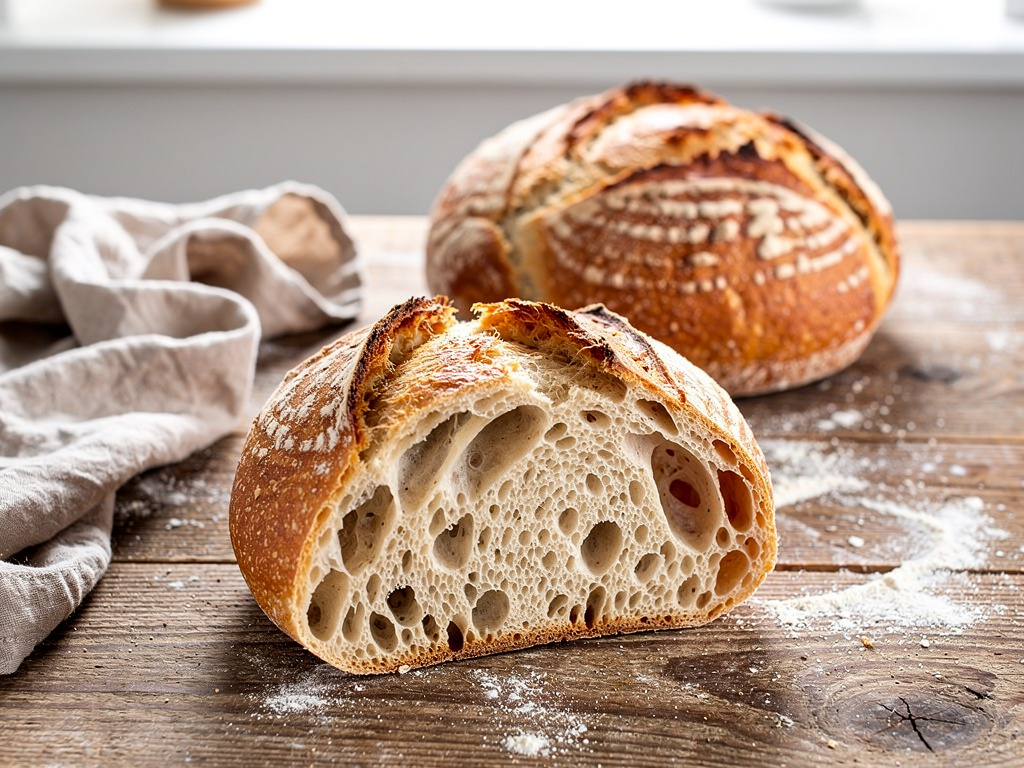


The short version: You can sell homemade bread from your own kitchen in most states, because baked bread is shelf-stable and falls inside the baked goods category nearly every cottage food law allows. The answer turns on two things, what is inside the loaf and whether your state exempts home kitchens, licenses them, or offers both doors. Colorado, Minnesota, Ohio and Oregon each show a different version of that rule below, with the fee for each and the sales cap where the state sets one.
Checked on the Colorado, Minnesota, Ohio and Oregon agency pages and on findhomegrown.com/signup, September 21, 2026: every fee, cap and product rule below came off those pages that day, and state food law changes between legislative sessions, so verify your own state's current rules on its own agency page before you sell a loaf. On the ordering side, Homegrown is $10 a month billed annually, customers create a Homegrown account to place a first order, and there is no timed drop or countdown release feature.
A neighbor tasted your sandwich loaf, asked whether you would bake her two a week, and offered to pay for them. Before you say yes, one question decides everything else: does your state let you sell bread baked in your own kitchen, and does your particular loaf count as the kind of bread it allows?
Bread is the friendliest product in the whole home-kitchen world. It leaves the oven shelf-stable, it does not need a refrigerator, and it falls inside the baked goods category that nearly every state exempting home kitchens allows. Some states print the word bread on the list, the way Ohio does; others, Colorado among them, cover it under baked goods without naming it. That part is easy.
The catch is that bread is not one product. A plain country loaf and a cream-cheese-stuffed loaf get sorted into two different categories by the same state rule, and several states put a licensed home kitchen next to the exemption, so the door you walk through decides what you can sell. This guide sorts 14 common loaves into allowed, depends, and not allowed, names what each state path costs, and gives you an afternoon's checklist for your own state.
Yes, in most states, and usually with no commercial kitchen and no inspection. Plain bread is the single easiest product to get cleared under a state home-kitchen law, because the whole idea behind those laws is that a food which does not need refrigeration cannot grow the bacteria that make people sick.
Two questions decide your answer, and they are worth separating before you read another word:
Everything else, the label, the cap, the places you are allowed to sell, follows from those two answers. The rest of this guide takes them in order, using the state agency pages and rule filings loaded on September 21, 2026.
This page is the permission half of the pair. Once your answer is yes, the bake schedule, pricing and pre-order side lives in the companion guide on how to sell sourdough bread from home, which walks the production workflow a long fermentation forces on you, and the broader how to sell bread from home guide covers bake-day planning for every other loaf.
Because a finished loaf holds too little available water to support the rapid growth of the organisms that cause foodborne illness, which is the exact test almost every state writes into its home-kitchen law. Agencies do not say bread cannot spoil, they say it does not need temperature control to be safe. Agencies call these foods non-potentially hazardous, or in newer rules, foods that are not time and temperature control for safety foods. Both phrases mean the same plain thing: the food is safe sitting on a counter.
Bread earns that status three ways at once:
Ohio writes the split out in one sentence on its cottage food page, separating non-potentially hazardous bakery products like cookies, breads, brownies, cakes and fruit pies from potentially hazardous ones like cheesecakes, cream pies and custard pies that require refrigeration. Bread sits in the first group, and Ohio prints it second on the permitted list, right after cookies. That is why it is so rarely the thing a state argues with you about. Pies are where that argument starts, because the same Ohio list that waves bread through names pumpkin, custard and cream pies as potentially hazardous, which is why selling homemade pies from home comes down to the filling.
The practical version: if your loaf can sit on your counter for two days and still be safe to eat, your state almost certainly lets you sell it. If it has to go in the refrigerator, you are in the second conversation, and that conversation is state by state.
In a pull of the Homegrown catalog on August 14, 2026, 175 of the 1,804 product names contained bread, loaf, loaves, focaccia, baguette, boule, challah, brioche or ciabatta. Nine of those were not bread, a jar of bread and butter pickles, a banana bread latte, a mac and cheese bowl, a bag of breadcrumbs, a bread pudding and four loaf cakes, which leaves 166 breads and loaves from 57 of the 219 vendors. Bakery was the largest category on the platform at 876 products, 49% of everything listed. Bread is not a niche thing people sell from home. It is the thing people sell from home.
A $14 plain loaf and a $14 cream-cheese-stuffed loaf can land on opposite sides of the same state rule, because the line almost never runs through the bread itself. It runs through whatever you folded in, spread on top, or stuffed inside, and the 14 common loaves below split along that one seam. Colorado publishes the clearest version of the test: its Cottage Foods Act page allows baked goods and then names the exclusions by hand, including cream, custard or meringue fillings and toppings, buttercream frosting unless it is made with ghee or vegetable oil, any meat product even used as an ingredient or a topping, and anything cut and raw, fruit or vegetable.
Scroll sideways to see every column.
| What you want to bake | Usual answer | Why it lands there | What to check first |
|---|---|---|---|
| Plain sourdough, country or artisan loaf | Allowed | Shelf-stable, nothing perishable in it | Only your state's label rule |
| Sandwich, white, wheat or multigrain loaf | Allowed | Same test, even with milk or butter baked into the dough | Whether your state wants a net weight on the label |
| Cinnamon raisin, chocolate or seeded loaf | Allowed | Sugar, cocoa and dried fruit do not need a refrigerator | Your allergen line, since nuts and seeds trigger it |
| Focaccia with herbs, olive oil and olives | Allowed | Baked, shelf-stable, nothing added after the oven | Fresh garlic sitting in oil is the one topping to ask about |
| Flatbread, pita, naan and tortillas | Allowed | Colorado names tortillas on its eligible list by hand | Whether your state names tortillas or flatbread the way Colorado does, or folds them into baked goods without saying so |
| Banana, zucchini or pumpkin bread | Usually allowed | Baked quick bread, no refrigeration needed once cool | Whether your recipe carries a cream cheese frosting, which flips it |
| Gluten-free bread | Allowed to sell, and allergen free is barred on the label | The bread itself is shelf-stable | Colorado bars an "allergen free" claim on any cottage food label; it does not name gluten-free or nut-free claims, so ask your own agency |
| Dinner rolls, buns and bagels | Allowed | Same shelf-stable test as a loaf | Nothing beyond labeling |
| Jalapeno cheddar or other baked-in cheese loaf | Depends on the state | Hard cheese baked into dough is fine in some states and a refrigerated filling in others | Ask whether your state treats baked-in cheese as a filling |
| Loaf with a cream cheese or custard filling | Usually not allowed | Colorado names cream, custard and meringue fillings on its ineligible list | Whether your state has a licensed path, the way Ohio does |
| Loaf topped with buttercream or cream cheese frosting | Usually not allowed | Colorado excludes buttercream frosting and allows it back only when the fat is ghee or vegetable oil | Which fat your frosting uses, because that is the whole test |
| Bread with bacon, sausage, prosciutto or ham | Not allowed in most states | Colorado excludes any meat product, including as an ingredient or a topping | Whether your state carves out federally inspected meat |
| Bread topped with cut fresh fruit or fresh peppers | Not allowed in most states | Colorado excludes raw cut produce of either kind, and jams made with fresh peppers | Whether dried fruit gets you the same look legally |
| Bread pudding or a baked French toast dish | Not allowed under a bread exemption | Egg and dairy custard needs refrigeration, so it is not a baked bread anymore | Whether your state licenses a home bakery that can make refrigerated products |
Product categories checked on the Colorado Department of Public Health and Environment's Cottage Foods Act page and on both of Ohio's pages, cottage food and Home Bakery, September 21, 2026. State lists are written differently, so treat this as the question to ask your own agency rather than a ruling on your recipe.
Colorado's eligible list names baked goods such as muffins, fruit pies, cookies and cakes, plus tortillas and fruit empanadas. If tortillas are on your list, pricing homemade tortillas starts from about $1.28 of ingredients for a dozen flour tortillas that small shops sell for $8 to $10. The ineligible list rules out any meat product, baked or fried products with cream, custard or meringue fillings or toppings, buttercream frosting made with butter, and cut fresh fruits and vegetables. That meat rule is why selling homemade tortillas works in Colorado while a carne asada burrito made in the same kitchen does not. The state runs a five-question screener on that same page, and the first question is whether the product needs refrigeration or hot holding for safety. Checked September 21, 2026.
Yes in most states, and quick breads are the second most common bread on Homegrown after sourdough, with 31 banana, zucchini, pumpkin, lemon, blueberry and apple loaves listed by 17 vendors in the August 14, 2026 catalog pull. A quick bread rises with baking soda or baking powder instead of yeast, and once it cools it passes the same shelf-stable test a yeast loaf does. Buttermilk biscuits are a quick bread too, leavened with baking powder, and the rules for selling homemade biscuits cover the cheddar, sausage and frozen dough questions a loaf rarely raises.
The confusion comes from how wet a banana loaf feels. Moist crumb is not the same as unsafe. What matters is free water available to bacteria, and the sugar and the bake take care of that. Colorado's eligible list opens with baked goods such as muffins and cakes, and a banana loaf sits squarely in that category.
Three things flip a quick bread from allowed to not allowed, and all three are additions rather than the batter:
Sell the plain version, price the frosting as a separate conversation, and you stay inside the rule.
Bread-family products listed on Homegrown, by type
Source: Homegrown catalog pull, August 14, 2026, 1,804 products from 219 vendors. Counted by product name containing bread, loaf, loaves, focaccia, baguette, boule, challah, brioche or ciabatta, then nine non-bread matches removed (pickles, a latte, a mac and cheese bowl, breadcrumbs, a bread pudding and four loaf cakes). Bucketed by name in this order, no product counted twice: sourdough; focaccia; banana, zucchini, pumpkin, lemon, blueberry, apple or beer bread as quick breads; sandwich, wheat, white, grain, oat, Hawaiian, Italian or milk bread; rye, challah, brioche, croissant, baguette or naan as specialty; everything else as plain and other. 166 products from 57 vendors in total.
Your answer depends on which of two systems your state runs, and the difference matters more than the paperwork cost, which ran $0 to $50 across the four states this guide priced. Most states write an exemption: you register or you simply comply, nobody inspects your kitchen, and the fee is small or zero. Some states also license your kitchen the way they license a storefront bakery, which means an inspector comes to your house, and in Ohio and Oregon that license sits next to the exemption as an upgrade rather than replacing it.
Here is what each path actually looked like on September 21, 2026:
The Ohio Home Bakery inspection is a useful preview of what any license asks for, because the requirements are physical rather than paperwork. Your kitchen needs walls, ceilings and floors in good repair and easy to clean, no carpet on the floor, no pests, no pets anywhere in the home, and a mechanical refrigerator with a thermometer that holds 45 degrees Fahrenheit or lower. If your house is on a private well, the well has to be tested for coliform bacteria every year and you show the negative result to the inspector.
Plenty of advice online reads one agency page and stops, and Oregon shows why that fails in both directions. Its licensing page lists home kitchen processing and baking as a licensed establishment type, which reads as if every home baker needs a license. One click away, its What Can I Do Without a License page says baked goods qualify for the Cottage Food Exemption up to $52,700 a year. Read only the first page and you pay for a license you do not need. Read only a secondhand exemption summary and you miss the cap, the pets-in-the-home label statement and the records rule that come with it, and selling past the cap without the license is operating an unlicensed food business, not a paperwork slip. Ohio is the same shape, a free unlicensed path alongside a paid licensed one, and a plain loaf usually belongs on the free path. Search your state's department of agriculture for both "cottage food" and "home kitchen license," read whichever pages come back, and confirm the rule as it stands today on that agency's own page.
Ohio gives a home baker two doors, and the free one covers bread. The exempt door, which Ohio calls a cottage food operation, carries no license and no inspection, names breads on its permitted list, and sells only inside Ohio. A Home Bakery is the same one-oven ordinary kitchen with a $10 annual license and an inspection, and the license is what buys the products the exemption will not carry, cheesecakes, cream pies and custard pies, plus distribution outside Ohio. Checked on both Ohio Department of Agriculture pages, cottage food and Home Bakery, September 21, 2026.
Most states cap what you can sell under a home-kitchen rule, and the caps run from a few thousand dollars a year to no ceiling at all. Minnesota caps a registered vendor at $78,000 in gross annual sales. Colorado takes a different shape entirely and caps net revenue at $10,000 per product type per year, which means blueberry muffins, banana muffins and chocolate chip muffins each get their own $10,000. Oregon's Cottage Food Exemption stops at $52,700 in gross annual sales. Senate Bill 643 set that cap at $50,000 in 2023 and told the agriculture department to adjust it for inflation every year, so it rose to $51,200 in August 2025 and to $52,700 in March 2026, and it will move again.
How the cap is written matters more than how big it is, and there are three common shapes:
Two practical notes. Read whether your cap is gross or net, because the states in this guide split on it: Minnesota's and Oregon's caps are gross sales, so a $14 loaf counts the whole $14, while Colorado's is net revenue, so your flour, power and packaging come out first. Check which word your state uses. And crossing the cap ends your exemption, so plan the move to a licensed kitchen before you get there. Oregon's own FAQ puts it plainly: if your gross annual sales go past $52,700 and you still want to bake at home, you must be licensed and inspected as a domestic kitchen bakery. Work out how many loaves a week your cap allows before you commit to a wholesale account. At a $14 loaf, a $78,000 ceiling is about 107 loaves a week, every week, for a year.
Direct to the person who eats the bread, almost everywhere, and the restrictions start the moment somebody resells it. Every state page checked for this guide allows direct sales from the producer's own home and at a farmers market, and that is the pattern across home-kitchen laws generally, but it is your own state's channel list that decides, so read it before you book a booth. What varies is whether a shop, a restaurant or a wholesale account is allowed to be in the middle.
The channels, in rough order of how widely they are permitted:
Colorado also bans catering with cottage foods, because the law requires the product to reach an informed end consumer directly. Ohio is more generous on both of its paths, which is worth knowing because it shows retail and restaurant access is not automatically an inspection question. Properly labeled Home Bakery products may be served by restaurants and distributed outside Ohio. Ohio's exempt cottage foods reach even further inside the state, through grocery stores, registered farm markets and farmers markets, and they may be sold to or used in preparing food in a restaurant, but they stay in Ohio.
Minnesota's registration is tiered by expected gross annual sales. At $7,665 or less you pay no registration fee and take an online training and exam each year. From $7,666 to $78,000 you pay $50 and take an approved food safety course once every three years. Part of qualifying is confirming your city, county or township does not prohibit home sales through zoning, which is a check nobody tells first-time bread vendors to make. The same page carries a legislative update: the tiers go away on August 1, 2027, replaced by a flat $30 a year and permission to ship. Checked on the Minnesota Department of Agriculture page, September 21, 2026.
Taking orders online is allowed in most states, and shipping a $14 loaf across a state line almost never is, which is two separate questions people collapse into one. Colorado says internet sales are allowed and that the delivery method is between you and the buyer, as long as it does not involve interstate commerce. The order can be placed on a website. The loaf still has to be handed over inside the state.
The reason is jurisdiction rather than food safety. A state exemption is written by that state for sales inside it. The moment a package crosses a line, federal rules and the receiving state's rules both come into play, and neither one recognizes your home kitchen.
What that means in practice:
You can still build a real business on in-state ordering. Bread is a weekly repeat purchase, and a customer who reserves two loaves every Friday is worth more over a year than a one-time order from three states away.
Six pieces of information, on every loaf you hand over, and five of the six are the same in nearly every state. Ohio spells the set out in more detail than most agencies bother with, and it maps almost exactly onto what other states ask for.
Two extras on Ohio's licensed Home Bakery label list catch bread vendors specifically, and neither one is on its exempt cottage food list. If the loaf needs refrigeration, the label must say "Keep Refrigerated." And any product whose quality drops within 30 days, which is most fresh bread, needs a sale date the customer can read. A full walkthrough with the layout is in the cottage food label checklist.
Selling gluten-free bread is allowed and calling it allergen free on the label is not, at least in Colorado, and that distinction costs a vendor a reprinted roll of labels. Colorado states directly that no cottage food may be labeled allergen free, because every one of them has to carry the disclaimer saying it came from an unlicensed home kitchen and may contain common allergens.
The logic is hard to argue with. You bake in a kitchen nobody inspected, on equipment that also handles wheat flour, and the state has no way to verify a negative claim.
What you can and cannot say:
There is also a nutrition claim trap. Ohio notes that the moment you make a nutrient content claim like low fat or salt free, or a health claim, the product has to carry a full Nutrition Facts panel. A plain loaf with a plain label owes nobody a panel. A loaf marketed as high protein does. For scale, Ohio's cottage food page requires its "This product is home produced" statement in 10-point type, which is a sensible floor for every line on a bread label, the allergen line included.
Between $0 and $50 in the four states priced for this guide, which is less than one weekend of flour for a serious baker, and the one license priced here, Ohio's Home Bakery, is $10 a year. The six paths below were all priced off their own agency pages on September 21, 2026, and they cover both systems, the exemption and the license, including two states that run both.
Swipe the table sideways for the rest of the columns.
| Path | What it is | Fee | What it asks of you | What it lets you sell |
|---|---|---|---|---|
| Colorado Cottage Foods Act | Exemption, no license | $0 | A food safety course before you start, from CSU Extension, a food handlers card, or your local public health agency | Shelf-stable baked goods up to $10,000 net revenue per product type per year, direct to the buyer, inside Colorado |
| Minnesota Tier 1 | Registration | $0 | An online training and exam every year | Non-potentially-hazardous foods up to $7,665 in gross annual sales |
| Minnesota Tier 2 | Registration | $50 | An approved food safety course once every three years | The same foods, up to $78,000 in gross annual sales |
| Ohio Cottage Food Production Operation | Exemption, no license and no inspection | $0 | Correct labeling, including the words "This product is home produced" in ten-point type | Shelf-stable baked goods including breads, sold inside Ohio, direct from home and through grocery stores, farm markets, farmers markets and restaurants |
| Ohio Home Bakery | License and inspection | $10 a year | A kitchen with no carpet, no pets in the home, a refrigerator holding 45F or lower, and an annual coliform test if you are on a private well | Breads and the other shelf-stable baked goods plus refrigerated products like cream and custard pies, sold from your home, served by restaurants, and distributed outside Ohio |
| Oregon Cottage Food Exemption | Exemption, no license and no inspection | $0 in state fees, plus a county food handler card for each person who bakes ($10 in Multnomah County) and an optional $25 a year for a state-issued ID number you can print in place of your address | A food handler certificate for everyone who prepares the food, a label carrying the state's homemade statement, your business phone number, a statement naming any pets in the home, and sales records you keep | Baked goods and other shelf-stable foods up to $52,700 in gross annual sales, in person or online, and to grocers under set conditions |
Fees and requirements checked on the Colorado Department of Public Health and Environment page, the Minnesota Department of Agriculture page, Ohio's agriculture department cottage food and Home Bakery pages, and the Oregon Department of Agriculture's Cottage Food Exemption guide, March 2026 edition, all loaded September 21, 2026. Your state will differ, sometimes by a lot, so price your own before you budget.
On top of the state fee, budget for the things nobody puts on a pricing page: a first roll of labels, bread bags and ties for a few hundred loaves, a food handlers card if your state asks for one, and a digital scale you trust for the net weight on the label. None of those has a fixed price, so price them at the supplier you will actually use before you set your loaf price, and expect the four together to cost more than the state paperwork did.
Once you are allowed to sell, the next wall is the one nobody warns you about: 20 people texting "can I get two on Saturday" and you reconstructing the count from your phone at 9pm on Friday. Bread punishes this harder than most products, because you have to commit to a loaf count before you mix, and a wrong count is either waste or a disappointed regular.
Homegrown costs $10 a month on the annual plan, or $12.50 billed monthly, with 0% commission and no percentage fees beyond standard payment processing at 2.9% plus $0.30. You get an ordering page where customers reserve specific loaves for a specific pickup day and pay when they order, so your bake sheet is a list you print rather than a list you rebuild. Setup takes about 15 minutes, there is a 7-day trial before the first charge, and your storefront is listed on the Homegrown marketplace.
Here is the whole fee stack next to the platforms a bread vendor actually considers, every row showing all four components.
This one is wide. Drag it sideways to read every fee column.
| Platform | Subscription | Free trial | Platform fee | Card processing | Customer pays on a $20 loaf | Vendor pays on a $20 loaf | Vendor pays on 50 loaves at $20 |
|---|---|---|---|---|---|---|---|
| Homegrown | $10/mo billed annually, $12.50/mo billed monthly | 7 days, no charge until day 8 | $0, 0% commission | 2.9% + $0.30 | $20.00 | $0.88 | $54.00 |
| Square Online, Free plan | $0/mo per location | n/a on Free; Plus and Premium offer 30 days | $0 | 3.3% + $0.30 online on the Free plan | $20.00 | $0.96 | $48.00 |
| Shopify Basic | $29/mo billed annually, $39/mo billed monthly | 3 days, then $1/mo for three months | $0 with Shopify Payments, 2% if you use another gateway | 2.9% + $0.30 online on standard cards, 3.5% + $0.30 on business cards and American Express | $20.00 | $0.88 | $73.00 |
| Etsy | None required, $0.20 per listing for four months | n/a | 6.5% transaction fee on the sale price including shipping | 3% + $0.25 | $20.00 | $2.35 | $117.50 |
Fees loaded from findhomegrown.com/signup, squareup.com/us/en/pricing, shopify.com/pricing, etsy.com/sell and Etsy's Offsite Ads help article on September 21, 2026. Per-order figures are computed from those rates. The 50-loaf column adds the monthly subscription to the processing, at each platform's annual-commit price, and assumes one Etsy listing fee per loaf sold. Shopify's per-order figures use its standard-card rate; a business card or American Express runs 3.5% plus $0.30 on Basic, or $1.00 on a $20 loaf. Etsy also charges an Offsite Ads fee on any sale it attributes to its own advertising: 15% while a shop has always made under $10,000 in any 365-day stretch, when you can opt out, and 12% with no opt-out for the life of the shop once it has ever crossed $10,000, capped at $100 per order. Etsy may also charge a one-time shop set-up fee; its pricing page says the amount shows before you finish opening the shop and does not print it. Neither is included above. No platform here adds a surcharge to the customer.
Read that table honestly. Square Online's Free plan is the cheapest of the four at 50 loaves a month, because $0 a month beats $10 a month by more than the extra 0.4 points of card processing takes back. Etsy is the expensive one by a wide margin even before its offsite advertising fee, and it is also a marketplace built for shipped products, which is the one thing a home bread vendor usually cannot do. Shopify gives you a full website for $29 a month on an annual commitment, $39 month to month, which is a real store if you want one and an overpayment if you want an ordering page.
What Homegrown does not do: it will not get you a permit, it does not ship your bread, there is no timed drop or countdown release feature, customers create a Homegrown account to place a first order, and while your storefront is listed on the marketplace, plan on most orders coming from people you send to your own link.
They decide the loaf count before the week starts instead of after, and they keep the catalog small. The vendors on Homegrown with the deepest bread catalogs are the exception, not the pattern: across the 57 vendors selling bread in the August 2026 catalog pull, the median vendor lists two bread products, not ten, and 19 of the 57 list exactly one.
Four habits that separate the ones still baking in year two:
Bake one extra loaf beyond your order count, every single bake. It costs you one loaf's worth of flour, the cheapest line in your whole operation, and it covers the loaf that gets dropped, the underproofed one you will not hand over, and the regular who texts at the last minute. Over 50 bakes that is 50 chances not to disappoint somebody, and the ones you do not need freeze or go home with you.
If you are still counting loaves out of a group chat, that is the part worth fixing first. A Homegrown ordering page turns Friday's bake sheet into a list your customers built themselves, and you can have it live in about 15 minutes at findhomegrown.com/signup.
Almost never the bread, and almost always a channel or a claim, and all 5 of the triggers below are things an agency can check without leaving the office. The enforcement that follows a complaint looks at where you sold and what you said, not at your crumb structure.
The real triggers, in rough order of how often they come up:
The pattern underneath all five depends on which door you took. On an exemption path nobody inspects your kitchen, and Oregon's rules go as far as listing the situations that cost you the exemption, so the checking starts when someone reports you and the agency looks at the two or three easy things. A storefront that visibly outsells its cap, $52,700 a year in Oregon and $78,000 in Minnesota, is the same kind of easy thing. On a license path an inspector comes to the house, the way Ohio's Home Bakery rules describe, and then leaves you alone between visits. Keep your channels clean and your label complete and you have removed most of what there is to find. Check the rule as your own state writes it today before you add any new channel.
Six steps, and you can finish all of them between lunch and dinner. The trick is going to your own state's agency page first, because secondhand summaries of these laws go stale every legislative session.
Your state's page is the only source that counts. A state-by-state overview of where the rules currently sit is in the cottage food laws by state guide, and it is a starting point rather than a substitute for your own agency's page.
In nearly every state, yes. Farmers markets are the most widely permitted channel for home-baked bread, because the sale is direct from the person who baked it to the person who eats it. The market itself may ask for a copy of your cottage food registration and a certificate of liability insurance before it assigns you a booth, and those are the market's rules rather than the state's. Check with the market manager and with your state agency, since both sets apply.
A food permit and a business license are two different things, and you may need both. The food side is your state's cottage food registration or home kitchen license, which ran $0 in Colorado, $0 or $50 in Minnesota, and in Ohio either $0 for an unlicensed Cottage Food Production Operation or $10 a year for an inspected Home Bakery, and $0 under Oregon's Cottage Food Exemption, when those pages were checked on September 21, 2026. The business side is a local business license or a sales tax permit from your city or county, which exists whether you bake bread or mow lawns. Call your city clerk and ask about a home occupation permit, since zoning is the piece most first-time bread vendors miss.
Posting bread for sale in a local Facebook group is legal wherever your state's home kitchen rules allow direct sales, because Facebook is just where the conversation happens. What the platform cannot do is make an illegal sale legal, so the same product rules, cap and label requirements apply to a loaf sold through a group post as to one sold at a market table. The practical problem with selling that way is order tracking, since 20 comment threads are a poor substitute for a list.
It depends on which state you are in, and the caps are written in different shapes. Minnesota lets a registered vendor sell up to $78,000 in gross annual sales and charges no registration fee at all below $7,665. Colorado caps net revenue at $10,000 per product type per year, so each variety gets its own ceiling. Some states set no dollar limit and some set one under $10,000, so look up the number on your own state's agency page before you plan around it.
Jalapenos baked into the dough are widely allowed, because they come out of the oven with the loaf and need no refrigeration. Jalapenos cut and laid on top are a different question, and Colorado is the warning: its ineligible list excludes raw cut produce outright, and a pepper sliced and laid on a crust is exactly that, so it fails in the state this guide leans on hardest. Baked-in hard cheese is the genuine gray area, because some states treat it as part of the baked product and others treat it as a filling that needs cold storage. Colorado's ineligible list names cream, custard and meringue fillings rather than hard cheese, which reads as permissive, but the safest move is a direct question to your own state agency naming the exact cheese and the exact recipe.
Usually not. A plain loaf sold under a state home kitchen rule needs the name, net weight, ingredients, allergen line, your name and address, and the home kitchen disclaimer, and no nutrition panel. That changes the moment you make a nutrient or health claim. The Ohio Department of Agriculture notes that a claim like low fat or salt free triggers full nutritional labeling, so calling your loaf high protein on the label turns a six-line sticker into a regulated panel.
These five go deeper on the parts this guide summarized.
Once your state says yes, the work shifts from permission to logistics: a loaf count you can trust before you mix, and a way for regulars to reserve Friday's bake without texting you at midnight. A Homegrown storefront runs $10 a month on the annual plan with 0% commission and no percentage fees beyond standard payment processing, it takes about 15 minutes to set up, and the first 7 days are free before any charge. Start your storefront at findhomegrown.com/signup and have your next bake sheet build itself.



