
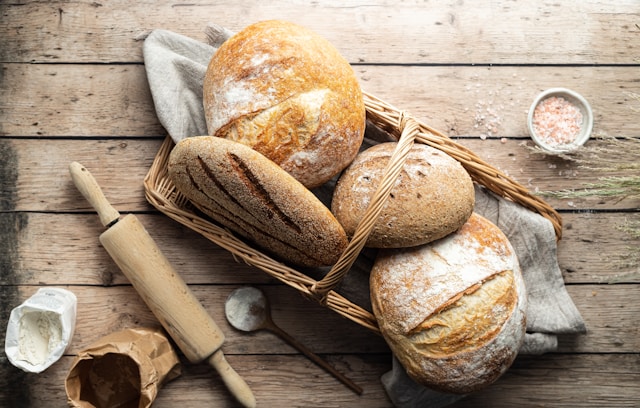


The short version: Yes, you can legally sell bread from home in all 50 states under cottage food laws, but the rules differ by state: Washington caps sales at $35,000 a year, Florida at $250,000, and Georgia sets no limit. You will need proper labels, a pricing strategy that reflects your quality (not grocery store prices), and a production schedule built around your bake days. A farmers market or porch pickup for local regulars is the simplest place to start, and a pre-order system cuts waste and guesswork because you bake what is already sold.
Checked September 14, 2026: state rules on each state agency's own website, fees on each company's own page, and bread and flour prices from the U.S. Bureau of Labor Statistics. Rules change, so confirm yours with your state before your first sale.
You've been baking bread for a while now. The loaves have gotten good — really good. Friends ask to buy them. Your sourdough starter is thriving. Someone at a party asked if you sold your bread and you said no, but you've been thinking about it ever since.
Here's the thing: selling homemade bread is legal in every U.S. state under cottage food laws, and bread, sourdough especially, sells at farmers markets and to local regulars. The person who's been feeding their starter for two years and makes a better boule than the loaf at the artisan bakery has a real product that people will pay for.
This guide covers what's legal, how to label a loaf, what to charge, how to plan your bake days around a market or regular orders, and how to handle it when your regulars start texting every Thursday asking if you have a loaf for them.
Ready to actually start selling? Take orders and get paid online in about 15 minutes — set up a Homegrown storefront ($10/mo billed yearly, 0% commission, plus 2.9% + 30¢ per card payment), or compare the best platforms to sell food from home.
Yes — in every U.S. state, and bread is one of the most universally permitted cottage food products.
Cottage food laws exist in all 50 states and allow home food vendors to make and sell certain foods directly to consumers without a commercial kitchen, and in many states without a health department inspection. Bread is almost always on the allowed list. It's dry, shelf-stable at room temperature, and carries a very low food safety risk — exactly the profile that makes something cottage food-friendly. The exception is the loaf that stops being dry, which is why the bread permission guide separates a plain loaf from a cream-cheese-filled one and prices the two state paths, a $0 Colorado exemption against a $10-a-year Ohio Home Bakery license with a kitchen inspection.
New Jersey was the last state to allow it. Its Department of Health published new rules in October 2021, and the Institute for Justice, the law firm that sued over the old ban, said that day that home bakers in every state and D.C. could now sell homemade foods.
What cottage food sales typically allow:
What may still apply:
One thing to check: Enriched breads with fillings that require refrigeration — cream-filled pastries, fresh custard-filled breads — may fall outside standard cottage food rules in some states. A plain sourdough boule, a cinnamon swirl loaf, or a seeded whole grain loaf are all fine. Breads with perishable fillings are worth checking on. California draws that line in the title of its own list, where the first approved category reads "Baked Goods Without Cream, Custard, or Meat Fillings," and the sourdough permission guide runs nine specific loaves, from jalapeno cheddar to a prosciutto focaccia, through that same test.
To look up your state's specific cottage food law, use Forrager's state directory — it tracks what each state allows, including revenue caps and labeling requirements.
Homegrown's free cottage food law checker does the same kind of lookup. Pick your state and it shows revenue limits, license requirements, labeling rules and the products you are allowed to sell.
Three state agencies show how far apart the rules are. Washington charges $355 for a two year cottage food permit, inspects your kitchen and caps sales at $35,000 a year. Texas raised its limit to $150,000 and lets operators who register with the state print a registration number on the label instead of a home address. Florida needs no food permit from its agriculture department for sales up to $250,000 a year.
Look up your own state agency's page before your first sale. Last verified September 14, 2026.
Every loaf you sell needs a label that meets your state's cottage food labeling requirements. The specifics vary by state, but most require the same core elements.
What most states require on cottage food labels:
To print a label that fits your state, Homegrown's free cottage food label template builds a label mockup with your state's required disclaimer text and a checklist of the required elements, ready to print.
Allergens for bread:
Bread allergen labeling is straightforward but important. Wheat (gluten) is present in all standard bread and must be disclosed. Enriched breads like brioche, challah, and milk bread contain eggs and/or milk — disclose those as well. If you bake in a kitchen that also processes tree nuts, peanuts, or other allergens, a "May contain" advisory is recommended even when those ingredients aren't in the bread itself. Cross-contact happens easily in a home kitchen, and disclosure protects both you and your customers.
A note on sourdough ingredients: Your sourdough ingredients list is simple — typically: flour, water, salt — with the starter being a live culture of flour and water. Label it straightforwardly. "Sourdough starter (flour, water)" is accurate. Don't overcomplicate it. Some bakers list it as "naturally leavened" on the product name. Either works.
Best-by date and freshness guidance: Artisan sourdough without commercial preservatives is typically at its best within 2-3 days of baking. Bread made with commercial yeast and no preservatives is also best within 2-3 days, but it goes stale and molds about a day sooner than sourdough. Include a best-by date on your label and recommend storage in a cloth or paper bag (not plastic, which softens the crust and traps moisture). Giving customers freshness guidance helps manage expectations and protects your reputation. A customer who stores your sourdough in a plastic bag for a week and then complains about texture didn't have the right information.
You might also include a note like "Slice and freeze what you won't eat in 2 days" — this extends the loaf's usefulness significantly and reduces buyer's remorse on a larger loaf.
Practical label options:
Your startup costs are low: materials for a loaf can run about $1-3.25, and a sourdough loaf can sell for $8-14, which leaves strong margins from day one. Artisan bread pricing confuses new vendors because grocery store bread warps your sense of what's normal. A $2-3 supermarket loaf is made by machines at industrial scale with cheap commercial flour and preservatives. Your bread isn't that. Don't price it like it is.
General pricing framework:
Swipe sideways to see every column.
| Bread Type | Price Range | Notes |
|---|---|---|
| Simple yeast breads (sandwich loaf, white bread, whole wheat loaf) | $6-10 per loaf | Lowest ingredient cost |
| Sourdough boules and batards (standard 700g-900g loaf) | $8-14 | Sourdough of all kinds is the most listed bread on Homegrown |
| Sourdough with inclusions (seeded, olive, jalapeno cheddar, cranberry walnut) | $10-16 | Higher ingredient cost, premium positioning |
| Enriched breads (brioche, challah, milk bread, cinnamon swirl) | $10-18 | Eggs and butter add cost |
| Smaller products (dinner rolls by the half-dozen, mini loaves, focaccia portions) | $5-9 | Good add-on products |
Cost breakdown per loaf:
For a price check on flour, the Bureau of Labor Statistics put all-purpose white flour at an average of 55 cents a pound across U.S. cities during August 2026. So each pound of all-purpose flour in a loaf adds about 55 cents before salt, packaging and add-ins.
That means a sourdough boule priced at $10 with $2 in materials cost gives you $8 in margin per loaf. If you bake 8 loaves for a Saturday farmers market and sell out in two hours, that's $64 in margin for a morning. Scale to 15 loaves and you're looking at $120. That's a meaningful number for a weekend side project. Those numbers come before card fees. If a customer pays for a $10 loaf by card through Homegrown, the fee is 59 cents (2.9% + 30 cents), which leaves $7.41 of that $8.
The real cost is time. A sourdough loaf takes 18-36 hours from levain build to baked loaf — most of that is hands-off fermentation time, but it requires planning, attention, and multiple stages. Your active hands-on time per loaf might only be 15-20 minutes (mixing, shaping, scoring, loading the oven), but the process stretches across two days. Factor that in, but also recognize that fermentation happens while you sleep or work your regular job.
Don't compare to grocery store prices. The people who will pay $10-12 for your sourdough have already opted out of grocery store bread. They're not comparing to a $2-3 loaf from the bread aisle. They're comparing to the loaf at the artisan bakery — and yours is often better because it's fresher, made in smaller batches, and baked that morning. For reference, white pan bread averaged $1.82 a pound in U.S. cities in August 2026, according to the Bureau of Labor Statistics.
If your loaves are consistently selling out, raise your price by $1-2. If you bring 10 loaves and take 4 home, either reduce your batch size or adjust pricing downward slightly. The market tells you what to charge. Batch size matters as much as the tag: at $18 an hour, the same sandwich loaf needs about $13 when you bake six and about $8 when you bake 24, which the bread pricing breakdown by batch size works through step by step.
Sell homemade bread for about $6 to $10 for a simple yeast loaf and $8 to $14 for a plain sourdough loaf, then adjust with how fast you sell out. Those are the starting ranges from the table above, and two real storefronts on Homegrown land inside them. Flowerdough Sourdough, a Des Moines, Iowa bakery, lists its Classic Sourdough Loaf from $10.00, and SunDaze Micro-Bakery in Nolensville, Tennessee sells the same kind of loaf for $10.00 and its Honey Oat Sourdough for $12.00.
The gap between the first and last card is the point of this section. Your customers are paying for fresh sourdough, and they are not shopping the bread aisle. To set a price from your own numbers, Homegrown's free pricing calculator takes your material cost, your time, your hourly wage, packaging and overhead and suggests a price with a margin built in.
Plan your production schedule backward from your market or pickup day — sourdough takes 18-36 hours from levain to loaf, and commercial yeast breads need at least a same-day morning start. This part is easy to skip, and it's one of the most practically important for anyone selling bread from home. You cannot bake sourdough to a same-day order, and yeast bread only works same day if the order comes in before you mix that morning. Sourdough needs planning across multiple days. If you don't think through your production schedule, you'll either be up at 3am in a panic or showing up to market with underproofed loaves.
Sourdough timeline for a Saturday farmers market:
That's a two-day process with a few touchpoints each day. Once you've done it three or four times, it becomes routine. The key is that a Saturday market means you're mixing on Thursday or Friday — not Saturday morning. King Arthur Baking's beginner's sourdough guide walks through making a starter and baking a basic loaf.
Commercial yeast bread timeline: Much shorter. Mix, knead, first rise (1-2 hours), shape, second rise (30-60 minutes), bake. You can mix in the morning and have loaves done by early afternoon. Same-day production is possible with yeast breads but still not same-hour. Biscuits are the same-hour bake on a bread menu, 8 to 10 minutes at 475°F in White Lily's recipe, which is why selling biscuits from home works best as a pickup-morning add-on to a bread order.
Home oven constraints:
A standard home oven with a Dutch oven handles 1-2 loaves per bake cycle (about 35-45 minutes per round). With a Dutch oven and a baking steel running simultaneously, you might do 2-3 per round. If you want to bring 10-12 loaves to market, plan 4-6 bake rounds starting early with that setup. With a single Dutch oven, the same 10-12 loaves take 5-12 rounds.
Alternatively, bake Friday evening and Friday night for Saturday morning sales. Sourdough holds well for 12-18 hours after baking — it's actually at peak eating quality a few hours after it's cooled, not straight from the oven.
For weekly regulars:
Set a consistent bake day that your customers learn to expect. Friday baking for Saturday pickup works well. Accept orders by Thursday at noon so you know exactly how many loaves to mix. Consistent rhythm equals predictable production equals less waste.
Pre-orders vs. bake-then-sell:
Baking first and selling at market carries the risk of unsold loaves. Stale bread is waste, and waste is lost margin. Pre-orders eliminate this — you only bake what's confirmed. A common approach is a mix: some confirmed pre-orders plus a few extra for walk-up market sales. Over time you'll learn your market's demand and dial in the right split.
The best sales channels for selling bread from home are farmers markets (for discovery and impulse buys), weekly subscriptions (for reliable revenue), and porch pickup (for zero-overhead local sales). Here is how each one works.
Bread is a natural fit for a farmers market table. Walk past a table with a row of golden sourdough boules and you'll see people stop. The combination of visual appeal, crust crackle, and the rarity of real artisan bread at an accessible price makes it a strong impulse purchase.
Strategies that work for bread vendors at market:
If you're setting up at a farmers market for the first time, how to sell at a farmers market covers booth setup, pricing display, and what moves at market.
Your best customers don't want to wonder if there's a loaf available — they want to know one is waiting for them every week.
A simple subscription model works like this: "Reserve your loaf by Thursday. Pickup Saturday at the market (or porch pickup)." You bake to confirmed orders. No guessing, no waste, no awkward "I only made 8 loaves and 12 people showed up" situation.
Weekly subscriptions, even informal ones, create loyal and consistent revenue. Someone who has a standing loaf reservation doesn't comparison shop or forget about you. They text you on Thursday because it's part of their routine. Over time, that routine is what keeps a regular ordering.
A single ordering link beats a pile of text messages. When regulars can reserve and pay ahead, you see exactly what you have committed before you start mixing dough. No chasing confirmations, no mental math about who wanted sourdough vs. who wanted the seeded rye. More on how to set this up in the pre-order section below.
One thing to know if you use Homegrown for this: it does not run automatic recurring subscriptions. On Homegrown, your regulars place a new order each week before your cutoff.
Works well for local regulars who don't want to make it to the market. You bake, they pick up from your front porch or doorstep. Low overhead, no booth fee, no setup time.
Announce on social media or a neighborhood app (like Nextdoor) that you have loaves available. Take orders by the day before. Have them bagged, labeled, and set out during your designated pickup window. Some bread vendors do a Friday evening porch pickup and a Saturday market — covering both channels with one bake day.
If you would rather not post your home address, a Homegrown storefront can show an approximate pickup area and share the exact address after a customer orders.
Many home bread vendors eventually wonder about selling to local coffee shops or specialty food stores. This typically falls outside cottage food rules in most states. Cottage food laws generally restrict sales to direct-to-consumer only, meaning you can sell to the person eating the bread, but not to a business that will resell it. California draws that line as Class A for direct sales only up to $75,000 a year and Class B for sales through shops up to $150,000, which is the rule that decides which of the seven places you can actually sell bread.
Selling wholesale to a business usually requires commercial kitchen production, a food handler's permit, and potentially a business license. Worth checking your state's specific rules before approaching shops. Some states have expanded cottage food laws that allow limited wholesale; many don't. Texas lets a cottage food vendor who registers with the state buy from a home baker at wholesale and resell to consumers, while Florida and Washington don't allow wholesale.
You sell bread online from home by putting your loaves on one ordering page, taking payment when customers order, and handing the bread over at pickup, at your farmers market or by local delivery. Check your state first. Florida's law, for example, lets cottage food operators accept orders and payment over the internet and deliver in person or by mail, and every state sets its own rules on online sales and shipping.
Homegrown is one way to set that up. A Homegrown storefront is a single page with your loaves, prices and pickup days. Customers create an account, order and pay by card, and choose a pickup day or local delivery. You set an order cutoff date, and Homegrown gives you an order summary for each pickup day. The price is $12.50 a month, or $10 a month on the yearly plan, with 0% commission, plus 2.9% + 30 cents per card payment. Your storefront is also listed in the Homegrown marketplace automatically, but plan on bringing your own customers with your link.
To compare other ways to take orders, see our guide to the best platforms for selling baked goods online or our look at the best platform to sell bread online.
A bread storefront on Homegrown is one page where customers see this week's loaves and pick where to get them. Flowerdough Sourdough in Des Moines, Iowa is a real example. Its storefront lists sourdough loaves, bagels, granola and cookies. Its pickup card lists a Flowerdough Sourdough Pop Up on Friday, September 18, Sunday, September 20 and Monday, September 21 from 9:00 AM to 3:00 PM, plus the Downtown Farmers Market on Saturdays from 7:00 AM to 12:00 PM.
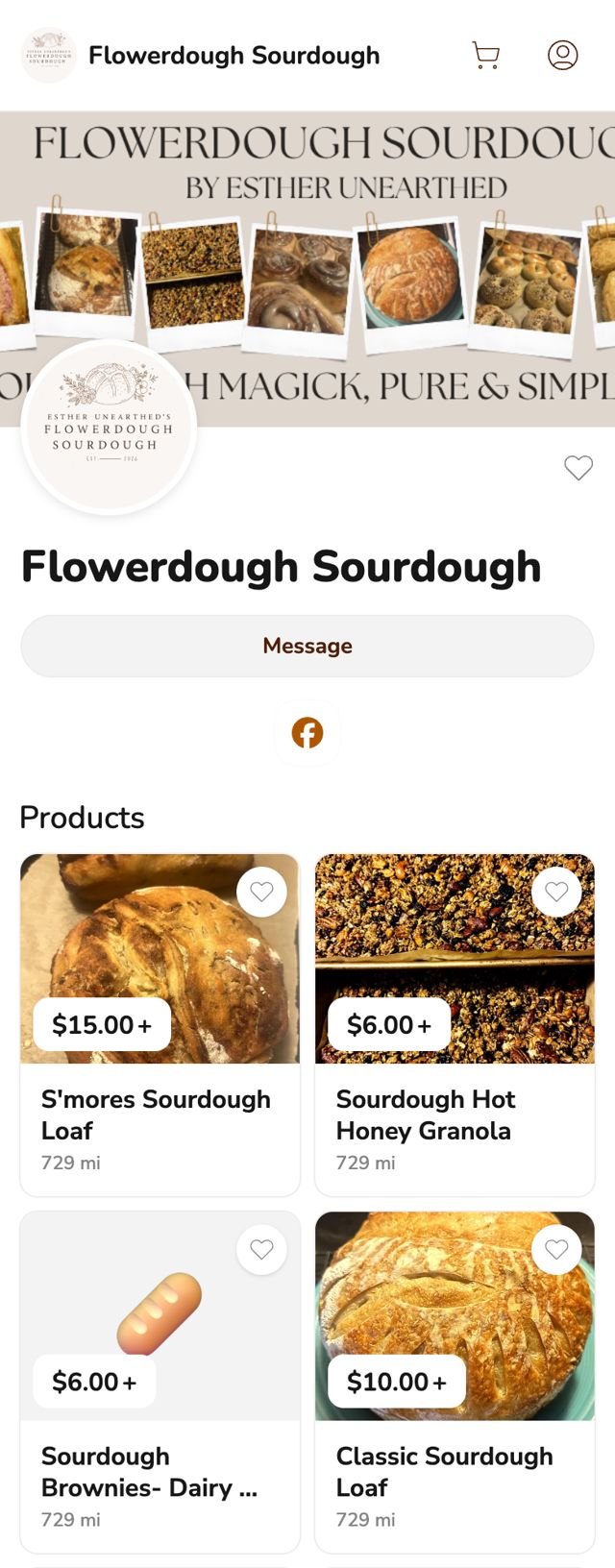
Those pickup days are what make pre-orders work for bread. Customers pick a day when they order, and the order summary for that day tells you how many of each loaf to mix before you build your levain.
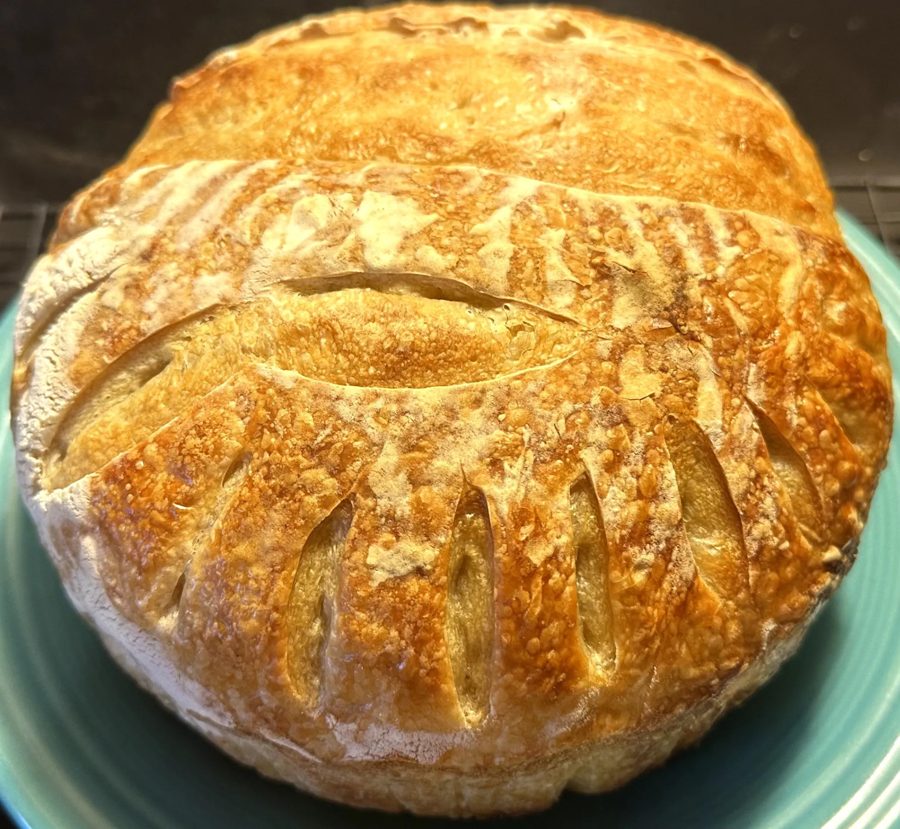
Sourdough leads. In a pull of our catalog on August 14, 2026, 75 of the 219 vendors on Homegrown listed at least one bread, roll or bagel, and 180 of those 295 bread listings had sourdough in the name.
In a pull of the Homegrown catalog on August 14, 2026, 75 of the 219 vendors listed at least one bread, roll or bagel, 295 of the 1,804 products in all. 180 of them had sourdough in the name, and 25 vendors listed 5 or more breads. We sorted by the words in each product name. These are product listings, and they are not sales figures.
The 295 bread listings on Homegrown, by the words in the product name
Source: Homegrown catalog pull, August 14, 2026. A listing with sourdough in the name counts as sourdough, even if it is a bagel or a roll.
Use a pre-order system so you know exactly how many loaves to bake before you start mixing. Once you have six or eight people who want a loaf every week, managing it over text gets messy fast. Who wanted sourdough, who wanted the seeded rye, who needed it before noon on Saturday, who's picking up at the market vs. porch pickup at your house. It's a lot to track with back-and-forth messages, and one missed text means a disappointed customer or a loaf baked for nobody.
A pre-order system gives you a clear record before you bake. You know exactly how many loaves to make, what type each person ordered, and when they're expecting it. No scrambling, no over-baking because you weren't sure of demand, no "wait, did she want two this week or one?"
It also makes your production planning tighter. If you know by Thursday at noon that you have 9 loaves committed — 6 sourdough, 2 seeded, 1 cinnamon raisin — you can build your levain to exactly that amount. No waste, no guessing, no stale bread at the end of the weekend.
Text threads and group messages work when you have 3-4 regulars. Past that, Thursday afternoon becomes a second job — scrolling through messages, confirming who paid, figuring out if the person who said "maybe two loaves" actually committed. You're doing this while you should be building your levain.
Google Forms + Venmo adds a layer of structure — people fill out what they want, you match payments to entries by hand. Works for a few weeks until someone Venmos you $10 with no note and you have three people who each ordered one sourdough.
Venmo also takes a cut when customers pay for bread. Its fee page lists 2.99% when a payment to a personal account is marked for goods and services, and 1.9% + $0.10 on payments to a business profile.
Homegrown costs $10 a month billed yearly or $12.50 month to month, plus 2.9% + 30 cents per card payment, and turns your Thursday cutoff into an actual system. You list what you're baking this week — 8 sourdough boules, 4 seeded rye, 2 cinnamon raisin — customers order and pay through one link. Enter a count for every loaf, and each one stops taking orders once it sells out. Share the link Monday and set an order cutoff date ahead of your Thursday evening levain build, so when orders close you have an exact production list: how many of each loaf, who's picking up at market vs. porch, and every order already paid.
Customers create a Homegrown account to check out, and you get an order summary for each pickup day, so the production list is ready when you sit down to plan the bake.
Swipe sideways to compare all three options.
| What you need | Text Threads | Google Forms + Venmo | Homegrown |
|---|---|---|---|
| Closes when your batch fills up | No | No | Yes |
| Collects payment at order time | No | Separate step | Yes |
| Gives you a production list by bread type | Manual counting | Partial | Yes |
| Handles market vs. porch pickup | You track it | You track it | Built-in |
| Cost | Free | Venmo fee on each payment (2.99% or 1.9% + $0.10) | $10/month billed yearly or $12.50 monthly, plus 2.9% + $0.30 per card payment |
Homegrown's free market finder lists 8,500+ farmers markets, and its free vendor application writer drafts the letter you send to apply for a booth. It won't land a wholesale account with a local cafe for you. The storefront handles the part that gets chaotic as you grow — the Thursday-to-Saturday pre-order cycle, the repeat customers, the "which loaves am I actually baking this week" question — and keeps it out of your text messages.
Yes. Sourdough is leavened with wild yeast and bacteria from your starter culture, but under cottage food laws it's classified the same as any other bread — a shelf-stable baked good. The natural fermentation actually makes sourdough more acidic and more shelf-stable than commercial yeast bread. There's no regulatory distinction between sourdough and other bread in virtually any state's cottage food law. If anything, sourdough's natural acidity is a food safety advantage.
No, not for cottage food sales in most states. pH testing requirements apply to acidified foods like hot sauce, salsa, or pickles — not baked products. Sourdough's acidity is a natural byproduct of fermentation, not a controlled acidification process. Your state's cottage food law almost certainly doesn't require pH testing for selling bread from home.
Gluten-free bread is still a dry baked good, so it usually falls under the same cottage food rules as any other loaf. Check your state's allowed foods list to be sure. The main practical consideration is cross-contamination. If you bake wheat bread in the same kitchen — using the same mixer, counter, and oven — trace amounts of gluten can end up in your gluten-free products. Disclose this clearly on your label: "Made in a facility that also processes wheat." Customers with celiac disease need to know your home kitchen is not a certified gluten-free facility.
Need more help here? See our guide on selling sourdough bread from home.
Generally yes. Brioche and challah are shelf-stable at room temperature even though they contain eggs and butter. Those ingredients must be disclosed on the allergen label, but the products themselves don't require refrigeration after baking. The exception is if your recipe includes a fresh dairy or cream filling that needs refrigeration — that filling might push the product outside standard cottage food allowances.
Shelf life varies by bread type:
Swipe sideways to see the storage notes.
| Bread Type | Shelf Life | Storage Notes |
|---|---|---|
| Artisan sourdough | Best within 2-3 days, edible 4-5 days, good toast 7+ days | Natural acidity gives it longer shelf life |
| Commercial yeast bread | Best within 2-3 days, edible 3-4 days at room temperature | Stales and molds about a day sooner than sourdough |
| Enriched breads (brioche, challah, milk bread) | 3-4 days at room temperature | Fat content keeps them moist but can go off faster once window passes |
Store in a paper bag or cloth wrap, not plastic. Plastic traps moisture, softens sourdough crust, and can accelerate mold growth. Include a best-by date on your label and recommend that customers slice and freeze what they won't eat in 2 days.
Most state cottage food laws don't require insurance, but many farmers markets and events do, as FLIP's cottage food insurance guide explains. A basic product liability insurance policy for a home-based food business can cost about $299 a year (FLIP's home bakery policy starts at $299 a year, or $25.92 a month) and covers you if a customer claims your product caused them harm. It's worth considering once you're selling regularly, and it's required by many farmers markets as a condition of getting a booth.
A standard home oven with a Dutch oven handles 1-2 loaves per bake cycle, which takes about 35-45 minutes per round. With a Dutch oven and a baking steel running simultaneously, you can do 2-3 per round. For a typical farmers market, plan on producing 8-15 loaves across 3-8 bake rounds starting early in the morning. At 35-45 minutes a round, 5 rounds of 2-3 loaves (10-15 loaves) take about 3 to 4 hours of oven time. With a single Dutch oven, the same 8-15 loaves take 4-15 rounds.
In many states, yes. Georgia's Department of Agriculture says cottage food operators don't need a license from it and sets no limit on gross sales, and Florida lets you sell without a food permit from its agriculture department as long as sales stay under $250,000 a year. Washington is stricter and asks for a $355 cottage food permit and a kitchen inspection first. If you also want to sell bread online, check that your state allows internet orders, as Florida's law does. A farmers market can still ask for its own license, even where the state does not.
The Bureau of Labor Statistics tracks bread prices by the pound. Its August 2026 U.S. city average for white pan bread was $1.82 a pound, and whole wheat pan bread averaged $2.81 a pound in May 2026, the latest month listed. Homemade sourdough sells for more. On Homegrown, a classic sourdough loaf starts at $10.00 at Flowerdough Sourdough and costs $10.00 at SunDaze Micro-Bakery. When you sell bread online from home, price against loaves like those instead of the bread aisle.
Apply to the market, bring labeled loaves and take pre-orders during the week, so part of your batch is sold before you set up. Ask the market what it requires first, because Georgia's Department of Agriculture notes that a market can require its own license even when state cottage food rules do not. The Des Moines bakery Flowerdough Sourdough shows how the two channels fit together: its Homegrown storefront lists the Downtown Farmers Market on Saturdays next to its own pickup pop ups. If you sell bread online as well, the market becomes a pickup spot for loaves that are already paid for.
Your bread is better than what most people buy at the store — that's why they keep asking if they can buy a loaf from you. The people who've been eating your sourdough already know it's worth paying for. You just need to make it official. For a deeper look at this topic, see selling baked goods.
Start at your next farmers market or with the small group of friends and neighbors who've already expressed interest. Set a bake day, set an order cutoff, take your first reservations. Keep it simple — a few loaves, a few customers, one pickup option. You can always expand once the rhythm is working.
When those regulars start texting every Thursday asking about this week's loaf, give them an ordering link instead. Set up takes 15 minutes, and your first Thursday cutoff will feel like a different business.
The customers are already there. You're just giving them a way to buy.



