
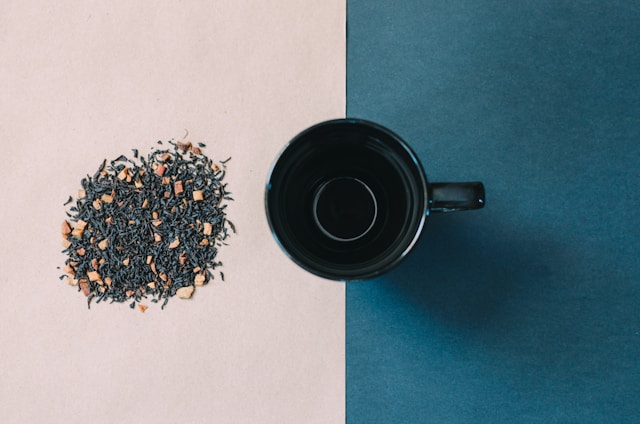


The short version: Dried herbal tea fits the cottage food rules in California, Colorado, Ohio and Texas, four of the 5 states we read: the first three name tea on their lists and Texas allows any food outside a short banned list, while Florida's list has no tea line, so its "Dry herbs, seasonings and mixtures" is the closest fit to confirm with the state. The rule that trips up tea vendors is about words, not kitchens: a tea sold as food can describe flavor and ingredients, but a claim that it treats, cures or prevents a condition is a drug claim, and FDA says "only a drug can legally make such a claim." At supplier prices we checked, a 2-ounce peppermint and chamomile pouch costs about $3.95 to make, so a $16 price keeps about 75% before any selling fee. Sell at farmers markets, through local shops where your state allows it, by mail where your state allows it, and through your own ordering link.
Checked October 1, 2026: each state's cottage food page, FDA's claims pages, Mountain Rose Herbs and Paper Mart prices, and Homegrown's signup page ($10 a month billed annually, 2.9% + $0.30 card processing paid by the vendor). Rules change, so verify your state's current rules before you sell. Homegrown customers create an account to place a first order, and Homegrown handles pickup and local delivery, not shipping.
Herbal tea is one of the easiest products to make in a home kitchen and one of the easiest to get wrong on the label. The making part is simple: dry herbs, a scale, a bowl and a pouch. The label part is where new vendors slip, because the words you put on a pouch decide whether the government treats your tea as a food or as a medicine.
Herbal teas are shelf-stable, lightweight and quick to pack. Four states on our five-state list name or clearly allow dry tea in their home kitchen rules, and the fifth, Florida, lists dry herb mixtures. And unlike fresh pasta or fermented foods, the legal path for dry tea is short, as long as you follow one rule about what you claim.
This guide covers the legal rules state by state, what you can and cannot say, how to make and price a blend from real supplier costs, packaging and labels, equipment and startup cost, and where to sell your herbal teas.
Ready to actually start selling? Take orders and get paid online in about 15 minutes with a Homegrown storefront ($10 a month billed annually, 0% commission, plus 2.9% + $0.30 card processing, which you pay), or compare the best platforms to sell food from home first.
Yes in four of the five states we checked on October 1, 2026: dried herbal tea blends qualify there because dry tea does not need refrigeration to stay safe. Florida's list has no tea line, so confirm with the state before you sell tea there. A cottage food law is a state law that lets you make low-risk foods in your own kitchen and sell them without a commercial kitchen or a food plant license.
Here is how each of the 5 states covers tea:
What you need before your first sale depends on the state. Of those five, only California makes you register or get a permit today (Colorado adds a yearly CDPHE registration on January 1, 2027), through your county's environmental health office. Colorado, California and Texas require a food safety course. Ohio and Florida's pages do not mention a course. Check your own state's list in our cottage food laws by state guide.
The legal path for herbal tea is simpler than for many foods. You do not need a commercial kitchen in any of these 5 states. Dried tea blends sit with other shelf-stable foods like cookies, granola and dried pasta. Which tea counts is where the lists split, and the guide to whether you can sell homemade tea checks bottled and brewed tea line by line.
Brewed tea is a different product from dry tea, and the cottage food rules treat it that way. Colorado's page lists "Beverages" as ineligible for cottage food. California's approved list names dry tea and "Powdered Beverage Bases/Mixes," not brewed drinks. If you want to pour cups of tea for customers, or open a tea shop, plan on the licensing your city, county and state require for a food business, which sits outside cottage food. Selling dry blends from home is the low-cost way to test what people buy before you sign a lease.
You can describe how your tea tastes, what is in it and when to drink it. You cannot say it treats, cures, prevents or eases a disease. That one rule matters more than your permit, your scale or your price, because it decides which federal category your tea falls into. A supplement claim brings a 30-day FDA notice; a disease claim makes it a drug.
The federal food law defines a drug by what it is for. Under 21 U.S.C. 321, a drug includes "articles intended for use in the diagnosis, cure, mitigation, treatment, or prevention of disease." The same section defines a dietary supplement as a product "intended to supplement the diet" that contains a dietary ingredient, and "an herb or other botanical" is on that list. So the same chamomile can be a food, a supplement or a drug, depending on what you say it does.
FDA's page on structure/function claims sets the lines. A structure/function claim says how something affects the normal working of the body. For regular foods, FDA says these claims "focus on effects derived from nutritive value." A dietary supplement can make a structure/function claim, but the maker must notify FDA "no later than 30 days after marketing" and print a disclaimer saying the product is not intended to "diagnose, treat, cure or prevent any disease," "because only a drug can legally make such a claim."
Scroll sideways to see every column.
| What you write on the pouch or listing | What FDA calls it | Where it puts your tea |
|---|---|---|
| "A bright peppermint and chamomile blend for after dinner" | A description of flavor and use, not a health claim | Food. Your state's cottage food rules apply |
| "Helps you sleep" or "supports relaxation" | A structure/function claim about an effect that is not nutrition | Outside what a food claim covers, and off every cottage food list we checked. As a dietary supplement it needs, among other federal rules, an FDA notice within 30 days and the FDA disclaimer |
| "Treats colds," "decreases migraines," "lowers blood pressure" | A disease claim. 21 CFR 101.93 counts high blood pressure as a disease example | A drug, the one category FDA allows to make a disease claim |
| "May reduce the risk of heart disease" | A health claim | Needs FDA authorization first. Ohio's cottage food page also requires a Nutrition Facts panel for health claims, and Florida's statute requires nutrition information for any nutritional claim |
We read FDA's Structure/Function Claims and Label Claims pages, 21 CFR 101.93 on eCFR and 21 U.S.C. 321 on October 1, 2026. None of the 5 state cottage food pages we read that day mention dietary supplements; they list foods.
The safe place for a home tea business is the first row. A sleep or calm claim on an herbal tea is not about nutrition, so it moves your pouch out of the plain food lane and into the supplement rules, which come with a federal notice and a mandatory disclaimer. No state page we read lists dietary supplements as a cottage food, so a sleep or calm claim also takes the pouch outside what those pages cover. Federal supplement rules also reach past the notice and disclaimer to how the product is made, under 21 CFR part 111. A disease claim moves it all the way to drug rules, which no home kitchen can meet.
What you can say:
What you cannot say:
Watch your product names too. 21 CFR 101.93 says FDA can find a disease claim in "the name of the product," in pictures and symbols, and in a citation to a book or article that names a disease use, not only in your description. The FTC's guidance gives an example of how a name adds up: a product called "Cold Away," sold with pictures of people sneezing and coughing and a line about nose and throat health in winter, likely tells buyers it prevents colds.
Yes, your posts, signs and reposted reviews count as much as your label. The Federal Trade Commission, which polices advertising, says in its Health Products Compliance Guidance that advertising includes "statements or depictions on packaging and labeling," "social media and influencer marketing," and claims made at trade shows. A market sign, a caption and a story all count.
Customer reviews count too when you repost them. The same FTC guidance says advertisers "should not make claims through consumer testimonials" that they could not back up themselves. If a customer posts "your tea cured my cold" and you share it, you have made that claim. The guidance even uses an herbal tea as an example. An ad that says "Ancient remedy used for centuries to aid digestion" next to an equally clear "There is no scientific evidence that it works" likely conveys how limited the support is. Add a customer saying the tea gave her "instant relief for her upset stomach," and the FTC says the whole ad likely tells buyers the tea works for digestion. That is the risk in reposting a glowing review. The example is about whether an ad misleads buyers, not about your label. On your own pouch, "aid digestion" is still an effect that is not about nutrition, so FDA's rules above still take the tea out of the plain food lane, disclaimer or not.
In March 2020 the FTC settled with Teami, a tea company that claimed its "Teami 30 Day Detox Pack" would help people lose weight and that its other teas would "fight cancer, clear clogged arteries, decrease migraines, treat and prevent flus, and treat colds." The order imposed a $15.2 million judgment, suspended on payment of $1 million. We read the FTC's release on October 1, 2026. A home vendor is smaller, but the words are the same words.
Of the 5 state pages we read, Colorado and Texas name one ingredient group outright: products containing CBD or THC, the compounds from hemp and cannabis, are not allowed as cottage food. Colorado goes further: the eligibility check on its cottage foods page marks any product containing hemp as not an eligible cottage food, so a hemp leaf or hemp flower blend does not qualify there. Ohio's rule is stricter in a different way: anything not on its permitted list is not allowed, so a tea ingredient that is not a dry herb or a dry tea blend does not qualify there.
FDA does keep a short list of plant ingredients that may not be added to food, in 21 CFR part 189: it names sassafras tea, calamus root and tonka beans, so leave those out of any blend. A plant missing from that list is not a green light either. If an herb is sold mostly as a medicine where you live, or you have only seen it in capsules and tinctures, ask your state's cottage food program before you blend it. This guide does not say any herb is safe or effective for any condition, and your label should not either.
In Ohio, Colorado (through 2026) and Texas, and in Florida if your blend fits its dry herb mixtures line, you do not need a state license to sell dry tea from home, and California requires a county registration or permit. Selling online is a separate question from the license, because each state limits how the tea gets from your kitchen to the buyer.
Swipe the table to see all six columns.
| State | Is dry tea covered? | Permit or registration | Training | Online orders and delivery | Sales cap |
|---|---|---|---|---|---|
| California | Yes, "Tea" and "Herbs & herb blends" | Register (Class A) or get a permit (Class B) with county environmental health | Cottage Food Operator Training within three months | Class A sells direct, including by internet, fulfilled in person, by mail or third-party delivery | $88,878 Class A, $177,756 Class B in 2026 |
| Colorado | Yes, "Dry teas" | No state license through 2026; yearly CDPHE registration from January 1, 2027 | Required, one of three course options | Internet sales allowed with no interstate commerce, direct to an informed end consumer | $10,000 net revenue per product type through 2026; $150,000 total a year from January 1, 2027 |
| Florida | No tea line; its dry herb mixtures line is the closest fit, so confirm with FDACS | No FDACS food permit | Not mentioned on the page | Internet or mail order, delivered in person, to an event venue, or by USPS or a commercial carrier. No wholesale | $250,000 gross |
| Ohio | Yes, "dry tea blends" | No license or inspection, subject to state sampling | Not mentioned on the page | Sold only in Ohio, from home, grocery stores, registered farm markets, farmers markets and restaurants | None stated on the page |
| Texas | Yes, any food outside the banned list | No permit or fee; registering is optional for non-refrigerated foods like tea | Accredited food handler course | Online sales allowed if you, an employee or a household member deliver it in person | $150,000 annual gross |
We checked each state's agency page on October 1, 2026: California CDPH's cottage food page, Approved Cottage Foods list and 2026 Adjusted Gross Annual Sales Limit PDF, plus its Cottage Food Labeling Requirements PDF, read October 2; Colorado CDPHE's cottage foods page; Florida FDACS's cottage foods page and Florida Statutes 500.80; the Ohio Department of Agriculture's cottage food page; and Texas DSHS's cottage food page. California's web page still shows the original $75,000 and $150,000 figures; the 2026 PDF has the inflation-adjusted limits.
The pattern across the 5: only 2 of them, California and Florida, say in writing that a cottage food order may go by mail. Texas allows online orders but wants you, an employee or a household member to hand them over. Colorado allows internet sales inside Colorado, and you and the buyer agree on how you deliver it directly; the page does not say whether mail counts, so ask CDPHE before you ship. Ohio's page limits sales to Ohio and lists the places you can sell. So "can I sell tea online?" usually has a yes for taking the order and a "check your state" for shipping it.
Texas lets you take a tea order online, but before you accept payment you must post all the label information on your website, and after payment the label needs your address or the ID number DSHS gives you when you register. We read that on the Texas DSHS cottage food page on October 1, 2026.
The blends that are easiest to sell combine herbs customers already know with one or two touches they cannot find at the grocery store. A buyer who recognizes peppermint or chamomile on the label will try your version; a list of six unfamiliar plants is a harder sell.
In a pull of the Homegrown catalog on October 1, 2026, 10 of the 2,748 products listed by 308 vendors were sold as tea to drink, going by each listing's own name or description, and they came from 5 vendors. Only 5 were dry tea you steep at home, meaning the listing's own words say loose leaf tea, infusion or steep: three $13.00 loose leaf blends from one homestead, including a mint blend, and two $7.99 herbal infusions from another shop, one of them peppermint. That same shop lists 11 more $7.99 botanical blends, 10 of them in Health and Wellness and one for dogs, whose listings do not say tea, infusion or steep, so they are not counted. All 5 are filed under Health and Wellness. The other 5 were a $9.00 listing called Jarred Teas with no description, an $8.00 Russian tea mix sold in 4- or 8-ounce jars, and three $3.00 cold brewed iced teas. We read every match by hand and each counted vendor's full product list; soaps, candles, tinctures, scones, coffees and syrups that mention tea, and a worm tea kit for gardens matched the words and were left out. So were two $10.00 dried herbs from one farm, lemongrass and cinnamon basil, whose listings name tea as one of several uses. These are listing prices, not sales.
That pull says two things. Dry tea is still rare on the marketplace, so a vendor with three good blends stands out. And mint is in 2 of the 5 dry tea listings, which is a good sign for starting with a familiar herb.
These are the blends to build your table around, because the herbs are easy to buy by the pound or grow:
Specialty blends let you charge more per ounce and set you apart from the next table:
Start with 3 to 5 core blends and build from there. A strong starting lineup looks like this:
The variety pack does real work. A first-time customer who is not sure which blend to try will buy a sampler, and the one they finish first tells you what to put in their next order.
You make a sellable blend by writing a recipe in grams, testing it in a cup, and then making every batch from that same recipe. A 64-ounce batch fills 32 two-ounce pouches. Weighing by grams is what lets your 2-ounce label stay true from the first batch to the hundredth.
If you want to sell tea bags instead of loose tea, the recipe step is the same. You weigh the blend into empty fill-your-own tea bags, then pack the bags in a pouch or box. The label still lists the ingredients and the net weight of everything in the package.
Price a pouch at about 4 to 5 times what it costs you to make, then check that number against the channel you sell through. On October 1, 2026 prices, a 2-ounce pouch of our 3-to-1 peppermint and chamomile blend costs $3.95 to make, which puts it at $15.80 to $19.75. We use $16 as the working price through the rest of this guide.
Here is where the $3.95 comes from. On Mountain Rose Herbs' product pages on October 1, 2026, organic peppermint leaf was $25.00 for a 1-pound bag ($1.5625 an ounce) and organic chamomile flowers were $42.00 a pound ($2.625 an ounce). Paper Mart's kraft stand-up pouch with an oval window was $163.47 for 1,000, about 16 cents each. Avery's 2.5-inch kraft round labels were $14.58 for 225 at Walmart, so two labels per pouch, one front and one back, cost about 13 cents.
Swipe left for the cost and price columns.
| Size | Herbs | Pouch | Two labels | Cost to make | 4 times cost | 5 times cost |
|---|---|---|---|---|---|---|
| 0.5 ounce sample | $0.91 | $0.16 | $0.13 | $1.21 | $4.83 | $6.04 |
| 1 ounce | $1.83 | $0.16 | $0.13 | $2.12 | $8.48 | $10.61 |
| 2 ounces | $3.66 | $0.16 | $0.13 | $3.95 | $15.80 | $19.75 |
| 4 ounces | $7.31 | $0.16 | $0.13 | $7.61 | $30.42 | $38.03 |
Blend: 3 parts peppermint to 1 part chamomile by weight, $1.828 an ounce at the 1-pound bag prices. We loaded Mountain Rose Herbs' peppermint and chamomile pages and clicked each size, Paper Mart's pouch page and Walmart's label listing on October 1, 2026. Costs are figured from unrounded prices, so a row can differ from the sum of its rounded cells by a cent. The pouch is sold as 4-ounce capacity; loose herbs are bulky, so fill one with your blend before you buy a pack. The 4-ounce row uses that 16-cent pouch as a floor: 4 ounces of loose herbs likely needs a bigger bag, such as Paper Mart's 7 by 11-1/2 inch kraft stand-up pouch, sold as 16-ounce capacity at $261.06 for 1,000 (about 26 cents), which adds about 10 cents to that row's cost. Your own herb cost will differ, so redo this table with your numbers.
Price each product off its own cost, because herbs do not cost the same. With the supplier prices above:
Use a cost-plus formula: herb cost plus packaging, times 4 to 5. For the wider method across products, see our how to price food products guide.
Example, the 2-ounce pouch:
Buy herbs by the pound, not the ounce. At Mountain Rose Herbs on October 1, 2026, a 1-ounce bag of peppermint was $7.25 and of chamomile $8.75, against $25.00 and $42.00 for 1-pound bags. Built from 1-ounce bags, the herbs alone in a 2-ounce pouch of the 3-to-1 blend cost $15.25, so the pouch costs about $15.54 to make and a $16 price leaves you about 46 cents. The same pouch from 1-pound bags costs $3.95.
If you grow your own chamomile, lavender, mint or lemon balm, your herb cost becomes seeds, water, garden space and your drying time instead of a supplier's price per ounce. That can push your margin above the 75% in the example, and it gives you a story no grocery store brand can tell.
Growing your own also means you can offer blends that are truly yours. "Grown in my garden, blended in my kitchen, packed by hand" is a strong line for a market sign, and it is a flavor and origin story, not a health claim. Oregon State University Extension's guide to drying herbs says to dry them in a dehydrator at 95°F to 115°F, which takes 1 to 4 hours, and that herbs are dry "when they crumble and stems break when bent."
Yes, on the numbers: a $16 pouch that costs $3.95 to make leaves $12.05 before fees, and the fee you pay depends on where it sells. Through a Homegrown storefront link that pouch leaves about $11.29, on Etsy about $10.08, and on Amazon's Individual plan about $8.66, before shipping and before Homegrown's $10 a month plan.
What each channel takes from one $16 pouch
Source: each company's pricing page, checked October 1, 2026. Per-pouch fees only; Homegrown adds $10 a month billed annually and Amazon Professional adds $39.99 a month. Full fee stack in the table further down.
Here is a month at 50 pouches, which is $800 in sales at $16. Your cost to make them is $197.47. Sold through your Homegrown link on the annual plan, fees are $48.20 and you keep $554.33. Sold on Etsy, fees are $98.50 and you keep $504.03, before Etsy shipping costs. Sold for cash at the booth, you keep $602.53, minus your booth fee. None of these figures counts your time, travel, insurance or taxes, so treat them as the most a month like this can pay, not the profit.
That gap is the case for running two channels: a market table and a link for local reorders, with shipping only where your state allows it and the customer is far away.
A resealable stand-up pouch is the simplest choice, at about 12 to 16 cents each in a pack of 1,000 from Paper Mart on October 1, 2026. Packaging matters more for tea than for most foods, because tea is light, it smells, and it has to stay dry for months in a customer's cupboard. Your package needs to protect the tea, look good on a table and leave room for the label.
Pouches, paper bags and sample bags run from about 2 cents to 42 cents apiece in bulk at Paper Mart, and jars cost more, so pick the one that fits your price and your table.
Loose tea is the simpler place to start, because you only weigh and pouch it. Tea bags take longer to fill, one measured portion at a time, but some customers will pay more for the convenience. If you sell both, keep the same recipe and label each package with the net weight of the tea inside.
Every package of herbal tea you sell needs a label. Most labels need the lines below, and your state's page has its exact list:
From January 1, 2027, Colorado labels must also carry your CDPHE registration number, the county where the food was made and CDPHE's cottage food web address. Colorado also requires a sign at the point of sale: "This product was produced in a home kitchen that is not subject to state licensure or inspection. This product is not intended for resale." Our cottage food labeling requirements guide covers the rest of the label rules, and the Big 9 allergen guide covers the allergen line.
Keep your labels clean and simple. A clear ingredient list, an attractive design and your business name are what a buyer reads. A template printed on kraft sticker paper looks finished, and at the Avery price above, two labels cost about 13 cents a pouch.
Store dried herbal tea in airtight packaging in a cool, dark, dry place, and plan for it to be best within six months to a year. Oregon State University Extension says dried herbs "can be stored effectively for up to one year in a cool, dry, dark place" and, for best flavor, to "use within six months to one year." It also says whole leaves keep their flavor longest and crushed or ground herbs lose aroma faster, so a blend of whole or coarsely cut leaves holds up better than a fine powder.
Put the blend date on every pouch. A best-by date six months after blending sits at the careful end of that range and gives your customer time to finish the pouch.
Starting an herbal tea business takes very little equipment, and most of it is already in your kitchen. The one tool you cannot skip is a scale that reads grams, because your net weight label has to be true.
At the prices we checked, a first batch costs about $249 with garden herbs and about $308 with bought herbs:
Most of either total is the pack of 1,000 pouches, which will last you a long time. That is a small startup cost for a food product: no oven, no fridge, no jars to sterilize. These totals leave out your state's food safety course, which Colorado, California and Texas require, and California's county registration or permit fee; we did not price either one.
Herbal tea can sell in more places than most cottage foods because it is light, shelf-stable and easy to carry, but your state decides which of those places are open to you. Each channel takes a different cut of the same $16 pouch, from 57 cents on a Square reader at your booth to $3.39 on Amazon's Individual plan, with 76 cents plus the $10 monthly plan through your Homegrown link and $1.97 on Etsy, and the seven places tea actually sells compares them in full.
Farmers markets are a strong starting point for herbal tea, because buyers can smell the blend and talk to you. All five states on our list allow direct sales to customers in some form. Do the math on your booth before you go: 10 two-ounce pouches at $16 is $160 in sales, and those 10 pouches cost you $39.49 to make, so your booth fee comes out of the $120.51 left.
Tea sells better when people can try it. Bring jars of each dry blend people can open and smell, and offer tastes where your state and market allow it. Florida's page says cottage food samples "must be prepackaged," so in Florida a pitcher of brewed tea is out under the cottage food rule.
A weekly or biweekly pre-order works well for herbal tea because you can blend and pouch in one session. Take orders through your own ordering link and hand them over at your next market or a pickup spot near you. Pre-orders also tell you how much of each blend to make, so you are not guessing before market day.
Herbal tea is easy to place in a shop because it lasts for months, takes little shelf space and appeals to gift buyers. But whether a shop may sell your cottage food depends on the state:
If a shop can buy from you and pays half of a $16 shelf price, that is $8 a pouch, and with $3.95 of cost you keep $4.05. The full tea pricing guide costs out every size from a half-ounce sample to a four-ounce refill; it was checked September 21 with a 12-cent pouch and one 10-cent label, so its 2-ounce cost is $3.87 against this page's $3.95, which uses a 16-cent window pouch and two labels. The guide to selling food in local stores covers the pitch.
Herbal tea is a natural fit for gift sets. Price a set of three 2-ounce pouches at $45 to $48 and push it hardest from October through December. If you partner with other local vendors, such as a beekeeper or a candle maker, have each vendor sell their own product at a shared table rather than one person reselling the other's, because Colorado's sign says cottage food is "not intended for resale."
Shipping makes tea available to faraway customers, but the postage is often bigger than you expect. On the USPS price list effective July 12, 2026, a Ground Advantage retail parcel up to 4 ounces costs $7.90 in zone 1, the closest zone, $8.05 in zone 2, and up to $9.45 in zones 8 and 9. Commercial prices, the rates online postage services charge, run $6.93 to $8.40 for the same weight. On a $16 pouch, retail postage is 49% to 59% of the price, so bundle several pouches per box or charge shipping.
Check whether your state lets cottage food go by mail before you sell online to people you cannot hand it to. Only California and Florida, of the states in our table, say so in writing. Our guide on whether you can ship cottage food has the state-by-state rules.
Amazon has the highest fees of any channel in this guide, and we did not confirm that it accepts home kitchen tea. On Amazon's pricing page on October 1, 2026, the Individual plan was $0.99 per item sold and the Professional plan $39.99 a month. The Grocery and Gourmet referral fee was 8% on products priced at $15.00 or less and 15% above $15.00. On a $16 pouch that is $2.40, plus $0.99 on the Individual plan, for $3.39. Price the same pouch at $15 with shipping built in, so the buyer's total stays at $15, and the referral fee falls to $1.20. That is not a saving: after the $0.99 item fee, your $3.95 cost and $7.90 to $9.45 of retail postage for a 4-ounce parcel, you keep about 96 cents a pouch in zone 1 and lose about 59 cents in zones 8 and 9. Amazon's rules for food listings, including whether a home kitchen product is accepted, were not checked for this guide, so confirm them, and that your state allows shipped cottage food, before you plan on Amazon.
Give your regulars one link where they see which blends you have, pick a size and pay before market day. Tea is a product people run out of and come back for, and the hard part is not the blending, it is keeping track of who wants what.
How it usually starts: customers text you, message you on Instagram, or catch you at the market. That works with 5 regulars. With 30, each wanting a different blend and size, your phone becomes the order book you manage between batches.
Homegrown is $10 a month billed annually ($12.50 billed monthly) with no percentage fees beyond standard payment processing of 2.9% + $0.30, which you pay, not your customer. Your customers get an ordering page with your blends, each with its sizes and prices as variants, a 1-ounce and a 2-ounce at different prices under one listing. They order and pay ahead, and choose a pickup time at your market, porch or another spot you set, or local delivery within the radius you choose. Inventory counts update automatically as you sell, and a low-stock alert tells you when the chamomile-lavender is running out. Every order lands in your dashboard prepaid, so you can count how many pouches of each blend to make.
Swipe left to see every fee.
| Platform | Monthly plan | Trial | Platform or marketplace fee | Card processing | You pay on one $16 pouch | You pay on 50 pouches ($800) in a month |
|---|---|---|---|---|---|---|
| Homegrown | $10 billed annually ($12.50 billed monthly) | 7 days, no charge until day 8 | None, 0% commission | 2.9% + $0.30, paid by you | $0.76 plus the plan | $48.20 ($50.70 on monthly billing) |
| Etsy | None | Not applicable | $0.20 listing fee plus 6.5% transaction fee; 15% Offsite Ads fee on sales from those ads | 3% + $0.25 | $1.97 | $98.50 |
| Square Online, Free plan | $0 | Not applicable | None | 3.3% + 30¢ online | $0.83 | $41.40 |
| Square reader at your booth, Free plan | $0 | Not applicable | None | 2.6% + 15¢ in person | $0.57 | $28.30 |
| Amazon, Individual plan | $0.99 per item sold | None listed | 15% referral fee in Grocery and Gourmet above $15 (8% at $15 or less) | No separate card fee listed on the pricing page | $3.39 | $169.50 |
| Amazon, Professional plan | $39.99 | None listed | 15% referral fee in Grocery and Gourmet above $15 (8% at $15 or less) | No separate card fee listed on the pricing page | $2.40 plus the plan | $159.99 |
We checked findhomegrown.com/signup, etsy.com/sell, squareup.com/us/en/pricing and sell.amazon.com/pricing on October 1, 2026. Fees are figured on the $16 price before shipping and tax; Etsy's 6.5% also applies to the shipping you charge, and so does Amazon's referral fee. Etsy may also charge a one-time shop set-up fee, shown before you finish opening the shop.
Etsy handles the shipped side well. If your state allows cottage food shipping, an Etsy listing puts your blends in front of buyers searching for herbal tea, within whatever area your state lets you ship to. On a $16 pouch, Etsy's fees come to $1.97, about 12%, which can work when you ship to customers you would never meet.
Square is the cheapest card option at your booth in this table, at 57 cents on a $16 pouch with the free plan's in-person rate, and its free plan includes an online site too.
Homegrown is built for the local side. It does not ship packages, so it does not replace your Etsy shop if you mail tea across the country, and it will not land wholesale accounts with cafes for you. Your blends also appear on the Homegrown marketplace, but plan on most tea orders coming from regulars you send your own link to. Customers create a Homegrown account to place their first order, and there is no countdown or limited-release feature for launching a blend. What it does is take the repeat local orders, the market pre-orders and the seasonal rotation off your phone.
If your regulars already message you every few weeks for the same blend, set up your Homegrown storefront and send them the link with your next batch.
Five habits help a tea table grow over a season: start from your garden, let people smell and taste, rotate blends, make reordering easy, and give the label real care.
If you have a garden, start with the herbs you already grow. Chamomile, lavender, mint, lemon balm, rosemary and lemongrass all dry for tea, and growing your own replaces a supplier's price per ounce with your own garden and drying time. It also gives you an honest story for your sign.
Tea is a sensory product, and customers want to smell it before they buy. Bring an open jar of each blend at every market, and brew tastes where your state and market allow it, iced in summer and hot in cooler weather. Florida's rule that cottage food samples be prepackaged means a Florida vendor hands out sealed sample packs instead of cups.
Keep your product line fresh by rotating one or two blends each season:
Seasonal blends give repeat customers a reason to come back ("only until the end of December") and give you a reason to post.
Herbal tea is used up and bought again, which makes it a good fit for a standing order. Offer a "tea of the month": a new blend each month, ready for pickup or shipped where your state allows mail. On Homegrown that is a listing your regulars order each month; the signup page's feature list does not include automatic monthly billing for customers, so they place each order themselves.
The order system above handles the local side. If most of your repeat buyers live far away, Etsy or a shipped order through your own site is the better fit, as long as your state allows mail.
Herbal tea sits in a customer's kitchen for weeks, so your label gets seen every time they reach for it. A clean, simple design that shows your name and the blend makes your pouch look like it belongs on a boutique shelf, and a matching seasonal label tells regulars something new is out.
Of the five states we read, four cap how much a home kitchen may sell, and past that cap you need a licensed food business. In our five-state read, the caps run from $10,000 per product type in Colorado (through 2026) to $250,000 in Florida, and Ohio's page states no cap.
Cottage food sales caps in five states
Source: Colorado CDPHE cottage foods page, California CDPH 2026 Adjusted Gross Annual Sales Limit PDF, Texas DSHS cottage food page and Florida Statutes 500.80, all checked October 1, 2026. Ohio's cottage food page states no cap.
At $16 a pouch, Colorado's $10,000 per product type is 625 pouches of one blend in a year, about 12 a week, if every dollar of sales counts against it. From January 1, 2027, Colorado's cap becomes $150,000 total a year, adjusted for inflation. Colorado calls today's cap a net revenue allowance, so ask CDPHE how it counts before you plan around that number. The other caps leave a part-time tea vendor plenty of headroom. California adjusts its caps for inflation every January, so a number from an older article is likely out of date.
What comes next is set by state law. Florida's statute, for example, exempts a cottage food operation from the state's food permit only while gross sales stay at or under $250,000; past that, the permit applies. The usual step up is a rented commercial kitchen or a licensed food facility, which is where "tea manufacturing plant" cost questions start. Plan that move a season before you reach your cap, not after.
You can go from blend to first sale in a few weeks for about $249 to $308 in equipment, packaging and herbs, plus your state's course or registration fee, which we left out, by doing the steps in this order. Each one is small, and the legal steps come before the money ones.
No state license is needed to sell dried herbal tea from home in Ohio, Colorado (through 2026, then a yearly registration) or Texas, or in Florida if your blend fits its dry herb mixtures line, and California requires registration or a permit with your county's environmental health office. Those are the 5 states we read for this guide. Colorado, California and Texas require a food safety course. Check your state's rules in our cottage food laws by state guide before your first sale.
Not as a cottage food. A claim that your tea treats, cures, prevents or eases a disease makes it a drug under federal law, and FDA reserves disease claims for drugs. A sleep or relaxation claim moves herbal tea toward the dietary supplement rules, which require an FDA notice within 30 days, a printed disclaimer and federal manufacturing rules, and no cottage food list we checked includes supplements. Keep your labels, signs and posts on flavor, ingredients and how to brew it.
Oregon State University Extension says dried herbs keep best "within six months to one year" when stored airtight in a cool, dark, dry place. Whole leaves keep their flavor longer than crushed or ground herbs. A blend date and a best-by date six months later keep every pouch inside that best-flavor window. That long life means a slow week does not turn into spoiled stock.
It depends on your state. California and Florida are the two states in our five-state read that say in writing that cottage food may go by mail, Texas wants online orders delivered in person, and Colorado bars interstate sales. Postage is the other catch: a USPS Ground Advantage retail parcel up to 4 ounces was $7.90 to $9.45 on the July 2026 price list, so bundle pouches into one box. Our cottage food shipping guide lists the rules state by state.
On October 1, 2026 prices, starting costs about $249 if you grow your own herbs and about $308 if you buy them. That covers a $12.53 kitchen scale, 1,000 pouches for $163.47, 225 labels for $14.58, and either a $57.88 dehydrator or $117 of peppermint and chamomile, enough for 32 two-ounce pouches. Most of it is the pouch pack, which lasts well past your first season. No oven, fridge or canning gear is needed. Those totals do not include a food safety course or California's county registration or permit fee, which we did not price.
Chamomile, peppermint, spearmint, lemon balm, lavender and lemongrass are common first choices for home tea growers. They are familiar to buyers, and the leaves and flowers dry in a dehydrator at 95°F to 115°F in 1 to 4 hours, per Oregon State University Extension. Start with two or three herbs in your first season and add more as you learn what sells in your market.
No, not under the 5 state cottage food pages we read. Herbal medicine is a drug claim under federal law, and none of those 5 pages list herbal tinctures; California's list allows only named flavor extracts such as vanilla and lemon. Dry herbal tea sold with flavor and ingredient wording is the product that fits. If you want to sell a tincture or a product with health claims, talk to your state's food or drug regulator first.
These guides answer the next questions tea vendors ask once the first pouches sell. Start with the first one if you have not checked your state's rules yet, and with the pricing guide if your pouches are already selling.
Ready to start selling your herbal tea blends? Set up your Homegrown storefront in about 15 minutes: list your blends with their sizes, set your pickup or delivery schedule, and let your regulars reorder without texting you.



