
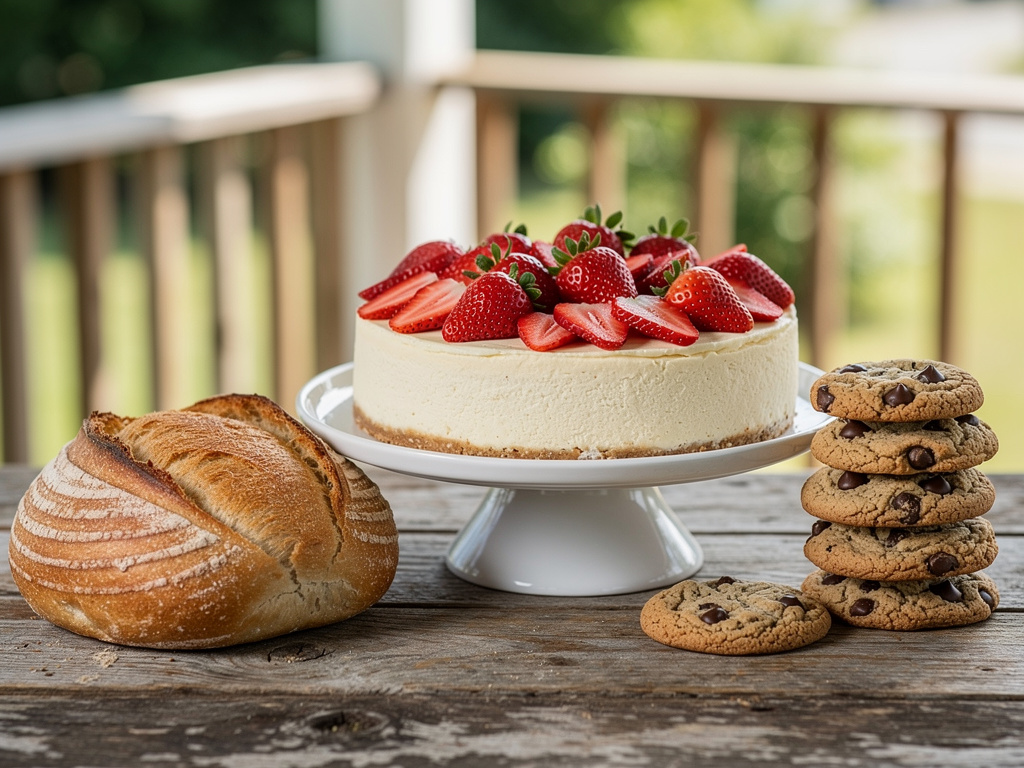


The short version: Tennessee's Food Freedom Act lets you make food in your own home kitchen and sell it with no state license, permit, inspection or sales cap. Since July 1, 2025, that includes refrigerated foods like cheesecake and cream pies, but those must be sold face to face, while shelf-stable foods like cookies and jam can also be sold online, through local stores and by in-state shipping. Every product needs your name, home address, phone number, the product name, the ingredients and the state's private-residence statement. Refrigerated foods can't contain raw milk, alcohol, fish, shellfish or red meat. Alcohol and most meat products are out of shelf-stable foods too, and nothing can be sold across state lines.
Checked on the Tennessee Department of Agriculture's Food Freedom Act page and the text of T.C.A. § 53-1-118, October 12, 2026. One slide in the University of Tennessee's 2025 presentation says to keep raw milk, alcohol, fish, shellfish and red meat out of every product, so ask UT Extension's food science team about any shelf-stable product made with one of them before it goes on sale. Tax law still applies (a $15 county business license past $3,000 a year in gross sales, and the 7% state rate plus local tax on baked goods you make, per the Department of Revenue the same day), so verify your own situation before you sell.
If you want Tennessee customers to order ahead for pickup or delivery, you can set up a Homegrown storefront and try it free for 7 days.
In Tennessee, you can sell homemade foods with no license, no permit, no inspection, and no sales cap under the Food Freedom Act, and since July 1, 2025 the allowed list reaches past cookies and jam to cream pies, cheesecakes and other foods that need a fridge. The law has two lanes: shelf-stable foods you can sell almost anywhere in the state, and refrigerated foods you can only hand over in person. This guide covers exactly what you can sell in each lane, the label the law requires, the tax and business license rules that still apply, and how to start this week.
Ready to begin? Follow our step-by-step guide to starting a cottage food business in Tennessee.
No, Tennessee has no cottage food sales limit: the Food Freedom Act sets no gross-sales cap, no income limit, and no production-volume limit, so a home baker who sells $2,000 a year and one who sells $80,000 follow the same food rules. The limits the law does set are about what you make, where you make it, who you sell to and how the product is labeled.
Scroll sideways to see every column.
| Tennessee rule | Detail |
|---|---|
| Annual sales cap | None |
| License / permit / inspection | None from the state for homemade food (exempt under the Food Freedom Act) |
| Where you make it | Your own private residence only, not a church, community or rented commercial kitchen |
| Allowed foods | Shelf-stable foods, plus most refrigerated foods since July 1, 2025 |
| Where you can sell shelf-stable food | In person, by phone or online, through an agent or a store, delivered by you, an agent, a store or a carrier |
| Where you can sell refrigerated food | In person only, by you or your agent (a farm stand on your property is the law's example) |
| Out-of-state sales | Not allowed; the exemption covers sales inside Tennessee only |
| Label | Your name, home address and phone; the product name; ingredients by weight; and the two-sentence private-residence and allergen statement, quoted in full in the label section |
| Governing law | Tennessee Food Freedom Act, T.C.A. § 53-1-118, last amended by Public Chapter 431 (effective July 1, 2025) |
We read every row against the text of T.C.A. § 53-1-118 as published by UT Extension's food science department and the Tennessee Department of Agriculture's Food Freedom Act page on October 12, 2026.
You do not need a state food license, permit or inspection to sell homemade food in Tennessee. Foods produced under the Food Freedom Act are exempt from all state licensing, permitting, inspecting, packaging and labeling laws, except when the Department of Health is investigating a reported foodborne illness. The Department of Agriculture says plainly that it does "not issue permits, licenses, or conduct inspections" for these products, so there is no application to file and no kitchen visit to schedule.
Two things still sit outside that exemption, and they catch new sellers off guard:
Cities and counties cannot add their own food rules on top. The statute says it "preempts county, municipal, and other political jurisdictions from prohibiting and regulating the production and sale of homemade food items," so a local health office cannot demand a home-kitchen permit for Food Freedom Act products.
Tennessee's allowed list is broad because the 2025 change opened most refrigerated foods to home sellers. Commonly sold items include:
Baked goods lead the way: in a pull of Homegrown's catalog on October 12, 2026 (313 vendors across many states, not Tennessee alone), 1,470 of 2,847 products (52%) were listed under Bakery. What decides the selling rules, though, is not the food's name but whether it needs a fridge to stay safe. Confirm specifics with the Tennessee Department of Agriculture, which points sellers to the law itself and to a private attorney for product-by-product questions.
TDA's page on the act, checked October 12, 2026, says the legislature amended the law "effective July 1, 2025 ... to allow for the production and sale of certain time/temperature controlled food items." TDA also says it can take enforcement action against homemade products found in the marketplace that do not fall within the law's exemptions.
A refrigerated food, which the law calls a "time/temperature control for safety" food (TCS for short), is one that needs cold or heat to keep bacteria from growing fast. A shelf-stable food does not. UT Extension's fact sheet on the 2025 version of the act, PB1909 (January 2026), lists the usual refrigerated foods: meat, poultry, fish, egg and dairy products, cooked plant foods that are not canned, cut melons, cut leafy greens, cut tomatoes, raw sprouts and fresh garlic-in-oil.
The line can fall inside a single product. UT's example is frosting: a frosted cupcake with water activity below 0.88 is shelf-stable, while one above 0.88, or one topped with fresh fruit, needs refrigeration. If you are not sure which side your recipe lands on, UT suggests asking a process authority (a food safety expert who tests recipes).
You cannot sell refrigerated foods that are, or contain, unpasteurized milk, alcoholic beverages, fish, shellfish, meat, meat by-products or meat food products. UT Extension reads "meat" as red meat (beef, lamb and pork), which is why a sausage kolache or a ham biscuit is out, while a dish made from inspected chicken can qualify if you meet the federal poultry exemption's conditions.
That exclusion list is written for refrigerated foods. For shelf-stable foods, the statute's text names no excluded ingredients, but two of them stay out anyway:
Fish, shellfish and raw milk are the gray area. The University of Tennessee's own 2025 Food Freedom Act slides disagree with each other: one slide says the restriction list for shelf-stable foods "was lost in the current code," and the summary slide says "Foods cannot include red meats, fish, shellfish, raw milk, or alcohol as ingredients or final products." Our reading is the statute's: fish, shellfish and raw milk are excluded by name only from refrigerated foods. UT's newer PB1909 fact sheet reads it the same way: its Section 7 summary says "The latest version of the TFFA only states that TCS foods containing unpasteurized (raw) milk, alcohol, fish, shellfish products, red meats (beef, lamb, and pork), meat byproducts or meat food products are not allowed." Because the state's own extension service still tells home producers to keep all five out of everything, check a shelf-stable product made with any of them, such as a seasoning blend made with dried shrimp or anchovies or an aged cheese made from raw milk, with UT's food science extension before you sell it. Don't expect a ruling from the state's agriculture department: its Food Freedom Act page says it "cannot render advice to firms about their specific product."
Other hard stops:
Poultry is the one animal protein the 2025 law lets back in, and only through 2 federal doors. UT Extension's plain-English guide to the statute describes them this way:
A chicken salad or a pot pie made from store-bought inspected chicken is the common case. It is still a refrigerated food, so it is sold in person only.
Probably yes, if it is made from pasteurized milk and cream and you sell it in person, though the law never names ice cream. Our reading of the statute: ice cream is a refrigerated (frozen) food, and the only dairy the act excludes is unpasteurized milk, so a batch made from store-bought pasteurized cream falls in the in-person lane. A batch made from raw milk does not.
Because the statute is silent on ice cream by name, treat it as a product you clear with a Tennessee food attorney or UT Extension before you scale it. Keep it frozen from your freezer to the customer's hands, and do not ship it or leave it with a shop to sell for you. If you scoop it into cones at an event, the Department of Revenue lists "ice cream served in cones, as sundaes" as prepared food, taxed at the 7% state rate plus local tax.
Yes, you can sell both, but dairy foods and shell eggs follow two different sets of rules. Dairy foods you make from pasteurized milk (butter, yogurt, cheese, a custard pie) count as homemade food items. Raw milk is excluded by name from refrigerated foods, and UT's 2025 summary slide says to keep it out of every product.
Eggs and dairy are a real category for small sellers: 53 of the 2,847 products in Homegrown's October 12, 2026 catalog pull (a multi-state pull, not Tennessee only) were listed under Eggs and Dairy. Cartons of fresh shell eggs from your own hens are a separate matter. Tennessee repealed its Egg Law in July 2020, so shell eggs now follow federal rules, and a producer with fewer than 3,000 laying hens who raises the hens and packs their own eggs is exempt from many of them.
The 2025 amendment does not mention shell eggs. Eggs as an ingredient in a refrigerated food are fine, but selling cartons of shell eggs is covered by UT Extension's PB1898, Egg Sales in Tennessee: under 3,000 hens, your own flock, your own packing, and the federal "SAFE HANDLING INSTRUCTIONS" box on every carton. Checked October 12, 2026.
If you plan to sell both, see how to sell eggs from your backyard flock for pricing and carton setup.
You can be legally selling within a week, because nothing needs state approval. The order below keeps you inside the exemption from day one.
Print two label versions from the start: one for packaged shelf-stable items and one with "Keep Refrigerated" added for anything cold. UT Extension strongly recommends that notice on refrigerated foods even though the law does not require it, and doing both from day one saves a reprint the first time a customer asks how long a cheesecake will keep.
The Food Freedom Act waives most labeling laws but sets its own required list, and it applies to every homemade food item, shelf-stable or refrigerated. Each one must carry:
How you show it depends on how you sell. A packaged item gets a label on the package. Bulk food (a jar of cookies you scoop from) gets a label on the container. Unpackaged food gets a placard at the point of sale. An item sold only online can carry the information on the web page, and for a phone or custom order you can tell the buyer the statement and have the rest ready on request. In both cases, UT notes, a packaged item still needs the full label on the package, so cookies you ship or deliver in a box carry the label too.
A simple compliant label might read: *"Lemon Pound Cake. Made by your name], [home street address, city, TN ZIP], [phone]. Ingredients: enriched flour (wheat flour, niacin, reduced iron, thiamin mononitrate, riboflavin, folic acid), butter (milk, salt), sugar, eggs, lemon juice, baking powder, salt."* Then the required two-sentence statement, word for word, on its own line. See our [cottage food labeling guide for templates.
No agency approves your label in advance, and it costs $0 in state fees, so getting it right is entirely on you. There is no option to leave your home address off. UT's presentation says that if you do not want personal information on the label, the route is to become a licensed food manufacturer, whose label carries the plant's address instead.
Where you can sell depends on which lane the food is in. Shelf-stable foods have almost no channel limits inside Tennessee; refrigerated foods can only change hands in person.
For shelf-stable foods (bread, cookies, fudge, jam, granola), you can sell:
For refrigerated foods (cheesecake, cream pies, yogurt, fresh cheese), you can sell only:
UT Extension's 2025 presentation on the act reads the web-page labeling option as covering "only non-TCS products sold online," and its fact sheet says refrigerated foods "must be sold in person direct to the consumer." Out-of-state sales are not covered in either lane: the statute does not apply to "sales other than intrastate sales made within this state."
Swipe left to compare both kinds of food.
| Channel | Shelf-stable food | Refrigerated food |
|---|---|---|
| From your home, in person | Yes | Yes |
| Farmers market booth, packaged and labeled | Yes | Yes, sold by you or your agent |
| Farm stand on your property run by a helper | Yes | Yes (the statute's own example) |
| Online or phone order | Yes | No |
| Consignment in a shop or grocery store | Yes | No |
| Shipping inside Tennessee | Yes, by you, an agent, the store or a carrier | No |
| Restaurants, food trucks, caterers | No | No |
| Any buyer outside Tennessee | No | No |
From T.C.A. § 53-1-118(b) and (c)(5), UT Extension fact sheet PB1909 and UT's 2025 Food Freedom Act presentation, all read October 12, 2026. The restaurant row comes from UT Extension, which says the Department of Health does not let food service businesses use homemade food items.
Because Tennessee allows online sales and in-state shipping of shelf-stable foods with no cap, a real storefront helps you take those orders and manage pickup or delivery without living in your DMs. Homegrown gives Tennessee sellers an online storefront with built-in payments and pickup scheduling for $10/month billed annually ($12.50 billed monthly) at 0% commission; beyond the plan, you pay only standard card processing (2.9% + $0.30). Start a 7-day trial (no charge until day 8) and have a storefront for your cookies, breads and jams live in about 15 minutes.
Yes, you can sell packaged, labeled Food Freedom Act products at a Tennessee farmers market with no permit, and a 2023 law lets market vendors hand out samples without a license as long as they follow seven conditions. Those conditions, in T.C.A. § 68-14-727, include clean surfaces, gloves or tongs between hands and food, sneeze guards over open samples, and tossing cut produce after two hours.
Cutting, scooping or plating a refrigerated food at the booth is a different matter (samples handed out under the seven sampling conditions are the exception, per T.C.A. § 68-14-727). The same law defines a "farmers market food unit" as a stand that prepares, sells or serves unpackaged refrigerated food at a market, and a food unit needs a Department of Health permit that costs $300 a year ($150 if you apply after January 1), issued after an inspection at your local health department. Our reading, which no state page we loaded on October 12, 2026 spells out: cutting or plating at the booth is preparation away from your home, so it falls outside the Food Freedom Act and under that permit. The simple way to stay exempt is to slice and package at home, label each piece, and keep it cold at the booth. Our guide to Tennessee market-day permits covers the food unit permit and market sampling.
UT Extension also notes that some markets and retailers choose not to carry products from unlicensed kitchens, so ask the market manager before you pay a booth fee.
A store can resell your shelf-stable homemade food in Tennessee, but a restaurant cannot use it. The statute lets shelf-stable homemade food be sold by "a third-party vendor, such as a retail shop or grocery store," naming those 2 businesses as its examples. That means a gift shop can resell your packaged cookies or a grocery store your jam, as long as each package carries the full label. Refrigerated foods cannot go this route: UT Extension says "no third-party vendors, like grocery stores or restaurants, are allowed to sell homemade TCS food items."
Restaurants, food trucks and caterers cannot use or serve your homemade food items at all. UT Extension's fact sheet explains that the Department of Health requires food service businesses to follow the Food Code, which rules out ingredients from uninspected home kitchens.
You need a business license once a location grosses more than $3,000 a year. Sales tax has no such floor on the Department of Revenue pages we checked on October 12, 2026. Neither one is waived, because the Food Freedom Act does not exempt you from tax law. Tennessee's business license comes from your county clerk (and your city, if it has a business tax), and the threshold is gross sales per location, according to the Department of Revenue's June 2025 Business Tax Manual.
Slide the table sideways for the cost column.
| Your yearly gross sales at a location | Business license | Cost |
|---|---|---|
| $3,000 or less | Not required (you may get one) | $0 |
| More than $3,000 but less than $100,000 | Minimal activity license | $15 to each county, and to the city if it has a business tax, each time you apply |
| $100,000 or more | Standard business license plus a business tax return | $15 license fee, plus a minimum business tax of $22 per location ($44 in a city with its own business tax) |
From the Tennessee Department of Revenue's Business Tax Manual (June 2025), loaded October 12, 2026. Your county clerk can confirm whether your city adds its own license.
Tennessee's sales tax has a twist for home bakers. The state taxes "food and food ingredients" at a reduced 4% rate, but that category excludes candy and prepared food, and the Department of Revenue's notice on prepared food puts baked goods made by the seller on its list of prepared food. Prepared food and candy are taxed at the general 7% state rate, plus a local rate that cannot exceed 2.75%.
On a $20 box of cookies you baked, that is $1.40 in state tax, and up to $1.95 once the highest local rate is added. Your customer pays it, but you are responsible for collecting it and sending it in through TNTAP, unless the platform you sell through files and remits it for you, so build it into your checkout rather than your price. For jams, pickles and other products that are not baked goods or candy, ask the Department of Revenue which rate applies before you set up your first sale. Sales tax is its own account, separate from the business license: the $3,000 threshold above is the license rule, the sales tax pages we read on October 12, 2026 list no small-seller floor, and returns are filed and paid online through the state's Tennessee Taxpayer Access Point (TNTAP).
Bring a cooler and a thermometer for anything cold. UT Extension's guidance is that a cold food taken out of refrigeration must be thrown away after four hours, or six hours if it stays below 70°F, so a five-hour July market with cheesecake on an open table ends with part of your batch in the trash.
Not sure whether you also need an LLC? Our guide on whether you need an LLC to sell food from home walks through liability and cost.
If your product fits the Food Freedom Act, there is no food permit to get and $0 in state food fees to pay; the business license and sales tax rules above still apply. The risk starts when a product falls outside the act's conditions: the Department of Agriculture says it "may take enforcement action" against homemade products in the marketplace that do not fit the exemptions, using its general food law powers under T.C.A. § 53-1-201 and the sections after it. The TDA page we read on October 12, 2026 does not list a fine schedule for this.
The cases most likely to put a seller outside the exemption:
The Department of Health also keeps its power to investigate a reported foodborne illness, and UT's 2025 presentation says it may need access to your home production area to do it. The act also does not shield you from liability if someone gets sick, which is why UT Extension recommends a recall plan and product liability insurance. Our guide to product liability insurance for cottage food compares the options.
With no cap and an allowed list that reaches cream pies, cheesecakes and pasteurized dairy foods, Tennessee doesn't limit your income; your ceiling is time, demand, and production capacity. A sensible path is to start with one strong channel, build a base of repeat customers, then expand your product range (the allowed list is broad, with the exclusions listed above).
Tennessee's Food Freedom breadth (cream pies, cheesecakes, and pasteurized dairy foods since 2025) makes refrigerated specialties a genuine differentiator, since a shelf-stable-only cottage food law would rule them out. A few ways to get the most out of it:
In a pull of the Homegrown catalog on October 12, 2026 (2,847 products from 313 vendors across many states, not Tennessee alone), 6 listings from 3 vendors were whole cheesecakes or a dozen mini cheesecakes, with base prices from $20 to $35 and a median base price of $27.50. We searched product names and descriptions (including spellings like "cheese cake") and read each counted vendor's full product list. Cheesecake-flavored cookies, buns, muffins, loaves, cake pops, fudge and freeze-dried bites were left out of the count.
A Tennessee home bakery that sells shelf-stable baked goods online needs a place to take orders, collect payment and charge the right sales tax, and Tennessee's 7% rate on baked goods makes that last part worth getting right. Homegrown is $10 per month (billed annually, or $12.50 billed monthly) with no percentage fees beyond standard payment processing of 2.9% + $0.30, and its signup page says sales tax is calculated at checkout and remitted for you. Customers pick a pickup window you set, or local delivery inside a radius you choose, when they order, so Saturday's cookie run starts from a list instead of a scroll through messages.
Compare that with what the other common choices cost on a $20 order of cookies:
Drag sideways to see every fee.
| Ordering tool | Subscription | Trial | Platform fee | Card processing | Customer pays on a $20 order | You pay on a $20 order | You pay for 50 orders of $20 |
|---|---|---|---|---|---|---|---|
| Homegrown (annual) | $10/mo | 7 days, no charge until day 8 | $0, 0% commission | 2.9% + $0.30, paid by you | $20.00 | $0.88 + plan | $54.00 |
| Homegrown (monthly) | $12.50/mo | 7 days, no charge until day 8 | $0, 0% commission | 2.9% + $0.30, paid by you | $20.00 | $0.88 + plan | $56.50 |
| Hotplate (its default: fee on the customer) | $0 | No plan to trial | 5% + $0.55, added at the customer's checkout | 2.9% + $0.30, paid by you | $21.55 | about $0.92 | $46.25, while customers pay $77.50 in fees |
| Hotplate (you absorb the fee) | $0 | No plan to trial | 5% + $0.55, paid by you | 2.9% + $0.30, paid by you | $20.00 | $2.43 | $121.50 |
| Etsy | $0 (a one-time set-up fee may apply) | None listed | $0.20 listing + 6.5% transaction | 3% + $0.25, paid by you | $20.00 + shipping | $2.35 | $117.50 |
Checked October 12, 2026 on Homegrown's signup page, Hotplate's pricing page and its post "What Hotplate does" (which says "we charge a fee to your customer" and that "80% of Hotplate chefs keep the default"), and Etsy's Fees and Payments Policy and Etsy Payments Policy. Figures leave out sales tax, tips and shipping and were computed from unrounded inputs; Hotplate's default processing is figured on the $21.55 the card is charged.
What you pay for 50 orders of $20 in a month, card processing (2.9% + $0.30, or 3% + $0.25 on Etsy) included
Source: the pricing pages in the table above, checked October 12, 2026. Hotplate's lowest bar leaves out the $77.50 its fee adds to your customers' checkouts.
Hotplate is a good fit if you sell in timed "drops," and Etsy brings shoppers who are already browsing, but Etsy's fees run about $2.35 on that $20 order and Hotplate either costs you $2.43 or adds $1.55 to your customer's bill on top of your own $0.92 or so in processing. Homegrown is the simpler fit for a Tennessee seller who wants a steady menu, pickup scheduling and sales tax handled for a flat monthly price.
What Homegrown does not do, so you can decide with clear eyes:
The big change took effect on July 1, 2025, when refrigerated foods joined the law for in-person sales. Here is how the rules got here, from UT Extension's history of the act and the General Assembly's bill record:
The bill as first filed would have let dairy, meat and poultry foods be sold remotely and required a production date on refrigerated foods. The Senate rewrote it before passage, so neither of those made it into law.
When we checked on October 12, 2026, the department's page still described the July 1, 2025 amendment as the latest change and announced no newer one. Rules like this can change in any legislative session, so re-check the page each January before you add a product.
Combined with no cap and no state food license, that makes Tennessee a strong state for home food businesses. Before adding a product, re-read the law as the Department of Agriculture's page asks, and take any question about a specific product to a legal professional, as that page also advises.
No. Tennessee cottage food law, the Food Freedom Act, sets no sales cap, income limit or production-volume limit. What does kick in as you grow is a $15 county business license, which the Department of Revenue requires after a location passes $3,000 in yearly gross sales.
No state food license. Home foods made under the act are exempt from state food licensing, permitting and inspection, and the Department of Agriculture does not issue permits for them. A county business license (once a location grosses more than $3,000 a year) and sales tax still apply, because the act does not exempt you from tax law.
Yes, since July 1, 2025. Refrigerated foods such as cream pies and cheesecakes are allowed, but they must be sold in person by you or your agent, kept cold, and labeled like any other homemade food. They cannot be shipped, sold online or resold by a store.
Yes for shelf-stable foods. Bread, cookies, jam and other foods that do not need refrigeration can be sold online or by phone and delivered or shipped anywhere inside Tennessee. Refrigerated foods are in-person only, and no homemade food can be sold to a buyer outside the state.
Dairy, yes, if it is made from pasteurized milk. Raw milk is excluded by name from refrigerated foods, and UT's 2025 guidance says to keep it out of every product. Butter, yogurt and cheese made at home from pasteurized milk are homemade food items, and the refrigerated ones are sold in person only. Shell eggs from your own hens follow federal rules instead: under 3,000 hens, packed by you, with safe handling instructions on each carton.
Every homemade food item needs the producer's name, home address and telephone number, the product's common name, the ingredients in order by weight, and the statement "This product was produced at a private residence that is exempt from state licensing and inspection. This product may contain allergens." Unpackaged food can use a placard at the point of sale, and online-only products can show it on the product page, but if the item is packaged, the package still needs the full label, per UT Extension.
Refrigerated foods that are or contain raw milk, alcohol, fish, shellfish, beef, lamb or pork are out, and poultry is allowed only under narrow federal exemptions. Alcohol and most meat products are barred from shelf-stable foods as well. University of Tennessee guidance from 2025 lists raw milk, alcohol, fish, shellfish and red meat as off limits for any product, so call its food science extension office before selling a shelf-stable product made with any of them, such as a seafood item or a raw-milk cheese. Food made outside your own home does not qualify either. Refrigerated foods can't be shipped or sold online, only sold in person.
Not with any food agency. The Food Freedom Act requires no registration, permit or inspection. Above $3,000 in yearly sales at a location, Tennessee's tax rules call for a $15 minimal activity business license from your county clerk, and from a city that levies one. You may also want an LLC for liability reasons.
Yes. Package and label it at home, or sell unpackaged shelf-stable food such as cookies from a labeled bulk jar or under a placard at the booth; the statute allows all three. You can also give out samples without a license if you follow the 2023 sampling rules (clean surfaces, gloves or tongs, sneeze guards). Cutting or serving refrigerated food at the booth is a different case: our reading is that it needs a farmers market food unit permit from the state Health Department, which costs $300 a year ($150 if you apply after January 1), though no state page we loaded on October 12, 2026 ties the two laws together.
No. The exemption covers only food made at your own private residence. UT Extension says anyone making food in a community kitchen, church, restaurant or other commercial space needs a food manufacturing permit from the Department of Agriculture or a food service permit from the Department of Health.
These guides pick up where this one stops, each one checked live on October 12, 2026, and each answers a question this page only touches:
Tennessee's Food Freedom Act, with no state license, no cap, and an allowed list that now includes refrigerated foods sold in person, makes it a straightforward place to start. Your first week can be this simple: sort your menu into shelf-stable and refrigerated, print labels with every required line, check whether your county needs a $15 business license yet, and pick the market or porch where your cold products will change hands. Once your labels carry everything the law requires, the next step is making it easy for customers to order and pay for your shelf-stable products. Set up a Homegrown storefront for Tennessee cottage food orders with pickup and in-state delivery, then compare the rules in nearby states like Kentucky, Georgia, Virginia, and Alabama, or see the full cottage food laws by state hub.
Planning to sell at a farmers market? See our Tennessee farmers market vendor permit guide for what you need on market day.
*This guide is general information, not legal advice. Cottage food rules change, so verify current requirements with the Tennessee Department of Agriculture before selling. Last verified: October 12, 2026.*



