
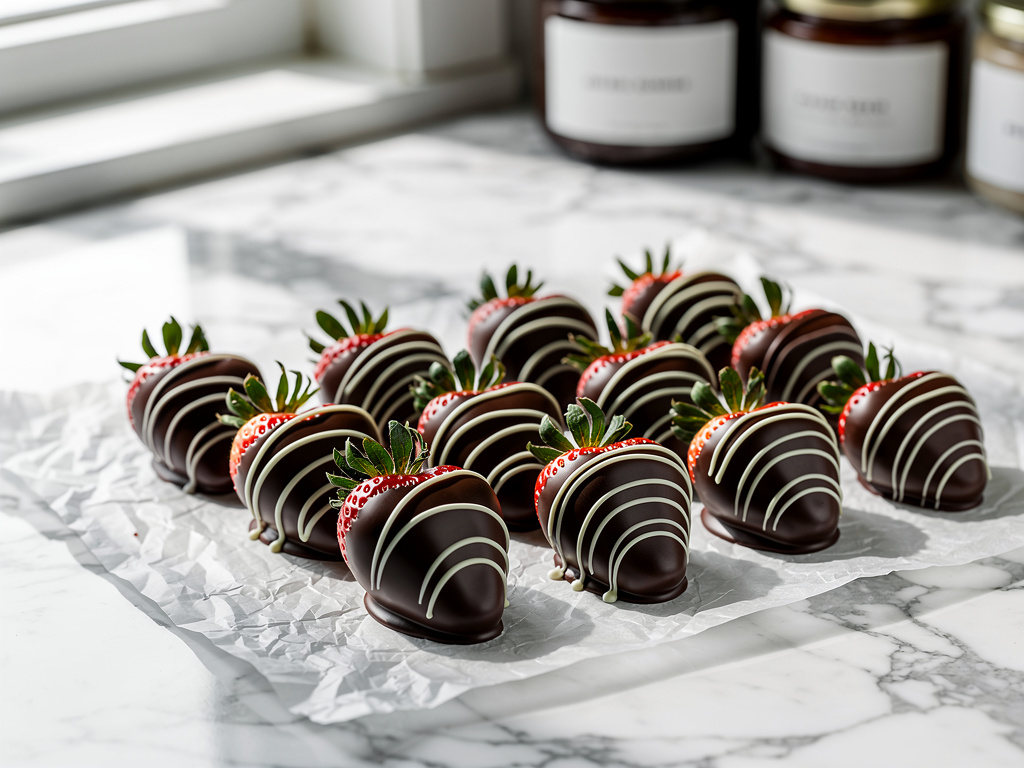


Chocolate-covered strawberries look like the perfect home food business: simple to make, gorgeous, and always in demand around Valentine's Day. But there's a critical catch that trips up new sellers, and it's not in the kitchen, it's in the law. Chocolate is shelf-stable, but a fresh strawberry dipped in chocolate becomes a perishable, refrigeration-required product, and that single fact changes whether you can legally sell them as a cottage food and exactly how you have to sell them. This guide walks through selling chocolate-covered strawberries and fruit from home, starting with the legal reality nobody warns you about.
The short version: Chocolate-covered strawberries are hugely popular, especially around Valentine's Day, but dipping fresh fruit in chocolate creates a perishable product that usually needs refrigeration. Because most cottage food laws exclude foods that require temperature control for safety, chocolate-covered fresh fruit is not cottage-food eligible in many states, or is allowed only under a separate license, so you must confirm your state's rules first. Keep them refrigerated, sell them fresh, and never ship them. Dry your fruit completely before dipping so the chocolate doesn't seize. Sell through same-day local pickup and pre-orders, not mail order. Homegrown gives you the pre-order and local-pickup tools that fit this perishable product, but you handle the safety and the legality.
This guide covers the appeal, the legal catch, safety, making them, pricing, selling, and mistakes. This is general information, not legal or food-safety advice.
Chocolate-covered strawberries are so popular because they combine a luxurious, giftable look with a strong seasonal hook around Valentine's Day, and they carry a high perceived value for a simple product. That combination makes them a natural, in-demand seller at the right time of year. Where fresh dipped fruit is off your state's list, a bouquet of chocolate-covered marshmallows, pretzels or dried fruit fills the same gift basket, and our guide to which homemade bouquets you can legally sell shows that California's list names 5 dipped products that qualify.
Why they sell so well:
The takeaway: chocolate-covered strawberries pair a luxury look and high perceived value with a powerful seasonal hook, which makes them a strong seller when you can legally offer them. The rule is to lean into the gift occasions that drive demand, especially Valentine's Day, while respecting the legal and safety realities that come next.
Here's the thing most guides skip: chocolate-covered fresh strawberries are often not cottage-food eligible, because dipping fresh fruit in chocolate creates a perishable product that needs refrigeration, and most cottage food laws exclude foods requiring temperature control for safety. This is the single most important thing to understand before you sell.
Why the legal picture is tricky:
The takeaway: never assume chocolate-covered strawberries are an easy cottage food, because their fresh fruit makes them a refrigeration-required product that many states don't allow from a home kitchen. The rule is to check your state's cottage food agency and ask specifically whether refrigerated, temperature-controlled foods are permitted and under what license, before you sell, the same due diligence as any cottage food business.
You keep chocolate-covered strawberries safe by washing and drying the fruit properly, keeping the finished product refrigerated, and selling it within a short window, because dipped fresh fruit is perishable and doesn't keep long. Safety and freshness go hand in hand with this product, and both are short-lived.
The safety essentials:
The takeaway: this is a fresh, refrigerated, short-shelf-life product, so cleanliness, cold storage, and quick turnover are non-negotiable. The rule is to make them fresh, keep them cold, and sell them fast, because a chocolate-covered strawberry is not a shelf-stable candy and can't be treated like one.
You make chocolate-covered strawberries that look professional by drying the fruit completely, melting or tempering your chocolate properly, dipping cleanly, and setting them in the fridge. The single biggest technical pitfall is water, because even a little moisture on the berry ruins the chocolate.
The key steps:
The takeaway: dry fruit and properly handled chocolate are the whole game, since wet berries seize the chocolate and unset chocolate looks amateur. The rule is to never dip a damp strawberry, because bone-dry fruit is the difference between glossy, professional berries and a grainy failure, the same chocolate discipline behind hot chocolate bombs.
You price chocolate-covered strawberries on your real cost of berries, chocolate, packaging, and labor plus a margin, and position them as the premium gift they are, especially around Valentine's Day. Because they carry high perceived value, they support strong pricing, but you should confirm your numbers against local sellers.
Here's a rough market picture to anchor to, treated as an estimate rather than a fixed rule:
| Format | Rough market estimate | Notes |
|---|---|---|
| Per berry | ~$2 to $5 | Higher for elaborate decoration |
| Half or full dozen | ~$15 to $40 | The common gift format |
| Premium gift box | $40 and up | Elaborate, boxed presentations |
How to build your price:
The takeaway: chocolate-covered strawberries support premium, gift-level pricing, so cost your labor and price the occasion, then sanity-check against local sellers. The rule is to price them as the premium gift they are, using local prices to confirm, much like pricing handmade chocolate truffles.
You sell chocolate-covered strawberries through same-day, local, made-to-order channels: pre-orders with a set pickup window and local delivery, never long-distance shipping. Because they're perishable, refrigerated, and short-lived, your entire sales model has to keep them cold and get them to customers fast.
The selling approaches that fit:
The takeaway: this product demands a cold, local, made-to-order model, which a pre-order-and-pickup approach handles cleanly, especially for the Valentine's rush. The rule is to sell fresh, cold, and local, and never ship, using a pre-order pickup model built for exactly this kind of perishable product.
The mistakes that sink a chocolate-covered strawberry business are assuming they're cottage-food legal, shipping a perishable product, dipping wet fruit, and making them too far ahead. Each one is common and each is avoidable.
The mistakes to avoid:
The takeaway: the mistakes come from treating a perishable, legally-tricky product like a shelf-stable one, and all are avoidable with legal checks, cold local selling, dry fruit, and made-to-order production. The rule is to respect the perishability at every step, from the law to the last-minute dipping.
Because chocolate-covered strawberries have to be sold fresh, cold, and local, the ideal model is a pre-order with a set local pickup window, which is exactly what a simple storefront makes easy. Homegrown is a $10-per-month online storefront, with no percentage fees beyond standard payment processing, built for made-to-order, local, pre-order selling.
You list your dozens and gift boxes, open a pre-order window ahead of Valentine's Day, and take payment at order time, so you make berries against confirmed orders and hand them off cold within a defined pickup window. That keeps the product refrigerated until the last moment and means you never over-produce a perishable. Because your storefront keeps clean records, you also see how many you sold and can plan next year's Valentine's rush. A flat monthly price means a big Valentine's season isn't eaten by per-sale percentage fees stacking up on every order, the way they would on a marketplace like Etsy.
To be clear about what Homegrown does not do: it does not refrigerate your berries, make them safe, or make your product legal in your state. Food safety and your state's rules are your responsibility, and chocolate-covered fresh fruit requires real cold-handling and a genuine legal check on whether you can sell it at all. What Homegrown gives you is the pre-order and local-pickup flow that fits a cold, perishable, seasonal product, so the selling runs smoothly while you handle the rest. If chocolate-covered strawberries are legal for you to sell, set up your Homegrown storefront and open your Valentine's pre-orders.
Often not, or only under a separate license, because dipping fresh strawberries in chocolate creates a perishable product that generally requires refrigeration, and most cottage food laws exclude foods that need temperature control for safety. The chocolate is shelf-stable, but the fresh fruit inside is not, so the finished product usually fails the cottage-food test in many states. Some states may permit refrigerated products under a different permit tier, while others exclude them entirely. You must check your own state's cottage food agency and ask specifically whether refrigerated, temperature-controlled foods are allowed before selling.
Not long, which is central to how you have to sell them. They're a fresh, perishable product best eaten within a day or two, and they should be kept refrigerated the whole time. The fresh strawberry inside starts to soften and weep fairly quickly once dipped, so they don't hold like a shelf-stable candy. This is why you make them close to when they'll be eaten, sell them same-day and local, and never ship them or build inventory. Freshness is both a safety and a quality issue with this product.
Almost always because the strawberries are wet. Even a small amount of water on the fruit causes melted chocolate to seize into a thick, grainy, unusable texture. The fix is to dry each strawberry completely after washing, since bone-dry fruit is essential for a smooth, glossy dip. Wash the berries under clean running water without soap, then dry them thoroughly with a clean cloth or paper towel before dipping. Using good chocolate, melted gently or tempered, also helps you get that professional glossy shell that sets firm.
No. Chocolate-covered fresh strawberries are far too perishable and temperature-sensitive to ship. The fresh fruit needs refrigeration and a short turnaround, and shipping exposes the product to time and temperatures that make it unsafe and cause the berries to deteriorate and the chocolate to melt or bloom. Sell them fresh and local instead: through pre-orders with a set local pickup window, or same-day local delivery. This keeps the berries cold and gets them to customers quickly, which is the only safe and quality-preserving way to sell this product.
Price on your real cost, the strawberries, chocolate, packaging, and a real hourly rate for washing, drying, dipping, and decorating, then add a margin and position them as the premium gift they are. Rough market estimates run around $2 to $5 per berry, roughly $15 to $40 for a half or full dozen, and $40 and up for premium gift boxes, though these vary widely by region and elaborateness. Treat those as estimates to position against and confirm what comparable local sellers charge. Because they carry high perceived value, especially around Valentine's Day, they support strong, occasion-based pricing.
Valentine's Day is by far the biggest season, since they're a classic romantic gift and Valentine's is a major chocolate-buying occasion. Mother's Day, anniversaries, birthdays, and other celebrations also drive demand throughout the year. Because they're perishable, plan around these occasions with pre-orders, taking orders ahead of the date and making the berries close to pickup, rather than keeping inventory. The Valentine's rush especially rewards taking pre-orders in advance so you can plan your production and buy your berries and chocolate for a known, confirmed number of orders.
Chocolate-covered strawberries can be a beautiful, in-demand product, but only if you respect what they really are: a perishable, refrigerated, legally-tricky fresh-fruit item, not a shelf-stable candy. Confirm they're legal where you are, keep them cold, dip dry fruit, and sell them fresh and local. Start your Homegrown storefront and take your Valentine's pre-orders the fresh, local way.



