
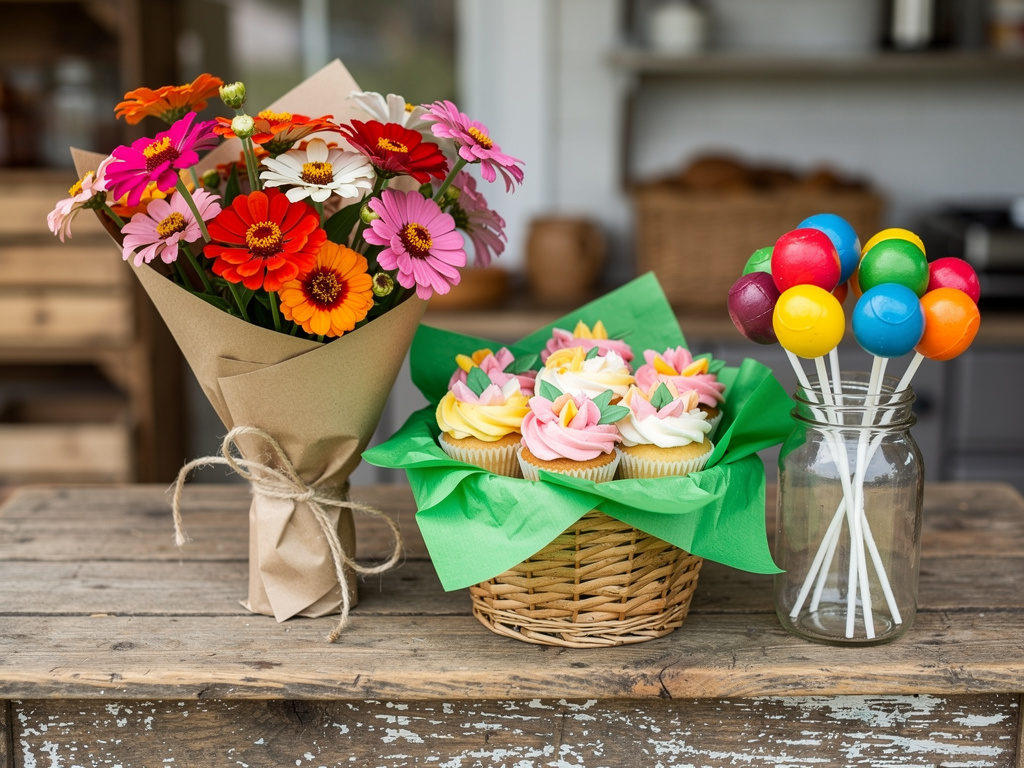


The short version: Yes, in general you can sell money bouquets, as long as the bills inside are real, whole and spendable, because the federal law on damaging money reaches someone who harms a bill with the intent to make it unfit to reissue, with a penalty of up to six months in prison. Fold, roll and clip the bills, skip glue, tape, staples and pins as a precaution, never stick your business card or logo to a bill, and only use printed play money that is one-sided, smaller than 75% or larger than 150% of a real bill, and printed from files deleted after use. Etsy bans any product containing usable cash, so money bouquets sell locally or through your own ordering page. Homemade candy, cookie and cupcake bouquets follow your state's cottage food list, store-bought candy follows your state's rules for reselling packaged food, fresh flower bouquets need a dealer permit in some states, and a bouquet with liquor in it needs a liquor permit.
Checked October 1, 2026: the U.S. Currency Education Program's currency image page, the Bureau of Engraving and Printing, Indiana and Maine revenue bulletins, Georgia's and Minnesota's food license pages, California's approved cottage foods list, cottage food page, label rules and alcohol license statute, Texas's cottage food page, Louisiana's flower permit page, Connecticut's gift basket statute and permit instructions, Etsy's fee and prohibited items policies, and the pricing pages of Homegrown, Square and Venmo. This is general information, not legal advice, so verify your state's current rules before you sell. Homegrown customers create an account to place a first order, and Homegrown has no drops feature, meaning no timed release that opens orders at a set moment.
A friend's graduation ended with three parents asking where you got that bouquet of rolled twenties. Now you have a Valentine's Day order, two birthday requests and a nagging feeling that folding cash for money might be against some rule. It mostly is not, but a few details turn a legal gift into a problem.
This guide covers the money rules first, because that is what most people ask. Then it walks through candy, baked, fruit, fresh flower and liquor bouquets, since the thing inside each bouquet decides which rule applies. Every statute, fee and list quoted here was read on its official page on October 1, 2026.
Yes, selling a money bouquet is generally legal in the United States when the bills stay whole and spendable, because the federal law on damaging money punishes harming a bill with the intent to make it unfit to reissue. The money rules we read are federal, so they apply the same way in all 50 states, and nothing in the statutes we read bans selling a bouquet of whole bills. No federal agency page we read addresses money bouquets by name, so treat this as our reading of the statutes, not an official ruling. What you are really selling is your time, the wrapping and the design. The cash inside is the customer's money, passed on to the person who gets the bouquet in a nicer shape.
Four conditions keep a money bouquet on the right side of the line:
If you also fill bouquets with homemade candy, the food rules are a separate question. Our guide on whether you can sell homemade candy walks through five states' candy lists, and the candy section below covers the store-bought kind.
Folding, rolling and clipping bills is fine, but the federal statute names cutting, perforating and "unites or cements together," which is why glue, staples and pins are the parts of a money bouquet to drop. The law is 18 U.S.C. 333. It covers anyone who "mutilates, cuts, defaces, disfigures, or perforates, or unites or cements together" a bill "with intent to render such bank bill ... unfit to be reissued." The penalty is a fine, up to 6 months in prison, or both.
The U.S. Currency Education Program's page on currency image use quotes that statute in full, along with the rules on pictures of money. The key words are "with intent." Rolling a bill into a rose so it can be unrolled and spent is not an attempt to make it unfit. Gluing twenty bills into a fan or punching wire through them matches the acts the statute lists, so skip them even though the law turns on intent.
There is a practical reason to care as well. The Bureau of Engraving and Printing describes mutilated currency as a bill damaged so that "one-half or less of the original note remains, or its condition is such that its value is questionable." The BEP says it gets more than 22,000 requests a year to examine damaged bills. A bill torn when the customer peels off hot glue is your problem to explain.
Swipe left to see all three columns.
| How you hold the bills | Does it damage the bill? | Our advice |
|---|---|---|
| Fold, fan or roll, held with a paper clip, binder clip or rubber band | No, the bill comes out flat and spendable | Yes |
| Slip into a clear plastic sleeve or a cellophane pocket | No, nothing touches the bill but plastic | Yes |
| Wrap around a stick and tie with ribbon | No, as long as the ribbon is tied, not glued | Yes |
| Tape the bill to a stick or to another bill | Tape can tear the paper when it comes off, and taping bills to each other matches the statute's "unites ... together" | Skip it to protect the bill |
| Hot glue, craft glue or a glue dot on the bill | Yes, and the statute names "cements together" | Avoid it; whether it breaks the law turns on intent, but it damages the bill |
| Staple, pin or push wire through the bill | Yes, the statute names "perforates" | Avoid it for the same reason |
Based on the text of 18 U.S.C. 333 and the Bureau of Engraving and Printing's mutilated currency definition, both read October 1, 2026. The statute turns on intent, so this table is the cautious reading, not a court ruling.
You can use printed play money only if each color picture of a bill is one-sided and either smaller than 75% or larger than 150% of a real bill, under 18 U.S.C. 504 and Treasury's rule at 31 CFR 411.1. The rule also says the files and plates used to print it must be destroyed or deleted after their final use. A full-size, two-sided printed twenty does not meet those conditions, whatever the fine print on it says.
Some customers ask for "fake" bouquets because they want the look without the cash. That is a fair request, and you have three clean ways to fill it:
Never pass a printed bill off as real, and never mix printed bills in with real ones in the same bouquet. Counterfeiting laws on that same U.S. Currency Education Program page carry up to 20 years in prison when someone makes or passes fake money with intent to defraud. If you print anything, keep it one-sided and the wrong size, as the rule above requires.
No, keep your card, logo and thank-you note off the bills themselves, because 18 U.S.C. 475 makes it a federal offense, punished by a fine, to attach "any business or professional card, notice, or advertisement" to a bill. This rule surprises new bouquet vendors, because a branded sticker on each twenty looks like smart marketing. Unlike the rule on gluing bills, this one does not turn on intent: the statute bars attaching the card whatever your reason.
Put your branding where it belongs instead:
The same section also covers printing anything "in the likeness or similitude" of a bill as an advertisement. So a flyer or business card designed to look like a $100 bill is out too, even if no real money is involved.
No, nothing in the federal money rules makes selling money bouquets illegal in California or Texas, because federal law applies the same way in all 50 states. We read the federal statutes, not every state's code. The state and local paperwork we cover below is the ordinary kind any home business needs.
Three questions decide your state and local paperwork:
Our guide on sales tax at farmers markets covers how registration and filing work for small vendors. The rules on bouquets themselves only get stricter when food, fresh flowers or alcohol go inside.
It depends on your state, and we did not find a state revenue page that addresses money bouquets by name, so put the cash and your work on separate lines and ask your state revenue department how it treats each one. Two state bulletins show why the split matters. They point in different directions for different parts of the bouquet.
Indiana's Sales Tax Information Bulletin #50 says "Transactions involving the sale of legal tender are always exempt from sales tax, even if sold at more than face value." That bulletin is written about coins, bullion and currency sales, not gift bouquets. Still, it shows a state treating the cash itself as something you do not tax.
Maine's Instructional Bulletin 21 for florists points the other way for the wrapping. It says sales of "flowers, wreaths, bouquets" are taxable. It also says vases, ribbons, cello wrap and enclosure cards are "part of the sale price of the arrangement." So in a state like Maine, the wrap, ribbon and vase count as part of a taxable bouquet's price. The bulletin does not say how cash inside a bouquet is treated.
Here is a clean way to write up a $100 money bouquet:
Splitting out your labor does not by itself make it tax-free. Maine's florist bulletin counts "any consideration for services which are part of a retail sale" in the taxable price, and its example taxes a florist's service charge "regardless of whether or not it is separately stated."
A candy bouquet made from sealed, store-bought candy is a resale of packaged food, while a bouquet of candy you cooked yourself falls under your state's cottage food law. That one difference decides almost everything. Sealed name-brand bars arrive with their own labels, so you are arranging finished, packaged food. Homemade fudge, lollipops or toffee are your own food product. Some states license even the resale of sealed candy. The Georgia Department of Agriculture says the Georgia Food Act requires a Food Sales Establishment License for retail food sales, internet sales included, and the Minnesota Department of Agriculture says a food license is required unless you meet an exclusion or exemption. Ask your state agriculture or health department before you resell packaged candy.
California's approved cottage foods list, last reviewed by the California Department of Public Health in April 2026, includes hard candy, fudge, toffee, marshmallows and brittles under "Candy and Confections." Our guide to what foods you can sell under cottage food laws shows how much those lists differ from state to state. Our candy guide found candy allowed in all 5 states it checked. Still, each state writes its own list, so check yours before you put homemade candy on a stick.
For a candy bouquet, check these before you sell:
Our guide on how much to sell candy for covers per-piece pricing if you are building a bouquet from your own candy.
Yes, if your state's cottage food law lists baked treats, as California's does, you can sell cookie and cupcake bouquets from your home kitchen, as long as the frosting and fillings are shelf-stable and you complete the registration or permit your state requires. In California that step goes through your local environmental health department, because the California Department of Public Health's cottage food page says it keeps the approved foods list but does not register or permit cottage food operations. California's approved list starts with "Baked Goods Without Cream, Custard, or Meat Fillings" and names cake, cookies and cupcakes. Cream and custard fillings are excluded. The list also allows only frostings that do not contain cream or cream cheese, with eggs allowed only as meringue powder, powdered eggs or pasteurized eggs, so a cupcake with cream cheese frosting or whipped cream is out.
Baked bouquets also bring a few practical rules:
Cake pops are less clear. California's list names cake but not cake pops, and a cake pop is cake mixed with frosting and dipped in a coating. In California the frosting mixed in also has to be one the list allows, with no cream or cream cheese. Ask your state cottage food office whether your recipe counts before you take a big cake pop bouquet order.
On Homegrown, one vendor sells a cupcake bouquet for $45, and four vendors list cake pops, sold singly or by the half dozen and dozen rather than as bouquets, in our October 1, 2026 catalog pull.
Fresh fruit bouquets and chocolate-covered fresh strawberries need a licensed kitchen unless your state's cottage food rules allow refrigerated foods, because cut and dipped fresh fruit needs refrigeration and cottage food lists such as California's leave fresh strawberries out. California's list shows how fine that line is. It allows "Chocolate-covered nonperishables" and names 5 products to dip: marshmallows, nuts, candy, dried fruit and potato chips. Fresh strawberries are not on it. By name, strawberry appears only as an extract flavor and in fruit-infused vinegar. Every fruit the list allows comes baked into pies, dried, candied, cooked into fruit butter, jam or jelly, or used as an extract or vinegar flavor, and none is allowed fresh.
That leaves three legal routes for a fruit bouquet:
A dipped-treat bouquet can still look like the fruit version. Chocolate-covered marshmallows on sticks, dipped nut clusters and dried apricots in white chocolate fill the same basket, keep at room temperature, and in California fall under the listed chocolate-covered nonperishables. Customers asking for a strawberry bouquet are often happy with that swap once you show them a photo.
Our full guide to selling chocolate-covered strawberries from home covers storage, pricing and why so many states draw this line.
Some states require a permit to sell fresh cut flowers, even when you arrange them yourself, so check your state agriculture department before your first sale. Louisiana is a clear example. Its Department of Agriculture and Forestry requires a Cut Flower Dealer Permit to "sell cut flowers (singly or arranged) to customers."
The Cut Flower Dealer Permit costs $120 per location per year, and a Floral Dealer Permit for cut flowers plus potted ornamental plants costs $100 per location per year. All permits expire January 31 each year, and you need a Louisiana state sales tax number before you apply. We read the Louisiana Department of Agriculture and Forestry's florist page on October 1, 2026.
Plan on sales tax for flower bouquets too. Maine's florist bulletin, for example, taxes bouquets and counts the vase and ribbon in the price. Our guide on how to sell cut flowers from home covers the license and tax rules in more states. Louisiana's flower permits do not apply to artificial or dried plant materials, its florist page says, so a silk, paper or crochet flower bouquet there follows the ordinary paperwork from the California and Texas section above. In other states, silk, paper, crochet and dried flowers are worth one question to your state agriculture department before you sell them.
No, not without a liquor permit, because a bouquet of mini bottles is a sale of alcohol, and states license who may sell it. It does not matter that the bottles are tiny or that you bought them at a store with tax paid. Selling them again inside a bouquet is a retail alcohol sale. In California, for example, Business and Professions Code section 23300 says no one may do any act a liquor license allows unless they hold that license.
Connecticut shows how narrow the legal path can be. The state's Department of Consumer Protection issues a Gift Basket Retailer liquor permit, but under Connecticut General Statutes section 30-37p it covers only wine, mead or beer, capped at four bottles of wine or mead or 72 ounces of beer per basket. Mini bottles of spirits such as vodka or whiskey are not on that list, so this permit does not cover a mini liquor bottle bouquet. The first-year filing fee is $300.00: a $100 application fee that is not refunded, plus the $200 permit, which renews at $200 a year under section 30-37p. Connecticut's permit is one state's version, so ask your state liquor agency which permit, if any, covers a gift bouquet where you live.
If customers ask for a liquor bouquet, here are your options:
Etsy prohibits alcohol listings too, so a liquor bouquet is not an Etsy product either.
The filling decides the rule: money follows federal law, homemade shelf-stable food follows your cottage food list, store-bought candy follows your state's rules for reselling packaged food, fresh fruit needs a licensed kitchen unless your state's cottage food rules allow refrigerated foods, as Texas's do, fresh flowers may need a dealer permit, alcohol needs a liquor permit, and silk, paper or crochet flowers are exempt from Louisiana's flower permits. The table puts every bouquet type on one row so you can find yours fast.
Swipe left to see the rule and the first step for each bouquet.
| Bouquet type | What makes it regulated | Rule to check | What to do first |
|---|---|---|---|
| Money, real bills | Damaging or marking currency | 18 U.S.C. 333 and 475 (federal, same in every state) | Hold bills with clips, sleeves or ribbon; branding on the wrapper |
| Money, printed play bills | Pictures of currency | 18 U.S.C. 504 and 31 CFR 411.1 | One-sided, and smaller than 75% or bigger than 150% of a real bill |
| Store-bought candy | Resale of packaged food | State food sales license rules (some states, such as Georgia, license packaged-food resale) and sales tax registration | Ask your state agriculture or health department whether reselling packaged candy needs a license; keep wrappers and labels intact |
| Homemade candy, cookies, cupcakes | Food made in a home kitchen | Your state's cottage food list | Confirm each recipe is on the list; label it |
| Fresh fruit, chocolate-covered strawberries | Food that needs refrigeration | Licensed kitchen and health permit, unless your state's cottage food rules allow it | Use a licensed kitchen or switch to listed dipped treats |
| Fresh cut flowers | Flower dealer rules in some states | State agriculture department (Louisiana: $120 permit) | Look up your state's flower permit |
| Alcohol (wine, beer or mini liquor bottles) | Retail sale of alcohol | State liquor agency (Connecticut: $300 permit filing, wine, mead and beer baskets only) | Sell it empty or partner with a licensed store |
| Silk, paper or crochet flowers | Nothing beyond normal business rules in Louisiana, whose flower permits exclude artificial materials | Sales tax, local business license, and your state agriculture department | Register for sales tax where required |
Federal statutes, the Georgia Department of Agriculture's farmers market FAQ, California's approved cottage foods list, Louisiana's florist permit page and Connecticut's gift basket statute and permit instructions were read October 1, 2026. Rules change and cities add their own, so verify your state's current rules before you sell.
Card processing is charged on the whole order, cash inside included, so a $100 money bouquet with $60 in bills costs you $3.20 in card fees on Homegrown, and $1.74 of that is the fee on the cash. The whole $3.20 comes out of the $40 you charge for design and materials, which makes it 8% of that $40. The table compares the full fee stack on that $100 order.
Scroll sideways to see every column.
| Platform | Monthly plan | Trial | Platform fee | Card processing | Customer pays on a $100 order | Vendor pays on a $100 order | Vendor pays on 10 orders of $100 in a month |
|---|---|---|---|---|---|---|---|
| Homegrown, billed annually | $10 | 7 days, no charge until day 8 | None, 0% commission | 2.9% + $0.30, paid by the vendor | $100.00 | $3.20 plus the plan | $42.00 |
| Homegrown, billed monthly | $12.50 | 7 days, no charge until day 8 | None, 0% commission | 2.9% + $0.30, paid by the vendor | $100.00 | $3.20 plus the plan | $44.50 |
| Square Free plan, online | $0 | None needed | None | 3.3% + 30¢ | $100.00 | $3.60 | $36.00 |
| Square Free plan, in person | $0 | None needed | None | 2.6% + 15¢ | $100.00 | $2.75 | $27.50 |
| Venmo business profile | $0 | None needed | None | 1.9% + $0.10 | $100.00 | $2.00 | $20.00 |
| Venmo personal account, payment marked as a purchase | $0 | None needed | None | 2.99% | $100.00 | $2.99 | $29.90 |
| Etsy (not allowed with real cash inside) | $0, plus a one-time set-up fee that may apply | None | $0.20 listing fee plus 6.5% transaction fee | 3% + $0.25 | $100.00 plus any shipping | $9.95 | $99.50 |
We checked Homegrown's signup page, Square's pricing page, Venmo's fee page and Etsy's fees policy and payment processing help page on October 1, 2026. Fees are figured on a $100 order before sales tax and shipping. Etsy's row is for a bouquet without cash, since its prohibited items policy bans products that contain current, usable currency. Venmo's business profile charges 2.29% + $0.09 for Tap to Pay instead.
One more cost hides in the cash itself. You put up the $60 in bills from your own pocket, so you carry that cash until pickup. Taking payment when the order is placed, not at pickup, keeps a no-show from leaving you with $60 rolled into roses.
Money and candy bouquets tie up your own cash and candy before the customer pays, so the safest setup is a pre-order page where buyers choose a bouquet, a pickup time and pay before you build it. Homegrown gives you that page for $10 per month billed annually, with no percentage fees beyond standard payment processing of 2.9% + $0.30. Customers pick a size, listed as its own variant with its own price, message you through your storefront about the denominations they want, and pay up front.
Compare that to the other places bouquet vendors start:
For bouquets, the parts that matter are pre-orders with a pickup time, a way for buyers to message you the cash amounts they want, small and large sizes with their own prices, and payment before you build. Homegrown does not print your labels and does not check whether your bouquet meets your state's food or flower rules. Customers create a Homegrown account to place their first order. There is no drops feature, meaning no countdown or timed release that opens orders at a set moment, and you should plan on most orders coming from people you send to your own link. Homegrown's signup page says it calculates and files sales tax on storefront orders, but we did not find a published Homegrown rule on listings with real cash inside, so message Homegrown support before you list a money bouquet and ask how sales tax is figured on the cash inside it. If your bouquets already come with a list of "can you make me one?" requests, set up a Homegrown storefront and send that list one link.
In our October 1, 2026 catalog pull, 17 fresh flower bouquet listings from 7 vendors were listed on Homegrown, and 9 of the 17 started at $15 or less. We found one edible bouquet, a $45 cupcake bouquet, and no money or candy bouquets. That gap is the opening for a vendor who builds them legally.
In a pull of the Homegrown catalog on October 1, 2026, 2,748 products were listed by 308 vendors. We counted a listing as a fresh flower bouquet when it was in the plants and flowers or arts and crafts category and its name or description sold a bouquet, bunch, arrangement, jar or vase of cut flowers one at a time. We left out 6 flower subscriptions and one 80-stem bucket for do-it-yourself arranging, then opened every matching vendor's other listings, which turned up single-variety bunches, a flower jar and mason jars named without the word bouquet. We also left out one $35 Halloween arrangement in arts and crafts, because its listing describes fall flowers mixed with dried material and does not say the flowers are fresh cut. That gave 17 listings from 7 vendors, starting at $10 to $95, with a middle of $15. Searching all names and descriptions in every category for bouquet, money, cash, candy bouquet, cake pop, gift basket and chocolate-covered strawberry found one cupcake bouquet at $45, no money or candy bouquets, and one vendor selling chocolate-covered strawberries for $30 as a 12 or 15 count rather than as a bouquet.
Starting prices of 17 fresh flower bouquet listings on Homegrown
Source: Homegrown public catalog pull, October 1, 2026, 17 listings from 7 vendors. Prices are each listing's starting price; several offer larger sizes for more.
Flower vendors in the pull price by size more than by stem count. Several list three sizes of the same bouquet, from $10 to $35 at one farm (small, standard and deluxe) and $25 to $45 at another (standard, deluxe and premium). The same ladder works for money and candy bouquets: a small, a medium and a large, each with its own price for your work, plus the cash or candy the customer chooses.
Starting legally takes 7 steps, and a bouquet with only real bills and craft flowers skips the food and liquor permits, and in Louisiana the flower permits too. Work through them in this order so you only pay for the permits your bouquets need. Each permit you do not need is money saved: Louisiana's cut flower permit alone is $120 per location per year.
Keep a folder, paper or on your phone, with every permit, registration and written answer from an agency. If a customer or a city ever asks, you can show the answer in one minute.
Five mistakes to avoid are gluing bills, branding the bills, selling liquor without a permit, selling fresh fruit from a home kitchen, and building a $100 bouquet before the customer pays. Each one is easy to avoid once you know it.
Price your work separately from the cash, and show both on the order. A $100 bouquet that reads "$60 in bills plus $40 for design and materials" answers the first question every customer asks, gives your state revenue department clear lines to rule on (Maine's florist bulletin, for example, taxes a florist's service charge whether or not it is listed separately), and shows the buyer that 60% of what they pay comes straight back to the person who opens it.
No, nothing in the money rules bars selling money bouquets in California when the bills are real, whole and spendable. Those rules are federal, so California follows the same law as every other state. We read the federal statutes, not California's own code, so confirm the state's rules before your first sale. If your bouquet includes homemade food, California's approved cottage foods list from the Department of Public Health decides which treats you can add.
No, the same federal money rules apply in Texas as everywhere else, and they do not bar selling a bouquet of whole bills. We read the federal statutes, not Texas's own code, so look up any Texas rule that may apply before you start. Keep the bills free of glue, staples and stickers, and use play money only if each bill is printed on one side, made under 75% or over 150% of real-bill size, and printed from files you delete after use, as the federal rule on pictures of money requires. Texas sales tax and any local license rules apply the way they do for any home business. If you want to add chocolate-covered strawberries or other treats that need refrigeration, the Texas Department of State Health Services lets a cottage food operation sell them once it registers with the state and keeps cold items at 41°F or below.
No, not with real cash inside. Etsy's prohibited items policy, updated August 11, 2026, bans current, exchangeable currency and anything a shop makes that contains usable currency. Empty money bouquet frames and kits without cash are a different listing, so read the policy before you post one.
Yes, if the printed bills meet the federal rule for pictures of currency. Each picture must be printed on one side only, and its size must be under three-quarters or over one and a half times the size of a real bill, and the printing files must be deleted after their final use. Never mix printed bills in with real ones or present them as real money.
It depends on your state, even for candy bouquets made from sealed, store-bought candy. Some states license anyone who resells packaged food: Georgia requires a Food Sales Establishment License for retail food sales, internet sales included, and Minnesota requires a food license unless an exemption applies. Ask your state agriculture or health department before you resell candy, and register for sales tax where your state requires it. Homemade candy falls under your state's cottage food law, which may ask for registration, a label and a home-kitchen statement. Check your state's list before you add homemade fudge or lollipops to a bouquet.
In some states, yes. Louisiana requires a Cut Flower Dealer Permit of $120 per location per year to sell cut flowers singly or arranged, and the permit expires every January 31. Louisiana's flower permits do not apply to artificial or dried plant materials, so a silk, paper or crochet bouquet there needs only the sales tax registration and local business license any home business needs. In other states, ask your state agriculture department.
More on the rules and prices behind each kind of bouquet:
The safe version of a money bouquet costs you nothing extra: whole bills, clips instead of glue, branding on the wrapper and payment before you build. Candy, baked, flower and liquor bouquets each add one more rule, and the permission table above shows which one is yours. Verify your state's current rules once, keep the answers in a folder, and you can say yes to every "can you make me one?"
Start small. Offer 2 or 3 sizes, one filling you know is allowed, and a pickup day. Add candy, baked treats or fresh flowers one at a time, each after you have checked the rule that comes with it. That pace keeps your first month simple and your paperwork short.
When the requests start stacking up, a pre-order page keeps the cash amounts, pickup times and payments in one place instead of a dozen text threads. Start your Homegrown storefront for $10 a month billed annually, with a 7-day trial and no charge until day 8, and take your next bouquet order with the money already paid.



