
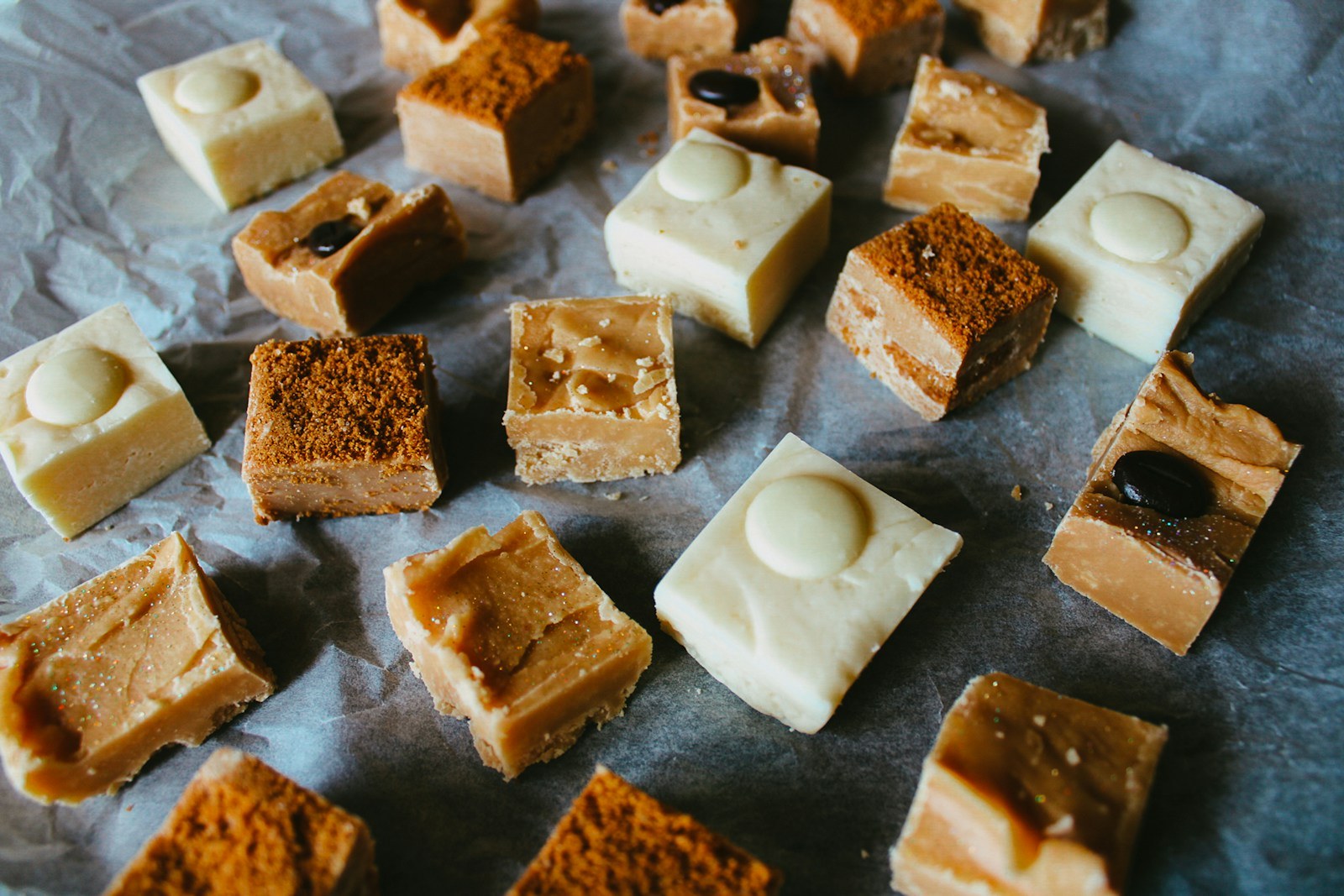


The short version: All five state agencies we checked allow candy as cottage food, and so does Etsy. None says you can mail out of state: New Jersey bans mailing, Texas wants online orders handed over in person. Three of the five need no state permit for candy, though Texas wants a food handler course; California registers you through your county, and New Jersey charges $100 and reviews for 16 weeks. New Jersey also bars chocolate-covered fresh fruit, candy apples and no-bake fudge.
Checked on five state cottage food pages, Etsy's policy pages and Homegrown's signup page, September 18, 2026. Verify your state's current rules first; Homegrown does not review them.
Homemade candy is legal to sell in every state we checked, and Etsy allows it. Your state decides whether it can be mailed.
Yes, but for most home candy vendors an Etsy shop only works for buyers in their own state, and in some states it does not work at all. Etsy has no candy ban. What limits you is the cottage food law in the state where you cook, and none of the five state pages we checked says you can sell across state lines.
A cottage food law is a state law that exempts certain low-risk foods made in a home kitchen from the licensing a bakery or candy factory needs. Candy was allowed in all five states we checked, because most cooked candy is shelf-stable. Virginia's FAQ calls these non-TCS foods, meaning they do not need time or temperature control, and says they "are safe when held at ambient temperatures after preparation." The trouble is that those laws picture a vendor handing a bag of toffee across a market table. Etsy pictures a package crossing the country.
Setting up the Etsy shop itself, with photos, tags and shipping profiles, is covered in our guide to selling food on Etsy. Here we only answer whether candy is allowed and where it can go. Once you know it is allowed, the next question is which counter it sits on, and our guide to where to sell candy compares seven places, including Ohio's and Washington's opposite rules on selling through local shops.
Four situations cover almost everyone reading this:
Etsy's food policy runs four sentences and never mentions candy, permits or state lines. In short, it says food sales are generally allowed, that government rules control who can make and sell food, that you should look up USPS and carrier restrictions, and that you should ask an attorney if you are unsure. The page we read on September 18, 2026 carried a "last updated" date of May 17, 2020.
So nothing stops you from listing a pound of peanut brittle tonight for Etsy's $0.20 listing fee, plus the one-time set-up fee Etsy may charge when you open a new shop. Etsy's fee policy says that set-up fee is charged during shop set-up and is non-refundable once paid, and it does not print the amount. Nothing in that policy asks what state you cook in, whether you hold a permit, or how close you are to your yearly cap.
What that leaves on your plate as a candy shop:
An Etsy listing shows up for shoppers in every state, and the 2020 food policy does nothing to limit that. Expect orders from outside your state and decide your refund rule before the first one lands. We read Etsy's policy on September 18, 2026.
Your state decides because cottage food laws are state laws, and each one sets its own list of allowed foods, its own sales cap and its own rules for how the food reaches the buyer. Etsy is only the storefront. The permission to make candy at home and sell it comes from the state where your kitchen sits.
Every cottage food law answers the same five questions, and the answers differ from state to state:
The one rule that does not change from state to state is the border. A state can exempt you from its own licensing rules, but that exemption stops at the state line. Virginia's July 2026 guidance says it outright: exempt products cannot be sold "across state lines." Our state-by-state cottage food directory lists the cap, permit and food list for your state.
Most cooked, shelf-stable candy is allowed as cottage food in all 5 states we checked, as long as it does not need a fridge after you make it. Four of the five write that condition into their own rules: California's cottage food law covers only "nonpotentially hazardous foods" under Health and Safety Code section 113758, Florida's statute 500.03 defines a cottage food product as food that is "not time or temperature controlled for safety," Virginia's FAQ says the foods it exempts "are safe when held at ambient temperatures after preparation," and New Jersey keeps refrigerated items off its approved list. Texas is the exception: it also allows refrigerated candy once you register with its health department, which then holds you to temperature limits and a safe-handling statement on the label. New Jersey publishes one of the most detailed lists, and its approved cottage foods list names brittle, toffee, bark, caramels, marshmallows, peanut clusters, chocolates, chocolate bars, candy bars, cereal treats and packaged cotton candy under candy, plus chocolate, caramel and strawberry fudge.
The other four states we checked list candy in broader terms:
Here is how common candy types line up against those lists, and how each one travels:
Scroll sideways to see every column.
| Candy | On the lists we read? | How it holds up in the mail |
|---|---|---|
| Fudge (cooked) | Yes, named on California's and New Jersey's lists | Yes in cool weather, soft in summer heat |
| Toffee and brittle | Yes, brittles and toffee are both named on California's list, and brittle and toffee on New Jersey's | Yes, the sturdiest candy you can mail |
| Caramels | Yes, caramels and salted caramels named on California's list, caramels on New Jersey's | Yes, wrapped one by one |
| Hard candy and lollipops | Yes for hard candy, named on California's list, with candy as a category on four lists and Texas allowing any food outside its banned list; lollipops are not named on any list we read, so they ride on the generic candy category and are worth confirming with your agency | Yes, if sealed against humidity |
| Chocolate bark and chocolates | Yes, chocolate named on California's list, bark and chocolates on New Jersey's | Not in summer without cold packs |
| Marshmallows | Yes, named on New Jersey's list, and on California's as marshmallows without eggs | Yes, in airtight bags |
| Packaged cotton candy | Yes, named in California, Virginia and New Jersey | Only in sealed tubs or bags |
New Jersey's list is the most detailed about what it leaves OUT, so it is a useful cross-check even if you live somewhere else. If a candy is on New Jersey's include list and your own state lists "candy" without detail, you are probably fine, but your state agency has the final say.
The candies most often left off cottage food lists are the ones with fresh fruit, fresh cream or a no-cook method, because those can need refrigeration to stay safe. New Jersey's approved list spells out the exclusions more plainly than any other state page we checked on September 18, 2026. The rule is not the same everywhere, though. California's approved cottage foods list names candied apples, and Texas allows foods that need refrigeration in general if you register with the Department of State Health Services and follow its temperature and labeling rules.
Candies New Jersey does not allow under its cottage food permit:
California's approved cottage foods list, by contrast, names candied apples, fudge, hard candy, marshmallows (without eggs) and freeze-dried candies under candy and confections. So a candy New Jersey turns away can still be fine one state over. Read California's parenthetical closely if you make marshmallows: the list approves "marshmallows (without eggs)" and, separately, marshmallow bars, so a recipe that whips raw egg white into the syrup sits outside that entry. An egg-free batch is named on the list itself. Ask your county environmental health office before you sell an egg-white one.
Two more categories trip people up. Truffles and cream-filled chocolates can go either way, because a ganache made with fresh cream may need refrigeration depending on the recipe. Chocolate-dipped pretzels split states too: Michigan and Ohio name them as allowed, while New York's home processor list says no chocolate on pretzels, as the guide to selling homemade pretzels legally shows. Virginia's July 2026 guidance applies a recipe-by-recipe test to three product families by name, and candy is not one of them: for baked goods, for jams and jellies and for acidified vegetable products it says whether a product meets the exemption "ultimately depends on the recipe of that specific product." Its candies entry carries no such note. What the candies entry does carry is the same condition every low-risk food carries, that the food cannot need time or temperature control for safety after preparation, and the FAQ says that "in some cases, laboratory testing is needed" from a food processing authority to settle which side of that line a recipe falls on. A Virginia truffle maker should ask VDACS directly rather than read the baked-goods answer across.
Freeze-dried candy is the newest gray area. It starts as store-bought candy that you run through a freeze dryer and repackage. The five states split on it. California's approved list names freeze-dried candies outright. Texas allows almost any food outside its banned list, including foods that need refrigeration once you register with the state. New Jersey bans the machine, not just the fruit: its prohibited food products page carries the flat heading "Freeze-drying or dehydrating machines are not allowed," and gives its trouble with drying fruit as the reason for the ban, not as a limit on it. As that page reads today, a freeze dryer is outside the New Jersey cottage food permit whatever you put in it, so ask the Department of Health in writing before you buy one. Virginia's list does not mention freeze-dried candy at all, so ask your agency there before you invest in a machine. The freeze-dried candy guide covers the business side once you have that answer.
"Cowboy candy" is not candy under cottage food law. It is candied jalapenos in a canning jar, which states treat as an acidified vegetable. Virginia's home food processing FAQ revised July 2026 allows home acidified vegetables only at a finished pH of 4.6 or below, caps their sales at $9,000 a year, and lists pepper jelly among products that may not be allowed. Eight Homegrown listings used cowboy candy or cowgirl candy in the name on September 18, 2026: four jars of candied peppers, three barbecue sauces and a jar of pickles that borrow the flavor name. Check your state's canning rules, not its candy rules.
Some states let you mail homemade candy to buyers inside the state, and some require you to hand it over in person. Of the five state agencies we checked on September 18, 2026, three allow mail delivery inside the state, New Jersey bans mailing, Texas requires online orders to be delivered in person, and none says you can mail to another state.
Swipe left on a phone to see all seven columns.
| State and agency | Candy on the list | Taking orders online | Mailing candy | Buyers in other states | Cap per year | Works with Etsy? |
|---|---|---|---|---|---|---|
| California, Department of Public Health | Candy and confections | Allowed for direct sales | Allowed, by mail or a delivery service | No; sales must be "within the state" under Health and Safety Code 113758 | $88,878 (Class A) or $177,756 (Class B) for 2026, adjusted each year | Only for buyers in California |
| Florida, Department of Agriculture | Candies and confections | Allowed through your website | Allowed as mail order | Not addressed; ask the department | $250,000 | Yes for buyers in Florida; the page does not say about other states, so ask the department first |
| New Jersey, Department of Health | Candy and fudge, listed by type | Allowed, with online payment | Not allowed by USPS, FedEx or DHL | No; N.J.A.C. 8:24-11.3, quoted in the FAQ, allows a handoff only at New Jersey locations | $50,000 | No |
| Texas, Department of State Health Services | Any food outside a short banned list | Allowed | Not allowed for online orders; you, an employee or a household member delivers it | Not addressed; the rule is on how you deliver, not where the buyer lives, so ask the department | $150,000 | No |
| Virginia, Department of Agriculture | Candies and cotton candy | Allowed | Allowed, by mail or delivery service | No; sales stay "within the Commonwealth" | None listed for candy | Only for buyers in Virginia |
Each row comes from that agency's own cottage food page or FAQ, read on September 18, 2026: California, Florida, New Jersey, Texas and Virginia. California's 2026 caps come from its adjusted gross annual sales limit table, effective January 1, 2026; the $75,000 and $150,000 in the statute are the amounts Assembly Bill 1144 set when it took effect on January 1, 2022, and the same section says those limits "shall be annually adjusted for inflation based on the California Consumer Price Index." CDPH's own cottage food page, the one linked as "California" above, has not been updated to that table, so it still prints those statutory figures as the current limits. The adjusted table is the newer of the two documents, so that is the figure this table prints. California's out-of-state answer comes from Health and Safety Code section 113758, which defines both direct and indirect sales as transactions "within the state." New Jersey's answer comes from N.J.A.C. 8:24-11.3, quoted in that state's FAQ, which allows a handoff only at the operator's home, the customer's home "provided the home is in New Jersey," a New Jersey farmers market or farm stand, or another location in New Jersey. Texas sets no such limit: its page rules on how an online order is delivered, not on where the buyer lives. Virginia's row follows the FAQ revised in July 2026. An older 2024 Virginia FAQ is still online and says internet sales are not allowed; it no longer matches the law. "Not addressed" means the page is silent on out-of-state buyers, which is not the same as permission. These rules get amended, so reread your own state's page before you mail a single box.
The Texas cottage food rules from the Department of State Health Services let you sell online only when you, an employee or someone in your household personally delivers the order, and you must post the label information on your website before you take payment. The yearly cap rose to $150,000 when Senate Bill 541 took effect on September 1, 2025. We checked that page on September 18, 2026.
No. None of the 5 states we checked says you can mail homemade candy to another state under its cottage food exemption. Virginia rules it out, and California's cottage food law defines every sale as a transaction "within the state" (Health and Safety Code 113758). New Jersey and Texas require an in-person handoff or personal delivery. Florida's law does not address out-of-state buyers. Cottage food laws are state exemptions, so they only cover sales inside the state that grants them. Once a box of fudge crosses a state line, you are outside that exemption and inside federal food rules written for licensed food businesses.
The clearest case is the Virginia home food processing FAQ revised in July 2026. It lets a Virginia vendor sell candy by phone or internet and deliver it by mail, which is more open than New Jersey or Texas. The same page limits those sales to buyers "within the Commonwealth" and rules out any sale "across state lines."
What that means for an Etsy candy shop:
The general rules for mailing any cottage food, including the handful of states that mention out-of-state sales, are in the guide to whether you can ship cottage food.
Most candy vendors need four things before the first sale: a confirmed allowed product, whatever registration or permit their state requires, a compliant label, and a way to take orders that matches their state's delivery rules. In the five states we checked, the paperwork ran from no permit at all in Florida, Texas and Virginia (Texas still requires a food handler course, plus registration if your candy needs refrigeration) through county registration or a county permit in California, to a $100 permit and a 16-week review in New Jersey.
The cottage food permit guide walks through the application itself, including which states want an inspection and which do not.
A homemade candy label needs, at minimum, the product name, your name and location, the ingredients, the major allergens and your state's home-kitchen statement. Candy is heavy on allergens, since peanut brittle, almond toffee and turtles all carry nuts and most fudge carries milk, so the allergen line matters more here than on almost any other cottage food.
What the label rules on 3 states' pages asked for on September 18, 2026:
For an Etsy order, the label goes on the package inside the box, not just on the listing. Texas also asks online vendors to post the full label information on their website before taking payment. The cottage food labeling guide has the full field list with a sample label.
Etsy takes $2.35 from a $20 box of fudge before any shipping charge: a $0.20 listing fee, a 6.5% transaction fee of $1.30, and US payment processing of 3% plus $0.25, which is $0.85. Etsy charges both percentages on shipping too, so every dollar you charge for shipping costs you another 9.5 cents.
We used $20 because it is the real price of a six-flavor fudge pack from a candy vendor on Homegrown on September 18, 2026. Here is the full fee stack on that box across three ways to sell it:
Swipe left on a phone to see all eight columns.
| Where you sell | Monthly plan | Trial | Platform or service fee | Card processing | Buyer pays for a $20 box | You pay on a $20 box | You pay on 50 boxes a month |
|---|---|---|---|---|---|---|---|
| Etsy | No plan required (a one-time set-up fee can apply) | n/a (no subscription) | $0.20 per listing plus 6.5% of the price and shipping | 3% + $0.25 per order for US bank accounts, figured on price, shipping and tax, paid by you | $20 plus your shipping charge | $2.35 plus 9.5% of shipping | $117.50 plus 9.5% of shipping |
| Hotplate | $0 | n/a (no subscription) | 5% + $0.55, added to the buyer's checkout unless you absorb it | 2.9% + $0.30, paid by you | $21.55 (or $20 if you absorb the fee) | $0.88 to $0.92 (or $2.43 if you absorb the fee) | $44.00 to $46.25 (or $121.50 if you absorb the fee) |
| Homegrown | $10 a month on the annual plan, $12.50 on the monthly plan | 7 days; first charge on day 8 | None: 0% commission and no fee added for the buyer | 2.9% + $0.30, paid by you | $20, plus your delivery fee if they pick delivery over pickup | $0.88 plus your plan | $54.00 on the annual plan, $56.50 on the monthly plan |
Sources: Etsy's Fees and Payments policy and its Etsy Payments policy, read September 18, 2026; Hotplate's pricing page and the Homegrown signup page, read September 20, 2026. Etsy does not print the set-up fee amount on its policy page. Hotplate shows its service fee as 5% + $0.55 of the subtotal ($1.55 on $20). Hotplate does not publish which amount it charges card processing on. Its own worked example pays $1.27 in processing on a $30.00 order with a $2.05 Hotplate fee, a $3.00 tip and $2.55 in tax, and $1.27 works back to a base of $33.45: more than the $30 subtotal, less than the $37.60 the customer paid. So the Hotplate row shows a range on a $20 box, $0.88 if processing lands on the $20 subtotal and $0.92 if it lands on the full $21.55 the customer pays. The 50-box figures are worked out before rounding, so the top of that range is $0.92495 a box, or $46.25 on 50 boxes. When you absorb the fee, the customer pays $20 and processing is $0.88. Left out of every row: sales tax, tips, and Etsy's Offsite Ads fee on sales that come through Etsy's outside advertising.
On 50 boxes a month, Etsy costs you $117.50 in fees, Homegrown $54.00 on the annual plan, and Hotplate $44.00 to $46.25. All three of those numbers already have card processing inside them. Hotplate is the cheapest of the three for you only because your buyer pays the $1.55 service fee on every box, $77.50 across 50 boxes, while the Homegrown buyer pays $20 and no platform fee on top of it (pickup is free; if the vendor turns on local delivery, the buyer pays the flat delivery fee that vendor sets, and the vendor keeps all of it). Against Etsy, Homegrown leaves you $63.50 a month better off before Etsy's share of shipping. That gap only matters, though, if your state lets you use Etsy in the first place. The full list of Etsy charges for food shops is in the Etsy fees breakdown for food vendors.
When your state keeps candy orders local, a nationwide marketplace is the wrong tool. You need a simple way for nearby customers to order and pay before pickup. Homegrown gives you that for $10 per month billed annually ($12.50 billed monthly), and nothing taken from your sales beyond the standard 2.9% plus $0.30 card processing on each order.
Compared with the other ways candy vendors usually sell:
What fits a candy business in particular:
The honest limits: Homegrown does not check your state's cottage food rules, print your labels or tell you which candies are allowed. It does not ship across the country or handle carrier labels. Customers create a Homegrown account to place their first order, and there is no timed-release or countdown feature for holiday candy drops. You do get a listing on the Homegrown marketplace, yet most of your orders will come from customers you point to your own link, so plan your marketing around that.
Heat and humidity decide which candies you can mail and which ones you should only hand over in person, even in a state that allows shipping. Chocolate softens in a hot mail truck, hard candy turns sticky in humid air, and freeze-dried candy can go stale if a box sits in a mailbox. The same heat and damp air also set how long homemade candy keeps on your own shelf, which is why sealed brittle lasts about 3 to 4 weeks while wrapped caramels last about 1 to 2. Candy bouquets for birthdays and graduations are usually handed over in person anyway, and our guide to selling candy and money bouquets explains when sealed store-bought candy is a simple resale and when homemade candy needs a cottage food label.
The Homegrown vendor with the most candy listings, a freeze-dried candy shop with 61 packs, puts it in capital letters on its own listings: "FREEZE DRIED CANDIES ARE VERY SENSITIVE TO HEAT AND COLD AND CANNOT BE LEFT OUTSIDE OR IN A MAILBOX."
How each candy type handles the trip:
Sell freeze-dried candy in small fixed packs at one price. The Homegrown freeze-dried candy vendor prices all 61 of its packs at $5, so a customer can build a mixed order of five packs for $25 without doing any math. Only 13 of those 61 listings print a pack weight at all, and the ones that do run from 0.75 of an ounce up to 4 ounces, so the flat price is doing the work, not a standard size. We saw those listings on September 18, 2026.
Candy vendors on Homegrown mostly sell low-priced packs, plus a few higher-priced packs and boxes. In the catalog pull of September 18, 2026, we found 91 candy listings from 6 vendors, and 61 of them were freeze-dried candy packs from a single shop, every one priced at $5. The other five vendors' 30 listings ran from $4 (a single fudge flavor) up to $32 (a zefir from a marshmallow flower shop).
Our September 18, 2026 catalog pull found 2,485 products from 288 vendors on Homegrown. Candy made up 91 of them, sold by 6 vendors. We counted a product as candy when its name said freeze-dried candy, fudge, toffee, brittle, truffles, turtles, buckeyes, marshmallow or cotton candy, or when the whole shop was a fudge or marshmallow shop. Prices ran from $4 for a single fudge flavor or coconut truffles to $32 for a zefir from a marshmallow flower shop.
Candy listings on Homegrown by type
Source: Homegrown public catalog, pulled September 18, 2026, 91 candy listings from 6 vendors.
The price points tell you how these vendors sell:
The pattern is lots of small items at $10 or less, with a few larger packs and boxes from $13 to $32 at the top. That ceiling is lower than the shelf outside Homegrown, where a half pound box of fudge runs $10.00 to $17.95 and an 8 ounce bag of brittle runs $12.53 to $17.00, so it is worth checking how much to sell candy for against both before you set a price. If that is the kind of candy business you are building, you can set up a Homegrown storefront with pickup times and payment at checkout, and share one link with your regulars instead of answering orders in your messages. For pricing and packaging ideas on the most common candy, the guides to selling fudge from home and selling caramels and toffee go deeper.
A commercial kitchen makes sense when you want to ship candy to other states, sell to shops for resale, or make candy your state's cottage food list leaves out. Those three moves fall outside most of the cottage food exemptions we checked, and each one usually needs a licensed food facility under your state's food rules. The exceptions: California lets Class B operators sell through restaurants and food markets, and Texas lets you sell to a registered cottage food vendor at wholesale and allows refrigerated foods once you register.
Signs you have outgrown a home kitchen:
Renting time in a licensed shared kitchen is usually the first step, and Virginia's FAQ points vendors who want to sell beyond the exemption to its permit application. You can keep a cottage food operation for local orders and add a licensed kitchen only for the products or buyers that need it.
If you sell candy outside your state's cottage food rules, you are running an unlicensed food business for those sales, and you lose the protection the exemption gives you. On each of the five state pages we checked, the exemption only covers sales that follow that state's food list, label and delivery rules. Virginia's FAQ says it plainly: to sell products not listed, or to sell beyond what the exemption allows, you need a permit from its Food Safety Program.
The practical risks for a home candy vendor:
The fix is usually simple: sell the candies your state lists, label every package, and match your sales channel to your state's delivery rule. If your state keeps sales local, a pickup storefront does the job Etsy cannot.
Yes, if three things line up in your state: candy is on its cottage food list, online sales are allowed, and mail delivery is allowed, and even then only for buyers in your own state. Some states also require a cottage food registration or permit, such as California, where your county environmental health office handles registration and mail delivery inside the state is allowed. Etsy itself does not ask for any license, so the responsibility is yours.
Cooked fudge is allowed in every state we checked, as candy on four lists and under Texas's any-food rule, and New Jersey names chocolate, caramel and strawberry fudge outright on its approved list. No-bake fudge is the exception, since New Jersey excludes it. Fudge made with cream cheese or fresh fruit toppings may also need refrigeration, which usually takes it off the list, except in states like Texas that allow refrigerated foods with registration.
None of the five states we read on September 18, 2026 says you can under a cottage food exemption. Virginia and California limit sales to buyers inside the state; Virginia allows mail delivery but only within the state, and California's law defines every cottage food sale as a transaction "within the state." New Jersey and Texas require an in-person handoff or personal delivery, and Florida's law does not address out-of-state buyers. To ship candy to other states, you need a licensed commercial kitchen.
It depends on your state. Florida and Virginia require no state permit for home candy, Texas requires registration only for refrigerated foods, California sends you to your county for registration or a permit, and New Jersey requires a $100 permit with a 16-week review. Check your state agency's cottage food page before your first sale.
Usually not, because fresh fruit dipped in chocolate needs refrigeration to stay safe. New Jersey's approved list excludes chocolate-covered strawberries, chocolate-covered fresh fruit and candy apples by name. Chocolate-covered nuts and dried fruit are allowed in New Jersey and California. Two of the five states we checked are more open. California's approved list names candied apples. Texas's Department of State Health Services cottage food page allows any refrigerated food outside its banned list if you register and follow its temperature and labeling rules. The Texas page does not name chocolate-covered strawberries, but its refrigerated-food rule is the one that would cover fresh-fruit candy.
On September 18, 2026, the freeze-dried candy shop on Homegrown priced all 61 of its packs at $5. The other five candy vendors charged $4 a flavor or $20 for a six-pack of fudge, $4 to $10 for coconut truffles, buckeyes and turtles, $6 for cotton candy, $13 for salted almond toffee, $20 for peanut brittle and $27 to $32 each for marshmallow flowers and zefir from one shop. If you sell on Etsy, add about 9.5% plus $0.45 to cover its listing, transaction and processing fees on each order, which is $2.35 on a $20 box before shipping.
Five guides that pick up where this one stops, each tied to a question candy vendors ask next:
Ready to take candy orders from people nearby without Etsy's fees or a pile of messages? Open your Homegrown storefront, add your fudge, toffee or brittle, and share one link with your regulars.



