
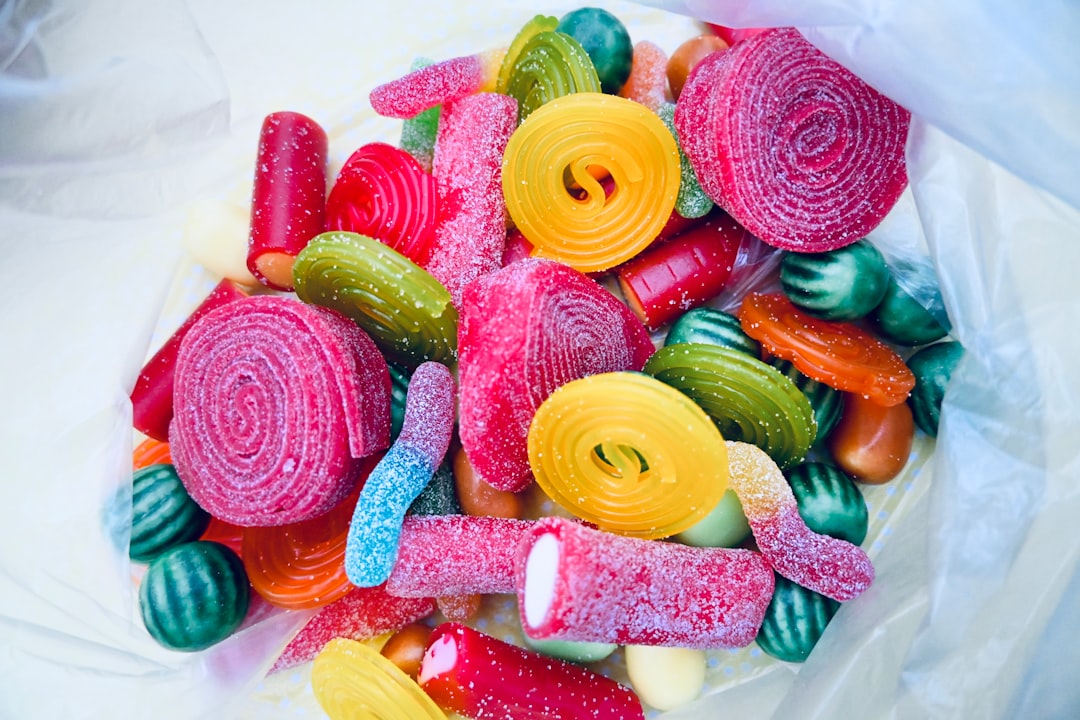


The short version: You can sell freeze-dried candy from home under cottage food laws in several states, but the rules differ: Utah lists freeze-dried candies by name, Oregon allows freeze-drying only for candy and other confections, and Ohio allows freeze-dried candy only in a bag sealed without an oxygen absorber. You need a home freeze dryer ($1,895 to $4,995 at Harvest Right's sale prices on September 14, 2026), food-safe packaging, and compliant labels. Skittles, gummy bears, and saltwater taffy are popular first candies to test. This guide's planning range for a bag is $5 to $15, and at $4 profit per $5 bag, selling 15 bags a week pays off a $2,395 medium freeze dryer in about 40 weeks before card fees. Startup costs run about $2,095 to $5,495.
Checked September 14, 2026: state rules on each state agency's own website, freeze dryer prices, batch times and running costs on Harvest Right's site, and Etsy's fees on its own fee pages. Rules change, so confirm yours with your state before your first sale.
Freeze-dried candy now turns up in social media feeds and even on grocery store shelves, as a University of Maine Extension article noted in 2024. What started as a TikTok trend has turned into a real business for home vendors selling at farmers markets, online, and through local pickup. The appeal is simple — freeze-dried Skittles, gummy bears, and saltwater taffy puff up into crunchy, intensely flavored snacks.
The barrier to entry is higher than most cottage food products because you need a freeze dryer, which starts at $1,895 on sale at Harvest Right and tops out at $4,995. But the margins can be strong: in this guide's cost table, a $5 bag costs about $0.76 to $1.42 to make, and a sealed bag keeps without refrigeration, which means low waste.
This guide covers everything you need to start selling freeze-dried candy from home: equipment, legal requirements, best products to freeze-dry, pricing, packaging, labeling, and where to sell.
Ready to actually start selling? Take orders and get paid online in about 15 minutes — set up a Homegrown storefront ($10/mo billed yearly, 0% commission, plus 2.9% + 30¢ per card payment), or compare the best platforms to sell food from home.
In several states, yes, as long as your state's cottage food rules cover candy that you freeze-dry at home. Freeze-dried candy is a shelf-stable, low-moisture food, and Utah lists freeze-dried candies by name among its allowed cottage foods. For safety, Illinois's 2026 cottage food guide tells operators to aim for a water activity (aw) of 0.85 or less in freeze-dried foods. Properly freeze-dried food lands well below that line. Utah State University Extension puts it at about 0.3 or below, and the University of Maine Extension says freeze drying removes up to 98% of moisture from food.
However, the rules vary by state:
Important: Check your specific state's cottage food laws before you start. Some states have stricter definitions of what counts as a "cottage food product," and freeze-dried candy is new enough that not every state has explicitly addressed it. Your state's Department of Agriculture or health department website is the best place to verify.
Things that can complicate legality:
You can sell freeze-dried food from home in several states, but candy is usually the easiest case, and freeze-dried fruit, vegetables and meals run into more limits. Each state writes its own list of allowed foods. Five state agencies show how far apart those lists are.
Swipe sideways to see both columns.
| State | Freeze-dried candy | Other freeze-dried foods |
|---|---|---|
| Utah | Listed by name as an allowed cottage food | Low acid fruits may be freeze-dried |
| Oregon | Allowed, because freeze-drying is allowed for confectionery | Not allowed, though you may repackage freeze-dried foods bought from a commercial source |
| Washington | Allowed for candies on your permit's allowed products list | Freeze-drying fresh fruits and vegetables is not allowed |
| Colorado | Candies such as cotton candy and fudge are eligible; the page does not name freeze-dried candy | Freeze-dried produce is eligible, and freeze-dried meals are not |
| Ohio | Allowed when sealed airtight without an oxygen scavenger (October 2025 memo) | The memo covers candy only |
Two of these five states draw a line at meat or meals. Colorado lists freeze-dried meals as ineligible, and Oregon leaves meat and meat-containing products out of its cottage food exemption. Homegrown's free cottage food law checker is a quick first stop: pick your state and it shows revenue limits, license requirements, labeling rules and the products you are allowed to sell.
Rules on freeze-dried food are still catching up. Ohio's Department of Agriculture sent its October 2025 memo to local health departments after questions about freeze-dried candy, and Oregon, Utah and Washington each answer the question on their own cottage food pages.
Look up your own state agency's page before your first sale. Last verified September 14, 2026.
You start a freeze-dried candy business in six steps: check your state's rules, pick a freeze dryer, test a few candies, package and label them, set prices, and set up a way to take orders.
Budget for the freeze dryer plus $200 to $500 for packaging, labels, a sealer and your first candy, the planning range this guide uses in its FAQ. The rest of this guide walks through each step.
The freeze dryer is the biggest investment, and Harvest Right's lowest priced home model was $1,895 on sale September 14, 2026. Everything else is relatively affordable.
To make freeze-dried candy you need a freeze dryer with a candy setting, the candy itself, airtight bags, a sealer, and a label for every bag. Harvest Right's machines come with a candy mode, and the Maine Extension article linked above notes that the candy setting dries at a higher temperature than the setting for fruits and vegetables. The sections below cover each piece and what it costs.
Harvest Right's home freeze dryers hold 6 to 50 pounds of fresh food per batch, depending on size. A home freeze dryer is the core of this business. The brand this guide uses for prices is Harvest Right, which sells four home sizes:
Swipe sideways to see every column.
| Size | Capacity (lbs of fresh food per batch) | Price on September 14, 2026 | Best For |
|---|---|---|---|
| Small | 6-10 lbs | $1,895 on sale (regular $2,495) | Testing the business, 1-2 markets/week |
| Medium | 10-15 lbs | $2,395 on sale (regular $3,195) | The middle size, 2-3 markets/week |
| Large | 18-27 lbs | $2,995 on sale (regular $3,895) | High-volume vendors, online + markets |
| X-Large | 40-50 lbs | $4,995 on sale, stainless only (regular $5,295) | The largest home model, on a dedicated 20 amp circuit |
Prices are Harvest Right's sale prices for its lowest priced finish on September 14, 2026, during a sitewide sale. Stainless steel costs more. Capacities are from Harvest Right's FAQ.
A medium Harvest Right sits in the middle of the range. It runs on a standard 110V household outlet on a dedicated 15 amp circuit, and Harvest Right says candy usually finishes in about two hours, while most other foods take 13 to 35 hours. In candy mode you can start the next candy batch without defrosting in between, so your prep and packing time sets how many batches you run in a week.
Running costs: Harvest Right estimates electricity at $1.25 to $2.80 a batch for its small and medium models, $2.00 to $3.00 for the large and about $4.00 for the X-Large, depending on your local rates. The vacuum pump requires oil changes every 20 to 30 batches on the Premier oil pump, or every 4 to 5 batches on the Standard oil pump. The cost table below already counts electricity in the cost of each bag, so this guide's payback math includes it. Add pump oil on top as it comes due.
Plan on 5 supplies beyond the freeze dryer, with prices below as planning ranges for buying in bulk.
Total startup cost: $2,095 to $5,495 depending on freeze dryer size and initial supply purchases, using Harvest Right's September 14, 2026 sale prices and $200 to $500 in supplies.
A Harvest Right home freeze dryer ran from $1,895 for the Small to $4,995 for the X-Large on September 14, 2026, during a sitewide sale, and $2,495 to $5,295 at regular prices.
Put the machine price next to your weekly sales before you buy. If a bag costs about $1 to make, near the middle of this guide's $0.76 to $1.42 range, each $5 bag leaves $4 of profit, so the medium's $2,395 sale price takes 599 bags to pay off, or about 40 weeks at 15 bags a week. Across that full cost range, the payback runs 38 to 45 weeks. A small at $1,895 takes 474 bags, about 32 weeks at that pace. Tray space runs from 434 square inches on the small to 2,251 on the X-Large, so buy the size that matches the candy you plan to sell each week.
Harvest Right also offers layaway. A $250 down payment locks in the sale price for one year, you pay with 0% interest when you want, and the freeze dryer ships after the final payment. If the price goes up and you have not paid it off within that year, you pay the higher price.
Skittles and gummy bears seem to be popular freeze-dried candies, the Maine Extension article noted, and both puff up and turn crunchy. Not all candy freeze-dries well. The best candidates are candies with moisture that transforms dramatically during the freeze-drying process — they puff up, get crunchy, and taste more intense.
Test 3 to 5 of these 6 candies first, since each one puffs up or turns crunchy in a freeze dryer.
Add these 5 candies once your first 3 to 5 candies sell steadily at market.
Skip three kinds of candy: ones that are already dry, plain chocolate bars, and candy with nuts.
Pro tip: Start with three to five products. Skittles, saltwater taffy, and gummy bears cover enough variety to test what your local customers prefer. Add more once you know what sells.
Freeze-dried candy is still rare on Homegrown: in a pull of our catalog on August 14, 2026, 28 of the 1,804 products listed were freeze-dried candy, and all 28 came from one vendor.
That vendor, Over Terrill Creek, lists its candy as flavor lines, including 7 Frooty Tooties flavors and 4 Taffy Bites listings such as Pickle Flavor and Maple Bacon Flavored. The rest of the freeze-dried listings were two kinds of freeze-dried strawberries and a freeze-dried beef liver pet treat.
In a pull of the Homegrown catalog on August 14, 2026, 31 of the 1,804 products from 219 vendors had freeze dried in the name. They came from 3 vendors: 28 candies, 2 fruit listings and 1 pet treat. All 28 candies came from 1 vendor. These are product listings, and they are not sales figures.
The 31 freeze-dried listings on Homegrown, by type
Source: Homegrown catalog pull, August 14, 2026. Counted by product name.
For a new vendor, that means two things. You will find few other freeze-dried candy storefronts on Homegrown to compare prices against. And a Homegrown storefront is listed in the Homegrown marketplace automatically, but that listing alone will not bring buyers, so plan on sharing your own link at markets and on social media.
Pricing freeze-dried candy is straightforward because the ingredient costs are low and the perceived value is high. Customers see it as a novelty treat, not a commodity.
Cost breakdown for a typical small bag:
These per-bag costs are planning estimates. Swap in your own candy, bag and label prices before you set a price.
Swipe sideways if the table is cut off.
| Cost Component | Amount |
|---|---|
| Candy (wholesale) | $0.30-$0.60 |
| Packaging (bag + label) | $0.21-$0.42 |
| Electricity | $0.15-$0.25 |
| Oxygen absorber | $0.10-$0.15 |
| Total cost per bag | $0.76-$1.42 |
Typical retail prices:
The cost table prices a small bag, the size that sells for $5 to $7. At those prices it leaves margins of about 72% to 89% before card fees. Medium bags, large bags and sampler packs use more candy and packaging, so add up their own costs before you price them. If you sell 30 to 50 bags a week at $5 to $10 each, that is $150 to $500 in revenue.
Card fees come out of that. On Homegrown, a $5 bag paid by card costs 45 cents in fees (2.9% + 30 cents). On Etsy, a $10 bag with no shipping or sales tax costs $1.40 in listing, transaction and payment processing fees. To set a price from your own numbers, Homegrown's free pricing calculator takes your material cost, your time, your hourly wage, packaging and overhead and suggests a price with a margin built in.
What customers will pay depends on where you sell:
Packaging matters more for freeze-dried candy than most cottage foods because moisture is the enemy. If air gets into the bag, the candy pulls moisture back in and loses its crunch.
Many states require these elements on cottage food labels, though the exact list and wording come from your state:
To print a label that fits your state, Homegrown's free cottage food label template builds a label mockup with your state's required disclaimer text and a checklist of the required elements, ready to print.
The University of Maine Extension's freeze-drying guide emphasizes that freeze drying does not destroy harmful bacteria — proper food handling during production is essential. Keep your kitchen clean, wash your hands, and handle candy with gloves or tongs.
Freeze-dried candy can sell through several channels because it keeps without refrigeration and looks different from regular candy. Those channels do not cost the same: on a $10 box of candy, fees take $0.41 on a booth card reader, $0.59 through your own ordering link and $1.40 on Etsy, and our guide to where to sell candy compares all seven places side by side.
Farmers markets are a natural starting point for freeze-dried candy, since shoppers can see it and taste it. Freeze-dried candy is an impulse buy — the bright colors and puffy shapes attract attention, and the $5 to $8 price point is easy to try. Set up a sample tray (where allowed by your market's rules) and let people try before they buy.
Here is how online orders can get out of hand: you post a TikTok of Skittles puffing up in the freeze dryer, it gets 10,000 views, and your DMs fill with "how do I order?" Now you are copy-pasting your flavor list into 30 conversations, tracking who paid via Venmo and who said they would "pay Saturday," and trying to remember whether @candylover92 wanted two bags of taffy or two bags of gummy bears.
Etsy works for shipping freeze-dried candy — customers search "freeze dried Skittles" and find your listing — but ship only where your state's law allows it. Etsy charges a $0.20 listing fee and a 6.5% transaction fee on the item price plus shipping, and Etsy Payments adds 3% + $0.25 per US order. Sales that come from Etsy's outside ads add a 15% fee unless you opt out, or 12% once a shop reaches $10,000 in sales over the past year. The platform is built for shipped orders. For a vendor whose customers pick up at Saturday's market, you are paying marketplace fees for a handoff that happens in person.
Instagram DMs and Facebook messages cost nothing, but you are the entire ordering system — manually confirming flavors, chasing payments, and keeping a mental list of who ordered what. When you are loading candy batches that finish in about two hours, the last thing you need is to spend your non-freeze-dryer time managing a text thread.
Homegrown costs $10 a month billed yearly or $12.50 month to month, plus 2.9% + 30 cents per card payment. List your flavors with photos and bag sizes, share the link on your TikTok bio or market signage, and customers create an account, then order and pay by card in one checkout. You get an order summary for each pickup day, so you see exactly how many bags of each flavor to prep for this week's batch — so you are loading trays with Skittles because 12 people ordered them, not because you guessed. Set how many bags of each flavor you have, and inventory tracking counts them down as orders come in, with a low-stock alert before the gummy bears run out.
Homegrown is not built for shipped orders. Where your state's law lets you ship, Etsy gives you the marketplace and shipping tools. But for turning your social media followers and market regulars into weekly pre-order customers, it replaces the DM chaos for $10 a month billed yearly, less than the profit on four $5 bags of candy, plus a 45 cent card fee on each $5 bag paid by card.
Your storefront is also listed in the Homegrown marketplace automatically, but plan on bringing your own customers with your link. To compare other ways to take orders, see our guide to the best platforms for selling baked goods online.
For tips on getting started, read our guide on places to sell homemade food that aren't Etsy or Shopify.
Freeze-dried candy photographs well because the candy changes shape as it dries. The puffed-up shapes and bright colors suit Instagram and TikTok. Post a video of candy going into the freeze dryer and coming out transformed, and you can generate interest.
County fairs, school events, holiday markets, and community festivals are good venues to test freeze-dried candy. Freeze-dried candy is easy to transport, does not need refrigeration, and fits events where customers are looking for something fun and different.
Starting a freeze-dried candy business follows the same path as any cottage food product — but the novelty factor gives you an advantage.
The Utah State University Extension's freeze-drying guide notes that high-sugar foods hold onto water and resist moisture loss, which prolongs drying, so test a piece from every tray before you bag the batch. Harvest Right's FAQ says a batch of candy typically takes about two hours, while fruits, vegetables, meats, meals and dairy take 13 to 35 hours. Plan your production schedule accordingly.
For help showing up in local search results, read our guide on how to show up when someone Googles "homemade cookies near me" — the same local SEO principles apply to freeze-dried candy.
These 7 mistakes cost new freeze-dried candy vendors time, product or money.
Plan on $2,095 at the low end and $5,495 at the high end to get started. The freeze dryer itself is $1,895 to $4,995 depending on size, at Harvest Right's September 14, 2026 sale prices. Packaging supplies, labels, an impulse sealer, and initial candy inventory add another $200 to $500. How fast you break even depends on volume: at $4 profit on a $5 bag, 15 bags a week pays off a $2,395 medium in about 40 weeks, or about 47 weeks after Homegrown's 45 cent card fee per bag and its $10 a month plan billed yearly.
The sources checked for this guide give no shelf life for freeze-dried candy in particular, so put a best-by date on every bag. Utah State University Extension says freeze-dried foods can stay safe and stable for 10 to 15 years in airtight, moisture-proof Mylar with oxygen absorbers, kept cool, dark and dry, but candy sells on its crunch, and that fades once moisture gets in. Once the bag is opened, the candy starts absorbing moisture from the air and loses its crunch. That is why resealable bags are important — customers can close the bag between servings.
Chocolate does not freeze-dry well on its own because it has very low moisture content. It does not puff or change shape — it just gets a slightly different texture. However, candies with chocolate coatings over a moist center (like Milk Duds or chocolate-covered marshmallows) freeze-dry well because the inside puffs while the chocolate shell crisps.
With a Harvest Right freeze dryer, Harvest Right puts a typical candy batch at about two hours, compared with 13 to 35 hours for most other foods. In candy mode you can start a new candy batch without defrosting between batches, so the limit is your own time to load trays, pack bags and seal them. Utah State University Extension notes that high-sugar foods hold onto water and resist moisture loss, which prolongs drying, so check that each batch is dry and crunchy all the way through before you bag it. Once the trays are loaded, you press start and the machine runs the cycle.
In many states, you need to register as a cottage food operator, which is simpler than a full business license. Some states require no registration at all — just label compliance. Utah is one that requires a valid food handlers permit, plus an inspection and registration. Check your state's agriculture or health department website for specific requirements before you sell freeze-dried food from home. Fees vary: Washington charges $355 for a two year cottage food permit.
Freeze-dried candy started as a social media trend, and it is now common enough that Ohio's Department of Agriculture sent a memo about it to all local health departments in October 2025 after receiving questions. Whether it lasts as a business for you comes down to repeat customers. The key is treating it like a real food business with consistent quality, proper labeling, and reliable availability.
Profit per bag depends more on your candy cost and your price than on the brand. Skittles are a strong first test because the finished product is instantly recognizable and fits this guide's $5 to $8 farmers market range, while the candy itself runs $0.30 to $0.60 a bag. Saltwater taffy is another good test because the transformation is dramatic and the product photographs well.
You sell candy from home by checking the cottage food rules in your state, labeling every package, and choosing where customers buy: a farmers market, pickup at your home, local delivery or an online ordering page. The same steps apply when you sell freeze-dried food from home, plus one more check on which freeze-dried foods your state allows. Florida, for example, lets cottage food operators take orders online and deliver by mail, and Washington caps cottage food sales at $35,000 a year.
It depends on the state, and fruit is harder than candy. Utah allows low acid fruits to be freeze-dried, and Colorado lists freeze-dried produce as eligible. Oregon permits freeze-drying for confections alone, and Washington does not allow freeze-drying fresh fruits and vegetables under its cottage food permit. If you want to sell freeze-dried food from home beyond candy, read your state's allowed foods list first.
A $2,395 medium freeze dryer sounds like a big investment for a cottage food side business. But at $5 per bag with $1 in costs, you earn $4 profit per bag. Sell 15 bags per week at one farmers market, and you take in $75 a week and keep $60 of it. The machine pays for itself in about 40 weeks, a little over nine months. Sell 30 bags a week and the same machine pays off in about 20 weeks before card fees.
Card payments change that math a little. Paid by card through Homegrown, each $5 bag costs 45 cents in fees (2.9% + 30 cents), so 15 bags leave $53.25 a week. Take out Homegrown's $10 a month plan, billed yearly, which is about $2.31 a week, and $50.94 a week pays off the machine in about 47 weeks. Cash sales at the market carry no card fee.
Start with your most popular candies, price confidently, and get your ordering page up so customers can find you between markets. Set up your Homegrown ordering page in 15 minutes and start taking pre-orders for pickup or local delivery before your next batch.



