

The short version: Yes, you can sell fudge from home in all 5 states whose agency pages we read (Texas, California, Florida, Washington and Arkansas), but the paperwork runs from no permit at all in Texas, Florida and Arkansas to a $355 two-year permit with a kitchen inspection in Washington. A half-pound box of chocolate fudge costs about $2.41 to make with the box and label, by our cost sheet built from Walmart.com prices, and five candy shops we checked charge $8.00 to $16.99 for a half pound. Print a best-by date 14 days after the day you make it on plain and fresh-nut fudge, and 10 days on fudge with marshmallows or marshmallow creme, crushed cookies or candy pieces (our cost-sheet recipe is one), our own rule because no federal agency publishes a shelf life for homemade fudge. Start with a few flavors, sell at markets and holiday fairs, and take pre-orders through one link so you know how many pans to cook.
Checked October 13, 2026: state rules on the Texas DSHS, CDPH, FDACS, WSDA and Arkansas Department of Health pages; ingredient, tool and label prices on Walmart.com search pages (prices vary by store); box prices on Nashville Wraps, WebstaurantStore and Confectionery House; shop prices on five candy shops' own product pages; fees and card processing rates on findhomegrown.com/signup, Etsy's Fees and Payments policies, Square's online store plans page and hotplate.com/pricing. Homegrown customers create an account to place a first order, and Homegrown has no drops or countdown release feature.
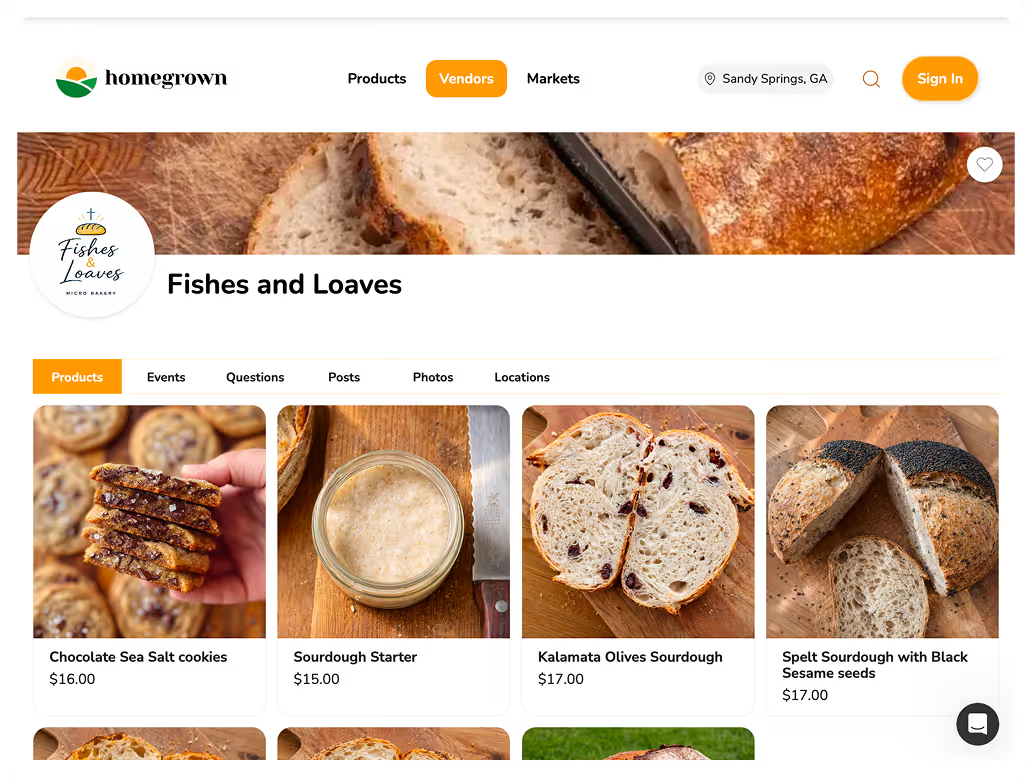
If you want local customers to order your fudge ahead, you can set up a Homegrown storefront and try it free for 7 days.
Fudge is one of the easiest candies to turn into a small business. The ingredients sit on any grocery shelf, the method is one pot and one pan, and a finished pan keeps long enough that you can cook on Thursday and sell on Saturday. On our cost sheet below, a 9-inch pan of chocolate fudge costs $9.13 in ingredients and fills five half-pound boxes, and candy shops sell a half pound for $8.00 to $16.99.
Beyond the numbers, fudge has something most cottage food products do not: built-in gift appeal. People buy fudge for themselves, but they also buy it as gifts for birthdays, holidays, thank-you packages, and hostess presents. That gift market opens up sales channels that other cottage food products cannot easily reach.
This guide covers everything you need to start selling fudge and candy from home: what the rules say in the five states whose agency pages we checked, what types of candy qualify, how long fudge keeps, how to price and package it, what the equipment costs, and where to find your first customers. If you want the full breakdown of each place to sell first, Homegrown's guide to where to sell fudge compares every channel on the same $15 box.
Yes. Fudge is named or covered as an allowed home-kitchen food in all 5 states whose agency pages we read on October 13, 2026. California's Approved Cottage Foods List names fudge under Candy and Confections. Washington lists "Fudge or Fudge-like candies." Arkansas lists fudge among allowed candy. Florida approves "Candies and confections." Texas now allows any food except a short banned list (meat, seafood, ice and ice cream, low-acid canned goods, raw milk and cannabis products), and fudge is not on it.
Fudge does not need refrigeration when it is made with a standard recipe: sugar, butter, chocolate and milk or cream, cooked to temperature with a candy thermometer. The high sugar content ties up the water that germs need, so cooked fudge keeps about 2 weeks at room temperature when it is wrapped airtight, by our own estimate. On a box of plain or fresh-nut fudge you sell, a best-by 14 days past the cooking date keeps the label inside that 2-week counter window, and marshmallow, cookie and candy mix-in fudge gets 10 days, the same two groups our guide to how long homemade fudge lasts uses beside its fridge and freezer numbers. These are exactly the characteristics that cottage food laws are designed for.
This applies to most traditional fudge varieties:
The one thing to be careful about is fudge with perishable add-ins. Fudge made with standard butter, sugar, and chocolate is fine. But if you add fresh cream fillings, cream cheese, or other ingredients that need refrigeration, the finished product may not count as a home-kitchen food in your state. Arkansas's guide, for example, allows candy only when the final product "does not require refrigeration for food safety" and rules out cream-based fillings. Stick with recipes where the final product sits safely at room temperature.
Check your state's specific rules in our cottage food laws guide to confirm what is allowed in your area.
Shelf-stable candy beyond fudge is on the allowed lists too: California's list names brittles, caramels, toffee, hard candy, marshmallows and chocolate-covered nonperishables beside fudge. The rule that ties the lists together is simple. If the finished candy does not need refrigeration to stay safe, it is the kind of food these laws were written for.
The safest approach is to stick with recipes where sugar is the primary preservative and the finished product stays stable at room temperature. Two of our five states draw the line differently, so read your own state's list. Arkansas allows chocolate-covered "uncut fruits and berries," and Texas allows foods that need refrigeration if you register with the state first. If you are unsure whether a specific recipe qualifies, check what you can sell under cottage food laws or contact your local health department.
Cream cheese fudge is popular, and it is the version most likely to break your state's rules. In a pull of the Homegrown catalog on October 13, 2026, 14 of the 38 fudge listings named cream cheese or mascarpone in their descriptions. Texas lets you sell a food that needs refrigeration only after you register with DSHS, print the date you made it, and add a safe handling statement; Arkansas's guide rules out cream-based candy fillings. If you sell it at all, keep it cold and have buyers finish it within 7 days, which is our own rule.
What you need depends entirely on your state: of the 5 states we read, Texas, Florida and Arkansas need no permit for fudge, California needs a county registration (Class A) or permit (Class B), and Washington needs a $355 two-year permit with a kitchen inspection. The permits for selling fudge and candy from home are the same basic cottage food permits you need for any shelf-stable cottage food product, so whatever your state asks of a cookie baker, it asks of you.
What the five states we read require:
What fudge does NOT need in the five states we read:
Scroll sideways to see every column.
| State | Is fudge allowed? | Permit or registration | Yearly sales cap | Training | Online orders and delivery |
|---|---|---|---|---|---|
| Texas | Yes, any food except a short banned list | None for fudge; register with DSHS only to sell foods that need refrigeration or to print an ID number instead of your address | $150,000 gross | Accredited food handler course | Online sales allowed if you, an employee or a household member delivers in person |
| California | Yes, fudge is on the approved list | Register (Class A) or get a permit (Class B) from your county; fee set by the county | $88,878 Class A, $177,756 Class B (2026) | Cottage Food Operator training within 3 months | Phone and internet sales allowed; orders can go out by mail |
| Florida | Yes, "candies and confections" | No state food permit | $250,000 gross | Not listed on FDACS's page | Website, mail order and in person allowed |
| Washington | Yes, with a candy thermometer required | $355 for a two-year WSDA permit, with a kitchen inspection | $35,000 gross | Food Worker Card for everyone who helps | Orders online, but payment and delivery person to person; no shipping |
| Arkansas | Yes, if no refrigeration is needed and water activity is 0.85 or lower | No Department of Health permit or inspection | None listed in the guide | Not listed in the guide | In person, phone or online; delivery by mail allowed |
We read each state's own agency page or guide on October 13, 2026: the Texas DSHS cottage food page, CDPH's Cottage Food Operations page, Approved Cottage Foods List and 2026 Adjusted Gross Annual Sales Limit PDF, the FDACS Cottage Foods page, WSDA's Cottage Food page, and the Arkansas Department of Health's Homemade Food Production Guidelines (updated May 21, 2026). California's caps adjust for inflation every January 1. These are 5 states, not all 50.
Texas rewrote its cottage food law with SB 541, and the Texas DSHS cottage food page says local health departments must follow it from September 1, 2025. The yearly gross income limit is now $150,000, local health departments may not require a permit or charge a fee to sell directly to a customer, and you must complete an accredited food handler course. If you sell online, you, an employee or someone in your household delivers the fudge in person, and your label information has to be posted on your website before you take payment. The page also says DSHS will adopt rules to carry out the new law, so check it again before you print labels.
Washington asks the most of you among the five states we read. WSDA's Cottage Food page lists a $355 fee for a two-year permit, a home kitchen inspection, a $35,000 yearly cap, and "Candies cooked on a stove top or in a microwave (temperature monitoring with candy thermometer is required)." Its FAQ says you can take orders over the internet, but payment and delivery must happen person to person, and another answer on the same page lists internet sales as prohibited. Ask WSDA in writing before you take card payments online.
Allergen labeling matters more for candy. Many fudge and candy recipes include tree nuts, peanuts, milk, and soy, which are all major allergens. The FDA's food allergies page lists nine major food allergens identified by law, and sesame is the newest one, so a sprinkle of sesame brittle on top counts. Texas's page says any food made with a major allergen must list it on the label, and Arkansas requires the line "This product may contain allergens." Nut allergies are especially serious, and failing to list allergens can create legal liability. Take the time to get your labels right from day one.
Check your state's specific cottage food requirements in our cottage food laws by state guide, and verify your state's current rules with its health or agriculture department before you sell.
Cooked fudge does not need refrigeration: it keeps about 2 weeks at room temperature wrapped airtight, about 3 weeks in the fridge and about 3 months frozen, by our own estimate. No federal agency publishes a shelf life for homemade fudge, and USDA's FoodKeeper data, which we loaded on October 13, 2026, has no fudge entry at all. That is why the numbers here are labeled as ours.
For a box of plain or fresh-nut fudge you sell, print a best-by date 14 days after the day you made it. That matches the 2-week counter estimate instead of stretching toward the 3-week fridge or 3-month freezer numbers, on purpose, because your box may sit at a warm booth on Saturday and in a customer's car on Sunday before anyone opens it. Fudge with marshmallows or marshmallow creme, crushed cookies or candy pieces gets a 10-day best-by, because those mix-ins age faster than the fudge around them. That group includes the Fantasy Fudge on our cost sheet below, which uses a jar of marshmallow creme.
Old fudge rarely turns dangerous first. It dries out, turns sandy and loses flavor, and the nuts in it go stale. Those are the complaints that cost you a repeat customer, so the date on the box protects your name as much as anything. The full breakdown by fudge type, with wrapping and freezing steps, is in Homegrown's guide to how long homemade fudge lasts.
Write the make date and the best-by date on every box before it leaves your kitchen, not at the booth. A pan of plain chocolate fudge you cook on October 1 needs "Best by October 15" on the label, and a marshmallow or cookie pan, like the Fantasy Fudge on our cost sheet, needs "Best by October 11." Once a box is within 3 days of its best-by, sell it as a second at a lower price, labeled with that date, and any box that reaches its best-by unsold goes on the sample tray.
Start with chocolate, peanut butter and one or two specialty flavors: peanut butter, mint and cookies and cream are the only flavors all three of Homegrown's fudge shops list. The best-selling fudge flavors fall into a few predictable groups, so start with a mix across them to appeal to the widest range of customers.
In a pull of the Homegrown catalog on October 13, 2026, 38 of the 2,885 products listed by 318 vendors were fudge, from 3 vendors. We counted a listing when "fudge" appeared as a whole word in its name or description, or in the shop's own name, then read every listing from each of those shops. Legacy Fudge lists 15 flavors at $4 each plus a $20 six-pack; QueenBeesfudge&gifts lists 21 flavors at $15, 20 of them with a size option marked 1/2 or 1/2 lb; and a sourdough bakery lists one $20 fudge listing with 33 flavor choices. Peanut butter, mint and cookies and cream appear in the flavor names at all three shops. Among the flavors that appear at two shops are maple, walnut, dark chocolate, birthday cake, s'mores, key lime, Butterfinger, strawberry, lemon and cheesecake.
Three vendors is a small sample, so read it as a picture of what real fudge vendors chose to list, not as sales rankings. It does line up with the groups below.
These are the flavors that carry a fudge table week after week:
These flavors set you apart from every other fudge vendor and give customers a reason to choose your booth:
Seasonal flavors create urgency and give repeat customers a reason to come back:
Start with four to six flavors. A good opening lineup is two or three classic flavors and two or three specialty flavors. Add seasonal flavors as you build your production routine. Every flavor is a separate pan, so offering too many at the start raises your ingredient costs and your cooking hours without adding enough sales to justify it. Legacy Fudge lists 15 flavors and the sourdough bakery lists 33, but a new table does not need that many to open.
Price a half-pound box of fudge at $10 to $15: our cost sheet puts that box at $2.41 to make, and five candy shops charged $8.00 to $16.99 for a half pound on October 13, 2026. Fudge and candy are among the highest-margin cottage food products because ingredient costs are low and people expect to pay more for handmade confections.
These are real prices, loaded from each shop's or vendor's own page on October 13, 2026:
Swipe the table to compare all six shops.
| Shop | What you get | Price | Price per pound |
|---|---|---|---|
| Alice's Kandy and Korn | Half-pound box, two flavors, made in a copper kettle | $8.00 | $16.00 |
| Wee-R-Sweetz | Half-pound box of peanut butter fudge | $9.99 | $19.98 |
| Chatham Candy Manor | Half-pound fudge box | $10.00 | $20.00 |
| QueenBeesfudge&gifts (Homegrown) | Half pound, one flavor | $15.00 | $30.00 |
| Pieces of Vermont | Half-pound gold gift box | $15.50 | $31.00 |
| Bear Creek Candy | Half-pound chocolate fudge package | $16.99 | $33.98 |
Each price was read on the shop's own product page or Homegrown listing on October 13, 2026. Price per pound is the half-pound price doubled. Shop prices do not include their shipping charges.
Use the same formula that works for any cottage food product. Follow these four steps for every flavor:
Example: Kraft Heinz's Fantasy Fudge recipe calls for 3 cups of sugar, 3/4 cup of butter, about 2/3 cup of evaporated milk, 12 ounces of semi-sweet chocolate, a 7-ounce jar of marshmallow creme and a teaspoon of vanilla, cooked to 234°F and poured into a 9-inch square pan. We priced it on Walmart.com on October 13, 2026, using a 12-ounce bag of chips for the chocolate and leaving out the optional walnuts:
That is $9.13 for the batch. About 3 pounds of ingredients go into the pot, and we plan on five half-pound boxes from the pan, with the trimmed edges going to your sample tray. That makes $1.83 of ingredients per box, plus $0.47 for the box and $0.11 for the label, or $2.41 a box. At $15 the box earns $12.59 before fees and your time, a gross margin of about 84%. At $10 it earns $7.59, about 76%.
For a deeper dive on pricing strategy, see our complete guide to pricing food products.
A gift box is worth a higher price because the packaging changes what the customer is buying, not because the fudge costs more. The full candy pricing guide works that number out from its own cost sheet and shows where gift-packaged shops sit against plain boxes. On our numbers, the plain $0.47 window box is the cheap end. If you buy just five boxes at a time, Confectionery House sells a 5-pack of half-pound white window boxes for $7.99, which is $1.60 a box and lifts your cost to $3.53. At the top of the range, Pieces of Vermont sells a half pound in a gold gift box at $15.50, and Bear Creek sells its half-pound package at $16.99 as a "personal treat, or small gift."
Price in round numbers. Customers at farmers markets and holiday markets prefer clean prices: $5, $10, $15, $20. Avoid prices like $4.37 or $11.50. Round numbers speed up transactions, make change easy, and make you look more professional.
Handmade fudge sold for $16.00 to $33.98 a pound at the five candy shops we checked on October 13, 2026, and a Homegrown vendor's $15 half pound works out to $30 a pound. Most shops sell by the half pound, so the per-pound price is simply the half-pound price doubled. Two shops in our set also sell a one-pound box. Wee-R-Sweetz charges $19.99, a cent more than two of its $9.99 half pounds, and Alice's Kandy and Korn charges $16.00, the same as two of its $8.00 half pounds.
What a pound of handmade fudge costs a customer
Source: each shop's own product page or Homegrown listing, October 13, 2026; half-pound prices doubled. Bar widths are each price divided by $33.98.
The shop pages show what each end of that range looks like. At the bottom, Alice's $8.00 half pound is two slices in a box. At $15.50, Pieces of Vermont's half pound comes sealed in a shrink-wrapped tray inside a gold gift box with a gold band. Decide whether you are selling a snack or a gift before you set your own price.
Fudge costs more than its ingredients suggest because you are paying for the stove time, the packaging and the gift, not the sugar: our $2.41 box sells for $10 to $15. The ingredients for a whole 9-inch pan come to $9.13 at Walmart.com prices, so the raw food is the smallest part of what a customer pays. Here is where the rest goes:
None of that makes your price too high. A buyer comparing your $15 half pound to a $16.99 shop box is getting fresh fudge from someone they can talk to, so do not discount your way to the $8.00 end unless you can make it up on volume.
Package each half pound in a 1/2-lb window candy box with the fudge wrapped airtight inside, then add a printed label: in a 100-pack the box costs $0.47 and the label about $0.11. Packaging is especially important for fudge and candy because customers buy with their eyes first. Attractive packaging also drives gift sales, which is one of your biggest revenue opportunities.
Whatever box you use, the box is not what keeps the fudge fresh. A paper box breathes, so wrap the fudge in plastic wrap or seal it in a bag before it goes in the box. Fudge that dries out turns crumbly and sandy, and that is the complaint you will hear first.
Your label must include what your own state asks for. The parts below come from the label lists on the five states' pages, but not every state asks for every part. Texas asks you to name any major allergen, not to list every ingredient. Only California and Washington list net weight. Florida's page says only that cottage foods "must be properly packaged and labeled." The parts are:
Invest in good labels. A printed label, even from a home printer on sticker paper, looks far more professional than a handwritten tag. Avery's 2 by 3 inch printable labels cost $21.73 for 200 on Walmart.com, and that size fits the lid of a half-pound box. Include your business name, a simple logo if you have one, and clean formatting. Good labels justify higher prices.
You need a heavy 3-quart saucepan, a candy thermometer, a 9-inch square pan, parchment and a kitchen scale; the thermometer and scale cost about $23 together on Walmart.com. A fudge business requires minimal equipment compared to baking. Most of what you need is already in your kitchen.
Total startup cost for a fudge business: about $105 before any state fees. That is an $11.76 thermometer, a $10.99 scale, a $3.77 roll of parchment, 100 half-pound boxes at $47.30, 200 labels at $21.73 and a first $9.13 batch, which adds up to $104.68. Add $22.93 if you want the heat sealer. Your state's paperwork is on top of that: $0 for a permit in Texas, Florida and Arkansas, a county fee in California, and $355 for the two-year permit in Washington. Those are permit costs only. The food safety training Texas, California and Washington require (a Food Worker Card in Washington) and Washington's Master Business License cost extra, and we did not price them. That still makes fudge one of the cheapest cottage food businesses to start.
Check your state's rules first, then test your recipe, cost it, label it and take your first orders, seven steps in all, and in a no-permit state none of them waits on an agency. Here is the order that avoids redoing work:
Sell fudge at farmers markets and holiday fairs first, then add pre-orders and custom orders, because those are the channels all five states we read allow when you hand the fudge to the customer yourself. Fudge and candy sell well across more channels than most cottage food products because of their gift appeal and impulse-buy nature. Which of those channels your state actually allows, and what each one takes from a $15 half-pound box, is laid out channel by channel in where to sell fudge, with the fee on every channel.
Farmers markets are the primary sales channel for most cottage food vendors. Fudge is an excellent farmers market product because it is easy to display, easy to sample, and easy to sell. Homegrown's breakdown of what a farmers market really costs a vendor found that one market day cost a home baker $20 to $84 at the seven markets it read on September 30, 2026, so seven $15 boxes cover even the top of that range after what they cost to make.
Sampling is your best sales tool. Cut the trimmed edges of your most popular flavor into small tasting pieces and offer them to everyone who stops. A taste does more selling than any sign. Budget those edges as your sampling stock rather than cutting into boxes you could sell.
Work out a market day from your own numbers. Twenty half-pound boxes at $15 bring in $300. On our cost sheet those boxes cost $48.15 to make, and if you take cards on a Square reader on its Free plan at 2.6% plus 15 cents, the fees come to $10.80 across 20 sales. Your booth fee comes out of what is left. Higher-end markets in busy areas can carry more boxes and higher prices, so track your own sell-through for three or four weeks before you scale up.
This is where fudge vendors make their best money. Holiday markets in November and December bring out gift shoppers who are looking for exactly what you sell: beautifully packaged, handmade treats. Many holiday markets fill early, and Homegrown's guide to Christmas markets and holiday night markets covers when applications open.
Holiday market strategies that work:
Holiday weeks are also when a dated best-by helps you most. You can cook on a Wednesday for a Saturday fair and still have 11 days left on a plain chocolate box's 14-day label when the fair opens, or 7 days left on a marshmallow or cookie flavor's 10-day label.
Set up an ordering page where local customers can browse your flavors, place orders, and pick them up at the farmers market or a designated spot, or get them by local delivery. Pre-orders give you paid sales before you even start cooking, so you cook the number of pans people asked for instead of guessing. The next section covers how that works on Homegrown and what each option charges on a $15 box. If your state is Washington, ask WSDA before you take payment online, since its page says payment must happen person to person.
Gift shops, boutiques, coffee shops, and specialty food stores are natural fits for fudge, but only in some states. Of those 5 states, Florida says cottage foods "cannot be sold wholesale," Washington prohibits consignment, wholesale and third-party sales without a food processor license, Texas allows wholesale only to a registered cottage food vendor, California allows sales through food markets with a Class B permit, and Arkansas allows sales through a third-party vendor such as a retail shop. Where it is allowed, approach store owners with a sampler box and a simple wholesale price sheet.
Price wholesale so the shop can still make money. Homegrown's guide to wholesale pricing for food products, citing Michigan State University Extension, says a store usually adds a 30 to 50 percent markup. At a 50 percent markup, a box the shop sells for $15 is one it bought from you for $10, which still leaves you $7.59 over our $2.41 cost. Our where to sell fudge guide uses a different rule of thumb, taken from Homegrown's guide to getting food into a local gift shop: a wholesale price of 50 to 60 percent of the shelf price. For a box the shop sells at $15, that is $7.50 to $9.00, which leaves you $5.09 to $6.59 over cost.
Fudge is a natural fit for:
Custom orders deserve a higher price because they take personalized packaging, planning and a deadline. Price the custom label, ribbon and your design time into each box instead of quoting your market price.
Give customers one ordering link that lists every flavor and box size, takes payment, and books a pickup time, so you know how many pans to cook before Saturday. Fudge sells in bursts. A holiday rush can mean twelve texts asking for peanut butter, three asking whether maple is back, and a Venmo request you lose track of. Homegrown is $10 per month billed annually ($12.50 billed month to month) with no percentage fees beyond standard payment processing of 2.9% plus 30 cents, which comes to $0.74 on a $15 box.
Here is what it does for a fudge table:
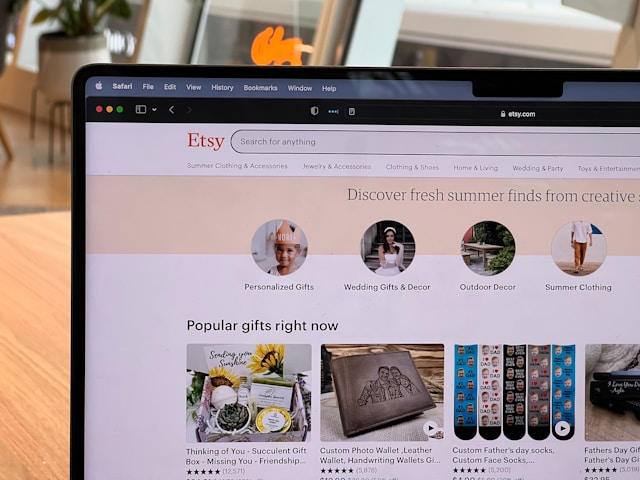
Compare that to Etsy, which takes about $1.88 on the same $15 box and is built for shipping, which two of our five states, Texas and Washington, rule out. Hotplate charges no monthly plan but shows your customer a 5% plus 55 cent fee by default, so the $15 box reads $16.30 at checkout, and the 2.9% plus 30 cent card processing still comes out of your side. Coordinating holiday orders through text messages and Venmo leaves you with no single order list at all.
What Homegrown does not do, said plainly. Your customers create a Homegrown account the first time they order. There is no drops or countdown release feature, which Hotplate is built around. It is built for pickup and local delivery, not for mailing boxes across the country. Your storefront also appears on the Homegrown marketplace, but plan on most fudge orders coming from people you send to your own link. The 2.9% plus 30 cents of card processing is paid by you, with nothing passed on to the customer. If you are ready to stop counting orders across your texts, set up your fudge ordering link on Homegrown; it starts with a 7-day trial, no charge until day 8.
On a $15 half-pound box, card processing on Homegrown comes to $0.74, plus the $10/mo plan billed annually ($12.50 billed monthly); Square Online's Free plan takes $0.80, Hotplate takes $0.77 from you and $1.30 from your customer, and Etsy takes $1.88. At 50 boxes a month, the plan matters less than the percentages, as the last column shows.
Swipe left on the table for the full fee stack.
| How you sell | Subscription | Trial | Platform fee | Card processing | Customer pays on a $15 box | You pay on a $15 box | You pay on 50 boxes a month |
|---|---|---|---|---|---|---|---|
| Hotplate, default (fee shown to customer) | $0, no plan | None, no plan | 5% + $0.55, paid by the customer | 2.9% + $0.30 on what the customer pays, paid by you | $16.30 | $0.77 | $38.64 |
| Square Online, Free plan | $0 | None needed, the plan costs $0 | None | 3.3% + 30¢ online, paid by you | $15.00 | $0.80 | $39.75 |
| Homegrown | $10/mo billed annually ($12.50 billed monthly) | 7 days, no charge until day 8 | None, 0% commission | 2.9% + $0.30, paid by you | $15.00 | $0.74 plus the plan | $46.75 ($49.25 on monthly billing) |
| Etsy | $0 (a one-time set-up fee may apply) | None, no plan | $0.20 listing + 6.5% transaction fee | 3% + $0.25, paid by you | $15.00 plus shipping | $1.88 | $93.75 |
| Hotplate, you cover the fee | $0, no plan | None, no plan | 5% + $0.55, paid by you | 2.9% + $0.30, paid by you | $15.00 | $2.04 | $101.75 |
Rates read on findhomegrown.com/signup, squareup.com's online store plans page, hotplate.com/pricing, Hotplate's post "What Hotplate does" (which says "we charge a fee to your customer" and that "80% of Hotplate chefs keep the default as-is"), and Etsy's Fees and Payments policies on October 13, 2026. Per-box figures are rounded to the cent; monthly totals use the unrounded per-box figure. Hotplate's card processing is figured on what the customer pays, $16.30, in the default row. Etsy's $0.20 listing fee repeats on each sale of a multi-quantity listing, and its 15% Offsite Ads fee and shipping are left out because they do not apply to every order. Sales tax is left out of every row.
Three things stand out once the stack is complete:
Fees change, and so do the rules on online payment. Washington's WSDA page says payment and delivery must happen person to person, Texas requires your label information on your website before you accept payment online, and Arkansas requires the full label disclosure on any website you sell from. Check your state's page before you turn on card checkout.
Shipping depends on your state: of the 5 states we read, California, Florida and Arkansas allow mail delivery, while Texas requires you, an employee or a household member to deliver online orders in person and Washington bans shipping. Fudge travels better than most homemade food because it is firm and keeps for about 2 weeks wrapped, so the limit is usually the law, not the fudge.
Homegrown's guide on whether you can ship cottage food covers the rest of the states. If you do ship, remember that a marketplace built for shipping charges its percentage on the shipping price too: Etsy's 6.5% transaction fee applies to "the amount you charge for shipping," and its 3% processing fee is assessed on the gross order including shipping.
Grow by getting four to six flavors identical every time, sampling at every market, and building gift boxes before you add more flavors. These five habits matter more than any single sales channel.
Before expanding your flavor lineup, make sure your top four to six flavors are consistently excellent. Customers come back for fudge that tastes the same every time. Use precise measurements by weight, a candy thermometer, and detailed recipe notes so every batch is identical. Write down the temperature you pulled each pan at; 234°F is where Kraft's recipe stops, and a few degrees either way changes the texture.
Sampling converts browsers into buyers more effectively than any sign, display, or sales pitch. Cut your trimmed edges into small tasting pieces and offer them to everyone who walks past your booth. Florida's page notes that samples must be prepackaged there, so check your own state's rule. Track which flavors get sampled most and which convert to sales, because they are not always the same.
Gift boxes are your highest-margin products and your best path to larger order sizes. Develop two to three gift box options at different price points and display them prominently. During holiday season, gift boxes should be the centerpiece of your booth. On our numbers, a ribboned half pound at $15 against a $2.41 plain-box cost is about 6 times your cost before the ribbon.
Limited-edition seasonal flavors give repeat customers a reason to buy now instead of later. Introduce two to three seasonal flavors per season, promote them as "available this month only," and rotate them out on schedule. The sourdough bakery in Homegrown's catalog lists pumpkin spice and peppermint among its 33 fudge flavors, which is the seasonal rotation in action.
Build a list of your customers' phone numbers or email addresses. When you launch a new flavor, announce a holiday market schedule, or open pre-orders, you have a direct line to people who have already bought from you. A simple sign-up sheet at your booth works, or put a QR code to your ordering link on your booth sign so regulars can order between markets.
Ready to turn this into a real business? The easiest way to take local orders and get paid is an online storefront. Compare the options in the best platform to sell food from home, or set up a Homegrown storefront in about 15 minutes ($10/mo billed annually, 0% commission).
Cooked homemade fudge lasts about 2 weeks at room temperature when it is wrapped airtight, about 3 weeks in the refrigerator and about 3 months in the freezer. Those are our own estimates, because no federal agency publishes a shelf life for homemade fudge and USDA's FoodKeeper has no fudge entry. For fudge you sell, label plain and fresh-nut fudge best by 14 days from its make date, and mix-in flavors with marshmallows, cookies or candy pieces best by 10 days. Cream cheese fudge is the exception: keep it cold, ask buyers to finish it within 7 days, and check whether your state lets you sell it at all.
Yes. A candy thermometer is essential for making fudge consistently, and Washington's cottage food rules require one whenever you cook candy on the stove or in a microwave oven. Kraft Heinz's Fantasy Fudge recipe cooks until the thermometer reads 234°F, and a few degrees off can leave fudge too soft, too hard, or grainy. A clip-on analog candy thermometer cost $10.26 to $11.76 on Walmart.com on October 13, 2026, and it is the single most important tool for selling fudge from home.
Start with about 20 half-pound boxes for your first market day, which is four 9-inch pans of a Fantasy Fudge-size recipe at five boxes a pan. That fills a table without leaving a mountain of leftovers. Boxes you cook the day before a market are 8 days old at the next week's market. A plain chocolate box on a 14-day best-by still has 6 days left and sells at full price, but Fantasy Fudge and other marshmallow or cookie flavors on a 10-day best-by have only 2 days left, which is when our vendor tip sells a box as a second. Track sales by flavor at each market and adjust up or down. After three or four markets you will know your real number.
Usually, yes, as long as the finished product is shelf-stable and does not need refrigeration. Chocolate-dipped pretzels, chocolate bark, and chocolate-covered nuts fit the lists we read: California's names chocolate-covered nonperishables such as nuts, marshmallows and dried fruit. Fresh fruit is where states split. Arkansas allows chocolate-covered "uncut fruits and berries," while cut fruit needs refrigeration, so Texas requires a DSHS registration for it and the other lists we read leave it off. Check your state's specific cottage food laws for details.
Selling fudge from home can be very profitable per box: a half pound of chocolate fudge costs about $2.41 to make with the box and label on our cost sheet, and sells for $10 to $15, a gross margin of about 76% to 84% before fees, booth costs and your time. Five candy shops we checked charged $8.00 to $16.99 for a half pound. Twenty boxes at $15 bring in $300 at one market. Holiday markets and custom orders can significantly increase that.
Keep your fudge at room temperature during transport. Do not refrigerate it right before a market, as temperature changes can cause condensation that makes the surface sticky. Stack boxes in sealed tubs, with each piece wrapped or each box sealed in a bag. Transport containers in a cooler without ice to insulate against extreme heat in summer. Display your fudge at booth level, out of direct sunlight, and keep backup stock in covered containers below the table.
No. A home fudge business runs on a heavy 3-quart saucepan, a candy thermometer and a 9-inch pan, and Washington's rules describe candy "cooked on a stove top or in a microwave." Copper kettles and automatic fudge machines are what candy shops use to cook large batches. One Fantasy Fudge-size pan fills about five half-pound boxes, so a home vendor scales by cooking more pans, not by buying a machine.
These guides go deeper on the questions this one only touches. Start with the shelf-life guide if you are about to print labels, the fee comparison if you are choosing where to take orders, and the Texas guide if you cook in Texas, since this page covers only the parts of SB 541 that matter for fudge:
Selling fudge and candy from home is one of the simplest, most profitable cottage food businesses you can start. The startup costs are low, about $105 for a thermometer, scale, parchment, 100 boxes, 200 labels and a first batch, the margins are high, and the gift appeal gives you sales channels that most other cottage food products cannot reach.
Start with four to six flavors, get your state's paperwork and labeling right, invest in attractive packaging, and set up at your local farmers market. Your first market day will tell you more than any guide, especially once customers taste that first sample.
Pick one market and one ordering link for your first month, and keep a simple tally of which flavors sell out. That tally is what tells you which pans to cook for the holidays.
Ready to start selling fudge? Set up your ordering page on Homegrown and start taking pre-orders from local customers before the holiday rush.