
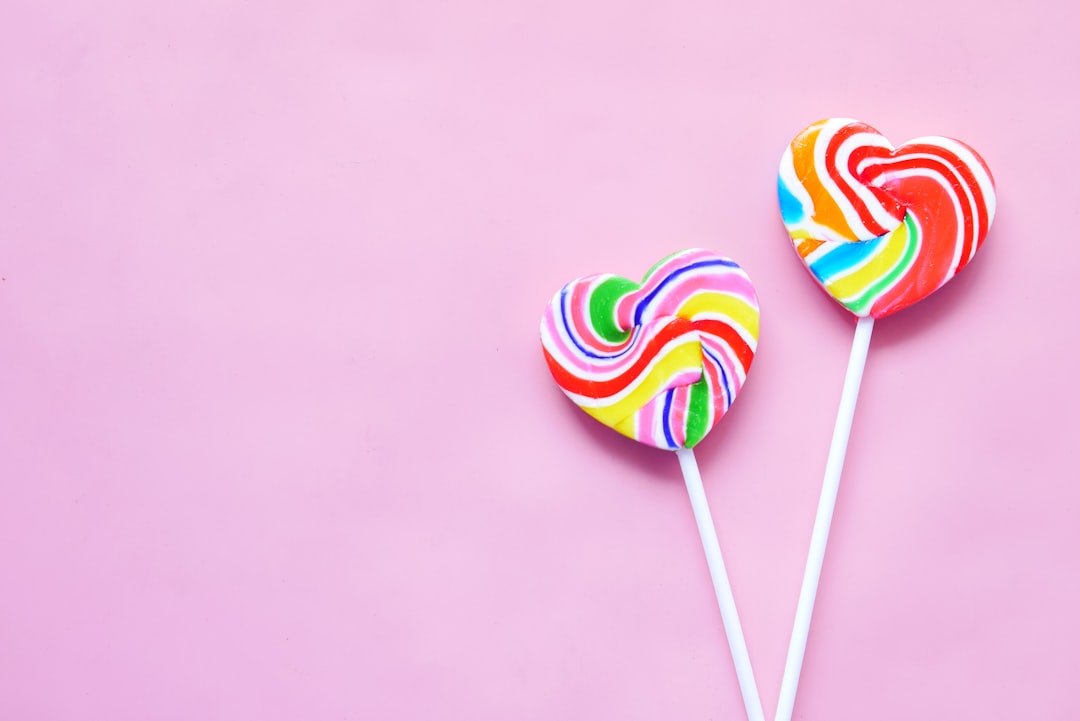


The short version: All 9 state cottage food pages we read allow hard candy and lollipops, but only 4 of the 9 let you mail them to a customer, and 8 of the 9 require their own home-kitchen statement on the label. A store-bought lollipop costs about 6 to 11 cents in a big bag at Target, while small-batch candy shops charged $2.00 to $4.99 per handmade lollipop, counting packs by the piece. Ingredients, stick, bag, twist tie and label for a half-ounce lollipop come to about $0.31, so $2.50 to $3 is a fair price for a standard 2-inch lollipop. Sealed hard candy keeps about 2 to 3 months by our working rule, so print a best-by date 60 days out and cook no earlier than 30 days before a sale.
Checked October 19, 2026: the cottage food pages of California, Connecticut, Florida, Michigan, New Jersey, New York, Texas, Virginia and Washington, lollipop prices on Target.com and at four small-batch candy shops, ingredient prices on Walmart.com and LorAnn's store, and the pricing pages of the four ordering platforms in our fee table. Homegrown customers create an account to place a first order, Homegrown has no drops feature, and most orders come from people you send to your own link.
Hard candy and lollipops are colorful, easy to customize, and keep longer than almost anything else a home candy maker sells, which makes them a fun and forgiving product to sell from home. From jewel-toned drops to custom-colored lollipops for weddings and baby showers, hard candy sells to gift shoppers, event planners, and nostalgic sweet-tooths alike. A batch costs about $4.16 in sugar, corn syrup, flavoring and color, and it fills about 40 lollipops. If you enjoy candy-making and like the creative side, a lollipop that costs you about $0.31 and sells for $2.50 keeps about 88% of the price as margin.
This guide covers why hard candy sells, what a lollipop costs in a store and from a candy maker, what 9 states allow, the label, your real cost and price, how to cook candy that stays glassy, how long it keeps, shipping, and how to reach gift and event buyers.
Once a batch is wrapped, and if your state lets you take payment online, you can set up a Homegrown storefront so customers order and pay for lollipops and candy bags ahead of pickup or local delivery. Washington and Connecticut require the sale itself to be made in person, which the ordering section below covers.
Hard candy and lollipops are a fun product to sell because they're inexpensive, easy to customize, and among the longest-keeping candies you can make at home. You can make them in any color and flavor, shape them for any occasion, and cook up to 30 days ahead of a sale. That creative range and staying power make them a low-stress, high-margin product with broad appeal.
Hard candy is nearly pure sugar cooked until almost no water is left. The Global Cold Chain Foundation's candy storage manual files hard candy and lollipops with its low-moisture candies, under 5% water, and less water is why a lollipop keeps for months while a caramel keeps for a week or two.
Here's what makes them work:
The honest note: hard candy requires cooking sugar to 300°F or more, so it takes candy-making skill and care, and a single lollipop is a small sale, so your money comes from volume, custom event orders, and gift packaging. But the ingredient cost is tiny, the product keeps about 2 to 3 months sealed, and the creative and event opportunities make it a fun and profitable niche.
A store-bought lollipop costs about 6 to 11 cents in a big bag at Target, and a handmade lollipop from a small-batch candy shop costs $2.00 to $4.99, counting packs by the piece. We loaded both on October 19, 2026. The gap is the whole business: shoppers already know a lollipop can be cheap, so a handmade one sells on color, flavor, shape and the occasion it is made for.
Here is what a lollipop cost that day, store-bought and handmade:
Scroll sideways to see every column.
| Lollipop | Where | Price | Price per lollipop |
|---|---|---|---|
| Dum Dums Original Mix, 300 count | Target.com | $17.49 | About 6 cents |
| Dum Dums Halloween Original Mix, 90 count | Target.com | $5.99 | About 7 cents |
| Blow Pop Halloween bag, 55 count | Target.com | $5.99 | About 11 cents |
| Hogwarts House lollipop, 4 inch, 4.23 oz | Target.com | $2.49 | $2.49 |
| Gimie Candy, 12 handcrafted 2-inch lollipops | Gimie Candy's shop | $23.99 | About $2.00 |
| Luna Candy Co. shower favors, 6 or 48 | Luna Candy Co.'s shop | $14.95 for 6, $99.95 for 48 | About $2.49 for 6, about $2.08 for 48 |
| Luna Candy Co. Lollitails, pick 6 | Luna Candy Co.'s shop | $17.95 | About $2.99 |
| Lady Fortunes custom 2-inch lollipop | Lady Fortunes' shop | $3.59 | $3.59 |
| Suss Candy blue raspberry lollipop | Suss Candy's shop | $4.00 | $4.00 |
| Lady Fortunes edible flower lollipop | Lady Fortunes' shop | $4.99 | $4.99 |
We loaded these prices on October 19, 2026: Target.com search results for a Minneapolis store, and each small-batch shop's own online store. Per-lollipop prices are the pack price divided by the count. Suss Candy also lists an oversized spiral lollipop for $8.00 (sold out that day), which we left out of the $2.00 to $4.99 range because it is a different size.
Three things stand out in that table:
Luna Candy Co. also sells "Lolligagers," lollipops with cosmetic flaws like cloudiness or bubbles, at 6 for $6.95, about $1.16 each. That is a smart way to sell your own seconds instead of eating them. Luna's 24-pack of seconds, listed at $18.95 or about 79 cents each, was sold out that day.
Yes: all 9 state cottage food pages we read allow hard candy and lollipops, because candy is a shelf-stable, low-risk food. California, Michigan, New York and Washington name hard candy or lollipops outright. Connecticut, Florida, New Jersey and Virginia allow candy in general, and Texas allows any food that is not on its short list of exceptions.
California's list of approved cottage foods names "Hard candy" and "Cotton candy" under Candy and Confections. Michigan's what can I make page allows "Hard candies, lollipops, and peppermint candies" and "Confections and candies (made without alcohol)." Washington's cottage food page answers the question directly: "Can I make and sell hard candies or lollipops? A: Yes. Candies cooked on a stove top or in a microwave are allowed. Temperature monitoring with a candy thermometer is required."
New York's home processing page approves "Sugar confections," and its note reads "Includes toffees, caramels, hard candies." The same page prohibits "Products containing alcohol" and "Tempered chocolate/candy melt/almond bark for dipping/coating/drizzling."
Washington allows hard candy and lollipops, and it requires a candy thermometer for any candy cooked on the stove or in the microwave. You may advertise and take orders online, but delivery and payment must both be person to person, with no mail or courier and no sales outside the state. The permit fee is $355 for two years, and the yearly sales limit is $35,000. All of it is on the Washington State Department of Agriculture cottage food page, read October 19, 2026.
Here is what each of the 9 states says about hard candy and about getting it to a customer:
Scroll sideways to see every column.
| State | Is hard candy allowed? | Can you mail it to a customer? | Yearly sales limit on the page we read |
|---|---|---|---|
| California | Yes: "Hard candy" is on the approved list | Yes, inside California: a direct sale "may be fulfilled in person, via mail delivery," and must be "a transaction within the state" | Not on the list we read |
| Connecticut | Yes: "Candies and confections" | No: "Products may not be delivered by mail or by other third-party delivery services such as UPS or FedEx, or by mobile food ordering companies." You may take orders online, but sale and delivery must be person to person and only inside Connecticut | $50,000 |
| Florida | Yes: "Candies and confections" | Yes: sales "on their website, by mail order, and direct to consumer" | $250,000 |
| Michigan | Yes: "Hard candies, lollipops, and peppermint candies," made without alcohol | Yes, inside Michigan: "may be sold by internet or mail order," and "may only be sold or delivered within Michigan" | $50,000, or $75,000 if your products sell for $250 or more per unit |
| New Jersey | Yes: "Candy, including brittle and toffee" | No: "You may not send products to your customers through the mail" | $50,000 |
| New York | Yes: "Sugar confections," which "Includes toffees, caramels, hard candies" | Not stated for mail inside the state; internet sales "within New York State only," and "Shipping products out of state is not permitted" | Not on the page we read |
| Texas | Yes: allowable foods "include any foods, except for" meat, seafood and a short list of others | No: online sales only when "the operator, an employee, or a household member personally delivers the food" | $150,000 |
| Virginia | Yes: "Candies" are on the home food list | Yes, inside Virginia: delivery "in person, by mail, or by delivery service," but never "across state lines" | Not listed for candy on the FAQ we read |
| Washington | Yes: "hard candies or lollipops," with a candy thermometer required | No. You may advertise and take orders online, but delivery and payment must both be person to person, with no mail or courier and no sales outside the state | $35,000 |
We read each state's page on October 19, 2026: California's approved list (last reviewed April 2026) and Health and Safety Code section 113758, Connecticut's cottage food sales FAQ and accepted products list, Florida FDACS, Michigan MDARD's what-can-I-make and selling pages, the New Jersey Department of Health FAQ, New York Agriculture and Markets, Texas DSHS, the Virginia VDACS home food FAQ (revised July 2026) and Washington WSDA. California, Michigan and Virginia allow mail only to customers inside the state.
Virginia's mail rule is new. The General Assembly's 2026 bill, House Bill 402, lets a home candy maker sell "through the internet, or by phone" to someone in Virginia and deliver "in person, by mail, or by delivery service." Charlottesville's WVIR reported that the law took effect July 1, 2026, and the VDACS FAQ in the table note, revised July 2026, says the same thing about mail.
A few points to keep straight:
Every state sets its own rules and sales limit, so verify your state's current rules before you sell. Our overview of what foods you can sell under cottage food laws and the cottage food laws by state directory point you to the specifics where you live, and can you sell homemade candy compares candy rules in five states.
A hard candy label needs the product name, your name and address, the ingredients in order by weight, the net weight, any allergens, and each food color by its own name, like "Red 40." On top of that, 8 of the 9 states we read require their own home-kitchen statement, and New York recommends one.
What to print on every bag or lollipop tag:
Then add your state's own statement, and copy it exactly. New Jersey's labeling page puts it plainly: "Altering it in any way will cause your label to be rejected." Here is the wording each state's own page or law gave on October 19, 2026:
A lollipop is a small thing to label. California wants its statement in 12-point type on the front, and Michigan and Washington want 11-point. A 2-inch round label, the size Avery sells 120 to a pack, fits a short label on a lollipop bag. If your state's statement plus the ingredients and your address will not fit, label the outer bag of a favor pack instead, and check with your state office that a single pop inside a labeled bag is allowed. Virginia is the one state on our list whose FAQ spells out a sign as the fallback.
For the full allergen wording, our guide to the big 9 allergens on a cottage food label shows the exact format for each.
A batch of hard candy costs about $4.16 in ingredients and makes about 1 1/4 pounds, which fills about 40 half-ounce lollipops. Add a stick, a bag, a twist tie and a label and one lollipop costs about $0.31. The base is sugar, corn syrup, and water with small amounts of flavoring and color, and the flavoring is the biggest single line.
The recipe is the classic one. LorAnn's hard candy recipe and the Ohio State University Extension 4-H candy book both start from 2 cups of sugar and 2/3 cup of light corn syrup, and the Ohio State book says its batch "Makes 1¼ lbs." Here is that batch priced at Walmart.com and LorAnn's store on October 19, 2026:
Scroll sideways to see every column.
| Item | What you buy | Amount in one batch | Cost per batch |
|---|---|---|---|
| Granulated sugar | Great Value, 4 lb, $2.97 | 2 cups (396 g) | $0.65 |
| Light corn syrup | Great Value, 16 fl oz, $2.54 | 2/3 cup (5.3 fl oz) | $0.85 |
| Super-strength flavoring | LorAnn, 1 dram bottle, $2.11 | 1 dram (about 1 teaspoon) | $2.11 |
| Liquid gel color | LorAnn, 1 oz, $3.35 | 1 teaspoon | $0.56 |
| Batch total | About 1 1/4 lb of candy | $4.16 |
Prices loaded October 19, 2026 on Walmart.com and LorAnn's online store. Sugar is weighed at 198 grams a cup, from King Arthur's ingredient weight chart. The color amount is the 1 teaspoon in the Ohio State recipe. Each line is rounded, so the lines add to $4.17; the unrounded total is $4.16. Water is not counted.
That works out to about 21 cents per ounce of candy. Here is how one lollipop adds up, assuming each one weighs half an ounce (weigh one of yours and redo the math if your mold is bigger or smaller):
A 4-ounce bag of cut hard candy costs about $1.01: $0.83 in candy, about a dime for a 4 by 6 inch cello bag with a twist tie (a 100-pack was $9.99 at Walmart.com), and the same 7-cent label.
If you are starting from nothing, a first-batch kit that can pour and bag all 40 lollipops at once costs about $70: a LorAnn candy thermometer ($8.39), three 2-packs of LorAnn silicone lollipop molds with 8 two-inch cavities a sheet, 48 cavities in all ($31.59), a 100-pack of LorAnn's large sucker sticks, the stick its mold listing recommends ($3.73), a 100-pack of sucker bags ($3.73), a 50-pack of twist ties ($2.87), a dram of flavor ($2.11), a bottle of gel color ($3.35), sugar ($2.97), corn syrup ($2.54) and a pack of labels ($8.87). Those add to $70.15.
Flavor is half your ingredient cost. One dram of LorAnn flavor is $2.11 against $1.50 for the sugar and corn syrup together, so buying flavor by the ounce instead of the dram is the first saving worth chasing. LorAnn sells its cherry and strawberry flavors at $6.22 for an ounce, and the company says 1 dram is about 1 teaspoon.
Price a standard 2-inch handmade lollipop at $2.50 to $3, party favors at $2.00 to $2.50 each with a minimum order, and custom or edible-flower lollipops at $3.50 to $5. A bag of hard candy drops can sell for $8 to $10. Those ranges follow what the small-batch shops in our price table charged on October 19, 2026, from $2.00 to $4.99 for one lollipop.
A pricing structure that works:
Here is what those prices leave you, using the $0.31 lollipop cost from the last section:
Scroll sideways to see every column.
| You charge | You keep per lollipop | Margin | A batch of 40 brings in | You keep from the batch |
|---|---|---|---|---|
| $2.00 | $1.69 | 84% | $80.00 | $67.52 |
| $2.50 | $2.19 | 88% | $100.00 | $87.52 |
| $3.00 | $2.69 | 90% | $120.00 | $107.52 |
Computed from the October 19, 2026 cost of about $0.31 per half-ounce lollipop, packaging and label included ($12.48 for 40). Before your time, market fees and card processing.
Custom event work, like color-matched lollipops for a wedding or shower, earns the same or less per lollipop than a standard pop, so the money comes from the count: set a minimum of 24 and step the price down only as the order grows. If pricing your work fairly feels uncomfortable, read why charging what you're worth feels wrong, and if you sell more than candy at your stand, our farm stand guide covers pricing honey, jam and baked goods. Our candy pricing guide works through the same math for fudge, brittle and caramels if you sell more than one kind.
Cook the syrup to the hard-crack stage, 300 to 310°F, on a dry day, with a candy thermometer, and wrap each piece as soon as it cools. The Exploratorium's guide to sugar stages says that at hard crack "there is almost no water left in the syrup," and it names lollipops among the candies cooked to it. Stop short and the candy stays tacky. Go past it and the sugar starts to caramelize and taste burnt.
The steps that keep a batch glassy:
The Ohio State book gives its hard tack candy a preparation time of 30 minutes, so a batch fits in an evening. Washington requires the thermometer for any cottage food candy cooked on a stove or in a microwave. It is a good habit everywhere, because a lollipop that missed hard crack by a few degrees looks fine on cooking day and turns sticky in its bag a week later.
Sealed homemade hard candy and lollipops keep about 2 to 3 months at cool room temperature by our working rule, so print a best-by date 60 days after cooking. That is the longest window of any candy in our guide to how long homemade candy lasts, and it is a rule built from extension and industry sources, not a lab test. Hard candy does not last forever, and it does not need to: two months is plenty of time to sell it.
Factory hard candy keeps much longer, and it helps to know why. The Global Cold Chain Foundation's candy storage manual, revised in 2024, gives hard candy and lollipops 24 months at 68°F in a room held at 40 to 45% humidity. It also says "Flavored and colored pure sugar hard candies should be held at 40% RH; they have a storage life of 4 years or longer at room temperature." Those numbers assume "good commercial production techniques" and rooms "where the relative humidity (RH) can be accurately controlled." Your kitchen, your market table and your customer's car are none of those things, which is why the home window is months, not years.
Older guides say hard candy lasts "indefinitely." It is safe for a long time, but it does not stay good. Michigan State University Extension food safety educator Christine Venema says that because hard candy is "almost pure crystallin sugar cooked to what is known as the hard crack stage," there "is not a foodborne illness issue there," but in high humidity it will "become a sticky mess" and "Over time, the flavoring will degrade in quality." Print the 60-day best-by date and stand behind it.
The date rule from our candy shelf-life guide, in one place:
Hard candy rarely goes bad in the food safety sense, but it goes off in quality: it turns sticky, cloudy or grainy, and the flavor fades. The candy manual lists "Softening or sticking to the wrapper" among the common quality changes, "particularly to caramels, some hard candies, lollipops, nougats, and brittles," and says the damage "cannot be corrected." Throw out anything that smells off, shows mold, or has a torn wrapper.
Wrap each piece in its own sealed wrapper, store the wrapped candy in an airtight container in a cool, dry, dark spot, and keep it away from moist candies like fudge. Packed that way, hard candy holds its 2 to 3 months. Humidity is the enemy, so packaging is part of the recipe, not an afterthought.
What works:
A gift box mixing hard candy and fudge is a box on fudge's clock, and the fudge will make the lollipops sticky. Sell them side by side, not in one container.
The hard candy and lollipops that sell best combine bright colors, familiar fruit flavors, and custom options for events. Because these candies are visual and often bought for occasions, your colors and customization matter as much as your flavors. The small-batch shops in our price table lead with the same mix: classic fruit, a botanical tier, and favors color-matched to a party.
Flavors that sell:
Custom options that bring in bigger orders:
Keep a bright, appealing retail lineup and promote your custom event capabilities, since one favor order can move 24 to 96 lollipops at once. Sample and display colorfully at markets, since hard candy sells with the eyes. If you also make freeze-dried candy, Suss Candy lists freeze-dried versions of its own hard candies at $12 against $10 for the regular bag, and our guide to selling freeze-dried candy from home covers that side. Check your state first: New York's home processing page lists "Freeze-dried foods" among the products it prohibits. A vivid retail line sells single pops, and custom event orders sell them two to eight dozen at a time.
You can mail hard candy to a customer in 4 of the 9 states we read, and in 3 of those 4 only to customers inside your own state. California, Michigan and Virginia allow mail inside the state, and Florida's page allows sales "by mail order" without saying in-state or out, though the University of Florida's extension fact sheet says products may be "shipped across state lines by the United States Postal Service or commercial mail delivery service." Connecticut, New Jersey, Texas and Washington do not allow cottage food to go by mail, and New York allows internet sales inside the state without saying whether you may mail.
If your state allows it, hard candy is one of the easier candies to mail. Our candy shelf-life guide rates brittle and hard candy the most heat-tolerant candies to ship, while humidity in a damp mailbox can still make them sticky. The Ohio State 4-H candy book gives the packing method in three lines:
One more habit of our own: ship early in the week, so a box does not sit in a hot truck over a weekend.
Crossing a state line is a bigger question. Our guide to whether you can ship cottage food read 25 states and found only Arkansas, North Dakota and Pennsylvania let home food vendors sell across state lines under their own law, and Florida's extension service reads Florida's law the same way, while 15 say outright that cottage food stays in the state.
Sell hard candy and lollipops through gift shoppers, event and party planners, and nostalgic treat lovers, using colorful displays and custom event work. These candies are visual, giftable, and occasion-driven, so your presentation and your custom capabilities drive most of your sales. Because a lollipop keeps about 2 to 3 months sealed, you can carry stock for a whole market season.
Ways to sell more:
Managing custom event orders and their details through DMs gets messy, so a real storefront and order system helps. Here's how to sell food online as a local vendor so your event orders and reorders stay organized, and our list of where to sell candy covers markets, shops and events beyond your own table.
A shelf-stable, giftable, event-driven candy fits an online storefront well in states that let you take payment online, especially for favor orders that need a count, a color and a pickup date. Homegrown is $10 a month billed annually, or $12.50 billed monthly, with no percentage fees beyond standard payment processing (2.9% + $0.30 per sale, paid by you). It starts with a 7-day trial, with no charge until day 8. You get one storefront link where customers browse your lollipops and bags of hard candy drops, pick sizes and flavors, each with its own price, and pay before pickup or delivery.
Here is what four common ways to take orders cost on a $20 order, which might be two $10 favor bags:
Scroll sideways to see every column.
| Platform | Subscription | Platform fee | Card processing | Customer pays on a $20 order | Vendor pays on a $20 order | Vendor pays on 50 orders a month |
|---|---|---|---|---|---|---|
| Homegrown | $10/mo billed annually, or $12.50 monthly; 7-day trial, no charge until day 8 | $0, 0% commission | 2.9% + $0.30, paid by the vendor | $20.00 | $0.88 | $54.00 with the annual plan ($44.00 processing + $10), or $56.50 monthly |
| Hotplate (default split) | $0 | 5% + $0.55 on the subtotal, charged to the customer | 2.9% + $0.30, paid by the vendor | $21.55 | About $0.88 to about $0.92 | About $44.00 to about $46.25 |
| Hotplate (vendor covers the fee) | $0 | 5% + $0.55, paid by the vendor | 2.9% + $0.30, paid by the vendor | $20.00 | $2.43 | $121.50 |
| Etsy | No required monthly fee; a one-time set-up fee may apply | $0.20 listing fee for each item sold (two bags here) + 6.5% transaction fee | 3% + $0.25 | $20.00 | $2.55 | $127.50 |
| Square Online (Free plan) | $0 | $0 | 3.3% + $0.30 online | $20.00 | $0.96 | $48.00 |
Checked October 19, 2026 on findhomegrown.com/signup, Hotplate's pricing page, Etsy's Fees and Payments Policy and its payment processing help page, and Square's pricing page and fee help article. Hotplate's pricing page says you can pay its fee "yourself or pass it on to customers," and its post "What Hotplate does" says "we charge a fee to your customer" by default and that "80% of Hotplate chefs keep the default as-is." The default range depends on whether the card fee covers the order or everything the customer pays. Sales tax, tips and shipping are left out.
How it compares to the alternatives:
What Homegrown does well for a candy vendor: sizes and flavors on one listing (a single lollipop, a 6-pack, a 24-count favor bundle), allergens and ingredients on every listing, prepaid orders that land in your dashboard with a pickup time, local delivery inside the radius you set, a customer message inbox for color details, and a fifteen-minute setup. What it doesn't do: it won't make, package or ship your candy, it has no drops or countdown release feature, customers create a Homegrown account to place their first order, and your storefront is listed on the Homegrown marketplace but you should plan on most orders coming from people you send to your own link. In Washington, you may advertise and take orders online, but delivery and payment must both be person to person, with no mail or courier and no sales outside the state, so an online checkout does not fit a Washington cottage food business. Connecticut's sales FAQ says "Sales and product delivery must be directly from the producer or designee to the consumer, in a person-to-person transaction," and "the actual sale must be made in person," so a prepaid online checkout does not fit a Connecticut cottage food business either. When you're ready, you can set up your storefront and sell your candy today.
In a pull of the Homegrown catalog on October 19, 2026, 0 of the 2,921 products listed by 327 vendors were lollipops or plain hard candy drops cooked by the vendor. We searched product names, descriptions and flavor options for lollipop, sucker, hard candy, rock candy, Jolly Rancher, candy cane and lemon drop, and read every match. The closest were Kramer Family Kickshaws' Freeze Dried Jolly Ranchers at $4 small or $6 large, store-bought candy freeze-dried at home, and Divine Destiny Desserts' Peanut Brittle at $20 for an 8x8 pan, whose description calls it "an old-fashioned sweet, hard candy." Fourteen cake pop listings from Clever Caracara Homestead mention lollipop sticks, but they are cake, not candy. For a lollipop maker, that is an open shelf.
Plan favor orders backward from the event date: take the order and payment 3 to 4 weeks out, cook no earlier than 30 days before the event, and hand the favors over a few days ahead. Because the best-by date is 60 days, a lollipop cooked 2 weeks before a wedding still has about 6 weeks of good days left for guests who take one home.
Weddings and showers are booked months ahead, so a sample board at your market table is your best salesperson. Our guide to edible wedding favors covers bulk favor orders, favor pricing and labels for guests.
The most common hard candy mistakes are missing the cooking temperature, poor storage, labels that leave out the colors, and custom event orders taken without a minimum. Because these candies require high-temperature cooking and shine in custom orders, the errors that matter most affect quality and profitability.
Mistakes to avoid:
Getting these right keeps a $0.31 lollipop selling at $2.50 to $3.
In all 9 states we read for this guide, you can sell hard candy and lollipops from a home kitchen, but the paperwork differs. Michigan lets you sell up to $50,000 a year "with no license, registration, or inspection." Washington charges $355 for a two-year permit with a kitchen inspection and also requires a food worker card and a Master Business License. New Jersey requires a Cottage Food Operator permit and Food Protection Manager Certification. New York asks you to register at no fee, and Texas requires a food handler course. California's cottage food law is written around the "registered or permitted area" of your home, and Connecticut's sales FAQ says cottage food "must be made in the licensed kitchen in your home." Verify your state's current rules on its cottage food page before your first sale.
Homemade hard candy and lollipops keep about 2 to 3 months sealed at cool room temperature, by our working rule, so print a best-by date 60 days after cooking and cook no earlier than 30 days before a sale. Humidity is the main enemy: Michigan State University Extension says hard candy in humid air becomes "a sticky mess" and that the flavor fades over time, though it is not a food safety issue. Keep it out of the fridge and freezer. Kansas State University Extension says candy "should be stored in an airtight container at room temperature and out of sunlight."
Charge $2.50 to $3 for a standard 2-inch handmade lollipop, $2.00 to $2.50 each for party favors with a minimum, and $3.50 to $5 for a single custom or edible-flower lollipop; a bag of hard candy drops can sell for $8 to $10. Small-batch shops charged $2.00 to $4.99 per handmade lollipop, counting packs by the piece, on October 19, 2026. With a lollipop costing you about $0.31 all in, the margin at $2.50 is about 88%.
Making custom lollipops for weddings, showers, and parties is one of the best ways to sell hard candy in volume, since you can match colors, use themed shapes, and add personalized tags, then sell them by the count. One small-batch shop sells shower favors at $14.95 for 6 and $99.95 for 48. Set an order minimum, collect the colors and date in writing, and take payment up front, since these are made for a specific day.
Hard candy turns sticky usually because of humidity or because the sugar wasn't cooked to a high enough temperature. For candy that stays hard and glassy, cook the sugar mixture to the hard-crack stage, 300 to 310°F, with a tested candy thermometer, on a dry day. Then wrap each piece and store it sealed, away from fudge and other moist candies, and out of the fridge.
Classic fruit flavors like strawberry, cherry, lemon and watermelon are reliable best-sellers, along with sour candy for kids and teens and nostalgic cinnamon and peppermint. Botanical flavors like lavender, hibiscus and honey make a strong premium tier for adults, and Luna Candy Co. pitches its alcohol-free cocktail flavors for bachelorette parties and bridesmaid gifts. Bright colors matter as much as flavor, since hard candy sells with the eyes.
Selling hard candy is profitable because a half-ounce lollipop costs about $0.31 once it is bagged and labeled, and handmade lollipops sold for $2.00 to $4.99 at the shops we checked. At $2.50 a lollipop, a batch of 40 brings in $100.00 and leaves about $87.52 before your time, market fees and card processing. Custom event orders, priced in steps from a minimum of 24, are where the volume comes from.
You can sell hard candy and lollipops at farmers markets, craft fairs, and holiday markets, through an online storefront for pickup or local delivery in states that let you take payment online (Washington and Connecticut require the sale to be made in person), and as party favors and custom orders for events. Mail order works only in some states: 4 of the 9 we read allow mail to a customer, and 3 of those only inside the state. Because sealed hard candy keeps about 2 to 3 months, you can carry stock across a whole season and take event orders weeks in advance.
More guides for candy makers who sell from home:
Hard candy and lollipops reward vendors who lean into the creative and event angles: cook the sugar right, store it dry, label the colors, display it colorfully, and pursue custom orders for weddings and parties. Because sealed hard candy keeps about 2 to 3 months, you can cook up to 30 days before a sale and still print a best-by date 60 days out. When you're ready to show off your candy and take custom event orders, set up a Homegrown storefront and start selling your hard candy.



