
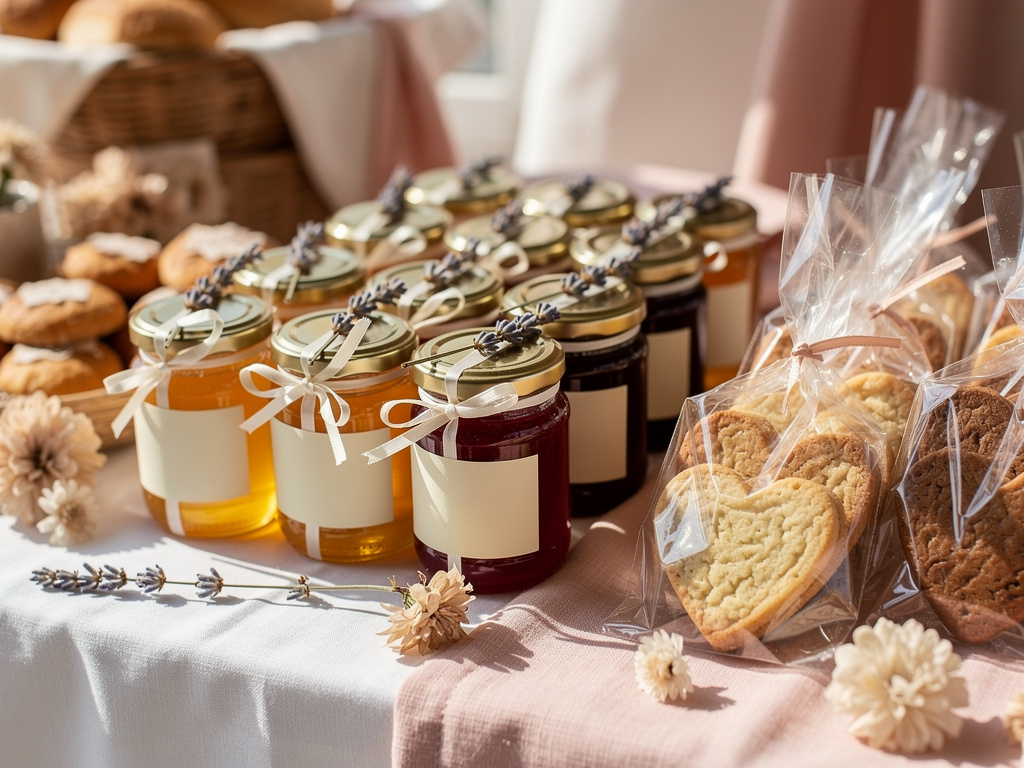


Edible wedding favors, mini jam jars, decorated cookies, honey, candy, hot cocoa, are a sweet spot for a home food vendor: they're shelf-stable, they sell in bulk, and couples will pay for something personal and memorable. One wedding can mean a hundred or more units in a single order, which is a meaningful sale for a small maker. The key is running it as a bulk, made-to-order product with the right lead time, clear guest-facing labeling, and pricing that works at volume. This guide walks through how to sell edible wedding favors as a food vendor, from what to make to how to price a bulk order.
The short version: Edible wedding favors, mini jam jars, decorated cookies, honey, candy, and dry mixes, are a strong bulk product for home food vendors because they're shelf-stable and cottage-food eligible in most states. The business is different from single sales: you're taking large made-to-order quantities with a lead time, personalizing packaging, and pricing per unit at volume. Because favors go to many guests, clear allergen labeling matters, guests with allergies rely on it. Require a deposit, set a firm lead time and headcount deadline, and price for the labor of producing and personalizing dozens or hundreds of units. Homegrown gives you the storefront to take bulk favor orders with deposits and clear terms. This is general information, not legal advice.
This guide covers what makes a good favor, cottage food eligibility, handling bulk orders, pricing, labeling for guests, personalization, and mistakes to avoid. This is general information, not legal or food-safety advice.
A good edible wedding favor is shelf-stable, small, personal, and easy to produce in quantity, mini jam jars, decorated cookies, honey, candy, or a dry mix, tied to the couple's style. It has to look special and scale to a big order.
What works as a favor:
The takeaway: the best favors are shelf-stable, small, personalizable, and scalable, tied to the couple's style. The rule is to choose a favor you can make beautifully in large quantities, the same curation mindset behind holiday gift boxes.
Yes, most edible wedding favors are cottage-food eligible, because the typical items, jams, honey, cookies, candy, and dry mixes, are all shelf-stable, approved cottage food categories. This makes favors a legally straightforward bulk product.
Why favors qualify:
The takeaway: the typical favor items are shelf-stable, approved cottage foods, so favors are a straightforward bulk product in most states. The rule is to build favors from shelf-stable, eligible items and confirm your state's rules, the same foundation as starting a cottage food business.
You handle bulk favor orders by setting a clear lead time, requiring a deposit, locking the headcount by a deadline, and planning production in batches. A wedding order is big and date-critical, so structure protects you and the couple.
How to run a bulk order:
The takeaway: bulk favor orders need a firm lead time, a deposit, a locked headcount, and batched production, since the wedding date is fixed. The rule is to put clear terms in writing up front, since a wedding order leaves no margin for surprises.
You price wedding favors per unit at volume, covering ingredients, packaging, personalization, and the labor of producing and assembling many identical units, with a minimum order that makes the job worth it. Per-unit pricing plus a minimum is the model.
Here's how common favors compare on effort and pricing:
| Favor type | Production effort | Pricing note |
|---|---|---|
| Mini jam or honey jar | Moderate; batch cooking plus filling | Jar and label drive cost |
| Decorated cookies | High; individual decorating | Labor-heavy, price accordingly |
| Candy or bark bags | Lower; batch then portion | Efficient at volume |
| Dry mix or cocoa jar | Lower; blend and fill | High margin, easy to scale |
Pricing guidance:
The takeaway: price favors per unit at volume with a minimum order, covering packaging, personalization, and especially decorating labor. The rule is to price the real per-unit labor and set a minimum, so a big order is profitable rather than just impressive.
You should label edible favors with ingredients and a clear allergen statement, plus your cottage food disclosure, because favors go to many guests and some will have allergies. Guest-facing allergen info is a real safety responsibility here.
Why labeling matters for favors:
The takeaway: favors need clear ingredient and allergen labeling because they reach many guests, some with allergies. The rule is to fit complete allergen and disclosure info onto even a small favor label, in line with the big allergens on a cottage food label.
You personalize wedding favors with custom labels, tags, colors, and messaging tied to the couple, which is what turns a jar of jam into a memorable keepsake. Personalization is the value that justifies the price.
Ways to personalize:
The takeaway: personalization through labels, colors, and messaging turns a simple favor into a keepsake and justifies the price. The rule is to make every unit feel custom to the couple, since that personalization is what couples are really buying.
The biggest mistakes are underpricing bulk labor, skipping a deposit and clear terms, weak allergen labeling, and no order minimum. Each is avoidable with structure.
Mistakes to avoid:
The takeaway: the mistakes that matter most are underpricing, skipping deposits and terms, weak labeling, and no minimum, all avoidable with clear structure. The rule is to set terms, a deposit, a minimum, and honest pricing before you accept a wedding order.
Wedding favors are big, date-critical, custom orders that need deposits, clear terms, and a firm timeline, so you need a clean way to take bulk orders and get paid, without losing a cut of every sale. That's what Homegrown is for.
Homegrown gives you an online storefront to sell your favors as bulk made-to-order products, take orders with deposits, set minimums and lead times, and collect payment, all for a flat $10 a month with no percentage fees beyond standard payment processing. For a large custom order, a per-order commission takes a real bite out of a job you've priced carefully at volume. A marketplace-style platform charges a percentage of every unit, and a general website builder wasn't made for bulk orders with deposits and deadlines. Homegrown bundles the storefront, order terms, and payment into one flat rate, so your favor margin stays yours. It won't suit everyone, if you make favors for one friend's wedding for cash, you may not need a storefront yet, but the moment you're taking real bulk orders online, a flat monthly rate beats handing a percentage to a marketplace on a hundred-unit job.
Ready to sell your wedding favors online? Set up your Homegrown storefront and start taking bulk orders.
In most states, yes. The typical favor items, jams, honey, cookies, candy, and dry mixes, are shelf-stable and fall under standard approved cottage food categories. Making them in bulk for a wedding doesn't change their eligibility, as long as you follow your state's rules and any production limits. Avoid perishable favors that need refrigeration.
Require a firm lead time, typically several weeks, so you can produce and personalize dozens or hundreds of units without rushing. Set a deadline for the final guest count, since favor quantity drives your whole production plan, and confirm pickup or delivery timing well before the date. A wedding order leaves no room for last-minute changes.
Yes. A large custom order ties up your time and materials, so a deposit secures the date and covers your costs if plans change. Put your deposit, lead time, headcount deadline, and delivery terms in writing up front. Clear terms protect both you and the couple on a date-critical order.
Price per favor at volume, covering ingredients, packaging, personalization, and the labor of producing and assembling many identical units, and set a minimum order so the setup is worth it. Hand-decorated favors are labor-heavy and should be priced accordingly, while dry mixes and candy scale more efficiently. Offering a simple and a premium option helps couples fit their budget.
Yes. Favors reach every guest, and some will have food allergies, so clear allergen labeling is a real safety responsibility. Even on a small favor label or tag, include the ingredients, a statement identifying any of the nine major allergens by source, and your state's cottage food disclosure. Compact but complete is the goal.
Dry mixes, cocoa jars, candy, and bark are the most efficient to produce at volume, since you batch them and then portion and personalize. Mini jam or honey jars are moderate effort, and hand-decorated cookies are the most labor-intensive. Choosing a favor that scales well protects your margin and your sanity on a large order.



