
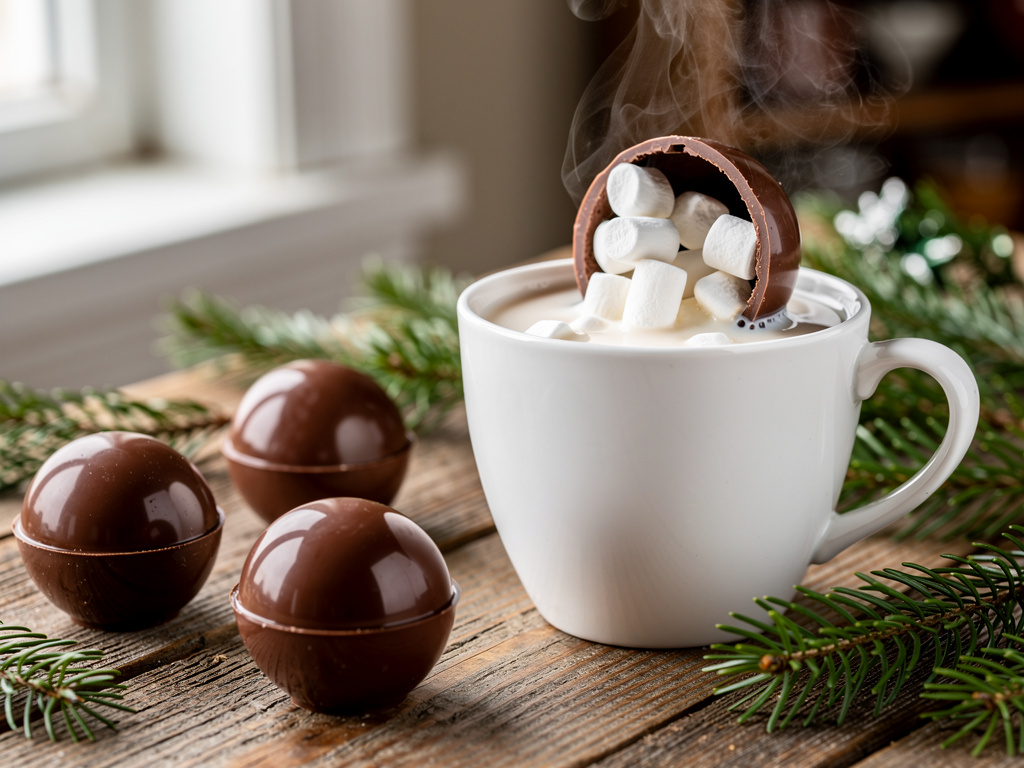


Hot chocolate bombs, hollow chocolate spheres packed with cocoa mix and marshmallows that bloom open when you pour hot milk over them, went from a viral novelty to a genuine holiday gift staple. For a home baker or candy maker, they're a near-perfect seasonal product: festive, giftable, and made from shelf-stable chocolate that most states treat as a legal cottage food. This guide walks through selling hot chocolate bombs from home, the legal picture, the equipment, tempering, pricing, shipping, and how to sell them through the gifting season.
The short version: Hot chocolate bombs are a seasonal gift product that sells hardest from November through Valentine's Day. As a shelf-stable chocolate confection, they're a legal cottage food in many states, though the rules, permits, and label requirements vary, so confirm your own state first. You'll need sphere molds (polycarbonate for a glossy retail finish, silicone for ease) and the skill to temper chocolate so it snaps and shines instead of turning dull. Price them from your real cost plus a gift-worthy margin, ship them only with heat protection since chocolate softens easily, and sell them through pre-orders and gift sets, with corporate gifting as a strong add-on. Homegrown gives you the storefront and pre-order tools to sell them, but you make and ship the product.
This guide covers what they are, the legal picture, equipment, tempering, pricing, shipping, and selling. This is general information, not legal advice.
Hot chocolate bombs are hollow chocolate spheres filled with cocoa mix and mini marshmallows that melt open when hot milk is poured over them, releasing the cocoa into the cup. They sell because they're a fun, giftable, photogenic product with a strong, reliable holiday season behind them.
Why they're a strong seasonal product:
The catch is that this is a seasonal product, so you plan for an intense few months rather than steady year-round sales. The takeaway: hot chocolate bombs pair a fun, giftable format with a proven high-spending season, which is a strong combination for a home maker. The rule is to treat them as a seasonal push, planning production and marketing around that November-to-February window.
In many states, yes, because hot chocolate bombs are a shelf-stable chocolate confection, and "candies and confections" are a commonly permitted cottage food category, but the rules vary by state, so you must confirm yours. Chocolate is non-perishable and non-hazardous, which is exactly the kind of food cottage food laws tend to allow.
What the legal picture looks like:
Because the specifics differ so much, check your own state's cottage food list and health or agriculture department before you sell. New York is the one to know about: its home processor rules name cocoa bombs on the prohibited list because melting chocolate has no kill step, and the state-by-state rules for selling homemade chocolate show where tempered chocolate is still allowed. The takeaway: hot chocolate bombs are legally sellable from home in many states as a confection, but only after you confirm your state's rules. The rule is to verify eligibility, caps, and labeling for your state first, the same starting point as any cottage food business.
To make hot chocolate bombs you need sphere molds, good chocolate, and a way to temper it, and your choice of mold shapes both how the finished bomb looks and how easy it is to make. The equipment list is short, but the mold decision is worth thinking through.
The core equipment:
The takeaway: the equipment is accessible for a home maker, and the polycarbonate-versus-silicone mold choice is the main decision, retail polish versus ease and cost. The rule is to match your mold to your goal, polycarbonate if you're selling a premium gift product, silicone if you're starting out or keeping costs low.
You temper chocolate by carefully controlling its temperature as it melts and cools, which forms the right crystal structure so the finished shell is glossy, snaps cleanly, and doesn't develop bloom. Tempering is the single most important skill for making bombs that look professionally made rather than homemade.
Why tempering matters and how to get it right:
The takeaway: tempering is what makes a bomb look and feel professional, and it's a learnable skill worth practicing before you sell. The rule is that a properly tempered, glossy, snappy shell is the baseline for a product people will pay gift prices for, so master it first.
You price hot chocolate bombs on your true cost per bomb, chocolate, filling, packaging, and labor, plus a margin that reflects a handmade gift item, and you check that against real market prices. Bombs sell in a healthy range because they're giftable, but only if you price on real costs rather than guessing.
Here's a rough picture of market pricing to anchor to:
| Format | Typical retail range | Notes |
|---|---|---|
| Single bomb | ~$5 to $15 | Higher for elaborate decoration |
| Multi-pack or gift set | ~$12 to $25 | The most giftable format |
| Corporate or bulk order | Custom, per unit | Volume with a per-unit rate |
How to build your price:
The takeaway: price on your real per-bomb cost plus a gift margin, and let gift sets carry your best pricing. The rule is that a labor-intensive handmade gift should never be priced like a commodity, so charge what the work and the season support, guided by solid holiday pricing.
You ship hot chocolate bombs with real heat protection, insulated packaging, cold packs, and fast shipping, because chocolate softens at surprisingly low temperatures and a melted or bloomed bomb arrives ruined. Shipping is the riskiest part of the business, so plan it carefully or lean on local fulfillment.
How to protect them in transit:
Because shipping adds cost and risk, many home makers favor local pickup and delivery, especially since bombs sell in the cooler months when local heat is less of a threat. The takeaway: shipping bombs is doable but demands genuine heat and breakage protection, so price it in and consider leaning local. The rule is to never ship chocolate without heat protection, and to lead with local pickup and delivery when you can.
You sell hot chocolate bombs most effectively through pre-orders and gift sets during the holiday season, with corporate and bulk gifting as a high-value add-on. Because the season is short and intense, the way you structure your offers matters as much as the product.
The selling approach that fits the season:
The takeaway: structure your season around pre-orders and gift sets, and chase corporate orders for volume, rather than hoping for steady walk-up demand. The rule is to sell ahead with pre-orders and package for gifting, which a solid pre-order system makes simple to run.
The selling side of a seasonal gift product comes down to taking orders and payment cleanly during a short, busy window, and letting customers buy gift sets and pre-orders without friction. Homegrown is a $10-per-month online storefront, with no percentage fees beyond standard payment processing, built for exactly this kind of made-to-order, seasonal selling.
You list your single bombs, gift sets, and corporate options, open a pre-order window, and take payment at order time, so you make to confirmed orders instead of guessing your holiday volume. Customers pick up locally, get delivery, or arrange shipping, and you keep clean records of what sold, which tells you what to make more of next season. A flat monthly price also means a busy December of gift sales doesn't get eaten by per-sale percentage fees stacking up on every order, the way they would on a marketplace like Etsy.
To be clear about what Homegrown does not do: it does not temper your chocolate, make your bombs, package them, or ship them, and it does not make your product legal in your state. Those are your craft and your compliance. What it gives you is the storefront, the pre-order flow, and the payment handling so the selling runs smoothly through your busiest season. If your bombs are ready for the holidays, set up your Homegrown storefront and open your pre-orders.
In many states, yes. Hot chocolate bombs are a shelf-stable chocolate confection, and "candies and confections" are a commonly permitted cottage food category, since chocolate is non-perishable and non-hazardous. However, the rules vary significantly by state on sales caps, whether you need a permit or registration, whether you can ship, and exactly what your label must say. Some states are more restrictive than others. Always confirm your own state's cottage food list and requirements with your state agriculture or health department before you start selling.
The season runs from roughly Thanksgiving through Valentine's Day and peaks in December, so it's a concentrated winter-holiday product rather than a year-round one. Winter-holiday chocolate and candy gifting is a major spending season, which is exactly why bombs sell so well then. Plan to open pre-orders and start marketing well before December, since gift buyers plan ahead and the window is short. Treat the business as an intense seasonal push, ramping production and promotion for that November-to-February stretch rather than expecting steady demand all year.
Sphere molds, good chocolate, a tempering setup, and fillings plus packaging. For molds, silicone is cheap and releases easily but gives a less glossy finish, while polycarbonate costs more and produces the professional, glossy, sharp-snapping shells preferred for retail. Use real couverture or tempering chocolate rather than candy melts if you want a quality snap and shine. You'll also need cocoa mix and mini marshmallows for the filling, and gift-ready packaging like boxes, bags, and ribbon to protect the fragile bombs and make them giftable.
That dull, grayish, streaky film is called bloom, and it happens when chocolate isn't tempered properly, so the wrong crystal structure forms as it sets. The fix is tempering: carefully melting the chocolate, cooling it to encourage the right crystals, then gently rewarming it to working temperature, which produces a glossy shell with a clean snap that resists bloom. Tempering has a learning curve, so make several practice batches until your shells reliably come out shiny and firm before you sell them as gift-quality products.
Price on your true cost per bomb, chocolate, filling, packaging, and a real hourly rate for your labor, then add a margin that reflects a handmade gift. Handmade bombs commonly sell from around $5 to $15 each, and gift sets from about $12 to $25, on marketplaces like Etsy, so check your number against the market to stay competitive without underselling your work. Gift sets and multi-packs are the most giftable format and support your best per-unit pricing, so make attractive sets the hero of your lineup.
Yes, but carefully, because chocolate softens around 72 degrees and a melted or bloomed bomb arrives ruined. Ship with insulated packaging like foam liners or metalized bubble wrap, add cold packs sized to the season and distance, and use expedited or overnight shipping to shorten the heat-exposure window, especially in warm weather. Cushion each bomb well against breakage too, since they're fragile. Because shipping adds real cost and risk, many home makers lean on local pickup and delivery, which is easier during the cool months when bombs sell best.
Hot chocolate bombs are one of the best seasonal products a home maker can add: festive, giftable, legal in many states, and riding a spending season people already love. Nail your tempering, price them as the gifts they are, and sell ahead with pre-orders and gift sets. Start your Homegrown storefront and take your holiday pre-orders in one place.



