
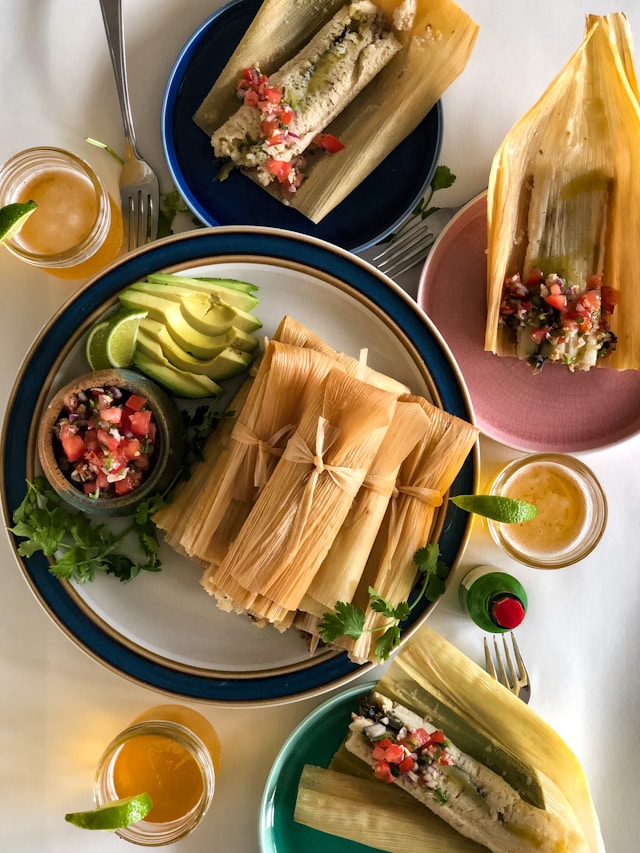


The short version: Whether you can sell tamales from home depends on your state and your filling. Of the four states whose rules we read on October 13, 2026, Arizona lets a registered home cook sell pork, beef and chicken tamales, plus cheese ones, today, Colorado follows on January 1, 2027, Texas allows bean and cheese tamales but not meat, and California's list allows only fruit tamales. A dozen pork tamales costs about $9.17 in supplies to make at Walmart.com prices that day, and four tamale shops charged $14 to $59 a dozen, so $28 to $30 for a homemade dozen leaves room to pay yourself. Start with pre-orders and pickup so you only cook what is already sold.
Checked October 13, 2026: the cottage food pages of Arizona (ADHS), Colorado (CDPHE), Texas (DSHS) and California (CDPH), California's and Utah's home kitchen (MEHKO) laws, supply prices on Walmart.com, tamale prices at four shops, and the pricing pages of Homegrown, Hotplate and Square, including card processing. Honest bounds: we read four states, not fifty, so verify your own state's current rules before you sell a dozen. The 5-dozen batch yield is our estimate. Homegrown customers create an account to place a first order, and Homegrown has no timed drop or countdown release.
If your state allows your tamales, you can set up a Homegrown storefront so customers can order by the dozen ahead, and try it free for 7 days.
If you make tamales that everyone asks you to sell, you are not alone. People already buy tamales by the dozen for family parties and holidays, and every tamale shop we checked for this guide sells them that way. That makes tamales a natural fit for farmers markets, holiday orders and local pre-orders. Empanadas are another strong-selling savory option, and here's how to sell empanadas at farmers markets.
But selling tamales from home is not as simple as making a big batch and setting up a table. Tamales with meat or cheese need to stay cold or hot to stay safe, which is why cottage food laws often leave them out, at least some kinds. Whether you can legally sell tamales from your home kitchen depends on your state, your filling, and the type of permit you get.
This guide covers the rules in four states, the permits, what a dozen costs to make, what to charge, packaging, labeling, and where to sell. Shelf-stable meats like beef jerky from home follow different rules than tamales, so do not assume a rule for one meat product covers the other.
Yes in some states and no in others, and the answer turns on two things: what is inside the tamale and which state you live in. A tamale filled with pork, chicken, beef or cheese needs to be kept cold or hot to stay safe, and home-kitchen laws have often kept those foods out. Three of the states in this guide changed that recently: Arizona in 2024, Texas in 2025, and Colorado starting in 2027.
Health departments call those foods "time and temperature control for safety" foods, or TCS foods. It means the food has to be held cold (41°F or below) or hot (135°F or above) so bacteria do not grow. Arizona's health department explains it the plain way: "if the item needs to be refrigerated to be safe, it is most likely considered TCS." Cooked meat, cheese and cooked vegetables are all TCS.
Here is how tamales break down in each state we checked on October 13, 2026:
So, of those four states, one allows pork tamales as cottage food today (Arizona), one adds them on January 1, 2027 (Colorado), one allows bean and cheese but not meat (Texas), and one allows fruit only (California). In the other 46 states you have to read your own state's rule. Start with our state-by-state cottage food laws, then look at whether your state has MEHKO laws that might allow perishable foods from your home kitchen.
Scroll sideways to see every column.
| State | Pork, chicken or beef tamales from home | Bean or cheese tamales from home | Registration and training | Yearly sales cap |
|---|---|---|---|---|
| Arizona | Yes, since September 14, 2024 (HB 2042), sold by you and delivered in person, one stop, within 2 hours | Yes ("Cheese & Jalapeño" is on the list) | Register with ADHS (no fee); accredited food handler course first | None: "to the maximum extent allowed by federal law" |
| Colorado | Not until January 1, 2027 (Tamale Act, HB26-1033) | Not until January 1, 2027; today's rules allow only foods that need no refrigeration | Food safety course today; yearly CDPHE registration plus CSU or equivalent training from 2027 | $10,000 per product today; $150,000 total from 2027 |
| Texas | No: meat, meat products and poultry are excluded | Yes, since September 1, 2025, if you register as a TCS cottage food operation | Register with DSHS for TCS foods; accredited food handler course | $150,000 |
| California | No: the list allows "Tamales (fruit only)"; a MEHKO permit or commercial kitchen is the path | No under cottage food; MEHKO or commercial kitchen | County registration (Class A) or permit (Class B); Cottage Food Operator Training within three months | $88,878 Class A, $177,756 Class B (2026) |
We checked each row on the state's own pages on October 13, 2026: ADHS and A.R.S. 36-932, CDPHE's cottage foods page and its Tamale Act pages, Texas DSHS, and CDPH with its 2026 adjusted sales limit PDF. Rules change; verify your state's current rules before you sell.
Cottage food rules are built around foods that keep on a shelf: baked goods, jams, dry mixes and candy. A meat or cheese tamale needs one, so it falls outside laws like Colorado's current rules and California's approved list. That is the whole reason a tamale is harder to sell from home than a loaf of bread.
Here is what makes a tamale different. Cooked pork, chicken, beef and cheese are TCS foods, and bacteria grow fast in the range between cold and hot. The USDA's food safety guidance on leftovers puts the danger zone at 40°F to 140°F and says perishable food left at room temperature for more than 2 hours (1 hour above 90°F) should be thrown away. A tray of tamales cooling on a counter, or sitting in a warm car on the way to a customer, can cross that line without anyone noticing.
States handle that risk in three ways:
California, Arizona and Colorado name tamales outright. California's list says "Tamales (fruit only)," which tells you that a pork or cheese tamale is not on it. Arizona's and Colorado's lists name the fillings that are allowed. Texas does not name tamales at all; it lists what is excluded, so you work out your tamale from the filling.
The bottom line: if your tamale recipe includes meat, poultry or cheese, read your state's rule for that filling before you sell. A basic cottage food registration covered meat and poultry tamales in only one of the four states we read on October 13, 2026 (Arizona), and cheese tamales in two (Arizona and Texas).
Check what you can sell under cottage food laws in your state to see exactly which foods are and are not allowed.
MASECA's own tamale recipe beats 8 cups of masa flour with 2 1/2 cups of lard, and lard is rendered pork fat; the same recipe suggests chicken or pork broth in place of water. Texas keeps meat and poultry products out of cottage food, so a bean tamale made with lard and chicken broth may not count as meat-free. For a Texas cottage food batch, beat the masa with vegetable shortening and plain water (MASECA's recipe calls for water and lists broth as a substitute), list both on the label, and ask DSHS if you are unsure.
Two of the states we checked allow it as cottage food: Arizona allows pork, beef and chicken tamales under its home kitchen registration today, and Colorado will on January 1, 2027. Both do it under a home kitchen registration rather than a restaurant-style permit. In California, a meat tamale needs a county MEHKO permit or a commercial kitchen, and in Texas it needs a licensed kitchen.
Arizona has allowed pork, beef, chicken and cheese tamales from a registered home kitchen since its 2024 "Tamale Bill" (HB 2042) took effect on September 14, 2024. The bill became Laws 2024, chapter 18, and the Arizona Capitol Times reported that Gov. Katie Hobbs directed ADHS to "immediately begin enforcing" it after the agency told vendors it would take an additional year to write new rules.
Here is what ADHS and the statute require for meat tamales, as of our October 13, 2026 check:
Every cottage food label needs the production date, your name and registration number, a complete ingredient list, ADHS's exact home-kitchen statement and the website line www.azdhs.gov/CottageFood, per the ADHS labeling page, checked October 13, 2026. If customers can order from an online listing, ADHS says the label information has to be in the listing too, for example as a photo of the label.
Our step-by-step guide to starting a cottage food business in Arizona walks through the ADHS registration screens.
Colorado's Tamale Act (HB26-1033) adds pork, beef and chicken tamales on January 1, 2027; until then Colorado's current rules apply and do not allow meat. Every CDPHE Tamale Act page carries the same banner: "The Tamale Act does not go into effect until January 1, 2027."
Here is what CDPHE's Tamale Act pages said when we loaded them on October 13, 2026:
Until December 31, 2026, Colorado's current cottage food rules allow only foods that do not need refrigeration, and CDPHE lists "Any meat product" as ineligible. A Colorado cook who wants to sell pork tamales this Christmas still needs a licensed kitchen. Colorado's current page, checked October 13, 2026, says the Tamale Act "begins January 1, 2027." Our Colorado cottage food law guide covers both sets of rules.
Vegetarian tamales open more doors than meat ones: in Texas, bean and cheese tamales have been cottage food since September 1, 2025. But "vegetarian" is not the line the four states we read draw. The line is whether the filling needs a refrigerator. A bean and cheese tamale is vegetarian and still a TCS food, so it follows the cold-food rules.
Here is how the four states treat meat-free tamales:
If you are flexible on your recipes, starting with the filling your state allows under cottage food is the simplest and cheapest way to begin selling. In Texas that is bean and cheese. In California it is a sweet fruit tamale. You can always add meat tamales later once you get a MEHKO permit or access to a commissary kitchen.
Yes for bean, cheese and other meat-free tamales, and no for pork, chicken or beef. Since September 1, 2025, Texas cottage food can include TCS foods except "meat, meat products, poultry, or poultry products," seafood, ice products, low-acid canned goods, CBD or THC products, and raw milk. To sell a bean and cheese tamale from home in Texas:
Pork, chicken and beef tamales in Texas need a licensed kitchen and whatever food permit your local health department requires for it. Our Texas cottage food law guide covers the rest of the Texas rules.
Bean and cheese tamales cost about $7.55 a dozen to make at October 13, 2026 Walmart.com prices with the same lard masa as pork ($9.17 a dozen), so the cheaper filling saves only $1.62 a dozen. Even the Texas version with shortening and water, $5.85 a dozen, saves about $3.32 a dozen against pork. Price it $2 under your pork dozen, not $10 under, because your hours are the same.
A MEHKO permit lets you sell meat tamales from your home kitchen after a health inspection, in the places that offer one; California's version caps you at 30 meals a day and $100,000 a year, adjusted for inflation. If your state has a MEHKO (Microenterprise Home Kitchen Operation) law, the permit comes from your local health department. A MEHKO is closer to a tiny home restaurant than to cottage food: it allows foods with meat and dairy, and in exchange the health department inspects your kitchen (Utah's law sets the first inspection within a week before you open).
We read two state MEHKO laws on October 13, 2026: California's and Utah's.
California. The state law (Health and Safety Code 113825) sets these limits:
Utah. Utah Code 26B-7-416 (effective May 7, 2025) lets a local health department issue a microenterprise home kitchen permit, with a fee that covers the department's cost. Food that needs time and temperature control must be prepared, cooked and served the same day, or within 72 hours if you keep time and temperature logs, update them at least every two hours during operating hours, and date-mark the food.
MEHKO permits come with more requirements than cottage food permits:
Not every state has a MEHKO program. California and Utah are the two whose laws we read; our MEHKO guide tracks the rest and lists county permit fees.
If your state does not allow your tamales under cottage food or MEHKO laws, your next option is a commissary kitchen. A commissary is a licensed commercial kitchen you rent by the hour or the month to prepare food for sale. It is the path for a Texas pork tamale, a California cheese tamale outside a MEHKO county, or any Colorado meat tamale made before January 1, 2027.
Using a commissary kitchen means:
Here is what three Texas shared kitchens charged on October 13, 2026:
Swipe left to see the rest of the table.
| Kitchen | City | Hourly rate | Monthly minimum or plan | Kitchen time for one 5-dozen batch (4.5 hours) |
|---|---|---|---|---|
| CBG Shared Kitchen | Houston | $18 to $25 an hour (overnight to peak); $25 on the pay-as-you-go plan | Pay-as-you-go at $25 an hour, or monthly plans from $400 a month | $81.00 to $112.50, or $16.20 to $22.50 a dozen |
| LIT Commercial Kitchen | Houston | $35 an hour on the Starter Package | $200 a month Starter (0 hours included); $250 a month for 10 hours; 6-month contract | $157.50 in hourly charges on the Starter rate, on top of the $200 monthly fee |
| Capital Kitchens | Austin | $29 an hour (prep only) or $33 an hour (main kitchen) | 12-hour monthly minimum: $348 or $396 a month | $130.50 to $148.50, or $26.10 to $29.70 a dozen |
Rates come from each kitchen's own page, loaded October 13, 2026: CBG Shared Kitchen (and its rates sheet), LIT Commercial Kitchen and Capital Kitchens. The 4.5 hands-on hours for a 5-dozen batch is our pricing guide's estimate. Deposits, storage and city permits cost extra.
A commissary makes the most sense once you are selling enough to fill regular kitchen time. At $25 an hour, kitchen rent adds $22.50 to a dozen you sell for $30; with $9.17 in pork tamale supplies and a $1.17 card fee (2.9% plus 30 cents), that dozen loses about $2.84 before you pay yourself. Even CBG's $18 overnight rate ($16.20 a dozen), which needs a monthly plan of at least $400, leaves only about $3.46. For someone testing the waters with weekend sales, it may be more cost than it is worth, so start with a cottage food or MEHKO permit if your state allows your filling. Our guide to commissary kitchens for cottage food vendors covers what to ask before you sign.
In the four states we read, a home tamale vendor needs up to three things: a food safety course (about $10.99 online), a state or county registration or permit, and a business name filing if you sell under a name. The details depend on how you plan to sell tamales and which filling you make. All four states we read require a food safety course of some kind, and three of them (Arizona, Texas and California) require you to register or get a permit before you sell tamales from home. Here is a breakdown.
Under cottage food you need a registration (free in Arizona), a food safety course of about $10.99, and a business name filing if you use one.
See our guide on how to get a cottage food permit for the full walkthrough.
A MEHKO needs a local health permit, an inspection and food safety training, and California limits it to $100,000 a year in sales, adjusted yearly for inflation.
A commercial kitchen route needs a food business license, a kitchen contract and liability insurance, and the three Texas kitchens we checked charged $18 to $33 an hour.
Before you rent kitchen time, call your local health department and say exactly what you will sell: "pork tamales, frozen, sold by the dozen for pickup." The answer decides which permit you need, and it costs you nothing. A food safety course is the one step all four states we read require, and in Arizona and Texas a $10.99 online food handler course meets it, so do it first.
A Texas vendor starting with bean and cheese tamales can be ready to sell for about $83.63 in fees and supplies, before any ordering tool. That covers the required food handler course, a county business name filing, labels, freezer bags and the ingredients for a first 5-dozen batch, at prices checked October 13, 2026.
Here is the list, using Texas as the example because bean and cheese tamales are cottage food there:
That adds up to $83.63. The batch line counts what the batch uses; buying whole packages at the store (the full shortening can, baking powder tin and bag of beans) adds about $5.39 up front, and a steamer pot, sheet pans and a cooler are not counted because we assume you already own them. A Homegrown storefront adds $10 a month billed annually ($120 for the year) or $12.50 a month billed monthly, after a 7-day trial with no charge until day 8. Selling pork tamales in Texas changes the math completely, because that means a licensed kitchen: kitchen rent alone at $25 an hour is $112.50 for one 4.5-hour batch.
In Arizona, the ADHS registration is free and StateFoodSafety's Arizona course is the same $10.99. We did not price an Arizona trade name filing, so check how your county or the state registers business names before you file.
A dozen red chile pork tamales costs about $9.17 in supplies, or about 76 cents a tamale, at Walmart.com prices on October 13, 2026. Chicken comes to about $7.97 a dozen and bean and cheese to about $7.55. Those numbers use the masa amounts from MASECA's own tamale recipe, doubled: 16 cups of tamale masa flour, 5 cups of lard and 11 cups of broth, spread at MASECA's "2.8 to 3 oz" of masa per tamale. Doubled, that is roughly 5.5 dozen; we count about 5 dozen after torn husks and tasting, by our estimate.
Drag the table sideways for the full view.
| Ingredient or supply | What you buy | Price | Used in one batch | Cost per batch |
|---|---|---|---|---|
| Masa flour | MASECA Tamal, 4 lb bag | $3.98 | Whole bag, about 16 cups | $3.98 |
| Lard | Armour Lard, 4 lb tub | $15.67 | 5 cups, about 2.25 lbs | $8.81 |
| Pork | Smithfield pork shoulder butt roast | $2.24 a lb | 5 lbs raw (roasts are sold at 5.5 to 11.5 lbs; save the rest) | $11.20 |
| Dried chiles | El Guapo whole guajillo, 7.5 oz bag | $5.72 (listed, out of stock that day) | Whole bag | $5.72 |
| Garlic | One bulb | $0.72 | One bulb | $0.72 |
| Broth | Great Value chicken broth, 32 oz | $1.50 each | 3 cartons | $4.50 |
| Baking powder | Clabber Girl, 8.1 oz | $2.52 | 4 tablespoons | $0.60 |
| Salt and cumin | Pantry | Our estimate | A few tablespoons | $0.50 |
| Corn husks | La Campesina, 16 oz bag | $9.12 | Whole bag, with spares for tearing | $9.12 |
| Batch total, about 5 dozen | $45.15 | |||
| Freezer bag and label, per dozen | Great Value gallon freezer bags, 80 count ($5.23); Avery 2-inch round labels, 120 count ($8.87) | One of each | $0.14 | |
| Per dozen | $9.17 |
Supply prices are Walmart.com prices for products sold by Walmart.com, loaded October 13, 2026; every item was in stock except the guajillo chiles, which showed their $5.72 price but no stock. The recipe amounts are MASECA's, doubled. The 5 pounds of raw pork, the husk and chile amounts and the 5-dozen yield are our estimates, the same ones our tamale pricing guide uses; weigh and count your own first batch and redo the math. If you print on the bigger 3-1/3 by 4 inch label instead of the 2-inch round, add about 3 cents a dozen.
Two ingredients carry most of the cost:
Swapping the filling changes less than you might think:
Slide the table left to see every column.
| Filling | Filling bought | Batch total | Per dozen with bag and label | Per tamale |
|---|---|---|---|---|
| Pork in red chile | 5 lbs pork shoulder, 7.5 oz guajillo chiles | $45.15 | $9.17 | $0.76 |
| Chicken in red chile | 6 lbs chicken leg quarters (from an $8.64 10 lb bag), 7.5 oz guajillo chiles | $39.14 | $7.97 | $0.66 |
| Bean and cheese | 2 lbs pinto beans (from a $3.82 4 lb bag), 2 lbs shredded Colby and Monterey Jack ($6.92) | $37.06 | $7.55 | $0.63 |
| Bean and cheese, Texas cottage food version | Same beans and cheese; masa made with vegetable shortening and water instead of lard and chicken broth | $28.42 | $5.85 | $0.49 |
Same Walmart.com prices as the table above, loaded October 13, 2026. Everything except the filling is identical in the first three rows, which all use the lard and chicken broth masa. The Texas row swaps in 2.25 pounds of Great Value vegetable shortening (from a $6.23 48-ounce can) and water, our estimate of a like-for-like swap, and is costed on the bigger Avery 5264 label from the startup list, at avery.com's $14.99 for 150; the other rows use the 2-inch round. Filling weights are our estimates for about 5 dozen.
Ingredients are the small part. A 5-dozen batch takes one cook about 4.5 hands-on hours by our pricing guide's estimate, and at $15 an hour that labor is $13.50 a dozen, more than the $9.17 in supplies. Our full tamale pricing breakdown times each step of the batch.
Price homemade tamales by the dozen, from your supply cost and your hours, and then check the number against what local shops charge. Our pricing guide suggests about $30 for a homemade pork or chicken dozen, $28 for bean and cheese, $16 for a half dozen and $3 for a single tamale at a market. Here is how to figure out the right price for yours.
On October 13, 2026, four tamale shops with prices on their websites charged $14 to $59 for a dozen pork or chicken tamales. That is about $1.17 to $4.92 a tamale. The cheapest dozens came from two South Texas shops, a Dallas shop charged $24.95 for every flavor, and a California shop that sells big tamales by weight charged $59.
Swipe the table to see all the columns.
| Shop | Where | Pork or chicken dozen | Cheese or specialty | Per tamale (dozen price) | How it sells |
|---|---|---|---|---|---|
| Parra's Tamales | Los Fresnos, TX | $14.00 (half dozen $7.50) | $16.00 for chicken with cheese or jalapeño cream cheese | $1.17 | Online, shipped |
| Delia's Tamales | McAllen, TX | $16.09 | $18.29 to $18.89 for savory fillings with cheese | $1.34 | "Online orders are sold by the dozen," cooked then frozen, shipped frozen |
| The Tamale Company | Dallas, TX | $24.95 | $24.95 for cheese and for vegan black bean and corn | $2.08 | Online, every dozen the same price |
| Nana's Tamales | Temecula, CA | $59 (dozen weighs about 4 to 5 lbs) | Gourmet tamales from $14.99 a pound | $4.92 | "MUST CALL TO ORDER"; sold by weight |
Prices from each shop's own site on October 13, 2026: parrastamales.com, deliastamales.com, thetamalecompany.com and temeculatamales.com. These are licensed businesses, not home kitchens; we use them as a price check, not a rule.
What a dozen costs at four tamale shops
Source: each shop's own site, loaded October 13, 2026, pork or chicken dozen; the $30 home dozen is our pricing guide's suggestion. Bars are each price divided by $59.
Meat tamales (pork, chicken, beef) cost you a little more to make than bean tamales because of higher ingredient costs, but only by about $1.62 a dozen. At October 13, 2026 grocery prices, a dozen pork tamales in red chile comes to about $9.17 in supplies against $7.55 for bean and cheese. The full tamale pricing breakdown shows why the price per dozen matters so much: using its 4.5-hour batch estimate and today's supplies, $30 a dozen pays about $21.84 an hour, while $20 pays $11.06.
Size explains much of the spread. Nana's says its dozens weigh "approximately 4–5 lbs." Delia's store data lists a weight of 2.4 pounds for its dozen, which may include the packaging. A $14 dozen and a $59 dozen are not the same amount of food, so weigh your own dozen before you compare.
A profitable tamale price starts from five numbers you can measure, and for our pork batch they add up to about $23.84 a dozen before profit on a $30 dozen (supplies, $15-an-hour labor and the card fee). Calculate your actual costs:
A common formula is (ingredient cost + packaging + labor + overhead) x 2.5 to 3 = retail price. For tamales that formula runs high, because labor is the biggest cost: $9.17 in supplies plus $13.50 of labor, times 2.5, is about $57 a dozen. A better check for a home vendor is to multiply supplies by three (3 times $9.17 is $27.51), then make sure the price still pays your hour, as in the table below.
Scroll the table sideways to read each row.
| Price per dozen | Card fee per dozen (2.9% + $0.30) | What a 5-dozen pork batch earns after supplies and card fees | Per hands-on hour (4.5 hours) |
|---|---|---|---|
| $20 | $0.88 | $49.75 | $11.06 |
| $24 | $1.00 | $69.17 | $15.37 |
| $30 | $1.17 | $98.30 | $21.84 |
| $36 | $1.34 | $127.43 | $28.32 |
Supplies are the $45.15 batch plus 14 cents of bag and label per dozen, Walmart.com prices loaded October 13, 2026. The card fee is figured at 2.9% + $0.30 on the dozen price, the rate Homegrown vendors pay. The 4.5 hours is our estimate for one experienced cook; time your own first two batches.
The five habits below protect a $28 to $30 dozen once you set it.
Take tamale orders through one pre-order link that collects payment up front, so you know exactly how many dozen to make before you soak a single husk. Tamales are a day of work per batch, and the worst outcome is spreading 60 tamales for orders that were really just "maybe" in a text thread.
That is the problem Homegrown solves for a tamale vendor. It costs $10 per month billed annually ($12.50 billed monthly) with no percentage fees beyond standard payment processing, after a 7-day trial with no charge until day 8. Customers see your dozens and half dozens, pick a pickup time or local delivery, and pay when they order, so a Christmas order list builds itself while you cook. Your customer pays the menu price plus any sales tax (and any delivery fee you set), with no added shopper fee; you pay the 2.9% + $0.30 card processing.
Here is what that looks like next to the other ways tamale vendors take orders, on a $30 dozen and a month of 40 dozen orders:
Swipe left for the remaining columns.
| How you take orders | Subscription | Trial | Platform fee | Card processing | Customer pays on a $30 dozen | You keep on a $30 dozen | Your fees on 40 dozen a month |
|---|---|---|---|---|---|---|---|
| Homegrown, billed annually | $10/mo | 7 days, no charge until day 8 | $0, 0% commission | 2.9% + $0.30, paid by you | $30.00 plus tax | $28.83 | $56.80 |
| Homegrown, billed monthly | $12.50/mo | 7 days, no charge until day 8 | $0, 0% commission | 2.9% + $0.30, paid by you | $30.00 plus tax | $28.83 | $59.30 |
| Hotplate, default (fee passed to customer) | $0 | None needed | 5% + $0.55, paid by the customer | 2.9% + $0.30 on what the customer pays, paid by you | $32.05 plus tax | $28.77 | $49.18 (your customers pay $82.00 more) |
| Hotplate, you pay the fee | $0 | None needed | 5% + $0.55, paid by you | 2.9% + $0.30, also paid by you | $30.00 plus tax | $26.78 | $128.80 |
| Square Free plan, online payments | $0 | None needed | $0 | 3.3% + 30¢, paid by you | $30.00 plus tax | $28.71 | $51.60 |
| Square Free plan, in person (tap, dip or swipe) | $0 | None needed | $0 | 2.6% + 15¢, paid by you | $30.00 plus tax | $29.07 | $37.20 |
Every fee comes from the company's own page, loaded October 13, 2026: Homegrown's signup page, Hotplate's pricing page (which says the fee is "your choice") and Hotplate's post "What Hotplate does" (which says "we charge a fee to your customer" and "80% of Hotplate chefs keep the default as-is"), and Square's fee page. Hotplate's card fee is figured on what the customer pays (the dozen plus Hotplate's passed-on fee) and rounded per dozen; month totals are figured from unrounded fees, so 40 times a rounded fee can differ by a few cents. Sales tax is left out of every row.
The other options each fit a different tamale vendor. Hotplate is built around "drops," which its pricing page calls "a preorder window with a clear start and end time," and its default puts a 5% + $0.55 fee on your customer, $2.05 on a $30 dozen. Square's Free plan has no monthly cost and the lowest in-person card rate in this table, which makes it a good fit for taking cards at a market table. Facebook and Instagram messages cost nothing and lose orders: you end up tracking dozens across 20 conversations and chasing payment by text.
What Homegrown does for a tamale vendor:
What Homegrown does not do, and it matters for tamales. It does not deliver for you: meat tamales in Arizona still reach the customer by your hand or an employee's, and TCS tamales in Texas by yours, an employee's or a household member's, which is what those states require. It does not ship, so frozen tamales go out by pickup or your own delivery. It has no drops or countdown release feature. Customers create a Homegrown account to place their first order. Your storefront is listed on the Homegrown marketplace, but plan on most orders coming from people you send to your own link. Selling by the pound (like Nana's does) is on Homegrown's roadmap, not live, so list fixed sizes. And Homegrown does not decide whether your tamales are legal where you live; the permit is yours to get.
If you are comparing ordering tools side by side, our guide to the best platform to sell tamales from home goes deeper. When your permit is sorted and you want orders to stop living in your texts, set up your Homegrown storefront and post the link where your regulars already ask "are you making tamales this year?"
In a pull of the Homegrown catalog on October 13, 2026, none of the 2,887 products listed by 318 vendors had "tamal," "tamale," "tamales" or "tamalito" in its name, description or size names. The closest product is a frozen savory dozen: Casa Isla Mía, whose listings say "Made in Houston, Texas," lists 7 frozen Puerto Rican empanadilla flavors in boxes of 5, half dozens and dozens, with dozens priced $24.00 (cheese) to $33.00 (garlic shrimp and salted cod). A tamale vendor would be the first to list tamales on the marketplace.
Package tamales by the dozen or half dozen in a sealed food-safe bag or container, keep them cold or frozen, and put a label on every package with the lines your state requires. Proper packaging keeps your tamales safe and your business legal.
A gallon freezer bag holding one dozen, sealed and labeled, is the simplest tamale package, at about 7 cents a bag.
Every state we read requires a label on each package, and each state wants a slightly different set of lines. Here is what each of them requires on a tamale label, as of October 13, 2026:
Move the table sideways to see it all.
| State | Who you are | What it is and what's in it | Home kitchen statement | Extra lines for tamales |
|---|---|---|---|---|
| Arizona | Name and ADHS registration number | Complete ingredient list, including those in components | "This product was produced in a home kitchen that may come in contact with common food allergens and pet allergens and is not subject to public health inspection." | Production date; the line www.azdhs.gov/CottageFood; label info in any online listing |
| Texas | Name of the operation and its address or DSHS ID number | Common name of the product; any major allergen (eggs, tree nuts, soy, peanuts, milk, wheat, sesame) | "THIS PRODUCT WAS PRODUCED IN A PRIVATE RESIDENCE THAT IS NOT SUBJECT TO GOVERNMENTAL LICENSING OR INSPECTION." | For TCS foods: the date made, and a safe handling statement in at least 12-point type on the label or on the invoice or receipt |
| California | Operation name, city and zip code; registration or permit number and issuing county | Common name on the front panel; ingredients by weight; net quantity in English and metric units; major allergens | "Made in a Home Kitchen" in 12-point type on the front panel | Fruit tamales only under cottage food |
| Colorado (from January 1, 2027) | Name, CDPHE registration number, county, phone or email | Product name; complete ingredient list | A disclaimer that the food was made in a home kitchen not subject to state licensure or inspection and may contain common allergens | Date produced; CDPHE's cottage food website; no QR code in place of the label |
Checked October 13, 2026 on the ADHS labeling page, the Texas DSHS cottage food page, CDPH's cottage food labeling requirements PDF, and CDPHE's Tamale Act labeling page. Texas's safe handling statement reads: "SAFE HANDLING INSTRUCTIONS: To prevent illness from bacteria, keep this food refrigerated or frozen until the food is prepared for consumption."
Whatever your state, a good tamale label carries these lines:
Check your state's specific labeling requirements. MEHKO and commercial kitchen products may have different labeling rules than cottage food. Our cottage food labeling requirements guide covers the federal basics.
Cool them fast, keep them cold or frozen, and get them to the customer within the time your state allows. For a meat tamale in Arizona that is one stop and no more than two hours, and Colorado's 2027 rules set the same two-hour limit and say the final product "shall not be cooled and reheated before being sold." The cooling and the drive are when a cooked tamale can sit in USDA's 40°F to 140°F danger zone, so that is where to be careful.
USDA's rule of thumb is that perishable food left at room temperature for more than 2 hours, or 1 hour above 90°F, should be thrown away. A cooler of frozen tamales at a summer market is fine; a basket of warm tamales on the table is not. Keep the display packages in the cooler and hand them out from there.
Sell tamales where your permit allows and where customers already come to buy food by the dozen: farmers markets, pre-orders with pickup, social media, and word of mouth. Which of these you can use depends on your permit: in Texas, bean and cheese tamales qualify as cottage food while pork tamales do not, which changes what a farmers market booth needs, and our guide to where to sell tamales matches seven places to the permit each one needs and what a $30 dozen pays you in each.
Here is how each state we checked shapes where a home tamale vendor can sell:
A farmers market booth puts your tamales in front of people who came out to buy local food. You get direct customer interaction, immediate feedback, and a built-in audience of people looking for locally made food.
Texas DSHS's farmers market page says a temporary food establishment permit "is not required at farmers' markets under DSHS jurisdiction to sell whole, intact unprocessed fruits and vegetables and pre-packaged non-potentially hazardous food/time temperature for safety foods or cottage foods," and that one "is required to sell all other potentially hazardous food/time temperature control for safety foods." The page does not say which of those two sentences covers a packaged bean and cheese tamale, which is a cottage food that needs refrigeration, so ask DSHS or the market's health authority before you count on selling without a permit. Arizona's statute says you must display your certificate of registration "when operating as a temporary food establishment." Your city or county, and the market itself, may add their own permit, so ask the market manager before you book a booth.
Tips for selling tamales at farmers markets:
Pre-orders let you cook exactly the number of dozens you have sold, which matters when one 5-dozen batch takes about 4.5 hands-on hours. Tamales are labor-intensive to make, and taking orders in advance means you only produce what you have sold: no waste, no unsold inventory.
Set up a simple online storefront where customers can see your menu and place orders for pickup. This works especially well during the holiday season. Open December orders in early November so families can plan their Christmas tamales, set a cutoff date, and cook to the list.
Post your tamale menu, take orders through a simple order link, and arrange local pickup or delivery. Post where your neighbors already look, such as a Facebook neighborhood group or your Instagram profile, and put an order link in the post so you are not taking orders one message at a time. In Arizona, an online listing customers can order from must include your label information.
Tamales have a built-in word-of-mouth advantage: when someone brings your tamales to a family gathering, everyone at that table becomes a potential customer. Encourage repeat orders by including a business card or flyer with every sale, with your order link printed as a QR code.
People looking for "tamales near me" usually find a home vendor through a link a friend shared, a local Facebook group, a farmers market vendor list, or a map search. You cannot buy your way to the top of those, but you can make yourself easy to find in each one.
Weigh the masa for your first 12 tamales, not just the first one. MASECA's recipe spreads 2.8 to 3 ounces of masa per tamale. If you are spreading 3.5 ounces instead, your 5-dozen batch shrinks to about 4 dozen and each dozen costs more to make. A scale at the spreading station keeps every dozen the size you priced.
Start with one or two varieties, which keeps your first batch at about 5 dozen. Pork and chicken show up on the menu of every tamale shop in our price table, and bean and cheese is the filling Texas allows as cottage food. Master those before expanding your menu. In Colorado from 2027, five variations of one TCS product is the legal ceiling anyway.
Make tamales in 5-dozen batches, each about four and a half hands-on hours by our estimate. Set aside one or two days a week for production, because spreading, filling and wrapping go faster once your station is set up. Steam, cool fast, bag by the dozen, label and freeze in one session. Two batches back to back share the setup and cleanup.
Track every batch's cost, hours and sales; your sales total is the number your state's cap counts. This helps you price accurately, identify your most profitable flavors, and stay within your state's revenue cap if you are operating under a cottage food or MEHKO permit. Those caps differ a lot: $150,000 in Texas, $88,878 (Class A) or $177,756 (Class B) in California in 2026, $10,000 per product in Colorado today and $150,000 total from 2027, and no cap in Arizona.
Take pre-orders before every cooking day, because an unsold pork dozen costs you about $9.17 in supplies. Do not rely on walk-up sales alone. A pre-order system guarantees sales before you start cooking and reduces waste. With a $45.15 pork batch, an unsold dozen also costs you the hours you spent on it. Close orders a few days before your cooking day so you can buy pork and husks for the exact count.
You now know your filling, your permit, and what a dozen costs you. Start a Homegrown storefront for $10 a month billed annually, list your dozens with a pickup time, and stop counting orders across text threads.
In Arizona yes, and in Colorado starting January 1, 2027; in Texas and California, no. Arizona has allowed pork, beef, chicken and cheese tamales from a registered home kitchen since its 2024 "Tamale Bill" (HB 2042) took effect on September 14, 2024, as long as you sell them yourself and deliver them in person, to one destination, within two hours. Colorado's Tamale Act (HB26-1033) adds them on January 1, 2027; until then Colorado's current rules apply and do not allow meat. Where cottage food does not allow them, pork tamales need a MEHKO permit (if your state offers one) or a food business license with a commissary kitchen, so check your state's cottage food laws for specifics.
For your first market, we suggest one or two batches: 5 to 10 dozen tamales (60 to 120 individual tamales), plus whatever is already pre-ordered. That gives you enough variety and quantity without too much risk, and frozen leftovers keep for your next market. Track what sells and adjust your production for the next market.
Yes, or a course like it: every state we checked requires food safety training. Arizona and Texas require an accredited food handler course, California requires Cottage Food Operator Training within three months of registering, and Colorado requires a food safety course today and CSU or equivalent training from 2027. StateFoodSafety's online food handler course was $10.99 in Arizona, Texas and California on October 13, 2026, and takes 30 to 75 minutes depending on the state.
You can take tamale orders online in Arizona, Texas, California and Colorado, but shipping homemade meat tamales is off the table in each of them. Arizona says perishables and meat "cannot be shipped" and all sales must be delivered in Arizona; Texas requires online cottage food orders to be personally delivered by you, an employee or a household member; and Colorado's 2027 rules say products must be sold only in Colorado and delivered directly to an informed end customer, with no more than two hours of transport for food that needs temperature control. Arizona's FAQ adds that once food crosses state lines it falls under federal jurisdiction, which can mean USDA inspection for meat products. For most home vendors, local sales (farmers markets, pre-orders with local pickup, and your own delivery) are the practical starting point.
USDA's guidance for cooked leftovers is 3 to 4 days in the refrigerator and 3 to 4 months in the freezer for best quality; frozen food stays safe indefinitely but "can lose moisture and flavor" over time. Selling frozen tamales is a smart strategy because it extends your selling window, makes transport easier, and lets customers buy in bulk. Put the date made on every bag (Arizona and Texas require it for these foods) so customers can count from it.
Under cottage food, insurance may not be required, but it is worth having; Colorado's Tamale Act FAQ says it is "not a requirement" but "highly recommended." If you use a commissary kitchen, the kitchen will likely require it: Capital Kitchens in Austin asks for a certificate showing a minimum of $1,000,000 in commercial general liability. FLIP listed food vendor liability coverage from $299 a year, or $25.92 a month, on October 13, 2026. Liability insurance protects you if a customer gets sick or has an allergic reaction.
A dozen tamales cost $14 to $59 at four shops we checked online on October 13, 2026: $14 at Parra's Tamales, $16.09 at Delia's Tamales, $24.95 at The Tamale Company and $59 for a 4 to 5 pound dozen at Nana's Tamales. For a homemade dozen of full-size tamales, our pricing guide suggests about $30 for pork or chicken and $28 for bean and cheese. A pork dozen costs about $9.17 in supplies to make at Walmart.com prices that day.
These guides answer the next question once you know your state's rule:
Tamales can be a strong food to sell from home when your state allows your filling: a dozen costs under $10 in supplies, shops charge $14 to $59 for one, and a customer who likes yours can order again every holiday. Get your permits sorted, price your tamales to cover your costs and your time, and start taking orders.
When you are ready to set up a simple online presence for your tamale business, Homegrown gives you a storefront for $10 a month billed annually where customers can see your menu and place orders for pickup or local delivery. Create your Homegrown storefront and start selling.



