
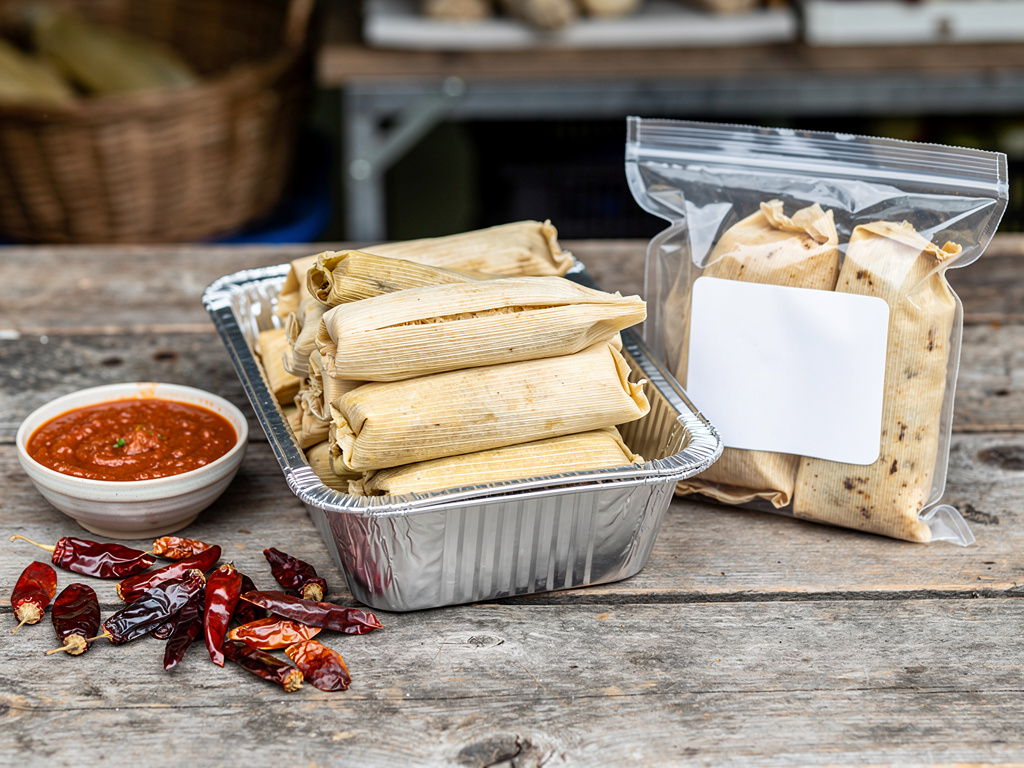


The short version: You can sell tamales in seven places: your own pre-order link with pickup or local delivery, Christmas and holiday orders, farmers markets, church events and festivals, coworkers and offices, Facebook groups and neighborhood chats, and stores or delivery apps once your kitchen allows it. Your permit decides which doors are open, because meat tamales are not cottage food in most states. In Texas, a change that took effect September 1, 2025 lets bean, cheese and sweet tamales be sold as cottage food (ask Texas DSHS first if your masa uses lard), but pork and chicken still need a licensed kitchen, while in California only fruit tamales are on the cottage food list and meat tamales need a home kitchen permit or a commercial kitchen. On a $30 dozen, card processing through a Homegrown storefront costs you $1.17 plus the $10 monthly plan, billed annually, while DoorDash's Basic plan keeps $4.50 on a delivered order.
Checked on the Texas and California health department pages and on each company's pricing page, September 25, 2026: Texas SB 541 and the Texas DSHS cottage food page, California's Health and Safety Code 113825 and the CDPH Approved Cottage Foods List, LA County's home kitchen permit page, Houston Health's temporary food permit page, and the pricing pages of Homegrown, Hotplate, Chefry, Square, Venmo and DoorDash. Rules change and vary by county, so verify your state's current rules before you sell a dozen. Homegrown customers create an account to place a first order, Homegrown has no timed drop or countdown release, and most orders come from people you send to your own link.
Everybody at the family Christmas party wants to know who made the tamales. By New Year's, three coworkers have asked for a dozen, your cousin's church wants you at the fall festival, and a neighbor says the corner market would take some. That is three more places to sell, and each one can need a different permit and pays you a different amount per dozen.
If you are still working out labels, packaging and pricing, start with our guide to how to sell tamales from home, which covers the basics of getting started. This guide is only about where: seven places tamale vendors actually sell, which permit each place needs in Texas and California, and what a $30 dozen pays you in each one.
You can sell tamales in seven places, and a workable start for a part-time tamale vendor is two or three at once: a pre-order link for regulars, a holiday order window in November and December, and one place where people gather, like a market or a church festival. In six of the seven, no store or app takes a cut of your $30 dozen, though card processing, market booth fees and event permits still come off what you keep. Only stores, restaurants and delivery apps take a share of every dozen.
Two ideas are left off on purpose. Shipping tamales across the country needs a licensed kitchen, insulated boxes and dry ice, so it is a different business. And a food truck is a vehicle permit, not a place to sell.
Whether you can sell tamales from a home kitchen depends on your filling and your state: meat tamales are not cottage food in most states, while bean, cheese and fruit tamales sometimes are. Cottage food laws are state rules that let you sell certain foods made at home without a health inspection. They were written for shelf-stable foods like cookies and jam, and a pork tamale needs a refrigerator or a steamer to stay safe.
Here is what the primary sources said on September 25, 2026:
Masa made with pork lard or pork broth may count as a meat product even when the filling is beans and cheese. The Texas law lists "meat products" without saying where lard falls, so ask Texas DSHS before you sell a "vegetarian" tamale made with manteca. Vegetable shortening and vegetable broth take the question off the table. We checked the Texas wording on September 25, 2026.
Each permit opens a different set of places: Texas cottage food covers direct sales but no wholesale of refrigerated (TCS) tamales, California's MEHKO covers direct sales and apps but never stores, and a licensed kitchen opens all seven. Use this table to find the places you can start with this month. Sales caps differ too: $150,000 a year for Texas cottage food, $75,000 for California Class A cottage food, and $100,000 for a California MEHKO. California's Class A cottage food permit allows only direct sales to customers, while Class B, capped at $150,000, can also sell through restaurants and food markets.
Scroll sideways to see every permit.
| Place to sell | Texas cottage food (bean, cheese, sweet) | California cottage food (fruit tamales only) | California MEHKO (any tamale) | Licensed or commissary kitchen (any state) |
|---|---|---|---|---|
| Your own pre-order link | Yes; online orders must be personally delivered by you, an employee or a household member | Yes, Class A or B | Yes, cooked and handed over the same day | Yes |
| Christmas and holiday orders | Yes, same rules as above | Yes | Yes, within 30 meals a day; a meal is what one person eats in one sitting, so a dozen counts as several meals | Yes |
| Farmers market | Yes, packaged, with no temporary permit at markets under DSHS jurisdiction | Yes | Not at the market; the law describes pickup from your home or delivery | Yes, with the market's health permit |
| Church events and festivals | Yes, packaged cottage food | Yes | No | Yes, with a temporary food permit |
| Coworkers and offices | Yes, direct to each buyer | Yes | Yes, as a delivery, same day | Yes |
| Stores, carnicerias, restaurants | No, TCS cottage food cannot be sold wholesale | Class B only | No, never to a retailer | Yes |
| Delivery apps | No for app delivery; Texas online orders must be personally delivered by you, an employee or a household member | Yes, CDPH allows third-party delivery for direct sales; the app must accept home-kitchen fruit tamales | Yes, app sales count as direct | Yes |
Built from Texas SB 541, the DSHS cottage food and farmers market pages, California's MEHKO statute (HSC 113825) and the CDPH cottage food page, all loaded September 25, 2026. County and city rules can add steps, so check with your local health department before your first sale.
The pattern is simple. The closer you sell to the person who eats the tamale, the more permits allow it. The moment a store or a restaurant resells your tamales, most home permits stop working.
Selling from your own pre-order link means customers choose flavors, pay and pick a pickup time before you buy a single bag of masa, so you steam exactly the dozens that sold. For tamales that matters more than for almost any other food, because a batch takes a full day of spreading, filling and folding, and unsold tamales take up the whole freezer.
A good tamale pre-order link has five parts:
Casa Isla Mía, a Houston-area Homegrown vendor, sells frozen Puerto Rican empanadillas this way. It is not a tamale shop, but the setup is the same one a tamale vendor needs: frozen boxes of 5, 6 and 12, a one-hour pickup window, and a small delivery zone.
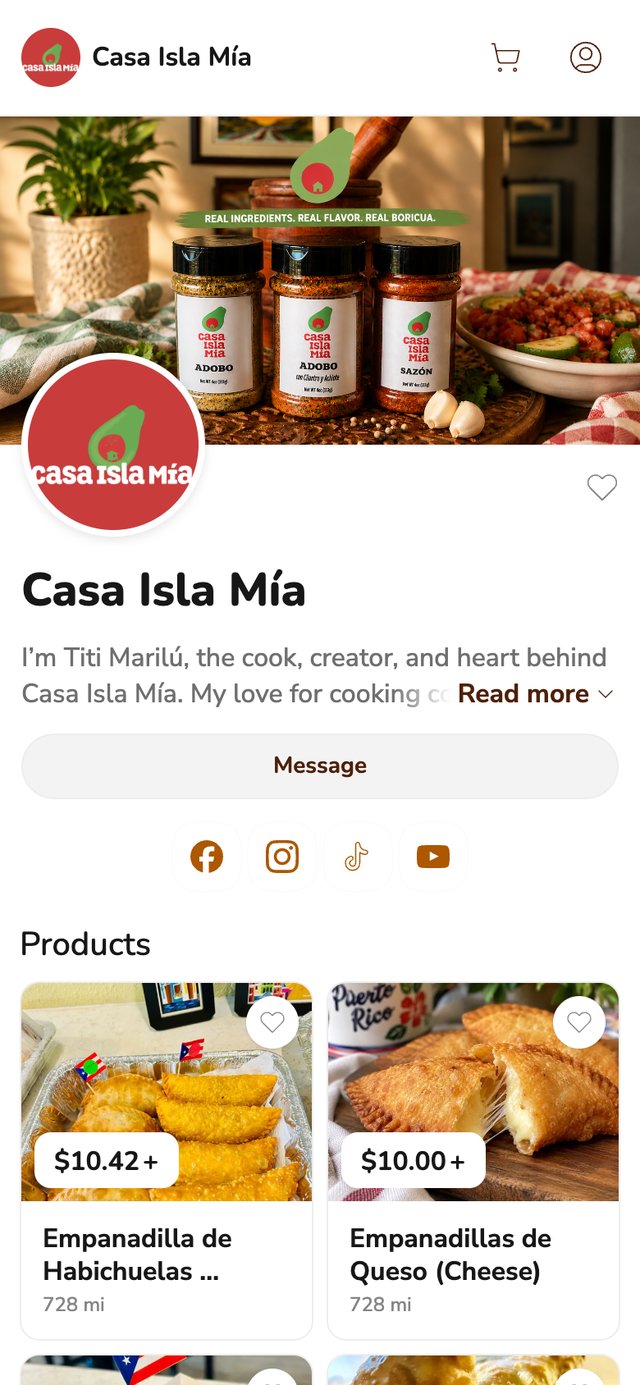
If you are tired of adding up orders from a dozen text threads every December, a pre-order link fixes that part. A Homegrown storefront gives your tamale menu one link with pickup windows and card payment, for $10 a month billed annually.
One order link keeps Christmas tamale orders straight because every dozen is paid for, counted and assigned a pickup time before you soak the husks, instead of living across texts, comments and a notebook. That is the problem Homegrown is built for: a storefront at $10 a month billed annually ($12.50 month to month) with no percentage fees beyond standard payment processing of 2.9% + $0.30 per order.
Here is how it compares with the tools tamale vendors usually try first:
What Homegrown gives a tamale vendor: pickup windows you set, local delivery with your own zone and minimum, one link for your whole menu, and sales tax calculated and sent in for you. Your customer pays $30 for a $30 dozen, with no platform fee added at checkout.
Homegrown does not get you a permit, does not ship frozen food across state lines, and has no countdown-timer drop feature. Customers create a Homegrown account for their first order. Your storefront is listed on Homegrown's marketplace, but plan on most orders coming from people you send to your own link.
Open Christmas tamale orders by the first week of November and close them by about December 15, so you know your dozens before masa and pork prices and your own calendar get tight. The weeks before Christmas and New Year's are when families order in bulk for a tamalada or a holiday table, and the vendors who sell out plan it like a small catering job.
A holiday order plan that works for a one-kitchen vendor:
Those dates are our recommendation, not a rule. Move them earlier if your family celebrates Nochebuena with a big order, and later if you only sell for New Year's.
You can sell tamales at a farmers market if your permit covers them: packaged Texas cottage food tamales need no temporary permit at markets under Texas DSHS jurisdiction, while meat tamales need a licensed kitchen and the market's health permit. The Texas DSHS farmers market page says a temporary food establishment permit is required for "all other" TCS foods, which is where pork and chicken tamales land.
What sells at a market booth:
In California, a MEHKO cannot sell at the market, because the law describes food picked up at your home or delivered from it. Fruit tamales under California cottage food can go to the market. Check how to sell food at craft fairs and festivals if you plan to rotate between markets and weekend events.
You can sell tamales at church events, festivals and fundraisers, and in Houston a temporary food permit costs $52 for one event of 1 to 14 days, applied for at least 14 days before the event. The Houston Health temporary food permit page also says Texas cottage food vendors are exempt when they only sell packaged foods allowed under SB 541, so packaged bean and cheese tamales can skip that permit.
Church and festival sales work because the crowd already expects tamales. What to settle before the event:
Our guide to selling food at school fundraisers and church events covers the booth setup and the money side.
You sell tamales to coworkers by taking orders ahead and making one drop at a set time, so five or ten dozen go out in a single stop instead of ten porch pickups. Offices are one of the easiest places to start, because a coworker who loved your tamales at the holiday potluck tells the whole floor.
Ways to make office sales work:
Set a 5-dozen minimum for any office drop. At $30 a dozen that is $150 in one stop, which covers your drive and the hour it takes to pack, label and deliver. Anything smaller goes on your regular pickup day.
Workplace rules still apply. Check with the office before selling on site. The walkthrough on selling food at work covers how to ask a manager and set up a weekly drop.
You can take tamale orders through Facebook groups and neighborhood chats as long as your state permit covers the tamales, because the app you use to find customers does not change the food rules. Our guide on whether it is legal to sell food on Facebook explains why: your state's cottage food or home kitchen law is what makes a sale legal, not the platform.
Where a Facebook post helps and where it hurts:
The fix is to post in the group and put your order link in the first comment. Everyone who wants tamales gets the same menu, pays up front, and picks a time.
You can sell tamales to stores, carnicerias and restaurants only from a licensed kitchen in most cases, because Texas bars TCS cottage food from wholesale and California's MEHKO law bans sales to any retailer. Wholesale means selling to a business that resells your food. California's Class B cottage food permit, which allows sales through restaurants and food markets up to $150,000 a year, is the exception, and there it only covers fruit tamales.
What a store or restaurant deal usually looks like:
If store sales are your goal, read up on getting food products into local stores, which walks through the pitch and the paperwork. Starting direct and adding a store after you have rented kitchen time keeps the risk small.
Sell tamales on DoorDash only if you have a permitted kitchen and enough margin, because DoorDash's pricing page lists commissions of 15% on Basic, 25% on Plus and 30% on Premier for delivered orders and 6% on pickup orders. On a $30 dozen, that is $4.50 on Basic and $7.50 on Plus.
A few things to know about the apps:
Apps are good at reaching people who have never heard of you. They are expensive for regulars, so move repeat buyers to your own link once they know you.
App commissions and intro periods change. We checked DoorDash's rates on its merchant pricing page on September 25, 2026; check the page again before you sign up, and read the plan you are placed on.
On a $30 dozen, the vendor pays $0 in cash at a market, $0.67 on a Venmo business profile, $1.17 on a Homegrown storefront plus the $10 monthly plan (billed annually), $1.29 on Square's online checkout and $4.50 on DoorDash Basic delivery. The table shows the full fee stack for each option, so you can compare them on the same dozen.
Scroll sideways for all eight columns of the fee stack.
| Platform | Monthly plan | Trial or intro period | Platform fee or commission | Card processing | Customer pays on a $30 dozen | Vendor pays on a $30 dozen | Vendor pays in a month of 40 dozen |
|---|---|---|---|---|---|---|---|
| Homegrown | $10 billed annually ($12.50 monthly) | 7 days, no charge until day 8 | None (0%) | 2.9% + $0.30 per order, vendor pays | $30.00 | $1.17 plus the plan | $56.80 ($46.80 processing plus $10) |
| Hotplate, default | $0 | None needed, no subscription | 5% + $0.55, paid by the customer | 2.9% + $0.30, paid by the vendor | $32.05 | $1.17 | $46.80 |
| Hotplate, vendor covers the fee | $0 | None needed, no subscription | 5% + $0.55, paid by the vendor | 2.9% + $0.30, also on the vendor | $30.00 | $3.22 | $128.80 |
| Chefry, menu order | $0 to start | None needed, $0 plan | 0% to the cook; 5% service fee paid by the customer | 2.9% + 30 cents (payer not stated; figured as the vendor) | $31.50 | $1.17 | $46.80 |
| Square Free plan, in person | $0 | None needed, $0 plan | None | 2.6% + 15 cents | $30.00 | $0.93 | $37.20 |
| Square Free plan, online | $0 | None needed, $0 plan | None | 3.3% + 30 cents | $30.00 | $1.29 | $51.60 |
| Venmo business profile | $0 | None needed | None | 1.9% + $0.10 per payment received | $30.00 | $0.67 | $26.80 |
| Venmo personal account, purchase payments | $0 | None needed | None | 2.99% on payments the buyer marks as a purchase | $30.00 | $0.90 | $35.88 |
| DoorDash Basic, delivery | $0, no subscription | 0% commission for 7 days | 15% of the food subtotal | Covered by the commission | $30.00 plus DoorDash's delivery and service fees | $4.50 | $180.00 |
| DoorDash Plus, delivery | $0, no subscription | 0% commission for 30 days | 25% of the food subtotal | Covered by the commission | $30.00 plus DoorDash's customer fees | $7.50 | $300.00 |
| DoorDash, pickup (any plan) | $0, no subscription | Same as the plan | 6% on pickup orders | Covered by the commission | $30.00 plus any DoorDash service fee | $1.80 | $72.00 |
We checked every fee on each company's own page on September 25, 2026: findhomegrown.com/signup, hotplate.com/pricing, chefry.io/pricing, squareup.com/us/en/pricing, venmo.com/resources/our-fees and merchants.doordash.com/en-us/pricing. Card processing is figured on the $30 price; a platform that charges it on the full total with fees, tips and tax runs a few cents higher. Taxes, tips and delivery costs are left out. Homegrown's month uses annual billing; on monthly billing it is $59.30. The $30 dozen comes from our tamale pricing guide, and 40 dozen is a busy December for one home kitchen, figured as 40 orders of one dozen each, so bigger orders pay fewer per-order fees.
The gap grows in December. At 40 dozen in a month, DoorDash Plus costs you $300.00 against $56.80 on Homegrown with its plan included, a difference of $243.20, or about eight dozen tamales' worth of sales.
A 40-dozen December at $30 a dozen is $1,200 in sales, and the fees on it run from $26.80 on a Venmo business profile to $300.00 on DoorDash Plus delivery. The chart puts the same month side by side, so the cost of each way to sell is easy to see.
What you pay in fees on 40 dozen at $30 ($1,200 in sales)
Source: the fee table above, with every fee checked September 25, 2026. Rounded to the dollar. Hotplate and Chefry default rows also add $1.50 to $2.05 a dozen to the customer's total, which this chart does not count.
Three things to read from the chart:
Homegrown's catalog shows an open lane: in a pull on September 25, 2026, none of the 2,694 products listed by 303 vendors were tamales. The closest products were filled handhelds, 12 empanada and empanadilla listings from 3 vendors (11 savory, 1 sweet), with starting prices of $9.00 to $15.00 and Casa Isla Mía's dozens at $24.00 to $33.00.
In a pull of the Homegrown catalog on September 25, 2026, 0 of the 2,694 products listed by 303 vendors had "tamal" in the name or description. 183 products from 20 vendors sat in the ready-to-eat category, and 12 were empanadas or empanadillas from 3 vendors, with starting prices of $9.00 to $15.00; Casa Isla Mía's dozens ran $24.00 to $33.00. 39 products from 17 vendors mentioned "frozen" in the name or description.
What that means for a tamale vendor:
Tamale vendors who want to sell out every December should decide their cap before they post the menu, take payment up front, and keep a list of last year's buyers to message first. These are our recommendations, not results from a vendor survey, and the difference is planning more than the recipe.
Habits worth copying:
Add one new place a month, starting with the one your permit already allows and your customers already visit. A sensible order is a pre-order link first, then one gathering place like a market or church event, and only then stores or apps.
The best place to sell tamales for most home vendors is their own pre-order link, because customers pay before you cook and close to the full $30 of a dozen reaches you. Add one gathering place, like a farmers market or church festival, to meet new customers. Stores and delivery apps come later, once you have a licensed kitchen.
You can sell bean, cheese and sweet tamales from home in Texas as cottage food since September 1, 2025, but not pork, chicken or beef tamales. If your masa uses pork lard or pork broth, ask Texas DSHS first, because the law does not say whether lard counts as a meat product. Tamales that need refrigeration require registering with Texas DSHS, keeping them at 41°F or below cold or 135°F or above hot, a label with the date made, and a safe handling statement on the label or the receipt. Meat tamales need a licensed kitchen.
You can sell fruit tamales from home in California under cottage food, and meat, bean or cheese tamales under a MEHKO permit if your county or city has adopted one. A MEHKO allows up to 30 meals a day, 90 a week and $100,000 a year, cooked and served the same day. The law counts a meal as what one customer eats in one sitting, so a dozen tamales counts as several meals; ask your county how it counts a dozen. Otherwise you need a commercial or commissary kitchen.
You can sell tamales through Facebook if your state permit covers the tamales you make, because Facebook does not issue food permits and the state rules decide what is legal. Post in local groups, then send buyers to an order link so payment and pickup times are settled. Venmo charges 2.99% when a buyer marks a payment to a personal account as a purchase.
Homemade tamales sell for about $30 a dozen for pork or chicken, $28 for bean and cheese, and $16 for a half dozen, based on Homegrown's pricing guide checked September 23, 2026. Tamale shops that posted prices online charged $14 to $59 a dozen that day. Weigh your dozen before you set your price.
You usually need a licensed or commissary kitchen plus a temporary food permit to sell meat tamales at a church event, like Houston's $52 permit for events of 1 to 14 days. Texas cottage food vendors selling packaged bean, cheese or sweet tamales are exempt in Houston. In Houston, apply at least 14 days before the event, because later applications are not reviewed, and ask your own city or county health department a month ahead.
These five guides, all on the Homegrown blog, answer the next questions that come up after you pick a place to sell, from what to charge for a $30 dozen to which permit fits a pork tamale:
The places to sell tamales are already around you: your coworkers, your church, the market down the street and last year's Christmas list. What is usually missing is one place where all those orders land, paid and counted, before the first husk soaks. With 40 dozen in a December, that is the difference between a clean pickup list and a weekend spent scrolling back through messages to find who wanted green chile.
Start with the place your permit already allows, then give every customer the same link. Set up your tamale storefront on Homegrown for $10 a month billed annually, add two or three fillings by the dozen and half dozen, set your pickup windows, and post your holiday menu in early November. Card processing is 2.9% + $0.30 per order with no platform fee, so a $30 dozen costs you $1.17. You still handle the permit and the steaming. The link handles the counting, the payment and the pickup times, so you know exactly how many dozen to make this December.



