
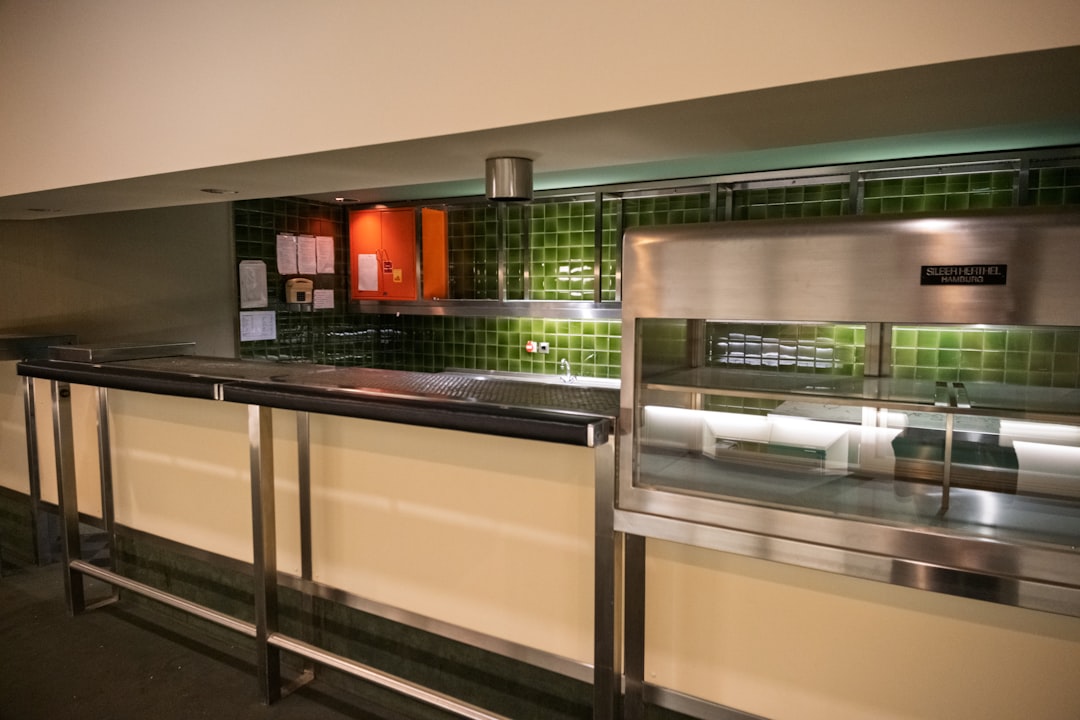


The short version: Commissary kitchens are licensed, inspected commercial kitchens that food businesses rent by the hour or by the month, and a cottage food vendor who sticks to approved foods and stays under the sales limit does not need one, because cottage food laws exist so you can sell what you bake at home. You need one when your product is not on your state's cottage food list (6 of 7 states we checked keep foods that need refrigeration out of the home kitchen), when you pass your state's sales cap ($35,000 a year in Washington up to $250,000 in Florida), or when you want to sell wholesale or ship where your law stops. At the 7 shared kitchens whose rate sheets we read, pay-as-you-go kitchen time cost $17 to $75 and up an hour (Cleveland's $17 overnight hour is $22 with its ovens) and plans that include kitchen hours ran $200 to $2,000 a month. Four hours a week at $25 an hour is $5,200 a year before storage and insurance, so count your orders before you sign anything.
Checked on each kitchen's own rate page and on 7 state agency pages, October 8, 2026: the kitchen prices, the state caps and the food rules in this post come from those pages, and the Homegrown prices come from findhomegrown.com/signup the same day. Rules change, so verify your state's current rules with the agency named in the table before you plan around them. Homegrown customers create an account to place their first order.
A commissary kitchen is a licensed, inspected commercial kitchen that food businesses can rent by the hour, day, or month instead of building their own. For most cottage food vendors, the answer to "do I need one?" is no. The entire point of cottage food laws is that you can produce food in your home kitchen legally without renting commercial space.
There are specific situations where renting a commissary kitchen makes sense even for a home baker: selling at events that require it, producing products your state cottage food law does not allow, scaling beyond your home kitchen's capacity, or moving toward wholesale or retail sales. This guide walks through each one with real prices pulled in October 2026 from 7 shared kitchens and the actual rules from 7 states, so you can decide with numbers instead of a hunch.
A commissary kitchen is a fully licensed commercial kitchen space that food businesses can rent on a short-term or recurring basis. The kitchen has commercial-grade equipment, passes regular health department inspections, and meets local food code requirements. The kitchen holds the facility license, but in most places you still need your own food business license or permit to sell what you make there. Haughville Shared Kitchen in Indianapolis, for example, walks every new member through the Marion County Public Health Department's commissary approval before they can cook.
Common types of commissary kitchens:
Most shared kitchens describe themselves as commissaries. In The Food Corridor's 2023 survey of 199 shared kitchen operators, 111 of the 185 who described their kitchen called it a "commissary or commercial kitchen" and 48 called it an incubator. A vendor pays an hourly or monthly rate, gets access to the kitchen during scheduled hours, and uses the equipment, refrigeration, and storage during their shift. They bring their own ingredients, label their own products, and take everything when they leave.
Most commissary kitchens require some setup before you can use them: an application, food safety training, a security deposit, an orientation, and proof of liability insurance. At the kitchens we read, the application review alone ran from about a week at Cleveland Central Kitchen to 10 to 15 business days at the 6888 Kitchen in Dayton, before orientation and insurance paperwork.
For the broader picture of how commissary kitchens fit into the food business world, our companion guide on the commissary kitchen for food business overview covers how shared kitchens work for any food business, not just cottage food vendors. Before you decide whether to rent commercial space, the most important question is whether your existing customer base actually justifies the cost, and the cleanest way to answer that is to see your real order volume in one place. A Homegrown storefront at $10 a month billed annually ($12.50 billed monthly) gives you a clean weekly order list, which makes the "do I need a commissary?" question a math problem instead of a guess.
In the food business, a commissary is a central kitchen where food gets made, prepped or stored before it goes somewhere else to be sold. The word means the same thing whether a restaurant chain, a bakery or a food truck uses it. What changes is who owns the kitchen and who uses it.
Here is how the word gets used in practice:
A cottage food vendor only ever meets the last one. You are not running a chain, so the question is never "should I build a commissary?" It is "should I rent time in someone else's?"
For a home baker, a shared commissary rented by the hour is the cheapest of the three, because you only pay for the hours you cook. Renting a whole kitchen (a closed restaurant, a church hall with a licensed kitchen, a caterer's space on its off days) gives you more privacy but usually means a lease and the full monthly cost whether you use it or not. A cloud kitchen, also called a ghost kitchen, is a delivery-only restaurant space set up for apps like DoorDash and Uber Eats, and it is built for meal businesses that cook to order every day, not a baker who produces once or twice a week.
Every commissary kitchen is a commercial kitchen, but not every commercial kitchen is a commissary. A commercial kitchen is any kitchen that is licensed, inspected, and meets the food code for making food to sell. A commissary is a commercial kitchen that makes food for more than one location or rents its time to more than one business.
People use a handful of names for the same idea, and it helps to know they mostly overlap:
The rules those kitchens follow mostly trace back to the FDA Food Code. The FDA describes the Food Code as a model that gives food control jurisdictions at all levels of government a scientifically sound technical and legal basis for regulating retail and food service, and its 2026 edition is the most recent. Your state or county adopts its own version, which is why the details of a commercial kitchen license change from place to place.
A commissary kitchen and a food production unit are mostly the same thing. "Food production unit" is a general name for a kitchen whose job is to make food that gets sold or served somewhere else, which describes a restaurant chain's commissary well. The difference is that "commissary" in the United States also covers shared rental kitchens, while "food production unit" usually means one company's own central kitchen. For a cottage food vendor, the practical question is the same either way: is the kitchen licensed for the product you want to make?
The 6 situations in the second list below are the usual reasons a cottage food vendor ends up renting a commissary kitchen, and a home baker selling allowed foods under the state cap, straight to local customers at venues that accept cottage food, in batches the home oven can handle, meets none of them. The entire purpose of state cottage food laws is to let small home vendors sell food without renting commercial kitchen space. As long as you are operating within your state's cottage food rules (selling allowed products, staying under the revenue cap, following labeling requirements), your home kitchen is legal and sufficient. Michigan's agriculture department says it plainly: its cottage food exemption is a chance for people who "have been reluctant to spend the money needed to establish or rent commercial kitchen space."
Situations where you do NOT need a commissary kitchen as a cottage food vendor:
Situations where you DO need a commissary kitchen, even as a cottage food vendor (four are legal reasons, one is a venue's own rule, and the last is a practical one; when the law is the reason, a rented commissary is usually the cheapest licensed kitchen you can get):
The cost of a commissary kitchen is significant for a small operation. In a 2021 USDA-funded survey of 179 businesses working out of shared kitchens, the average yearly rent was $6,995 once the people who reported paying nothing were left out. For a home baker whose products and sales fit the cottage food law, staying home is usually cheaper and simpler than renting commercial space, because the home kitchen costs nothing to rent.
A commercial kitchen is not required to sell the foods your state's cottage food law covers. Each of the seven state laws in our table lets you sell some foods made in your own home kitchen without a commercial kitchen, as long as you stay on the approved list, under the cap, and inside the sales channels the law allows. You need a licensed kitchen for everything outside those three lines. That does not have to be a rented commissary: a restaurant's kitchen under a written agreement, a co-packer, or (where your state allows it) a separate licensed kitchen at home all count, and a commissary is usually the quickest of those to start in, because you can rent it by the hour.
The lines are different in every state, and they moved in three of the seven recently. Texas widened its law on September 1, 2025, Michigan raised its cap in 2026, and Colorado's law widens on January 1, 2027. Here is what each state's own page said when we read it.
Scroll sideways to see every column.
| State | Yearly sales cap | Foods that need refrigeration (TCS) | Sell through stores or restaurants | Online, mail and out of state | Home kitchen check |
|---|---|---|---|---|---|
| California | $88,878 (Class A) or $177,756 (Class B) for 2026, adjusted every year | Only foods on the state's Approved Cottage Foods List | Class B only, through restaurants and food markets | Phone and internet orders allowed, delivered in person, by mail or by a delivery service | Register or get a permit through your county Environmental Health Department |
| Texas | $150,000 | Allowed with a DSHS registration, except meat, poultry, seafood, ice and ice cream, low-acid canned foods, raw milk and CBD or THC products | Only wholesale to a registered cottage food vendor, and never TCS foods | Online orders must be delivered by you, an employee or a household member | Label says the home is not subject to government licensing or inspection |
| Florida | $250,000 | Not on the approved list (low-risk foods only) | No wholesale | Internet and mail order allowed, delivered in person or by USPS or a commercial carrier | No food permit; the state inspects only after a complaint |
| New York | No cap stated on the state's home processing page | Prohibited, including cheesecake, cream pies and homemade buttercream with dairy | Wholesale and retail allowed | Internet and home delivery allowed, within New York only | Registration with Agriculture and Markets |
| Michigan | $50,000, or $75,000 if your products sell for $250 or more each (raised in 2026) | Not allowed | Direct sale to customers only | Internet and mail order allowed if the customer can speak with you before the sale, within Michigan only | No license or inspection |
| Washington | $35,000 | Not allowed, including cream, custard and meringue pies | No wholesale | Orders over the internet allowed; no shipping by mail or courier and no consignment; delivery and payment person to person, within Washington | WSDA inspects your kitchen before the $355 two-year permit |
| Colorado | $10,000 of net revenue per product; $150,000 from January 1, 2027 | Not allowed today; allowed from 2027 with registration (one TCS food type, up to 5 variations) | Not to restaurants or grocery stores | Colorado only | Not licensed or inspected today; from January 1, 2027 every producer registers with CDPHE before selling |
We read each state's own page on October 8, 2026: California's CDPH Cottage Food Operations page and its 2026 Adjusted Gross Annual Sales Limit sheet, the Texas DSHS Cottage Food Production page, Florida Statutes section 500.80 and the FDACS Cottage Foods page, New York Agriculture and Markets' Home Processing page, Michigan MDARD's Cottage Food page and its Getting Started FAQ, WSDA's Cottage Food page, and Colorado CDPHE's Cottage Foods Act page plus the HB26-1033 bill summary. California's web page still says $75,000 and $150,000; its yearly limit sheet sets the higher 2026 numbers.
Three of these seven states changed recently, and older articles still carry the old rules. Texas raised its cap to $150,000 and opened the door to most refrigerated foods on September 1, 2025. Michigan's 2026 update raised its cap to $50,000 a year ($75,000 for products priced at $250 or more). Colorado's HB26-1033, signed June 4, 2026, raises its cap to $150,000 a year and allows refrigerated and meat foods starting January 1, 2027. We checked all three on the states' own pages on October 8, 2026.
Ohio, which is not in the table because we did not read its cap, shows one more pattern. Ohio Revised Code section 3715.023 says that properly labeled cottage food products are acceptable foods that a licensed grocery or restaurant may sell or cook with. So "can I sell to a store?" has three different answers across these states: no (Florida, Washington, Michigan, Colorado), yes (New York, Ohio, California Class B), and only through a registered middleman (Texas).
Shelf-stable baked goods do not need a commercial kitchen in any state in our table: cookies, breads and baked fruit pies appear on all seven cottage food lists (New York only allows double-crust fruit pies). Baked goods that need the fridge are where it changes: a cream cheese frosted cake, a custard pie or a cheesecake needs a licensed kitchen in New York, Michigan, Washington and, until January 1, 2027, Colorado, and is not on the approved lists in California or Florida. In Texas the same cake can come from your home kitchen if you register with DSHS and follow the state's temperature and labeling rules.
Whether you need a licensed kitchen for delivery depends on the food, not the delivery. Shelf-stable cottage foods can be delivered from your home kitchen where your state allows the channel. Colorado requires the food to go from you or your designated representative straight to the person who eats it, inside Colorado, Texas requires online orders to be delivered by you, an employee or a household member, Michigan allows a third-party delivery app only if the customer can talk to you before the sale, and Washington lets you take orders online but bans shipping by mail or courier, so you hand the order over in person. Hot meals and meal prep are a different business: in 6 of the 7 states anything that needs the fridge has to come from a licensed kitchen, and even Texas keeps meat, poultry and seafood out of the home kitchen. You can rent that licensed kitchen by the hour at a commissary instead of building one. A delivery-only meal business is exactly what shared kitchens and cloud kitchens are set up for, and our guide to how to sell meal prep from home covers the licensing side.
Foods that need refrigeration to stay safe are one of the clearest reasons a home baker has to move into a licensed kitchen, because 6 of the 7 states we read keep them out of the home kitchen. The FDA Food Code calls them TCS foods, short for "time/temperature control for safety," and the Texas DSHS page defines them the same way: a food that needs time and temperature control to limit the growth of bacteria or toxins.
In the 7 states we read, these foods most often needed a licensed kitchen:
Two products sit close to the line and trip people up. New York allows fudge, toffee and caramels but bans fudge and caramel sauces, while candies cooked on the stove are allowed in Washington. Pies flip on their fillings: a double-crust fruit pie is allowed in New York, but a single-crust, custard or nut pie is not. If your best-selling product is on the wrong side of your state's line, that one product is your reason to rent kitchen time, and our guide to which states allow TCS foods under cottage food goes deeper on the edge cases.
In a pull of the Homegrown catalog on October 8, 2026, none of the 2,907 products listed by 310 vendors mentioned a commissary, a commercial kitchen or a licensed kitchen in its name or description. 54 products from 8 vendors carried a home kitchen or cottage food statement, such as "made in a home kitchen" or "produced in a home kitchen not subject to public health inspection." Bakery was the biggest category, with 1,476 of the 2,907 products. We searched every name and description for kitchen words, read each match, and then read every product from each vendor we counted.
A commissary kitchen costs $22 to $50 an hour at peak times for pay-as-you-go use, with overnight hours as low as $17 ($22 at Cleveland once you use its ovens or mixers) and one-time bookings running to $75 and up, at the seven kitchens in our price table. Monthly plans that include kitchen hours ran from $200 to $2,000. The national picture runs lower: in the same 2023 operator survey, 68 of 161 shared kitchens (42%) said their average hourly rate was $20 to $29, 63 more (39%) averaged under $20, and only 30 (19%) averaged $30 or more.
Here is what each of the 7 kitchens published.
Swipe to see each kitchen's full price sheet.
| Kitchen (city) | Pay-as-you-go hourly | Cheapest plan with hours | Upfront fees and deposit | Storage | Bigger plans |
|---|---|---|---|---|---|
| Teegarden Commercial Kitchen (Yuba City, CA) | $40 | Commissary Service Plan: $200 a month with 6 hours, 3 months prepaid ($600) | Not listed on the pricing page | Not listed on the pricing page | 15 hours for $540 ($36 an hour) up to 80 hours for $2,000 ($25 an hour) |
| The Cookery (Kendallville, IN) | $50, or $450 for a 10-hour day | Basic: up to 20 hours for $250 a month, 3-month minimum | Not listed | Memberships include one shelving unit (a 6-foot rack) each in dry storage, the freezer and the walk-in cooler | Professional: up to 40 hours for $400 |
| Cleveland Central Kitchen (Cleveland, OH) | $25 (6 a.m. to 8 p.m.), $17 overnight, plus $5 an hour for large equipment such as the ovens and mixers | Nighttime Growth: $1,000 a month | $75 application, $140 deposit, $125 every quarter | $22 dry, $27.50 cooler, $33 freezer, per shelf a month | Growth: $1,450 a month, use 24/7 |
| 6888 Kitchen (Dayton, OH) | $22 peak, $18 non-peak, 8-hour minimum | Grower: up to 40 hours for $750 | $50 application, $150 every six months, $300 deposit | $20 dry, $25 cooler, $15 freezer, per shelf a month | $1,100 unlimited nights, $1,500 unlimited days |
| CBG Kitchen (Houston, TX) | $25 at any hour | $400 a month (16 peak hours, or 22 overnight) | Deposit equal to the monthly fee, at least $350 | $100 a month for a 4-shelf dry rack on the hourly plan (10-hour monthly minimum) | $625, $800 and $1,000 monthly credit |
| Haughville Shared Kitchen (Indianapolis, IN) | One-time use: $45 to $75 and up, 5-hour minimum | Standard plan: $27 and up an hour, 4-hour monthly minimum | One-time use: $275 permit fee plus a $300 refundable deposit | Sold by the month (price not listed) | Seasonal plan, March through October |
| LaunchSpace (Athol, MA) | $25 kitchen plus $10 prep area, billed for your time plus a 1-hour cleanup | $50 a month base membership (hours billed on top) | $75 onboarding fee | $45 a month dry cage; $10 a week per fridge or freezer shelf | All-inclusive pricing on request |
We loaded each kitchen's own pricing page or rate sheet on October 8, 2026. CBG Kitchen's sheet is labeled 2025 and is the one still linked from its homepage that day. Prices are before your own ingredients, packaging and insurance.
Peak hourly rate for a pay-as-you-go user
Source: each kitchen's own rate page, loaded October 8, 2026. Haughville's figure is the low end of its $45 to $75 one-time rate; LaunchSpace's is its $25 kitchen rate plus the $10 prep area it requires, and LaunchSpace's hours also require its $50 monthly base membership. Cleveland's and 6888 Kitchen's rates are member rates too ($125 a quarter and $150 every six months). Cleveland adds $5 an hour when you use its ovens, mixers or other large equipment. Widths are each rate divided by $50.
Typical commissary kitchen pricing, by plan type, at the same 7 kitchens:
Swipe to compare each kind of plan.
| Plan Type | Cost Range | What You Get |
|---|---|---|
| Hourly rental | $22 to $50 an hour at peak; $17 to $18 overnight (Cleveland adds $5 an hour for its ovens and mixers); $45 to $75 and up for a one-time booking | Pay-as-you-go with no long commitment; Haughville and 6888 Kitchen set 4 to 8-hour minimums |
| Day rate | $450 for a 10-hour day (The Cookery, the only one of the 7 listing a day rate) | A full day block with the listed equipment |
| Part-time monthly | $200 for 6 hours (Teegarden) to $1,000 for 40 peak hours (CBG Kitchen); 40-hour plans cost $400 at The Cookery and $750 at 6888 Kitchen | A set number of hours a month, sometimes a storage shelf |
| Full-time monthly | $1,000 to $2,000: Cleveland Central Kitchen's Growth plans ($1,000 for nights, $1,450 at any hour), 6888 Kitchen's unlimited plans ($1,100 nights, $1,500 days) and Teegarden's 45 and 80-hour plans ($1,260 and $2,000) | More hours at a lower hourly rate; 6888 Kitchen's unlimited plans include a storage rack |
| Dedicated workspace | Not priced on any of the 7 sheets; Cleveland Central Kitchen offers custom space by inquiry | Private prep area or your own production space |
Ranges come from the same 7 kitchen rate pages, loaded October 8, 2026, so a kitchen near you can sit outside them.
Additional costs to budget for, from the same sheets:
A vendor renting a commissary kitchen 4 hours per week at $25 per hour pays $5,200 a year for kitchen time (208 hours), or about $433 a month. Add CBG Kitchen's $100 monthly dry rack and a $299 FLIP policy and the year comes to $6,699, about $558 a month, before ingredients. CBG's own $400 monthly plan, with its $75 rack, buys the same hours for $6,399 a year at peak rates, or $5,999 if you bake between 2 p.m. and 11 p.m., when monthly members pay $20 an hour. Kitchen time and storage alone come to $6,400, close to the $6,995 average yearly rent reported in the 2021 USDA-funded shared kitchen survey by Colorado State University and The Food Corridor, which also found that 67.5% of shared kitchen users named affordability as a benefit while 35.2% found it too expensive.
For comparison, the same vendor producing in their home kitchen under cottage food rules pays $0 per month for kitchen space. The whole reason cottage food laws exist is to let home vendors skip this cost entirely while their business is small.
Divide one session's rent by what that session produces before you book. Four hours at $25 is $100, so a session that turns out 20 dozen cookies carries $5 of rent in every dozen, and a session that turns out 10 dozen carries $10. If that number is bigger than your margin on a dozen, the kitchen loses you money on every box, no matter how busy you are.
A part-time vendor using a commissary 4 hours a week should budget about $6,700 a year at a $25-an-hour kitchen once storage and insurance are in, before ingredients, packaging and the drive. Here is how that adds up and how it changes with the plan you pick.
Slide the table to see each way of renting.
| How you rent | Kitchen time for a year | Storage for a year | Insurance | Year total | What it is good for |
|---|---|---|---|---|---|
| CBG Kitchen hourly, 4 hours a week at $25 | $5,200 (208 hours) | $1,200 (dry rack) | $299 (FLIP) | $6,699 | A steady weekly bake that cannot be done at home |
| The Cookery Basic, up to 20 hours a month | $3,000 ($250 x 12) | Included (one shelving unit each) | $299 (FLIP) | $3,299 | Regular use where a community kitchen with low rates is close by |
| 6888 Kitchen Starter, the same 4 weekly hours at $22 | $4,576 (208 hours) plus $300 in six-month fees and the $50 application fee | Priced per shelf | $299 (FLIP) | $5,225 before storage | A steady weekly bake at a kitchen that charges members by the hour |
| 6888 Kitchen Grower, up to 40 hours a month | $9,000 ($750 x 12) plus $300 in six-month fees and the $50 application fee | Priced per shelf | $299 (FLIP) | $9,649 before storage | A business that has outgrown cottage food entirely |
| Haughville one-time booking, 5 hours twice a year | $1,000 ($275 permit plus $225 for 5 hours at $45, each time) | None | $299 (FLIP) | $1,299 | Holiday rushes or a one-off catering job |
Every figure comes from the kitchen rate pages and the FLIP price page, loaded October 8, 2026. Deposits are left out (6888 Kitchen and Haughville say theirs are refundable; CBG's sheet asks for at least $350 and does not say). Haughville's one-time rate runs $45 to $75 and up, so its row uses the lowest rate.
The Cookery row looks cheap because the kitchen runs with a local community learning center whose page says its mission allows affordable rates. The Food Corridor's guide on pricing a shared kitchen says some kitchens, particularly nonprofit ones, offer below-market rates, and it puts national rates at $15 to $45 an hour, so your nearest kitchen may land anywhere in this range. The point of the table is the method: hours times rate, plus storage, plus insurance, plus the fees that come once.
To rent a commissary kitchen you usually need an approved application, liability insurance that names the kitchen, a ServSafe or food handler card, a signed member agreement, a deposit, and the food license or permit for your own business. The kitchens that publish their requirements all ask for some version of this list, and the paperwork, not the cooking, is what takes the time.
Here is the order it usually happens in, using what Cleveland Central Kitchen, 6888 Kitchen and CBG Kitchen spell out on their own pages:
The last step is the one people miss. The kitchen's license covers the building, and your license covers your business, so plan on needing both before you sell anything made there.
A commissary kitchen agreement is the contract between you and the kitchen that sets your hours, your rate, your storage, your cleaning duties and what happens if you break a rule. Cleveland Central Kitchen calls it a Membership Agreement and has members sign it, plus a health reporting policy, at orientation. 6888 Kitchen has members sign a membership handbook, a code of conduct and a user agreement.
Food truck owners also hear "commissary agreement" used for a different paper: a signed letter from a licensed kitchen saying your truck uses it as its base, which many local health departments ask for before they issue a mobile food permit. Teegarden's $200-a-month Commissary Service Plan exists for exactly that, a "county health permit sign off" with 6 hours of kitchen time included.
Before you sign either kind, read these parts closely:
The fastest way to find a commissary kitchen is to search for "shared kitchen [your city]" or "commissary kitchen [your city]" on Google, then check The Kitchen Door, the national directory of shared-use kitchens run by The Food Corridor. Larger cities often have several choices, while smaller towns may have none within driving distance.
Search strategies that work:
A home baker can rent a licensed kitchen by the hour at a shared-use or incubator kitchen, a church or community center kitchen that holds a license, or a caterer's or restaurant's kitchen on its off hours under a written rental agreement. Shared kitchens are the easiest, because they already sell time in small blocks. The Cookery in Kendallville, Indiana rents electric ovens, stainless workstations and commercial sinks at $50 an hour, Haughville in Indianapolis has a Bakers Corner with a double oven, a prep table and a mixer at $27 and up an hour with a 4-hour minimum, and Teegarden in Yuba City, California rents single sessions at $40 an hour.
When evaluating a commissary kitchen, ask these questions:
The questions matter because kitchens price the same hour in very different ways. Cleveland Central Kitchen drops from $25 to $17 an hour after 8 p.m. and adds $5 an hour for its ovens and mixers, 6888 Kitchen from $22 to $18 after 6 p.m., and LaunchSpace adds a required $10-an-hour prep area to its $25 kitchen rate and bills an extra cleanup hour. Our step-by-step guide to finding and renting a commissary kitchen covers the tour and the contract in more detail.
A good commissary kitchen has commercial-grade prep equipment, proper refrigeration, and ample storage. The specific equipment matters less than whether the kitchen meets your specific production needs. CBG Kitchen in Houston, for example, lists five prep stations, two six-burner stoves, three double-stack convection ovens, 20-quart and 60-quart mixers, a 3-compartment sink, a dishwasher, one walk-in freezer and two walk-in coolers.
Standard equipment in most commissary kitchens:
Specialty equipment that may or may not be included:
Always tour the kitchen before signing a contract. A photo or website description does not tell you whether the equipment actually works, whether the storage is clean, or whether the schedule will accommodate your hours. A 30-minute tour will reveal most of what you need to know, and The Cookery's page is a good reminder of what to ask: its users bring their own ingredients, most small appliances, pots, pans and utensils.
A commissary kitchen unlocks production capabilities and product types that home kitchens cannot legally support, but it also adds significant cost, scheduling complexity, and time. The right choice depends on your specific business goals and product mix.
Swipe to see both columns.
| Pros | Cons |
|---|---|
| Legal to produce TCS (time/temperature control) foods, once you hold the license for them | Significant monthly cost ($200 to $2,000 for the plans with hours at the 7 kitchens we read) |
| Commercial equipment for higher production volume | Time spent driving and setting up |
| Opens the door to wholesale, retail and out-of-state sales, with the food processing license that goes with them | Sharing space with other tenants (40.8% of shared kitchen users in the 2021 USDA-funded survey named it a challenge) |
| Inspected and licensed (no home inspection needed) | Not enough space, including for ingredients and finished product (39.1% in the same survey named a lack of space as a challenge) |
| Can take catering jobs that require commercial kitchens | Schedule conflicts with peak demand times |
| Networking with other small food businesses | Insurance and certification requirements |
| Access to specialty equipment | Cleaning standards and rules to follow |
| Usually a deductible business expense (ask your tax preparer) | Application and onboarding take a week or more (6888 Kitchen alone reviews applications in 10 to 15 business days) |
Survey figures come from the 2021 shared kitchen survey by Colorado State University and The Food Corridor, funded through USDA's Agricultural Marketing Service (179 businesses). Kitchen figures come from the rate pages we loaded October 8, 2026.
The biggest hidden cost is time, not money. If each trip to the commissary adds 2 hours of driving, loading and setup, and you bake twice a week, that is about 17 hours a month (2 hours x 2 trips x 52 weeks, divided by 12) spent on logistics that you would not spend in your home kitchen. That is 17 hours a month you are not baking or selling, on top of the rent.
The biggest hidden benefit is the network. Other tenants in a shared kitchen are usually small food business owners facing the same problems you face. In the 2021 shared kitchen survey, 27.3% of users named a supportive community as a benefit, and 33.5% named access to specialty equipment. The introductions, recipe swaps, customer referrals and shared learning can be worth a lot, but more users in that survey named the equipment than the community.
Your orders can pay for kitchen rent when the extra money a commissary lets you make, after ingredients, is bigger than the rent plus your time, and you can only see that if every order sits in one list. Most cottage food vendors who wonder about a commissary are guessing at their own volume, because orders arrive through Instagram DMs, texts, Venmo notes and a Facebook post.
Homegrown is an online storefront for local food vendors at $10 per month billed annually ($12.50 billed monthly), with no percentage fees beyond standard payment processing of 2.9% + $0.30 per order, paid by the vendor. Customers pick a product and a pickup time and pay up front, and every order lands in one dashboard, so after a month you know exactly how many dozen you sold, of what, and on which days. In Washington, where WSDA says delivery and payment must happen person to person, ask WSDA how online prepayment fits before you take orders this way. Homegrown's free tools library, which needs no signup, also has a batch calculator for scaling a recipe to your orders, and on the storefront your customer list (names, emails and order history) stays yours.
Here is how the main options compare on a $20 order, checked on each platform's own pricing page on October 8, 2026:
Scroll sideways to see the full fee stack.
| Platform | Monthly plan | Trial | Platform or transaction fee | Card processing | Customer pays on a $20 order | Vendor pays on a $20 order | Vendor pays in a month of 50 orders at $20 |
|---|---|---|---|---|---|---|---|
| Homegrown | $10 billed annually ($12.50 monthly) | 7 days, no charge until day 8 | None | 2.9% + $0.30, paid by the vendor | $20.00 | $0.88 plus the plan | $54.00 ($56.50 on the monthly plan) |
| Etsy | $0 (a one-time set-up fee may apply) | None listed | $0.20 listing fee plus 6.5% transaction fee | 3% + $0.25 (US) | $20.00 plus any shipping | $2.35 | $117.50 |
| Square (online sales), Free plan | $0 | Not needed | None | 3.3% + 30¢ online | $20.00 | $0.96 | $48.00 |
| Square (online sales), Plus plan | $49 per location | 30 days | None | 2.9% + 30¢ online | $20.00 | $0.88 plus the plan | $93.00 |
Etsy's listing and transaction fees come from its Fees and Payments Policy and its processing fee from its Etsy Payments Policy (US bank accounts). Square's plan prices and online rates come from squareup.com/us/en/pricing. Homegrown's come from findhomegrown.com/signup. All loaded October 8, 2026. Processing is figured on the $20 price; on a total with tax or shipping it runs a few cents higher.
Square's Free plan costs less than Homegrown at 50 orders a month, and it is a good fit if you already take cards at a market booth with a Square reader. Etsy is built for shipping to strangers, which 5 of the 7 cottage food laws we read limit or ban, and its fees are the highest of the four at $2.35 on a $20 order. Instagram DMs and a Venmo handle cost nothing but leave you counting orders by hand. Homegrown is built around local pickup and delivery from your own link, with your products listed on its marketplace too, though you should plan on most orders coming from people you send to that link. It does not book commissary time, manage a shared kitchen schedule or handle wholesale invoicing, and customers create a Homegrown account to place their first order. It has no timed drop or countdown release feature, and there is no release date to share.
Sometimes, but it is usually a second, separate kitchen, not your family kitchen. Pennsylvania's Department of Agriculture spells it out in its Limited Food Establishment application packet: foods that need refrigeration "could only be produced in a second processing kitchen separate from the private home kitchen," with separate entrances and exits, built to the full standards for a food establishment.
What Pennsylvania's rules show about running a food business from a home:
Pennsylvania's packet recommends applying 60 days before you open. Other states set their own rules (Washington inspects your cottage food kitchen before it issues a permit, for example), and your city's zoning office has a say too, so call both before you price out a remodel. If the answer is yes, compare the build cost with a few years of rent at a shared kitchen; our guide to renting versus buying or building a commercial kitchen walks through that math.
The requirements for a home commercial kitchen are the same as for any licensed food business, plus a wall between it and your house. In Pennsylvania that means a processing kitchen kept apart from all personal use areas, separate entrances and exits, adequate plumbing fixtures, and an approved water supply, with registration and inspection by the Department of Agriculture. Your local zoning approval comes first: Pennsylvania's own packet says department approval does not mean you meet local zoning.
You start a commissary kitchen the way you start any licensed food business, then add the systems for renting it out: a licensed space, a plan review and inspection, insurance, member rules, and a booking and billing system. It is a real estate business as much as a food business, and the numbers from kitchen owners show why.
In The Food Corridor's 2023 survey of 199 shared kitchen operators:
The steps, in order:
For a cottage food vendor, starting a commissary is almost never the next step. It makes sense for someone who wants to run a kitchen as the business. If you just need kitchen time, renting it is far cheaper than building it.
Yes, a home baker whose products are on the approved list and whose sales sit below the cap should skip the commissary, because the home kitchen costs $0 a month in rent. Cottage food laws exist specifically to let small vendors sell legally without commercial kitchen costs. Until you outgrow your state's cottage food law (in revenue or product type), the home kitchen path is almost always cheaper, simpler, and more profitable than renting a commissary.
Here is the test that helps most vendors decide:
If you answered yes to all six, you do not need a commissary kitchen. The math does not work, the time cost is high, and the regulatory benefit is zero, because you are already legal at home.
If any answer is no, the question shifts. A vendor on track for $40,000 a year in Washington, where the cottage food cap is $35,000, has to either move to licensed production, restructure as a different business, or stop accepting new customers. A vendor whose home oven cannot handle holiday demand might need commercial space for two weeks per year, not for the whole year.
One path for cottage food vendors who eventually outgrow home production is hybrid: stay home for the regular product line, rent a commissary by the hour for special projects (catering jobs, holiday rushes, new product launches that fall outside cottage food rules). This approach captures the upside of commercial space without the full monthly cost, but it means two sets of paperwork: your cottage food registration or permit, where your state has one, for what you make at home, and a food business license for what you make in the commissary. New York does not allow this mix: its home processing page says your home processor registration becomes void once you open a food business licensed or permitted by the Department of Agriculture and Markets or the Department of Health, and from then on all your food has to be made in the licensed kitchen. Washington, for example, sends vendors whose products are not allowed under cottage food to its separate Food Processor License. Ask your state agency how the two work side by side before you plan around it. Two 5-hour one-time bookings a year at Haughville come to $1,299 with the $275 permit fee each time and the same $299 FLIP policy, against $6,699 for a year of weekly sessions at CBG.
For more on what happens when you eventually outgrow cottage food rules, our companion guide to moving from cottage food to a commercial kitchen walks through the transition steps and what to expect at each scale. The other thing worth understanding before you decide is your state's cottage food revenue cap, because passing it is one of the six situations near the top of this guide where a cottage food vendor does need commissary space.
No. Cottage food vendors can sell at farmers markets directly from their home kitchens, as long as they follow their state's cottage food law. Michigan's agriculture department names farmers markets, craft shows and roadside stands as places cottage food can be sold, and New York and Washington name farmers markets too. Some specific markets or events have stricter requirements (commercial kitchen only, food safety certification required, specific product limitations), so ask the market manager before you apply.
Check your state's cottage food rules on your state department of agriculture or health website. Each of the 7 states we compared publishes a list of allowed foods, prohibited foods or both, and the prohibited side usually covers meat, dairy and anything that needs refrigeration. New York's page, for example, bans cheesecake, cream pies and homemade buttercream made with dairy, while Texas since September 2025 allows most refrigerated foods with a state registration. If your product is on your state's prohibited list, you need a commercial kitchen or commissary kitchen to sell it.
Often only as part of a kitchen plan. At most of the 7 kitchens we read, storage was an add-on to kitchen time: $15 to $33 a shelf a month at 6888 Kitchen and Cleveland Central Kitchen, or $100 a month for a 4-shelf dry rack on CBG Kitchen's hourly plan, which requires at least 10 hours of kitchen use a month. If you have outgrown your home freezer but not your home kitchen, ask a commissary kitchen whether it rents storage to non-members before you assume it does.
A commercial kitchen is any kitchen that is licensed, inspected, and meets commercial food code requirements. A commissary is a specific type of commercial kitchen that cooks for a chain's many locations (a central kitchen) or rents time to many businesses (a shared kitchen). Every commissary kitchen is a commercial kitchen, but not every commercial kitchen is a commissary: a single restaurant has a commercial kitchen that serves only its own dining room.
Yes. Most commissary kitchens require general liability and product liability insurance and ask you to list the kitchen as an additional insured on the policy. Cleveland Central Kitchen, for example, sets its minimum at $1 million per claim and $2 million in total. FLIP's coverage for food vendors costs $299 a year at its lowest and includes additional insureds at no extra charge, checked October 8, 2026.
Plan for a few weeks from first inquiry to first production day. The steps usually include a tour, an application, insurance with the kitchen as additional insured, proof of food safety training, a signed agreement, a deposit, an orientation, and your own business license. Application review alone took up to a week at Cleveland Central Kitchen and 10 to 15 business days at the 6888 Kitchen in Dayton, and a new license for your business can add more time on top.
Maybe. A restaurant kitchen counts as a commercial kitchen if it is licensed and inspected. However, using it for your business requires a formal rental agreement, the restaurant's insurance to allow shared use, and usually approval from the local health department. It is rarely as simple as "my friend said I could use their kitchen on Sundays," because there are legal and insurance requirements that have to be met first.
If you are weighing kitchen space against staying home, these guides answer the next question you will have.
Renting a commissary kitchen is one of those moves that feels like growth but can add cost faster than it adds revenue, so count your orders first. The real growth lever for most home bakers is not commercial kitchen access. It is having more reliable customers ordering on a predictable schedule. Instagram DMs and a Venmo handle give you orders, but they do not give you an order list you can run numbers on.
Etsy takes a $0.20 listing fee, a 6.5% transaction fee and 3% + $0.25 processing on every sale, $2.35 on a $20 order, and it is built for shipping, which is the wrong tool for local pickup. Square's Free plan costs $0 a month and charges 3.3% + 30¢ on each online sale, so it costs less than Homegrown until you pass about 125 orders a month at $20 (157 against Homegrown's monthly plan), and the Plus plan lowers that to 2.9% + 30¢ for $49 a month. Homegrown is a flat $10/month billed annually regardless of how much you sell, plus card processing of 2.9% + $0.30 per order, with a 7-day trial (no charge until day 8). It takes orders from your existing customers through one link, puts them in one order dashboard and gives you the weekly order data that makes the "can I afford a commissary?" question answerable. It will not manage your commissary kitchen schedule or help with wholesale distribution, but it will show you, week by week, whether your orders could cover $433 a month of kitchen time.
Build the order book first, scale the kitchen second. When the numbers say your best-selling product needs a licensed kitchen, or your orders are about to pass your state's cap, rent the hours you need, start with a one-time booking, and keep everything else in your home kitchen for as long as your state allows.



