
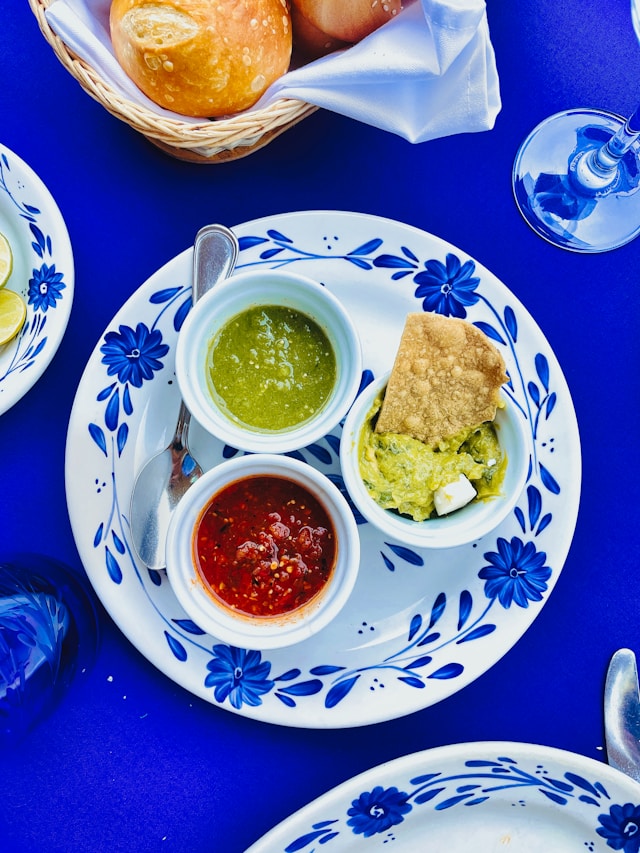


The short version: You can sell homemade salsa from home in some states, but not in most of the ones we checked: of the 13 states whose rules we read on October 6, 2026, 5 allow canned salsa from a home kitchen (Illinois, Minnesota, Pennsylvania, Texas and Wisconsin) and 8 do not. Where it is allowed, every jar has to reach a pH of 4.6 or lower, which means following a tested recipe such as the National Center for Home Food Preservation's Choice Salsa exactly (or, in some states, testing your own recipe at a lab or reading the pH of every batch) and processing the jars in a boiling water canner. A pint costs about $3.12 or a little more to make in ingredients, jar and label at August 2026 tomato prices, before your time, and salsa listings on Homegrown ask $7 to $20 a jar. Start with your state agency's page, one tested recipe and a pH log.
Checked October 6, 2026: the cottage food pages of the agriculture or health departments in California, Colorado, Florida, Georgia, Illinois, Michigan, Minnesota, New York, Ohio, Pennsylvania, Texas, Washington and Wisconsin; the NCHFP salsa recipes; BLS tomato prices; Walmart and Target supply prices; every salsa listing in the Homegrown catalog; and Homegrown's signup page ($10/mo billed annually or $12.50 monthly, 0% commission, card processing 2.9% + $0.30 paid by the vendor). Homegrown customers create an account to place their first order, and Homegrown has no drops or countdown release feature. Wisconsin's rules do not allow internet sales of home-canned salsa. Rules change, so verify your state's current rules with the agency before your first sale.
Everyone at the cookout says your salsa is the best they have ever had. Your neighbors ask for jars. Your coworkers want to buy it. At some point, you start wondering whether you could actually sell it.
You might be able to, and the answer depends more on your state than on your recipe. Salsa is one of the trickier homemade foods to sell legally, because it is mostly vegetables, and vegetables need added acid to sit safely on a shelf. Some states welcome home-canned salsa with a few rules. Others say no outright. In the states that say yes, the startup costs are low, and if you already make great salsa, you are closer to selling it than you think.
This guide covers everything you need to go from making salsa in your kitchen to selling it legally and profitably, including the food safety rules that are specific to salsa and the realistic costs of getting started. Every rule, price and catalog number below was loaded at its source on October 6, 2026, unless the sentence gives another date.
Yes in 5 of the 13 states we checked, and no in the other 8. Cottage food laws let you make and sell certain foods from your home kitchen without a commercial license, but each state writes its own list of allowed foods, and salsa is on far fewer lists than cookies or jam. Among the 13 states whose agency pages we checked that day, Illinois, Minnesota, Pennsylvania, Texas and Wisconsin allow canned salsa from a home kitchen, and California, Colorado, Florida, Georgia, Michigan, New York, Ohio and Washington do not.
The key factor is that salsa is an acidified food. It contains low-acid ingredients like onions and peppers that are made safe by adding an acid, usually bottled lemon juice, lime juice or vinegar. Federal rules define acidified foods as "low-acid foods to which acid(s) or acid food(s) are added" (21 CFR 114.3), and the safe line for a finished jar is an equilibrium pH of 4.6 or lower. Four of the 5 states that allow salsa add a rule about how you prove your jar stays under that line, through a tested recipe, a lab pH test, a pH reading of every batch, or a mix of these; Wisconsin recommends a pH test without requiring one. Our state-by-state look at whether you can sell homemade salsa quotes five of these states' rules in full (Texas, Wisconsin, Washington, California and Florida, checked September 23, 2026).
Before you start, check your state's cottage food laws to confirm that salsa is allowed in your state and understand any specific requirements.
Here is what each state's own page said on October 6, 2026:
Swipe left to see each state's rules.
| State | Canned salsa from your home kitchen? | Proof your jar is safe | Permit or registration | Yearly sales cap | Online orders |
|---|---|---|---|---|---|
| Illinois | Yes | A USDA or extension tested recipe followed exactly, or a commercial lab pH test of your own recipe filed with a Cottage Food Safety Plan (the plan is renewed yearly, and for tomato products like salsa the lab test is repeated every year, with later batches using the same tomato varieties as the tested one) | Register with your local health department ($0 to $50) | None | Yes, with shipping only inside Illinois |
| Minnesota | Yes, if the jar's pH is 4.6 or lower | A tested Extension or USDA recipe followed exactly, or test the pH yourself or at a lab | Yearly MDA registration after training ($0 up to $7,665 in sales, $50 above) | $78,000 | Yes, but the jars change hands in person inside Minnesota |
| Pennsylvania | Yes, as a registered Limited Food Establishment | Lab test of each recipe, then a pH log for every batch | PDA registration with a home kitchen inspection ($35, then $35 a year) | None stated | Yes, internet sales are included, but PDA's canning guidance lists internet sales under interstate sales, which may need FDA registration and a process authority review |
| Texas | Yes, as a "plant-based acidified canned good" | A recipe from a DSHS-approved source, a certified lab test or a process authority's approval (a process authority is a food safety expert who reviews your recipe and canning process), or else a calibrated pH meter reading of every batch; plus a batch number on every jar and a batch record kept 12 months | None required (food handler training is) | $150,000 | Yes, if you, an employee or a household member deliver it, and your label information is posted on your ordering page before the customer pays |
| Wisconsin | Yes, under the "Pickle Bill" | pH 4.6 or lower; a finished-product pH test is recommended | None | $5,000 | No internet sales |
| California | No: not on the Approved Cottage Foods list | n/a | n/a | n/a | n/a |
| Colorado | No: sauces and condiments are not eligible today | n/a | n/a | n/a | n/a |
| Florida | No: not one of the 12 approved product types | n/a | n/a | n/a | n/a |
| Georgia | No, per the agriculture department's FAQ | n/a | n/a | n/a | n/a |
| Michigan | No: "No fruit or vegetable salsas" | n/a | n/a | n/a | n/a |
| New York | No: "Sauces, salsas" are on the prohibited list | n/a | n/a | n/a | n/a |
| Ohio | No: no acidified foods | n/a | n/a | n/a | n/a |
| Washington | No: "Canned fruits, vegetables, vegetable butters, salsas" are not allowed | n/a | n/a | n/a | n/a |
Each row comes from that state's agency page, loaded October 6, 2026: the Illinois Department of Public Health and the University of Illinois Extension's 2024 Cottage Food Guide it links to, the Minnesota Department of Agriculture, the Pennsylvania Department of Agriculture's registration page and its canning guidance for Limited Food Establishments, Texas DSHS, Senate Bill 541 and the Texas cottage food rule (25 TAC §229.661), Wisconsin DATCP, CDPH, CDPHE, FDACS, the Georgia Department of Agriculture, Michigan MDARD, New York Agriculture and Markets, the Ohio Department of Agriculture and Washington's WSDA. Illinois's no-cap answer and fee range come from the Extension guide, which is guidance, not the statute.
A few things to verify for your own state:
Two of these states have announced changes. Colorado's "Tamale Act" (HB26-1033) starts January 1, 2027 and makes "Refrigerated Salsas and Hot Sauce (Tomatillo, Red salsa, Pico de Gallo)" eligible with yearly state registration and training, while "canned salsa" stays off the list. Minnesota's revisions take effect August 1, 2027, with one $30 yearly registration for everyone and shipping allowed inside Minnesota. Georgia's own pages also read differently: the agriculture department's FAQ says no to salsas, while the HB 398 text it posts (marked "Under Revision") lists dill pickles among allowed foods and never names salsa. If you are in Georgia, ask the department before you plan on selling salsa there.
Salsa falls into the acidified food category, which has stricter safety requirements than simple baked goods or dry mixes. The reason is that low-acid vegetables like onions and peppers can carry the spores that cause botulism, and those spores only stay harmless when the jar is acidic enough. The National Center for Home Food Preservation (NCHFP) puts it plainly: low-acid foods have pH values higher than 4.6, and most mixtures of low-acid and acid foods stay above 4.6 "unless their recipes include enough lemon juice, citric acid, or vinegar to make them acid foods."
This means you cannot just throw your ingredients together, can them, and sell them. You need to use a recipe that has been tested and verified to produce a safe pH level. You need to follow proper water bath canning procedures. And you need to understand why these steps matter, not just for legal compliance, but because improperly canned salsa can make people sick.
Tomatoes sit right on the line. The federal rule says "Tomatoes and tomato products having a finished equilibrium pH less than 4.7 are not classed as low-acid foods," and NCHFP notes that some tomatoes "are now known to have pH values slightly above 4.6," which is why even plain canned tomatoes get bottled lemon juice added. Washington's and Georgia's agencies give the same reason for saying no: cooked vegetables, "whether fresh or canned," are usually a mix of low-acid and acidified foods.
If you already sell hot sauce from home or pickles from home, the acidified food rules will feel familiar. Salsa follows the same food safety principles.
Texas's cottage food law now allows any food except meat, poultry, seafood, ice, low-acid canned goods, CBD or THC products and raw milk, so canned salsa qualifies as a "plant-based acidified canned good." Each batch needs its own number on the label and a record of that number, the recipe, the recipe's source or lab result, and the date it was made, kept for at least 12 months under 25 TAC §229.661. The Texas DSHS cottage food page lists the recipe sources it accepts: the USDA Complete Guide to Home Canning (2015), So Easy to Preserve (6th edition) and three named Ball books. Local health departments may not require a permit or charge a fee to sell directly to customers.
Fresh salsa is harder to sell from home than canned salsa: only Texas allows it today among the 13 states in our table. Fresh salsa and pico de gallo are cut tomatoes and vegetables held in the fridge, and agencies treat them as foods that need temperature control for safety. Minnesota's rule says that if a food needs refrigeration to stay safe, it does not qualify. Illinois lists "Cut or puréed fresh tomato" among foods a cottage food operation cannot make.
Texas is the exception. Since Senate Bill 541 took effect on September 1, 2025, as the Texas DSHS cottage food production page explains, a Texas cottage food operation may sell foods that need time and temperature control, as long as it:
Colorado joins the list on January 1, 2027, when its Tamale Act makes refrigerated salsa eligible for registered home cooks. Until then, a fresh salsa vendor in the other 12 states in our table needs a licensed kitchen, which the section on salsa manufacturing below covers.
Swipe across to compare fresh, canned and dry salsa.
| Type of salsa | How it is kept safe | States of the 13 that allow it from a home kitchen today |
|---|---|---|
| Canned salsa (sealed jar, shelf-stable) | Acid to pH 4.6 or lower, then a boiling water canner | 5: Illinois, Minnesota, Pennsylvania, Texas, Wisconsin |
| Fresh (raw) salsa, pico de gallo | Cold holding at 41°F or below | 1: Texas (registered); Colorado from January 1, 2027 |
| Dry salsa seasoning mix | Dry, no water for bacteria to grow | Allowed as a seasoning or spice mix in California and Florida; check your state's list |
From the agency pages loaded October 6, 2026: Texas DSHS, Colorado CDPHE's 2027 food eligibility page, Minnesota MDA, the Illinois Extension guide, the CDPH Approved Cottage Foods list and FDACS.
You need a tested recipe, a boiling water canner, canning jars, a way to check pH, labels, and whatever registration your state requires. Most home cooks already own some of the basic equipment. Here is what we priced on Walmart.com and Target on October 6, 2026:
Startup cost for gear and your first batch: about $97 to $131. That is the canner, the canning kit, a food pH meter, a 12-pack of pint jars, and the ingredients and labels for one 6-pint batch, added from the prices above in our cost script. The ingredients and labels are counted by what one batch uses, so buying whole bags, bottles and a pack of labels costs more on the first day. Then add your state's costs: nothing in Wisconsin or Texas beyond Texas's required food handler training, $0 or $50 a year in Minnesota depending on your sales, plus a paid food safety course every three years once sales top $7,665, $35 a year plus lab tests in Pennsylvania, and in Illinois up to $50 to register plus a Certified Food Protection Manager course that the Extension guide puts at $100 to $300. You are not starting a factory. You are selling your salsa at the farmers market.
Slide the table to see each low and high price.
| Item | Price we found | Where | Low end | High end |
|---|---|---|---|---|
| Water bath canner, 21.5 qt with rack | $28.72 to $49.94 | Walmart.com | $28.72 | $49.94 |
| 18-piece canning kit (jar lifter, funnel) | $19.99 regular | Walmart.com | $19.99 | $19.99 |
| Food pH meter | $23.03 to $35.99 | Walmart.com | $23.03 | $35.99 |
| Ball 16 oz jars, 12-pack | $13.49 regular | Target | $13.49 | $13.49 |
| First batch of Choice Salsa ingredients (about 6 pints) | $11.78 | BLS and Walmart.com | $11.78 | $11.78 |
| Six 2 by 4 inch labels | 3 cents each | Walmart.com | $0.19 | $0.19 |
| Total before state fees | $97.20 | $131.38 |
Prices loaded October 6, 2026 on Walmart.com and Target (Atlanta Perimeter store) at regular price; tomato cost from the Bureau of Labor Statistics August 2026 average. Your local prices will differ. The ingredient line is worked out in the pricing section below.
No, not in Illinois, Minnesota, Pennsylvania, Texas or Wisconsin, the five states in our table where home-canned salsa is legal. That is the whole point of cottage food exemptions: they remove the commercial kitchen requirement for small-scale vendors. Pennsylvania is the one of those 5 that sends an inspector to your home kitchen before you can sell, and Illinois's guide says your local health department may inspect.
In the other 8 states we read, salsa has to come from a licensed food business today, and a rented commercial kitchen is only part of that. Washington's and Georgia's agencies both say "Manufacturers of cooked vegetable products like salsas and tomato sauces must meet significant federal and state training and licensing requirements." Some states also require a food safety course for anyone making salsa at home: Illinois requires the Certified Food Protection Manager certification for the operator and everyone who prepares or packages the food, Texas requires an accredited food handler course, and Minnesota requires its own training before you register.
Check whether you need a license to sell food from home in your state. If your state does not allow home-canned salsa, ask your agriculture department what license a shared commercial kitchen would need, and get hourly quotes from kitchens near you before you count on that route.
You can go from family recipe to first sale in seven steps, and the state check comes first because it decides everything else. Here is the order that saves the most wasted work:
Ready to take salsa orders between market days? If your state allows online orders, a Homegrown storefront lets regulars pick a heat level and pay before pickup. Set up your Homegrown storefront for $10 a month billed annually, with 0% commission and standard payment processing.
Start with a tested recipe from a trusted source and follow it exactly. Do not use your grandmother's recipe as-is unless it has been tested for safe pH levels. The difference between salsa you eat fresh at home and salsa you sell in sealed jars is shelf stability, and that depends entirely on proper acidity. NCHFP's rule for salsa is blunt: "Do not can salsas that do not follow these or other research tested recipes. (They may be frozen or stored in the refrigerator.)"
Safe salsa for selling follows these rules:
The lemon juice in a salsa recipe is not a flavor choice. NCHFP tested Choice Salsa with 1 1/2 cups of bottled lemon or lime juice for 6 cups of tomatoes and 9 cups of onions and peppers, and warns "do not substitute vinegar for the lemon or lime juice." It also says: "Do not use bottled key lime juice." Fresh-squeezed lemons are not a stand-in either, because the recipe calls for commercially bottled juice to standardize the acid.
Test the pH of a cooled, sealed jar, not the salsa in the pot. Pennsylvania's guidance says to measure once "the containers have cooled to room temperature and stabilized," and warns that a reading "just before or right after canning" will not be accurate, because the pH of the vegetables and the liquid needs time to even out. You have three options:
Pennsylvania's rule for registered home kitchens shows how the pH number changes what you have to do:
Swipe to read what each pH range requires.
| Finished pH of your salsa | What Pennsylvania requires on every batch |
|---|---|
| 4.0 or below | A calibrated pH meter or pH strips (a meter if the color hides the strip reading) |
| Above 4.0 up to 4.2 | A calibrated pH meter, every batch |
| Above 4.2 up to 4.6 | A calibrated pH meter every batch, plus a process authority's review (USDA recipes and Ball recipes from after 1994 are exempt if you change nothing) |
| Above 4.6 | Not allowed: "No product may ever enter commerce if a final pH is found to be >4.6" |
From the Pennsylvania Department of Agriculture's "Canning of Acid, Acidified, Fermented Foods and Beverages: Guidance for PA Limited Food Establishments" (rev. 12/2023), loaded October 6, 2026. Other states set their own rules; Minnesota, for example, says a tested Extension or USDA recipe followed exactly needs no pH test.
If your pH reading is above 4.6, do not sell that batch, and do not try to rescue it by stirring in more vinegar. If the jars have already sat at room temperature, treat them as unsafe and discard them the way NCHFP describes for suspect jars, without tasting. Then go back to the tested recipe and check what changed. Do not sell salsa with a pH above 4.6. This is not negotiable; it is a food safety issue.
A pH reading checks one batch; it does not prove your whole process, such as the heat time and jar size, is safe. That is the job of a tested recipe or a process authority's review, which is why Illinois, Minnesota, Pennsylvania and Texas each name tested recipes, lab tests or a process authority in their rules. Keep a log of your pH readings for each batch. Pennsylvania requires production date, batch number, pH and meter calibration records, and Texas requires a record of every batch kept for at least 12 months. Even if your state does not, it protects you and shows customers you take safety seriously.
Fifteen minutes for pints at up to 1,000 feet above sea level, for 5 of the 6 NCHFP salsa recipes below; only Choice Salsa is also tested in half-pints at that time. The time goes up as you go higher, because water boils at a lower temperature:
After processing, NCHFP says to let the jars cool undisturbed for 12 to 24 hours, then check the seals. Any jar that did not seal goes in the fridge for your own table, not on your booth table.
Price a pint at $10 or more if you want to be paid for your time; at $8 you fall 12 cents short of covering materials plus two hours of work at $15 an hour. Vendors on Homegrown ask anywhere from $7 to $20, and the cost math below shows why the low end is thin.
Here is how to calculate your price, using NCHFP's Choice Salsa (about 6 pints a batch) and prices loaded October 6, 2026:
Start with your ingredient cost per jar. A batch uses 6 cups of peeled, cored, seeded and chopped tomatoes (we estimate at least 3 pounds as purchased: NCHFP's Peach Apple Salsa gets 6 cups from about 3 pounds of Romas that are peeled and chopped but not seeded, so seeded tomatoes take more), 9 cups of onions and peppers, 1 1/2 cups of bottled lemon juice and 3 teaspoons of canning salt. At the Bureau of Labor Statistics' August 2026 average of $1.977 a pound for tomatoes and Walmart.com prices for the rest, the batch costs $11.78, or $1.96 a pint.
Add your packaging cost. A Ball 16 oz jar with a two-piece lid is $1.12 at Target's regular 12-pack price, and a printed 2 by 4 inch label adds about 3 cents. Total packaging: about $1.16 per jar.
Calculate your total cost per jar. Ingredients ($1.96) plus packaging ($1.16) equals about $3.12 per pint. Treat that as a floor: each extra pound of tomatoes your batch takes adds about 33 cents a pint.
Apply a markup. If you price with a 2.5x to 3x markup on your cost, the math looks like this. At 2.5x, a $3.12 cost becomes a $7.80 selling price; at 3x it is $9.36. Then check your time: if a batch takes you 2 hours and you pay yourself $15 an hour, that adds $5 a pint, and a $10 pint leaves you $1.88 after materials and time, before any card fee ($0.59 on a $10 pint through Homegrown; cash sales skip it). At 4 hours a batch, your time alone is $10 a pint.
Scroll right for the per-pint column.
| Line | Amount in one batch (about 6 pints) | Price loaded October 6, 2026 | Batch cost | Per pint |
|---|---|---|---|---|
| Tomatoes | About 3 lb as purchased (our low estimate) | $1.977/lb (BLS, August 2026) | $5.93 | $0.99 |
| Onions | 4.5 cups, about 1.8 lb | $2.64 for a 3 lb bag | $1.58 | $0.26 |
| Bell peppers | 4.5 cups, about 3.4 peppers | $0.86 each | $2.90 | $0.48 |
| Bottled lemon juice | 1 1/2 cups (12 fl oz) | $3.57 for 32 fl oz | $1.34 | $0.22 |
| Canning salt | 3 teaspoons (about 18 g, our estimate) | $2.68 for 4 lb | $0.03 | under 1 cent |
| Pint jar with lid and band | 1 per pint | $13.49 for 12 | $1.12 | |
| Label | 1 per pint | $31.86 for 1,000 | $0.03 | |
| Total materials | $11.78 ingredients | $3.12 | ||
| Your time (example: 2 hours at $15/hour) | $30.00 | $5.00 | ||
| Total with time | $8.12 |
Our assumptions, labeled: 6 cups of peeled, cored, seeded tomatoes take about 3 pounds as purchased, a low estimate borrowed from NCHFP's Peach Apple Salsa, whose Romas are not seeded; the recipe's 9 cups of onions and peppers split evenly between onions and green bell peppers; 3 teaspoons of salt weigh about 18 g; a batch takes 2 hours. NCHFP's conversions: 2 1/2 cups diced onion is about 1 pound, 2 cups chopped bell pepper is about 1 1/2 large peppers. Lines are rounded; totals are worked out from unrounded numbers in one script.
For more detailed pricing strategies, see our guide to pricing food products for farmers markets.
Common price points on Homegrown, from the 20 salsa listings in our October 6, 2026 catalog pull:
An example bundle, made up for illustration and not taken from the catalog: when one jar is $9, list a 3-jar bundle as its own product at $25.
A mixed bundle lets a customer try several heat levels or flavors in one order. In a batch of Choice Salsa, tomatoes are at least half the ingredient cost (50% with 3 pounds of tomatoes, the low end of our estimate, at August 2026 prices), but the jar and your hours at the stove are why a pint of homemade salsa should sell for about $10. That pricing guide puts a pint at $4.28 to make for three reasons: it costs a different recipe, NCHFP's paste tomato salsa; it uses a different tomato estimate, 3 pounds per quart of chopped tomatoes, or about 21 pounds for 17 pints (about 1.2 pounds a pint), where this article counts 3 pounds per 6 cups (half a pound a pint); and it uses an 8-cent round label instead of a 3-cent one. At the guide's 3 pounds a quart, this batch would take about 4.5 pounds of tomatoes and cost about $3.61 a pint, so weigh your own batch; the $3.12 in this article is for Choice Salsa, at the same August 2026 tomato price.
What a pound of tomatoes cost in 2026 (US city average)
Source: Bureau of Labor Statistics average price series APU0000712311, tomatoes, field grown, per pound, pulled October 6, 2026. August is the latest month published.
At April's $2.689 a pound the same pint costs $3.48 to make, and at January's $1.791 it costs $3.03. That 45-cent swing is why buying tomatoes in the cheaper months, or growing your own, matters more than shaving a few cents off jars.
Homemade salsa on Homegrown is listed at $7 to $20 a jar, with listed pints between $8 and $18 and one vendor's raw avocado salsa, in jars up to 1.5 lb, at $20. A grocery store jar is much cheaper: Pace Chunky Medium Salsa was $2.97 for 16 oz on Walmart.com on October 6, 2026, about 19 cents an ounce, while a $10 homemade pint works out to about 63 cents an ounce, roughly 3.4 times as much. Your customers are not paying for salsa in general. They are paying for your recipe, your local tomatoes and the fact that they met you.
In a pull of the Homegrown catalog on October 6, 2026, 20 of the 2,893 products, from 8 of the 311 vendors, were salsa listings. We counted any product whose name, description or size options named salsa, salsa verde or pico de gallo, set aside the peppers, pepper and tomatillo plants, tomatoes, dried cilantro and seasoned salt whose descriptions only mentioned salsa as a use, then read every product of each counted vendor to catch salsas listed under another name (we found none). One vendor lists its salsas as options inside a single "Canned Goods" listing, and we counted that as one. Not every listing is a canned salsa: six, from one vendor at $7.49 with no jar size given, are listed as ready-to-eat food and described as fresh, and the four $20 listings describe a raw salsa with avocado and limes. Listed prices ran from $7 for a 15 oz jar to $20 for a 16 oz to 1.5 lb jar. A listed price is what a vendor asks, not proof of a sale. One more vendor sells a dry salsa and dip seasoning mix at $14, which we did not count as salsa.
What the 20 listings say about what salsa vendors offer:
Your label needs the product's name, the ingredients, who made it and where, and your state's exact home kitchen statement if it has one; Pennsylvania, which inspects your kitchen instead, asks for how much is in the jar and a lot code. Wisconsin's rule, for example, lists 4 required parts: the canner's name and address, the date of canning, its home kitchen statement, and the ingredients with any major allergens named. Printed on 2 by 4 inch Avery labels, all of it costs about $0.03 a jar. Minnesota's guidance says the department investigates complaints about labeling, among its other rules, and that actions "may include inspection, written notice, penalties, or prosecution." Illinois, Minnesota, Texas and Wisconsin each word their home kitchen statement differently, and Pennsylvania's pages give none.
Every salsa label needs:
Wisconsin and Minnesota also require a sign at your booth. Wisconsin's sign reads "These canned goods are homemade and not subject to state inspection." Minnesota's sign uses the same words as its label statement above, and Minnesota also asks you to post it on any website you sell from. Illinois wants its statement on your online ordering page too, and Texas wants all of your label information posted on your ordering page before a customer pays. For a complete breakdown of what goes on a cottage food label, see our guide to cottage food labeling requirements.
Package salsa in 8 oz or 16 oz glass canning jars with two-piece lids, because NCHFP tested Choice Salsa in half-pint and pint jars and its processing times were written for them. A 12-pack of Ball pint jars with lids and bands was $13.49 at Target on October 6, 2026. The right packaging protects your salsa, meets food safety requirements, and makes your product look professional on the shelf or booth table. Pennsylvania's guidance lets USDA and post-1994 Ball recipes skip a process authority review only when nothing changes, "including container size and type."
Jar options:
Lid options:
Label tips:
For more packaging ideas, check our guide to food packaging for farmers market vendors.
Farmers markets are the best starting point, and in Wisconsin they are 1 of only 3 kinds of places you may sell home-canned salsa, alongside community or social events and flea markets, with sales capped at $5,000 a year. You get face-to-face interaction with customers, instant feedback on your flavors, and the ability to offer samples, so customers can taste a heat level before they buy a jar.
Best places to sell salsa:
Where you cannot sell matters as much. No salsa-friendly state in our table lets you mail it to a customer in another state on a home kitchen registration alone: Pennsylvania covers internet sales but warns that an out-of-state sale can bring in FDA registration, Illinois allows shipping only inside Illinois, Minnesota allows no shipping of home-canned food until August 1, 2027 (and then only inside Minnesota), Texas wants you, an employee or a household member to deliver it, and Wisconsin allows no out-of-state sales. Stores are mostly off the table too: Illinois says cottage food is "not for resale," Minnesota's registration card now reads "Products cannot be resold," Wisconsin rules out wholesale and consignment, and Texas allows store sales only through a registered cottage food vendor. Pennsylvania is the exception: its registration page says some retail stores may carry a registered Limited Food Establishment's products if they meet labeling requirements.
Yes, wherever home-canned salsa is legal in our table, and farmers markets are a venue all 5 accept. Wisconsin names farmers markets among only three places you may sell, Minnesota allows sales at farmers markets and community events, Illinois's guide lists farmers markets as a sales avenue, Pennsylvania's page says that once registered "you may sell at farmers markets, community events, roadside stands, and directly to consumers," and Texas lets you sell directly to consumers at the point of sale. The market itself adds its own rules on top of the state's.
Before your first market day, check these:
Under the "Pickle Bill" you need no license to sell home-canned salsa with a pH of 4.6 or lower, but you may sell only at community or social events, flea markets or farmers markets in Wisconsin, never from your home, wholesale, on consignment, over the internet or out of state, and no more than $5,000 a year per person. Wisconsin DATCP's home-canned foods page lists "salsas and chutneys" as allowed examples.
Know your cap in jars, not dollars. At $10 a pint, Wisconsin's $5,000 cap is 500 pints a year, about 10 a week, while Minnesota's $78,000 is 7,800 pints and Texas's $150,000 is 15,000. If you are in Wisconsin and your booth sells 20 pints a market day, you hit the cap after 25 markets, so price for the jars you are allowed to sell.
Give your regulars one ordering page where they pick a salsa and a heat level, pay ahead, and collect the jars at your booth or your door, as long as your state allows online orders. Salsa takes planning: a batch takes an afternoon, and NCHFP says the jars should cool undisturbed for 12 to 24 hours before you check the seals. When regulars text "do you have the hot one this week?" between markets, you end up holding jars for people who may not show, or canning a batch nobody pre-paid for.
Homegrown is $10 a month billed annually ($12.50 billed monthly) with no percentage fees beyond standard payment processing, and gives you a storefront where customers browse your salsa varieties, place orders, and pay ahead for pickup at your booth or porch. That lets you can to the orders you already have. Compare it with the other ways salsa vendors take money:
What helps a salsa vendor most: pickup-first checkout with your own pickup days, local delivery inside a radius you set (useful in Texas and Minnesota, where you or an employee, or in Texas a household member, hand over the jars), sales tax calculated and remitted for you, and your home address kept to an approximate location on the storefront. What Homegrown does not do: it does not ship salsa, check your state permit or test your pH, and it has no drops or countdown release feature. Your customers make a Homegrown account the first time they order. Your storefront is listed on Homegrown's local marketplace, but plan on most orders coming from people you send to your own link. In Wisconsin, where internet sales of home-canned salsa are not allowed, an online store is not an option for Pickle Bill salsa at all.
Here is the full fee stack on a $20 order of two $10 pints, and on a month of 50 such orders:
Swipe across for every fee in each platform's stack.
| Platform | Subscription | Trial | Platform fee | Card processing | Customer pays on a $20 order | You pay on a $20 order | You pay on 50 orders a month |
|---|---|---|---|---|---|---|---|
| Homegrown (annual) | $10/mo billed annually | 7 days, no charge until day 8 | $0 (0% commission) | 2.9% + $0.30, paid by you | $20.00 | $0.88 | $54.00 ($44.00 fees + $10) |
| Homegrown (monthly) | $12.50/mo | 7 days, no charge until day 8 | $0 (0% commission) | 2.9% + $0.30, paid by you | $20.00 | $0.88 | $56.50 ($44.00 fees + $12.50) |
| Etsy | $0 (Etsy Plus optional, $10/mo) | n/a | $0.20 per listing sold + 6.5% transaction fee | 3% + $0.25 | $20.00 plus any shipping | $2.55 | $127.50 |
| Square (Free plan, online) | $0/mo | n/a (paid plans have 30 days) | $0 | 3.3% + 30¢ online | $20.00 | $0.96 | $48.00 |
| Venmo (business profile) | $0 | n/a | $0 | 1.9% + $0.10 | $20.00 ($20.60 if paid by credit card) | $0.48 | $24.00 |
Checked on each company's own page on October 6, 2026: Homegrown's signup page, Etsy's Fees and Payments Policy and Etsy Payments Policy (United States rate), Square's payments fee page, and Venmo's fee page. Etsy's listing fee assumes two pints from one multi-quantity listing, which renews at $0.20 after each item sells; Etsy may also charge a one-time shop setup fee and a 15% Offsite Ads fee on orders it attributes to its ads, which are not in this table. Venmo's 1.9% + $0.10 is for payments sent to a business profile; Tap to Pay payments at a booth are 2.29% + $0.09, and Venmo charges the customer a 3% fee when they pay with a credit card. Fees are worked out in one script from the published rates.
On fees alone, Venmo and Square's free plan cost less than Homegrown at 50 orders a month, and Etsy costs more than twice as much. What the $10 buys is the ordering page itself: flavors, heat levels and pickup times in one place, paid before you can the batch. Once your state's rules check out, you can start your Homegrown salsa storefront and send the link to the people who keep asking for jars.
Stand out with flavors your competitors cannot copy from the grocery shelf, samples, and a clear heat scale, while staying inside tested recipes. On Homegrown, 4 out of 8 vendors selling salsa already offer a ladder of 3 or more heat levels, so a heat scale alone will not set you apart. The question is not whether there is competition; it is how you make yours different enough that customers choose yours and come back for more.
Ways to differentiate your salsa:
We could not find a public, sourced figure for what a salsa manufacturing plant costs, and any number depends on the building, the equipment and the state. What we can tell you is what a licensed salsa business has to do that a cottage food vendor does not, because those steps are the real cost of moving out of your kitchen.
A commercial salsa business, called an acidified food processor in federal rules, has to:
Pennsylvania's guidance also notes that acidified food processors "must register their process with the FDA if they will be conducting interstate commerce." That is the line most home vendors never need to cross: selling inside one state at markets and through local pickup.
Two cheaper routes sit between your kitchen and your own plant:
Get quotes from co-packers and kitchens in your state before you plan on either, and ask your agriculture department which license applies.
Most salsa mistakes come down to two things: skipping the state check and changing a tested recipe. Starting a salsa business is straightforward, but these mistakes trip up new vendors:
For best quality, use properly canned salsa within a year. NCHFP's storage advice is to keep sealed jars in a clean, cool, dark, dry place between 50 and 70°F and to "can no more food than you will use within a year," and never to store jars above 95°F. Once opened, the jar goes in the refrigerator; NCHFP's Choice Salsa recipe says to refrigerate canned salsa once a jar is opened. Always include a "refrigerate after opening" note on your label to protect your customers and your reputation.
Not as a cottage food product across state lines on a home kitchen registration alone, in any of the 5 salsa-friendly states in our table. Pennsylvania's registration covers internet sales, and its page says interstate sales may need FDA registration too. Illinois allows shipping only inside Illinois, Texas wants you, an employee or a household member to deliver it, Wisconsin bans internet and out-of-state sales, and Minnesota bans shipping human cottage foods until August 1, 2027, when shipping inside Minnesota begins. Selling salsa across state lines takes more than a home kitchen registration: Pennsylvania's page says you may need FDA registration, and acidified food processors in interstate commerce register their process with the FDA. Start with local sales and explore shipping later if your business grows. If you deliver jars yourself, pack them upright in a box with dividers or towels so they do not knock together.
Your state's cottage food sales cap determines the maximum. In the 5 states we found that allow home-canned salsa (Illinois, Minnesota, Pennsylvania, Texas, Wisconsin), the yearly cap is $5,000 in Wisconsin, $78,000 in Minnesota and $150,000 in Texas, while Illinois has no cap and Pennsylvania's registration page states none. At $10 a pint, that is 500 pints a year in Wisconsin, 7,800 in Minnesota and 15,000 in Texas. Filling the Texas cap at $10 a pint takes about 288 pints a week, so for most home kitchens the real limit is how many batches you can can.
None of the 13 state pages we read lists insurance as a requirement for a cottage food business, but a farmers market can ask for it in its vendor rules. New York's page says the department "does not mandate you to obtain insurance," and Colorado's 2027 FAQ calls it "highly recommended." The Food Liability Insurance Program's FLIP Pro general liability plan for food vendors was listed at $25.92 a month, or from $299 a year, on October 6, 2026. Even if it is not required, insurance protects you if a customer has an allergic reaction or claims your product made them sick.
You can sell salsa online in 4 of the 5 states we read that allow it. Illinois, Minnesota and Texas keep those sales inside the state, and Pennsylvania's registration includes internet sales, with FDA registration possibly needed for buyers in other states. For salsa, PDA's canning guidance treats internet sales as interstate sales that may need FDA registration, so ask your PDA inspector before you list online. Illinois's guide says you can sell through Etsy if sales stay inside Illinois, while Wisconsin bans internet sales of home-canned foods outright. Etsy charges $0.20 per listing, a 6.5% transaction fee and 3% + $0.25 for payment processing, which is $2.55 when a $20 sale is two pints, counting a $0.20 listing renewal for each pint sold, and cuts into margins on a $10 pint of salsa. For local sales, an ordering page built for local food vendors usually costs less and is designed for local pickup orders rather than shipping.
A ladder of heat levels is the most common lineup among salsa vendors on Homegrown. In our October 6, 2026 catalog pull, 4 of the 8 salsa vendors sold the same salsa in three or more heat levels, 3 sold a tomatillo or green salsa and 2 sold a fruit salsa, mango or peach. Vendors who offer three to four varieties, such as a mild, a medium, a hot and a specialty, give customers a reason to mix and match. For canned salsa, pick your specialty from a tested recipe such as NCHFP's mango, peach apple or spicy cranberry salsa.
A pint of homemade tomato salsa costs about $3.03 to $3.48 to make, counting ingredients, jar, lid and label, depending on the month you buy tomatoes, at our low estimate of 3 pounds of tomatoes a batch; each extra pound adds about 33 cents a pint. That range uses NCHFP's Choice Salsa, 2026 national tomato prices from January's low to April's high, and Walmart and Target prices for everything else, checked October 6, 2026. At a selling price of $9 a jar, your profit before your time and any card fees is $5.52 to $5.97, a margin of 61% to 66%; at $10 it is $6.52 to $6.97. Your time is the biggest cost after that, so count it before you set a price.
A jar of salsa you sell needs a finished equilibrium pH of 4.6 or lower in every state in our table that allows it. Pennsylvania's guidance sets 4.2 or lower as a safer target and requires a pH log for every batch, and commercial processors must read the pH with a meter when it lands above 4.0. Measure a cooled, sealed jar, not the hot salsa in the pot. If you follow a tested recipe exactly, Minnesota does not require a pH test, but your log is still your best proof.
More on selling salsa and other jarred foods from home:
You probably already have the recipe, much of the equipment, and the customers; you just need to check your state's rules, switch to a tested recipe, log your pH, and show up at your first market with samples, labeled jars and the batch log behind them.
Start small. Bring 20 jars to your next farmers market. Let people taste it. See what happens. Selling out of a small first batch tells you which heat levels to make next, and regulars who loved a jar are the ones who will ask when they can order more.
Set up an ordering page and start taking salsa orders before your next market day. A Homegrown storefront is $10 a month billed annually with 0% commission, plus standard payment processing.



