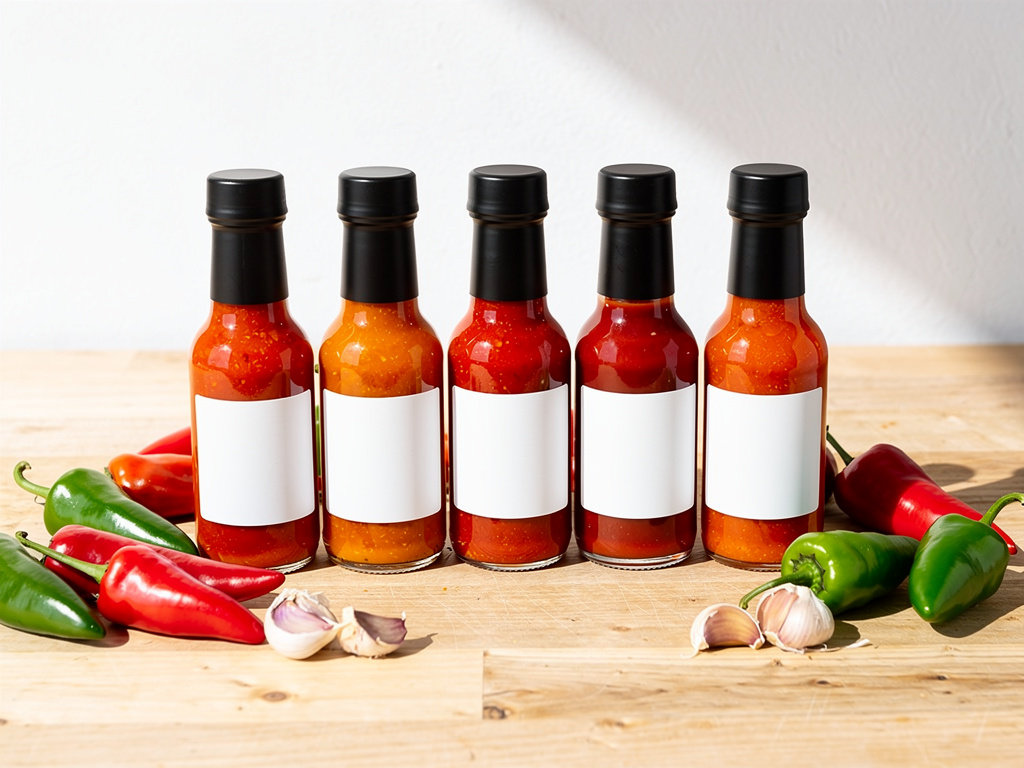


The short version: You can sell homemade hot sauce, but most bottled hot sauce is an acidified food (peppers made shelf-safe by adding vinegar until the finished sauce sits at pH 4.6 or below), so your state decides whether your home kitchen counts. Of the 7 state agency pages we read, Texas and Minnesota give a vinegar hot sauce a home-kitchen path, Wisconsin is unclear, and Washington, Ohio, Florida and California say no, which leaves a licensed kitchen or a co-packer. On any path, test every batch with a calibrated pH meter, label every bottle, and price a bottle in the $8 to $15 range that the 6 bottled hot sauces on Homegrown were listed at on October 12, 2026. The bottle, cap, pour insert and waterproof label cost about $0.86 a bottle at the supplier prices we loaded, so your recipe and your time are the real costs.
Checked on the Texas DSHS, Minnesota MDA, Wisconsin DATCP, Washington WSDA, Ohio ODA, Florida FDACS and California CDPH pages, 21 CFR Parts 108 and 114 on eCFR, and Homegrown's signup page, October 13, 2026. Rules change, so verify your state's current rules with its agency before you sell. This guide is not legal advice. Homegrown takes orders for pickup and local delivery; it does not ship, test your sauce or make it legal to sell. Customers create a Homegrown account to place a first order, and Homegrown has no drops or countdown-release feature.
You've been making your hot sauce for years. People keep asking for bottles. Someone offered you $20 for a jar of it. When you finally looked into how to sell it, you hit a wall: cottage food laws, FDA regulations, pH testing, acidified foods. It got complicated fast.
Selling hot sauce isn't quite like selling jam or honey. There are real differences in what's required and why. But the path is knowable, the compliance steps are manageable, and there are real numbers for every step: what a pH meter costs, what a process review costs, what a bottle costs, and what small-batch sauce sells for.
This guide covers what the rules actually are, what you need to do to comply with them, how to label and bottle your sauce, what to charge, and where to sell it. If you only need the legal answer for your state, our guide to whether you can sell homemade hot sauce in your state quotes each agency. This page is the practical half: making, bottling, pricing and selling.
You start by finding out which kitchen your state lets you use, then you lock one recipe, prove its pH, label it, price it and sell it to the people already asking. Most people try to do these in the wrong order (labels first, legal check last), and that is how a vendor ends up with 200 printed labels for a sauce their state won't let them sell from home.
Here is the order that wastes the least money:
The rest of this guide walks through each step with the actual rules and prices.
Most bottled hot sauce is classified as an acidified food, a pepper sauce brought to pH 4.6 or below with added acid, which means it faces stricter regulation than naturally high-acid or raw agricultural products. A sauce soured only by fermentation (NC State's food business FAQ says traditionally fermented foods are exempt from acidified food regulations), a sauce kept under refrigeration, or a mostly-vinegar condiment sauce can fall outside the federal rule, and a process authority decides which side your recipe lands on. Knowing this upfront explains every rule that follows.
Honey is a raw agricultural product. Jam is a naturally high-acid food, and the federal acidified food rule leaves it out by name. That is why jam gets an easier path under most home kitchen laws: the biology works in your favor.
Hot sauce is different. It's what the FDA classifies as an "acidified food." The federal definition in 21 CFR 114.3, which we read on eCFR on October 13, 2026, calls acidified foods "low-acid foods to which acid(s) or acid food(s) are added," and it lists "peppers" among the examples. To count, the food is wet (a water activity above 0.85) and has a finished equilibrium pH of 4.6 or below. "Finished equilibrium pH" just means the pH once the pepper bits and the liquid in the bottle have evened out.
The 4.6 line matters because of botulism. The National Center for Home Food Preservation at the University of Georgia teaches that foods above pH 4.6 are not acidic enough to stop the bacteria that cause it. If a batch isn't acidified correctly, a sealed bottle on a shelf is exactly where those bacteria can grow. That is the risk every hot sauce rule is written to stop.
What this means practically:
This doesn't mean you can't sell your hot sauce. It means the path requires a few additional steps compared to jam or honey. Work through those steps for your state and you have a legal path to sell.
Yes in Texas and Minnesota, no in Washington, Ohio, Florida and California, and unclear in Wisconsin. We loaded 7 state agency pages on October 13, 2026: two of them give a shelf-stable vinegar hot sauce a path from a home kitchen, one leaves the question open, and four keep it out of their home kitchen programs. Cottage food law is the name for the state rules that let you sell certain low-risk foods made in your home kitchen without a commercial license.
Scroll sideways to see every column.
| State | Home-made hot sauce allowed? | Yearly sales cap | What the agency page says | Where you can sell |
|---|---|---|---|---|
| Texas | Yes | $150,000 gross income | Allowed foods are "any foods, except" a short list; low-acid canned goods are on that list, plant-based acidified canned goods are not, and they need a batch number | Direct to consumers, or wholesale (not TCS foods) to a cottage food vendor registered with DSHS; online only when you, an employee or a household member personally delivers |
| Minnesota | Yes, as a home-canned vegetable at pH 4.6 or lower; confirm with MDA | $78,000 | Allows "home canned pickles, vegetables, or fruits with a pH of 4.6 or lower"; MDA's acidified foods page lists hot sauces by name | From home, farmers markets, community events or online, with you or your employee present at sale or delivery; no shipping of food for people |
| Wisconsin | Unclear; ask the state | $5,000 per person | Allows "salsas and chutneys" at pH 4.6 or lower but never names hot sauce, and "dressings" need a license regardless of pH | Only community or social events, flea markets and farmers markets in Wisconsin; no internet sales |
| Washington | No | Not applicable to hot sauce | Prohibits canned salsas, "food products made from fresh fruits or vegetables" and "barbeque sauces, ketchups, or mustards" | Licensed kitchen or co-packer only |
| Ohio | No | Not applicable to hot sauce | A cottage food operation "is not permitted to process acidified foods" | Licensed kitchen or co-packer only |
| Florida | No | Not applicable to hot sauce | Hot sauce is not on the approved list; "vinegar and flavored vinegars" are | Licensed kitchen or co-packer only |
| California | No | Not applicable to hot sauce | Hot sauce is not on the Approved Cottage Foods list (last reviewed April 2026); the closest category is "Vinegars and Mustards" | Licensed kitchen or co-packer only |
We loaded the Texas DSHS, Minnesota MDA, Wisconsin DATCP, Washington WSDA, Ohio ODA, Florida FDACS and California CDPH pages on October 13, 2026. Seven states is not every state; your state may sit in either group.
Two things in that table catch people out. First, an allowed-list state (Florida, California) is a firmer no than it looks, because anything not written on the list is out. An exclusion-list state like Texas works the other way: anything not on its short exclusion list is in. Second, the 3 states that may allow a home hot sauce all limit where it can go. None of the 3 lets you ship a bottle from a home kitchen today, and Wisconsin bans internet sales outright.
Minnesota's rules are changing. Its registration page, checked October 13, 2026, says revisions take effect August 1, 2027: one registration tier, a $30 yearly fee for everyone, "allowed shipping," and advanced training for all registrants. Until then, the current tiers apply: $0 and a yearly online training up to $7,665 in sales, and a $50 fee with a food safety course every three years from $7,666 to $78,000.
The Texas cottage food rule, 25 TAC §229.661(f), says that before you sell pickled fruit or vegetables, fermented vegetable products or plant-based acidified canned goods (a vinegar hot sauce or a fermented one), you use a recipe from a DSHS-approved source, a recipe a certified lab tested at pH 4.6 or less, or one a process authority approved. Otherwise you "test each batch of the recipe with a calibrated pH meter." You also label each batch with a unique number and keep the batch record for at least 12 months. We read the rule and the DSHS page on October 13, 2026. DSHS also says it "will adopt rules" to implement SB 541, the law behind the $150,000 threshold that local health entities had to follow from September 1, 2025, so check its page again before your first sale.
For the full state-by-state wording, including the label statements and caps, our state guide to selling homemade hot sauce quotes each agency. If your state is not one of these 7, start with our cottage food laws by state guide, then read your own agency's page for the word "acidified."
You have three production paths: your home kitchen (only if your state's cottage food law allows hot sauce), a licensed commercial kitchen, or a co-packer. Before you sell a single bottle, know which legal category applies to you, because each one comes with a different set of costs and paperwork.
Cottage food (home kitchen): Check your state's specific law. Some states allow vinegar-based hot sauces under cottage food. Others explicitly exclude all acidified foods. Look at your state's list of permitted foods and see if hot sauce, acidified foods, canned vegetables or fermented products are included or excluded. Seven states' answers, from Texas's $150,000 yes to Washington's flat no, are quoted from each agency and dated in our guide to whether you can sell homemade hot sauce in your state.
Licensed kitchen: If your state excludes hot sauce from cottage food, you'll need to produce in a licensed commercial kitchen. Many cities and towns have shared-use commercial kitchens you can rent by the hour or on a monthly plan. Food business incubators, community centers, and culinary schools often have licensed kitchen space available. Renting the kitchen is only part of it: making an acidified food commercially also brings the federal registration, process filing and training covered in the permits section below.
Co-packer: A co-packer is a licensed commercial food production facility that makes your product under your recipe and puts your label on it. You provide the recipe; they do the production in a compliant kitchen, usually under their own registration and their own trained supervisor. More on this in a dedicated section below.
Production path comparison:
Swipe left to compare the three paths.
| Path | Best for | What it costs (examples we loaded) | Smallest run |
|---|---|---|---|
| Cottage food (home kitchen) | Local sales in a state that allows it | Ingredients, packaging (about $0.86 a bottle) and a pH meter ($72 for Apera's PH20 kit) | No minimum |
| Licensed shared kitchen | Vendors in a "no" state, or growing past a cap | $23 an hour for a hot-side station at Millstone Kitchen in Virginia, plus a $200 yearly membership and $50 orientation; $264 a month for 9 hours at Alchemist Kitchen in Sacramento, California | Whatever you can sell; you set the batch size |
| Co-packer | Scaling up, stores, shipping nationally | PepperNutz quotes $250 for a price quote up to $2,700 for full recipe development, before production | About 24 gallons at Kensington Food Company (up to 614 five-ounce bottles before losses), with Small Batch Co-Pack's typical start at about 40 gallons; PepperNutz's typical 100-gallon run makes about 2,500 bottles, and it says it can sometimes brew less depending on the recipe |
We loaded Apera's tester page, Millstone Kitchen's 2026 rates, Alchemist Kitchen's pricing page, PepperNutz's co-packing page, Small Batch Co-Pack's sauce page and Kensington Food Company's hot sauce co-packing page on October 13, 2026. Bottle counts are our arithmetic: 128 fluid ounces a gallon divided by 5. These are examples, not the going rate where you live.
Selling at farmers markets: Market rules vary. Some markets require proof of cottage food compliance for any food product. Others ask for a licensed kitchen certificate or product liability insurance. Check with your specific farmers market before assuming you can bring your sauce.
Shipping across state lines: None of the 3 home-kitchen states in the table above lets a home kitchen ship hot sauce today. Shipping nationally means producing in a licensed facility or with a co-packer, under the federal acidified food rules and full FDA labeling requirements.
A Texas home kitchen needs no local permit at all, Minnesota needs a yearly state registration, and a licensed kitchen or your own small plant needs a state food license plus four federal steps for acidified foods. Here's the list for each path, as of October 13, 2026:
The federal acidified food steps, from 21 CFR 108.25 and Part 114, apply to a commercial processor:
The FDA does not approve hot sauce recipes or issue a license to sell them, so there is no FDA approval to get. The process filing rule says it in plain words: "Filing of this information does not constitute approval of the information by the Food and Drug Administration." What a commercial processor needs is the facility registration, a process authority's written process, the filing and a trained supervisor. Those federal steps are written for commercial processors. Where a state's cottage food law allows hot sauce, that state's page sets the home kitchen's rules, so ask your state agency whether anything more applies to you.
What a process review costs, from university programs we loaded on October 13, 2026:
Swipe to see every program's fee.
| Program | Service | Fee |
|---|---|---|
| University of Georgia | Product classification, which covers an acidified hot-filled product's process letter | $195; revisions $40; most work done in 3 to 5 weeks |
| Washington State University | Hot-fill-hold product evaluation, with lab results you send from a certified lab | $75 in WA, ID and MT; $150 out of state |
| University of Tennessee | Hot-fill process letter including equilibrium pH measurement | $150 per product |
| University of Tennessee | Equilibrium pH measurement only, for Tennessee home (cottage food) producers | $25 per product |
From the UGA process authority services page, the WSU product evaluation page and the University of Tennessee sample submission form, loaded October 13, 2026. WSU stopped its own discounted acidified food lab testing on July 1, 2025, so its fee does not include the lab tests.
Each heat level or bottle size can count as a separate product. WSU's page gives the example that a mild, medium and extremely spicy salsa are "three different recipes," which matters if you plan a three-sauce lineup.
Test every batch with a calibrated digital pH meter; your target is a finished pH of 4.6 or below, and a reading well under that line gives you a safety margin. Texas requires a meter reading on every batch unless your recipe comes from an approved source, a lab test or a process authority; elsewhere, testing every batch is our rule, and a cheap one. If you're selling hot sauce, you need to know your product's pH. This is the fundamental food safety issue for acidified foods.
The target: pH 4.6 or lower. At pH 4.6 or below, _Clostridium botulinum_ (the bacterium that causes botulism) cannot grow. This is the same line that separates acid foods from low-acid foods in home canning. Your hot sauce needs to hit this mark consistently, batch to batch.
Vinegar-based sauces usually pass, but you still measure. Tested recipes call for vinegar at a stated strength (the National Center for Home Food Preservation's Easy Hot Sauce uses distilled white vinegar at 5% acidity), and a sauce that is mostly vinegar and peppers usually lands well below 4.6. Still, verify it. The pepper-to-vinegar ratio is what does the safety work, so a "little extra" garlic or onion changes the number.
Fermented hot sauces require more care. Fermentation is a biological process and results vary. A fermented pepper mash might land well under the line or close to it. Fermented sauces absolutely need pH testing before you sell them, and many get vinegar added at the end. Adding vinegar takes a fermented sauce out of the fermentation-only exemption: Minnesota's acidified foods page exempts only fermented foods "where the pH is reduced by natural fermentation and not by adding acid," and 21 CFR 114.3 defines acidified foods as "low-acid foods to which acid(s) or acid food(s) are added," so treat a vinegar-finished ferment as an acidified food unless a process authority says otherwise. Our guide to selling fermented hot sauce from home covers that process.
How to test:
Calibrate like the regulation describes. 21 CFR 114.90 tells commercial processors to standardize the meter with a pH 4.0 buffer, then check it against a second buffer such as pH 7.0. The same habit works in a home kitchen: two buffers, every session, written down.
Test every batch. The ingredients you use vary season to season. A pepper's heat and water content change, and the share of solids in each pot changes with them. Don't assume one good test covers all future batches.
Keep one notebook page per batch with six lines: date, batch number, recipe name, where the recipe came from (or its lab or process authority result), pH reading and the number of bottles filled. Texas requires a record of the batch number, the recipe, the recipe's source or test results, and the date the batch was made for at least 12 months, and the record costs nothing to keep in every state. If a customer ever calls about a bottle, the batch number on the label takes you straight to the right page.
You make hot sauce shelf stable by getting its finished pH to 4.6 or below and then heat-processing it so the sealed bottle holds no live spoilage organisms. There are two common ways to do the heat step, and which one you use depends on your kitchen and your bottle.
Home canning in jars. The Easy Hot Sauce recipe from the National Center for Home Food Preservation uses 8 cups of canned diced tomatoes, 1½ cups of seeded, chopped serrano peppers, 4 cups of 5% distilled white vinegar, 2 teaspoons of canning salt and 2 tablespoons of pickling spices. You fill hot sauce into half-pint canning jars with two-piece lids and process them in a boiling water canner for 10 minutes up to 1,000 feet of elevation (15 minutes from 1,001 to 6,000 feet, 20 above that). It makes about 7 to 8 half-pints.
Hot-fill-hold in bottles. This is how most bottled hot sauce is made. The University of Georgia's hot-fill-hold publication describes heating the sauce to around 180 to 200°F, filling, inverting the bottle, and holding it for 2 to 5 minutes. The exact fill temperature and hold time for your sauce come from a process authority, and you log them for every batch.
No: home canning guidance calls for half-pint canning jars with two-piece lids, not woozy bottles. The National Center for Home Food Preservation says "other commercial jars with mouths that cannot be sealed with two-piece canning lids are not recommended for use in canning any food at home," and a woozy bottle takes a one-piece screw cap. If you want home-canned sauce, use half-pint canning jars. If you want the woozy bottle, the usual process is hot-fill-hold, set by a process authority.
Fresh, refrigerated sauces are a separate product. A sauce that is never heat-processed and lives in the fridge falls outside the federal acidified food rule (21 CFR 114.3 excludes foods "stored, distributed, and retailed under refrigeration"), and most home kitchen laws built around shelf-stable food leave it out too. Texas is an exception: since SB 541, a home kitchen may sell a sauce that needs refrigeration for safety (DSHS calls it a time and temperature control for safety, or TCS, food, one that "requires time and temperature control for safety (TCS) to limit pathogen growth or toxin production") if it registers with DSHS, labels the date the food was made, gives DSHS's "SAFE HANDLING INSTRUCTIONS" statement, in at least 12-point type, on the label or on a receipt, and stores and delivers it cold enough to hold 41°F or below. DSHS also says TCS foods are not eligible for wholesale or donation. Treat it like a fresh salsa: cold, short-dated, and usually made in a licensed kitchen.
For how long each kind keeps once it is bottled, our guide to how long homemade hot sauce lasts sets USDA's 6 months for bottled hot sauce beside the one-year window for home-canned jars and the 6 months Oregon State gives a fermented sauce in the fridge.
Every bottle needs a product name, net quantity, your name and place of business, a full ingredients list and any major food allergens, plus whatever home-kitchen statement your state requires. Hot sauce labeling has two layers: the federal food label rules that apply to packaged food, and your state's cottage food rules if you sell from home.
Required on every label:
Home-kitchen statements, if you sell under cottage food law. Texas wants "THIS PRODUCT WAS PRODUCED IN A PRIVATE RESIDENCE THAT IS NOT SUBJECT TO GOVERNMENTAL LICENSING OR INSPECTION." plus a unique batch number. That is the SB 541 wording on DSHS's page; the older rule text, 25 TAC §229.661, still prints "This food is made in a home kitchen and is not inspected by the Texas Department of State Health Services or a local health department" until DSHS adopts new rules, so check DSHS before you print labels. Minnesota wants "These products are homemade and not subject to state inspection" on the label, the date the food was produced, and the same statement on a sign where you sell (and on your webpage if you sell online). Copy your own state's wording exactly.
Nutrition facts panel: Most packaged food needs one, but there are two small business exemptions in 21 CFR 101.9(j). One covers a vendor making direct sales to consumers with no more than $500,000 in total annual sales, or no more than $50,000 in food sales to consumers. The other covers a low-volume product from a business with fewer than 100 full-time equivalent employees selling fewer than 100,000 units of that product a year; it needs a notice filed with FDA unless the business has fewer than 10 full-time equivalent employees and sells fewer than 10,000 units. Both exemptions disappear if your label or ads make a nutrition claim ("low sodium," "zero calories"). As you scale into stores, plan on a panel.
Best by date and lot code: USDA's Food Safety and Inspection Service says on its food product dating page (read October 13, 2026) that except for infant formula, product dating is not required by federal regulations, but Minnesota requires the production date, Texas requires a batch number, plus the date the food was made on a TCS sauce or on any bottle sold through a cottage food vendor, and stores expect both. A best by date tells customers how long the sauce is good and gives you a clean way to rotate stock. To choose that date, our guide to how long homemade hot sauce lasts lays out the published numbers by type of sauce.
Practical label execution:
If you've been asking what tool helps you make a label with an ingredients list, a free design template plus a label printer or laser printer is enough at first. Our guide to the cottage food label checklist walks through each line, and the big 9 allergens on a cottage food label shows the allergen wording.
Use 5 oz woozy bottles with a hot-fill process for vinegar-based sauces; they're the standard bottle for artisan hot sauce. The bottle you choose matters for presentation, safety, and customer experience.
Woozy bottles (the tall round bottle with the long neck and small opening) are the standard for hot sauce. The narrow neck and a plastic pour insert (an orifice reducer) control the pour, the shape is recognizable, and 5 oz is the size most small-batch makers use. WebstaurantStore listed a case of 12 five-ounce glass woozy bottles with a 24/414 neck at $6.49 on October 13, 2026, about 54 cents a bottle, with matching 24/414 caps at $7.79 per 100 and pour inserts at $6.99 per 100. Order the cap and insert to match the bottle's neck size, which is printed in the listing (24/414 and 24/490 are common).
Hot fill vs. cold fill:
Swipe left to see both methods.
| Method | How it works | Best for |
|---|---|---|
| Hot fill (hot-fill-hold) | Sauce heated to around 180 to 200°F, bottled hot, inverted and held 2 to 5 minutes, then cooled; time and temperature set by a process authority | Vinegar-based sauces, shelf-stable products |
| Cold fill | Bottled at room temperature or chilled; shelf stability, if any, comes from the recipe (acid and preservatives), not heat | Fermented sauces kept in the fridge, refrigerated products; shelf-stable cold fill needs a process authority letter |
Hot-fill temperatures and hold times from the University of Georgia's hot-fill-hold publication, loaded October 13, 2026. The University of Tennessee lists a separate cold-fill process letter ($150) limited to products with acetic acid and/or benzoic acid.
Most small-batch hot sauce vendors use hot fill for vinegar-based sauces. For fermented or refrigerated sauces, cold fill is typical, and Minnesota's acidified foods page says a refrigerated product's label "must prominently bear the statement 'Keep Refrigerated.'"
Caps: Plastic caps with a liner inside are the usual choice for woozy bottles. The liner is part of what holds the seal, so buy caps whose liner suits a hot-filled, acidic sauce and ask your process authority if you're unsure. Shrink bands over the cap are common on artisan hot sauce and add a tamper-evident layer customers notice. WebstaurantStore sold 250-count bags of shrink bands at $6.99 to $14.49 on October 13, 2026 (3 to 6 cents each); match the band's size to your cap.
A home-kitchen start in a state that allows it can cost about $127 before ingredients: a $72 pH meter kit plus $54.84 of packaging bought in the pack sizes suppliers sell, enough for 48 bottles. A licensed start costs more because of the process review, the supervisor course and kitchen time. Here's what each piece cost at the sources we loaded on October 13, 2026:
Scroll sideways for the full cost list.
| What you buy | Price we loaded | Who needs it |
|---|---|---|
| pH meter kit (Apera PH20) | $72 | Everyone |
| Packaging for 48 bottles: 4 cases of bottles, 100 caps, 100 inserts, 80 labels | $54.84 at checkout (about $0.86 a bottle once used; 52 caps, 52 inserts and 32 labels left over) | Everyone |
| Process authority letter | $150 to $195 per product (UGA, UT; WSU $75 to $150 plus lab tests) | Licensed and co-packed sauces; some home kitchens use one too |
| Acidified foods supervisor course | $400 (NC State, online) | Whoever supervises production in a licensed kitchen |
| Shared kitchen time | $92 for a 4-hour session at $23 an hour (Millstone Kitchen), plus membership | Vendors in a state that says no |
| Co-packer development | $250 quote to $2,700 full program (PepperNutz), before production | Vendors going to a co-packer |
Packaging uses WebstaurantStore's bottle, cap and insert prices and OnlineLabels' weatherproof label price; the 48-bottle total is what the smallest packs cost at checkout. State fees, insurance and your local business license are not included.
Put together, a licensed one-sauce start with your own process letter and the supervisor course runs about $550 to $595 in review and training ($150 or $195 for the letter plus $400 for the course), before kitchen time, licensing and ingredients. That's the number to compare against a co-packer's development fee.
A full plant is a different business from a home or shared-kitchen start, and no public source we found prices one for a small sauce maker. What small makers do instead is rent shared kitchen time or use a co-packer until their sales justify their own space. Our comparison of renting a commercial kitchen versus buying or building one walks through when owning starts to make sense.
Price a 5 oz bottle of small-batch hot sauce at $8 to $12 for direct-to-consumer sales, and $15 or more for a superhot or a specialty pepper. That range matches the single-bottle prices hot sauce makers listed on Homegrown in October 2026 (Crimson's bundle lists 5 oz bottles; the single listings don't state a size), and it leaves room for your costs, card fees and time. Our guide on pricing food products for a farmers market covers the full framework.
In a pull of the Homegrown catalog on October 12, 2026 (2,867 products from 317 vendors), 6 single-bottle hot sauce listings came from 2 vendors, priced from $8 to $15: Crimson Hot Sauce's Original, Spicy and Jalapeño Honey at $10, its Inferno and Rick's Funeral at $15, and Immunity Artisan's fermented Amber Artisan sauce at $8. Crimson also listed two bundles: a 3 Sauce Value Pack of three 5 oz bottles at $25 ($5 less than three singles) and all five sauces at $50 ($10 less than five singles). We searched every product name and description for whole words like "hot sauce," "pepper sauce" and "table sauce," read every match, then read every product from each hot sauce vendor and from a shop with "Hot Sauce" in its name (its 9 listings were all jams and jellies). We left out salsas, pepper jams, hot honeys and chili oil, and two sauce listings with no description.
Unusual flavor profiles, extreme heat, or premium ingredients (specialty peppers, organic produce) can go $15 or more. For a national comparison, single bottles of Hot Ones sauces on Heatonist ranged from $7 to $22 on October 13, 2026 (from Hot Ones Jr. at $7 to The Last Dab sauces at $22), with Los Calientes Rojo, a 5 oz bottle, at $12. Salsa, the other acidified jar on many hot sauce tables, sells by the pint instead, and a $10 pint of salsa pays about $21.80 an hour for a four-hour, 17-pint batch after supplies and card fees.
Your costs per bottle:
Packaging is the part you can price exactly. Ingredients depend on your recipe, so the table uses an example: say one batch of groceries costs $12 and fills 11 five-ounce bottles. That's a realistic yield for a recipe the size of the Easy Hot Sauce above (7 to 8 half-pints is 56 to 64 fluid ounces, or 11 to 12 five-ounce bottles). Swap in your own receipt.
Swipe left to see each cost and its source.
| Cost | Per 5 oz bottle | Where the number comes from |
|---|---|---|
| Glass woozy bottle | $0.54 | $6.49 for 12, WebstaurantStore |
| Cap with liner | $0.08 | $7.79 for 100, WebstaurantStore |
| Pour insert | $0.07 | $6.99 for 100, WebstaurantStore |
| Waterproof label | $0.18 | $14.10 for 80, OnlineLabels |
| Packaging total | $0.86 | Sum of the unrounded figures |
| Ingredients (example) | $1.09 | $12 of groceries divided by 11 bottles |
| Total cost per bottle | $1.96 | Before your time, booth fees and card fees |
Supplier prices loaded October 13, 2026, before shipping and tax. Per-bottle figures are rounded to the cent; totals are built from the unrounded figures, so the rows may not add to the cent. A shrink band adds about 3 to 6 cents.
At a selling price of $10, that example bottle leaves about $8.04 before card fees, or $7.45 after Homegrown's 2.9% + $0.30 card processing on a one-bottle order. Sell 30 bottles at a farmers market day and that's about $241 in margin before card fees and the booth fee, or about $224 if every bottle is a separate card sale at 2.9% + $0.30. Your time is the cost the table can't show, so count the hours one batch really takes.
One 5 oz bottle at $10: where the money goes
Source: supplier prices loaded October 13, 2026; ingredients are an example ($12 a batch, 11 bottles); card processing is Homegrown's 2.9% + $0.30 on a $10 order. Figures are rounded and built from unrounded costs, so the four parts may not add to the cent.
Don't price against Tabasco. Mass-produced hot sauce is a commodity. Yours is a small-batch, hand-crafted product with a story. The people buying small-batch hot sauce at a farmers market aren't comparing it to the bottle in their refrigerator. They're buying it because it's local, distinctive, and better. Price accordingly.
Check specialty store prices. Your best pricing reference is what small-batch hot sauces sell for at your local specialty food store, farmers market, or online. That's your market.
Farmers markets and local events are the best starting point, because a $10 bottle sells well after a free taste, and farmers markets are allowed in Texas, in Minnesota and, if your sauce qualifies, in Wisconsin. Expand into stores and online as your production moves to a licensed kitchen or co-packer.
Swipe to see each place you can sell.
| Where you sell | Home kitchen (TX, MN; WI if your sauce qualifies) | Licensed kitchen or co-packer |
|---|---|---|
| Farmers markets and events | Texas and Minnesota; Wisconsin only if its home-canning law covers your sauce | Yes, with the market's approval |
| From home, pickup or local delivery | Texas and Minnesota; not Wisconsin | Yes, subject to local rules |
| Online orders | Texas (personally delivered) and Minnesota (you present at delivery); not Wisconsin | Yes |
| Shipping to other states | No, in all 3 today | Yes |
| Stores and restaurants (wholesale) | Texas only to a registered cottage food vendor, and not for a TCS (refrigerated-for-safety) sauce; not Minnesota or Wisconsin | Yes |
From the Texas DSHS, Minnesota MDA and Wisconsin DATCP pages loaded October 13, 2026. Minnesota's rule says food must be delivered "directly to the ultimate consumer" with you or your employee physically present.
Hot sauce is a natural farmers market product: the sample cup and the heat level do the selling. Set up a small tasting station with chips or crackers, a few different heat levels to choose from, and clear labels. Let people try it. A medium-heat sauce and a hot sauce side by side will convert more of your traffic than any signage.
Check with your farmers market about their labeling and cottage food requirements before your first day. Markets vary significantly on this, and sampling often has its own rules (Florida's cottage food page, for one, says samples must be prepackaged).
For a complete guide to setting up and selling at markets, see our walkthrough on farmers market booth setup ideas.
Local specialty grocery stores, high-end butcher shops, craft beer stores, and deli counters often carry local hot sauce, especially if it has a clean label and consistent production. Walk in with a sample and a one-page sell sheet (product name, heat level, ingredients, price, wholesale terms). A rule of thumb we use: wholesale at 50 to 60% of your retail price.
This channel requires professional labeling and consistent supply, and in the 3 home-kitchen states we read it usually means producing outside your home kitchen. Texas is the exception: a cottage food operator may sell any product that is not a TCS food (one that needs time and temperature control for safety) at wholesale to a store registered with DSHS as a cottage food vendor, and any bottle a cottage food vendor sells must show the date the food was made on its label. If a store puts your sauce on the shelf, they need to be able to reorder reliably.
Hot sauce ships reasonably well, and the price point justifies the shipping cost in a way that a $6 jar of jam often doesn't. A $12 bottle of hot sauce with $8 shipping is still a reasonable purchase for someone who loves your products. Only licensed producers can ship it: none of the 3 home-kitchen states in our table lets a home kitchen ship hot sauce today, so shipping is a licensed-producer channel.
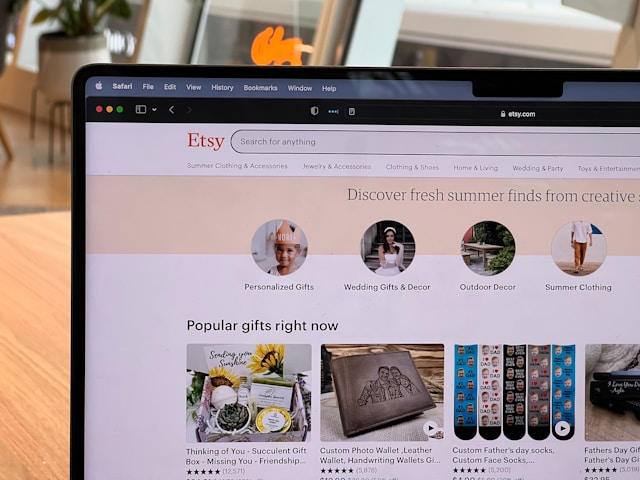
Etsy is a natural platform for shipped hot sauce from a licensed producer. On October 13, 2026, Etsy's Fees & Payments Policy listed a $0.20 listing fee and a 6.5% transaction fee on the listing price plus shipping, and its US payment processing was 3% + $0.25 on the total sale. For shipping glass, use:
Our guide to whether you can ship cottage food covers the shipping rules for other home-kitchen products.
Regional gift shops, tourist destinations, state-specific product stores, and food gift companies often carry local and regional food products. A locally branded hot sauce can be a natural fit for this channel, especially if you can tie it to your region (peppers grown locally, a distinctive local flavor profile, regional branding). Like any store, a gift shop is a wholesale buyer, so plan on a licensed kitchen or co-packer for it.
Once people in your circle are asking for refills every few weeks, taking those orders through texts stops working. You end up tracking who wants which heat level across a dozen threads, chasing Venmo payments that carry no order details, and guessing how many bottles to fill before market day.
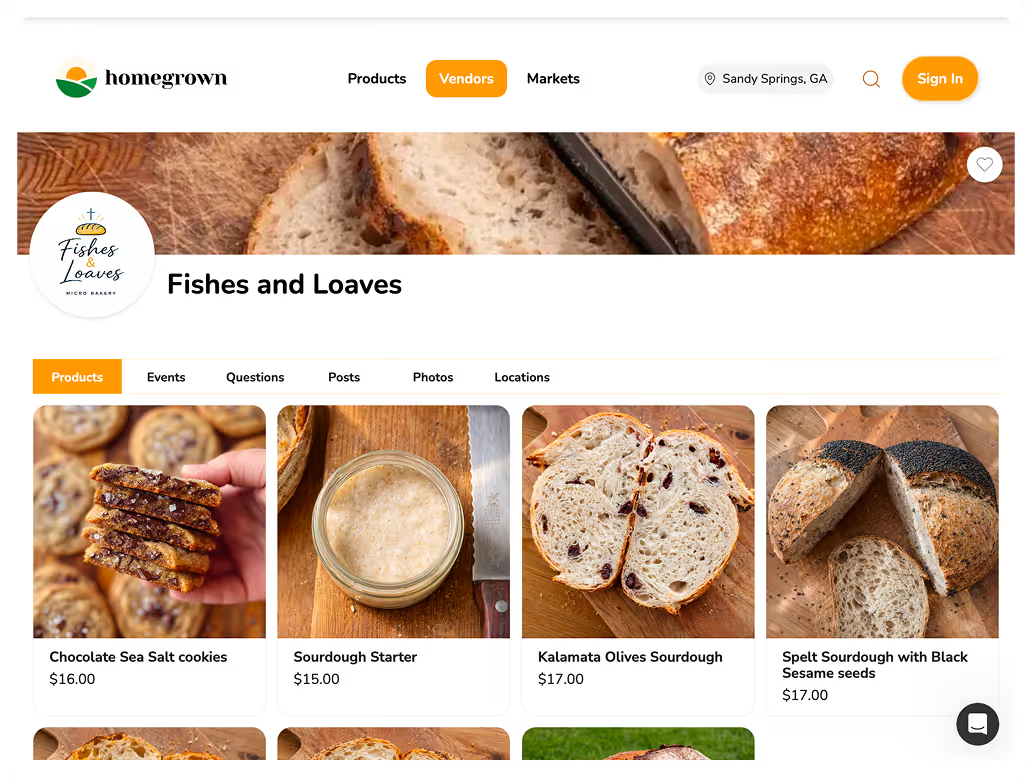
Homegrown gives your regulars one link where they see your sauces, pick a heat level, pay upfront and choose pickup or local delivery. It costs $10 a month billed annually ($12.50 billed monthly) with no percentage fees beyond standard payment processing (2.9% + $0.30 per sale, paid by you). Each sauce gets its own product page with an ingredients and allergens section, which helps in Texas, where DSHS asks you to post all your required label information on your website before you take payment; put the rest of it (your operation's name, the product's common name and the private-residence statement) in each product description. You set pickup days and a delivery radius (1 to 25 miles), orders land in one dashboard with a pickup time or delivery address, and you bottle exactly what was paid for.
Here's how it compares with what hot sauce vendors usually consider, on a $20 order (two $10 bottles) and a month of 50 such orders:
Swipe to compare every platform.
| Platform | Subscription | Trial | Platform fee | Card processing | Customer pays on a $20 order | Vendor pays on a $20 order | Vendor pays for 50 orders a month |
|---|---|---|---|---|---|---|---|
| Homegrown | $10/mo billed annually, or $12.50/mo billed monthly | 7 days, no charge until day 8 | $0 (0% commission) | 2.9% + $0.30, vendor pays | $20.00 | $0.88 | $54.00 annual plan, $56.50 monthly plan |
| Square Online (Free plan) | $0/mo per location | None needed | $0 | 3.3% + 30¢ online, vendor pays | $20.00 | $0.96 | $48.00 |
| Etsy | $0; a one-time set-up fee may apply | None | $0.20 per listing or renewal + 6.5% transaction | 3% + $0.25 on the total sale (US) | $20.00 plus any shipping you charge | $2.55 | $127.50 |
We checked these on Homegrown's signup page, Square Online's plans page and Etsy's Fees & Payments Policy and payment processing help page on October 13, 2026. Etsy's figure includes two $0.20 listing renewals (one per bottle sold) and leaves out fees on shipping and sales tax. Square's paid Plus plan is $49 a month per location with 2.9% + 30¢ online.
The fee is only part of the choice. Square Online's free plan costs you $6 a month less than Homegrown's annual plan at this volume ($8.50 less than the monthly plan) and is a fine pick if you already run Square at your booth; you build and run the site yourself. Etsy is the shipping marketplace, and its $2.55 an order is the price of being found by strangers, which matters once you're licensed to ship. Homegrown is the local reorder link: flat pricing, your customers pay your price, pickup windows and delivery days built in, and sales tax calculated at checkout and filed for you.
Honest bounds: Homegrown does not ship, so out-of-town customers who want a bottle mailed need Etsy or your own shipping setup, from a licensed kitchen. It doesn't test your sauce, file your FDA paperwork or make a home-kitchen sauce legal where your state says no. Customers create a Homegrown account to place a first order, and there's no drops or countdown release feature. Your storefront is listed on Homegrown's marketplace, but plan on most orders coming from people you send to your own link. In Texas, hand online orders to the buyer yourself (or have an employee or household member do it), because DSHS allows online sales only when the food is personally delivered. In Minnesota, you or your employee must be there at pickup or delivery.
Already have regulars asking for another bottle? Set up your Homegrown storefront, list your two or three best sauces, and text the link to everyone who bought a bottle this season. The 7-day trial means no charge until day 8.
A co-packer produces your hot sauce in a licensed facility under your recipe and label, and it's the most common way small hot sauce makers scale without building a plant. If your state doesn't allow hot sauce under cottage food, or if you want to sell to stores and ship without renting kitchen time yourself, this is the path most producers eventually choose.
What a co-packer does: A co-packer (short for contract packager) is a licensed commercial food production facility. You bring your recipe; they produce it in a compliant kitchen with proper equipment and documentation. The finished product comes out under your label.
Why this matters for hot sauce: Co-packers already have the licenses, equipment, trained supervisors and processes for producing acidified foods. You don't need to navigate kitchen licensing yourself; you rent their production capacity. NC State's food business FAQ says the acidified foods course is for "anyone manufacturing acidified foods for sale, even if you only sell 10 jars a year," and "alternatively, you must hire a commercial co-packer who holds this certification." (Home vendors under a state cottage food law that allows hot sauce follow that state's rules instead.)
What to expect, from co-packers that publish their terms (loaded October 13, 2026):
Most 5 oz bottles a first run can fill, by published batch size
Source: batch sizes from Kensington Food Company, Small Batch Co-Pack and PepperNutz pages, loaded October 13, 2026. Bottle counts are our arithmetic (128 fluid ounces a gallon divided by 5) before process losses and samples; PepperNutz itself says about 2,500 bottles.
At 30 bottles a market day, even the smallest of those runs is 20 market days of sauce. That's why most makers sell out of a shared kitchen first, then move to a co-packer once a store order or a steady online demand can absorb 600 to 2,500 bottles at once.
How to find a co-packer: Search "hot sauce co-packer" or "food co-packer [your state]." Local food business incubators and university food science programs often keep referral lists. Some co-packers specialize in hot sauces and can advise on recipe adjustments for safe production. Ask each one who files the scheduled process with the FDA and who pays the process authority, and get the answer in writing.
A process filing covers one recipe in one container size. If you change the recipe, add a bottle size or switch co-packers, the process goes back to a process authority and gets filed again. WSU's process review page counts a mild, medium and extra-hot version of the same salsa as three recipes.
You grow by giving people a reason to buy more than one bottle: a heat ladder, a bundle, and a refill habit. The vendors who do well with hot sauce rarely sell one flavor; they sell a lineup that lets a customer step up in heat.
If your first batch sells out, our guide to moving from cottage food to a commercial kitchen covers the next step.
It depends on your state. Of the 7 states we checked on October 13, 2026, Texas lets you sell a shelf-stable hot sauce from a home kitchen with no local license or fee, Minnesota allows it as a home-canned vegetable at pH 4.6 or lower after a yearly registration, and Wisconsin's home-canning law never names hot sauce. The other four (Washington, Ohio, Florida, California) say no. If your state excludes acidified foods, your options are a licensed commercial kitchen or a co-packer. Verify your state's current rules with its agency before you sell.
Not always. In Texas, a home vendor needs either a recipe from an approved source, a certified lab test at pH 4.6 or less, or a process authority's approval, or else a calibrated pH meter reading on every batch. We still recommend a pH check on every batch, wherever you sell. Licensed producers need a process authority to set their process; on October 13, 2026, the University of Tennessee charged $150 per product for a hot-fill process letter that includes an equilibrium pH measurement, and $25 for the pH measurement alone for Tennessee cottage food producers (check what your own state's extension lab charges).
Yes, if you're allowed to ship it, which in practice means producing in a licensed kitchen or with a co-packer, since none of the 3 home-kitchen states we read lets a home kitchen ship hot sauce. Etsy charged a $0.20 listing fee, a 6.5% transaction fee and 3% + $0.25 US payment processing on October 13, 2026. For shipping glass bottles, double-box them with bubble wrap, include a sealed inner bag in case of leakage, and label the outer box "Fragile."
Unprocessed fresh pepper mash is a different product with a shorter shelf life and different regulatory treatment. It hasn't been acidified and heat-processed, so it isn't shelf stable, and home kitchen laws built around shelf-stable food usually leave it out (Texas now allows home-made foods that need refrigeration for safety, which DSHS calls TCS foods, if you register with DSHS and follow its date, safe-handling and 41°F rules). Most home vendors focus on finished hot sauce (vinegar-based, or fermented and finished with vinegar) because shelf stability is what makes the product sellable across channels.
It depends on the kind of sauce, and no federal source publishes a shelf life for homemade hot sauce. USDA's FoodKeeper data gives store-bought hot sauce 6 months in the pantry, the National Center for Home Food Preservation advises canning no more than you'll use within about a year, and an Oregon State Extension recipe says its fermented hot sauce is best used within six months, kept refrigerated. Our guide to how long homemade hot sauce lasts breaks it down by type, and every bottle you sell should carry a best-by date.
A home-kitchen start can be about $127 before ingredients: a $72 pH meter kit plus $54.84 of bottles, caps, pour inserts and labels in the pack sizes suppliers sell, enough for 48 bottles. A licensed start adds a process authority letter ($150 to $195 per product at the university programs we checked) and a supervisor course ($400 online at NC State), plus kitchen time. A co-packer's development work ran from $250 to $2,700 at PepperNutz on October 13, 2026, before the production run.
Yes, if your sauce is legal where you live. Texas and Minnesota allow home-kitchen sales at farmers markets, and Wisconsin does too if its home-canning law covers your sauce. Check with your specific farmers market first: some ask for proof of cottage food registration, a licensed kitchen certificate, or product liability insurance. Hot sauce is a strong farmers market product because the sample-and-sell model works so well: let people taste it before they buy.
These 5 guides answer the questions vendors usually ask after this one:
Selling hot sauce has a higher compliance bar than most cottage food products, but the bar is clear and manageable. Find your state's answer, verify your pH, label your bottles properly, pick your production path, and get your sauce in front of people who want it.
Start small: sell to the people already asking for bottles. Use their demand to fund a shared kitchen session or a co-packer batch. Build from there.
When your regulars start asking for refills on a regular basis, give them a link instead of a phone number. A Homegrown ordering page takes about 15 minutes to set up and replaces the text conversations you're managing every time a new batch is ready.