

The short version: The best platform to sell hot sauce online depends on one legal fact first: of the 7 state agency pages we read, only Texas and Minnesota let a home kitchen sell hot sauce online, and only for local pickup or your own delivery, so shipping takes a licensed co-packer or commercial kitchen. For those local orders, Homegrown is $10 a month billed annually ($12.50 billed monthly) plus 2.9% + $0.30 per order with no commission, and it gives your fans one link to reorder between markets. Square Online's free plan costs a little less at low volume, Hotplate fits timed batch releases, and Etsy and Shopify fit once your sauce comes from a licensed kitchen and you ship it. On a $20 order of two $10 bottles, you pay $0.88 on Homegrown and $2.55 on Etsy.
Checked October 14, 2026: Homegrown's signup page, the pricing pages of Hotplate, Square Online and Shopify, Etsy's fees policy, Venmo's business profile fees, and the cottage food pages of Texas, Minnesota, Wisconsin, Washington, Ohio, Florida and California. Customers create a Homegrown account to place a first order, Homegrown has no drops feature, and it does not ship. Rules change, so verify your state's current rules before you sell.
If your state lets you sell hot sauce for local pickup or delivery, you can set up a Homegrown storefront and try it free for 7 days.
The best platform to sell hot sauce online for a small-batch vendor who sells close to home is Homegrown, a $10-a-month storefront where customers order, pay and pick up locally through one shareable link. A hot sauce fan buys a bottle at a festival, runs out a month later, and has no way to buy another until your next event. The platform you choose should fix that gap first, because for sauce from a home kitchen, local pickup and your own delivery are the only online sales the rules we read allow.
This guide compares six ways to take hot sauce orders online: Homegrown, Hotplate, Etsy, Shopify, Square Online, and Venmo with Instagram DMs. Every fee is shown in full, card processing included, with what you pay on a $20 order and in a month of 50 orders. If you are still working out permits, pH testing and labels, start with our guide on how to sell hot sauce from home, then come back here to pick the ordering tool.
Hot sauce vendors need an online ordering platform because the sale that slips away between events is the reorder, and a link your fans can use any day catches it. Unlike baked goods that go stale in days, many hot sauces keep for months, so a fan can buy several bottles at once and come back when they run out. How many months depends on the recipe: NCHFP, the national home food preservation center, advises canning only what you will eat in a year, Oregon State Extension gives a ferment finished with vinegar about 6 months in the fridge, and our guide to how long homemade hot sauce lasts treats a fresh sauce with no vinegar as a fridge product with about a week of life. A customer who tries your habanero mango at a tasting event and likes it may buy three bottles: one to keep, one to give away, and one to bring to the next barbecue.
The challenge this solves is not production or demand. It is capturing the reorders between events. Here is what that looks like in practice:
An online ordering platform gives your fans a way to buy between events. Your full lineup lives on one link. Customers see what is in stock, order what they want, pay upfront, and arrange pickup or delivery. Shipping comes later, once your sauce is made somewhere licensed to ship it.
The tipping point for hot sauce vendors is less about weekly order volume and more about missed reorder opportunities. Every fan who tried your sauce and cannot find you online is a sale you may have lost to a grocery store bottle.
You can take hot sauce orders online from a home kitchen in only some states, and in none of the 7 states we read can you ship the bottle to fill an online order (in Texas, ask DSHS about any order taken another way and shipped). On the agency pages we read on October 14, 2026, two states allow a home-made hot sauce (Texas, and Minnesota as a home-canned product at pH 4.6 or lower), Wisconsin allows home-canned acidified vegetables but never names hot sauce and bans internet sales, and the other four keep hot sauce out of their home kitchen programs. That means a home vendor's "online store" is really an ordering page for local pickup or your own delivery.
Hot sauce gets stricter treatment than cookies because peppers are a low-acid food. The federal rule for acidified foods, 21 CFR 114.3, names "peppers" among its examples and draws the safety line at a finished pH of 4.6 or below. Our state-by-state guide to selling homemade hot sauce legally quotes each state's wording in full.
Swipe left to compare all 7 states.
| State | Home-made hot sauce allowed? | Online orders | Shipping to the customer | Yearly sales cap |
|---|---|---|---|---|
| Texas | Yes. Allowed foods are "any foods, except" a short list that includes low-acid canned goods; acidified and fermented vegetable products need an approved recipe, a lab test, a process authority or a pH test of every batch | Yes, with all label information shown online ahead of payment | No. You, an employee or a household member must personally deliver the order | $150,000 gross income |
| Minnesota | Yes, as "home canned pickles, vegetables, or fruits with a pH of 4.6 or lower"; its acidified foods page names hot sauces | Yes, but the food must be handed to the customer in person | No. "Cottage food intended for humans cannot be shipped." From August 1, 2027, shipping within Minnesota will be allowed | $78,000 |
| Wisconsin | Possibly, as a home-canned vegetable "acidified by pickling or fermenting" at pH 4.6 or lower; hot sauce is not named, so ask DATCP | No. Internet sales are not permitted | No. Out-of-state sales are not permitted either | $5,000 per person |
| Washington | No. Bans food made from fresh fruits or vegetables, and barbeque sauces, ketchups and mustards | Only for sauce from a licensed kitchen | Only once a licensed processor makes it | No home cap for hot sauce |
| Ohio | No. A cottage food operation "is not permitted to process acidified foods" | For sauce from a licensed facility | For sauce from a licensed facility | Does not apply |
| Florida | No. Hot sauce is not on the approved list; "vinegar and flavored vinegars" are | Through a co-packer or commercial kitchen | Through a co-packer or commercial kitchen | Not a home product, so none |
| California | No. Hot sauce is not on the Approved Cottage Foods list (last reviewed April 2026); the nearest category is vinegars and mustards | After you move to licensed production | After you move to licensed production | No cottage cap applies |
We read the Texas DSHS, Minnesota MDA, Wisconsin DATCP, Washington WSDA, Ohio ODA, Florida FDACS and California CDPH pages on October 14, 2026. We have not read the other 43 states for this guide, so check your own state agency's page before you sell.
The Texas DSHS cottage food page allows an online sale when "the operator, an employee, or a household member personally delivers the food to the consumer," and only if you post all the required label information on your website before you accept payment. Your address or registration number can go on the label after payment. DSHS also says it "will adopt rules" for the newer law, so recheck the page before you launch. That rule says who hands the order over, not where, so a cooler on the porch with nobody home does not clearly fit; ask DSHS first if you plan an unattended porch pickup. We read it on October 14, 2026.
Minnesota's cottage food guidance says "Shipping will be allowed within Minnesota" once its revised law takes effect on August 1, 2027, along with a single registration tier at $30 a year. Until then, the Minnesota Department of Agriculture says you can take orders over the internet but must hand the food to the customer yourself. Its cottage food guidance says the food "must still be provided to the customer in person," so be there for each pickup rather than leaving bottles out. Shipping across state lines is not part of that change.
The practical upshot for picking a platform: if you make sauce at home, you need a tool built for pickup and local delivery. If you want to ship nationally, the question becomes where the sauce is made, not which website you use. The section on shipping below covers that path.
Six tools serve hot sauce vendors, and each fits a different stage: Homegrown for local reorders, Hotplate for timed batch releases, Square Online for vendors already on Square, Venmo with DMs for your first few bottles, and Etsy or Shopify for shipping once your sauce is made in a licensed kitchen. The fees below were loaded from each company's own pages on October 14, 2026.
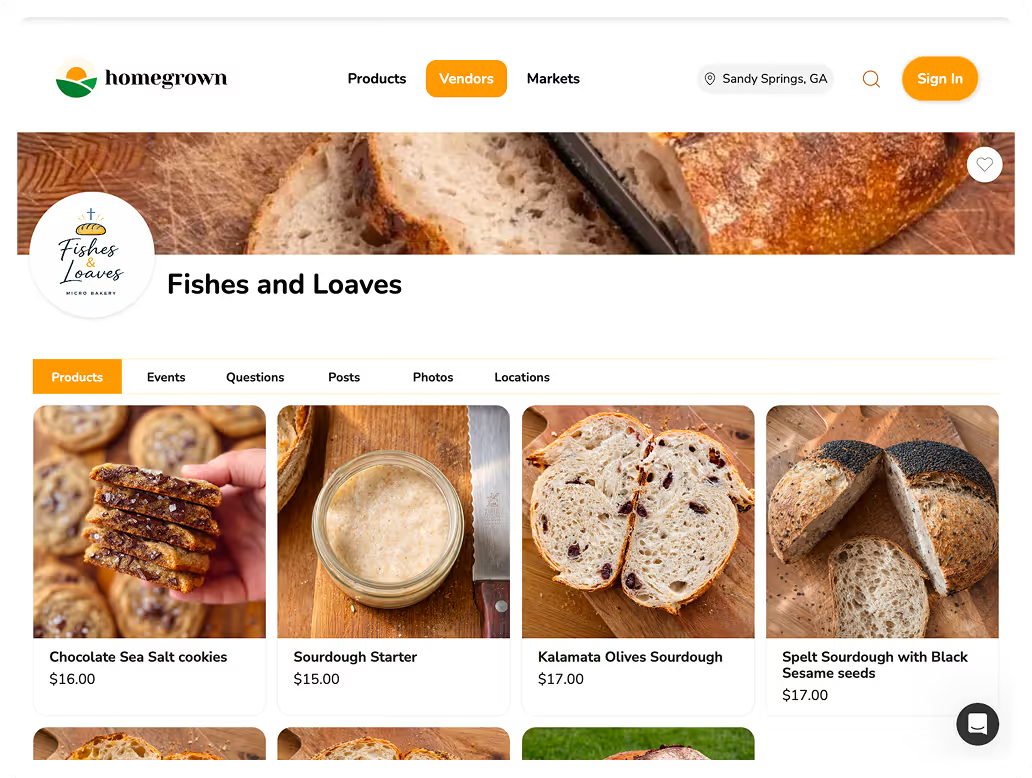
Homegrown is the best fit when your hot sauce sells to people within driving distance and your real problem is reorders between events. It is an online storefront built for local vendors who sell through pickup or local delivery, and it costs $10 a month billed annually or $12.50 a month billed monthly, with no percentage fees beyond standard payment processing of 2.9% + $0.30 per order, paid by you. You list your hot sauce lineup with each variety's description, heat level, bottle size and price, set pickup locations and time windows, and customers browse, order, pay and pick a slot.
Here is what Homegrown includes for hot sauce vendors, from its signup page on October 14, 2026:
The key advantage for hot sauce vendors is the always-on storefront between events. Your $10 bottle of habanero sauce is available to order any day, not just when you are standing behind a table at a food festival. Customers who discover you at an event can scan the QR code on your sign, save the link, and reorder for pickup whenever they run out.
How it compares for a home hot sauce vendor: Square Online's Free plan costs less than Homegrown's annual plan until about 125 orders of $20 a month, but you build the site, pickup rules and item pages yourself. Hotplate passes a $1.55 fee to your customer on a $20 order by default, leaves you the same card processing, and is built around timed drops rather than an always-open lineup. Etsy charges $2.55 on the same order and is built for shipping, which home-made sauce cannot do in any state we checked. Homegrown's fit is the steady middle: every sauce listed every day, the listed price is what the customer pays, and pickup or delivery is the whole workflow.
Pros:
Cons:
Best for: Small-batch hot sauce vendors who sell at farmers markets, festivals and through local word of mouth. If you want your fans to reorder between events without texting you, Homegrown gives them one link to do it. Start your 7-day Homegrown trial (no charge until day 8).
Hotplate fits a hot sauce vendor who likes to announce a batch, open orders for a set window, and sell out. Its pricing page defines a drop as "a preorder window with a clear start and end time," and lists a countdown timer, automatic SMS alerts and reminders, and waitlists. Hotplate has no monthly subscription. It charges a fee of 5% + $0.55 on the order subtotal, which is $1.55 on a $20 order, and you pay card processing of 2.9% + $0.30.
Who pays that $1.55 is your call: the pricing page says you can "pay it yourself or pass it on to customers," and calls it "your choice." By default it goes to the customer. Hotplate's own post, "What Hotplate does", says "we charge a fee to your customer" and "80% of Hotplate chefs keep the default as-is."
So on a $20 order under the default, your customer pays $21.55 and you pay about $0.88 to about $0.92 in card processing, depending on whether processing is figured on the $20 or on the $21.55. Hotplate's own pricing example, a $30 order with a $3 tip, shows the chef paying $1.27 in processing, which sits on the low end of that math. If you cover the fee yourself, you pay $2.43 on a $20 order and your customer pays $20.00. Hotplate's pricing page and its "What Hotplate does" post describe pickup and do not mention shipping.
Best for: Hot sauce vendors with a following who release a batch at a time. Our Hotplate alternative guide compares the two platforms in depth.
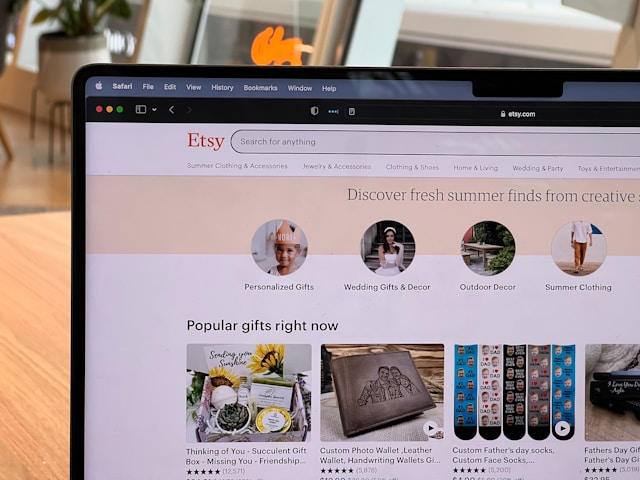
Etsy works for hot sauce vendors who ship, and for hot sauce that means bottles from a licensed facility, since none of the 7 home kitchen programs we read lets you mail an online order. Etsy's food and edibles policy says selling food is "generally allowed," then points out that government rules "dictate who can make, package, and sell food" and tells shops to check USPS and other carriers for shipping limits. Sampler packs, gift sets and heat-level variety packs suit Etsy because they give a gift buyer a reason to take several bottles at once.
Etsy's fees, from its Fees & Payments Policy and its US processing rate on October 14, 2026:
On a $35 three-bottle sampler pack shipped with a $25.80 shipping charge, that is:
Pros:
Cons:
Best for: Hot sauce brands made by a co-packer or in a licensed kitchen, ready to ship gift-ready packaging and variety packs. Our breakdown of Etsy fees on food orders shows how they stack at other order sizes.
Shopify fits hot sauce brands that ship nationally, sell wholesale to shops, or want a monthly hot sauce club. Shopify Basic is $29 a month paid yearly or $39 paid monthly, with online card rates from 2.9% + 30¢, no extra transaction fee with Shopify Payments, and a 2% fee if you use a different payment processor. Its pricing page offers 3 days free, then $1 a month for 3 months. Shopify's free Subscriptions app handles auto-billed weekly, monthly or yearly orders, and local pickup and local delivery are settings in the online store on Basic.
Pros:
Cons:
Best for: Hot sauce businesses made in a licensed facility, shipping nationwide, selling wholesale, or running a subscription club.
Square Online fits a vendor who already takes cards at festivals and markets with a Square reader, because online and in-person sales land in one system. The Free plan is $0 a month per location, with online card processing at 3.3% + 30¢. Square Plus is $49 a month per location with online processing at 2.9% + 30¢ and a 30-day trial. Square's plans page lists pickup and local delivery with ordering windows on every plan, plus shipping.
Pros:
Cons:
Best for: Hot sauce vendors who already use Square at events and want an online ordering addition at no monthly cost. Our look at the Square Online free plan's real cost runs the math at higher volumes.
Venmo with Instagram or Facebook DMs is the cheapest of these six ways to sell your first handful of bottles, and the messiest once orders pile up. A Venmo business profile charges you 1.9% + $0.10 per payment, which is $0.48 on a $20 order, and Venmo's help page says a customer who pays a business profile by credit card is "exempt from the standard 3% Venmo fee." There is no monthly plan and no storefront: you post a photo, take orders in messages, track who wants which bottle by hand, and send a payment request.
Best for: Testing whether people will pay for your sauce before you set up anything else. Once DM orders pile up, a storefront that counts inventory for you saves the evening you spend matching payments to names.
On a month of 50 local orders at $20 each (two $10 bottles), you pay $54.00 on Homegrown billed annually, $56.50 billed monthly, $48.00 on Square Online's Free plan, $44.00 to $46.25 on Hotplate's default, $73.00 or $83.00 on Shopify Basic, $127.50 on Etsy and $24.00 through Venmo. The table shows every part of each fee, so you can see where the money goes.
Scroll sideways to see every column.
| Platform | Subscription and trial | Platform fee | Card processing | Customer pays on a $20 order | You pay on a $20 order | You pay for 50 orders a month |
|---|---|---|---|---|---|---|
| Homegrown, billed annually | $10 a month; 7 days, no charge until day 8 | $0, 0% commission | 2.9% + $0.30, paid by you | $20.00 | $0.88 | $54.00 ($10 + $44.00) |
| Homegrown, billed monthly | $12.50 a month; 7-day trial (no charge until day 8) | $0, 0% commission | 2.9% + $0.30, paid by you | $20.00 | $0.88 | $56.50 ($12.50 + $44.00) |
| Hotplate, default | $0 a month; no subscription to trial | 5% + $0.55 ($1.55), paid by the customer | 2.9% + $0.30, paid by you | $21.55 | About $0.88 to about $0.92 | $44.00 to $46.25 |
| Hotplate, you cover the fee | $0 a month; no subscription to trial | 5% + $0.55 ($1.55), paid by you | 2.9% + $0.30, paid by you | $20.00 | $2.43 | $121.50 |
| Square Online, Free plan | $0 a month per location; no trial needed | $0 | 3.3% + 30¢ online | $20.00 | $0.96 | $48.00 |
| Shopify Basic | $29 a month paid yearly or $39 paid monthly; 3 days free, then $1 a month for 3 months | $0 with Shopify Payments (2% with another processor) | From 2.9% + 30¢ online | $20.00 | $0.88 | $73.00 yearly plan, $83.00 monthly plan |
| Etsy | $0 a month; a one-time set-up fee may apply | 6.5% transaction fee, plus a $0.20 listing fee for each item sold (two bottles here) | 3% + $0.25 on the total sale | $20.00 plus any shipping you charge | $2.55 | $127.50 |
| Instagram DMs and a Venmo business profile | $0 a month | $0 | 1.9% + $0.10 per payment; a customer paying by credit card skips Venmo's usual 3% card fee | $20.00 | $0.48 | $24.00 |
We checked Homegrown's signup page, Hotplate's pricing page, Square Online's plans page, Shopify's pricing page, Etsy's Fees & Payments Policy with its US processing rate, and Venmo's business profile fees on October 14, 2026. Etsy's $0.20 listing fee renews each time one bottle sells, so an order of two bottles pays it twice. Hotplate's range depends on whether processing is figured on the $20 or on the $21.55. None of these rows include sales tax or shipping.
What you pay for 50 orders of $20 in a month
Source: each platform's pricing or fee page, loaded October 14, 2026. Bars are the vendor's cost only, card processing included; Hotplate's default also adds $1.55 to each customer's order.
What the numbers mean for a hot sauce vendor:
Etsy, Shopify and Square Online can ship, Homegrown and Hotplate are built for pickup, and Etsy's help page says it "doesn't have a built-in tool for offering local pickup or delivery." That split matters less than it looks, because home-kitchen sauce sold online cannot ship under any of the cottage food rules we checked, so the shipping tools only become useful once you move production to a licensed facility.
Swipe left for pickup, delivery and shipping by platform.
| Platform | Local pickup | Your own local delivery | Shipping | Batch releases with an order window | Recurring orders (a sauce club) |
|---|---|---|---|---|---|
| Homegrown | Yes, unlimited pickup locations with time windows | Yes, 1 to 25 miles, your flat fee | No | No drops feature | No |
| Hotplate | Yes, set per drop | A setting on a drop, per Hotplate's changelog | Not mentioned on its pricing page or its "What Hotplate does" post | Yes, its core feature | Not listed on its pricing page |
| Etsy | No built-in tool; you arrange it with the buyer by message | No built-in tool | Yes, its core use | No | No |
| Shopify Basic | Yes, "pickup in store" in shipping settings | Yes, by distance or postal code | Yes | Not listed on its pricing page | Yes, with the free Shopify Subscriptions app |
| Square Online | Yes, every plan | Yes, every plan | Yes | Ordering windows on every plan | Square Plus ($49 a month) |
| Venmo and DMs | You arrange it in messages | You arrange it in messages | You arrange it in messages | No | No |
From Homegrown's signup page, Hotplate's pricing page, FAQ and changelog, Etsy's local pickup help page, Shopify's help pages for pickup in store and local delivery, the Shopify Subscriptions app listing, and Square's online store plans page, all loaded October 14, 2026. Subscriptions, platform fees and card processing for each platform are in the fee table above.
For a home vendor, the columns that matter are pickup and local delivery. Homegrown, Hotplate and Square all cover them; the choice between those three comes down to fees, whether you want timed releases, and whether you already run Square at your booth.
On a single $10 bottle, card processing takes $0.59 on Homegrown and Shopify, $0.63 on Square's Free plan, and Etsy takes $1.40. One-bottle orders are where per-order flat fees hurt most, because the $0.30 or $0.25 charge is the same whether the order is $10 or $50.
Swipe to see the fees on one $10 bottle.
| Platform | Subscription | Platform fee on a $10 bottle | Card processing on a $10 bottle | Customer pays | You pay per one-bottle order | You pay for 100 one-bottle orders ($1,000) |
|---|---|---|---|---|---|---|
| Homegrown, billed annually | $10 a month | $0 | $0.59 (2.9% + $0.30) | $10.00 | $0.59 | $69.00 ($10 + $59.00) |
| Homegrown, billed monthly | $12.50 a month | $0 | $0.59 (2.9% + $0.30) | $10.00 | $0.59 | $71.50 ($12.50 + $59.00) |
| Square Online, Free plan | $0 a month | $0 | $0.63 (3.3% + 30¢) | $10.00 | $0.63 | $63.00 |
| Shopify Basic | $29 a month yearly or $39 monthly | $0 with Shopify Payments | $0.59 (from 2.9% + 30¢) | $10.00 | $0.59 | $88.00 yearly, $98.00 monthly |
| Etsy | $0 a month; a set-up fee may apply | $0.20 listing renewal + $0.65 transaction fee (6.5%) | $0.55 (3% + $0.25) | $10.00 plus any shipping | $1.40 | $140.00 |
Same pages as the table above, loaded October 14, 2026. Hotplate is left out here because its customer fee changes the order total; on a one-bottle order it adds $1.05 (5% of $10 + $0.55) to the customer's bill by default.
At 100 one-bottle orders a month ($1,000 in sales), Homegrown billed annually costs $69.00 and Etsy costs $140.00, card processing included. The $71.00 a month difference is about 7 bottles of hot sauce at $10, which is real money for a small-batch vendor.
Price a two-bottle bundle. On Homegrown one $20 order for two bottles costs you $0.88 in processing, against $1.18 for two separate $10 orders, because the $0.30 per-order charge is paid once. Crimson Hot Sauce does this on Homegrown with a $25 three-sauce pack of 5 oz bottles, against $30 for the same three bought one at a time.
Shipping hot sauce adds a postage cost your customer feels and, on Etsy, a fee you pay on the postage itself. USPS's retail price for a Priority Mail Medium Flat Rate Box was $25.80 in its price list effective October 4, 2026, and the Small Flat Rate Box is only 1-5/8 inches deep inside, too shallow to stand up a 5 oz woozy bottle, which is 6 5/8 inches tall.
What changes when you ship instead of hand over a bottle:
Square says its bulk shipping labels save on US rates, Shopify lists shipping discounts of up to 87% on its plans, and Etsy sells its own shipping labels, so the postage you pay can land under the retail counter price. Load your own platform's label rate for your packed box before you set prices.
You can ship hot sauce across the country once it is made in a licensed facility, either a commercial kitchen you run under the food license your state requires or a co-packer, a licensed company that makes and bottles your recipe for you. Federal rules then apply too: under 21 CFR 108.25, a commercial processor of acidified foods registers with FDA on Form FDA 2541 within 10 days of starting, and files each product's process on Form FDA 2541e within 60 days of registering and before packing any new product.
The path from home kitchen to shipped bottle, step by step:
You can run both at once: a licensed product that ships, and local pickup orders on a storefront like Homegrown for the regulars who live nearby. Our guide to whether you can ship cottage food covers the same question for other home-made foods.
Small-batch hot sauces on Homegrown sold for $8 to $15 a bottle on October 14, 2026, and the 109 single bottles in stock at Heatonist, the hot sauce shop that sells the Hot Ones lineup, ran $4.99 to $22 with a median of $12. That puts a $10 to $15 bottle in the middle of the market, and 68 of Heatonist's 109 singles sat in exactly that range.
In a pull of the Homegrown catalog on October 14, 2026, 6 of the 2,927 products from 322 vendors were bottled hot sauces, from 2 vendors, priced $8 to $15, plus 2 bundle listings. Crimson Hot Sauce lists five sauces at $10 and $15, a $25 pack of three 5 oz bottles and a $50 bundle of all five. Immunity Artisan in Snyder, Texas lists a fermented Hatch and ghost pepper table sauce at $8 and a $5 delivery option within 5 miles of central Snyder. We searched names and descriptions for hot sauce words, read every match, then read each counted vendor's full list, and left out pepper jams and jellies, salsas, pickled peppers and listings with no description.
What that means for your own price list:
Price the same online as at your table. A fan who sees $12 at the festival and $12 on your link trusts both.
Each hot sauce listing should tell a buyer the heat level, the bottle size, the price, the ingredients and allergens, how to store it, and when and where to pick it up. In Texas, the DSHS page also requires your full label information online, ahead of payment, for an online order, so the listing doubles as your label.
A listing checklist for an online hot sauce order:
Homegrown has no drops feature and no countdown timer, so a limited batch sells as an ordinary listing with a set quantity that stops at zero. If you want orders to open and close on a schedule by themselves, Hotplate's drop is built for that.
Shelf life decides how far ahead you can bottle for online orders: a fresh sauce made without vinegar needs a pickup within days, a fermented sauce finished with vinegar and kept in the fridge is best within about 6 months, and for a canned vinegar sauce from a tested recipe, the NCHFP's general canning advice is to put up only a year's supply. Set your pickup days around the shortest-lived sauce on your list.
Sauces that must stay cold to stay safe are also the hardest ones to sell legally from home. In our 7-state table, only Texas clearly allows a home-made sauce that needs the fridge for safety. Minnesota and Wisconsin write their home path for home-canned products, so ask MDA or DATCP before you sell an uncanned fridge sauce there. The Texas DSHS cottage food page calls this a time and temperature control for safety (TCS) food. For a TCS sauce you register with DSHS, keep it at 41°F or below, and put the date it was made on the label. You also add DSHS's safe-handling statement on the label or receipt, and you cannot sell it wholesale or donate it. Whether your sauce counts as TCS is a question for DSHS or a process authority. We read the page on October 14, 2026.
The published numbers we use, all loaded October 14, 2026:
How to turn that into an online ordering rhythm:
The right platform for selling hot sauce depends on where your sauce is made and how your fans want to buy it. Here is the short decision list:
For a small-batch hot sauce vendor, the gap between events is where sales leak away. Someone tries your sauce at a tasting, loves it, and has no way to buy more until they happen to find you at another event months later. A Homegrown storefront closes that gap for $10 a month with no percentage fees beyond standard payment processing: your fans reorder from one link any time they run out, a limited batch shows sold out the moment the last bottle goes, and you hand orders over at the pickup spot you choose. It will not ship your sauce, test its pH or tell you whether your state allows it, so settle those first.
Set up your hot sauce storefront on Homegrown and try it for 7 days before your first charge on day 8.
Two expensive mistakes for hot sauce vendors online are picking a shipping platform for a sauce that cannot legally ship, and pricing that ignores fees and postage. Here are the ones to fix before you list a single bottle.
Whether you need a license to sell hot sauce depends on your state and where the sauce is made. Of the 7 state agency pages we read on October 14, 2026, Texas and Minnesota allow a home-made hot sauce without a food license (Texas requires an accredited food handler course, plus DSHS registration if your sauce must be refrigerated for safety; Minnesota requires a yearly cottage food registration, a food safety training that is yearly at $7,665 or less in sales and every three years above that, and a pH of 4.6 or lower), Wisconsin covers home-canned acidified vegetables but never names hot sauce, and Washington, Ohio, Florida and California require a licensed facility. Shipping always takes a licensed kitchen or co-packer under the rules we read, and a commercial processor of acidified foods also registers with FDA under 21 CFR 108.25. Verify your state's current rules with its agriculture or health department.
A small-batch hot sauce usually sells for $8 to $15 a bottle in the listings we checked. On October 14, 2026, the 6 bottled hot sauces on Homegrown ran $8 to $15, and Heatonist's 109 in-stock singles ran $4.99 to $22 with a median of $12. Crimson Hot Sauce on Homegrown prices its everyday 5 oz sauces at $10, its hottest at $15, and a three-bottle pack at $25. Whatever platform you choose, check what it takes from a single bottle: about $0.59 on Homegrown and $1.40 on Etsy for a $10 one-bottle order.
You can sell hot sauce from home in some states, usually with a pH test or an approved recipe, and you can take those orders online for pickup or delivery you make yourself, but not for shipping. Texas allows it with one of four safety checks (an approved recipe source, a certified lab test, a process authority's approval or a pH test of every batch), Minnesota allows it as a home-canned product at pH 4.6 or lower, and four of the 7 states we read do not allow it at all. For a process authority review on October 14, 2026, the University of Georgia charged $195 to classify a hot-filled product ($40 per revision, and other methods may cost more), and Washington State University charged $75 per recipe in Washington, Idaho and Montana or $150 out of state, plus the certified food testing lab results it asks you to send. WSU does not review fermented sauces or sauces that are not heat-processed, and UGA says fermented products will likely carry additional costs, so ask for a quote if yours is fermented.
To ship hot sauce safely, triple-pack each glass bottle: absorbent cushioning that can soak up all the sauce, a sealed leakproof bag or container around it, and a strong outer box marked as liquid with orientation arrows, which is what the USPS Domestic Mail Manual requires for breakable liquid containers over 4 fluid ounces. Ship only sauce made in a licensed facility, since no home kitchen rule we read allows mailing an online order. A retail Priority Mail Medium Flat Rate Box was $25.80 in USPS's October 4, 2026 price list, so ship sets of several bottles rather than singles. A sauce labeled "Keep Refrigerated" needs a cold-chain plan before it goes in a box at all.
Hot sauce sells well online when the platform matches where it is made: a home-made sauce through local pickup ordering where your state allows it (Texas and Minnesota of the 7 we read), a licensed one through shipping. It suits online ordering because many recipes keep for months (the NCHFP's canning advice is to put up only what you will eat in a year, and Oregon State Extension rates a vinegar-finished ferment at about 6 months in the fridge), a 5 oz bottle at $10 to $15 sits in the middle of the market Heatonist prices, and fans who run out come back for the same sauce. The main barrier is the rules, which are stricter than for cookies or bread because peppers are a low-acid food. Resources like the Penn State Food for Profit program can help with licensing and food safety planning.
Homemade hot sauce lasts about a week if it is fresh with no vinegar and about 6 months in the fridge if it is fermented and finished with vinegar, and for a vinegar sauce canned from a tested recipe, the NCHFP's advice is to can no more than you will use within a year. Those figures come from our hot sauce shelf life guide, Oregon State Extension's fermented hot sauce recipe and the NCHFP's page on storing home-canned foods. USDA's FoodKeeper gives store-bought hot sauce 6 months in the pantry, but that entry is for a bottle from a store. Put a production date on every bottle, and if your state requires a process authority review, use its shelf-life guidance.
Homegrown is better for selling home-made hot sauce to local customers, and Etsy is better for shipping a sauce made in a licensed kitchen to gift buyers across the country. On a $20 order of two $10 bottles, you pay $0.88 on Homegrown (plus its $10 or $12.50 monthly plan) and $2.55 on Etsy, checked October 14, 2026. Etsy also has no built-in local pickup, and Homegrown has no shipping, so the deciding question is whether your sauce can legally be mailed.
More on selling hot sauce from the Homegrown blog:
Your hot sauce deserves a storefront that is always open, not just when you are standing behind a table at a festival. Homegrown gives small-batch hot sauce vendors a shareable ordering link, built-in payments, and local pickup and delivery scheduling for $10 a month on annual billing ($12.50 on monthly), plus 2.9% + $0.30 per order. Open your Homegrown storefront: 7 days, no charge until day 8.