


Almost every home baker underprices, and almost none of them find out from a spreadsheet. They find out from exhaustion. Six months in, the orders are steady, the weekends are gone, and the money left over after ingredients doesn't feel like it matches the work. That gap has a specific cause, and it's almost always the same one: labor got counted as zero.
Our calculator shows how much to charge for baked goods across six US regions so you can see where your price lands.
Pricing baked goods isn't hard arithmetic. It's four numbers and a multiplication. What makes it hard is that two of the four numbers are invisible, and the person you're charging is frequently someone you know.
The short version: Price = ingredients + packaging + labor + overhead, then add margin. Track your real time across a full batch (shopping, mixing, cleanup, packaging, messages) rather than just oven time, because that's where the number goes wrong. Price by the batch, not by feel. Then check the result against your local market and against what your capacity actually allows. Most home bakers land 25 to 40 percent below where the formula puts them, and the fix is almost never charging a little more for everything. It's charging correctly for the products where the labor is hiding.
Ingredients + Packaging + Labor + Overhead = your floor. Floor ÷ (1 − margin) = your price.
That second step matters and gets done wrong constantly. If you want a 25 percent margin, you don't add 25 percent to your cost. You divide by 0.75. Adding 25 percent to a $12 cost gives you $15, which is a 20 percent margin, not 25. Dividing gives you $16.
Here it is on a sourdough loaf, baking four at a time:
| Component | Per loaf |
|---|---|
| Ingredients (bread flour, water, salt, levain) | $1.20 |
| Packaging (paper bag, tie, label) | $0.43 |
| Labor (3.0 hrs across 4 loaves at $18/hr) | $13.50 |
| Overhead (energy, water, equipment wear) | $0.50 |
| Cost floor | $15.63 |
| Price at 20% margin ($15.63 ÷ 0.80) | $19.54 |
| Rounded price | $19 |
Most home bakers selling sourdough charge $10 or $12. The gap between $12 and $19 isn't a better loaf. It's whether the three hours got counted.
And notice what happens when the batch gets bigger. Bake eight loaves in 4.0 hours instead of four in 3.0, and labor per loaf drops from $13.50 to $9.00. Cost floor becomes $11.13, price at 20 percent becomes about $14. Same loaf, same baker, same hourly rate. The only thing that changed is batch size, which is the single most powerful lever you have on price, and it's the reason the batch model beats baking to order.
The mistake here is pricing from the grocery receipt instead of from the recipe.
Work in cost per unit of measure. A 5 lb bag of bread flour at $6.49 is $0.0812 per ounce. Your loaf uses 17 oz of flour, so that's $1.38. Do this once for every ingredient you use regularly, put it in a note on your phone, and you never have to think about it again.
Three things that get left out:
Consumables that aren't in the recipe. Parchment, oil for the pan, dusting flour, cooking spray. Individually trivial, collectively a few percent of your ingredient cost. Add a flat 3 to 5 percent rather than tracking each one.
Waste. Not every batch is sellable. A proof that went too far, a tray that caught, the loaf you cut open to check the crumb. If you lose one item in twenty, your real ingredient cost is 5 percent higher than the recipe says.
Price movement. Butter, eggs, and flour all move meaningfully within a year, and eggs in particular have swung hard enough in recent years to erase a home baker's entire margin on egg-heavy products. The USDA's Food Price Outlook tracks category-level forecasts if you want to see a change coming rather than discover it at the register. Re-cost your recipes twice a year, or whenever an ingredient jumps noticeably. When it does move enough to matter, see handling ingredient price spikes before you eat the difference.
One more habit worth building early: keep the receipts. Ingredients, packaging, labels, mileage to the market, and your permit fee are all ordinary business expenses, and the IRS guidance on deducting business expenses is worth ten minutes of your time before your first tax year closes. Bakers who don't track expenses overpay on income tax and then conclude the business isn't profitable, which is the wrong conclusion drawn from incomplete books.
For worked examples on specific products, we've broken down cost per loaf of sourdough, cost per dozen cookies, and cost per jar of jam.
This is where the money goes missing, so it's worth being precise.
Track the whole batch, not the bake. Time yourself across an entire cycle, end to end, and count all of it:
That last one shocks people. A baker running twenty orders a week through Instagram DMs and texts routinely spends two to four hours a week just on order communication. That's real labor, it's attached to the products you sold, and it belongs in the price. It's also the piece that a proper ordering system removes rather than makes cheaper, which is a different and better kind of fix.
Pick an hourly rate and commit to it. Not what you think you deserve, and not minimum wage. Something you'd accept from someone else for skilled work in your area. Fifteen to twenty-five dollars an hour is where most home bakers reasonably land. Write it down and use it consistently across every product, because inconsistency here is what produces a menu where three items are profitable and two are quietly subsidizing them.
Do the measurement twice. Once on a batch that goes well, once on a batch that doesn't. Average them. Your first measurement will be your best-case day, and best-case days are not what you should price around.
Most bakers who do this honestly discover their effective rate was somewhere between $7 and $12 an hour before they adjusted, which is the arithmetic behind feeling busy and broke at the same time. Calculating your real cost per item walks the full exercise.
Energy for a long oven cycle, water, equipment wear, and the slow consumption of pans and racks. For a home operation this genuinely is small, and precision isn't worth the effort. A flat $0.25 to $0.75 per item covers it for most baked goods, higher for anything with a long bake. Anything you fry adds one more line: in pricing homemade donuts, fresh frying oil came to 56% of a glazed batch's cost at September 2026 Walmart prices. Muffins show how small the ingredient line can get: a King Arthur blueberry muffin costs about 32 cents to make at September 2026 Walmart prices, so what to charge for muffins depends far more on your hours, packaging and market than on flour. Scones follow the same pattern: a King Arthur chocolate chip scone costs about 41 cents to make, butter and vanilla cost more than the flour, and what to charge for scones comes down to the same hours and packaging. Biscotti flip the usual order: in pricing homemade biscotti, the almonds came to 59% of a classic batch's cost at September 2026 Walmart prices, so a jump in nut prices moves your price more than flour ever will.
Where overhead deserves more attention is the annual fixed costs, which never show up in a per-item calculation and quietly eat margin: your permit or license fee if your state charges one, insurance, packaging bought in bulk, your ordering platform, market booth fees. Add those up for the year, divide by the number of items you expect to sell, and you'll usually get something between $0.10 and $0.40 per item. It's small, but it's the difference between a 20 percent margin and an 18 percent one.
Margin isn't profit you take home. Labor already paid you for your time. Margin is what covers the batch that failed, the customer who didn't show, the equipment that needs replacing, and eventually the ability to grow without borrowing.
Reasonable ranges:
If you take nothing else from this section: the reason custom cakes so often lose money isn't the ingredients. It's that the two hours of back-and-forth about buttercream colors never made it into either the labor line or the margin. See pricing decorated cookies and how to get more custom cake orders for how to structure that work so it pays.
The formula gives you a floor and a defensible price. It doesn't tell you what your market will pay. Two checks:
Look at the right comparison. Not the grocery store. A supermarket loaf is a different product made in a different way at a scale you can't touch, and comparing yourself to it is how bakers talk themselves into $8. Compare to the bakery downtown, the sourdough vendor at your farmers market, and the other home bakers in local Facebook groups. That's your actual competitive set, and it's usually priced higher than you assume. For sourdough, that set is easy to read: 71% of 172 full-size loaves on Homegrown were listed between $10 and $15.99, as our sourdough price breakdown by loaf type shows.
Watch what happens at the top of your batch. If every batch sells out in an hour and you have a waitlist, your price is too low. That's not a hunch, it's the clearest demand signal you will ever get. If a batch consistently doesn't clear, the problem is either price, product mix, or reach, in that order of likelihood.
When a competitor is pricing below you, resist matching. What to do when a competitor undercuts you covers why that's usually the wrong move.
There's a specific psychological failure that catches nearly every home baker, and no formula fixes it, so it's worth naming.
You feel strange charging your kid's teacher $19 for a loaf. So you say $15. Then you throw in a second one because she's been so nice. And you tell yourself it's community, which it partly is.
But the vendor at the market two miles away charges the same teacher full price without a second thought. When you round down because you know the buyer, you're not being generous with your business. You're funding somebody's grocery budget out of your own labor, week after week, and the person you're subsidizing has no idea it's happening.
Charge the number. If someone genuinely can't afford it, that's a separate and much simpler conversation than trying to raise prices on eighty regulars a year from now. Why charging what you're worth feels wrong is the longer version of this argument.
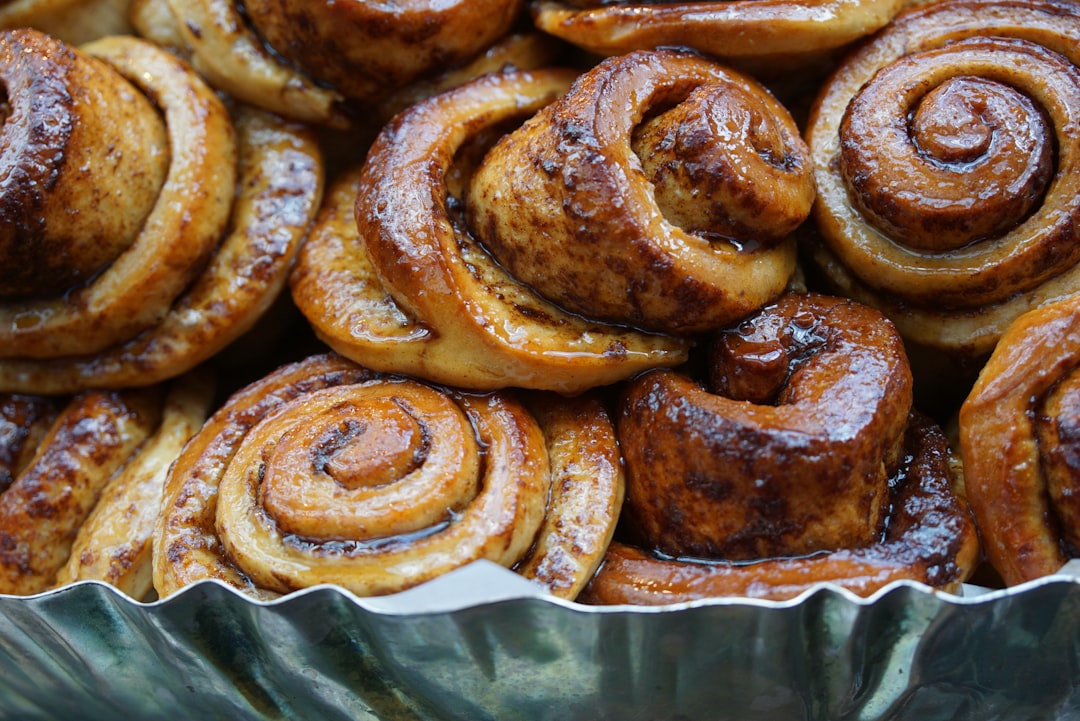
If you only re-price one thing, make it the item with the worst labor-to-revenue ratio, because that's almost never the item you'd guess. Cinnamon roll dozens are a common culprit: the median dozen on Homegrown in September 2026 sold for $25, and pricing cinnamon rolls with your time counted puts the floor closer to $36.
Run this quickly across your menu. For each product, write down the batch time and the batch revenue, then divide. A batch of 24 cookies taking 2.5 hours and selling for $96 is $38 an hour. Four loaves taking 3.0 hours and selling at $12 each is $16 an hour. Same baker, same kitchen, and one product is paying more than twice as well as the other.
The results tend to be consistent across home bakeries:
Cookies and bars usually win. They scale beautifully. One dough, one shaping session, multiple trays through the same preheated oven, and packaging that takes seconds.
Bread is middling and depends entirely on batch size. The labor is largely fixed per session rather than per loaf, so a four-loaf bake is poorly paid and a twelve-loaf bake is well paid.
Decorated and custom work is usually worst per hour, despite having the highest sticker price. A $75 decorated cake that consumed five hours including two rounds of messages about colors is $15 an hour before ingredients. Wedding cakes run the same math at a larger size: a 44-serving cake at $5 a serving pays about $15.75 an hour once the consultation, tasting and delivery are counted, as the wedding cake pricing math lays out. Cheesecake shows the same trap from the other side: at the $25 many home vendors list it for, a 9-inch cake that costs $13.97 to make pays about $10 an hour, as the cheesecake pricing math lays out step by step.
Anything requiring individual assembly is worse than it looks. Cake pops, individually wrapped items, and elaborate cookie sets all carry hidden per-unit hand time that batch products don't. Macarons are the extreme case, with about 13 cents of ingredients in each one and about 6 hands-on hours in a batch of 72, which is why the macaron pricing guide builds a $3.00 price from the hours instead of the grocery receipt.
You have three moves once you see the numbers, and they're better in this order. First, raise the price on the poorly-paid item until the hourly rate matches your batch average. Second, restructure it so it batches better, which usually means fewer variations and a fixed menu instead of open-ended custom work. Third, drop it. Dropping a beloved product feels drastic, but a product that pays $14 an hour while your cookies pay $38 is actively costing you money every time someone orders it instead.
The cleanest version of this discipline is to test new products at small scale before they earn a permanent menu slot, so you learn the real batch time before you've built demand for something that doesn't pay.
Once your number is right, a few structural choices move revenue without raising a single price:
Bundle. A loaf at $19 and a half dozen cookies at $16 sold together at $32 raises your average order and your batch efficiency at once, because you're baking both anyway. Bundle pricing for food vendors has the mechanics.
Tier. Offer a standard loaf, a seeded loaf at a few dollars more, and an occasional specialty at a real premium. The middle option becomes the default and the top option makes the middle look reasonable. Tiered pricing for baked goods covers how to structure it.
Anchor. Listing the premium item first makes everything after it read as good value. This is price anchoring, and it works because people evaluate prices relative to what they saw first, not in the abstract.
Set a minimum order. A single $4 cookie order costs you the same packaging, message thread, and pickup coordination as a $40 one. A minimum protects the economics of the small end.
You will need to at some point, and the mechanics matter more than the number.
Give notice, two to three weeks. Announce it once, plainly, in the same channel you use for everything else. Don't apologize, don't over-explain, and don't itemize your cost increases, because that invites negotiation about your costs rather than acceptance of your price. "Starting the first week of next month, loaves are $19" is a complete message.
Expect to lose a small number of customers, and expect it to be fewer than you fear. In practice the people most likely to leave over a two-dollar increase were also the ones generating the most coordination work per dollar. How to raise prices without losing customers and how to communicate a price increase to regulars cover the wording.
Add your ingredient cost, packaging cost, labor at a real hourly rate, and overhead to get a cost floor, then divide by one minus your target margin. For a sourdough loaf costing $15.63 to produce, a 20 percent margin gives you $19.54, which you'd round to $19. The step that decides everything is measuring labor across the entire batch cycle rather than just the time in the oven.
Think in margin rather than markup, because they're different numbers and confusing them is a common source of underpricing. Fifteen to twenty percent margin works for simple high-volume items, twenty-five to thirty-five percent for skilled work, and forty percent or more for custom orders. To hit a 25 percent margin you divide your cost by 0.75, not add 25 percent.
Run your own numbers, because ingredient costs and batch sizes differ. As a reference point, a baker producing four loaves in three hours at $18 an hour lands around $19. A baker producing eight loaves in four hours lands around $14 for the identical product. Batch size, not skill, drives most of that spread.
Yes, and plenty of home bakers do. You're selling a different thing: a small-batch product from a person the customer knows, often made to order. What you can't do is charge a premium and also be unreliable about pickup times, so the operational side has to hold up the price.
Price them separately from your batch menu, with a higher margin and consultation time counted as billable labor. Charge a deposit at booking, because custom work carries real cancellation risk. See pricing decorated cookies and deposits and partial payments on custom orders.
Only when it genuinely reduces your cost per unit, which for a home baker means larger single orders that bake in the same cycle. Discounting for loyalty alone lowers your revenue without lowering your work. A bundle or a tier gives customers a better deal on paper while protecting your margin. Homegrown intentionally doesn't include discount codes, because for small food vendors they far more often erode margin than drive volume.
Re-cost your ingredients every six months and after any noticeable price jump in a staple like butter, eggs, or flour. Revisit your labor measurement whenever your process changes meaningfully, because getting faster is a real gain that should either lower your price or raise your effective rate, and you should choose which one deliberately.
Do the measurement once and you own the number for good. Time a full batch, cost your recipes per ounce, pick an hourly rate, pick a margin, and divide. It's an evening of work that changes what every hour of the next year is worth.
The thing worth noticing is how much of the labor cost is coordination rather than baking. Chasing payments, confirming pickups, and reconciling messages against a spreadsheet is often the largest single block of unpaid time in a home bakery, and unlike mixing and shaping, it produces nothing. That's the part worth removing rather than pricing in.
A Homegrown storefront handles that side: customers see your menu with live quantities, order and pay in one step, and get their own confirmation and pickup reminder. It's $10 a month billed annually, or $12.50 month to month, with no commission on your sales at any volume. If you're not there yet, how to start a home bakery covers the full setup.



