
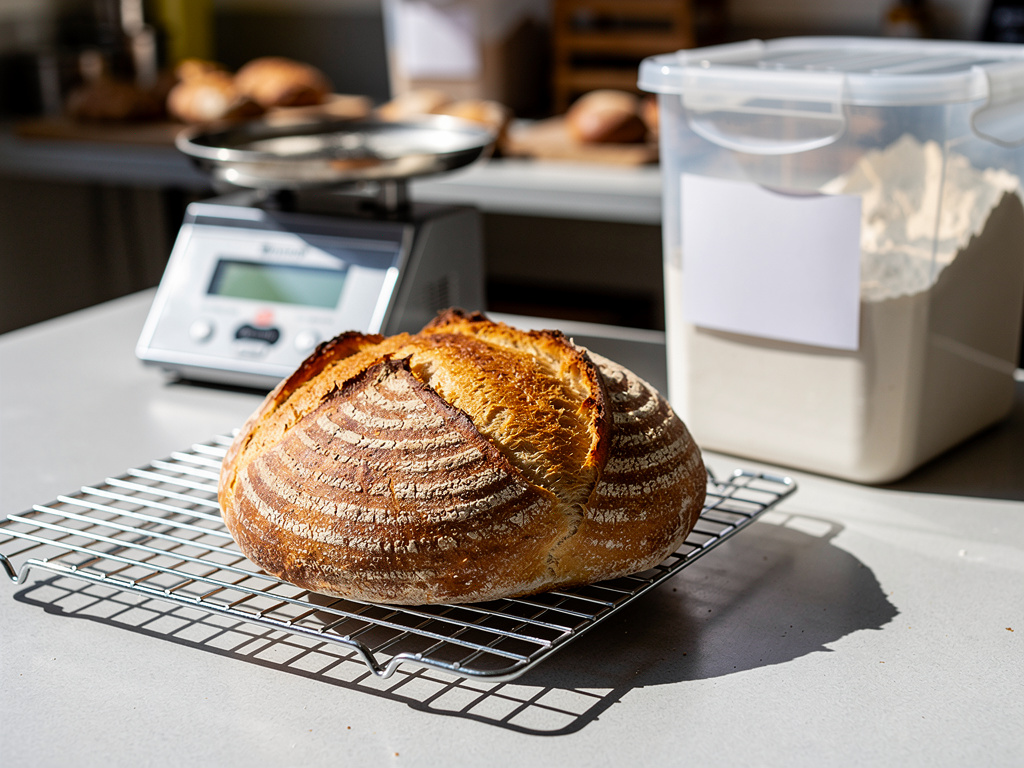


Sourdough is the ultimate "cheap to make" illusion. The ingredients, flour, water, salt, and a starter you keep alive for free, cost almost nothing, so new sourdough sellers price their loaves low and feel generous doing it. Then they realize they're working for a few dollars an hour on a product that takes the better part of two days to make. Sourdough's real cost isn't in its ingredients; it's in the time and labor the long fermentation demands. If you don't account for that, you'll badly underprice your loaves. This guide walks through what a loaf of sourdough really costs to make, so you can price it to profit, covering ingredients, the crucial cost of time and labor, energy and packaging, overhead, and how to price with confidence.
The short version: A loaf of sourdough costs far more to make than its cheap ingredients (flour, water, salt, starter) suggest, because its real cost is time and labor. Sourdough involves a long, multi-stage process, feeding starter, mixing, a long fermentation, shaping, proofing, and baking, spread across many hours (often over a day or two), plus real hands-on labor at each stage. A complete cost per loaf includes ingredients, a fair value for that significant labor and time, energy (long bakes and oven preheating), packaging, and overhead. Most sourdough sellers underprice by pricing on the cheap ingredients and ignoring the time and labor. To price profitably, count the full cost, especially your labor, then price sourdough as the premium, artisan product it is.
This guide covers ingredients, the cost of time and labor, energy and packaging, overhead, and pricing with confidence.
Sourdough sellers underprice because the ingredients are extremely cheap, which hides the product's real cost: the significant time and labor its long fermentation process demands. Cheap flour masks expensive time.
Why sourdough gets underpriced:
The consequence:
Sourdough sellers underprice because the ingredients, flour, water, salt, and a free-to-maintain starter, are genuinely almost free, which creates a powerful but false impression that sourdough is cheap to make. The illusion hides sourdough's real cost, which isn't ingredients at all, it's time and labor. Sourdough is a long, multi-stage process spread across many hours (often over a day or two), with hands-on work at each stage: feeding the starter, mixing, stretching and folding, shaping, proofing, scoring, and baking. Because that time is invisible in an ingredient tally, sellers ignore it and price on the cheap ingredients, ending up working for a few dollars an hour on a skilled, time-intensive product. Add the temptation to price near cheap store bread, and underpricing is almost guaranteed. The fix is to value the time and labor. Pricing your work to reflect its true cost is fundamental to a sustainable business, which the U.S. Small Business Administration's guidance on managing your business supports.
Sourdough ingredients, flour, water, salt, and starter, genuinely cost very little per loaf, which is real, but it's exactly why you can't price on ingredients alone. Count them accurately, but know they're the small part.
The ingredient cost:
How to calculate ingredient cost per loaf:
The key point about ingredients:
The honest truth about sourdough ingredients is that they genuinely cost very little, flour, water, salt, and a starter you maintain with a bit of flour and water, and that's real. Count your ingredient cost accurately (figure the batch cost and divide by loaves, counting flour properly, especially quality or specialty flours, and acknowledging the small ongoing cost of feeding your starter). But here's the crucial point: because sourdough's ingredients are so cheap, this is precisely why you can't price on them alone. The ingredient cost is a small, honest starting point, but it's a tiny fraction of what a loaf really costs, since sourdough's real cost lies in the time and labor its long process demands (covered next), plus energy and overhead. So count your ingredients, but recognize they're the small part, and never let their low cost fool you into pricing sourdough cheaply.
Time and labor are sourdough's real cost, the long, multi-stage process spread across many hours (often a day or two) with hands-on work at each stage, which you must value fairly. This is where the money is.
Sourdough's time and labor investment:
How to value your time and labor:
Why this is the core cost:
Time and labor are the real cost of sourdough, and valuing them is the key to pricing profitably. Sourdough is a long, multi-stage process, feeding starter, mixing, a long bulk fermentation, stretching and folding, shaping, proofing (often overnight), scoring, and baking, spread across many hours and frequently over a day or two, with hands-on, skilled labor required at multiple stages. Even though much of the fermentation is passive, the hands-on time and the long, attention-requiring process make each loaf a significant investment of your time and skill. So assign a fair value to your labor and spread it across the loaves in a batch, and batch to spread that labor across more loaves (up to what you can sell fresh). This is the core of sourdough's cost, far exceeding the cheap ingredients, and valuing it fairly is exactly what justifies pricing sourdough as the premium, skilled artisan product it is. Managing your time and pricing well is part of running your business, which the U.S. Small Business Administration's guidance on growing your business supports.
Energy, packaging, and overhead round out sourdough's true cost, the energy of long bakes and oven preheating, packaging, and a share of equipment and business costs. These add to the ingredient and labor costs.
Energy:
Packaging:
Overhead:
How these fit into the total:
Energy, packaging, and overhead complete sourdough's true cost per loaf. Energy is notable for sourdough specifically, because it often bakes at high heat with a long preheat (frequently using a Dutch oven), so each loaf carries a real share of your utility cost. Packaging (bread bags or wrap, labels) is a per-loaf cost, and overhead includes a share of your equipment (bowls, bannetons, Dutch oven, and their wear), broader utilities, business costs, and the small ongoing cost of maintaining your starter. Adding these to your ingredient cost and, most importantly, your significant labor cost gives you an honest, complete cost per loaf, one that reveals sourdough is far from the nearly-free product its cheap ingredients suggest. With the full cost known, especially the time and labor that dominate it, you can price sourdough properly, as the premium, artisan product it truly is.
You price sourdough confidently by adding a healthy margin to your complete cost (especially your labor) and positioning it as the premium, artisan product it is, not comparing it to cheap store bread. Once you know your cost, check it against what small vendors actually charge for sourdough: $10 for a typical plain loaf, $13 for a flavored one, and up to $20 for einkorn or spelt. Cost plus margin plus premium positioning.
How to price sourdough:
Why confident premium pricing works:
Pricing sourdough with confidence means adding a healthy margin to your complete cost, especially your significant labor and time, and positioning it as the premium artisan product it genuinely is. Start from your true cost per loaf (ingredients, labor, energy, packaging, overhead), making sure to value your time and skill properly, since that's the real cost and a price that doesn't cover it isn't sustainable. Add a healthy margin, and position your sourdough as premium, skilled, artisan bread rather than anchoring to cheap store bread, which drastically undervalues the craft, time, and quality. Price confidently: real sourdough with skilled labor and a long, careful process is worth a premium, and customers who seek out artisan sourdough value exactly that and will pay for it. Don't let the cheap ingredients or comparison to commodity bread fool you into underpricing your time. Your true cost (especially labor) plus a healthy margin, at premium positioning, is what makes sourdough genuinely worthwhile.
Once you've priced your sourdough right, you need a place to sell where fees don't eat your margin, and that suits recurring bread sales. Homegrown is $10 a month with no percentage fees beyond standard payment processing, so the platform doesn't take a cut of every loaf.
How it compares to the alternatives:
What Homegrown does well: a professional storefront to sell your sourdough with clear pricing, support recurring and standing weekly orders (ideal for a bread people buy regularly), local pickup and delivery, all at a low flat cost, with a fifteen-minute setup. A flat fee means the margin you priced into each loaf stays with you. When you're ready to sell sourdough, you can set up your storefront today.
The biggest mistakes are pricing on cheap ingredients and ignoring the time and labor. Because time and labor are sourdough's real cost, the errors that matter most involve undervaluing your time.
Mistakes to avoid:
Getting these right means valuing the time and labor that are sourdough's real cost, counting the complete cost per loaf, pricing with a healthy margin, and positioning sourdough as premium.
Far more than its cheap ingredients suggest, because sourdough's real cost is time and labor, not flour and water. The ingredients (flour, water, salt, starter) genuinely cost very little, but the product takes a long, multi-stage process spread across many hours (often over a day or two), with hands-on skilled labor at each stage. A complete cost per loaf includes those cheap ingredients, a fair value for the significant labor and time, energy (long hot bakes and preheating), packaging, and a share of overhead. The exact number depends on your process and pricing of your time, but the key is that labor and time dominate the cost. Most sellers underprice by pricing on the cheap ingredients and ignoring the time.
Because its cost is in time and labor, which are invisible in an ingredient tally. Sourdough ingredients are almost free (flour, water, salt, a free-to-maintain starter), so it looks cheap. But making it involves a long, multi-stage process, feeding starter, mixing, a long bulk fermentation, stretching and folding, shaping, proofing (often overnight), scoring, and baking, spread across many hours with hands-on, skilled work at multiple points. That significant time and skill is the real cost, and because it doesn't show up in the ingredient cost, it's easy to miss. So sourdough is far more expensive to make than it looks, once you account for the substantial time and labor its long, careful process demands. Value your time, and the true cost becomes clear.
You should value your labor and the overall time commitment, even though much of the fermentation is passive. While you're not actively working during the long bulk fermentation and overnight proof, the process still represents a real, extended commitment, you have to plan around it, attend to it at multiple stages, and it makes each loaf a significant time investment. So rather than trying to bill for passive hours, value your hands-on labor and skill fairly (which is substantial across the many stages), and recognize that the long process is part of what makes sourdough a premium, time-intensive product worth premium pricing. The point isn't to charge for every hour the dough sits, but to value your real labor and skill properly and price sourdough as the slow, artisan product it is.
Start from your complete cost per loaf (ingredients, and especially a fair value for your significant labor and time, plus energy, packaging, and overhead), add a healthy margin, and position sourdough as the premium, skilled, artisan product it is, not near cheap store bread. The most important thing is to value your labor and time properly, since that's the real cost; a price that doesn't cover your time isn't sustainable. Price confidently: real sourdough with skilled labor and a long, careful process is worth a premium, and customers who seek out artisan sourdough value the craft, flavor, and process and expect to pay for it. Don't let the cheap ingredients or comparison to commodity bread fool you into underpricing your time and skill.
Because it's a fundamentally different, premium product. Artisan sourdough is made through a long, skilled, multi-day process with natural fermentation, real craft, and hands-on labor, unlike mass-produced commodity bread made quickly at industrial scale. Sourdough has better flavor, texture, and quality, and it costs far more in time and skilled labor per loaf (even though the ingredients are cheap). So artisan sourdough legitimately costs more to make and is worth more, which is why it's priced as a premium product rather than competing with cheap store bread. Customers who seek out real sourdough understand and value this difference, the craft, the flavor, the slow process, and expect to pay a premium. Price your sourdough for what it genuinely is: premium artisan bread.
Two levers: price it properly (for your true cost, especially your significant labor and time, plus a healthy margin, at premium positioning), and produce efficiently. On pricing, stop pricing on the cheap ingredients, value the time and skill that are sourdough's real cost, and position it as premium artisan bread, not commodity bread. On production, batch to spread the process's labor across more loaves (up to what you can sell fresh), since making several loaves per session is more efficient per loaf than baking one. Also consider recurring and standing weekly orders, since sourdough suits a bread people buy regularly, which gives you predictable demand to produce efficiently against. Proper premium pricing plus efficient batch production is what turns sourdough from a labor of love into a genuinely profitable product.
Sourdough is the ultimate cheap-ingredient illusion: its real cost is the significant time and labor its long, multi-stage process demands, not the flour and water. Pricing it profitably means valuing that time and labor, counting the complete cost per loaf, adding a healthy margin, and positioning sourdough as the premium artisan product it is. Don't let cheap ingredients fool you into underpricing your skill and time. And to sell your sourdough (with recurring orders) at prices built on real costs, set up a Homegrown storefront built for local food vendors.



