
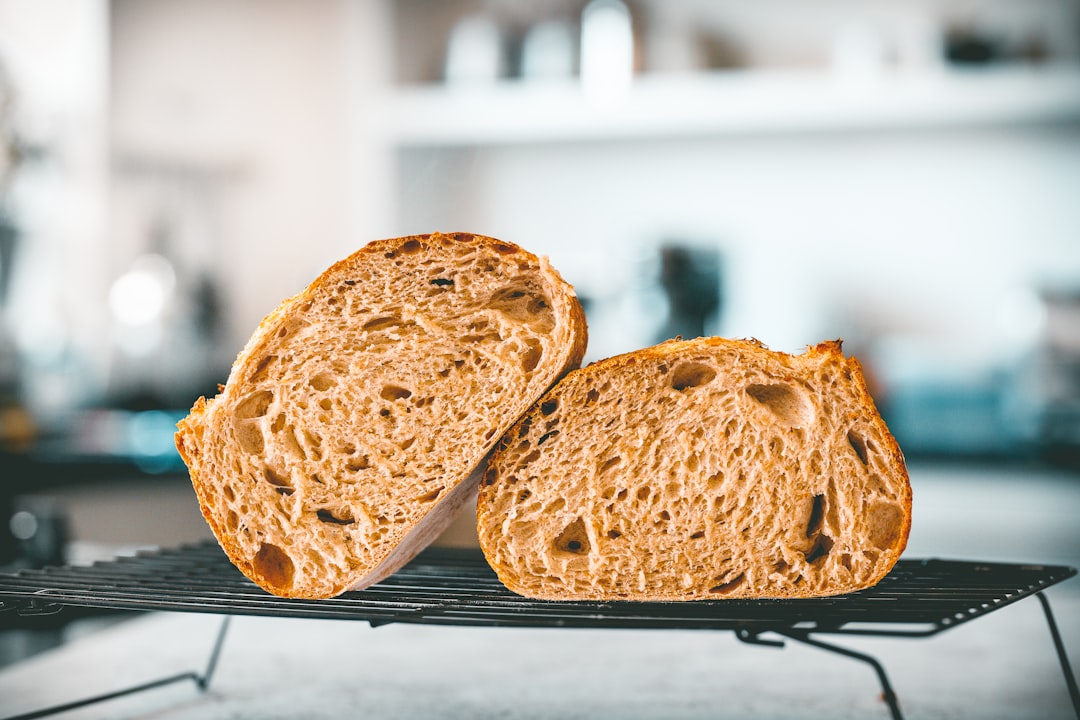


Somebody has already told you that you should sell your bread. Maybe a neighbor smelled the sourdough cooling and asked if you'd make them one. Maybe your sister-in-law offered to pay for the cinnamon rolls you brought to Christmas. That's how nearly every home bakery starts, and it's a better starting point than most people realize, because you already have a customer before you have a business.
The gap between "people want to buy this" and "I run a home bakery" is smaller than it looks. In every state, cottage food law lets you bake in your own residential kitchen and sell directly to customers without a commercial kitchen, without a restaurant license, and in about two-thirds of states without paying a permit fee at all. What you do need is to know your state's specific rules, get your labels right, price so the work is actually worth doing, and have somewhere for orders to land that isn't a DM inbox.
The short version: Look up your state's cottage food law first, because the sales cap, permitted products, and permit requirements vary enormously (Texas allows $150,000 a year with no permit; California requires county registration and caps Class A operations near $86,000). Pick two to four products you already bake well. Budget $150 to $400 for packaging and labels. Price using ingredients plus packaging plus your real hourly labor plus margin, and don't round down because the customer is a neighbor. Then set up one place for orders and payment so you're not reconciling texts against a spreadsheet at 6am on bake day. Most home bakers can go from decision to first paid order inside two weeks.
This guide walks the whole thing in order, with the parts most guides skip: what happens when you cross your revenue cap, whether you owe sales tax, what insurance actually costs, and the specific point where an informal system stops working.
A home bakery is a food business operating out of a private residential kitchen under your state's cottage food law. That law is the thing that makes it legal. It carves out a category of lower-risk foods that home producers can sell directly to consumers without meeting the commercial kitchen standards, routine health inspections, and licensing that a retail bakery has to meet.
The important word is *directly*. Almost every cottage food law is built around direct-to-consumer sales: you sell to the person who eats it. Selling to a coffee shop that resells your scones is a different transaction under most state laws, and it usually requires a different permit tier or falls outside cottage food entirely.
Within that frame, home bakers tend to run one of two models, and picking the right one early saves a lot of pain:
The batch model. You set a menu, open an order window (say Monday through Wednesday), bake everything at once on Friday, and hand it all off at one pickup window on Saturday. You bake exactly what was ordered and paid for.
The custom model. You take individual commissions. A birthday cake for the 14th, a cookie set for a baby shower on the 22nd. Each order is quoted separately and fulfilled on the customer's timeline.
Custom work pays more per item and it's genuinely satisfying, but it destroys production efficiency because you're baking small one-off quantities on scattered days. Batch work is where the actual economics live: one preheat, one mixing session, one cleanup, one pickup window. Most bakers who last end up running a batch menu as the backbone and taking a limited number of custom orders on top of it. If you're stuck under a pile of one-off requests already, read our breakdown of why custom orders keep food businesses overcommitted.
This is genuinely the first step, not a formality, because the answer changes what you can sell and how much you can earn.
Four questions to answer before anything else:
Is a permit or registration required? Many states require nothing. Others require a free registration, a food handler's card, or a paid permit from the state Department of Agriculture or your county health department. Texas requires no permit at all and explicitly bars local governments from requiring one. California requires county registration under a two-class system. The spread is that wide.
What's the annual revenue cap? Most states cap gross annual cottage food sales. The range runs from around $5,000 in the most restrictive states to $150,000 in Texas, with a large cluster in the $25,000 to $75,000 band. Several states have no cap at all.
Which products are allowed? Every state permits standard shelf-stable baked goods. Where they differ is the edges: cream cheese frosting, cheesecake, custard fillings, refrigerated items, and anything needing temperature control. In Ohio those edge products need a separate $10-a-year Home Bakery license with a kitchen inspection, while New York and North Carolina keep cheesecake out of home kitchens entirely.
Can you sell online, and can you ship? Some states allow online orders for local pickup and delivery. Some restrict you to in-person transactions only. A subset allow shipping within state lines. Almost none allow shipping across state lines, because the moment a package crosses a border it becomes interstate commerce under federal jurisdiction.
We publish a full 2026 guide for all fifty states with the current cap, the allowed and prohibited product lists, the exact required label wording, and where you're permitted to sell. Start at cottage food laws by state and open yours. Forrager maintains a useful independent summary as a cross-check, and your state's Department of Agriculture or Health site is the primary source when you want the statute text itself.
Here's how different three states look side by side, which is the best argument against taking a friend's advice from another state:
| State | Annual cap | Permit | Notable |
|---|---|---|---|
| Texas | $150,000 gross per household | None required | Since SB 541 (Sept 2025), anything not on a prohibited list; free registration for TCS foods |
| California | ~$86,206 Class A / ~$172,411 Class B | County registration; Class B needs a kitchen inspection | Approved-foods list only; in-state shipping allowed |
| New York | No sales cap | Home Processor Exemption | In-state sales, no permit fee |
The instinct to offer everything is the most common early mistake. A menu of nine items means nine ingredient inventories, nine sets of packaging, nine timing windows on bake day, and nine chances for something to go wrong.
Start with two to four products. Pick them on three criteria: you already make them well, they hold quality for at least 24 hours after baking, and they share ingredients so your shopping list stays short.
Products that are permitted essentially everywhere:
Products that are restricted or excluded in most states:
The working shorthand is the refrigeration test. If leaving it on a counter for four hours would make it unsafe rather than just stale, it's probably outside your cottage food exemption. When you're unsure about a specific product, the state guide for your state lists the actual approved and prohibited items rather than the general rule.
The reason a home bakery is one of the cheapest businesses to start is that the expensive equipment is already sitting in your kitchen. Your oven is paid for. Your mixer is paid for. What you're actually buying is the stuff that turns a bake into a product someone can carry home. For a cupcake menu that list is short: two pans, 1,000 liners, 10 boxes with inserts, piping bags, a scoop and a case of powdered sugar came to $88.43 in September 2026, priced line by line in the guide to starting a cupcake business from home.
| Item | Realistic range | Notes |
|---|---|---|
| Packaging (bags, boxes, ties, liners) | $40–$120 | Buy the smallest case size available for your first run |
| Label stock and printing | $25–$60 | A home inkjet on sheet labels is fine to start |
| Extra pans and cooling racks | $40–$100 | The most common real bottleneck on batch day |
| Digital kitchen scale | $15–$30 | Skip only if you already weigh everything |
| Permit or registration fee | $0–$150 | Zero in most states; check yours |
| Food handler's card, where required | $10–$25 | Online course, usually under two hours |
| Total | $130–$485 | Most bakers land near $250 |
Two costs to plan for but not pay yet. General liability insurance for a home food business typically runs a few hundred dollars a year, and your homeowner's policy almost certainly excludes a home-based food business, so don't assume you're covered. For bakers, the published starting price on September 29, 2026 was $299 a year, and our guide to insurance for a home bakery covers the gaps that price leaves, like deliveries and one-day event policies that exclude food claims. And a business entity: most home bakers legitimately start as a sole proprietor, which requires no filing. If you want to understand what an LLC changes and when it's worth it, the SBA's business structure guide and the IRS overview of business structures are the two sources worth reading before you pay anyone to form one for you.
This is where the money goes missing, and it isn't because the math is hard. It's because you're selling to people you know.
The formula:
Ingredients + packaging + labor + overhead + margin = price
Worked out on a single sourdough loaf, baking four at a time:
| Component | Cost |
|---|---|
| Ingredients (flour, water, salt, levain) | $1.20 |
| Packaging (bag, tie, label) | $0.43 |
| Labor: 3 hours across 4 loaves at $18/hr | $13.50 |
| Overhead (energy, water, wear) | $0.50 |
| Floor price | $15.63 |
| Margin at 20% | $3.13 |
| Price | $18.75, call it $18 |
Most home bakers selling sourdough charge $10 or $12. The ones charging $16 to $18 aren't baking a different loaf. They ran the numbers and didn't round down.
Two things sabotage this. The first is undercounting labor. Active bake time is easy to measure. Shopping, mixing, shaping, cleanup, packaging, label printing, and answering order messages are not, and together they're usually more hours than the baking. Track a full batch weekend twice, end to end, before you set prices. Most bakers who do this honestly discover their effective rate was somewhere between $7 and $12 an hour, which is why they felt busy and broke at the same time.
The second is what we'd call the neighbor discount. You feel strange charging your kid's teacher $18 for a loaf. So you knock it to $14, and you throw in a second one, and you tell yourself it's community spirit. But the farmers market vendor two miles away charges the full price to the same customer without flinching. When you round down because you know the buyer, you're funding their grocery budget out of your labor.
Charge the number the formula gives you. If someone truly can't afford it, that's a separate and much simpler conversation than trying to raise prices on a hundred regulars a year from now. For the psychology behind this and how to get past it, see why charging what you're worth feels wrong.
Every product you sell needs a label. This is statute, not branding advice, and handing over an unmarked bag is a violation in every state. Your business name is one of the required lines on that label, so if you have not settled on one yet, these bakery name ideas from 158 real home bakeries also show when California, Texas and Florida require you to file the name.
The elements nearly every state requires:
The disclaimer is the element that catches new bakers, and it's the one with actual legal exposure. Look up your state's exact wording before you print a single sheet. Our cottage food labeling requirements guide walks each element and where it has to appear on the package, and the big 9 allergens breakdown covers the disclosure side in detail.
Your first ten customers are people you already know. Not an Instagram audience, not a website, not ads. This isn't a fallback plan; it's the actual sequence, and skipping it is why some bakers spend two months building a brand and sell nothing.
What works, roughly in order:
Tell the people who already asked. Somebody has already offered to pay you. Go back to them with a date and a price. "I'm doing a bake this Saturday, sourdough is $18 and cinnamon rolls are $16 for four. Want in?" That's the entire pitch.
Post once in your neighborhood group. Nextdoor or a neighborhood Facebook group is a warm, free, hyperlocal audience. One photo of what you make, what it costs, and how to order. Once your first ten customers are coming back, the bakery advertisement ideas for reaching strangers price out the next step, from a $17.99 yard sign to a $35 test ad on Facebook or Instagram.
Ask each of those first buyers for one referral. After a good handoff, "if you know anyone else who'd want a loaf, send them my way" converts at a rate no paid channel touches, because the bread is doing the selling.
Add a farmers market if your state allows it. One market day puts you in front of a few dozen people already shopping for local food, and market customers convert into weekly-batch regulars better than almost any other source. Check whether your state's cottage food law covers market sales; some cover only home-based sales and require a separate vendor permit. Ours are catalogued in the farmers market vendor permits by state guide.
Social media comes third, not first, and process beats polish. A shaky video of you shaping dough at 6am will outperform a styled flat lay every time with this audience. The single highest-leverage habit is a consistent weekly announcement: same day, same time, same format. Consistency trains people to look for you. Irregular posting trains them to stop.
At the beginning, DMs and a notes app work. They work right up until they don't, and the failure is gradual rather than dramatic.
It usually looks like this. Two people ask about the last loaf on different platforms and you tell both of them yes. Somebody's request sits in a filtered message folder for three days. You get to Friday morning and can't tell from your spreadsheet whether Sarah paid or whether you just remember her saying she would. You bake for a customer who never confirmed and never shows up. None of these are personal failures. They're what happens when a message inbox, a spreadsheet, and a payment app get asked to do a job none of them were built for.
The threshold where this reliably breaks is somewhere between ten and twenty orders a week, and it arrives faster than you expect once referrals kick in. At that point a website for your home bakery only needs one page: the menu with a price on every size, an order cutoff, a pickup window and an allergen line per product, with the payment taken at checkout instead of in your DMs.
What actually fixes it is having the pieces connected rather than separate: a menu customers can see with live quantities, payment collected at the moment of ordering so a confirmed order is genuinely confirmed, automatic confirmations and pickup reminders, and a bake list that generates itself from what was ordered. When an item hits its cap it goes sold out on its own, which is what makes double-booking structurally impossible instead of something you have to stay on top of.
That's what a pre-order storefront does. Homegrown is $10 a month billed annually, or $12.50 month to month, with no commission on your sales at any volume. You get a storefront link to put in your Instagram bio, a live batch menu, checkout, order dashboard, and pickup management, and you're listed in a local marketplace where nearby customers can find you. Setup takes about fifteen minutes.
Before you commit to any tool, read how to take pre-orders for your food business so you know what you actually need it to do.
Underpricing on day one. Customers anchor to the first price they see, and raising prices later on people you know is genuinely uncomfortable. Do the math before the first order.
Skipping the disclaimer. Every label, every batch, no exceptions. It's the one label element with real regulatory teeth.
Treating state law as the only law. Cottage food law is the floor. Your county, city, or HOA can add zoning restrictions, limits on residential traffic, or signage rules on top of it. A neighbor complaint about cars during Saturday pickup is a real problem that state law will not solve for you. Call your local health department once before your first pickup.
Not tracking gross sales against the cap. Crossing your state's revenue cap doesn't get you fined on day one, but it does mean you're no longer covered by the cottage food exemption, which can mean a commercial kitchen, a different permit class, and inspections. Track gross from your first sale.
Baking on speculation. Making twenty extra loaves because you think demand is there, then eating the difference, is the fastest way to erase your margin. The whole point of the pre-order model is that you bake what's already sold. See bake to order versus bake to sell for the full comparison.
It depends on the state. Many states require no permit or license for cottage food operations at all. Others require a free registration, a food handler's card, or a paid permit through the Department of Agriculture or your county health department. Open your state's cottage food law guide for the specific answer, then verify against your state agency's site.
Most home bakers spend between $130 and $485 before their first sale, and typically land around $250. That covers packaging, labels, an extra set of pans, and any permit or food handler's fee your state charges. The oven, mixer, and kitchen you already own are the reason the number is that low.
One bake day a week producing 20 loaves at $18 is $360 gross. After roughly $24 in ingredients, $9 in packaging, and honest labor, you're looking at something in the neighborhood of $250 net per bake day, or around $1,000 a month from a single weekly batch. Adding a second product line or a second bake day scales it from there, but a consistent one-day-a-week operation at that level is a realistic target for the first six months.
In most states, yes, for local pickup or delivery. A minority of states restrict cottage food sales to in-person transactions only, and a subset allow shipping within state lines. Interstate shipping is almost never permitted, because crossing a state line moves the product into federal interstate commerce. See can you ship cottage food for the state-by-state picture.
It depends on your state, and it's the question new bakers most often forget to ask. Many states exempt unprepared grocery food from sales tax while taxing prepared food, and baked goods can land on either side of that line depending on whether they're sold by the item, sliced, or served. Confirm with your state's Department of Revenue before your first sale rather than discovering it at tax time.
You lose the cottage food exemption. Practically, that means you'd need to move production into a licensed commercial or shared-use kitchen, or move to a higher permit tier if your state has one. It's a solvable problem and it's a good problem, but it's much easier if you see it coming, which is why you track gross sales from order one.
It isn't legally required in most states, but it's worth having. General liability coverage for a small home food business is typically a few hundred dollars a year and covers claims of illness or injury. Your homeowner's policy almost certainly excludes home-based business activity, so confirm rather than assume. See cottage food business insurance for what the policies actually cover.
The whole sequence fits into about two weeks of evenings. Open your state's guide and write down your cap, your permit requirement, and your exact disclaimer wording. Pick three products. Price them with the formula and don't round down. Order packaging and print a test label. Tell the ten people who already asked. Take orders somewhere they won't get lost.
The first batch is the easy version of the problem. The tenth week, when three people are asking about a product that sold out and you're trying to remember who paid, is where the system you set up now either holds or doesn't. Build it before you need it.
If you want the ordering piece handled without stitching together a form, a payment app, and a spreadsheet, you can set up a Homegrown storefront in about fifteen minutes. Ten dollars a month billed annually, no commission on your sales, and your customers get one link that does the menu, the checkout, and the pickup reminder.



