
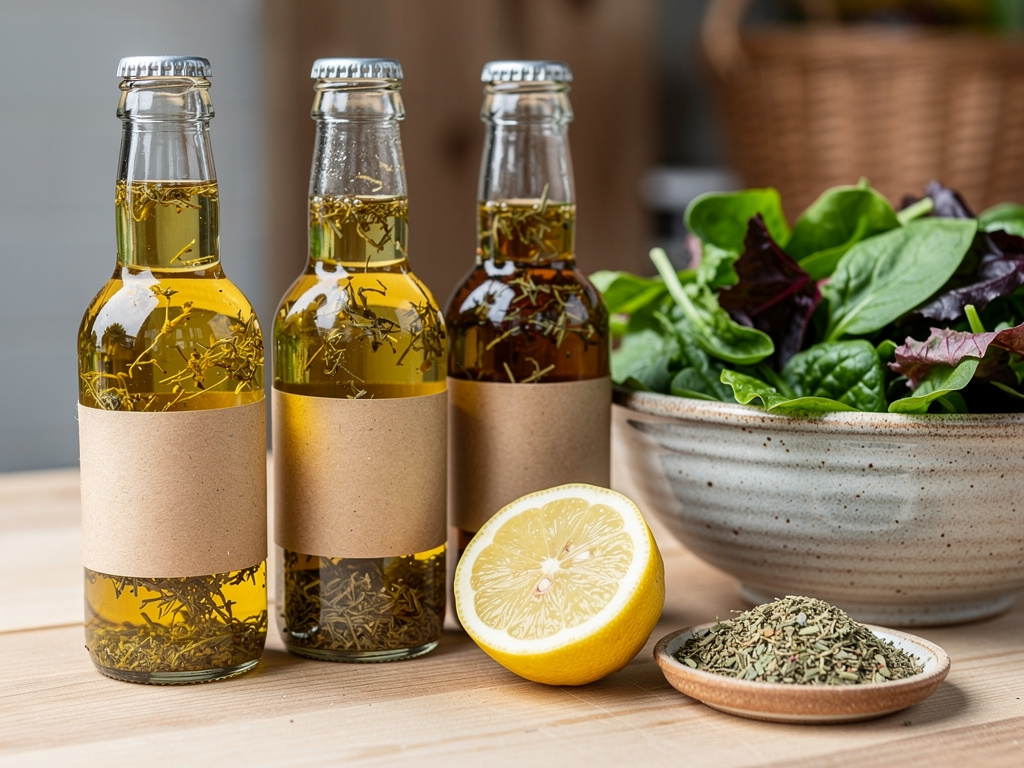


The short version: You can sell homemade salad dressing in some states, but assuming it is allowed in most states is not safe. Of the 9 states whose rules we read, Texas allows it under its any-food rule, and North Carolina names "balsamic dressing" and evaluates each sauce for shelf stability, which may mean a lab test. Utah leaves it off its cottage food list but allows in-person sales inside Utah under a separate homemade food law. Colorado and Michigan name salad dressing as not allowed, California leaves it off its approved list, the food list Minnesota's cottage food page links to puts "Oil based flavored vinaigrettes" under Not Allowed, and Washington and Georgia do not name it at all. Creamy dressings like ranch need refrigeration, and today, of the 9 states, only Texas and Utah's Homemade Food Act give them a home-kitchen path.
Checked on each state agency's page and on eCFR, September 26, 2026: the rules quoted here, plus Homegrown's pricing on findhomegrown.com/signup the same day. Rules change and every state reads its own law, so verify your state's current rules with the agency before you sell. Homegrown takes orders and payments; it does not approve recipes, test pH or tell you what your state allows, it has no drops or countdown-timer release feature, and customers create a Homegrown account to place a first order.
Your lemon herb vinaigrette is the thing everyone asks you to bring. A friend wants three bottles for Christmas gifts, and the farmers market manager asked if you would bring some in the spring. Before you take anyone's money, you want a straight answer on whether you can legally sell it from your kitchen.
This page gives that answer for 9 states, in each agency's own words, plus the one federal sentence that explains why a vinaigrette and a ranch get such different treatment. It covers permits, pH testing, labels, sales caps and where you can sell once you are allowed.
Your state decides, and among the 9 states whose rules we read on September 26, 2026, 3 give a homemade vinaigrette a written path from a home kitchen. Texas allows "any foods" under its cottage food law except a short list that does not include dressing. North Carolina's Home Processor program names "balsamic dressing" on its list of low-risk sauces. Utah's Home Consumption and Homemade Food Act rules out only meat and raw dairy, as long as you sell in person inside Utah. Three states rule it out, Minnesota's cottage food page does not name dressing but the food list it links to puts "Oil based flavored vinaigrettes" under Not Allowed, and two states never mention it.
The reason the answers split is what is in the bottle. Oil and vinegar with dried herbs is a very different food from buttermilk, mayonnaise and fresh garlic, even though both are sold as dressing. The same split decides flavored olive oil: Michigan and Washington list garlic in oil among foods a home kitchen cannot sell, which is why what to charge for olive oil starts with checking your state before any price.
Here is what the rest of this page covers:
If your state already allows it and you want the kitchen and pricing side (recipes, bottle sizes, ingredient costs, flavors that sell), our guide on how to sell salad dressing from home covers that. This page is the permission half: which states allow it, quoted from each agency's own page.
A simple vinaigrette is usually an "acid food" under federal rules, while ranch and other creamy dressings are foods that must be kept cold, and state laws treat those two groups very differently. The federal definitions sit in 21 CFR 114.3, which we read on eCFR on September 26, 2026. It defines three things you need to know:
That exclusion is the good news for vinaigrette makers. Minnesota's Department of Agriculture gives a vinaigrette as its own example on its acidified foods page: "An example of this could be dried spices in a vinegar-based vinaigrette." Oil, vinegar, salt and a spoon of dried oregano is an acid food with a little low-acid food mixed in.
The line blurs when you add large amounts of fresh garlic, shallots, roasted peppers or fruit puree. Those are low-acid ingredients, and enough of them can make your dressing an acidified food, which many home-kitchen laws exclude. Creamy dressings are a third group. The same federal section also leaves out foods "stored, distributed, and retailed under refrigeration," but that only takes them out of the federal canning rule. Most state cottage food laws keep refrigerated foods out: today, 7 of our 9 states leave them out of their cottage food and homemade food rules, Texas lets them in only with registration, and Utah's separate homemade food law does not list them among its exclusions.
Thin, vinegar-forward dressings made with dried herbs and spices are the easiest to get approved, and anything with dairy, egg, fresh garlic in oil or heaps of fresh vegetables gets harder fast. The table below sorts common dressings by what keeps them safe and how the rules we read treat them.
Scroll sideways to see every column.
| Dressing | What keeps it safe | Needs refrigeration? | How the rules we read treat it |
|---|---|---|---|
| Red wine or balsamic vinaigrette with dried herbs | Vinegar is the main acid; small amounts of dried spices | No, if the pH stays low | Closest to the federal "food dressings" exclusion. North Carolina names "balsamic dressing". Still banned outright in Colorado and Michigan, not on California's approved list, and listed as not allowed on the food list Minnesota links to |
| Lemon or lime vinaigrette | Citrus juice is the acid | No, if the pH stays low | Same as above, but fresh juice varies batch to batch, so pH testing matters more |
| Honey mustard vinaigrette | Vinegar plus mustard and honey | No, if the pH stays low | Usually treated like a vinaigrette. Colorado lists mustard among ineligible condiments |
| Vinaigrette with fresh garlic, shallots or roasted peppers | Vinegar must acidify the low-acid pieces | Depends on the recipe | Can become an acidified food; a lab or process authority decides. Garlic in oil mixtures are banned by name in Michigan and Washington. In North Carolina that also brings in the federal acidified food rules |
| Asian sesame or soy ginger | Rice vinegar plus soy sauce, fresh ginger, garlic | Depends on the recipe | Fresh ginger and garlic push it toward acidified; get it tested |
| Ranch, blue cheese, Caesar, creamy Italian, Thousand Island | Refrigeration; dairy, egg or mayonnaise base | Yes | A food that needs time and temperature control. Today, of the 9 states, only Texas (with DSHS registration) and Utah (in person, under its Homemade Food Act) give a home kitchen a path. Texas excludes fish, so a Caesar made with anchovies is out there |
Federal definitions from 21 CFR 114.3 on eCFR; state treatment from each agency page named in this guide. We read all of them on September 26, 2026.
The practical result: two products both called "Italian dressing" can get different answers. A dried-herb version in a shelf-stable bottle might be fine where you live, while a version packed with fresh garlic cloves might not be.
Texas, North Carolina and Utah are the 3 states of the 9 we read that let a home kitchen sell a vinaigrette on paper, and each one gets there a different way. None of them uses the exact same test, so read the one for your state closely.
Texas DSHS says cottage food "allowable foods now include any foods, except for the following: meat, meat products, poultry, or poultry products; seafood...; ice or ice products...; low-acid canned goods; products containing cannabidiol or tetrahydrocannabinol; or raw milk and raw milk products." Salad dressing is not on that list. The annual gross income limit is $150,000, and local health departments may not require a permit or charge a fee. We read this on the DSHS Texas Cottage Food Production page on September 26, 2026.
North Carolina runs a Home Processor program through the Department of Agriculture. Its list of low-risk foods includes "Some sauces ( i.e. balsamic dressing, etc.)" and "Acid and acidified foods ( i.e. pickles, BBQ sauce, etc. )", and the NCDA&CS Home Processor page says sauces "will be required to first be evaluated to determine if they are shelf stable." That evaluation may require a lab test for pH or water activity, and the lab then issues a Process Authority Letter you send in with your application. If your dressing counts as an acidified food, the same page says the federal acidified food rules (21 CFR 114) and emergency permit control rules (21 CFR 108) also apply, so ask NCDA&CS whether you need FDA registration and a process filing.
Utah has two home-kitchen laws, and dressing fits only one of them. Its cottage food registration is a closed list: the Utah Department of Agriculture and Food (UDAF) has registrants agree "to limit production to the commodities listed under the Permitted Cottage Food Products," and dressing is not on that list. Vinegar is, with a strict rule: "Flavored vinegar must be strained or filtered prior to bottling and may not contain any flavoring components, including but not limited to herbs, pieces of fruits or vegetables, and fruit rinds." The second law, the Home Consumption and Homemade Food Act, is what UDAF calls "an alternative to the Cottage Food Law." It needs only a business license, rules out "Meat," "Food products containing meat" and "Raw (unpasteurized) dairy products," and says products "may only be sold within Utah" and "must be sold in-person, directly to the final end consumer." Your label needs your name and address, the line "Not for Resale – Processed and prepared without the benefit of state or local inspection" and an allergen list, and Utah Code 4-5a-104 says you must tell each buyer the food is not certified, licensed, regulated or inspected.
For the full picture of the Texas law beyond dressing, see our Texas cottage food law guide.
Launch with one vinaigrette, not four. In North Carolina every sauce goes through its own shelf-stability evaluation before approval, so a single balsamic recipe means one evaluation, and possibly one lab test and one Process Authority Letter, to wait on. Add a second flavor once the first is selling and you know which way your customers lean.
Colorado and Michigan both list salad dressing among foods a home kitchen cannot sell, and California leaves it off the list it lets home kitchens make. Under these 3 states' cottage food laws, a bottled vinaigrette needs a licensed kitchen, not your home stove. Minnesota is a likely no as well, because a food list linked from its cottage food page names oil based vinaigrettes as not allowed. California also has a separate MEHKO law that lets a person "operate a restaurant in their private residence" where the city or county has authorized it; that is a home restaurant permit, so ask your county before assuming it covers bottled dressing.
Colorado. The Colorado Cottage Foods Act page from CDPHE lists ineligible foods, and one line reads: "Sauces such as barbeque, hot, pasta, pizza , or salad dressing." The next line rules out "Condiments such as ketchup, mustard, and hot sauce." Colorado's own eligibility quiz asks, "Is it a condiment, sauce, salsa, canned fruit or vegetable, beverage, or juice?" A yes answer means the product is not a cottage food. Colorado has also signed a law, HB26-1033, that from January 1, 2027 lets a registered home kitchen sell one type of food that needs refrigeration, in up to 5 variations, after a food safety course. CDPHE's page says to check back for details, so ask the agency whether a creamy dressing can be that one type.
The March 2026 MDARD cottage food one-pager lists "Salad dressings, sauces, or condiments" and "Garlic in oil mixtures" under foods that cannot be cottage foods. The same page lists "Vinegar and flavored vinegar" and dry mixes under foods that "May Be Considered for Cottage Foods," which matters if you want a legal product close to dressing.
California. The California Department of Public Health keeps an Approved Cottage Foods List (last reviewed April 2026 on the copy we read), and a home kitchen can only make what is on it. Dressing is not there. The closest category is "Vinegars and Mustards," which covers "Mustards (plain, without eggs)," plain vinegars, and fruit-infused vinegars made only with high-acid fruits such as apple, lemon or raspberry. If plain mustard is the product you land on, pricing homemade mustard starts from about $2.45 for an 8-ounce jar, and six small-batch brands charged $6.95 to $13.95 for an 8 or 9 ounce jar on September 30, 2026.
Our guide to Michigan's cottage food law walks through the rest of that state's rules if you want to sell something else in the meantime.
Minnesota. Minnesota lets registered cottage food producers sell "non-potentially hazardous foods and home-processed and home-canned pickles, vegetables, or fruit with a pH of 4.6 or below," and its cottage food page does not name salad dressing. That page links to a Non-Potentially Hazardous Foods List, developed with the MDA, the Minnesota Farmers' Market Association, the Minnesota Cottage Food Producer Association and University of Minnesota Extension, and last revised September 14, 2026. Both its vinegar table and its condiments table put "Oil based flavored vinaigrettes" in the Not Allowed column. The MDA page says the list "is not owned by the MDA and only provides examples," so ask the Department of Agriculture in writing before you plan on selling a vinaigrette there.
In Washington and Georgia, none of the agency pages we read names salad dressing either way, so the safe move is to email the agency with your exact recipe and get the answer in writing. Each of these 2 states does say something close enough to steer you:
Read Utah's cottage food vinegar rule, quoted earlier, closely. If a state will not let herbs float in a bottle of vinegar under its cottage food list, a vinaigrette with herbs in it is unlikely to pass a similar list without an agency's written OK. Washington's ban on mustard and garlic in oil points the same direction.
Swipe the table sideways to see each state.
| State | Does the agency name dressing? | What the agency page says | What it means for a vinaigrette |
|---|---|---|---|
| Texas | No | "Any foods" except meat, seafood, ice, low-acid canned goods, CBD or THC, raw milk | Yes, no permit, up to $150,000 a year |
| North Carolina | Yes | "Some sauces ( i.e. balsamic dressing, etc.)"; sauces evaluated for shelf stability | Yes, after a shelf-stability evaluation (possibly a lab test) and a home inspection |
| Minnesota | Not on the cottage food page; its linked food list names vinaigrettes as not allowed | Non-potentially hazardous foods and home-canned foods "with a pH of 4.6 or below" | Likely no: the MDA-linked food list says oil based flavored vinaigrettes are not allowed; ask MDA in writing |
| Utah | Not on the closed cottage food list | The separate Homemade Food Act rules out only meat and raw dairy; sales in person, inside Utah | Yes under the Homemade Food Act, in person only; not under a cottage food registration |
| Colorado | Yes | "Sauces such as barbeque, hot, pasta, pizza , or salad dressing" are ineligible | No |
| Michigan | Yes | "Salad dressings, sauces, or condiments" cannot be cottage foods | No |
| California | No, not on the approved list | Only listed categories allowed; vinegars and plain mustards are listed | No |
| Washington | No | Bans garlic in oil, BBQ sauces, ketchups, mustards and food products made from fresh fruits or vegetables; allows vinegars | Ask WSDA in writing |
| Georgia | No | Untreated garlic and oil mixtures need temperature control | Ask GDA in writing |
Every quote is from the state agency's own page or PDF, which we read on September 26, 2026. Verify your state's current rules before you sell, because lists like these get revised.
Garlic in oil is named by 3 states we checked: Michigan and Washington ban "garlic in oil mixtures" by name, and Georgia lists "untreated garlic and oil mixtures" as a food needing temperature control. The agency pages do not give a reason, but Oregon State University Extension explains the risk: low-acid foods such as garlic "can be a source of Clostridium botulinum bacteria," and "Low acid foods stored in oil create an oxygen-free environment which is perfect for growth of Clostridium botulinum bacteria." We read that page on September 26, 2026. That makes garlic in oil the one ingredient choice most likely to turn a legal vinaigrette into an illegal one.
Here is the problem in plain terms. Fresh garlic, shallots and fresh herbs are low-acid foods that can carry soil bacteria. Oil seals them away from air. If the acid in your dressing does not fully reach into those pieces, you have a low-acid pocket sitting in an oxygen-free space at room temperature.
A dressing that separates into an oil layer on top and a vinegar layer on the bottom can leave fresh garlic or herb pieces floating in the oil, away from the acid. That is the setup the OSU Extension warning describes, even inside a vinaigrette. Use dried garlic and dried herbs in any dressing you sell, unless a lab or process authority has approved your fresh-ingredient recipe in writing.
If you already make infused oils, the same caution applies there, and our guide to selling infused olive oil from home covers the dried-ingredient approach. For a dressing, the easy fix is to switch to dried ingredients, which moves your recipe back toward the simple "acid food" group. Swaps that keep the flavor:
Texas asks for no permit for a shelf-stable dressing but requires a food handler training course. North Carolina requires an application, a kitchen inspection and a shelf-stability evaluation that may include a lab test and a Process Authority Letter, and a check with your county planning or zoning office (and your HOA or landlord) for any local permits; NCDA&CS says the inspection is usually scheduled 8 to 12 weeks after it gets your application, sometimes longer. Utah's Homemade Food Act route needs only a business license, with no UDAF registration. Minnesota is in the table too, in case the Department of Agriculture says yes to your recipe in writing: it asks for cottage food training, an exam and a yearly registration that is free up to $7,665 in sales. Here is how those 4 states compare.
Swipe sideways for the fee, cap and testing columns.
| State | Permit or registration | Fee | Yearly sales cap | Kitchen inspection | Testing |
|---|---|---|---|---|---|
| Texas | None for a shelf-stable dressing; DSHS registration if the dressing needs refrigeration; a food handler training course is required | Local permits and fees not allowed | $150,000 gross | No | If your dressing counts as a "plant-based acidified canned good," the DSHS page lists approved recipe sources, accredited testing labs and qualified process authorities, and a Request for Official Determination to add a new recipe source; print a batch number on the label |
| North Carolina | Home Processor application; a check with your county planning or zoning office (and HOA or landlord) for local permits; no pet may come inside the home, even only at night | Not listed on the NCDA&CS page | Not listed on the page | Yes | Shelf-stability evaluation; dressings may need a pH test and a Process Authority Letter; an Acidified Food Course may be required; if your dressing counts as an acidified food, the federal acidified food rules (21 CFR 114) and emergency permit control rules (21 CFR 108) also apply, so ask NCDA&CS about FDA registration and a process filing |
| Minnesota | Cottage food registration, renewed each year (expires March 31), after training and an exam (a free online course up to $7,665 in sales, a paid course above that) | $0 up to $7,665 in sales, $50 above that | $78,000 per person | Not listed on the MDA page | Finished pH of 4.6 or below; the MDA-linked food list puts oil based flavored vinaigrettes under Not Allowed |
| Utah (Homemade Food Act) | A business license; no UDAF registration | No UDAF registration fee; any local business license fee still applies | None named on the UDAF page | No; Utah Code 4-5a-104 exempts these sales from state and local inspection | None named on the UDAF page |
Read on the Texas DSHS, NCDA&CS, Minnesota MDA and Utah UDAF pages and in Utah Code 4-5a-104 on September 26, 2026. Minnesota's 2025 law, effective August 1, 2027, moves every registrant to one tier with a $30 yearly fee.
A process authority is a food scientist, usually at a university or a testing lab, who reviews your recipe and the way you make it and puts the verdict in writing. In North Carolina, the testing lab issues that letter, and you send a copy in with your application. The Home Processor page also says any pet that comes inside your home, even only at night, rules your kitchen out, and it expects a kitchen sink used only for food prep, a separate sink for hand washing, and a copy of your water bill or a well water test.
Not every state requires it, but test every batch anyway, because a calibrated pH meter reading at or below 4.6 is the number that matters. Minnesota writes 4.6 into its cottage food rule, North Carolina lists "Dressings/sauces" among products that may need pH testing, and the federal acidified food rule uses the same line. The Texas page never mentions pH. For plant-based acidified canned goods it lists approved recipe sources, accredited testing labs and qualified process authorities, and a Request for Official Determination to add a new recipe source.
A pH meter is a handheld probe that reads acidity as a number. Paper strips change color instead, and they are hard to read in a cloudy, oily dressing. The federal rule for commercial acidified food makers, 21 CFR 114.80, says that when a finished pH is above 4.0, it "shall be by a potentiometric method," which means a meter. That rule is written for licensed processors, but it is a good standard for a home kitchen too.
A simple routine that fits a small batch:
Oil does not have a pH of its own, so a very oily dressing can give a jumpy reading. Mixing the sample well before testing gives you a more honest number.
A label that works in any of these states has the name of the dressing, your ingredients in order by weight, any major allergens, your name and address, and your state's home-kitchen statement. Not every state requires all of them (the Texas list asks for allergens but not a full ingredient list), and Texas spells its statement out word for word. On a Texas cottage food label, that line reads: "THIS PRODUCT WAS PRODUCED IN A PRIVATE RESIDENCE THAT IS NOT SUBJECT TO GOVERNMENTAL LICENSING OR INSPECTION." Texas also lets you register with DSHS and print a registration number in place of your home address.
A checklist that covers the states in this guide:
Do not print just "Salad Dressing" as the name. Federal rules at 21 CFR 169.150 reserve that exact name for a standardized spoonable product with at least 30 percent vegetable oil and egg yolk equal to 4 percent liquid egg yolk, the kind sold in jars next to mayonnaise. Name yours for what it is, like "Red Wine Vinaigrette." We read that section on eCFR on September 26, 2026.
Our cottage food labeling requirements guide walks through the 7 things every label needs, including the disclosure statement, if you are designing your first label.
Of the 9 states we read, Texas allows it after you register with Texas DSHS and keep the dressing at 41°F or below from your fridge to your customer, and Utah's Homemade Food Act does not rule it out for in-person sales. Ranch, blue cheese, Caesar and creamy Italian need refrigeration to stay safe, and today the other 7 states' home-kitchen rules keep foods that need refrigeration out.
Texas calls these TCS foods, short for "time and temperature control for safety." The DSHS page says a cottage food operation "may sell time and temperature control for safety food (TCS)" as long as it is not meat, seafood, ice, low-acid canned goods, CBD or THC products, or raw milk. Creamy dressings made with store-bought pasteurized buttermilk, sour cream or mayonnaise fit inside that rule. A Caesar made with raw egg yolk is a much bigger food safety risk, and we would not sell one from a home kitchen even where it is technically allowed. A classic Caesar also contains anchovies, and Texas excludes "seafood, including seafood products, fish, fish products," so leave the anchovies out or ask DSHS.
Texas adds these rules for any TCS food:
In Utah, the Homemade Food Act (Utah Code 4-5a-105, checked September 26, 2026) excludes only raw dairy and meat, so a ranch made with pasteurized buttermilk is not ruled out for in-person sales inside Utah. Neither the law nor the UDAF page sets a temperature rule, so keep it at 41°F or below anyway and ask UDAF before you sell. Everywhere else, a creamy dressing is a job for a licensed kitchen for now. Colorado's HB26-1033 lets a registered home kitchen sell one type of food that needs refrigeration, in up to 5 variations, starting January 1, 2027, so ask CDPHE whether ranch can be that one type. Our guide to TCS foods and cottage food laws explains why refrigerated foods get left out in most states.
In Texas and Utah, plan on selling in person or delivering it yourself, because those 2 states both limit shipping. North Carolina's program also covers stores, restaurants and shipped orders. Texas allows online sales only when "the operator, an employee, or a household member personally delivers the food to the consumer." If MDA signs off on your recipe, Minnesota requires cottage food to be handed to the customer in person in Minnesota: pickup at your home, at a farmers market or community event, or delivered by you, and says acidified jarred or canned foods "must be both made and sold in Minnesota."
Where that leaves you in each yes state:
Ask your farmers market manager too, since each market sets its own paperwork for a booth, on top of what your state requires.
If your state says no, you have 3 honest options: make the dressing in a licensed kitchen, sell a product your state does allow, or wait for the law to change. The second one can start this month.
Option 1: a licensed kitchen. You can rent time in a commercial or commissary kitchen and get your state's food manufacturer license. If your dressing is classed as an acidified food, federal rules add steps. Minnesota's acidified foods page lists them: a product and process assessment from a process authority, registration with the FDA as a Food Canning Establishment, a Form FDA 2541e filed "for each type of acidified food in each container size," and a Better Process Control School course. Our guide to using a commissary kitchen as a cottage food vendor covers rental costs and how to find one.
Option 2: sell the parts. Several states, including all 3 that say no to dressing, allow or will consider the ingredients of a great dressing:
In a pull of the Homegrown catalog on September 26, 2026, none of the 2,731 products listed by 308 vendors was a bottled salad dressing. We read every listing whose name or description mentioned "dressing," "vinaigrette," "vinegar" or "marinade" (34 listings), then opened those vendors' other listings. Two were plain vinegars: KairosGO's Apple Cider Vinegar at $7.99 for 32 ounces and Heavenly Fresh Fruits' Brunos Red Wine Vinegar at $12.50. One was a $5.50 Jalapeno Syrup from Sonkissed Shire whose description suggests it "for a marinade or salad dressing." The rest used vinegar as an ingredient or dressing as a serving idea.
Option 3: watch the law. Colorado's 2026 Tamale Act (HB26-1033) and Minnesota's 2025 changes show that rules do move. If you are close to a border, compare your neighbor state's list on our food freedom states list and in our cottage food laws by state guide, but keep in mind that these laws cover food made in a home kitchen inside that state.
Pair vinegar with greens. KairosGO lists its $7.99 apple cider vinegar on the same storefront as $4.29 salad greens, so a customer building a salad gets both in one order. If your state rules out dressing but allows vinegar, a vinegar plus a card with your vinaigrette recipe is a legal way to sell the flavor people ask you for.
Once your state allows your dressing, you need a way to take orders that fits in-person pickup and your own delivery, because that is how Texas and Utah let you sell. In Utah, ask UDAF whether taking payment online before an in-person handoff counts as an in-person sale under the Homemade Food Act. Homegrown gives you a storefront for $10 per month billed annually with no percentage fees beyond standard payment processing, and customers order and pay through one link you share.
Here is what the three options a dressing maker usually considers cost on an $8 bottle picked up locally, checked on each company's pricing page on September 26, 2026.
Scroll right to see every fee column.
| Platform | Subscription | Trial | Platform fee | Card processing | Customer pays on an $8 order | You pay per $8 order | You pay for 50 orders a month |
|---|---|---|---|---|---|---|---|
| Homegrown | $10/mo billed annually, or $12.50/mo billed monthly | 7 days, no charge until day 8 | $0, 0% commission | 2.9% + $0.30, paid by you | $8.00 | $0.53 | $36.60 ($26.60 processing + $10) |
| Shopify Basic | $29/mo billed yearly | 3 days, then $1/mo for 3 months | $0 with Shopify Payments; 2% with a third-party processor | 2.9% + 30¢ online (standard cards; 3.5% + 30¢ on premium cards) | $8.00 | $0.53 | $55.60 ($26.60 processing + $29) |
| Etsy | None | None | $0.20 listing fee plus 6.5% transaction fee | 3% + $0.25 | $8.00, plus shipping if shipped | $1.21 | $60.50 |
We checked findhomegrown.com/signup, shopify.com/pricing and etsy.com/sell on September 26, 2026. Math: 2.9% of $8 is $0.232, plus $0.30, is $0.532 per order (shown as $0.53), or $26.60 for 50 orders. Shopify's figure uses its standard card rate. Etsy: $0.20 + $0.52 + $0.49 = $1.21 per order, counting one $0.20 listing fee for each sale. Etsy also charges a 15% Offsite Ads fee on any sale that comes from one of its offsite ads, which is not counted above. Etsy may also charge a one-time shop set-up fee, shown at signup.
What you pay in a month of 50 orders of one $8 bottle
Source: each company's pricing page, checked September 26, 2026. Homegrown and Shopify on annual billing.
Etsy is built for shipping to strangers, and the home-kitchen rules in this guide mostly keep dressing local, so much of what you pay Etsy for is off the table. Shopify is a full website builder at almost three times the Homegrown plan price, which is more than a vendor with 2 vinaigrettes and a porch pickup needs.
For a legal home dressing business, the parts of Homegrown that fit are:
Honest bounds: Homegrown does not test your pH, review your recipe, print labels or tell you whether your state allows your dressing, and there is no drops or countdown-timer release feature. Customers create a Homegrown account to place their first order. Your storefront is listed on the Homegrown marketplace, but plan on most orders coming from people you send to your own link. Card processing of 2.9% + $0.30 is paid by you, not added to the customer's total. When your state has said yes in writing, you can set up your dressing storefront on Homegrown in about 15 minutes.
You can get a written answer for your own state in about one afternoon of reading plus one email, and the email is the part that protects you. Here is the process we used for the 9 states in this guide:
If the answer is yes, you are ready to set a price and take orders. Starting with one dressing and one pickup day keeps it simple, and a Homegrown storefront for your vinaigrette lets regulars order and pay before bottling day.
It is legal in some states and not in others. Of the 9 states whose agency pages we checked on September 26, 2026, Texas and North Carolina allow a homemade vinaigrette under written rules, and Utah allows in-person sales under its Homemade Food Act. Colorado and Michigan rule salad dressing out by name, California leaves it off its approved list, and a food list the MDA links from its cottage food page puts oil based flavored vinaigrettes under Not Allowed. Check your own state's cottage food page and ask the agency in writing before you sell homemade salad dressing.
In Texas you need no permit for a shelf-stable dressing sold under the cottage food law, up to $150,000 a year, but you must complete a food handler training course. North Carolina requires a Home Processor application, a kitchen inspection and a shelf-stability evaluation that may require a lab test and a Process Authority Letter, plus a check with your county planning or zoning office (and your HOA or landlord) for any local permits. NCDA&CS says the inspection is usually scheduled 8 to 12 weeks after it gets your application. Utah's Homemade Food Act needs only a business license, with no UDAF registration, if you hand the dressing to buyers in person within the state. If MDA approves your recipe in writing, Minnesota requires cottage food training and an exam, plus a yearly registration that costs $0 up to $7,665 in sales and $50 above that.
Often it is not. Federal rules in 21 CFR 114.3 leave out acid foods, "including such foods as standardized and nonstandardized food dressings," that contain only small amounts of low-acid ingredients, and Minnesota's Department of Agriculture uses dried spices in a vinegar-based vinaigrette as its example. A vinaigrette loaded with fresh garlic, shallots or peppers can cross into acidified territory, so have a lab or process authority check that kind of recipe.
Among the states covered here, Texas has the clearest written home-kitchen path for ranch, because it allows foods that need refrigeration if you register with DSHS. You must keep it at 41°F or below, label the date it was made, and include Texas's safe handling statement. Utah's Homemade Food Act excludes only meat and raw dairy, so it does not rule ranch out for in-person sales inside Utah. The other 7 states keep refrigerated foods out of their home-kitchen rules today, though Colorado's HB26-1033 opens one type of refrigerated food to registered home kitchens on January 1, 2027.
Aim for a finished pH of 4.6 or below, the line federal rules use for acid and acidified foods and the number Minnesota writes into its cottage food rule. Test each batch with a calibrated pH meter, since federal rules for commercial acidified foods require a meter when the pH is above 4.0. Record every reading in a log with the date and batch number.
Yes, in the states that allow it, a farmers market is one of the main places you can sell homemade salad dressing. Texas lets you sell directly to consumers with no local permit, and in Utah, UDAF allows Homemade Food Act sales at a direct-to-sale farmers market or in a separate section with its required sign. Ask your market manager what paperwork they want to see before your first Saturday.
More on selling sauces, oils and dressings from a home kitchen:



