
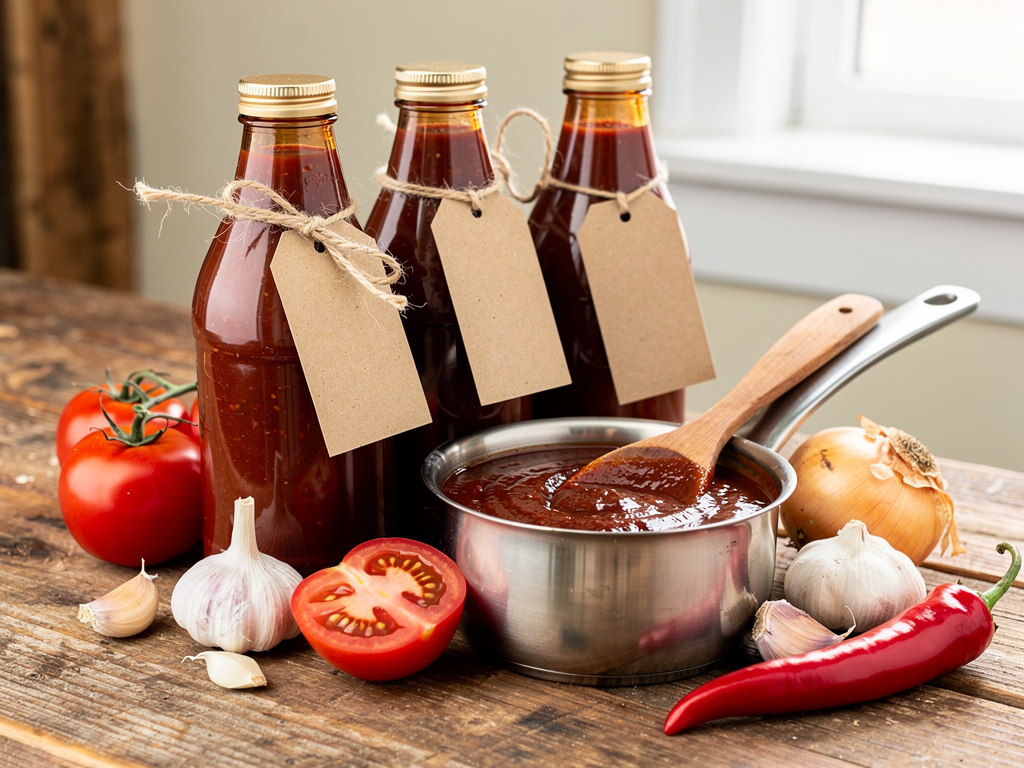


The short version: You can sell homemade BBQ sauce in some states, but "most states say yes" is not a safe bet, because agencies such as Missouri's and Washington's treat BBQ sauce as an acidified food, and many home-kitchen laws leave acidified foods out. Among the 9 states we looked at, Texas, North Carolina and Kentucky give BBQ sauce a written path from a home kitchen (Kentucky's per the University of Kentucky Extension, which state law assigns to train and test the program's farmers), and Alabama and Tennessee are a maybe. Washington, South Carolina and Missouri say no, and Georgia's current FAQ says no while rules under its 2025 law are pending. Texas asks for no permit or fee up to $150,000 a year, North Carolina inspects your kitchen and wants a lab letter first, and Kentucky only lets farmers who grow a main ingredient do it. Texas requires you or your household to deliver online orders in person, Alabama (if the Alabama Department of Public Health, or ADPH, allows your sauce) limits sales to buyers inside Alabama, and Kentucky limits sales to 3 kinds of places. Where the answer is no, the legal route is a licensed kitchen or a co-packer working under the federal acidified food rules.
Checked on the pages of the Texas Department of State Health Services (DSHS), the North Carolina Department of Agriculture and Consumer Services (NCDA&CS), the Kentucky Cabinet for Health and Family Services (CHFS) and the University of Kentucky Extension, Alabama's Department of Public Health (ADPH), the Tennessee Department of Agriculture (TDA), the Washington State Department of Agriculture (WSDA), the Missouri Department of Health and Senior Services (DHSS), the South Carolina Department of Agriculture (SCDA) and the Georgia Department of Agriculture (GDA), and 21 CFR Parts 108 and 114, September 26, 2026. Rules change, so verify your state's current rules with its agency before you sell. This guide is not legal advice. Homegrown takes orders and payments; it does not test your sauce or make it legal to sell. Customers create a Homegrown account to order.
Your brother-in-law finished the last bottle of your peach chipotle sauce and asked where he can buy more. A neighbor at the cookout offered you $10 for a jar. Before you take anyone's money, you want a straight answer on whether selling it is legal where you live.
This page gives that answer for 9 states, using each agency's own words, plus the federal rule that decides why BBQ sauce gets harder treatment than cookies or jam. It also covers the practical part once you are allowed: permits, pH testing, labels, sales caps, and where you can and cannot sell.
Your state decides, and among the 9 states whose rules we read on September 26, 2026, 3 give homemade BBQ sauce a clear written path. Texas allows plant-based acidified foods under its cottage food law. North Carolina's Home Processor program names "BBQ sauce" on its allowed list. Kentucky's microprocessor program, as the University of Kentucky Extension describes it, names "barbecue sauce", but only for farmers. A microprocessor is Kentucky's term for a farmer who cans products at home from a crop they grow. Alabama and Tennessee do not name BBQ sauce either way, 3 states rule it out, and Georgia's current FAQ does too.
The reason the answers split comes down to what is in the bottle. A typical BBQ sauce is tomato, onion, garlic, peppers, sugar and vinegar. The onion, garlic and peppers are low-acid vegetables, and the vinegar is what pulls the whole sauce into the range where it is safe on a shelf. That makes many BBQ sauces an "acidified food" in federal terms, and plenty of state home-kitchen laws were written to exclude that category.
Here is what the rest of this page covers:
If your state already allows it and you want the kitchen and pricing side (bottle sizes, ingredient costs, flavors that sell), our guide on how to sell BBQ sauce from home covers that. This page is the permission half.
BBQ sauce is usually an acidified food under 21 CFR Part 114 and jam is not, so a state can welcome your blackberry jam and refuse your BBQ sauce under the same law. Section 114.3 defines acidified foods as low-acid foods with acid added, with a water activity above 0.85 (meaning a wet food, not a dried one) and a finished equilibrium pH of 4.6 or below. "Finished equilibrium pH" is the pH once the solids and the liquid in the bottle have evened out. We read the section on eCFR on September 26, 2026.
The same section names jams, jellies and preserves as outside the acidified rule. That line is part of why jam is on nearly every cottage food list and BBQ sauce is on so few; Washington's FAQ adds that BBQ sauces need "pH control and in many cases a process authority review" and "are not considered to be low risk." Washington, Missouri and Georgia, 3 of the 4 no states in this guide, all allow jams or jellies from a home kitchen while keeping BBQ sauce out.
BBQ sauce also sits right on three federal carve-outs that make its classification a judgment call instead of a lookup:
Minnesota's Department of Agriculture says this out loud. On its acidified foods page it lists "some barbecue sauces" among common acidified foods, then answers its own question: "Is barbecue sauce an acidified food? This depends on the formulation. A product and process assessment by a Process Authority will still be necessary to determine if the product is an acidified or acid food." A process authority is a food scientist, usually at a university or a testing lab, who reviews a recipe and the way you make it and puts the verdict in writing.
The practical result: two sauces with the same name can get different answers. A thin vinegar mop with a little pepper might be an acid food. A thick Kansas City style sauce loaded with onion and garlic is far more likely to be acidified.
Yes, and the style you make can change your legal path more than any flavor choice. The table below sorts the common regional styles by what keeps them safe and how the rules we read treat them.
Scroll sideways to see every column.
| Style of sauce | What keeps it safe | Shelf status | How the rules we read treat it |
|---|---|---|---|
| Tomato and molasses (Kansas City style) | Vinegar added to tomato, onion, garlic and peppers | Shelf-stable once bottled hot and sealed | Usually an acidified food. The tested NCHFP recipe is a tomato, brown sugar and vinegar sauce close to this style, without the molasses. The 3 yes states in this guide allow it; Washington, Missouri and South Carolina name BBQ sauce as not allowed |
| Vinegar and pepper (Eastern Carolina style) | Mostly vinegar, small share of pepper | Shelf-stable | May fall under the federal condiment sauce exclusion as an acid food, but only a process authority can say so for your recipe |
| Mustard base (South Carolina style) | Mustard and vinegar | Shelf-stable | Washington lists "mustards" beside BBQ sauces on its not-allowed list; South Carolina's own not-allowed list names BBQ sauce |
| Mayonnaise white sauce (Alabama style) | Kept cold | Refrigerated | Outside the acidified rule because it is refrigerated, but it needs time and temperature control, which Georgia's and Alabama's home rules leave out. Texas allows some refrigerated foods if you register with DSHS, and Tennessee's 2025 amendment allows "certain time/temperature controlled food items" |
| Sauce with meat drippings or bacon | Varies | Varies | Texas excludes "meat, meat products" from cottage food, so ask DSHS before bottling one |
| Fruit BBQ sauce (peach, blueberry, strawberry) | Fruit acid plus vinegar | Shelf-stable | Still a sauce, not a jam, so it follows the BBQ sauce rules in your state rather than the jam rules |
Sources: 21 CFR 114.3 on eCFR for the federal categories and each state agency page for the state notes, all read on September 26, 2026. Your recipe decides where your own sauce lands; a regional name does not.
For your first product, pick 1 style and 1 recipe. Every yes state ties your path to a specific recipe: Kentucky and North Carolina review each one, and Texas expects each one to come from an approved recipe source or a lab test. So a vendor with 1 sauce has 1 recipe to clear, and a vendor with 4 flavors has 4. In Kentucky that is the difference between $5 and $20 in recipe reviews before you sell a bottle.
Of the 9 states in this guide, as of September 26, 2026, Texas, North Carolina and Kentucky give a home kitchen a written path for shelf-stable BBQ sauce. North Carolina lists "BBQ sauce" among the foods its Home Processor program allows in a home kitchen. Kentucky's path is on the University of Kentucky Extension's program page, which names "barbecue sauce" for farmers, and Kentucky law (KRS 217.138) has the Extension Service run the program's training while the state health cabinet issues the certification. Texas does not name BBQ sauce, but its cottage food page allows any food except a short list that includes low-acid canned goods, and it sets label and recipe rules for "plant-based acidified canned goods." Alabama and Tennessee are maybes: in Alabama, ask your county health department, and in Tennessee, read the law, since TDA will not give product-specific advice. The table covers all 9 states in each agency's words.
Swipe left to read the whole table.
| State | Home-made BBQ sauce allowed? | Yearly sales cap | Permit or fee | What the agency page says |
|---|---|---|---|---|
| Texas | Yes | $150,000 gross income | No local license, permit or fee | Allows any food except a short list that includes meat and "low-acid canned goods"; batch number required on "plant-based acidified canned goods" |
| North Carolina | Yes, after review | Not stated on the page | Home kitchen inspection by NCDA&CS | Allowed list includes "Acid and acidified foods ( i.e. pickles, BBQ sauce, etc. )"; sauces are "first evaluated to determine if they are shelf stable" |
| Kentucky | Yes, farmers only | $60,000 gross income | $50 workshop, $5 per recipe, $50 certification | Microprocessors "must grow a primary product ingredient"; Extension lists "barbecue sauce" among allowed products |
| Alabama | Maybe | None; the income limit was removed | Food safety course and a review form to your county | Not named; pickles and salsa "must undergo pH verification" from a processing authority or Alabama Extension |
| Tennessee | Maybe | Not stated on the page | None issued by TDA | Home food under the Food Freedom Act is exempt from licensing, and TDA "cannot render advice to firms about their specific product" |
| Washington | No | $35,000 (for allowed foods) | $355 for two years | Not allowed: "Barbeque sauces, ketchups, or mustards" |
| Missouri | No | None; caps removed in 2022 | Not needed for allowed foods | Cannot be sold under the cottage law: "Sauces (BBQ sauce, hot sauce, etc.)" |
| South Carolina | No | Not stated in the flyer | No permit for allowed foods | Foods not allowed include "Hot sauce and BBQ sauce" |
| Georgia | No, per GDA's current FAQ; HB 398 rules pending | Not stated on the FAQ | No state license or fee since HB 398 (July 1, 2025); optional GDA ID number for the label | Cooked vegetable products "like salsas, tomato sauces, spaghetti sauces" do not qualify |
We loaded each agency page on September 26, 2026: Texas DSHS Cottage Food Production, NCDA&CS Home Processor, Kentucky CHFS Microprocessing and the University of Kentucky Extension program page, Alabama ADPH Cottage Food, Tennessee TDA Food Freedom Act, Washington WSDA Cottage Food, the Missouri DHSS home-based kitchen guidance, the SCDA 2025 home-based food flyer, and the Georgia GDA Cottage Food FAQ and its "Cottage Food Update: House Bill 398 & Frequently Asked Questions" sheet.
The NCDA&CS Home Processor page names "BBQ sauce" on its list of allowed low-risk foods, which is rare. The catch is the process: sauces are "first evaluated to determine if they are shelf stable," a lab test produces a Process Authority Letter that goes in with your application, you "may be required to take an Acidified Food Course," and no pet can come into your home "at any time (even if only at night)." The page says an inspector reaches out 8 to 12 weeks after your application arrives.
Kentucky's path is narrow on purpose. The Kentucky microprocessing program is built for farmers, so a sauce made with tomatoes and peppers you grew qualifies, and a sauce made from store-bought ketchup does not. If you do not farm, Kentucky's regular home-based processor list covers breads, candy, jams and dried spices, not BBQ sauce.
Tennessee's answer is the hardest to pin down. Its Department of Agriculture says it does not issue permits or inspect under the Food Freedom Act, and that questions about a specific product "are best answered by a firm's private legal counsel." Read the law itself, T.C.A. § 53-1-118, before you sell.
Washington, Missouri and South Carolina name BBQ sauce as not allowed from a home kitchen, and Georgia's current Cottage Food FAQ excludes cooked vegetable sauces that a tomato BBQ sauce falls in with. That is 4 of the 9 states we checked on September 26, 2026, including Missouri, the home of Kansas City barbecue.
Here is how each one words it:
A no from these states is a no to your home kitchen, not to your sauce. Each of them points sauce like yours to a licensed facility or a processor license instead, which is the route in the "What If Your State Says No?" section below.
Older guides still rank for this question. One of the top results is a BBQ sauce article from Castiron, a platform that has closed: its storefront domain, shopcastiron.com, did not load on September 26, 2026, and the old article now carries a link to an online casino site. Do not use a closed platform's page as your legal source. Go to your state agency.
In Texas it can: DSHS lets you make acidified foods from a list of approved recipe sources instead of lab-testing your own recipe. The list on the Texas DSHS cottage food page, loaded September 26, 2026, includes the USDA Complete Guide to Home Canning (2015 revision), the University of Georgia's So Easy to Preserve (6th edition) and several Ball books. A new recipe source needs a Request for Official Determination, and DSHS lists accredited labs and process authorities for recipes of your own.
The National Center for Home Food Preservation at the University of Georgia publishes a tested barbecue sauce recipe, and its numbers show how specific "tested" is:
The center adds a warning that applies to every vendor with a family recipe: "There are many types of barbecue sauce recipes and the acidity will vary among recipes. This canning process is intended for this recipe and procedure."
A tested recipe only covers the recipe as written. Cutting the vinegar to make it sweeter, doubling the onion, or swapping in a thicker bottle changes the acidity and the heat penetration. Alabama Extension's guidance on acidified products tells home canners not to alter validated recipes, because "proportions are very important." Once you change it, you are back to needing a lab test or a process authority's review.
Your grandmother's sauce may be better, but a barbecue sauce recipe printed in one of the DSHS-approved books, followed exactly, needs no lab bill. Confirm the recipe you pick is in one of those books before you rely on it.
Texas asks for no license at all, North Carolina sends an inspector to your home, and Kentucky's program costs $105 in the first year, so the paperwork among the 3 yes states ranges from zero to a kitchen visit. Texas DSHS says local health departments may not require a cottage food operation to "obtain any type of license or permit" or pay any fee to sell directly to a consumer. Texas does require a food handler course.
Slide the table sideways for all five columns.
| State | What you file | Who approves the sauce | Training | Cost we could confirm |
|---|---|---|---|---|
| Texas | Nothing for direct sales; registration optional, so a DSHS number can replace your home address on the label | You, using an approved recipe source, or a lab for your own recipe | Accredited food handler course | No state or local fee |
| North Carolina | Application for Home Processor Inspection | A lab, which issues a Process Authority Letter | Acidified Food Course if NCDA&CS requires it | Not listed on the page |
| Kentucky | Application for microprocessor certification | University of Kentucky recipe review | UK workshop, pass both tests | $50 workshop, $5 per recipe, $50 certification each year |
| Alabama | Cottage Food Review Form to your county health department | A processing authority or Alabama Extension | Approved food safety course | Varies by county, per ADPH |
From the Texas DSHS, NCDA&CS, Kentucky CHFS step-by-step guide, University of Kentucky Extension and Alabama ADPH pages, loaded September 26, 2026.
The Kentucky CHFS step-by-step guide lists the order: attend the Homebased Microprocessor workshop and pass both tests, send each recipe to the University of Kentucky with a $5.00 fee, attach a draft label to each approved recipe, prove an approved water source, and mail the application with the $50.00 certification fee. The Extension program page puts the workshop at $50.00, which makes one sauce a $105 first year.
A county or city can add its own rules on top of the state's, most often zoning for home businesses. North Carolina's page tells applicants to check with the local planning department before applying.
Usually yes, because 3 of the 4 states covered here in detail, the 3 yes states plus Alabama, want a test: North Carolina and Alabama want one before you sell, Texas wants one unless you follow an approved recipe source exactly, and Kentucky has the University of Kentucky approve each recipe instead. The number you have to hit is not the same everywhere either. Federally, the finished sauce has to sit at pH 4.6 or lower. Alabama Extension says preserved fruits and vegetables may be allowed under the state's cottage food law if the finished pH is below 4.2, with the first test done by an approved lab.
Three rules decide how you test:
An electronic pH meter plus the buffer solutions to calibrate it is a small cost next to a recall, and in Alabama the first reading has to come from a processing authority or Extension anyway. Test a cooled sample from every batch, write the reading in a log next to the batch number, and keep the log.
Sugar does not replace acid. Brown sugar and molasses make a sauce taste safer than it is, but the rules above measure pH, and a sweeter sauce with less vinegar can drift over the line.
Texas, Kentucky and Alabama require a label on every bottle. North Carolina requires one for self-service, wholesale or shipped sales, but lets you skip it on orders handed directly to the customer, as long as you can give ingredient information on request. The required wording differs by state, so print the exact statement your state asks for. The Texas DSHS page lists these for cottage foods:
Alabama's list is the common name, your name and address, a statement that the food is not inspected by the health department, ingredients in order of weight, and an allergen disclaimer, all in at least 10-point type. Kentucky asks for a draft label attached to each approved recipe. North Carolina's label needs the product name, your name and address, net weight in ounces or pounds and grams, ingredients in order by weight, and allergens.
Texas says any major food allergen in the sauce, "such as eggs, tree nuts, soy, peanuts, milk, wheat, and sesame," must be listed on the label. The one BBQ sauce cooks forget is fish: many Worcestershire sauces contain anchovies, which puts fish in your sauce even though you never touched one. Read every ingredient's own label before you write yours. Our cottage food label checklist walks through the general rules.
Texas lets a home kitchen gross up to $150,000 a year and Kentucky caps microprocessors at $60,000, while Alabama removed its income limit entirely. At $8 a bottle, $60,000 is 7,500 bottles a year, about 144 a week, so the cap is rarely the first limit a part-time vendor hits.
The first real limit for most home BBQ sauce vendors is the batch. The NCHFP tested recipe makes about 4 pints from 16 cups of tomatoes and roughly 3 hours of cooking down on the stove. Selling 50 bottles a week means cooking that recipe many times over, every week. When your sauce outgrows your stove, it is also outgrowing the home rules, and a commercial kitchen starts to make sense on volume alone.
You can sell in person in all 3 yes states, and Texas lets you take orders online if you or your household deliver in person; Alabama, if ADPH allows your sauce, lets you sell and mail to buyers inside Alabama; and Kentucky allows only 3 in-person locations. The rules on where you can hand it over differ:
FDA registration is a separate question from where you sell. Under 21 CFR 108.25, a commercial processor of acidified foods registers with the FDA on Form FDA 2541 within 10 days of starting to make them "in any State," so the rule is not limited to sauce that crosses state lines, and files a process for each product on Form FDA 2541e. Whether that covers a home kitchen under your state's home program is a question for your state agency, the same one the North Carolina bullet above tells you to ask. Our guide on whether you can ship cottage food covers the general shipping rules; for BBQ sauce, plan on local pickup and delivery.
That local limit is exactly where an order page earns its keep. Under these rules, most home BBQ sauce sales in the yes states will be local, from a porch pickup to a hand delivery in Texas to a market table in Kentucky, and a single link that collects the order and the payment keeps those Saturday handoffs straight. If your state allows your sauce, you can set up a Homegrown storefront for BBQ sauce pickup orders in about 15 minutes.
You can still sell BBQ sauce legally; you have to make it somewhere other than your home kitchen. The two common routes are renting time in a licensed commercial kitchen or hiring a co-packer, a licensed plant that makes your recipe under your label. Either way, the federal acidified food rules apply:
A co-packer already holds the registration and the training, so those steps sit with the plant instead of with you. Before you commit, ask each co-packer for its minimum run and its price per bottle. Our guide on renting a commercial kitchen as a cottage food vendor covers the kitchen route.
There is also a sidestep in each of the 4 no states we checked, with a Missouri caveat: sell the dry rub. Washington's allowed list includes "dry spice blends," South Carolina allows dried herbs and spices, and Georgia's 2025 cottage food law, HB 398, lists "dry herbs, seasonings, and mixtures." Among dry products, Missouri's cottage law covers only "dried herb and dried herb mixes," and DHSS calls its list "very specific," so a rub that is mostly sugar, salt, paprika and chili powder fits better under the Missouri Food Code exemption for "Packaged spices and spice mixes" sold from an individual stand, where your local public health agency allows it. Confirm with DHSS or that local agency before you sell. A rub has no water to speak of, so the acidified rules never come into it. Our guide on selling BBQ rub from home covers pricing and packaging.
Once your state says yes, the hard part shifts from permission to logistics: collecting orders for local pickup without losing track of who wanted which flavor. Homegrown is $10 per month billed annually ($12.50 billed monthly) with no percentage fees beyond standard payment processing, and it gives you one storefront link where customers pick a flavor, pay, and choose pickup or delivery. The table shows what three common options cost on an $8 bottle.
Drag sideways to compare every fee column.
| Platform | Monthly plan | Trial | Platform fee | Card processing | Customer pays on an $8 order | Vendor pays on an $8 order | Vendor pays in a month of 50 $8 orders |
|---|---|---|---|---|---|---|---|
| Homegrown | $10 billed annually ($12.50 monthly) | 7 days | None, 0% commission | 2.9% + $0.30, paid by the vendor | $8.00 | $0.53 plus the plan | $36.60 ($39.10 on monthly billing) |
| Etsy | None | None | 6.5% transaction fee, plus $0.20 per listing and $0.20 to relist each sold bottle | 3% + $0.25 (Etsy Payments) | $8.00 | $1.21 | $60.50 |
| Shopify Basic | $29 billed yearly ($39 monthly) | 3 days free, then $1 a month for 3 months | None with Shopify Payments (2% with another processor) | 2.9% + 30¢ online | $8.00 | $0.53 plus the plan | $55.60 ($65.60 on monthly billing) |
Prices come from findhomegrown.com/signup, etsy.com/sell and shopify.com/pricing, each loaded September 26, 2026. Figures assume one $8 bottle per order, no shipping charge and no sales tax. Etsy's 6.5% also applies to any shipping you charge, Etsy's Offsite Ads fee is not included, and Etsy may charge a one-time shop set-up fee.
What you pay in a month of 50 orders of one $8 bottle
Source: pricing pages checked September 26, 2026; annual billing for Homegrown and Shopify, 50 single-bottle orders, no shipping.
Etsy is built for shipping. A Texas home kitchen has to deliver online orders in person, Kentucky sells only from 3 in-person places, and Alabama (if ADPH allows your sauce) sells only to buyers in Alabama, so most of what you would pay Etsy for is off the table. Shopify is a full website builder at almost three times the plan price, more than a vendor with 3 flavors and a porch pickup needs. Instagram DMs cost nothing and fall apart the week 20 people want sauce for the same Saturday cookout.
For a legal home BBQ sauce business, the parts of Homegrown that fit are:
Honest bounds: Homegrown does not test your pH, review your recipe, print labels or tell you whether your state allows your sauce. Customers create a Homegrown account to place their first order. Your storefront is listed on the Homegrown marketplace, but plan on most orders coming from people you send to your own link. There is no timed-release feature for a limited flavor drop, and card processing of 2.9% + $0.30 is paid by you, with no option to pass it to the customer.
To stay legal, treat each recipe as a fixed formula and keep a paper trail from the first batch. Four habits keep a home BBQ sauce business inside the rules:
In Kentucky, each recipe costs $5.00 to review, so a lineup of 5 flavors is $25 in reviews and 5 draft labels before your first sale. Start with your best seller, earn the approval, and add the second flavor once the first one is paying for itself.
In a pull of the Homegrown catalog on September 26, 2026 (2,712 products from 307 vendors, 265 of them in the pantry category), we counted pantry listings with "BBQ sauce" or "barbecue sauce" in the name or description, then opened each matching vendor's other listings. That found 3 BBQ sauce listings, all from one vendor, Froggy Fields Farm: strawberry, blueberry and peach Cowboy Candy BBQ sauces at $8.00 each, sold beside its cowboy candy, pickled okra and pickles. We left out 2 jams whose descriptions suggest stirring them into BBQ sauce, and a hot sauce whose description compares it to barbecue sauce.
That catalog count shows the shape of a small BBQ sauce business: a few fruit flavors built around one base, sold at the same $8 price, next to other shelf-stable jars. It also shows how few vendors list BBQ sauce by name: 1 of the 307 vendors in the pull. The catalog is not a sample of the 9 states in this guide, so that count says nothing on its own about the state rules.
You can do the reading for your own state in one afternoon by going straight to the agency and asking one specific question; the agency's written answer to your email may take days. Some platform pages are out of date, like the Castiron article in the warning above, so use the agency's own page. Our state-by-state guide to cottage food laws is a starting point for finding your agency.
The source note under the state table in "Which States Let You Sell Homemade BBQ Sauce From Home?" names the exact page we used for each of the 9 states, so if you live in one of them, you can start at step 4. In Tennessee, skip the email: TDA does not answer questions about a specific product, so read T.C.A. § 53-1-118 or ask a lawyer.
It is legal in some states and not in others. In our September 26, 2026 check of 9 states, Kentucky (for farmers who grow a main ingredient, under the University of Kentucky Extension's home-based microprocessor program), North Carolina and Texas each allow homemade BBQ sauce under a home program, while Washington, Missouri and South Carolina name BBQ sauce as not allowed, and Georgia's current FAQ excludes cooked tomato sauces while its HB 398 rules are pending. Alabama and Tennessee do not name BBQ sauce. In Alabama, ask your county health department before you sell. In Tennessee, the Tennessee Department of Agriculture (TDA) sends questions about a specific product to your own lawyer, so read T.C.A. § 53-1-118 or ask one.
Texas asks for no license, permit or fee for direct sales, but requires a food handler course. North Carolina inspects your home kitchen and wants a lab's Process Authority Letter, and Kentucky certifies farmers for $50 a year after a $50 workshop and a $5 review per recipe. States that exclude BBQ sauce require a licensed facility.
Many BBQ sauces are acidified foods, and many cottage food laws exclude that category. Minnesota's agriculture department says whether a barbecue sauce is acidified "depends on the formulation," and a process authority makes that call. Whether it counts as a cottage food depends on whether your state's law allows acidified foods.
Federal rules set a finished pH of 4.6 or below for shelf-stable acidified foods. Alabama Extension says preserved fruits and vegetables may be allowed under that state's cottage food law only if the finished pH is below 4.2. If the finished sauce is above pH 4.0, federal rules call for an electronic pH meter rather than test strips.
Yes, in the states that allow homemade BBQ sauce, with the right label. In Texas you can sell there yourself, and a registered cottage food vendor can also resell your sauce at a farmers market. Kentucky limits microprocessors to their farm, a Kentucky registered farmers market or a certified roadside stand. Check your market's own vendor rules too.
You can take orders online in Texas, and in Alabama if the Alabama Department of Public Health (ADPH) allows your sauce. Texas requires that you, an employee or a household member deliver it in person, and Alabama allows sales to people in Alabama, including by mail. None of the home rules we read for Texas, Alabama or Kentucky let you mail sauce to another state, so out-of-state shipping usually means the licensed route. Separately, a commercial acidified food processor registers with the FDA on Form FDA 2541 within 10 days of starting production, even if it sells only in its own state, so ask your state agency whether that applies to a home kitchen.
These 5 guides answer the next questions a home BBQ sauce vendor usually asks, from pricing a bottle to what to sell if your state keeps sauce out of home kitchens:
If you live in Texas, our Texas cottage food law guide covers the rest of the state's rules, including the $150,000 limit and registering for an ID number.
Once your state says yes and your recipe is approved, the only thing left is making it easy to buy. Under these rules, most home BBQ sauce sales in the yes states will be local: a porch pickup, a hand delivery in Texas, a farmers market table in Kentucky. That means your customers need a simple way to reserve bottles before you cook, so you make 24 bottles for 24 paid orders instead of guessing. A Homegrown storefront for your BBQ sauce gives your customers one link to pick a flavor, pay, and choose pickup or delivery, for $10 a month billed annually ($12.50 billed monthly), with no percentage fees beyond standard payment processing. You keep your recipe, your label and your state approval; the storefront just handles the orders and the payments. If your state said no, start with the rub, and come back to the sauce once you have a licensed kitchen or a co-packer lined up.



