
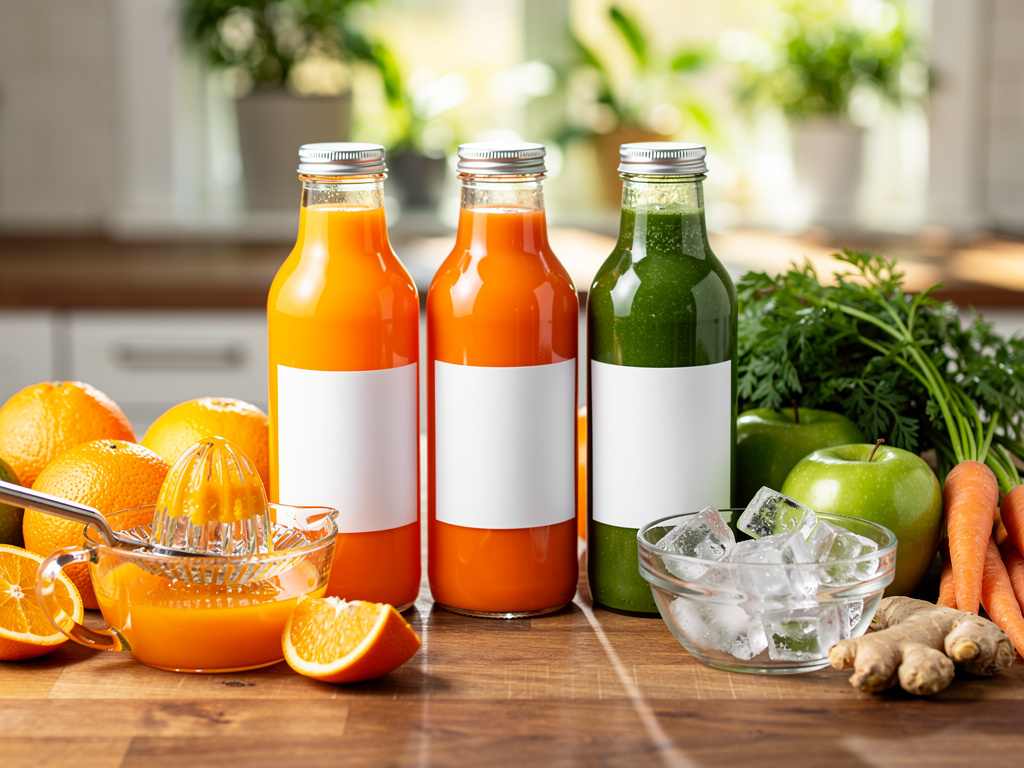


The short version: Usually not from a home kitchen, but three of the eight states checked for this guide now say yes with conditions. Illinois lets a registered home cook bottle fresh juice with the federal "not been pasteurized" warning on the label, Texas lets a cook who registers with the state sell it cold with safe handling instructions, and Wyoming's Food Freedom Act lets you sell it directly to a customer you have told it was not inspected. California, Colorado, Florida, Georgia and Washington leave juice out of their home-kitchen rules or ban it by name. Juice pressed to order at a market is a separate question, handled by a local or temporary food permit from your county or city, and selling to a cafe takes a licensed kitchen and a federal food safety plan, while shipping is barred or licensed by state rules.
Checked on September 22, 2026: the state agency pages and statutes for Illinois, Texas, Wyoming, Washington, Georgia, Colorado, California and Florida, the federal juice rules at 21 CFR 120 and 101.17, and Homegrown's signup page. Rules change, so verify your state's current rules with its agency before you sell. Homegrown customers create an account to place their first order, and Homegrown has no timed drop feature.
Your cousin keeps asking for another bottle of that ginger, apple and carrot juice, and a neighbor offered to pay for a week of it. Before you order a case of bottles, you want to know one thing: is this legal?
The honest answer is that juice is one of the hardest products to sell from a home kitchen, and it is also one of the few where the rules have loosened lately. This guide sorts it out. It shows what eight state pages said about homemade juice on September 22, 2026, it explains the two federal rules that apply to every juice seller, and it separates the three very different ways people sell juice: by the cup, by the bottle from home, and to stores or by mail.
In most states you cannot sell fresh juice made in your home kitchen, but Illinois, Texas and Wyoming now allow it with conditions. Of the 8 states checked for this guide, 5 states leave juice out of their home-kitchen law or ban it by name, and three let you sell bottled juice if you follow their rules on registration, labels and cold holding.
Most states handle home food sales through a cottage food law. That is a rule that lets you make low-risk foods in your own kitchen and sell them without a full food license. Juice rarely fits, because a cottage food law is built around foods that are safe on a shelf, and fresh juice is not. Three questions decide your answer:
This page is the permission half of a pair. If you already know you are allowed, the booth setup, equipment list, menu and cup pricing are in the companion guide on how to sell fresh juice at a farmers market. The rest of this guide stays on the rules.
Juice is treated differently because fresh juice needs refrigeration to stay safe, and nearly every cottage food law is written for foods that do not. The food safety term for it is a TCS food, short for time and temperature control for safety, which means a food that can grow harmful bacteria if it sits out too long.
A loaf of bread is dry, and a jar of jam is high in sugar and acid, so germs struggle to grow in either one on a shelf. Fresh juice is mostly water with natural sugar, and many vegetable and blended juices are not acidic enough to slow bacteria down. The produce itself can carry germs from the field, and pressing it spreads whatever is on the skin through the whole batch.
That is why the rules in Illinois, Texas and Wyoming keep coming back to the same few things:
For the full list of which foods count as TCS and why, see the guide to TCS foods and cottage food law. The short rule from that page holds for juice: if it needs a refrigerator to be safe, a standard cottage food law probably does not cover it.
Federal law has two juice rules, and a home seller who sells only directly to customers is outside the first one but still covered by the second. The first is the juice food safety plan rule. The second is the warning label for juice that was not treated to kill germs.
The juice food safety plan rule. The Food and Drug Administration's Juice HACCP rule, 21 CFR Part 120, says any juice sold as juice must be made under a written hazard plan, often called a HACCP plan, short for Hazard Analysis and Critical Control Point. It applies in all 50 states, whether or not the juice ever crosses a state line. But the same rule says, at 21 CFR 120.3, that processing "does not include" the operation of a retail establishment. It defines a retail establishment as one that provides juice directly to consumers and does not also sell or distribute juice to other businesses. Selling only to the people who drink it keeps you out of Part 120. Selling even one case to a cafe puts you in it. That line splits the seven places to sell juice into two groups: five where you hand the bottle to the customer, like a weekly juice club or a gym pop-up you staff, and two, cafes and grocery stores, that need the written plan.
The warning label rule. Under 21 CFR 101.17(g), juice that has not been processed to cut the most resistant harmful germ by 5-log, which is a 100,000-fold reduction, must carry this statement on its label:
> WARNING: This product has not been pasteurized and, therefore, may contain harmful bacteria that can cause serious illness in children, the elderly, and persons with weakened immune systems.
The word WARNING has to be capitalized and bold, and the statement has to be set off in a box by hairlines on the label. The FDA's consumer page on juice safety adds the part that matters for a market vendor: FDA "does not require warning labels for juice or cider that is sold by the glass," and it names farmers markets, roadside stands and juice bars as examples.
So at the federal level, a cup poured to order and a sealed bottle are two different products. The cup needs no warning. The bottle does, unless you pasteurized it. Your state then decides whether you may sell either one from a home kitchen at all.
Five of the eight state rules read on September 22, 2026 do not allow homemade juice under their home-kitchen rules, and three do with conditions. The table below shows what each state's own page or statute says, in its own words where it names juice.
Scroll sideways to see all eight states in full.
| State | Home-kitchen juice allowed? | What the rule says | Main conditions | Source checked |
|---|---|---|---|---|
| Illinois | Yes, bottled | Cottage food covers "food or drink"; fresh-pressed juice allowed | Register yearly with your local health department (fee up to $50), certified food protection manager, bottle and label at home with the federal warning, hold at 41°F or below, no made-to-order at a market, no shipping | 410 ILCS 625/4; Illinois Extension chilled food and drink page |
| Texas | Yes, if registered | Any food allowed except a short excluded list; juice is not on it | Register with the state health department to sell TCS foods, food handler training, date made on the label and the safe handling statement on the label or receipt, hold at 41°F or below, no wholesale, $150,000 yearly gross threshold | Texas DSHS cottage food production page (SB 541, effective September 1, 2025) |
| Wyoming | Yes, direct only | Food Freedom Act covers "food or drink products" | Sell directly to an informed end consumer inside Wyoming, tell them it was not licensed or inspected, up to 250,000 products and $250,000 a year | W.S. 11-49-101 to 104 |
| Washington | No | Prohibited: "Juices made from fresh fruits or vegetables" and "Beverages" | Raw juice only with a county health permit at a retail spot like a market | WAC 16-149-130; WSDA fact sheet 41 |
| Colorado | No | Ineligible: "Beverages" and "fruit or vegetable juices or concentrates" | Not a cottage food | Colorado CDPHE cottage foods page |
| Georgia | No | "No beverages are allowed to be produced under the Cottage Food Regulations" | Pressed apple cider is also a no on the same FAQ | Georgia Department of Agriculture cottage food FAQ |
| California | No | The approved list's only drink category is powdered beverage bases and mixes | A dry drink mix, not juice | CDPH Approved Cottage Foods list, last reviewed April 2026 |
| Florida | No | Juice, beverages and drinks do not appear on the approved list | Not a cottage food | Florida FDACS cottage foods page |
We checked every row on the state agency page or statute named in the last column on September 22, 2026. "No" means the home-kitchen rule does not cover juice; it does not mean you can never sell juice in that state, only that you need a licensed kitchen or a local food permit to do it.
The split is not random. Illinois and Texas now let home cooks sell some foods that need refrigeration, and Wyoming's law covers them too as long as you sell them yourself. The states that say no still run a cottage food law built around shelf-stable food like bread, cookies and jam.
This list is eight states, not fifty. If yours is not here, the cottage food laws by state guide is the place to start, and the check-it-yourself steps at the end of this page tell you what to ask.
In a pull of the Homegrown catalog on August 14, 2026, 42 of the 1,804 products sat in the Beverages category, listed by 7 of the 219 vendors. Two shops with "juice" in their names listed 29 of those 42. Nine product names were juice or cider drinks, from 3 vendors. Juice is a small corner of the catalog, and most of it comes from those two shops.
Illinois, Texas and Wyoming were the three states checked that let you sell bottled juice made in a home kitchen, and each one does it a different way. Illinois registers you and sets strict label and product rules, Texas registers you and sets a temperature and label rule, and Wyoming exempts you from state licensing when you sell directly to the customer inside the state.
The Illinois cottage food statute, 410 ILCS 625/4, covers anyone who "produces or packages food or drink" at home for direct sale, and Illinois Extension's cottage food guidance says fresh-pressed juice is allowed. You register every year with your local health department, which may charge up to $50, and the person making the juice has to be a certified food protection manager.
Illinois is the most detailed of the three, so read the statute before you register. Here is what its rules add up to for a juice seller:
More on the Illinois registration process is in the Illinois cottage food law guide.
Since September 1, 2025, Texas has allowed a home cook to sell any food except meat, poultry, seafood, ice products, low-acid canned goods, products containing CBD or THC, and raw milk, according to the Texas Department of State Health Services cottage food page. Juice is not on that excluded list, so a Texas home cook can sell it as a TCS food after registering on the department's online registry.
Texas skips the local step entirely, because local health departments may not require a permit or fee from a home cook. What Texas does require for a food that needs refrigeration like juice:
The Texas page does not mention the federal juice warning. The FDA's consumer page on juice safety names farmers markets among the places where packaged, untreated juice made on site must carry it, and Illinois tells its home juice sellers to print it, so print it on every Texas bottle too. The Texas cottage food law guide covers the rest of the state's label rules.
The Wyoming Food Freedom Act, W.S. 11-49-101 through 104, lets a producer sell homemade "food or drink products" to an informed end consumer, and it exempts those sales from state licensing, permits, inspection, packaging and labeling rules.
Wyoming is the loosest of the three, but the act still draws 4 firm edges:
The act switches off Wyoming's own label rules, and it says nothing about federal ones. The FDA lists farmers markets among the sellers whose bottled, untreated juice has to carry the unpasteurized juice warning, so print it on every bottle anyway. The Wyoming cottage food law guide and the overview of food freedom states explain how this kind of law differs from a regular cottage food law.
In the 5 states checked that exclude juice from home kitchens, and in any state like them, you still have three legal paths: sell juice by the cup under a local food permit, make it in a licensed kitchen, or switch to a shelf-stable drink your state does allow. None of them lets you bottle raw juice in your own kitchen and sell it, which is the one thing these states rule out.
Washington's cottage food rule, WAC 16-149-130, lists "Juices made from fresh fruits or vegetables" and "Beverages" as prohibited products. The state agriculture department's fact sheet on selling juice says raw juice may be sold "only in a retail environment where the juice is provided directly to the customer, such as at a farmers market, juice bar, or restaurant," and it sends raw juice sellers to the county health department or local health district for the permit details.
That fact sheet comes from the department's 2019 handbook for small and direct marketing farms, and of the sources checked for this guide it draws the clearest map. It splits juice into two lanes:
The shelf-stable route can be the fastest one. California's approved cottage food list includes powdered beverage bases and mixes, and Homegrown has guides to powdered drink mixes and shrubs and drinking vinegars, which some states treat differently from juice. Check the exact product with your state before you make a batch, because a fruit syrup or concentrate can still count as a beverage.
Yes, you can sell fresh juice by the cup at a farmers market where your county or city health department permits it, but that takes a local food permit, not a cottage food registration. Juice made to order at a booth is what Illinois calls selling "concession-style," and it is licensed by your city or county health department rather than under a home-kitchen rule.
Of the 8 states checked, 2 states say this outright in their own guidance. Illinois Extension says drinks "cannot be prepared onsite and sold concession-style without a temporary food permit." Washington's fact sheet sends raw juice sellers to the county health department "for specific permitting information" and notes that the rules "may vary from county to county."
At the federal level, a cup has two advantages over a bottle:
Before you apply, ask the health department exactly what it wants to see at the booth, and plan on showing how you will keep produce and juice cold and how you will wash your hands and equipment. Ask the market manager too, because each market sets its own vendor rules on top of the permit. For lemonade poured by the cup, that permit cost $40 to $52 in the three places compared in the guide to whether you can sell homemade lemonade, which also covers the kids' stand laws. The farmers market vendor permits by state guide lists the agency to call in each state.
Yes, bottled juice that was not pasteurized or treated to kill germs needs the federal warning on its label, while juice sold by the cup does not. FDA's juice safety page says untreated juice bottled on site and sold at farmers markets is required to carry it. The statement runs 28 words, starting with a bold, capitalized WARNING. The exact wording and format come from 21 CFR 101.17(g), and your state then adds its own label lines on top.
Here is how a bottle label stacks up in the three states that allow home juice:
Swipe left to compare the three states side by side.
| Label item | Illinois | Texas | Wyoming |
|---|---|---|---|
| Federal unpasteurized juice warning | Required, Illinois Extension says so directly | Not mentioned on the state page; print it anyway, because FDA says bottled untreated juice at a farmers market needs it | State labeling exempt; print it anyway, because FDA says bottled untreated juice at a farmers market needs it |
| Your business name | Required, with the town or county where you operate | Required | Not required by the state |
| Registration or ID number | Required, the number your local health department issues | Your home address, or your DSHS registration number in its place (one of the two is required) | None |
| Product name and ingredients | Required, all ingredients in order of weight, plus federal allergen labeling | Common name required; list any major food allergen ingredient | Not required by the state |
| Date made | Required, the date the product was processed | Required for TCS foods | Not required by the state |
| Home-kitchen statement | On the label: "This product was produced in a home kitchen not inspected by a health department that may also process common food allergens. If you have safety concerns, contact your local health department." Plus a placard or online notice | "THIS PRODUCT WAS PRODUCED IN A PRIVATE RESIDENCE THAT IS NOT SUBJECT TO GOVERNMENTAL LICENSING OR INSPECTION." | Tell the buyer it is not licensed or inspected |
| Cold-holding line | Not a label line, but drinks must be held at 41°F or below | "SAFE HANDLING INSTRUCTIONS" statement, 12-point, on the label or receipt | Not required by the state |
Label rules read in 410 ILCS 625/4 and on Illinois Extension's chilled food and drink page, on the Texas DSHS cottage food production page, and in W.S. 11-49-103 on September 22, 2026. The federal warning wording is from 21 CFR 101.17(g) on the same date.
The simplest habit is to print one label that satisfies the strictest state rule you are under, with the federal warning boxed on the front. The cottage food labeling requirements guide walks through the parts every label shares.
A state law that exempts you from its own labeling rules does not switch off the federal juice warning. Wyoming's Food Freedom Act removes state label requirements, and the Texas cottage food page never mentions the warning. FDA's rule at 21 CFR 101.17(g) requires this warning on packaged juice that has not had a 5-log treatment, and Illinois Extension tells home juice sellers to include it. The FDA puts it plainly for market sellers: packaged juice made on site that was not pasteurized or otherwise treated is required to carry the warning on the label. Print it on every bottle.
The hardest juices to sell legally from home are the ones a state's banned-product list catches. In Illinois, green juices with kale or spinach, melon and tomato juices, kombucha and anything with dairy run into a second list of banned products, even though the same law allows juice. The Texas excluded list names none of them, so check your own state's list.
Illinois shows how it works. Its statute allows home "food or drink," then separately prohibits 14 products, and 5 of them matter for a juice menu:
A kale and apple green juice or a watermelon juice runs straight into the Illinois prohibited list, even though the same law allows fresh-pressed juice. If your best seller is green, call your local health department and describe the recipe before you register it.
Other states draw the line in their own places, so treat this as a warning about how the lists work, not a rule for your state. Kombucha has its own set of rules, covered in the guide on selling kombucha from home legally. Lemonade sits in a gray area of its own, because lemon juice is acidic but a fresh concentrate still needs refrigeration, as the guide to selling lemonade concentrate explains.
Where juice is allowed at all, the recipes that stay clear of every item on the Illinois list are the simple ones:
No, not raw juice made in a home kitchen, in Illinois, Texas or Wyoming. Selling to a business is wholesale, and every source checked closes that door for juice that needs refrigeration.
The rules say it plainly:
All 3 states that say yes close the door, and the federal rule turns you into a licensed juice processor the moment you open it. If a cafe owner wants your juice on their shelf, that is a sign you have a real product and a reason to look at the licensed-kitchen route below.
You can usually take juice orders online, but you usually cannot ship homemade juice, and none of the 3 states that say yes lets you ship it across a state line. The order can be online; the handoff has to stay local and cold.
For the wider question of mailing home-made food, see can you ship cottage food.
A local pickup or delivery model also suits juice better than shipping ever would. You press on a set day, the customer collects it cold within hours, and nothing sits in a warm truck for three days. If your state allows home juice and you want customers to order before you press, a Homegrown storefront takes the order and payment ahead of time and lets you set pickup at your porch or market booth, or local delivery inside the radius you choose. Texas asks for every label fact to be posted before payment, and a product description has room for all of them; ask DSHS whether a marketplace listing counts as your website. You can set one up in about 15 minutes at findhomegrown.com/signup.
A licensed kitchen is worth it once you want to sell juice to stores, cafes or gyms, ship it, or make it in a state that bans home juice. It adds a kill step, a written food safety plan and a state license, and in return it opens every channel the home-kitchen rules close. It is also the one route that works in all 50 states.
The three ways to sell juice line up like this:
Swipe the table to see the permit column.
| How you sell | Where it is made | Federal food safety plan (21 CFR 120) | Federal warning label | Usual permit |
|---|---|---|---|---|
| By the cup, made to order | At the booth or juice bar | No, retail establishment | No, sold by the glass | Local or temporary food permit from the county or city |
| Bottled, sold only to the people drinking it | Home kitchen in a state that allows it, or a licensed kitchen | No, retail establishment | Yes, unless treated for a 5-log reduction | State cottage food or food freedom rules, or a local food permit |
| Bottled, sold to stores or cafes | Licensed kitchen | Yes, a written Juice HACCP plan | Only if not treated; wholesale juice must be treated | State food processor license |
| Bottled, shipped to customers | Depends on the state | Not by the federal rule alone; states like Washington require a processor license and a Juice HACCP plan, and Illinois bans shipping it | Yes, unless treated for a 5-log reduction | Set by the state |
Federal rules read in 21 CFR 120.1, 120.3 and 101.17(g), the FDA's juice safety page, and Washington's fact sheet 41 on September 22, 2026. Permit names differ from state to state; the last column shows the kind of permit, not its exact title.
Washington's fact sheet spells out what the licensed route involves. The juice goes through heat or another treatment so the target germ count ends up 100,000 times smaller, a 5-log reduction. The plan must be developed by someone with HACCP training or equivalent experience. Washington licenses beverages that use juice as one ingredient, like juice added to sparkling water, under the newer preventive-controls food safety rules, and the juice inside them must still meet the juice rule.
You do not have to own the kitchen. You can rent hours in a shared commercial kitchen instead, and the guide to finding and renting a commissary kitchen covers what to ask before you sign.
Once your state says yes, the hard part of home juice is the clock: every bottle needs a date, a cold handoff and a buyer who picks it up the day you press. That shape is a pre-order page with pickup windows, not a pile of texts that you sort into a list at midnight before a pressing day.
Homegrown costs $10 a month billed annually, or $12.50 billed monthly, with 0% commission and no percentage fees beyond standard payment processing at 2.9% plus $0.30. What it does for a juice vendor specifically:
Here is the whole fee stack on a $10 bottle on Homegrown and three other ways to take orders, with every row showing every part.
This one is wide. Drag it sideways to read every column.
| Platform | Subscription | Trial period | Platform fee | Card processing | Customer pays on a $10 bottle | Vendor pays on a $10 bottle | Vendor pays on 50 bottles at $10 |
|---|---|---|---|---|---|---|---|
| Homegrown | $10/mo billed annually, $12.50/mo billed monthly | 7 days, no charge until day 8 | $0, 0% commission | 2.9% + $0.30 | $10.00 | $0.59 | $39.50 |
| Square Online, Free plan | $0/mo per location | n/a on the Free plan | $0 | 3.3% + $0.30 online | $10.00 | $0.63 | $31.50 |
| Hotplate, default | $0 | n/a | 5% + $0.55, added to the customer's total | 2.9% + $0.30, paid by the vendor | $11.05 | $0.59 | $29.50 |
| Hotplate, vendor covers the fee | $0 | n/a | 5% + $0.55, paid by the vendor | 2.9% + $0.30, paid by the vendor | $10.00 | $1.64 | $82.00 |
| Shopify Basic | $29/mo billed yearly, $39/mo billed monthly | 3 days, then $1/mo for 3 months | $0 with Shopify Payments, 2% with another payment provider | 2.9% + $0.30 online | $10.00 | $0.59 | $58.50 |
Fees loaded from findhomegrown.com/signup, squareup.com/us/en/pricing, hotplate.com/pricing and shopify.com/pricing on September 22, 2026. Card processing is figured on the $10 price; a platform that charges it on a total with fees, tips or tax runs a few cents higher. The 50-bottle column adds each monthly subscription at its annual price.
Two platforms cost the vendor less than Homegrown at 50 bottles a month. Hotplate's default is the cheapest for you at $29.50, because it adds $1.05 to every customer's bottle, which is $52.50 across the month paid by your regulars. Square Online's Free plan comes to $31.50, because its extra 0.4 points of card processing cost $2.00 on $500 of sales, less than Homegrown's $10 subscription. Shopify gives you a full website for $29 a month on a yearly plan, which is more store than a weekly juice list needs.
What Homegrown does not do: it will not register you with your state or get you a food permit, it does not check your label or your recipe against your state's banned-ingredient list, it does not ship juice, and there is no timed drop or countdown release feature. Customers create a Homegrown account to place a first order, and 20% of each order is held for 30 days before it pays out, per the signup page on September 22, 2026. Your storefront is listed on the Homegrown marketplace, but plan on most orders coming from people you send to your own link.
Run a home juice line by selling on pre-order, pressing on the day of the handoff, and treating the thermometer and the date label as part of the product. The legal rules and good business point the same way, because a bottle that is sold before it is pressed never sits long enough to become a problem.
Put a thermometer in every cooler and read it at least once every 60 minutes you are selling. Illinois and Texas both draw the line at 41°F, and Illinois Extension warns that constant opening and closing warms a cooler on hot summer days. If it reads above 41°F, add ice and move the bottles to the bottom before you hand over another one.
The mistakes that get home juice vendors in trouble are selling in a state that bans it, selling to a business, and skipping the label. Each one is easy to avoid once you know it is a rule.
You can check your own state's juice rules in one afternoon by reading your state's home-kitchen list, searching it for the words "juice" and "beverage," and then asking the right agency one specific question in writing. Keep the answer, with the date and the name of the person who gave it.
If your state is one of the 8 states in this guide, start from the row in the state table above, then confirm it against the agency page, because rules change.
Often, but it depends on what you sell. Juice made to order at your booth needs a local or temporary food permit from your county or city, where one is offered, not a cottage food registration, and Illinois says so directly for made-to-order juice. Bottled homemade juice can be sold at a market in the states that allow it, such as Illinois and Texas, as long as it stays at 41°F or below and carries the required label.
In most of the states checked you need more than a cottage food registration, because fresh juice needs refrigeration and their home-kitchen laws cover only shelf-stable food. Illinois requires an annual registration and a certified food protection manager, and Texas requires state registration and food handler training. Wyoming's Food Freedom Act is the exception among the states checked, with no state license as long as you sell directly to an informed customer inside Wyoming.
Not if you sell it only directly to the people who drink it, because the federal Juice HACCP rule does not cover a retail establishment. You do have to put the federal "not been pasteurized" warning on the label of any bottled juice that was not treated to kill germs. Juice sold to stores or cafes must be pasteurized or otherwise treated under a written plan.
Cold-pressed juice follows the same rules as any other raw juice, because cold pressing is a way of extracting juice, not a way of killing germs. It is allowed from a home kitchen in the states that allow juice, like Illinois and Texas, and it needs the federal warning on the bottle. Juice treated to the federal 5-log standard can drop the warning, but the process has to cut the most resistant harmful germ 100,000-fold for the bottle's whole shelf life, and pressing alone does not do that.
Lemonade and cider are juice drinks, so they follow the juice rules. Georgia's cottage food FAQ says pressed apple cider is not allowed, and Washington's cottage food rule bans beverages, though raw juice can still be sold directly to customers at a market or juice bar with a county health permit. In Illinois and Texas, where juice drinks are allowed, the same bottling, label and 41°F rules apply, and a lemonade concentrate is a gray area covered in its own guide.
Yes, in Wyoming, whose Food Freedom Act covers homemade "food or drink products" sold directly to an informed end consumer inside the state. You have to tell each buyer the juice was not licensed or inspected, and a store cannot buy it from you to resell. A consignment or food freedom store you name in writing as your agent can sell it for you, and nothing can cross state lines. Other food freedom states write their laws differently, so check the exact wording of yours.
These six pick up where this guide stops, from the booth to the kitchen.
Once your state says yes, the work shifts from permission to timing: a page where regulars reserve Saturday's bottles by Thursday, and a dated record of every bottle you sold. A Homegrown storefront runs $10 a month on the annual plan with 0% commission and no percentage fees beyond standard payment processing, and it takes about 15 minutes to set up. Start your juice storefront at findhomegrown.com/signup and press only what is already sold.



