
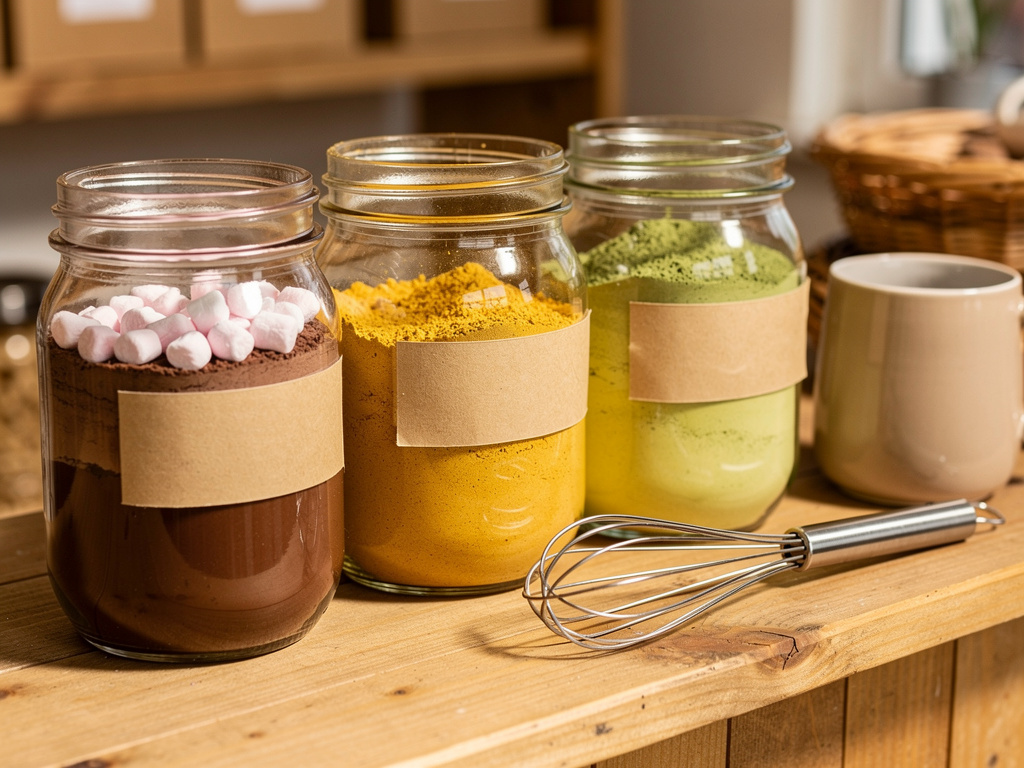


Powdered drink mixes, hot cocoa, chai lattes, golden milk, lemonade, horchata, are a quietly great home food product: dry, shelf-stable, endlessly giftable, and seasonal in a way that keeps orders coming year-round. They're also a clean fit for cottage food law, since some states name powdered drink mixes as an approved category outright. The one rule to know is that they have to be built from dry, shelf-stable ingredients, and you can't make claims you can't back. This guide walks through how to sell powdered drink mix from home, why it's cottage-eligible, and how to build a gift-worthy line.
The short version: Powdered drink mixes made from dry, manufactured ingredients, hot cocoa, chai, golden milk, lemonade, horchata, are cottage-food eligible in many states, and California even lists "powdered drink mixes made from manufactured ingredients" as an approved category by name. The rules: everything must be dry and shelf-stable, use commercially processed ingredients like cocoa, powdered milk, and sugar, and avoid unverifiable claims. California specifically bars labeling drink mixes with "protein" because the amount can't be determined. Keep it dry, label it honestly, and a drink mix is one of the safest, most seasonal home products around. Homegrown gives you the storefront to sell your mixes as gifts, seasonal drops, and subscriptions. This is general information, not legal advice.
This guide covers why powdered drink mix is cottage-eligible, the dry-ingredient rules, what mixes to make, labeling, making and storing, the market, pricing, and mistakes. This is general information, not legal or food-safety advice.
Yes, in many states you can sell powdered drink mix as a cottage food, and some states name it as an approved category outright, because a dry mix of shelf-stable ingredients is exactly the kind of non-perishable product these laws cover. It's one of the clearer eligible products.
Why powdered drink mix is eligible:
The takeaway: powdered drink mixes made from dry, manufactured ingredients are cottage-eligible in many states, and named outright in some, making them a clear product. The rule is to register under your state's cottage food program and confirm its drink-mix rules, since eligibility is strong but the process still applies, the same first step as starting a cottage food business.
The rules for drink mix ingredients are that everything must be dry and shelf-stable, made from commercially processed ingredients like cocoa, powdered milk, sugar, and fruit powders, with no fresh dairy or perishable additions. Dry-and-manufactured is the whole framework.
The ingredient rules:
The takeaway: drink mixes must be built entirely from dry, commercially processed, shelf-stable ingredients, with powdered dairy fine and fresh anything excluded. The rule is to formulate every mix from dry manufactured ingredients only, since that's what keeps it safe and eligible, a core principle of home food safety.
You can make a wide range of powdered drink mixes, hot cocoa, chai, golden milk, matcha latte, lemonade, iced tea, horchata, and apple cider, all from dry, shelf-stable ingredients. The variety and seasonality are what make drink mixes such a flexible product.
Popular drink mixes:
The takeaway: from cozy hot cocoa and chai to summer lemonade and horchata, dry drink mixes span every season and taste. The rule is to build a seasonal, varied lineup so orders keep coming year-round, a cousin of packaging up spice blends.
You should label powdered drink mix with a full ingredient list, an allergen statement, your cottage food disclosure, preparation instructions, and net weight, while avoiding unverifiable claims like "protein." The claim rule is the one that catches people, so know it.
Here's what the label needs to cover:
| Label element | Why it matters |
|---|---|
| Ingredient list | Every dry ingredient, by weight |
| Allergen statement | Milk in cocoa/chai; others as relevant |
| Cottage food disclosure | Your state's "made in a home kitchen" line |
| Preparation instructions | How much mix and what liquid to add |
| No unverifiable claims | California bars "protein" on drink mixes |
What to get right:
The takeaway: drink mixes need a standard cottage food label plus prep instructions and no unverifiable claims like "protein." The rule is to label ingredients and allergens fully, give clear directions, and keep claims honest, alongside the rest of your cottage food labeling.
You make and store powdered drink mix by blending fresh dry ingredients evenly, keeping everything bone-dry, sealing airtight, and storing cool and dry with a date. Dryness and even blending are what make a good, consistent mix.
Making and storing well:
The takeaway: even blending, dry handling, fresh components, and airtight cool storage give you a consistent mix that keeps for months. The rule is to keep everything dry and blend evenly, since those two things drive both quality and shelf life.
The market for powdered drink mix is gifts, seasonal drops, subscriptions, and cafe or shop wholesale: it's a cozy, giftable product with built-in seasonality that keeps orders flowing. Hot cocoa in winter and lemonade in summer means year-round demand.
Where drink mixes sell:
The takeaway: drink mixes sell as gifts, seasonal drops, and subscriptions, with year-round seasonality driving repeat orders. The rule is to build a seasonal, subscription-friendly lineup, the same gift and seasonal strength behind holiday gift boxes.
You price powdered drink mix to cover ingredients like cocoa and specialty powders, the jar and packaging, the labor of blending and filling, and a gift-market margin, then use sets and subscriptions to lift order value. Presentation and packaging drive value as much as the mix.
Pricing guidance:
The takeaway: price drink mixes for real ingredient cost, packaging, and blending labor, using sets and subscriptions to lift order value. The rule is to price the quality and presentation, then build recurring and seasonal offers to grow revenue.
The biggest mistakes selling powdered drink mix are using fresh dairy, making protein or health claims, letting mixes clump from moisture, and weak allergen labeling. The claims and fresh-dairy mistakes are the ones with real consequences.
Mistakes to avoid:
The takeaway: the mistakes that matter most are fresh dairy, unverifiable claims, moisture clumping, and weak labeling, all avoidable with a dry, honest approach. The rule is to keep it dry, use shelf-stable dairy, skip unverifiable claims, and label clearly before your first jar ships.
Powdered drink mixes are a seasonal, giftable product that suits gift sets and subscriptions, so you need a clean way to take orders, offer recurring and seasonal drops, and get paid, without losing a cut of every sale. That's what Homegrown is for.
Homegrown gives you an online storefront to sell your drink mixes as single jars, gift sets, and subscriptions, take scheduled seasonal and recurring orders, and collect payment, all for a flat $10 a month with no percentage fees beyond standard payment processing. For a gift product where much of the revenue lands in seasonal spikes, a per-order commission quietly skims your best months. A marketplace-style platform takes a percentage of every jar, and a general website builder wasn't made for seasonal drops and subscriptions. Homegrown bundles the storefront, order scheduling, and subscription options into one flat rate, so your drink-mix margin stays yours. It won't suit everyone, if you gift a few jars to friends for cash, you may not need a storefront yet, but the moment you're taking gift and subscription orders online, a flat monthly rate beats handing a percentage to a marketplace.
Ready to sell your drink mixes online? Set up your Homegrown storefront and start taking orders.
In many states, yes, and some name it as an approved category outright. California lists "powdered drink mixes made from manufactured ingredients" among approved cottage foods. Because a dry mix is non-perishable, it's one of the clearer eligible products. Register under your state's cottage food program, follow its rules, and keep every ingredient dry and shelf-stable.
No, not fresh milk. Fresh dairy is perishable and would make the mix ineligible. Use commercially processed powdered milk or creamer instead, which is dry and shelf-stable, so a hot cocoa or chai mix can include it. The customer adds the fresh milk or water when they prepare the drink at home.
California specifically bars labeling powdered drink mixes with "protein" because the amount can't be determined in a home-blended product. More broadly, nutrient and health claims can require substantiation and cross into regulated-claim territory. Describe your mix honestly by its ingredients rather than making protein or health claims you can't back up.
Seasonal favorites drive the most sales: hot cocoa, peppermint mocha, chai, and golden milk in the cold months, and lemonade, iced tea, and horchata in warm weather. Building a seasonal lineup keeps orders coming year-round, and gift sets and subscriptions raise order value across the calendar.
A sealed, airtight jar of dry mix typically stays good for several months to a year, with flavor gradually fading and the shortest-lived ingredient setting the real shelf life. Keep everything dry, seal tightly, store cool and dry, and date each batch so customers use it at its best. Moisture is the main enemy, causing clumping.
They can be, especially as seasonal gift sets and subscriptions. Ingredient costs are modest for most mixes, so profitability comes from pricing the packaging and blending labor in, and from bundling into sets and recurring subscriptions that raise order value. The built-in seasonality gives drink mixes year-round earning potential.



