
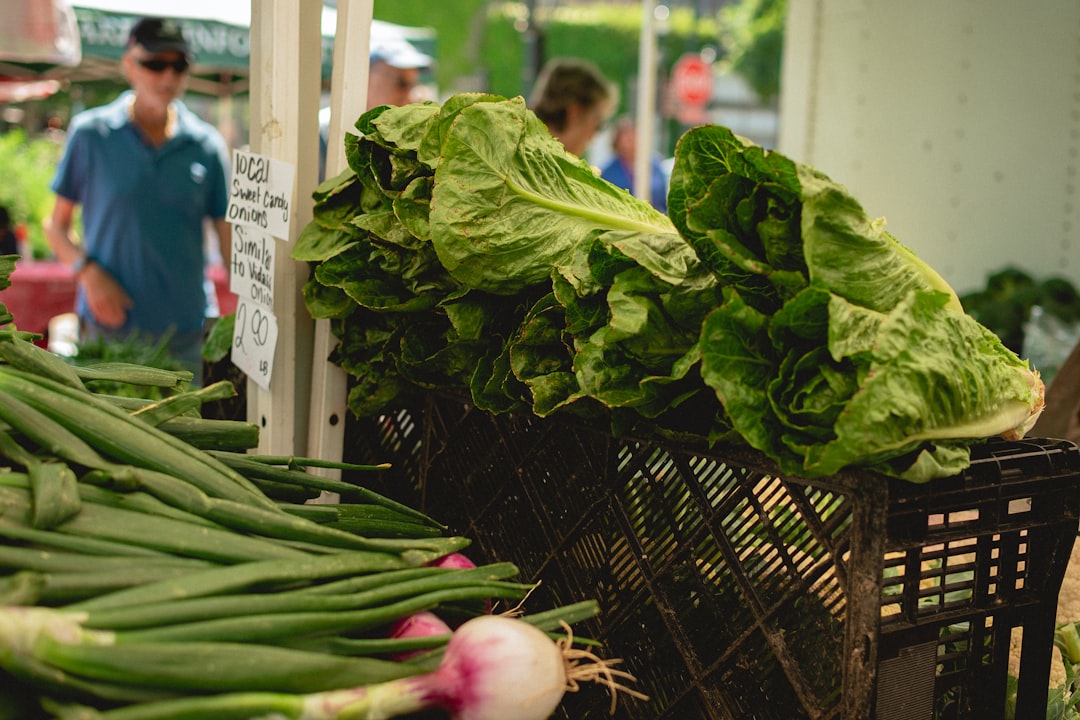


A handful of states have true "food freedom" laws that let home vendors sell almost any homemade food — including meat, dairy, and cooked meals — directly to customers without a license, commercial kitchen, or inspection. Wyoming started the trend in 2015, and Utah, North Dakota, Maine, Montana, Oklahoma, New Hampshire, and Iowa have followed with their own versions of varying scope. Every other state still runs a traditional cottage food program with a short list of allowed "low-risk" products (baked goods, jams, dried goods) and caps on what you can earn. If you live in a food freedom state, you have far more room to sell than most vendors realize.
The short version: Food freedom states let you sell homemade food directly to customers without a license, inspection, or commercial kitchen — usually as long as the sale is face-to-face and not through a third party. The strongest food freedom laws are in Wyoming, North Dakota, Utah, Maine, Montana, and Oklahoma. New Hampshire and Iowa have partial food freedom provisions. In these states, you can sell meat, dairy, baked goods, cooked meals, and preserves from your home as long as you label products and sell directly to the end consumer. The rest of the country runs traditional cottage food programs with a limited "low-risk food" list and revenue caps between $10,000 and $75,000 per year. If you are in a food freedom state, you are operating under the most permissive homemade food rules in the country — and most vendors do not take full advantage of what the law actually allows.
A food freedom law is a state statute that exempts direct-to-consumer homemade food sales from most licensing, inspection, and facility requirements. Instead of treating home food production as a regulated food business, food freedom laws treat it as a private transaction between a vendor and a buyer. The buyer takes on the risk, the vendor labels the product honestly, and the state stays out of the relationship.
Traditional cottage food laws work the opposite way. They start with the assumption that all food production is regulated, then carve out narrow exceptions for "low-risk" items (non-refrigerated baked goods, jams, dried goods). A cottage food vendor usually has to register, follow labeling rules, stay under a sales cap, and sell only approved products. A food freedom vendor faces almost none of that.
Here is the key distinction in one sentence: cottage food laws tell you what you can sell; food freedom laws tell you what you cannot. In a food freedom state, the allowed list is long and the banned list is short.
If you want the legal background on how these laws were passed and why they exist, our companion article on food freedom law explained walks through the policy history and legal framework in plain language.
About eight states have passed laws that qualify as food freedom rather than standard cottage food, though legal experts disagree on which ones count as "full" food freedom versus expanded cottage food. Here is the list with the year passed and the key scope of each law. Always check the current statute before launching a business — these laws change frequently.
| State | Law Name | Year | What You Can Sell Without a License |
|---|---|---|---|
| Wyoming | Food Freedom Act | 2015 | Almost anything direct-to-consumer, including meat from on-farm poultry, dairy, cooked meals |
| North Dakota | Cottage Food Production Act (expanded) | 2017 | All homemade foods direct-to-consumer including TCS foods |
| Utah | Home Consumption and Homemade Food Act | 2018 | All homemade food, meat from non-amenable species, cooked meals |
| Maine | Food Sovereignty Act | 2017 | All direct-to-consumer sales in towns that opt in (most rural towns have) |
| Montana | Local Food Choice Act | 2021 | Almost any homemade food including meat, dairy, cooked meals |
| Oklahoma | Homemade Food Freedom Act | 2021 | All homemade foods direct-to-consumer |
| New Hampshire | Homestead Food Operation (expanded) | Recent | Expanded cottage food with some TCS foods allowed |
| Iowa | Home Food Processing (partial) | Recent | Limited food freedom for on-farm and direct sales |
Wyoming's 2015 Food Freedom Act was the first true food freedom law in the country and remains the most permissive. It allows direct sales of almost any homemade food, including poultry (up to 1,000 birds per year from the producer's own flock), rabbit, fish, and even some dairy products — with very few restrictions beyond a requirement to label the product as uninspected.
Most of the laws that followed Wyoming borrow from its basic structure: sales must be direct to the consumer, products must be labeled clearly, and the food cannot be sold through a third-party retailer, restaurant, or food service.
Food freedom laws and cottage food laws both let home vendors sell food without a commercial kitchen, but the scope, revenue caps, and product lists differ dramatically. Here is a side-by-side comparison of what changes when you move from a cottage food state to a food freedom state.
| Rule | Traditional Cottage Food | Food Freedom |
|---|---|---|
| Allowed products | Short list (usually ~20 "low-risk" items) | Almost anything direct-to-consumer |
| Revenue cap | Usually $10,000–$75,000/year | Usually none, or very high |
| Inspection required | Sometimes (kitchen or product) | No |
| License required | Sometimes (registration or permit) | No |
| Labeling required | Yes (strict format) | Yes (simpler format) |
| Sales channels allowed | Varies, often limited | Direct-to-consumer only (no retail/wholesale) |
| Meat and poultry | Banned | Allowed in most food freedom states |
| Dairy | Banned | Allowed in most food freedom states |
| Cooked meals | Banned | Allowed in most food freedom states |
The products you gain access to in a food freedom state are the ones that actually generate real income. A Wyoming vendor can sell cooked meals at a farmers market stand. A cottage food vendor in California cannot. A Montana vendor can sell raw milk from a small herd. A cottage food vendor in Ohio cannot. A Utah vendor can sell chicken from their backyard flock. A cottage food vendor in Illinois cannot.
This matters because the cottage food products (cookies, jam, granola) are saturated markets with thin margins. The food freedom products (prepared meals, meat, dairy) are underserved markets with real pricing power. A home vendor in a food freedom state has access to a product mix that is nearly impossible to build under traditional cottage food rules.
You can sell most foods you can legally produce at home, as long as the sale is direct-to-consumer and you label the product as uninspected. The exact rules vary by state, but most food freedom laws cover these categories.
Commonly allowed under food freedom laws:
Products that stay off-limits even in food freedom states:
The federal restrictions on certain meats are non-negotiable. Even Wyoming's food freedom law does not let you sell home-slaughtered beef to the public — that is a USDA jurisdiction issue, not a state one. Poultry is the exception because federal law carves out a "producer-grower exemption" for small-scale birds.
For a full state-by-state breakdown of which products are allowed in each traditional cottage food state, our cottage food laws by state guide covers the rules everywhere else in the country.
Most food freedom states require a simple label and minimal records. The point of food freedom is to reduce the regulatory burden, not eliminate all consumer protection, so every state still requires you to label the product and keep a basic paper trail.
Typical labeling requirements:
Wyoming's version of the required disclosure reads something like: "This product was produced under the Wyoming Food Freedom Act and is not subject to Wyoming's food safety regulations." The exact wording varies by state, but the goal is the same — make sure the buyer knows the product is not inspected.
Record-keeping is usually lighter than cottage food states. Most food freedom laws do not require you to track sales, keep receipts, or file any paperwork with the state. Some require you to keep a basic log of production dates in case of a recall. Many do not.
The University of Minnesota Extension's guide to selling food under cottage food and similar laws notes that even in permissive states, labeling honestly and keeping a simple production log protects you in the rare case a customer reports a problem. Good records are your strongest defense.
Compare that to a cottage food state like Florida, where the Florida Department of Agriculture cottage food program requires label approvals, annual registration, detailed allergen formatting, and a $250,000 annual sales cap before you need to move to a commercial kitchen. That is the gap between food freedom and traditional cottage food — and it shows up in how much administrative time you lose every month.
You start by labeling your product honestly, selling directly to customers, and making sure you understand the specific restrictions in your state. There is no application to fill out, no permit to wait for, and no inspection to schedule.
Here is the typical setup, in order:
The biggest mistake new food freedom vendors make is assuming the rules are the same across states. They are not. A legal product in Wyoming may not be legal in Utah. A legal sales channel in North Dakota may not be legal in Montana. Always check your specific state's statute before launching.
If you want the full walkthrough on the business side of launching a cottage food or food freedom operation, our complete guide to starting a cottage food business covers pricing, packaging, labeling, and first-customer tactics that apply in any state.
Food freedom laws are the most permissive home food rules in the country, but they come with three real limitations every vendor should understand before scaling.
Limitation 1: Direct-to-consumer only. You cannot sell to a retail store, restaurant, or food service under a food freedom law. The moment you introduce a middleman, the product has to go through the normal inspection and licensing process. This is the biggest scaling constraint — you cannot wholesale a food freedom product.
Limitation 2: State lines. Food freedom laws end at the state border. You cannot ship a food freedom product to another state, even by mail. If you want to sell across state lines, you need to meet federal food safety requirements, which usually means a commercial kitchen and a federal license.
Limitation 3: Federal meat and poultry rules. Food freedom does not override federal USDA rules on beef, pork, lamb, and goat. Even the most permissive state laws carve out these items. Poultry (chicken, turkey, duck) is the exception because of the federal producer-grower exemption, but the limit is usually 1,000 birds per year per producer.
Here is what this means in practice. A Wyoming vendor can:
A Wyoming vendor cannot:
Once you understand the limits, you can design a business that works inside them. Most food freedom vendors who hit $30,000 to $60,000 per year do it with a combination of farmers markets, farm stand sales, and direct pickup orders. That is the sweet spot — high product flexibility, simple logistics, no middleman.
Food freedom changes what you can build because it removes the product restrictions that cap traditional cottage food vendors at $10,000 to $50,000 per year. With access to meat, dairy, cooked meals, and prepared products, a home vendor in a food freedom state can build a six-figure business without ever renting a commercial kitchen.
Here are the business models that work under food freedom rules but not under traditional cottage food:
The business models that food freedom unlocks are the ones with the best margins and the most differentiation. A home cookie business has thousands of competitors. A home weekly-meals delivery for ten families has essentially none.
If you are ready to build a multi-product business under a food freedom law, your biggest bottleneck will not be the regulation — it will be managing orders. Taking weekly meal orders through Instagram DMs falls apart at 15 customers. A simple online ordering system lets customers see what is available, pick their products, pay upfront, and schedule pickup. Homegrown is $10/month with no percentage fees beyond standard payment processing and is built for exactly this use case — food freedom vendors selling weekly meals, meat shares, and prepared products direct to local customers. Compare that to Etsy, which charges 6.5% per transaction and is designed for shipping shelf-stable products to strangers, or Shopify at $39/month with features built for online retailers, not a home vendor selling 20 meal orders per week to neighbors. Homegrown does not help you navigate your state's food freedom law or handle delivery logistics — it gives you the ordering page that turns scattered DM orders into a functional business.
Food freedom legislation is introduced in state houses regularly, and most states that eventually pass a law saw three to five failed bills before one crossed the finish line. If you want to know whether your state is close, watch for these signals.
What to watch:
States that have introduced but not yet passed food freedom bills in recent years include Texas, Nebraska, Colorado, New Mexico, and Tennessee. Any of these could pass a food freedom law in the next few legislative sessions. Nebraska, in particular, has come close multiple times.
If you want to push your state toward food freedom, the most effective step is to contact your state representative and share a concrete example of a business you would like to start that cottage food rules make illegal. Specific stories from real vendors are the single strongest lobbying asset for food freedom bills. Abstract principles do not move legislators. Real people with real businesses do.
Ready to turn this into a real business? The easiest way to take local orders and get paid is an online storefront — see the best platform to sell food from home, or set up a Homegrown storefront in about 15 minutes ($10/mo, 0% commission).
About eight states have laws that meet the definition of true or near-true food freedom, where home vendors can sell almost any homemade food direct-to-consumer without a license or inspection. Those states include Wyoming, North Dakota, Utah, Maine, Montana, Oklahoma, New Hampshire, and Iowa, though New Hampshire and Iowa have more limited versions than the first six. Every other state runs a traditional cottage food program with a limited product list and revenue cap.
Cottage food laws allow a short list of low-risk homemade foods (usually baked goods, jams, dried goods) with strict labeling and a revenue cap. Food freedom laws allow almost any homemade food, including meat, dairy, and cooked meals, with simpler labeling and usually no revenue cap. The core difference is scope — cottage food laws tell you what you can sell, while food freedom laws tell you what you cannot.
No. Food freedom laws only apply within the state that passed them. Shipping food freedom products across state lines requires federal food safety compliance, which usually means a commercial kitchen and a federal license. If you want to ship, you need to move off food freedom and into a standard licensed food business.
Most food freedom states do not require a license, permit, or registration to sell direct-to-consumer. You do have to label products correctly, follow any state-specific restrictions (like meat production caps), and report your income on your taxes. No inspection, no kitchen approval, no permit.
No. Food freedom laws cover direct-to-consumer sales only. Selling to a restaurant, grocery store, or any third-party retailer requires a licensed commercial kitchen and state food business registration in every state. The moment you add a middleman, the product has to meet normal food safety rules.
Raw milk rules vary even within food freedom states. Wyoming, North Dakota, and Utah allow raw milk sales direct-to-consumer from small herds. Montana allows raw milk sales under specific rules. Maine's Food Sovereignty Act allows raw milk in towns that have opted in. Always check the specific statute because raw milk is regulated separately from most other food freedom products.
Wyoming is generally considered the most permissive food freedom state because it has the longest track record (since 2015), the widest product scope, and the simplest labeling requirements. Montana and Utah are close seconds. Maine is strong but depends on whether your town has opted into the Food Sovereignty Act. The best state for you depends on what you want to sell — if you want to focus on prepared meals, any of the top four work; if you want to sell raw milk, Wyoming and Montana are the friendliest.
If you live in a food freedom state, you already have more legal room than most home vendors in the country. The bottleneck is almost never the law — it is order management. A vendor who moves off DMs and onto a simple ordering page can handle ten times the volume within a month, not because the law changed but because customers can finally see products, prices, and pickup times in one place. Set up your ordering page and start selling what your state already allows you to make.



