
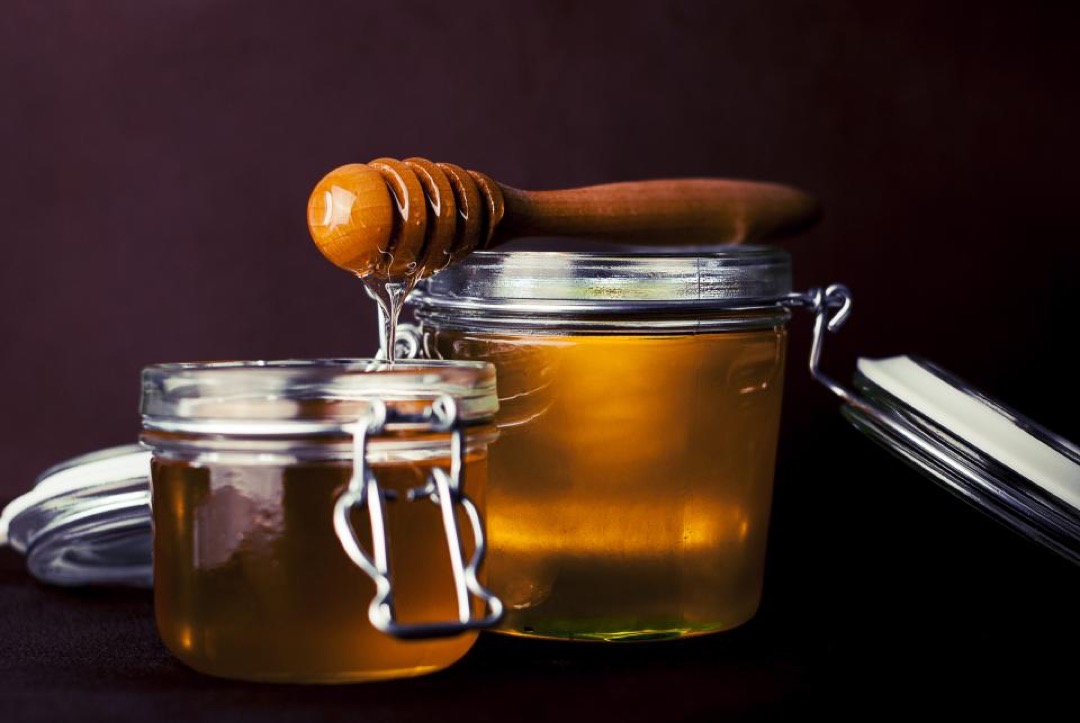


The short version: Every state page we loaded that addresses selling honey lets a beekeeper sell their own honey, and in most of those states no food license is required. Three states show how differently this gets handled: Wisconsin requires no license if you sell only your own honey and only strain it, heat it enough to pour, or let it crystallize into creamed honey with a starter of your own honey, Ohio exempts you if at least 75% of the honey comes from your own hives, and New York exempts you from its Article 20-C food processing license unless you buy honey from someone else to repackage, or combine it with an ingredient that can support the growth of infectious or toxigenic organisms. The jar needs the word honey, the net weight, and your business name and street address. The moment you add anything to that jar, or bottle honey that is not from your bees, you can fall out of the exemption and into cottage food rules or full licensing.
Checked September 21, 2026: the rules here come from the state agriculture pages for seven states, plus the FDA guidance titled Proper Labeling of Honey and Honey Products, final guidance issued February 2018, all loaded that day. Honest bounds: seven states is not fifty, state food law changes every legislative session, and shipping honey out of state is a separate question from selling it locally, so verify your own state's current rules with your state department of agriculture before your first sale.
Four hives in the backyard, sixty jars cooling on the counter, and one question standing between you and your first sale. Is it legal to sell this?
Yes. Honey is one of the easiest homemade products to sell in the United States. Pennsylvania shows the gap plainly: its honey registration guide exempts an on-farm honey business from food establishment registration, then says in the same breath that the act is not intended to exempt other on-the-farm food processors who are processing food products other than honey. The loaf of bread baked in the same kitchen still needs the paperwork the honey does not. What trips people up is that honey does not sit under one single law. Depending on where you live, your jars are covered by a standalone beekeeper exemption, by your state's cottage food law, or by rules that treat honey as a raw farm product like apples or eggs.
This guide walks through which of those three you are in, what has to go on the jar, the exact line where your exemption stops applying, and what it costs to get square with your state. Our guide to how to sell honey covers what to charge and how to handle repeat orders once the legal side is settled.
Yes, and on most of the seven pages we read for this guide that means no food license and no commercial kitchen. Inspection is the part that does not go away everywhere: Pennsylvania's honey registration guide says being exempt from the registration fee is not an exemption from inspection, and it keeps exempt producers on an inspection rotation once they sell off farm. Every state page we loaded that addresses selling honey lets a beekeeper sell honey from their own hives straight to the person who will eat it. Only one of the seven pages puts a number on the food side at all: the $35 Pennsylvania charges a honey producer who wants to print "Reg. Penna. Dept. Agr." on the jar. California's cottage food registration or permit costs money too, at a price your local environmental health department sets, and we did not price it. The other five publish no food-side fee at all, which is not a promise that none exists. That $35 is not a general Pennsylvania registration fee. A farm where the only food offered is honey from that farm is exempt from registering at all, not just from the fee, but any honey producer who wants that statement on the jar has to register and pay the $35 either way. Your own state sets its own number. Hive registration is a separate bill on top of that. California scales that one by colony count, from $10 a year for a handful of backyard hives up to $250 for an operation past fifty, and the full schedule sits in the hive registration section below. Counties that opted into the hobbyist waiver show a beekeeper with fewer than 10 colonies as waived.
Here is what selling your own honey usually does require:
One thing is deliberately not on that list: selling direct to the person who will eat the honey. It is the sale every exemption here is written around, and it is a condition in two of these states: Florida bars wholesale outright, and California confines a Class A cottage food operation to direct sales unless it upgrades to a Class B permit. Wholesale is a separate question, and it lands in four different places across these seven states; the section on where you can sell has each one.
Here is what it usually does not require:
Honey gets its own lane because you did not actually make it, the bees did, and because none of the state pages we read treats plain honey as a food that needs temperature control. State food law usually draws a line between processing food and harvesting a farm product, and extracting honey from a frame sits on the harvesting side of that line. Texas says this in plain words: the Department of State Health Services FAQ, loaded September 21, 2026, states that beekeepers who sell raw honey from their own bees are farms and are exempt from licensing as food manufacturers, and that extracting and bottling raw honey is an allowable farm activity.
The food safety reasons behind that are simple:
That is why the same state that makes a person selling jam register can wave you through with nothing. It is also why the exemption is so easy to lose. Every one of those four reasons stops being true the moment you stir something into the jar.
Your honey falls into one of three legal buckets, and which one you are in decides everything else. Bucket one is a standalone honey or beekeeper exemption written specifically for people like you. Bucket two is your state's general cottage food law, which caps your annual sales and usually restricts you to in-state buyers. Bucket three treats honey as a raw farm product, which puts you under farm rules instead of food processing rules.
Scroll sideways to see every column.
| State | Which law covers plain honey | License or registration | Sales limit | Where you can sell |
|---|---|---|---|---|
| Texas | Raw farm product. Beekeepers are treated as farms | None from DSHS for pulling frames and filling jars with raw honey | None stated for the farm exemption | Retail or wholesale, per the DSHS FAQ. Pasteurizing needs a manufacturer license |
| Ohio | Standalone honey exemption, ORC 3717.021. A separate provision, ORC 3715.021, is what keeps plain honey out of the cottage food rules | None as long as three quarters or more of what you jar came off your own hives. Voluntary inspection available on request | None stated for the honey exemption | No permission stated for plain honey, though the ODA page writes its label rule around honey sold from home, a market or elsewhere. Flavored honey becomes a cottage food, and cottage food products may only be sold in Ohio |
| Wisconsin | Standalone honey exemption | No DATCP license if you sell only your own honey and only strain it, heat it enough to pour, or let it crystallize into creamed honey with a starter of your own honey | None stated for the exemption | Not stated for a beekeeper who does not grade. If you do grade, the whole crop has to be graded, and the only ungraded honey DATCP names is honey sold from your own premises. DATCP also points you to local ordinances and to farmers market rules. Ungraded honey must say "Ungraded" on the label |
| New York | Honey processing exemption from Article 20-C | No 20-C license unless you repackage honey bought from someone else, or combine honey with an ingredient capable of supporting the growth of infectious or toxigenic organisms | None stated for the exemption | The honey processing page does not say. The state's farmers market guidance does: a vendor bottling honey at their own facility is exempt from licensing, and the guidance wants the jars packaged, properly labeled and graded before they reach the table. Sanitation and Part 259 labeling still apply |
| Pennsylvania | Honey Sale and Labeling Act exemption | None on a farm where 100% of the regulated product offered for human consumption is honey produced or processed there. That food establishment is exempt from registering at all, not just from the fee. Where registration is required, the guide names a $35 fee for a honey producer who wants to use the statement Reg. Penna. Dept. Agr., and the exemption is not an exemption from inspection | None stated for the exemption | On-farm sales are exempt. Off farm, only pre-packaged honey is exempt. Bulk honey off farm is not. How the honey is sold is not evaluated for the registration exemption, so wholesale is covered, but exempt wholesalers sit on an 18-month inspection rotation |
| Florida | Cottage food law. Honey is an approved cottage food | No FDACS food permit for direct-to-consumer sales | Gross sales must not exceed $250,000 a year | In person, your own website, and mail order. No wholesale |
| California | Apiary law plus cottage food law. Pure honey is category 6 on the state's approved cottage food list, with no added ingredients allowed | Apiary registration with your county agricultural commissioner, plus a cottage food registration or permit from your local environmental health department. CDPH maintains the food list but registers nobody | $75,000 in gross annual sales for a Class A operation and $150,000 for a Class B in the statute, adjusted for inflation every January. CDPH's adjusted-limit notice sets the limits effective January 1, 2026 at $88,878 for Class A and $177,756 for Class B, up from $86,206 and $172,411 in 2025 | Class A sells direct to the public only, in person, by phone, online or by mail. Class B may also sell through restaurants and food markets |
Every row here was read on the state's own page on September 21, 2026: the Texas DSHS food manufacturer FAQ, the Ohio Department of Agriculture honey page, last updated April 3, 2018, the Wisconsin DATCP honey and honey products page, the New York Department of Agriculture and Markets maple syrup and honey processing page and that department's guidance on sanitary regulations for New York State farmers markets, dated April 24, 2020, the Pennsylvania Department of Agriculture honey registration guide, dated June 2014 and the newest one the department publishes, the Florida FDACS cottage foods page, and for California the CDFA Apiary Protection Program page plus the CDPH cottage food operations page and its approved cottage foods list. "None stated" means the page does not publish a pound or dollar cap on the exemption, not that no cap exists anywhere in that state's code. These seven are examples, not a substitute for your own state. Check what your own state requires right now before you sell.
If your state is not in that table, our cottage food laws by state guide is the faster way to find the cap and the registration rule where you live.
In most of the seven states covered here, no, so long as every jar came out of your own hives and nothing was stirred into it. Wisconsin puts the test in two bullets on the Wisconsin DATCP honey page, under the heading "No DATCP license is needed if": no license is needed if you extract, package and sell only your own honey from your own bees, and you only process it by straining, heating enough to make it pour, or letting it crystallize into creamed honey using a starter from your own honey. Ohio sets the bar at 75% of the honey coming from your hives and then exempts you from licensing, registration and mandatory inspection.
Finding your own answer takes about twenty minutes:
Hive registration is the obligation people miss. California's apiary protection page, read on September 21, 2026, states that apiary registration and registration fees are required as of January 1, 2026, and that registration is handled by your county agricultural commissioner under the Food and Agricultural Code, Division 13, Chapter 1. The fee comes due on January 1 each year and must be paid by January 31; after that BeeWhere, the state registration portal, adds a late penalty of 50% of the amount due. When we loaded BeeWhere on September 21, 2026, its banner said the 2026 fees were already past due. If you are reading this after January, register anyway and ask your county agricultural commissioner what you owe. You can register through the CDFA Apiary Protection Program. That is a separate filing from anything on the food side.
In some states yes, and it has nothing to do with food law. Hive registration exists so the state can track bee diseases and warn beekeepers before a pesticide application nearby, and it is run by a different office than food licensing. In California, the only state whose apiary page we loaded for this guide, that office is your county agricultural commissioner rather than the state food safety program. That means you can be fully exempt from food licensing and still be out of compliance on the bee side.
What registration typically involves:
Those dollar figures and dates are California's. Every state sets its own apiary fee schedule and its own deadline, and California's is the only one we checked for this guide, so read your own state's apiary page and its due date rather than assuming these numbers travel.
Pennsylvania shows how the two sides can interact. Its honey registration guide, loaded September 21, 2026, notes that hives may be kept off the farm elsewhere in Pennsylvania for pollination and the on-farm exemption still holds, but hives moved out of state for pollination and then brought back lose the registration exemption. If you rent your bees out for almond pollination, that sentence is about you.
Three things, plus whatever your state adds: the word honey, how much is in the jar by weight, and who packed it. The FDA guidance titled Proper Labeling of Honey and Honey Products, final guidance issued February 2018, says that a food containing only honey must be named honey because that is its common or usual name, and that because honey is a single-ingredient food you do not need an ingredient list at all. Your state then adds whatever it adds on top.
The three elements to print, and the one your state may add, in order of how often people get them wrong:
Order one label design and let the net weight float. The word honey, your business name and street address, and any floral source claim read the same on every jar you fill, whatever its size. The net weight line is the only part that changes, and it will not match the number stamped on the jar, because honey outweighs the water the jar was sized for. So print the shared design in one run at the volume price, weigh a filled jar of each size you actually pack, and put the net weight on a small separate sticker. Put that sticker in the bottom 30% of the front panel, the part a customer sees first. FDA's Food Labeling Guide, loaded September 22, 2026, puts the net quantity statement there as a distinct item, in lines generally parallel with the base of the container, and cites 21 CFR 101.105. A beekeeper who buys size-specific labels before the crop is in pays twice: once for the run that does not fit, once for the reprint.
Floral source claims are optional but they have to be true. The FDA guidance says you may label honey with the name of a plant or blossom only if you or the beekeeper have information supporting the conclusion that it is the chief floral source, so clover honey, orange blossom honey and wildflower honey are all fine when they are accurate. Some states narrow that further, since Wisconsin allows one named source only and bans naming honey by season, and our guide to honey label ideas covers those rules alongside Texas's ban on bee drawings for anything that is not pure honey. Our cottage food labeling requirements guide has the full element list if you sell anything besides honey.
The net weight rule changes based on where you sell. The Ohio Department of Agriculture honey page, last updated April 3, 2018 and loaded September 21, 2026, says that if honey is sold on site the label must declare the net weight in ounces and does not have to carry the weight in grams, but if it is sold off site it must show both ounces and grams. Grams are optional at your driveway and required at the market across town, which means one label printed with both units is legal in both places. Printing both on every jar is the simpler route and it costs nothing extra.
You can fall straight out of the honey exemption and into a different set of rules. This is the single biggest trap in selling honey, and almost nobody writes it down. Plain honey is a single-ingredient farm product. Hot honey with chili flakes is a processed food you manufactured, and your state's food code sees it that way. That extra step belongs in the price as well, and our guide to how much to sell hot honey for puts a half-pint jar at $15, $2 to $4 above the same jar of plain honey.
Ohio spells the flip out. Its Division of Food Safety honey page says plain honey is not exempt as a cottage food, it is exempt under ORC 3715.021, but flavored honey made by a beekeeper exempt under ORC 3717.021 is a cottage food and must follow the cottage food rules, which in Ohio means it can only be sold inside Ohio. New York draws its line at ingredients too. The New York honey processing exemption applies to beekeepers who do not buy honey from others to repackage and who do not combine honey with any ingredient capable of supporting the growth of infectious or toxigenic organisms.
Three things break a honey exemption, and which ones apply depends on the state, so match the rule to the page rather than assuming it travels. Adding another ingredient is the one three of the pages address, and they do not draw the line in the same place. New York's exemption stops only if the ingredient can support the growth of infectious or toxigenic organisms, and the department's farmers market guidance, which we read again on September 22, 2026, says outright that a vendor stays exempt while adding ingredients “such as spices, that are not capable of supporting the growth of infectious or toxigenic organisms.” Wisconsin is stricter and stops the exemption if you add color, flavors or other ingredients at all. In Ohio flavored honey becomes a cottage food, which is a different rulebook rather than a refusal. Bottling honey you bought from another beekeeper breaks it outright in New York and Wisconsin, and in Ohio only once the bought honey passes 25%, because Ohio's exemption runs on at least 75% coming from your own hives. Heat is a Texas and Wisconsin rule rather than a national one: the Texas DSHS FAQ, which we read on September 21, 2026, says pasteurizing raw honey is a manufacturing activity that requires a license as a food manufacturer, while jarring it straight off the frames does not, and Wisconsin allows heating only to make the honey pour for packaging. The Ohio and New York pages do not mention pasteurizing at all. Wholesale is the fourth thing people expect to see on this list, and the seven states split four ways on it, so it is worked through in full further down, where the venues are. The Texas FAQ treats extracting and bottling raw honey as an allowable farm activity whether for retail or wholesale, and says a beekeeper may blend in other raw honey as long as some of it comes from their own bees.
The cost of that flip is not a fee, it is a border: plain honey under a farm or honey exemption can have no stated cap at all, while a cottage food product is capped, at $250,000 a year in Florida, and is usually locked to buyers inside your own state. Creamed honey is where that line gets fine, and how you make it decides which side you land on. Wisconsin explicitly allows you to let honey crystallize into spun or creamed honey, including using a starter, as long as the starter is your own honey, but the same DATCP page lists whipping with air under the further processing that does need a license. Texas draws it the same way: its DSHS FAQ says letting raw honey from your own hives dry so that it crystallizes is an allowable farm activity, while whipping air into raw honey is a manufacturing activity that requires a food manufacturer's license. Crystallize and those two states leave you alone. Whip and they do not. Add a vanilla bean to that same jar and you are somewhere else entirely.
More than a backyard beekeeper with ten hives will ever produce, in all seven states this guide covers. At the 2025 national average of 48.0 pounds per colony, ten hives put out about 480 pounds a year, which is roughly 480 one-pound jars. Florida's cottage food cap is $250,000 in gross sales a year, and at $12 a jar those 480 jars come to $5,760. Price the same jar at $20, the price the platform fee table further down uses, and it is $9,600. Both numbers are assumptions about your price, not a published figure, and neither one gets a ten-hive beekeeper anywhere near the cap.
The thresholds that actually matter to a small operation:
If you are close to any of those lines, the next step is usually a food establishment registration rather than a full commercial kitchen. Pennsylvania's honey guide does not price that registration for a beekeeper in general. The only fee it names is $35, and only for a honey producer who wants to use the statement Reg. Penna. Dept. Agr. on the jar; the guide is dated June 2014, so ask the department what your own situation costs today. Read the fee and the inspection separately: Pennsylvania's honey registration guide says twice that being exempt from the registration fee is not an exemption from inspection, and it puts exempt producers who sell at an off-farm retail location on a 24-month inspection rotation and those who sell wholesale on an 18-month rotation.
At your own place wherever the page says so, and Pennsylvania writes its exemption specifically for on-farm sales. At a farmers market wherever your state addresses it, and online only where your own state says so. Two of the seven name online selling and allow it: Florida's cottage food rule names your own website and mail order, and California's cottage food page names the phone, the internet and any other digital method, fulfilled in person, by mail or by a third-party delivery service. New York's honey page never says where you may sell, but a second New York document does: the department's guidance for farmers markets, dated April 24, 2020, exempts a vendor bottling honey at their own facility from licensing and sets three conditions on what goes on the table: the jar is packaged, it is labeled correctly, and the honey is graded. Where a page stays quiet, though, it has not given you clearance. Ohio's page does not hand you permission either, but it is not silent: it writes its label rule around honey "sold from home, a market or elsewhere," it asks for grams as well as ounces on any jar sold off site, and it sets one venue limit outright, since cottage food products, which is where flavored honey lands, may only be sold in Ohio. Wisconsin's page names a venue in one place only, and it is an exception inside its grading rule: if you grade your crop to Wisconsin standards the whole crop has to be graded, and a beekeeper who does that may still sell ungraded honey from their own premises. A beekeeper who never grades gets a label requirement from DATCP, not a venue limit, because the next line says only that the label shall list "ungraded." That same page also tells you to ask your town, village or city and your county about local ordinances on processing and selling honey, and says farmers markets may have rules of their own. Seven is not fifty, so confirm the last step against your own state's page. Easiest to hardest, roughly:
Your market manager will ask for proof before your first Saturday. Bring whatever your state gave you, even if it is just a printed page from the department of agriculture site with the date on it, plus your liability insurance certificate if the market requires one.
Usually not, at least not under the exemption that covers your local sales, because a cottage food law is state authority that stops at the state line. Ohio's cottage food products, which is where flavored honey lands, may only be sold in Ohio. The standalone honey exemptions are quieter than people expect. New York's honey page, loaded for this guide, never says where you may sell, and the farmers market guidance that does name a venue names a booth inside New York, not a package leaving it. Ohio's writes its label rule around honey sold from home, a market or elsewhere, which is not permission to ship plain honey anywhere. And the one venue Wisconsin names sits inside its grading rule: a beekeeper who grades the crop may still sell ungraded honey from their own premises. A beekeeper who does not grade is told to label the jar "ungraded," and nothing about where it may go. Silence is not the same as clearance to ship. Florida and California are the two that name mail order and allow it, and both do it under a cottage food rule, which is in-state authority. California's statute says as much in the same sentence that grants the permission: a cottage food operation is authorized to sell its products throughout the state. That covers a jar you mail inside your own state. Neither page we loaded tells you it covers a jar you mail out of it. The cap comes with the permission either way, $250,000 a year in Florida, and in California $88,878 for a Class A operation or $177,756 for a Class B, the inflation-adjusted limits CDPH set effective January 1, 2026 on top of the $75,000 and $150,000 written in the statute.
What that means in practice:
Our guide to shipping cottage food covers the interstate question in full. The short version for honey is that local pickup and local delivery keep you inside the exemption you already have, which is why a pickup-first ordering page fits a beekeeper better than a shipping-first one.
US honey averaged $3.05 a pound in 2025, up 27% from $2.41 in 2024, according to the USDA National Agricultural Statistics Service honey report released March 13, 2026. That is a price weighted by the quantities sold in each marketing channel, not an average of what each beekeeper got. It blends three marketing channels and the report groups them into two for the country as a whole: honey sold co-op or private averaged $2.45 a pound in 2025 and honey sold retail averaged $7.15. A jar you hand to a customer at a market sits at the retail end of that split, not at the blended average. The state spread below shows how wide the gap can run.
Average honey price per pound, 2025
Source: USDA National Agricultural Statistics Service, Honey, released March 13, 2026, 2025 crop year, prices reflect all marketing channels. Loaded September 21, 2026.
The spread tells you something useful. North Dakota produced 30.8 million pounds in 2025 and averaged $1.89 a pound. North Carolina produced 672,000 pounds and averaged $7.99. USDA does not explain the gap state by state. It publishes the co-op-and-private against retail split for the country as a whole, $2.45 a pound against $7.15 in 2025, and no split at all for any individual state. Theory, and those national numbers are what make it a good one: the channel mix is what moves a state average, because honey sold into drums by the barrel pulls it down and honey sold by the jar at a market pulls it up. What is not a theory is which end of that spread a small beekeeper is selling at. Small and local is the high-price end of this market, not the low end. Which places actually pay that high end is what the guide to where to sell honey works out, pricing seven of them on a $16 jar, from $0.57 in card fees at your own booth to a $3.39 cut on Amazon.
Once your state says yes, the bottleneck stops being the law and becomes the ordering. A honey harvest lands over about three weeks, 60 jars come off the extractor at once, and you end up tracking eleven separate text threads about who owes what and who is picking up on Saturday. Homegrown is $10 a month billed annually, or $12.50 billed monthly, with no commission taken from your sales and nothing added to your customer's total; card processing is 2.9% + $0.30 per order. Card processing of 2.9% plus 30 cents comes out of your side of each order and goes to the payment processor, not to Homegrown. You get an ordering page you can text to your regulars, pickup scheduling so the Saturday handoffs land in windows instead of all at once, sales tax calculated and remitted in all 50 states, and a listing in the local marketplace.
Scroll sideways to see every column.
| Platform | Monthly plan | Trial | Listing fee | Platform or commission fee | Card processing | Customer pays on one $20 jar | Vendor pays on one $20 jar, fees only | Vendor pays on 50 jars at $20, plan included |
|---|---|---|---|---|---|---|---|---|
| Homegrown | $10 billed annually, $12.50 billed monthly | 7 days, no charge until day 8 | $0 | $0, 0% commission | 2.9% + $0.30, paid by the vendor | $20.00 plus sales tax | $0.88 | $54.00 on the annual plan, $56.50 on the monthly plan |
| Square Free | $0 | Not offered, the plan itself is $0 | $0 | $0 | 3.3% + 30 cents online, 2.6% + 15 cents in person | $20.00 plus any sales tax the vendor turns on | $0.96 online, $0.67 in person | $48.00 online, $33.50 in person |
| Etsy | $0, Etsy Plus optional at $10 | Not offered | $0.20 per listing, renewing every four months and again after each item sells | 6.5% of the displayed price plus shipping | 3% + $0.25 in the US, set by country in Etsy's separate payments policy | $20.00 plus shipping and any tax Etsy collects at checkout | $2.35 | $117.50, including $10.00 of listing fees |
Homegrown numbers come from findhomegrown.com/signup, Etsy numbers from etsy.com/legal/fees and etsy.com/legal/etsy-payments, and Square numbers from Square's own fee help page, all loaded September 21, 2026. Both vendor total columns use the same convention: the one-jar figure is fees only, and the 50-jar figure adds one month of the plan. Homegrown's annual plan is billed a year at a time, $120 for the year, so a beekeeper whose whole crop sells in one three-week stretch still carries the eleven months this column does not show. The customer column is the jar price plus tax, because none of the three fee pages we loaded adds a buyer-side service charge to a US order: Homegrown's signup page says “No shopper service fee” and that the $1 per-order fee was eliminated in April 2026, leaving “cart + tax” (loaded September 22, 2026), Square's fee page publishes seller processing rates only, and Etsy's charges land on the seller, though an Etsy buyer still pays shipping and whatever sales tax Etsy collects at checkout. Card processing is figured on the $20 price, and so is Etsy's 6.5% transaction fee; a platform that charges either one on the total with tax runs a few cents higher. Etsy charges that 6.5% on shipping as well, so an Etsy seller who charges $6 to ship a one-pound jar pays about $0.39 more per order than this column shows. Square is the only row with two processing rates, so its two total cells carry both. The online figure is the like-for-like number, because every other row here is an ordering page a customer buys from, and the tap, dip or swipe figure is what the same vendor pays handing a jar across the table at a market booth. The $20 here and the $12 in the cap example earlier are both assumptions about your own price, not USDA figures. Both sit above the $7.15 a pound US honey averaged in the retail channel in 2025, because a jar sold by hand at a market is the high end of that channel, not the average of it. Swap in yours. Etsy's 50-jar figure includes $10.00 of listing fees. Etsy's own help article on listing multiple quantities, loaded September 21, 2026, works the example: you pay $0.20 to create the listing, and $0.20 for each additional item that sells, so a quantity of ten that sells out costs $0.20 plus $1.80. Two Etsy costs are not in that column at all. Offsite Ads charges 15% of an attributed order, or 12% once your shop passes $10,000 in sales over the prior 365 days, and past that threshold you cannot opt out. And Etsy's fees policy says that to open a shop you may be required to pay a one-time set-up fee, an amount Etsy displays during the onboarding flow rather than publishing in the policy, and can waive at its own discretion. Square is genuinely cheaper on fees at this volume, and it is the right answer if all you want is a checkout. What you do not get there is automatic sales tax filing or a local marketplace listing, both of which you would handle yourself.
Honest bounds on Homegrown for a beekeeper: your customers create a Homegrown account to place a first order, there is no countdown-timer drop feature, your storefront is listed in the marketplace but plan on most orders coming from the link you send out yourself, and the 2.9% plus 30 cents card processing is yours to pay with no pass-through to the customer. If your honey sells out in a weekend to twenty people you already know, set up a storefront and text them one link instead of answering twenty messages.
In a pull of the Homegrown catalog on August 14, 2026, 26 of the 1,804 products listed by 219 vendors had the word honey in the name, spread across 22 vendors. Only 7 of those 26 were actual honey products, from 5 vendors. The other 19 only borrowed the word: soap, bread, granola, butter, pickles, freeze dried candy, produce and flavored pantry items named for honey. One of the 5 is Flora Farm, which in that same pull listed Local Raw Wildflower Honey in an 8 ounce and a 1.5 pound size. Those two sizes come from the August 14, 2026 catalog pull rather than a live storefront visit. Honey itself is still a wide open category on the marketplace.
Five things, and three of them are label problems rather than food safety problems. The other two break the exemption itself rather than the label: bottling honey you bought from someone else, and selling wholesale under a rule written for direct sales. Not one of the five is about honey going bad, which is the thing most beekeepers worry about first.
The list, roughly in the order they cost people money:
None of that requires a lawyer. It requires a scale, an honest label and one saved page from your state agriculture department with the date you read it.
No state we checked licenses beekeepers the way it licenses a restaurant. California requires you to register your hives with your county agricultural commissioner, which is a different thing from a food license. Registration is usually a short form, and it is handled by that office rather than the food safety office, so check your own state's apiary page separately from its food page. The fee is set state by state: California's BeeWhere portal sets the fee from the most colonies you had registered the year before: $10 for 1 to 9 colonies, $100 for 10 to 50 and $250 for 51 or more, due January 1, 2026 and payable by January 31, after which a late penalty of 50% of the amount due is added and a beekeeper who still has not paid by February 28 may be excluded from the BeeCheck notification program. Counties that opted into the hobbyist fee waiver show a beekeeper with fewer than 10 colonies as waived. California's is the only apiary fee schedule we checked for this guide, so look up your own state's before you budget for it.
Two of the seven states read for this guide actually spell out a market booth, and both say yes with a condition attached. Pennsylvania exempts off-farm retail from a retail food facility license only when all the honey is pre-packaged, so dispensing from a bulk container at the booth is not covered. New York exempts a vendor who bottles honey at their own facility from licensing, and sets three conditions on the jar itself: sealed, correctly labeled, and graded. The other five do not answer the question: Ohio names markets only inside its labeling rule, Wisconsin names your own premises only inside its grading rule, and Texas, Florida and California do not name a booth at all. Put the question to your own state before you pay a stall fee. Your market manager will also want a vendor application and possibly a liability insurance certificate, which is the market's rule rather than the state's.
No agency issues a raw certificate. The FDA honey labeling guidance, issued February 2018 and read end to end on September 21, 2026, does not use the word raw anywhere in its eight pages. What it does set is the standard that covers every claim on the jar: it points at section 403(a)(1) of the FD&C Act, under which a food is misbranded if its labeling is false or misleading in any particular, and it applies that standard by name to floral source claims. Nothing we loaded defines the word raw: not that FDA guidance, and none of the seven state pages either. That leaves the misbranding standard as the only test the word has to meet, so whatever you print has to be true of what is actually in the jar. If your honey went from the extractor through a strainer into the jar and was never heated past hive temperature, you know what you did to it, which is the part you can stand behind. Check whether your own state defines the word before you print it.
Usually not under the same exemption that covers your own honey. Ohio's exemption requires three quarters of what you jar to come off your own hives. New York's exemption stops applying if you purchase honey from others for repackaging. Wisconsin's applies only to your own honey from your own bees. If you want to resell someone else's honey, expect to register as a food establishment. Pennsylvania's honey guide does not price that registration. The only fee it names is $35, and only for a producer who wants to use the statement Reg. Penna. Dept. Agr. on the jar. The department can quote you the current fee for your own situation.
Not for plain honey with no claims on the label, as long as you also fall under one of FDA's small business exemptions. Ohio's Division of Food Safety honey page says a Nutrition Facts panel is pulled in when nutrient content claims or health claims appear on the label, and that honey is a single-ingredient food that does not require an ingredient list at all. The federal exemption most backyard beekeepers sit in is the retailer one: FDA exempts a retailer with annual gross sales of $500,000 or less, or annual food sales to consumers of $50,000 or less, and that one needs no notice filed. Write "raw wildflower honey, net wt 16 oz, Smith Apiary, 12 Mill Road, Athens, OH 45701" and you are fine, as long as the wildflower claim is true of that batch. Write anything about health benefits and you have created a labeling obligation.
No federal rule requires an infant warning on a honey label, and none of the seven state pages loaded for this guide on September 21, 2026 required one either. Plenty of beekeepers add a line like not recommended for infants under one year anyway, because the advice is real. The CDC says not to feed honey to a child younger than one year old, and printing the line costs nothing. Check your own state's current label list before you order, since this is the kind of requirement states add.
Getting permission to sell honey is the easy part. Most beekeepers find out their state wants nothing from them, print a label, and are selling the same week. If you also want the ordering to stop living in your text messages, you can have a honey storefront live tonight for $10 a month on the annual plan, free for the first 7 days, and send your regulars one link. Verify your state's current rules with your state department of agriculture before your first sale, since food law changes every session.



