
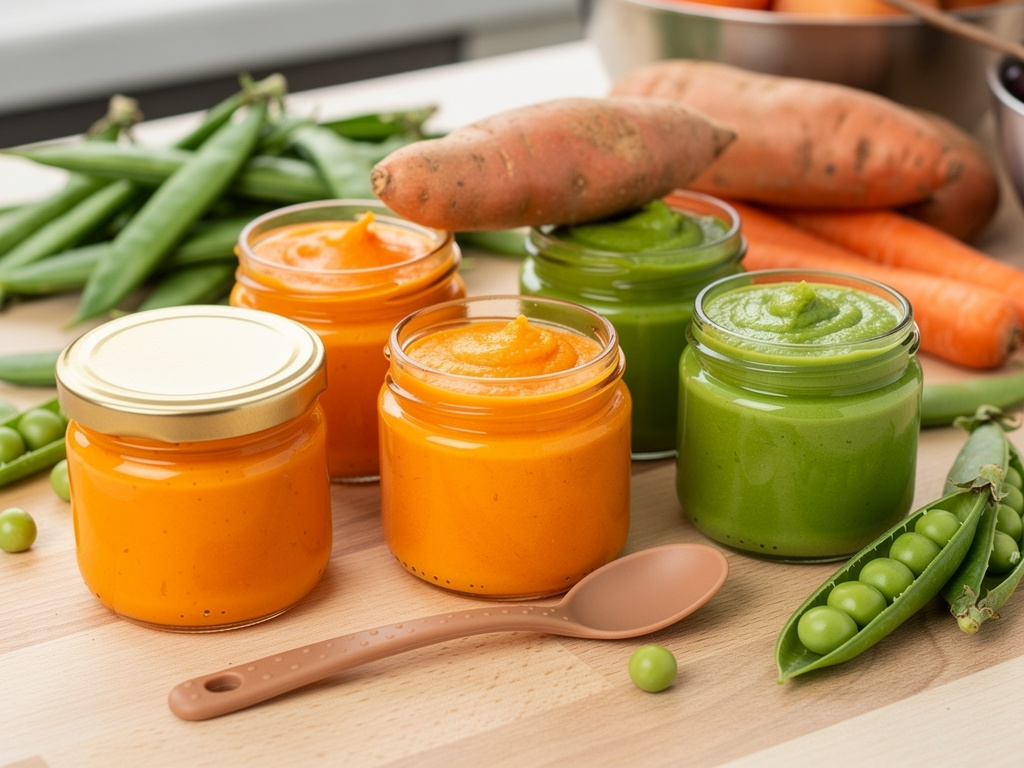


The short version: In most states you cannot sell homemade baby food purees from your home kitchen, because purees need a fridge or freezer and most cottage food laws only cover foods that are safe at room temperature. Six of the nine states checked for this guide (California, Colorado, Florida, Georgia, Minnesota and Washington) give a fresh or frozen vegetable puree no home-kitchen route, and Minnesota allows a fruit puree only if it tests at pH 4.6 or below. Texas allows refrigerated fruit and vegetable purees if you register with the state, Utah allows direct sales to an informed buyer inside the state, and Illinois leaves baby food off its banned list, so ask your local health department there. Jarred low-acid purees and homemade formula are off limits nearly everywhere, while baked teething biscuits without honey usually count as ordinary cottage food. Verify your own state's current rules with its health or agriculture department before your first sale.
Checked September 23, 2026 on each state's own pages: the cottage food pages of California, Colorado, Florida, Georgia, Minnesota, Texas and Washington, the Illinois cottage food statute (410 ILCS 625/4), Utah Code chapter 4-5a, the FDA's January 2025 lead guidance for foods for babies, the FDA's advisory on homemade infant formula, and California's baby food testing law, AB 899. Nine states are examples, not the whole country. Homegrown customers create an account to place a first order, Homegrown handles pickup and local delivery, not shipping, and there is no drop or countdown release feature.
You already make your own baby food. You steam sweet potatoes on Sunday, blend them smooth, and freeze them in ice cube trays. Another parent at daycare asks if she can buy a week's worth. It seems like the easiest side business in the world. The law sees it very differently from a loaf of bread or a jar of jam.
This guide covers baby food as a product: purees in jars, pouches or tubs, frozen cubes, and dried or baked foods made for babies and toddlers. It uses what nine state pages and three federal and California sources said on September 23, 2026. If you want the full list of foods your state does allow from a home kitchen, start with our guide to what foods you can sell under cottage food laws. Then come back here for the baby food details.
Usually no: in 6 of the 9 states checked for this guide, a homemade vegetable puree for babies cannot be sold from a home kitchen. A cottage food law is the set of state rules that lets you make certain low-risk foods at home and sell them without a commercial kitchen. Baby food purees are not on the low-risk side, because they spoil fast outside the fridge.
There are four narrow exceptions, and each comes with conditions:
Everywhere else, the legal route runs through a licensed kitchen and a food manufacturing license. That route is real, but it is a business, not a side hustle.
Most cottage food laws only allow foods that are safe at room temperature, and a smooth, cooked vegetable or fruit puree is not one of them. Regulators call the risky kind a TCS food, short for time and temperature control for safety. It means bacteria can grow in the food unless it stays cold or hot. Our guide to TCS foods and cottage food rules explains the line in more detail.
Here is how 4 states checked say it in their own words:
Baby food adds one more layer. The customer is a baby. A baby's immune system is still developing, and a baby cannot tell you the food tastes off. That is why even states with generous home food rules tend to treat baby food with more care, and why the commercial industry has its own FDA lead action levels.
Yes, a lot: the form of the food decides which rule applies, and a dried teething biscuit is treated nothing like a frozen puree cube. Most parents think of "baby food" as one thing. The law splits it into at least five.
Scroll sideways to see every column.
| Type of baby food | Needs cold storage? | Usual cottage food answer | Where it can work |
|---|---|---|---|
| Fresh puree in a jar or tub, kept in the fridge | Yes | Not allowed in most states | Texas with DSHS registration; Utah food freedom; Minnesota for fruit purees at pH 4.6 or below; ask in Illinois |
| Frozen puree cubes or portions | Yes (freezer) | Not allowed in most states | Same as fresh. Texas bans "ice or ice products", so confirm frozen portions in writing |
| Shelf-stable jarred puree (vegetables, meats) | No, but it needs a pressure process | Banned as a low-acid canned food | Licensed plant only in the cottage food states checked. In Utah, ask the state before canning anything |
| Shelf-stable fruit sauce like applesauce | No | Allowed as canned fruit in a few states if the pH is 4.6 or below | Minnesota's canning rule, for example. Selling it as "baby food" raises the bar |
| Dried or baked foods (teething biscuits, toddler crackers) | No | Usually allowed as a baked good | Most cottage food states, with no honey for babies under 12 months |
| Infant formula | Varies | Do not sell. It is regulated by the FDA; see the formula section below | None of the 9 state pages checked names it. The FDA strictly regulates formula and advises against making it at home |
Built from the state pages and rules checked on September 23, 2026: Texas DSHS, Minnesota MDA, Washington WSDA, Colorado CDPHE, Georgia GDA, the Illinois cottage food statute, Utah Code 4-5a and California's AB 899, plus the FDA's 2021 formula advisory. A pH of 4.6 is the line between acid and low-acid foods in these rules.
The short way to read this table: the wetter and more perishable the food, the fewer doors are open. The drier and more shelf stable, the more it looks like an ordinary cottage food.
Six of the nine states checked on September 23, 2026 give a homemade vegetable puree no route from a home kitchen, two allow it with conditions, and one leaves it to local health departments. None of the nine names "baby food" as its own category. You have to read the rules for refrigerated foods, cooked vegetables and canned goods.
Scroll sideways to see every column.
| State | Fresh or frozen puree | Shelf-stable jarred puree | Baked teething biscuits | Annual sales cap |
|---|---|---|---|---|
| California | No. Only non-potentially hazardous categories are approved | No | Yes, as a baked good without cream, custard or meat | Not checked for this guide |
| Colorado | No. Foods that need refrigeration are ineligible | No | Yes, baked goods are eligible | $10,000 net revenue per product type |
| Florida | No. Purees are not on the approved list | No | Yes, breads, cakes and cookies are approved | $250,000 gross sales |
| Georgia | No. Cooked vegetable products do not qualify | No | Yes, as a non-potentially hazardous baked good | No gross sales limit |
| Illinois | Not named on the banned list. Ask your local health department | No. Low-acid canned foods are banned | Yes | Not checked for this guide |
| Minnesota | Vegetable purees no. A fruit puree only if it tests at pH 4.6 or below, under MDA's non-potentially hazardous rule | Only canned fruit or vegetables at pH 4.6 or below | Yes | $78,000 |
| Texas | Yes, if you register with DSHS and hold it at 41°F or below. No meat | No. Low-acid canned goods are banned | Yes | $150,000 |
| Utah | Yes, direct to an informed customer in Utah. No meat products, apart from narrow poultry and rabbit exceptions | Ask the state before canning anything | Yes | Not checked for this guide |
| Washington | No. Foods that need refrigeration are not allowed | No. Canned vegetables are unapproved | Yes, baked goods are approved | $35,000 |
We checked each row on the state's own cottage food page or statute on September 23, 2026. Nine states are a sample. Laws change every legislative session, so verify your state's current rules with its health or agriculture department before you sell.
For every state's basics in one place, our cottage food laws by state guide covers caps, permits and fees for all 50.
Annual cottage food sales caps, four states checked
Source: each state's cottage food page, checked September 23, 2026. Georgia has no gross sales limit; Colorado allows up to $10,000 in net revenue per product type.
The caps matter less than the product rules here. A $150,000 cap in Texas does you no good if your product is a canned pea puree, which Texas bans outright.
Yes, a refrigerated fruit or vegetable puree reads as allowed in Texas, as long as you register with the Texas Department of State Health Services and follow its rules for foods that need refrigeration. This changed with Senate Bill 541, which took effect September 1, 2025. The DSHS cottage food page now says allowable foods include "any foods" except a short list.
Checked on the DSHS Texas Cottage Food Production page, September 23, 2026: cottage food operators may sell any food except meat and poultry, seafood, ice or ice products (including popsicles), low-acid canned goods, products with CBD or THC, and raw milk products. Anyone selling a food that needs refrigeration must register with DSHS, put the date the food was made on the label, and include this statement in at least 12-point font: "SAFE HANDLING INSTRUCTIONS: To prevent illness from bacteria, keep this food refrigerated or frozen until the food is prepared for consumption." Gross sales are capped at $150,000 a year. Every operator must also complete an accredited food handler course.
What that means for baby food in Texas:
Allowed is not the same as low risk. Texas lets you sell a refrigerated puree, but you carry the cold chain from your fridge to the customer's fridge. A cooler with ice packs at a two-hour market in July is where most of the risk lives. If you cannot hold 41°F from your kitchen to the handoff, do not sell purees, even where the law allows it.
Utah and Illinois are the two other states in this sample where a home vegetable puree is not ruled out on paper, but they work very differently. Utah exempts you from most food rules if you sell directly to an informed customer. Illinois keeps registration and training but does not ban refrigerated foods as a group.
Checked on Utah Code 4-5a-104 and 4-5a-105, September 23, 2026: homemade food produced and sold in Utah, directly to an informed final consumer, is exempt from state and local licensing, permitting and inspection. The label must carry your name and address, say the product is not for resale and was "processed and prepared without state or local inspection," and list common allergens such as milk, soy, wheat and eggs. You still need a business license. The law does not cover raw dairy or most meat products. The only meat exceptions are poultry from a producer who slaughters no more than 1,000 birds a year under the USDA exemption, and domesticated rabbit, so a beef puree is out and a chicken puree needs a check with the Utah Department of Agriculture and Food first.
Checked on the Illinois cottage food statute, 410 ILCS 625/4, September 23, 2026: the banned list includes meat, low-acid canned foods, cut leafy greens, and cut or pureed fresh tomato or melon, but it does not name baby food. Anyone making the food must be a certified food protection manager, the label must include the date the food was processed, and only foods that do not need refrigeration may be shipped. Local health departments register cottage food operations for a fee of up to $50. Ask yours, in writing, whether a cooked vegetable puree qualifies before you make a batch to sell.
You can read the full banned list yourself in the Illinois cottage food statute, paragraph (1.5). It runs from (A) meat to (N) kombucha, and baby food is not on it.
Other food freedom states may also allow homemade purees. Those laws change often, and this guide did not check them, so read your own state's statute rather than a list online.
No, not from a home kitchen: a shelf-stable jar of vegetable or meat puree is a low-acid canned food, and every state checked that addresses canned foods bans it for cottage food. Low-acid means a pH above 4.6. Peas, carrots, sweet potatoes, squash and meats all fall on that side. Of the 9 states checked, 4 name low-acid or canned vegetables outright in their rules: Texas, Illinois, Washington and Georgia. Colorado's eligibility quiz also flags canned fruit or vegetables.
The reason is botulism. Low-acid food sealed in a jar without enough heat can grow the germ that makes botulinum toxin. Licensed canners use tested processes built for that risk. A home pressure canner is not a substitute in the eyes of any cottage food law checked for this guide.
Fruit is different. Applesauce and pear sauce are naturally acid, and a few states allow home-canned fruit with a pH of 4.6 or below. Minnesota is one. But there is a catch:
If you want to sell a canned fruit sauce, sell it as applesauce for everyone. Let the parents decide whether it goes to the baby.
Do not sell homemade infant formula: none of the 9 state cottage food pages checked for this guide mentions formula, the FDA strictly regulates infant formula as its own category, and the FDA advises parents and caregivers not to make or feed homemade formula at all. The FDA issued that advisory on February 24, 2021. It said homemade recipes have not been evaluated by the FDA, may lack nutrients vital to a baby's growth, and that it had received reports of hospitalized infants.
Formula is regulated as its own category of food under federal law. The FDA advisory notes that formula missing required nutrients, or with nutrients outside the set range, is adulterated. California's baby food law even carves formula out of its definition of baby food, because formula already has its own rules.
What this means for you:
Licensed baby food makers work under FDA lead action levels and, in California, monthly heavy metal testing, which is a big part of why home purees are treated so carefully. These rules do not apply to a home kitchen, because a home kitchen is not allowed to make the product in most states. They are still worth knowing. They show you what a legal baby food business looks like.
If you move to a licensed kitchen and sell packaged baby food with a UPC in California, AB 899's monthly testing applies to you as a manufacturer. So does the QR code, for any tested metal the FDA has set an action level for, and lead now has one. Budget for lab testing before you set a price. We checked the bill text on the California Legislative Information site on September 23, 2026.
Usually yes: dry, baked foods for babies and toddlers fit the baked goods category that almost every cottage food law allows, which makes them the most realistic home product in this whole space. Teething biscuits, toddler crackers, oat bites and soft baked bars are shelf stable once baked and cooled. California, Colorado, Florida, Georgia, Minnesota, Texas and Washington all allow baked goods that do not need refrigeration. Washington also bars infants and young children from the kitchen while you produce, and asks for a child management plan if kids under six live there, according to the WSDA cottage food page.
Three rules make or break a baby snack:
Write "Not for babies under 12 months" on any snack sweetened with honey, and keep a honey-free recipe for your baby line. One recipe change keeps the whole product list open to every age, and it is one less question for a nervous parent at your table.
If you already sell honey, our guide to selling homemade honey covers the honey rules. It is worth adding the under-12-months note to your honey labels too.
Selling purees outside the Texas, Utah, Minnesota acidic-fruit and possibly Illinois routes means making them in a licensed commercial kitchen under a state food manufacturing license, which takes more time and money than any cottage food registration. The exact steps and fees vary by state. The order of work is similar everywhere.
Renting kitchen time is the step most people underestimate. Our guide to commissary kitchens vs home kitchens compares hourly rent, storage and the rules that come with each.
This route is also how home cooks in Texas and Utah, the 2 states in this sample with a clear home route for vegetable purees, grow past direct sales. A licensed kitchen lets you sell to stores and daycares, which the home routes do not allow.
Where a home puree is allowed, the label carries your name, allergens, and a statement that it came from an uninspected home kitchen. The exact words differ by state. Texas also requires the food's name and, for foods that need refrigeration, the date it was made. Illinois requires the food's name and the date it was processed. Utah's law lists neither.
In Texas, a cottage food label must include:
Illinois and Utah ask for a slightly different set. Here is how the 3 states that leave a door open compare, checked on their own pages on September 23, 2026:
Scroll sideways to see every column.
| Label element | Texas | Illinois | Utah |
|---|---|---|---|
| Your name | Yes | Yes, plus your town | Yes |
| Address | Address or DSHS registration number | Registration number and county or town | Yes |
| Name of the food | Yes | Yes | Not listed |
| Full ingredient list | Allergens only | Yes, by weight | Allergens only |
| Home kitchen statement | Yes | Yes | "Processed and prepared without state or local inspection" |
| Date made | Yes, for refrigerated foods | Yes, date processed | Not listed |
| Other | Safe handling statement, 12-point | Federal allergen labeling | "Not for resale" |
For the general rules on fonts, placement and allergen wording, see our cottage food labeling requirements guide.
Once you are registered in Texas, selling under Utah's law, or licensed, the safest way to sell purees is by pre-order with a set pickup time, so every batch is sold before you cook it and nothing sits in a cooler waiting for a buyer. Baby food is small-batch and short-lived. A tray of fresh puree has days, not weeks, and a missed pickup is a wasted batch.
That is the problem Homegrown solves for a small baby food or toddler snack vendor. It costs $10 per month billed annually, or $12.50 billed monthly, with no percentage fees beyond standard payment processing of 2.9% + $0.30, which the vendor pays. Parents open your link, pick their flavors and a pickup window, and pay before you cook. What it does for this kind of vendor:
How it compares with what small food vendors usually use, on an $8 bag of teething biscuits (an example price) and a month of 40 orders:
Drag right to compare all four platforms.
| Platform | Monthly plan | Trial period | Platform fee | Card processing | Customer pays on an $8 order | Vendor pays on an $8 order | Vendor pays in a month of 40 orders |
|---|---|---|---|---|---|---|---|
| Homegrown | $10 billed annually ($12.50 monthly) | 7 days, no charge until day 8 | 0% commission | 2.9% + $0.30, paid by the vendor | $8.00 | $0.53 plus the plan | $31.28 ($33.78 on monthly billing) |
| Local Line Core | $87 billed annually ($109 monthly) | 7 days | No commission | 2.9% + $0.30 cards, 1.0% ACH | $8.00 | $0.53 plus the plan | $108.28 ($130.28 on monthly billing) |
| Square Online, Free plan | $0 (Plus is $49) | None on the Free plan | None | 3.3% + 30¢ online | $8.00 | $0.56 | $22.56 |
| Venmo business profile | $0 | Not applicable | None | 1.9% + $0.10 per payment | $8.00 | $0.25 | $10.08, with no order page or pickup times |
We checked every price on each company's own pricing page on September 23, 2026: findhomegrown.com/signup, localline.co/suppliers/pricing, squareup.com/us/en/pricing and venmo.com/resources/our-fees. Card processing is figured on the $8 price. Castiron, which some older guides still recommend, has shut down.
Square Online's Free plan costs less than Homegrown at this volume, but it charges 3.3% + 30¢ on every online order and is built for general retail, not weekly pickup windows. Local Line is made for farms and handles wholesale, which a licensed maker selling to stores may want, at $87 to $109 a month before processing. Venmo is the cheapest, but it is a payment app, so you still track who ordered which flavors by hand.
Homegrown's honest bounds for a baby food vendor: it does not register or license you, check your state's rules, or make a home puree legal where it is not. It does not ship, which suits refrigerated food anyway. Your storefront is listed on the Homegrown marketplace, but plan on most orders coming from people you send to your own link. Customers create a Homegrown account to place their first order. Homegrown has no drop or countdown release feature; you set pickup days and take pre-orders. Once your product is legal to sell, you can set up your pre-orders on Homegrown and open your first pickup day.
None of the 2,641 products in Homegrown's September 23, 2026 catalog pull is baby food, but vendors do sell the raw ingredients parents puree at home. That gap is the honest picture of this market. Home purees are hard to sell legally, so local vendors sell what goes into them.
In a pull of the Homegrown catalog on September 23, 2026, 0 of 2,641 products from 301 vendors were baby food: no purees, no teething biscuits, no infant cereal. The Vegetables category held 131 products, including kabocha squash at $2.99 from Kaufman Family Farms, whose listing suggests roasting it or pureeing it into soup, and root crops at $1.49 a pound from KairosGO. The only food product labeled for kids was a lunchbox pack of juices at $6 from Frugally Bougie. A few bakers mention kids in their descriptions, like sourdough granola bars at $2 from Gabriella's plants and produce.
That points to two realistic plays for a home vendor who wants the baby food customer:
A vegetable grower can even add a card with simple puree instructions to a "baby's first foods" produce bundle. You are selling vegetables and a recipe, not baby food.
Most problems come from selling a product the state never allowed, not from bad cooking. These are the mistakes that turn a side business into a stop-sale order or a sick baby:
Find your state's cottage food page, look for the words "refrigeration," "potentially hazardous," "TCS" and "low-acid canned," then ask the department in writing about your exact product. A written answer is the only thing that protects you if an inspector disagrees later.
In most states, no, not from a home kitchen. Homemade baby food purees need refrigeration, and most cottage food laws only allow foods that are safe at room temperature. Texas allows refrigerated foods with DSHS registration, and Utah's food freedom law allows direct sales to informed customers in the state. Elsewhere you need a licensed kitchen.
Only where your state allows it, and only if you can keep it at 41°F or below at the booth. In Texas, a registered cottage food operator can sell refrigerated purees directly to customers. In most states checked, a farmers market booth does not change the rule: a home puree is still not allowed.
Usually yes: a state food manufacturing license and a licensed kitchen. The exceptions in this guide are Texas, where you complete a food handler course and register with DSHS instead, and Utah, where selling straight to an informed customer skips food licensing but still needs a business license. Illinois requires cottage food registration and a certified food protection manager.
Frozen purees need a freezer to stay safe, so most states treat them the same as fresh purees and do not allow them from a home kitchen. Texas includes frozen foods in its safe handling statement, but also bans "ice or ice products," so ask DSHS in writing before selling frozen portions.
In most states, yes, as a baked good that does not need refrigeration. Leave out honey for any product meant for babies under 12 months, list every allergen, and follow your state's cottage food label rules.
You can take orders online in many states, but you usually cannot ship refrigerated food. Illinois only allows shipping of foods that do not need refrigeration, and Texas limits refrigerated cottage foods to direct sales to the customer. Local pickup is the safer plan.
More on what a home kitchen can sell and how to sell it:
Baby food is one of the few foods where the honest answer is "probably not from your kitchen." If you are registered in Texas, selling under Utah's law, or selling honey-free toddler snacks, start your Homegrown storefront and sell each week's batch by pre-order.



