
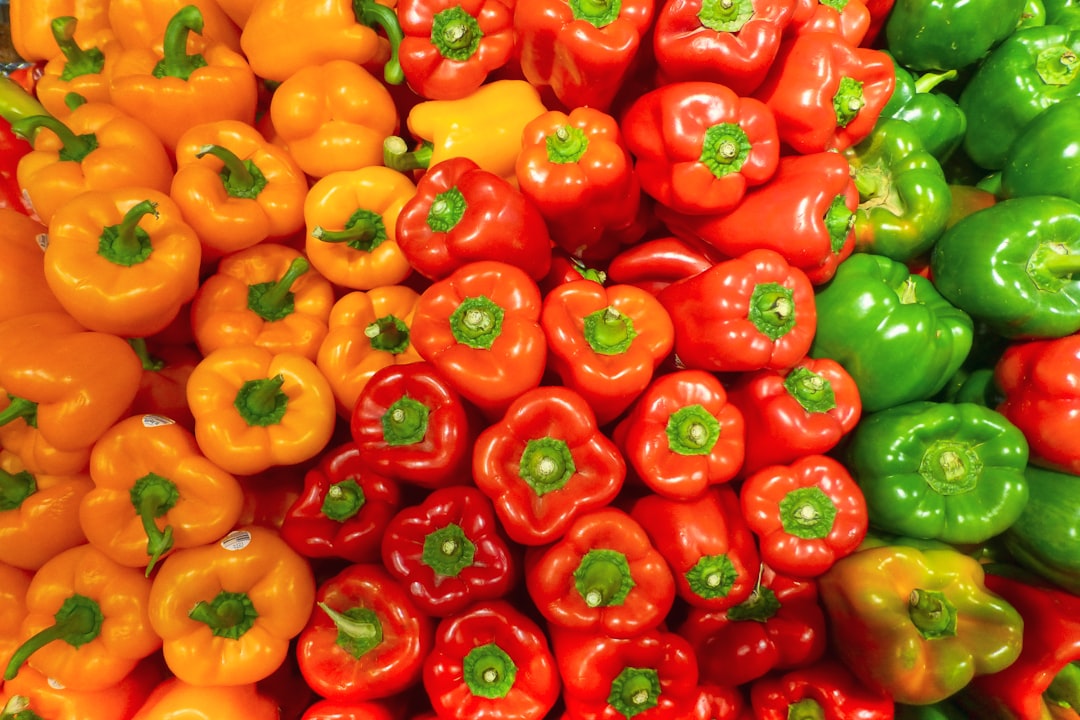


The short version: Price farm stand vegetables off what farmers markets near you charge, and use the grocery store as your floor, not your target. In Virginia's state report for August 2026, market tomatoes averaged $3.50 a pound and cherry tomatoes $4.18 a pint, while grocery ads in late September sold tomatoes for $2.01 a pound ($2.49 organic). A good starting point: tomatoes at $3 per pound on a legal-for-trade scale or $5 for a level quart basket (about 1.7 pounds), peppers at $1 to $2 each, herbs at $3 to $4 per bunch, and zucchini at $2 each ($1 for a small one). At an honor stand, use whole dollars and price by the piece, by the pint or quart basket, or by a bag with a set count on the sign, because in Maryland and many other states charging by the pound takes a legal-for-trade scale.
Checked September 30, 2026: the Virginia Market News Service retail farmers market report dated August 31, 2026, USDA's weekly grocery ad survey dated September 25, 2026, Bureau of Labor Statistics store prices for August 2026, a live pull of Homegrown's catalog, and the pricing pages of Homegrown, Square and Venmo. Prices in your town can differ, so walk your own market before you set yours. Homegrown customers create an account to place their first order, and Homegrown has no drops feature and no price-by-the-pound checkout yet.
You grew more tomatoes than your family can eat. The zucchini is out of control. Your neighbor mentioned she would pay for some of your peppers. And now you are standing in front of a folding table wondering: what do I charge for a bag of homegrown tomatoes?
For the herbs, eggs, jam or salsa you might sell beside your vegetables, you can compare your prices against typical ranges with our price benchmark tool.
Most pricing advice is written for commercial farmers with spreadsheets and cost-of-production records. You do not have those. You have a garden, some surplus, and a genuine question about what is fair. This guide answers it with real numbers: what nine farmers markets charged in August 2026, what grocery stores advertised the last week of September, and what vendors on Homegrown listed their vegetables for on September 30, 2026.
Once the numbers work, make ordering effortless. A price list on a folding table only reaches the cars that drive by. Set up a Homegrown storefront ($10 a month billed annually, 0% commission, plus 2.9% + $0.30 card processing) and regulars can reserve this week's tomatoes before you pick them, or compare the best platforms to sell food from home first.
Start with what the market charges, not with what your vegetables cost to grow. If you are a backyard grower, you probably do not track seed costs, water usage, or labor hours per crop, and you do not need to.
Instead, use this simple three-step method:
Why this works: Your customers are not comparing your vegetables to the cheapest conventional produce at Walmart. They are comparing them to the farmers market and the organic section, or to nothing at all, because what you grow is often not available at any grocery store (heirloom varieties, unusual herbs, just-picked freshness). Price accordingly.
If you do want a cost check, one number is enough: what an hour of your time is worth. A quart of beans that takes 20 minutes to pick and sells for $5 pays you $15 an hour before seed and water. If that feels low, the price is low.
Virginia-area farmers markets charged $3.50 a pound for tomatoes, $4.18 a pint for cherry tomatoes, $4 a pound for green beans and $1.28 for a cucumber, on average, in August 2026. Those are the averages printed in the Virginia Market News Service's retail farmers market report dated August 31, 2026, which lists what managers at nine markets reported charging shoppers that month: eight in Virginia and one, State Street, just over the line in Bristol, Tennessee.
A state report is a good public source for this, because it prints the actual prices market managers turn in each month instead of a national guess. Here is the report's own August summary for the vegetables most backyard growers sell:
Swipe left to see the high and average columns.
| Vegetable | Unit | Lowest price | Highest price | Average |
|---|---|---|---|---|
| Tomatoes | Pound | $2.49 | $5.00 | $3.50 |
| Cherry tomatoes | Pint | $3.00 | $6.00 | $4.18 |
| Green beans | Pound | $3.00 | $5.00 | $4.00 |
| Squash (summer) | Pound | $1.75 | $3.50 | $2.43 |
| Potatoes | Pound | $0.89 | $3.00 | $2.14 |
| Peppers | Each | $0.75 | $2.49 | $1.40 |
| Cucumbers | Each | $1.00 | $2.00 | $1.28 |
| Cabbage | Pound | $0.99 | $0.99 | $0.99 |
Source: Virginia Market News Service, Retail Farmers' Markets August Price Summary, in the report dated August 31, 2026 (Vol. 34 No. 04, with a September 4 update), loaded September 30, 2026. Market managers submit these prices monthly. The cabbage line is a single market's per-pound price.
Average farmers market price, Virginia, August 2026
Source: the August price summary on page 4 of the Virginia state report dated August 31, 2026, 7 vegetables.
Three things stand out in the market-by-market pages behind that summary:
Market prices are monthly and local. The Virginia report covers August 2026, peak tomato season, at nine markets. Your town, and a June or October week, can run higher or lower. Check two or three tables at your own market each month and move your price with them, not with a number from another state.
Here is a realistic pricing guide for common farm stand vegetables in 2026. Each row sets our recommended farm stand price next to what Virginia farmers markets charged in August 2026 and what grocery ads charged in the week of September 25, 2026, from the specialty crops edition of USDA's weekly grocery store feature reports, so you can see where the number comes from:
Slide the table sideways to see the market and grocery prices behind each row.
| Vegetable | Unit | Farm Stand Price | Virginia markets, Aug 2026 | Grocery ads, week of Sept 25, 2026 | Notes |
|---|---|---|---|---|---|
| Tomatoes (slicing) | Per level quart basket (about 1.7 pounds) | $5 | $2.49 to $5.00 a pound, average $3.50; $5 a quart (Lakeside Romas, Bath cherry tomatoes, Lakeside organic slicers) | $2.01 a pound ($2.49 organic) | Lakeside's $5 quart of Romas, against its $3 pound price, held about 1.7 pounds; weigh a full quart of yours and multiply by $3. By weight only on a legal-for-trade scale: $3 a pound. Heirlooms ran $3.50 to $4.29 a pound at three Virginia markets ($3.00 at State Street in Bristol, Tennessee); charge $4 to $5 a pound when few tables have them |
| Cherry/grape tomatoes | Per pint | $4-$5 | $3.00 to $6.00, average $4.18 | $2.50 a pint (grape) | High-impulse purchase; $4, or a range starting at $4, at three of the seven pint markets, more than any other price; $5 for mixed colors or Sungolds |
| Zucchini/summer squash | Each | $2 full-size (about 0.8 pound); $1 small (about 0.4 pound) | $0.50 to $1.00 each, or $1.75 to $3.50 a pound | $1.60 a pound ($2.39 organic) | Bundle 3 for $5 to move surplus |
| Peppers (bell) | Each | $1-$2 | $0.75 to $2.49 each, average $1.40 | $0.82 green, $1.20 red | Colored peppers (red, yellow, orange) command more than green |
| Peppers (hot) | Per pint or counted bag | $5 | $5.00 to $6.00 a pint at two markets, $0.50 each or $6 to $8 a quart (organic) at one, $2 a pound at one | $1.36 a pound (jalapeño) | Pint baskets or counted bags need no scale; the two pint markets averaged $5.50, and a counted bag at Birdhouse's 50 cents a pepper is 10 for $5 |
| Cucumbers | Each | $1-$2 | $1.00 to $2.00 each, average $1.28 | $0.75 ($2.50 organic seedless) | Bundle 3 for $5 on $2 English or Asian types; keep $1 slicers at $1, already the lowest whole-dollar price |
| Fresh herbs (cilantro, parsley, dill) | Per bunch | $3 ($4 for basil, rosemary, thyme or sage) | $2.00 to $5.00, $3.00 most common | $0.82 cilantro | High value for the garden space they take; $5 for herbs grocery stores rarely carry, the same split as our herb pricing guide |
| Lettuce/greens | Per head, or a counted bunch | $3 | $2.00 to $5.00 a head; greens $2.00 to $4.00 by the bunch | $1.69 romaine ($2.49 organic) | Sell same day; wilts fast |
| Green beans | Per quart | $5 | $3.00 to $5.00 a pound, $4.00 to $6.00 a quart (average $5.25 across the four quart markets) | $2.17 a pound | Labor-intensive to pick, price reflects that |
| Corn | Per ear | $1 an ear; $9 a dozen | $0.75 to $1.25 each (average $1.00 across three markets); $8 to $12 a dozen at four markets (average $9.50) | $0.45 each | Sell in bundles of 6 or 12 |
| Potatoes | Per quart | $4-$5 | $0.89 to $3.00, average $2.14; $4 to $5 a quart | $2.98 for a 5 lb russet bag | By weight only on a legal-for-trade scale: $2 a pound |
| Onions | Per quart, or a counted bunch of green onions | $4-$5 a quart; $3 a bunch | $1.99 to $3.00 a pound, or a quart for $4 to $6 at one; green onions $3 to $4 by the bunch | $0.87 a pound yellow | Count green onions into bunches of 6 and put the count on the sign |
| Garlic | Per head | $2 | $1.00 and $2.00 a head at two markets (average $1.50; $1.50 for an organic head at a third), $10 a pound at one market | $1.92 a sleeve | One market charged $10 a pound; at a stand, sell by the head and skip the scale. No whole dollar sits just under the $1.50 average, so round up to $2, the honor stand rule further down |
| Okra | Per pint | $4 | $3.00 to $6.00 a pint (average $4.33 across the three pint markets), $3.25 to $6.00 a quart | Not in the survey | Pick small; big pods do not sell |
| Eggplant | Each | $2 | $2.00 to $3.50 a pound, $2 to $4 each (average $2.50 across two markets) | $1.45 a pound | Sell glossy fruit; dull skin means overripe |
| Winter squash/pumpkins | Each | $3 winter squash; no pumpkin price | Winter squash $2 and $4 each at two markets (average $3.00), or $2 a pound at one; no pumpkin price in the report | $1.15 a pound butternut, $5.19 a pumpkin | The Virginia report has no pumpkin price, so this guide does not set one. Grocery ads had small pumpkins at $3.00, medium $5.36 and large $6.07; price a stand pumpkin no lower than the store charges for the same size |
| Microgreens | Per pint container | $6-$7 | $7.00 a container at one market and $7.00 an organic pint at another | Not in the survey | Restaurant-quality product at retail; in Maryland, a clamshell sold by weight needs a legal-for-trade scale and has to meet the state's net quantity labeling rules, so check your own state's |
Market prices: the nine market pages of Virginia's August 31, 2026 report. Grocery prices: USDA Agricultural Marketing Service, Weekly Grocery Store Specialty Crops Feature Activity, September 25, 2026, national conventional averages of advertised prices unless marked organic. Both loaded September 30, 2026. Grocery ad prices are specials from store circulars and digital promotions, not every-day shelf prices.
These are not the lowest prices possible. They are fair prices for fresh, locally grown produce, and most of them sit at or just under what Virginia markets charged in August 2026. If you are charging less than these numbers, you are probably underpricing.
Slicing tomatoes cost $2.49 to $5.00 a pound at eight markets in August 2026, and the report's average was $3.50. Cherry tomatoes ran $3 to $6 a pint at the seven markets that sold them by the pint. Here is every tomato price the report lists:
Swipe sideways to see each market's cherry and heirloom prices.
| Market | Town | Slicing tomatoes | Cherry or grape tomatoes | Other tomatoes |
|---|---|---|---|---|
| Annandale Farmers Market | Annandale, VA | $5.00 a pound | $6.00 a pint | Not reported |
| Burke Market | Burke, VA | $3.75 a pound | $4.00 a pint | Roma $4.00 a pint |
| Birdhouse Market | Richmond, VA | $3.50 a pound ($4.00 to $5.00 organic) | $3.50 to $6.00 a pint ($5.00 organic pint, $8.00 organic quart) | Heirloom $3.50 a pound ($3.95 organic), Roma $3.00 a pound ($8.00 organic quart) |
| Lakeside Farmers Market | Richmond, VA | $2.50 to $4.00 a pound ($5.00 organic quart) | $4.00 to $5.00 a pint | Heirloom $4.00 a pound, Roma $3.00 a pound or $5.00 a quart |
| Farmville Community Marketplace | Farmville, VA | $3.00 to $4.00 a pound | $4.00 to $5.00 a pound | Not reported |
| Danville Market | Danville, VA | $3.00 a pound ($3.00 organic) | $4.00 a pint ($6.00 organic) | Not reported |
| Bath Community Farmers Market | Hot Springs, VA | $2.75 a pound | $5.00 a quart | Roma $2.75 a pound |
| Roanoke Historic City Market | Roanoke, VA | $2.49 a pound | $3.00 a pint | Heirloom $4.29 a pound |
| State Street Farmer's Market | Bristol, TN | Not reported | $3.00 a pint | Heirloom $3.00 a pound |
Source: each market's page in the same Virginia report (August 31, 2026), loaded September 30, 2026. Prices are what each manager reported for August.
Compare that with the store. The Bureau of Labor Statistics put the average shelf price of field-grown tomatoes at $1.98 a pound in August 2026, and grocery ads the week of September 25 averaged $2.01 a pound, or $2.49 for organic. Every one of the eight markets charged more than the store, from 51 cents a pound more at Roanoke to $3.02 more at Annandale.
So the answer to "how much do homegrown tomatoes sell for" is: about $3 to $4 a pound in most of these towns, $5 at one Northern Virginia suburb (Annandale), and rarely under $2.50. Start at $3 a pound on a legal-for-trade scale, or without one, $3 for every pound a quart basket holds ($5 for a level quart of about 1.7 pounds), and let the first two weekends tell you if it should move.
A pint of cherry tomatoes sells for about $4 at a farmers market, a quart of tomatoes for about $5, and a half-bushel canning box for around $30 in our canning guide's example. Here is how each unit works at a stand:
Make the second unit cheaper than the first. Kaufman Family Farms lists zucchini on Homegrown at $3.99 for a 1 lb bag and $5.99 for a 2 lb bag, so the second pound costs the shopper only $2. The same ladder works for tomatoes: $4 for one pint of cherry tomatoes or $7 for two, and for slicers a $5 quart up to a $30 half bushel for canners. Big buyers take the volume, and the shopper who wants three tomatoes still pays full price.
Sell cucumbers for $1 to $2 each, zucchini for $2 each ($1 for a small one), and green beans for $5 a quart, or about $4 a pound sold over a legal-for-trade scale. Those three crops come in faster than any family can eat them, so they are the ones most growers underprice. Here is what the numbers say for each:
Cucumbers: $1 to $2 each. Virginia markets charged $1.00 to $2.00 a cucumber in August 2026, an average of $1.28. Five markets sold them by the pound instead or as well, at $1.00 (Danville), $1.99 (Roanoke), $2.00 (Lakeside), $3.50 (Annandale) and $3.50 for organic (Birdhouse). Grocery ads the week of September 25 had cucumbers at 75 cents each and long seedless at $1.27, with organic seedless at $2.50. Charge $1 for a standard slicer and $2 for a long English or Asian type, and sell pickling cucumbers by the quart or in a counted bag, or by the pound ($2 to $3 at the two markets that listed them) if a legal-for-trade scale does the weighing. Sell small Persian cucumbers by the pint or in a counted bag; grocery ads had them at $2.90 for a tray of 5 or 6.
Zucchini and summer squash: $2 each, $1 for a small one. Markets that sold squash by the pound charged $1.75 to $3.50, an average of $2.43. Kaufman Family Farms sells zucchini on Homegrown in 1 lb and 2 lb bags and says there are "one or two zucchini per bag, typically," so weigh five of your own (the method is a few sections down) before you turn the $2.43 pound price into a price per zucchini. At $2.43 a pound, a full-size zucchini of about 0.8 pound is worth about $1.94 (0.8 x $2.43), signed at $2, and a small one of about 0.4 pound is worth about 97 cents (0.4 x $2.43), signed at $1. Both stay above the grocery ad of $1.60 a pound, which puts the same two sizes at $1.28 and 64 cents. Two markets sold squash by the piece, at 50 cents (Bath) and $1 (Farmville), without saying how big, and 50 cents is under what the store asks for a full-size zucchini, so price yours from its weight instead. At a stand charging $2 each, "3 for $5" moves surplus when the plants are out of control. Oversized zucchini go in the cooking bag, not the main display.
Green beans: $5 a quart. Quart prices were $4 (Lakeside), $5 (Farmville) and $6 (Annandale and Burke), an average of $5.25 across the four, so $5 sits 5% below the market. By the pound, beans sold for $3.00 to $5.00, an average of $4.00. Grocery ads had them at $2.17 a pound conventional and $4.50 for a 12 oz bag of organic. Beans take longer to pick than anything else on your table, so do not price them like zucchini.
On Homegrown, vendor prices for these crops spread wider than the market's: South Fork Farm sells a pound of green beans for $2, KairosGO a pound of organic green beans for $3.99, and Harvest House Foods a pint of mixed green, purple and dragon's tongue beans for $4 or a 4 lb bag for $25 (about $6.25 a pound). KairosGO lists slicing cucumbers at $1.49 and English cucumbers at $2.29.
No, you should not price below the grocery store, and in most cases you should price above it. In 2026 the Virginia market averages sat above the grocery store's conventional ad price on every vegetable in the comparison below, so a farm stand priced at the market's level is already above the store, and that is fine. The store is a floor that tells you when you have gone too low, not a ceiling. It has three exceptions, and this is the one list of them in this guide: bulk canning boxes, seconds (imperfect produce and counted cooking bags), and surplus you would otherwise compost.
Here is the gap on the vegetables backyard growers sell most:
Swipe left to compare the organic and market columns.
| Vegetable | Unit | Grocery ad, conventional | Grocery ad, organic | Virginia market average, Aug 2026 | Market vs. organic ad |
|---|---|---|---|---|---|
| Tomatoes | Pound | $2.01 | $2.49 | $3.50 | Market $1.01 higher |
| Zucchini or summer squash | Pound | $1.60 | $2.39 | $2.43 | Market $0.04 higher |
| Green beans | Pound | $2.17 | $4.50 for a 12 oz bag ($6.00 a pound) | $4.00 | Organic ad $2.00 higher |
| Cherry or grape tomatoes | Pint | $2.50 | Not in the survey by the pint | $4.18 | Market $1.68 above the conventional pint |
| Cucumbers | Each | $0.75 | Not in the survey for standard cucumbers (long seedless: $1.27, or $2.50 organic) | $1.28 | Market $0.53 above the conventional ad |
Grocery: USDA Agricultural Marketing Service weekly grocery ad survey, September 25, 2026, national averages of advertised prices. Market: Virginia Market News Service August price summary, report of August 31, 2026. Both loaded September 30, 2026. The organic bean price is $4.50 divided by 0.75 pound.
So "match the organic aisle" works for squash, undershoots the market on tomatoes by about a dollar a pound, and overshoots it on organic green beans by $2 a pound. That is why the market comes first in the method above and the store second. Here is when to price at, below, or above your market's level:
Price AT market levels when:
Price 10-20% BELOW market levels when:
Price ABOVE market levels when:
Never price at garage sale levels. Charging well under what your own market charges, like $1 for a whole bag of tomatoes, signals "I do not value my own product." Customers who pay garage sale prices often do not come back, because they were buying the deal, not your food. Customers who pay fair prices become regulars.
There is also a practical reason to avoid rock-bottom prices: they attract the wrong customers. People who buy rock-bottom zucchini are not going to become your $6/dozen egg regulars next spring. People who pay $2 for a zucchini because it is fresh and local are exactly the customers you want: they value quality, they come back, and they tell their friends. Egg regulars are their own pricing question, and how to price eggs at a farm stand walks through it.
Charge $1 to $2 more a pound for heirloom tomatoes than for your regular slicers, on a legal-for-trade scale, or $2 to $3 more on a level quart basket, and sell the name, not just the tomato. At Roanoke's city market in August 2026, heirlooms sold for $4.29 a pound next to regular tomatoes at $2.49, a $1.80 premium. At Lakeside in Richmond, heirlooms were $4.00 against $2.50 to $4.00 for the rest. At Birdhouse, also in Richmond, they were the same $3.50 as regular tomatoes, which shows the premium is earned at the table, not automatic.
Here is how growers earn it:
The same rule covers purple potatoes, striped beets and white eggplant. ZachsGarden lists Purple Adirondack potatoes and Purple Majesty sweet potatoes at $8 (the listing does not give a size) and says plainly that they are "not found in your local supermarket." That sentence is the whole pricing argument.
Price imperfect produce about 20 to 30% below your best produce, or bag a set count of it as a $5 cooking bag, and never compost anything that is still good to eat. Not every tomato is picture-perfect. Misshapen peppers, oversized zucchini, cracked tomatoes, and sunburned squash are all perfectly good to eat. They just do not look like the grocery store version.
How to price imperfect produce:
You can make imperfect produce part of your brand with a hand-painted sign like "Ugly Veggies, Great Taste." It tells shoppers up front what they are getting and why it costs less. Your customers are not buying perfection. They are buying freshness, flavor, and a connection to the person who grew it. If seconds become a real part of your harvest, the ugly produce business model covers seconds boxes and turning surplus into sauce or jam.
Price an honor system stand in whole dollars ($3, $5, $10) and by the piece, by the pint or quart, or by a counted bag, never by the pound. Honor system stands need pricing that is simple, unambiguous, and whole-dollar. Here is how to adapt your pricing:
Rules for honor system pricing:
Bundling for surplus:
When you have too much of something, bundling moves it faster than individual pricing:
Bundles reduce decision fatigue, increase average transaction size, and move surplus before it spoils. Put bundles at the front of your stand where customers see them first. They also cut what you lose to card fees, which matters at a stand that takes a QR code instead of cash (the fee math is three sections down). For the cash box, the camera and the sign, setting up an honor system farm stand covers the rest.
Yes, in Maryland and many other states you need a legal-for-trade scale to sell vegetables by the pound, and a kitchen scale will not do. The National Council on Weights and Measures, which runs the national scale certification program, says in its certification FAQ that "many states require" a scale to carry an NTEP certificate before it is used in a sale. If you charge by weight, the scale has to be a legal-for-trade model, and some states, Maryland among them, make you register it every year. In Maryland, every commercial scale has to be registered with the state (COMAR 15.03.08.02), the registration expires May 31 of each year (15.03.08.04), and the fee is $25 per scale up to 100 pounds plus $75 per business location (15.03.08.05). We read all three sections of the Maryland regulation on September 30, 2026.
A kitchen scale does not qualify, however accurate it is. The University of Maryland Extension's guide to selling produce by weight lists what a legal-for-trade scale is marked with: a serial number, a model number, a Class III designation and an NTEP certificate of conformance (NTEP is the national program that tests commercial scales). It also says inspectors can shut down a vendor using an unapproved scale.
Registration is required for every scale used in a sale, it expires May 31 each year, and it costs $25 per scale up to 100 pounds plus $75 per business location, per COMAR 15.03.08.02, .04 and .05, read September 30, 2026. Other states set their own rules and fees, so call your state's weights and measures office before you buy a scale.
The easy way around the scale is to sell by something other than weight. The same Extension guide lists the legal options:
Selling by count still has to be honest. The Extension guide notes that even "three ears of corn for $1" falls under weights and measures law, so what the sign says is what the customer gets.
Divide the price by the number of pieces or pounds, then round to a price you can sign. If 2 tomatoes cost $1.99, one tomato costs $1.99 ÷ 2 = $0.995, or about $1.00. If a 2 lb bag costs $5.99, the price per pound is $5.99 ÷ 2 = $3.00. That is all unit pricing is, and it is the fastest way to check a bundle against your per-pound price.
Three conversions come up at almost every stand:
Weigh one full container of each crop at the start of the season and write the weight on the inside of your sign box lid. A quart of cherry tomatoes, a pint of beans, a peck basket of potatoes: once you know what each holds, you can turn any per-pound market price into a container price in your head, and you will notice when your containers start running heavy.
On a $3 sale, card processing at 2.9% + $0.30 takes 39 cents, or 12.9% of the sale. On a $15 bag it takes 74 cents, or 4.9%. The flat 30 cents is the part that hurts small tickets, which is why bundles and whole-dollar pricing above $5 matter more at a stand that takes cards or a QR code.
Here is the full fee stack on one $15 counted bag of vegetables and on a month of 50 of them, for the four ways a farm stand usually gets paid:
Slide sideways for what each option costs you over a month.
| How you get paid | Monthly plan | Trial | Platform fee | Card or payment processing | Customer pays on a $15 bag | You pay on a $15 bag | You pay on 50 bags ($750) |
|---|---|---|---|---|---|---|---|
| Homegrown storefront (pre-orders, online card payment) | $10 billed annually ($12.50 billed monthly) | 7 days, no charge until day 8 | $0, 0% commission | 2.9% + $0.30, paid by you | $15.00 | $0.74 plus the plan | $46.75 ($49.25 on monthly billing) |
| Square Free plan, online checkout | $0 | Not needed on a $0 plan | $0 | 3.3% + 30¢ online, paid by you | $15.00 | $0.80 | $39.75 |
| Square Free plan, Tap to Pay on your phone at the stand | $0 | Not needed on a $0 plan | $0 | 2.6% + 15¢ in person, paid by you | $15.00 | $0.54 | $27.00 |
| Venmo business profile QR code | $0 | Not needed on a $0 plan | $0 | 1.9% + $0.10, paid by you | $15.00 ($15.45 if they pay with a credit card) | $0.39 | $19.25 |
| Cash box | $0 | Not applicable | $0 | None | $15.00 | $0.00 | $0.00, minus whatever goes missing |
Checked September 30, 2026 on Homegrown's signup page, Square's pricing page and Venmo's fee page. Square Plus ($49 a month per location) lowers online processing to 2.9% + 30¢. Venmo charges the sender 3% when they pay with a credit card. Fees are figured on the $15 price; the 50-bag column is 50 times the unrounded per-bag fee ($0.735 for Homegrown, $0.795 for Square online, $0.54 in person, $0.385 for Venmo) plus the plan. Taking cards at the stand with Square needs either Tap to Pay on your phone, which Square says needs no additional hardware, or a card reader, and Square's hardware starts at $59 on its pricing page.
Two things follow for your prices:
If another backyard grower in your area sells the same vegetables, resist the urge to undercut them. A price war between two people selling surplus zucchini helps nobody, and the Virginia numbers show why it is rarely needed: Annandale and Burke, two markets in the same county, held tomatoes $1.25 a pound apart in the same month.
What to do instead:
For more on the pricing psychology that keeps food vendors stuck at too-low prices, read our article on pricing guilt and why charging what you are worth feels wrong.
Put a price on every product, every bag and every bundle, readable from arm's length. A customer who has to ask "how much is this?" is a customer who might walk away instead, and at an honor stand there is nobody to ask. Here is how to display prices effectively:
At an attended stand:
At an honor system stand:
The golden rule: If a customer has to look for the price, your pricing is not visible enough. Every product, every bag, every bundle needs a price that can be seen from arm's length without bending down or moving things aside.
Write the unit as big as the price. "$4" next to a pile of tomatoes reads as $4 each to one shopper and $4 a pound to the next, and both feel cheated when they find out. A set of small chalkboard signs or wooden stakes is cheap and pays for itself the first time it saves a sale. Using a chalkboard sign at your farm stand covers lettering and placement.
Raise your prices one step at a time, about $1 on your bigger units first, when you sell out regularly, keep the same regulars, or see your market's prices climb. Raise them when any of these are true:
How to raise prices without losing customers:
If your regulars order by text and you want to tell them first, how to raise your prices without losing customers has the wording. For a complete guide on getting started with your farm stand, read how to start a farm stand.
Yes, a little: up to 20% below your market's price is fair, because a farm stand skips the booth fee, the drive and the setup. When we read seven markets' 2026 fee pages for our guide to the real cost of selling at farmers markets on September 30, 2026, one market day's booth cost a home baker $20 to $84. Rates for produce growers can differ, so ask your own market. A stand at the end of your driveway pays none of that.
Here is how the discount works on Virginia's August averages:
The 20% line has two exceptions in this guide, and only two. The first is the $1 cucumber or pepper above: when the market average is under $1.50, the nearest whole-dollar price for an honor box is $1, so the gap comes from rounding, not from a discount. The second is bulk and seconds: a half-bushel canning box, a counted cooking bag of imperfect produce, or surplus headed for the compost pile. Those same three, bulk canning boxes, seconds and compost-bound surplus, are also the only exceptions to the grocery store floor, listed once in the grocery store section above. Outside those two, do not go further below than 20%. At a price 40% under the market, you have to sell two-thirds more vegetables (1 ÷ 0.6 = 1.67 times as many) just to take home the same money, and your regulars learn your vegetables are worth less than the ones a mile away.
Price vegetables online by the fixed unit, not by the pound at checkout: a pint, a quart, a bunch, a set count, or a box that lists how many of each item it holds, each at its own price, and a 1 lb bag only if you pack it on a legal-for-trade scale where your state requires one, as Maryland does. Shoppers order ahead and you pick to the order, so the price has to be set before anything is weighed.
Here is what that looks like on Homegrown today, from a live pull of the catalog:
In a live pull of the Homegrown catalog on September 30, 2026, 129 of the 2,773 products listed by 311 vendors sat in the Vegetables category. Reading every one by hand, 54 were fresh vegetables, not boxes or shares (including rhubarb, ginger and grape leaves), from 8 vendors, and 22 of those 54 came from one vendor, KairosGO. The other 75 were 32 microgreens listings, 23 mushrooms, 7 fresh-cut herbs, 4 mixed boxes or shares, and 9 that were not fresh vegetables (pickles, salsa, kimchi, a veggie tray, edible flowers, an avocado and a cookie listing filed in the wrong category). Prices for the crops in this guide: South Fork Farm, $2 a pound for green beans, green bell peppers and onions and $3 a head for lettuce; Kaufman Family Farms, $3.99 for a 1 lb bag of zucchini and $5.99 for 2 lb; Harvest House Foods, $5 for a pint of cherry tomatoes.
Those three vendors all sell by a fixed unit, and that is how Homegrown works right now. You list one product with sizes (a pint at $4, a level quart at $5, a half bushel at $30), and each size carries its own price. Homegrown has no price-by-the-pound checkout yet; its signup page lists "Sell by weight" as on the roadmap, not live. Three habits help when you sell online:
The biggest pricing headache at a farm stand is surplus. You harvested 40 pounds of tomatoes, put them out in $5 quart baskets of about 1.7 pounds each, and half are still sitting there at 3 PM going soft. Pre-orders fix most of it: you list what is ripening, customers claim what they want, and you pick what is already sold, with only a little extra for the table.
Homegrown handles the ordering side of this for $10 per month billed annually ($12.50 billed monthly), with no percentage fees beyond standard payment processing of 2.9% + $0.30 per order, which you pay, not your customer. List this week's harvest with photos and the prices from this guide (a $4 pint, a $5 quart, a $15 bag with its count on the listing), share the link on Nextdoor or print a QR code for your stand from Homegrown's built-in generator, and customers order and pay before you pick a single tomato. Inventory counts go down as orders come in, so the number on each listing matches what you have left to pick, and you can set more than one pickup spot: the stand, your porch, the Saturday market.
Collecting orders through text messages works for your first 5 regulars, but when you are juggling "save me tomatoes," "can I add peppers?" and "I'll pay you Saturday" from 15 people, you need one link that handles ordering and payment in one step. Square's Free plan does online checkout for $0 a month but charges 3.3% plus 30 cents per online transaction (2.9% plus 30 cents on its $49-a-month Plus plan), and you build the ordering site yourself. A Venmo business profile costs 1.9% plus 10 cents a payment and is the cheapest option in the fee table above after cash, but it collects money without keeping an order list, so you still track who wants what by hand.
What Homegrown does not do, so you know before you start:
The 7-day trial (no charge until day 8) is long enough to put up one week's harvest and see whether your regulars use the link. If you want the setup steps first, the farm stand pre-order system guide walks through them, or go straight to setting up your storefront and list this week's tomatoes tonight.
We recommend $3 a pound for slicing tomatoes at a farm stand in 2026 when a legal-for-trade scale weighs each sale, or without one, a quart basket priced at its weight times $3 ($5 when a level basket holds about 1.7 pounds). At the eight Virginia farmers markets that reported slicing tomatoes in August 2026, slicers ran $2.49 to $5.00 a pound and averaged $3.50, while heirlooms ran $3.50 to $4.29 at three Virginia markets and $3.00 at the one Tennessee market in the report. Price at or slightly below your local farmers market, never below the grocery store's price for the same tomatoes ($2.01 a pound conventional and $2.49 organic in late-September 2026 grocery ads), outside the bulk canning box, seconds and compost-bound surplus listed in the grocery store section above. If you sell out consistently, raise the basket price by $1 first ($5 to $6) before you move the per-pound price.
No. Your vegetables cost you time, money (seeds, water, soil amendments), and space. Charging a fair price respects the work you put in and the value of the product. Neighbors who ask whether you sell are asking because they want to buy, and $3 a pound for tomatoes picked that morning, weighed on a legal-for-trade scale, is less than the $3.50 Virginia farmers market average in August 2026.
Price per unit (each, per bunch of herbs, per pint or quart basket, or per bag with a set count) instead of per pound. Put tomatoes in quart baskets and price each one from its weight at $3 a pound ($5 for a level quart, about 1.7 pounds), or in bags marked with how many are inside. Sell peppers at $1 to $2 each. Bundle herbs in rubber-banded bunches: $3 for cilantro, parsley or dill, $4 for basil, rosemary, thyme or sage. This means you do not need a scale, so you skip scale registration rules in states like Maryland, and it suits a self-serve stand where nobody is there to weigh.
Match or go slightly below farmers market prices. Your overhead is lower (no booth fee, no gas, no setup time), so a discount of up to 20 percent is reasonable and gives customers an incentive to stop at your stand. On Virginia's August 2026 averages that means about $3 a pound for tomatoes on a legal-for-trade scale (or $5 a level quart basket without one) and $4 a pint for cherry tomatoes. But do not go below your costs: your time and products are worth real money regardless of where you sell.
Bundle it into counted grab bags at a discount, offer it to neighbors at half price, donate it to a food bank, or preserve it (can, freeze, dehydrate). The worst option is letting it rot, which wastes your labor and seeds. A grab bag with a set count at $3 to $5 is better than composting a pile of perfectly good vegetables, and a half bushel of seconds sold to a home canner for about $30 is better still.
Three signs: you sell out every time (demand exceeds supply), customers never question your prices (they expected to pay more), and you calculate your effective hourly rate and it comes out below minimum wage. A fourth is a quick comparison: if your prices are more than 20% under the averages in your state's farmers market report (outside the $1 cucumber or pepper and the bulk and seconds exceptions in the farm stand section above), or under the grocery store's shelf or ad price for the same vegetable (outside the bulk canning box, seconds and compost-bound surplus listed in the grocery store section), you are underpricing. If any of these are true, try raising one of your bigger units by $1 (a $5 quart to $6) at your next monthly price change, and watch whether it still sells before the next one.
A pint of cherry tomatoes cost $3 to $6 at the seven Virginia-area farmers markets that sold them by the pint in August 2026, and the report's average was $4.18. Organic pints ran $5 to $6 where markets listed them. Grocery ads the week of September 25, 2026 had grape tomatoes at $2.50 a pint, so $4 is a fair farm stand price for a fresh-picked pint and $5 for mixed colors.
This guide sets the price on what you grow. These pick up the questions that come right after it, in the order most growers hit them:
The produce at your stand was grown in your soil, picked this morning, and carried to a table ten feet from where it grew. No truck, no warehouse, no shelf life countdown. That is a premium product by any definition, and in 2026 the farmers market down the road is already charging like it: $3.50 a pound for tomatoes and $4.18 a pint for cherry tomatoes.
Before your next stand day, check three numbers: what your nearest market charges for the five things you grow most, what the grocery store's organic aisle charges for the same five, and what an hour of your picking is worth. Set your price at or just under the market (above it for heirlooms and crops the store does not carry), never under the grocery store except for bulk canning boxes, seconds and surplus headed for the compost, and make sure it pays you for the third. Write the unit as big as the price, round to whole dollars, and put your surplus in counted bags before it goes soft. Then look again in a month, because tomato prices in August are not tomato prices in October.
Price it like one.



