
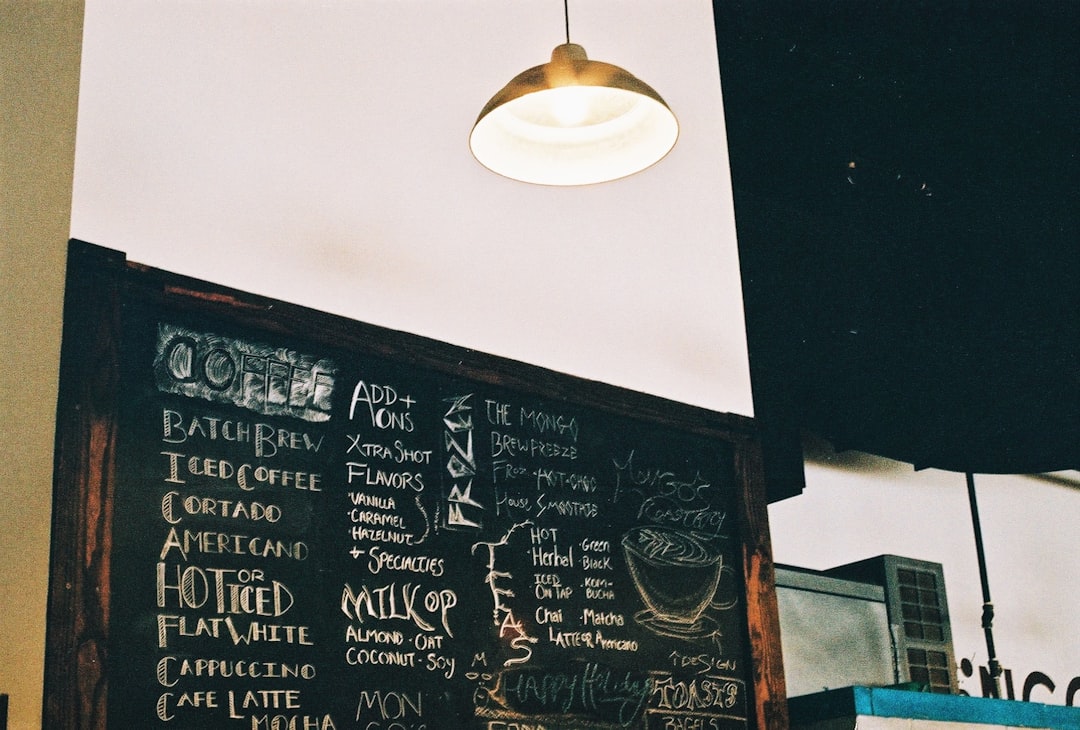


A chalkboard sign is the most cost-effective sales tool a farm stand can have. For $20 to $50, you get a reusable sign that can be updated daily to show prices, specials, seasonal items, and messages that pull customers off the road. The difference between a farm stand that draws traffic and one that gets driven past is often the sign — a clear, bold, readable chalkboard positioned at the road tells drivers what you are selling before they decide whether to stop.
This guide covers what to write on your chalkboard, how to make it readable from a moving car, where to position it, and the specific sign strategies that actually increase sales.
The short version: Your chalkboard sign needs to be readable from 30 to 50 feet away by a driver moving at 25 to 45 mph. That means large letters (3 to 4 inches minimum), high contrast (white or bright chalk on a dark board), and no more than 5 to 7 words per line. The most effective sign format: product name + price on top, a seasonal special or "today only" item in the middle, and your hours on the bottom. Change the sign at least twice per week — a sign that never changes becomes invisible to repeat passersby.
Printed signs are cheaper per use, but chalkboard signs outperform them for farm stands because of one property: they change.
A permanent printed sign that says "FARM STAND" tells drivers the same thing every day. After the third drive-by, it becomes invisible — the brain filters it out as part of the landscape. A chalkboard sign that says "FRESH PEACHES $3/lb — TODAY ONLY" gives drivers new information. New information is what triggers the decision to stop.
Three reasons chalkboard signs work specifically for farm stands:
For the full guide to signage ideas including road signs, A-frames, and banner options, see our farm stand sign ideas guide.
The size depends on where you position the sign and how fast traffic moves on your road.
Most farm stands need two chalkboard signs: one large sign visible from the road (to attract drivers) and one at the stand (to guide customers through your products and pricing). For the full guide to setting up your first farm stand including display and signage, see our farm stand startup checklist.
The content of your sign matters more than the sign itself. A beautiful sign with the wrong message does nothing.
Your road sign has 2 to 3 seconds to communicate before a driver passes. That means:
Line 1: What you are selling (biggest text)
Line 2: Price or deal (second biggest text)
Line 3: Hours or call to action (smallest text)
Three lines, 5 to 7 words per line, high contrast. That is the entire formula.
The sign at your actual stand can have more detail because customers are standing still and reading at close range.
Effective stand-level sign content:
Readability is where most farm stand signs fail. The vendor writes a beautiful detailed sign that nobody can read from the road. Follow these rules:
For road-facing signs visible at 30 to 50 feet:
For stand-level signs at 3 to 10 feet:
A road-facing chalkboard needs weather protection or it will fade and smudge within days.
Where you put the sign matters as much as what you write on it.
Change the road-facing sign at least twice per week. Change the stand-level sign whenever your inventory changes.
Signs that change regularly trigger what marketers call the "novelty effect" — repeat passersby notice changes and re-evaluate whether to stop. A sign that says "FRESH STRAWBERRIES" every day for 6 weeks becomes wallpaper. A sign that says "LAST STRAWBERRIES OF THE SEASON — THIS WEEK ONLY" triggers action.
Content rotation ideas:
The stand-level sign should be updated daily to reflect what you actually have. Nothing frustrates a customer more than a sign that lists products you sold out of yesterday. For a system that handles the out-of-stock communication automatically so customers can check availability before driving to your stand, see our guide to handling out-of-stock at your farm stand.
Different products call for different sign strategies.
Lead with freshness and origin. "TOMATOES — PICKED THIS MORNING" sells better than "TOMATOES $3/LB." Customers at farm stands are paying for freshness — the sign should reinforce that.
For produce, list the price after the freshness claim:
Lead with the item and create scarcity. Baked goods sell out — customers know this. Use it.
Lead with variety and gift potential. Preserves are impulse purchases and gift items.
For products that need explanation, use the stand-level sign (not the road sign) to educate.
For more on choosing which products to feature at your stand, see our guide to what to sell at a farm stand.
A basic 24 x 36 inch chalkboard costs $20 to $40 at a craft store or online. An A-frame chalkboard sign costs $30 to $80. Chalk markers cost $10 to $20 for a set. A custom plywood chalkboard (chalkboard paint on plywood) costs $10 to $25 in materials. Total setup for two signs (one road-facing, one at the stand): $50 to $120.
Whiteboards are harder to read in sunlight — the glare washes out the text. Chalkboards have a matte surface that stays readable in direct sun. If you prefer a whiteboard aesthetic, use a black dry-erase board with white markers for similar contrast without the glare problem.
Check your local sign ordinance. Most municipalities have rules about sign size, placement, and whether you need a permit for roadside signage on private property. Signs in the public right-of-way (the strip between the road and the property line) are often restricted or prohibited. Signs on your own property are usually allowed within size limits.
Use chalk stencils (available at craft stores) or practice a simple block letter style. Block letters are more readable than cursive from a distance anyway. You can also ask a friend with better handwriting to write the sign for you, or use chalk markers which are easier to control than regular chalk. The lettering does not need to be artistic — it needs to be readable.
Only on the stand-level sign, never on the road-facing sign. Nobody can read @farmstandsarah at 35 mph. At the stand, include your Instagram handle or online ordering link in small text at the bottom of the menu board. Better yet: a QR code that links to your online store or social media — customers can scan it while browsing.
Chain or lock road-facing signs to a post, fence, or stake. Bring A-frame signs in every night. Use inexpensive signs that can be replaced easily — a $30 A-frame is not worth stressing about. If vandalism is an ongoing issue, switch to a sign that can be set up and taken down each selling day in under 2 minutes.
Most people who drive past your farm stand will never stop — and the sign is the only thing that can change that. A clear, bold, updated chalkboard sign is the difference between a curious driver who pulls over and a potential customer who keeps going. The sign costs less than a day's worth of produce and works every hour you are open. The sign gets them to stop. But what about the drivers who see your sign, are interested, but cannot stop right now? They need a way to find you later. A QR code on your sign that links to an ordering page turns "I'll come back next week" into an actual order placed that night.
Instagram works as a discovery channel but does not take orders. A full website on Wix or Squarespace costs $19 to $29 a month billed annually and takes hours to build when all you need is a product list with prices.
Homegrown costs $10/month with no commission, plus card processing of 2.9% + $0.30 per order, and gives you a clean ordering link you can write on your chalkboard or print as a QR code. Customers scan, browse your product list, and pre-order for next week's pickup — all from a sign they read at 35 mph. Homegrown does not help you choose a chalkboard, design your layout, or write compelling sign copy — this guide covers those. What it does is extend your sign's reach beyond the 2-second window a driver has to decide whether to stop. The SBA's business growth guide covers additional signage best practices, and your USDA local food directory listing adds another discovery channel that complements your physical signage.



