
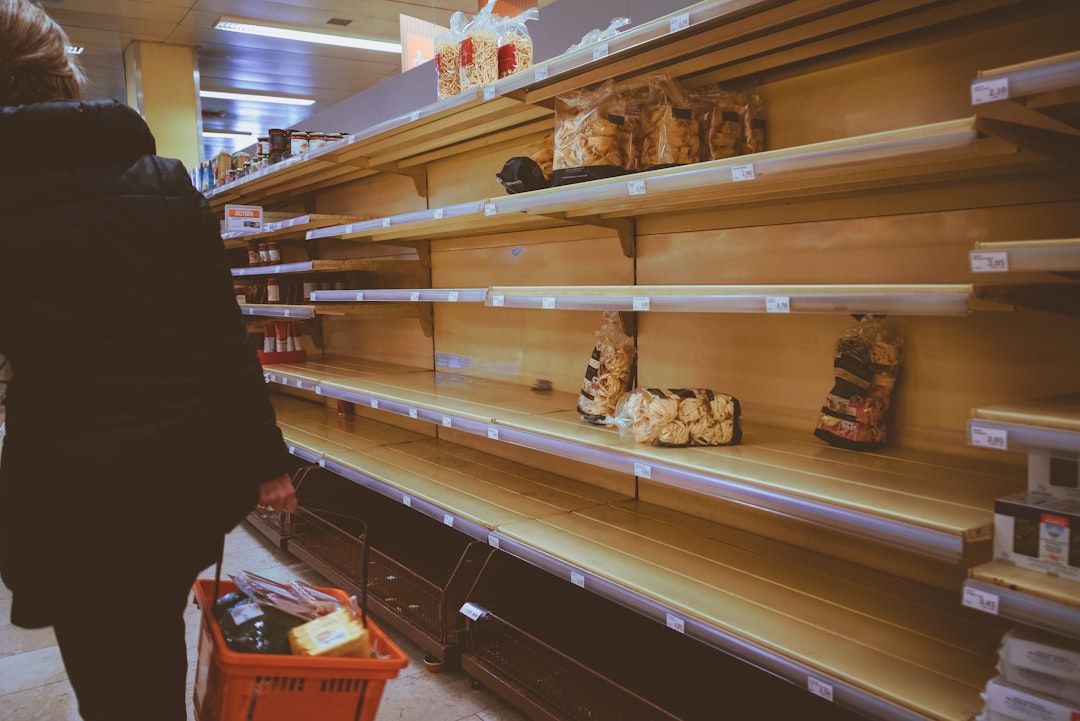


When a product sells out at your farm stand, the way you handle it determines whether the customer comes back next week or finds another vendor. The best approach is the same three-step process every time: tell the customer what IS available, offer to add them to a waitlist or pre-order for next week, and give them your ordering link so they can guarantee the product before their next visit. A sold-out product is not a failure — it is proof of demand and a conversion opportunity for next week's pre-orders. For inventory planning fundamentals, Clemson Extension's produce storage guide helps you understand how long each product stays fresh, which directly affects how much to stock.
The short version: When a product sells out, post a note on your stand ("Sourdough sold out — pre-order for next week: [QR code]"), redirect customers to available products, and collect their name for a waitlist or send them your ordering link for next week's pre-order. The long-term fix is adding online pre-orders so customers can guarantee their favorites before they sell out at the stand. Vendors who add pre-ordering typically see sold-out problems decrease by 80% because most demand is captured before the stand opens. Walk-in shortages become rare instead of weekly.
Out-of-stock situations happen for predictable reasons:
The first three causes are production and planning issues. The fourth is a systems issue. Fixing the system (adding pre-orders) reduces out-of-stock events by 80% or more because demand is captured and filled before the stand opens.
Do not let an empty space on your display be the only signal. Post a small sign where the product was displayed:
``` SOURDOUGH — SOLD OUT TODAY Pre-order for next Saturday: [QR CODE] Never miss out again. ```
This turns the empty space into a marketing tool. Every customer who sees the sign learns two things: the product is popular (social proof) and they can pre-order to avoid missing out next time (conversion opportunity).
When a customer asks for the sold-out product, redirect immediately:
"The sourdough went early today — it is one of our most popular items. I still have fresh cookies, strawberry jam, and honey. And if you want to guarantee a loaf next week, scan the QR code on that sign and you can pre-order. That way it is set aside with your name on it."
This response:
If the customer does not scan the QR code, offer to personally notify them:
"Can I get your name and number? I will text you Monday when pre-orders open for next week so you can grab one before they sell out."
Write their name and what they want in your phone or a notebook. Text them Monday. This personal touch creates loyalty and almost always results in an order.
For a complete guide to building waitlists, see our article on how to build a waitlist for food products.
Record what you bring, what you sell, and what sells out (and when it sells out). After 4 weeks, you have demand data that makes production planning 80% more accurate.
| Week | Sourdough Brought | Sold | Sold Out Time | Leftover |
|---|---|---|---|---|
| 1 | 12 | 12 | 10:30 AM | 0 |
| 2 | 14 | 14 | 11:00 AM | 0 |
| 3 | 14 | 11 | Never | 3 |
| 4 | 14 | 14 | 10:45 AM | 0 |
This data tells you: 14 is not enough 75% of the time. Bring 16 to 18 next week.
Pre-orders let customers claim and pay for products before the stand opens. If 10 customers pre-order sourdough by Wednesday, you know to make at least 10 plus a buffer for walk-ins. The pre-ordered loaves are labeled and set aside — they cannot sell out because they are already claimed.
Homegrown costs $10/month with no commission, plus card processing of 2.9% + $0.30 per order, and handles the pre-order mechanics — customers see your product list with quantities, order by your cutoff, and pay when they order. When the last sourdough slot fills, the listing closes automatically so you never get more orders than you can fill. Managing pre-orders through text messages works for your first 5 regulars, but by customer 12, you are scrolling through a week of DMs on Thursday night trying to figure out who said "save me a loaf" versus who actually committed. A Google Form captures requests but not payment — half the list does not follow through with Venmo, and you produced for 15 when 8 actually show up. Homegrown does not tell you how much buffer to add for walk-ins or how to handle the sold-out conversation at the stand — this guide covers those. What it does is replace the guessing with confirmed, prepaid orders that cannot sell out because they are already claimed. Customers choose pickup or local delivery at checkout.
Over time, as more customers shift to pre-ordering, walk-in demand decreases and out-of-stock events become rare. The typical progression:
| Month | Pre-Order % | Walk-In % | Sold-Out Events |
|---|---|---|---|
| Month 1 (no pre-orders) | 0% | 100% | 2-3 per week |
| Month 2 (pre-orders added) | 20% | 80% | 1-2 per week |
| Month 3 | 40% | 60% | 0-1 per week |
| Month 6 | 60% | 40% | Rare |
For a complete guide to adding pre-orders, see our article on farm stand pre-order systems.
Make 15 to 20% more than your average weekly sales. If you typically sell 12 loaves, make 14. The buffer handles demand spikes. Unsold buffer items can be frozen, discounted at end of day, or repurposed.
Post your inventory on Instagram, Facebook, and your Google Business Profile the day before: "Saturday lineup: 16 sourdough loaves, 8 cookie boxes, 12 jars of jam. Pre-order to guarantee yours, or come early for walk-in availability." Customers who see limited quantities pre-order instead of hoping for walk-in availability.
If the same product sells out every week for 3 or more weeks straight, you have a demand signal that requires action:
Make more. If you sell out of 14 sourdough loaves every week, make 18. If those sell out, make 22. Keep increasing until you find the quantity where you sell most but not all, with 1 to 3 left over at the end of the day.
If you cannot (or do not want to) make more, raise the price. A product that sells out in 60 minutes at $8 might still sell out in 120 minutes at $9, giving more customers a chance while increasing your revenue per unit. If it does not sell out at $9, you found the right price.
Some vendors intentionally keep production limited. "I only make 12 pies per week" is a brand statement that creates exclusivity and urgency. If this is your strategy, pair it with pre-orders so customers can guarantee their pie without racing to the stand on Saturday morning.
For more on managing this decision, see our guide on how to limit orders and take the right ones. And for handling the sold-out conversation specifically, see our guide on how to tell customers your food is sold out.
An empty table where sourdough used to be looks like your stand is closing. Fill the space with other products, move products around to maintain a full display, or replace the empty space with a sign.
A "sold out" sign with your pre-order QR code is free marketing that runs itself. Every customer who sees it learns that:
Some vendors report that their "sold out" signs generate more pre-orders than their active product displays. The scarcity signal is that powerful.
A chalkboard or whiteboard that shows current availability lets customers see at a glance what is still available versus what is sold out. Update it in real time as products sell. This reduces "do you still have sourdough?" questions because customers check the board before asking.
Post a Story when a popular product sells out: "Sourdough is GONE — sold out by 10 AM. Pre-order for next week: [link sticker]." This reaches followers who have not visited yet and may have planned to come later. It also builds urgency for next week's pre-orders.
Post on your Business Page: "Saturday update — sourdough and cinnamon rolls are sold out. I still have cookies, jam, and honey through 1 PM. Pre-order for next Saturday so you do not miss out: [link]."
If specific customers asked to be notified, send them a text: "Hey Sarah, sourdough sold out early again today. I saved you a spot on the pre-order list for next week — order here: [link]."
For more on managing your online presence during selling days, see our guide on using Instagram Stories for food orders.
One brief acknowledgment is fine: "Sorry about that — they went fast today." Do not over-apologize or make it a big deal. Frame it as popularity, not failure. Then redirect to available products and pre-ordering.
Selling out is a positive demand signal. How you handle it determines the business impact. If customers leave with no way to get the product next time, it is bad. If they leave with a pre-order link and a waitlist spot, it is good — you converted a negative experience into a future guaranteed sale.
Make 15 to 20% more than your average weekly sales. If you sell an average of 12 items per week, make 14 to 15. This buffer handles most demand spikes without creating significant waste.
Stay calm, acknowledge their frustration, and offer a solution: "I completely understand — the sourdough is our most popular product. Let me add you to the list for next week so you are guaranteed a loaf. I can send you the ordering link right now." Most anger comes from wasted effort (they drove there specifically). A guaranteed solution for next week diffuses most frustration.
No. Stay open for your full posted hours. You may have less-popular products that still sell throughout the day, and closing early damages the trust customers place in your posted schedule. If your primary products sell out consistently, increase production or add pre-orders rather than closing early.
For pre-ordered items, yes — they are claimed and paid for in advance. For walk-in items, no — you still need to estimate walk-in demand. But as your pre-order percentage grows (from 0% to 50% to 70% of total sales), walk-in out-of-stock events become increasingly rare because your production is increasingly data-driven.
If you have production capacity and time to make more, increase production first. If you are already at maximum capacity (your oven, your schedule, or your ingredients are the bottleneck), raise prices. Raising prices reduces demand slightly while increasing revenue per unit, which is the right move when capacity is fixed.
No. A product that sells out every week is your best marketing asset. Continue featuring it in your social media posts and on your stand signage because the scarcity drives pre-orders and brings new customers to your stand. Pair every mention with your pre-order link so customers learn to order in advance rather than risk missing out. The sold-out signal creates urgency that benefits your entire product lineup, not just the one item.
Set expectations before customers arrive, not after they are standing at your stand disappointed. Post your full product lineup and estimated quantities on Instagram or your ordering page 24 hours before each selling day: "Saturday lineup: 16 sourdough loaves, 10 jars strawberry jam, 8 cookie boxes. Pre-order to guarantee yours." This gives customers a clear picture of what is available and how quickly things may sell out. At the stand, use a running availability board (a small chalkboard or whiteboard) that you update in real time as products sell. When a product is getting low, write "3 left" next to it so customers can decide immediately rather than browsing while the last few sell to someone else. For products with seasonal availability (like strawberry jam only in June), communicate the season timeline in advance: "Strawberry jam starts in June and usually lasts through August. Pre-order to get yours while supply lasts." The goal is to make availability transparent so customers feel informed, not frustrated.
Yes, and how you handle it matters for customer retention. If a customer pre-ordered three items and one is unavailable, contact them before pickup with an explanation and an offer: "I am short on strawberry jam this week — would you like to swap for blueberry jam, get a credit for next week, or receive a partial refund?" Give the customer the choice rather than making the decision for them. Most customers appreciate the communication and choose a swap or a credit. If you are running a self-serve stand and cannot contact every customer, place a note in their pickup bag: "Sorry — the strawberry jam sold out before I could fill your order. I have credited your account for next week." Always err on the side of the customer when a shortage is your fault. A $6 refund or credit costs you far less than losing a repeat customer who felt ignored.
Track three numbers for every product every selling day: quantity brought, quantity sold, and the time the last unit sold. Record this in a simple spreadsheet or even a notebook. After 4 weeks, calculate the sell-through rate for each product (units sold divided by units brought, expressed as a percentage). A sell-through rate of 90 to 100% means you are not bringing enough — increase by 15 to 20%. A sell-through rate of 60 to 75% is the sweet spot: you are meeting demand without significant waste. Below 60% means you are overproducing — reduce your batch size or consider dropping the product. Pay special attention to the time the last unit sold. If your sourdough consistently sells out by 10:30 AM in a 9 AM to 1 PM window, you are losing 2.5 hours of potential sales on that product. Increase production until the sell-out time lands closer to your closing time, or shift more of that product to pre-orders so walk-in supply lasts longer into the day.



