

Pricing a weekly produce box, a CSA share, is one of the trickiest decisions a small farm makes. Price too high and members balk; price too low, the far more common mistake, and you're working a season for free. The challenge is that a box's value swings from a light early-season share to a heavy summer haul, and you're selling not just vegetables but freshness, locality, and a relationship. This guide walks through how to price a weekly produce box subscription, using real methods and real numbers, so your shares actually pay you for the work.
The short version: There are three ways to price a produce box: market-value (price against what the same produce costs at the farmers market or grocery), cost-plus (cover your full cost to grow and pack per share, then add margin), and share-based (divide your total season budget by the number of shares). Market-value is the most common and easiest to defend, with cost-plus as your sanity check against underpricing. Real full-season CSA shares commonly run $300 to $700 for a season, roughly $15 to $30 a week. Price for the whole season's value, not an average week, count your labor and packing, and choose between an upfront-season model that shares risk with members and a flexible recurring subscription. Homegrown gives you the storefront to sell subscriptions and prepaid shares. This is general information.
This guide covers what a produce box is, the pricing methods, real price points, the factors, upfront vs recurring, the value story, and mistakes. This is general information, not financial advice.
A produce box subscription, often a CSA (community-supported agriculture) share, is a recurring weekly box of seasonal produce that customers pay for either upfront for a whole season or on an ongoing subscription basis. It's a direct, committed relationship between a farm and its eaters.
The two main models:
The takeaway: a produce box subscription is a recurring seasonal-produce relationship, sold either as a prepaid full season or a flexible subscription, each with different risk tradeoffs. The rule is to understand which model you're running, since it shapes both your pricing and your cash flow, and to build it on a smooth subscription setup.
There are three main pricing methods: market-value, cost-plus, and share-based, and most small farms lead with market-value while using cost-plus as a check. Each looks at the price from a different angle.
Here's how the methods compare:
| Method | How it works | Best for |
|---|---|---|
| Market-value | Price at what the produce would cost at market or grocery | Easiest to defend to customers |
| Cost-plus | Total your full cost to grow and pack a share, add margin | Making sure you're not underpricing |
| Share-based | Divide your total season budget by number of shares | Community-farm and full-budget models |
A closer look at each:
The takeaway: market-value pricing is the most defensible day to day, but you should always run the cost-plus math to be sure it covers your real costs. The rule is to price at market value and check it against your full cost, since a price customers accept that still loses you money is no good.
Real full-season produce box shares commonly run $300 to $700 for a season, which works out to roughly $15 to $30 per weekly box, varying with season length, box size, and delivery. Knowing the real range lets you sanity-check your own price.
Here's the market picture:
The takeaway: full-season shares commonly run $300 to $700, or about $15 to $30 a week, which gives you a real range to benchmark against. The rule is to check your price against these real numbers, then set yours from your own costs and local market rather than copying a figure.
Your price is set by your box size and its seasonal swing, your season length, whether you deliver or offer pickup, and, above all, your real costs including labor and packing. Getting these right is what separates a sustainable price from a money-losing one.
The key factors:
The takeaway: your price flows from your box's real value across the whole season and your true costs, not from an average week or a competitor's number. The rule is to price on the season's full value and your complete costs, using your real cost per item as the foundation.
The choice between an upfront-season payment and a flexible recurring subscription is a real tradeoff in risk and cash flow, not just a checkout preference, and it affects how you price. Each model shifts risk between you and your members differently.
How the two models differ:
The takeaway: upfront-season and recurring subscriptions carry different risks and benefits for you, so choose deliberately and price each to match. The rule is to decide which model fits your cash-flow needs and price for its tradeoff, turning one-time buyers into members with a smart subscription conversion.
You justify a produce box's price against grocery by selling what grocery can't: peak freshness, genuine local sourcing, variety, and a real relationship with the farm that grew the food. Members aren't just buying vegetables, they're buying a partnership.
What justifies the price:
The takeaway: a produce box competes on freshness, locality, variety, and relationship, not on beating grocery prices, so you can price comparably or above grocery per item. The rule is to sell the partnership and the freshness, since that's what members value and what supports your price.
The pricing mistakes with produce boxes are pricing off an average week, ignoring your labor and packing costs, pricing near grocery on a premium product, and setting half-shares at exactly half price. Each quietly costs you money.
The mistakes to avoid:
The takeaway: the mistakes nearly all come from underpricing, by using the wrong basis or ignoring real costs, which is the classic CSA error. The rule is to price on the season's full value and your complete costs, and never to undervalue a fresh, local, relationship product.
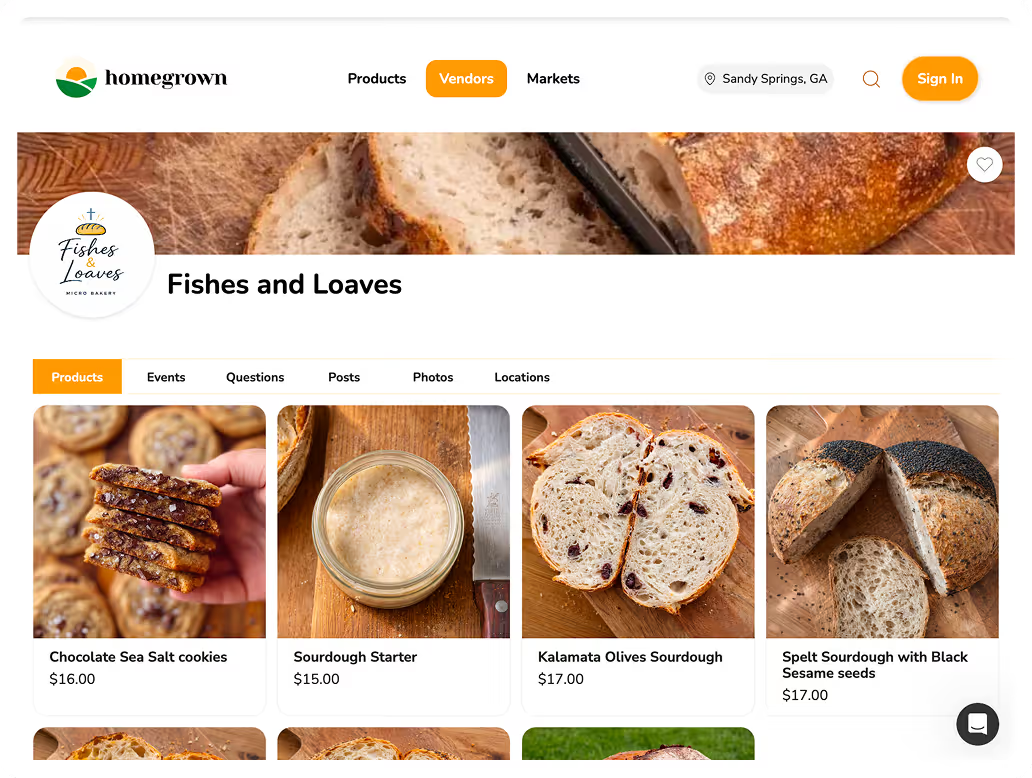
Once you've set a price that pays you, you need a clean way to sell subscriptions and prepaid shares and manage your members, and a simple storefront does exactly that. Homegrown is a $10-per-month online storefront, with no percentage fees beyond standard payment processing, where you can sell full-season shares, flexible subscriptions, and add-ons.
You list your share options at your set prices, take upfront-season payments or recurring subscriptions, and keep clean records of your members and orders, so you know exactly how many shares you've sold and what you'll harvest for. Whether you run the classic prepaid model or a flexible subscription, the storefront handles the selling and the record-keeping, so you can focus on growing. A flat monthly price means your share revenue isn't eaten by per-sale percentage fees stacking up on every box and renewal.
To be clear about what Homegrown does not do: it does not grow your produce, pack your boxes, or set your prices. Your farming, your costs, and your pricing decisions are yours. What Homegrown gives you is the storefront to sell your subscriptions and prepaid shares and keep clean member records, so the selling side of your CSA runs smoothly. To sell your produce box subscriptions cleanly, set up your Homegrown storefront and take share and subscription orders in one place.
Full-season CSA shares commonly run $300 to $700 for a season, which works out to roughly $15 to $30 per weekly box, depending on your season length, box size, and whether you deliver or offer pickup. Use that range to benchmark, but set your own price from your real costs and local market. The most common method is market-value pricing, charging what the same produce would cost at your local farmers market, checked against a full cost-plus calculation to make sure it covers your labor, packing, and overhead. Price for the whole season's value, since a share swings from a light early box to a heavy summer one.
Lead with market-value pricing and check it with cost-plus. Market-value, pricing the box at what the produce would cost at farmers-market rates, is the most common approach and the easiest to defend to customers, who can compare it directly. Then run a cost-plus calculation, totaling your real cost to grow, harvest, and pack a share including labor, plus a margin, to make sure your market price actually covers your costs. A third method, share-based pricing, divides your whole farm's season budget among members, common in community-farm models. Using market-value as your customer-facing price and cost-plus as your sanity check protects you from the classic mistake of underpricing.
Run the cost-plus math and price on the season's full value, not an average week. Total every real cost, seed and inputs, harvest labor, packing time, delivery, land, equipment, and administration, then divide by your shares and add a margin. Compare that to your market-value price; if the market price doesn't cover your full cost, you're underpricing. Also price for the season's total value, since a share that's light in spring and heavy in summer is undervalued if you price on an average box. And price half-shares at more than 50 percent of a full share, since packing and admin don't halve. Underpricing is the most common CSA mistake, so let real costs, not hope, set your floor.
Both are valid, and they carry different tradeoffs. The classic upfront-season model, where members pay for the whole season at the start, gives you capital before you grow and shares production risk with members, since a bad week is shared, not refunded, but it's a bigger commitment for customers. A flexible recurring subscription, paid weekly or monthly, is easier for customers to join but shifts cash-flow and marketing risk back to you, since members can leave anytime. Many farms offer both and price each to reflect its tradeoff, an upfront share might carry a slight discount for the commitment, while a flexible one prices a bit higher for the convenience.
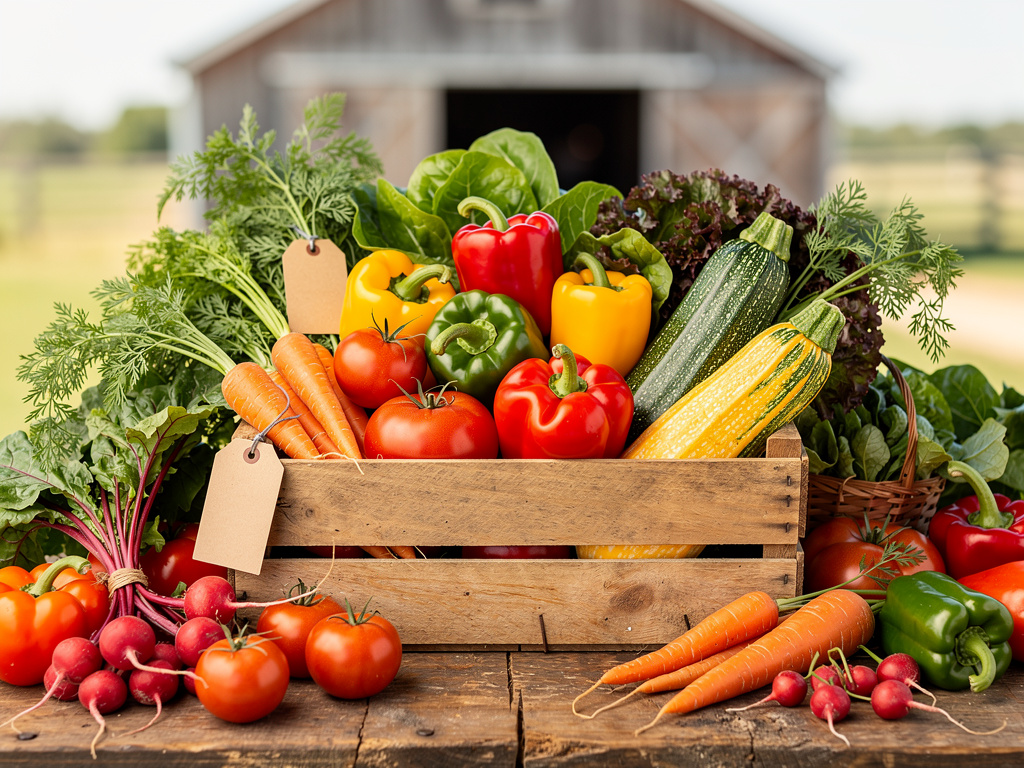
Sell what grocery can't. A produce box offers peak freshness, produce often picked days or hours before it reaches the member, genuine local sourcing where members know exactly where and how their food was grown, variety and discovery of seasonal produce they wouldn't buy on their own, and a real relationship with the farm they're supporting. Those are values grocery shopping simply doesn't provide, which is why members join a CSA in the first place. So you don't need to beat grocery prices, you can price comparably or above grocery per item, because your members are buying freshness, locality, and a partnership, not just vegetables.
Because they follow the season. A CSA share reflects what's actually being harvested that week, so it might be a light 5 pounds of greens and early crops in spring and a heavy 20 pounds at peak summer abundance. That's a feature of the model, members share the farm's real season, but it has a pricing implication: you must price for the season's total value across all those boxes, not for a single average week. Pricing on an average box undervalues the big peak-season hauls and can leave you underpaid. So set your full-season price on the whole season's worth of produce, and help members understand that the varying box size is part of eating with the seasons.
Pricing a produce box well comes down to two things: charging what the value is genuinely worth against your local market, and making sure that price covers your real costs including your labor. Benchmark against real ranges, price the whole season's value, and choose your model deliberately. Start your Homegrown storefront and sell your shares and subscriptions at prices that finally pay you for the season's work.