
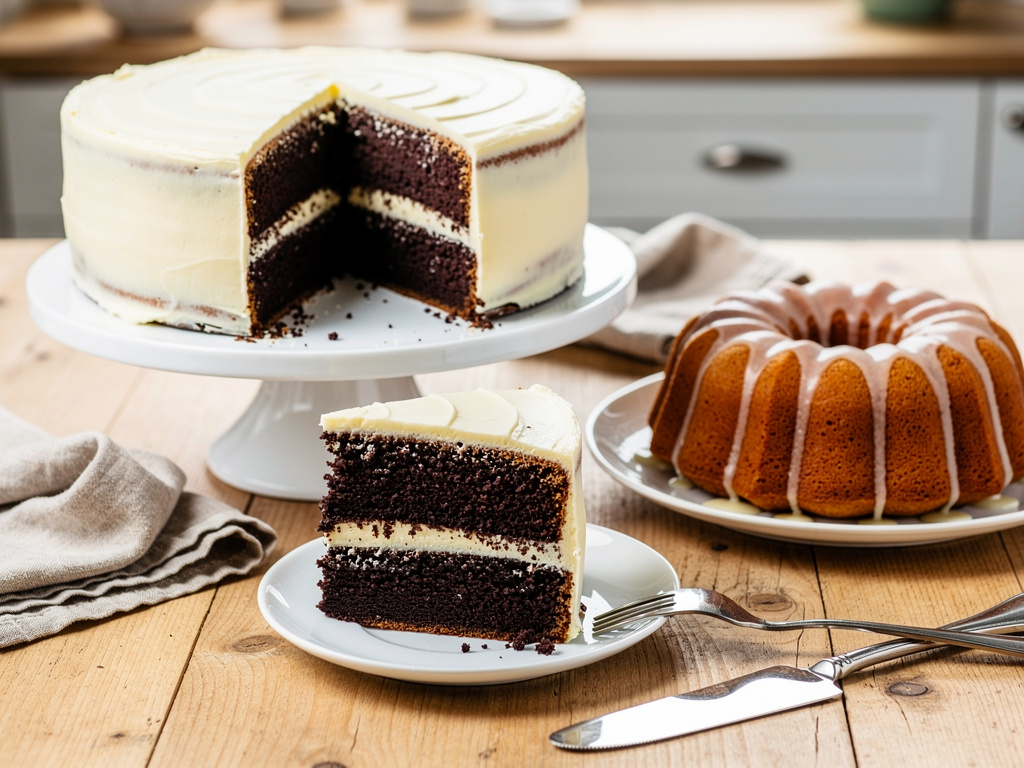


The short version: Yes, you can sell homemade cake from your home kitchen in all 8 cottage food states whose agency pages we read, as long as the cake and its frosting are safe at room temperature, and the ninth page, Illinois's bake sale guideline, allows cakes at charity sales. The frosting decides most cases: cream cheese frosting, whipped cream, custard fillings and cheesecake are out in most states, and even buttercream splits them, because Colorado bars buttercream made with butter and Michigan accepts homemade buttercream only from two lab-tested recipes, though store-bought shelf-stable frosting is fine there. Texas allows refrigerated cakes once you register with the state, and Ohio allows cheesecake with a $10-a-year Home Bakery license and an inspection. Charity bake sales are handled state by state: the FDA's model food code allows a bake sale exemption where a state adopts it, Illinois has one for cakes that do not need a refrigerator, and Texas and Washington handle charity sales differently, so check your state.
Checked on September 24, 2026: the cake rules come from each agency's own page (Texas DSHS, California CDPH, Florida FDACS, Michigan MDARD, Ohio ODA, Washington WSDA, Colorado CDPHE, Minnesota MDA, Illinois IDPH), the bake sale rule from the FDA Food Code 2022, and platform fees from each company's pricing page the same day. Homegrown customers create an account to place their first order.
Your chocolate cake is the one people ask about after every birthday party, and now a coworker wants one for her daughter's party and is offering $45. Or the school is holding a bake sale for the band trip and asked you to bring two cakes. Either way, the question is the same: are you allowed to sell a cake you baked at home?
For most cakes in most states you are. The catch is not the cake. It is what you put on it and in it. This page walks through the rule, what 9 state agencies actually say about cakes and frostings, how charity bake sales are treated, and what to do once you know your answer.
Yes, in all 8 cottage food states whose agency pages we read on September 24, 2026, you can sell a baked cake made in your home kitchen. Each of them has a cottage food law, which is a state law that lets you make certain low-risk foods at home and sell them without a commercial kitchen. Cakes are named on the allowed list, or fit the allowed definition, in Texas, California, Florida, Michigan, Ohio, Washington, Colorado and Minnesota, and the Illinois page we read, its bake sale guideline, allows cakes at charity sales.
The "yes" narrows once you look past the sponge. Here is the quick version by type:
If your state says yes and you want the business side (pricing, packaging, finding buyers), the guide to selling cakes and cupcakes from home covers it. This page is the permission half: which cakes, in which states, under which rules.
A cake is allowed or refused based on one question: does it need to be kept cold to stay safe? Food safety rules call a food that needs cold holding a "time and temperature control for safety" food, or TCS food. Older laws say "potentially hazardous food" for the same idea. Most cottage food laws allow only foods that are not TCS.
Across the agency pages of 9 states, every cake refusal we found was about a frosting, a filling, a topping or a custard-style cake like cheesecake. The baked sponge almost never trips that rule. Flour, sugar, eggs and butter are baked through, and the finished crumb is too dry and sugary for bacteria to grow in quickly. The trouble starts with what goes on after baking:
Ohio's Department of Agriculture puts the reason plainly on its cottage food page. A potentially hazardous food "requires temperature control because it is in a form capable of supporting the rapid and progressive growth of infectious or toxigenic microorganisms," and its examples include "cheesecakes." One perishable layer is enough. A shelf-stable cake with a custard filling is a custard cake in the eyes of the rule, and Texas is the only state on our list whose cottage food rules make room for it.
Plain cakes and cakes finished with fondant, sugar glaze or a high-sugar icing are allowed almost everywhere; cakes that need a refrigerator are allowed almost nowhere without extra paperwork. The table sums up where each common type landed across the 9 agency pages we read.
On a phone, slide the table to read the last two columns.
| Cake or topping | Typical status | Why | Where it differs |
|---|---|---|---|
| Pound, loaf, bundt, coffee cake | Allowed | Baked through, no perishable topping | No state on our list bars them |
| Sugar glaze, flat icing | Allowed | High sugar, room-stable | Washington wants a cook step or enough sugar |
| Fondant, gum paste | Allowed | Sugar-based and dry | California: gum paste with pasteurized eggs only |
| Buttercream | Depends on the state | Butter and milk are perishable, sugar offsets them | Colorado bars butter buttercream; Michigan allows 2 recipes; California allows it |
| Cream cheese frosting | Not allowed in most | Soft dairy, needs cold holding | Texas allows with registration |
| Whipped cream, custard, cream fillings | Not allowed in most | Milk and eggs, needs cold holding | Texas registration; Ohio Home Bakery license |
| Fresh fruit garnish or filling | Depends on the state | Cut fruit adds water | Michigan allows fruit garnish; Washington bars it |
| Cheesecake | Not allowed in most | A custard of eggs and cream cheese | Texas registration; Ohio Home Bakery license |
Built from the agency pages listed in the short version, read September 24, 2026. "Typical" means most of the states on our list, not every state in the country.
Use the table to sort your menu before you read your own state's page. A baker who sells glazed lemon pound cake and chocolate cake with fondant is in a very different spot from one whose best seller is carrot cake with cream cheese frosting. Cupcakes raise their own version of that question, from lemon curd centers to edible glitter, and the guide to selling homemade cupcakes legally reads six more states, including New York, which bars homemade buttercream on cupcakes.
Buttercream is allowed in some states, limited in others and barred in at least one, so it is the frosting to check first. It is also the most common cake frosting there is, which is why a general rule of thumb gets people in trouble. Here is how 4 states we read handle it, in their own words, and they land in 4 different places:
So the same American buttercream is fine in Sacramento, fine in Seattle if the sugar outweighs the butter and milk three to one, fine in Detroit only if it is one of two specific recipes or a commercially prepared, shelf-stable frosting, and not fine in Denver at all unless you swap the butter for ghee or vegetable oil.
"Buttercream is fine everywhere" is not true. Michigan's list of what cottage food producers can make names exactly two buttercream recipes, and Colorado bars buttercream made with butter. We read both pages on September 24, 2026. Rules like these get revised, so read your own state's page before you print a menu. The frosting also sets how long a cake keeps: Kansas State treats a frosting that is at least 65% sugar by weight as stable at room temperature, and our breakdown of how long homemade cake lasts turns that line into counter, fridge and freezer times plus a label line.
Cream cheese frosting is not allowed under the cottage food rules of most states we read; Texas is the only one of our 9 states that allows it with a simple registration. It is the most common reason a home baker's best cake does not qualify. Michigan's list says "No cream cheese frostings or icings." Washington bars "cakes or pastries with cream or cream cheese fillings," and a cream cheese frosting there has to pass the same cook step or 3 to 1 sugar test as any other frosting. California's approved frostings are the ones that "Do Not Contain Eggs, Cream, or Cream Cheese." That covers red velvet, carrot cake and hummingbird cake as most people make them.
There are two ways to a legal yes that we found:
A cream cheese frosted cake is a TCS food, so you register with Texas DSHS before you sell it. Its label needs the date you made it, and the label or the receipt needs this statement in at least 12-point type: "SAFE HANDLING INSTRUCTIONS: To prevent illness from bacteria, keep this food refrigerated or frozen until the food is prepared for consumption." Texas also says TCS foods "are not eligible for donation," which matters for bake sales. Checked on the Texas DSHS cottage food page, September 24, 2026.
Everywhere else, the honest options are to switch that cake to a frosting your state allows, or to make it in a licensed kitchen. Selling the frosting as a separate product does not get around this, because the frosting is still a food your state has to allow on its own.
Cheesecake and cream-filled cakes are out under most cottage food laws, and fresh fruit depends on the state. Here is what 6 states said on their agency pages on September 24, 2026:
If cheesecake is a big part of what you want to sell, the practical guide to selling cheesecake from home covers the legal question, pricing and keeping it cold from kitchen to customer.
All 9 allow a shelf-stable cake (Illinois at charity bake sales, the only Illinois rule we read), and they split on frosting, sales caps and permits. We read each agency's own page on September 24, 2026. Laws change, so verify your state's current rules on its agency site before you sell.
Scroll sideways for the frosting, refrigeration and cap columns.
| State (agency) | Cakes | Frosting line | Refrigerated cakes | Yearly sales cap |
|---|---|---|---|---|
| Texas (DSHS) | Allowed | Any frosting; register if it needs refrigeration | Allowed if you register; 41ºF or below | $150,000 gross income |
| California (CDPH) | "Cake" and "Cupcakes" listed | Frostings without eggs, cream or cream cheese; butter buttercream listed | Not allowed | $88,878 Class A, $177,756 Class B (2026, adjusted yearly for inflation) |
| Florida (FDACS) | "Cakes, pastries and cookies" listed | Not addressed on the page | Not on the list | $250,000 gross sales |
| Michigan (MDARD) | Including "celebration cakes" | Shelf-stable only; 2 approved buttercream recipes; no cream cheese | Not allowed; "no cheesecake" | Not stated on the page we read |
| Ohio (ODA) | Allowed as a cottage food | Not addressed on the page | Home Bakery license only | Not stated on the page we read |
| Washington (WSDA) | Including wedding cakes | Cook step or 3 to 1 sugar ratio; no cream cheese fillings | Not allowed | $35,000 gross sales |
| Colorado (CDPHE) | Allowed | Butter buttercream barred; ghee or oil versions allowed | Not allowed | $10,000 net revenue per product type |
| Minnesota (MDA) | Allowed as a baked good | Not addressed on the page | Not allowed | $78,000 |
| Illinois (IDPH, bake sales) | Allowed ("breads, cookies, and cakes") | Not addressed on the page | No custard or cream fillings | Not applicable to bake sales |
Each row comes from that state's own agency page, read September 24, 2026. Illinois is the bake sale guideline from the Illinois Department of Public Health, not the full Illinois cottage food law. "Not addressed" means the page we read did not mention it.
The biggest cap, Florida's $250,000, comes with no permit at all, and Texas's $150,000 needs no registration unless the cake needs a refrigerator. California's larger Class B cap ($177,756 in 2026) comes with a county permit and training. And the strictest frosting rules sit in Colorado (no butter buttercream), Michigan (homemade buttercream only from its tested recipes) and Washington (every frosting cooked or high in sugar).
Colorado's cottage food page lists cakes frosted with butter-based buttercream as ineligible, so a classic butter-and-sugar buttercream is out unless you swap the butter for ghee or oil. Colorado gives each product type its own $10,000 net revenue allowance, and its FAQ treats each flavor as its own type (blueberry, banana and chocolate chip muffins count as three separate $10,000 allowances). The state bars sales to restaurants and grocery stores and requires a point-of-sale sign. Checked on the Colorado CDPHE cottage foods page, September 24, 2026.
Yes in some states, as long as the cake does not need a refrigerator, but the rules for charity sales differ from state to state. The FDA Food Code, the model food law most states build their rules from, says a home kitchen is not a food establishment when it only makes food that is not TCS "for sale or service at a function such as a religious or charitable organization's bake sale if allowed by LAW," with "a clearly visible placard" telling buyers the food came from an uninspected kitchen. The words "if allowed by LAW" matter: each state decides whether to adopt that exemption.
Here is how 3 states we read treat charity sales, and they do not agree:
For a school, church or nonprofit fundraiser, Illinois asks that bake sale products be individually wrapped and recommends a label with the common name, ingredients and major food allergens. Pumpkin, sweet potato, custard and cream fillings are not allowed. Checked on the IDPH bake sale guidelines page, September 24, 2026.
A charity sale does not change the frosting rule. The exemption covers the permit, not the recipe, so the same cream cheese frosting that keeps a cake off your own table keeps it off the bake sale table too. If you want to turn school and church events into a regular channel, the guide to selling food at school fundraisers and church events covers how to work with organizers.
In England, Wales and Northern Ireland, a small, occasional charity cake sale may not need to register, if your local council decides the sale is small and infrequent enough. The Food Standards Agency's guidance on providing food at community and charity events, last updated 4 September 2026, says: "If the food activity is very limited and infrequent, the local authority may decide that registration is not needed." Regular sales, including from home or online, are a food business and may need to register.
The same guidance gives cake bakers a short list:
Homegrown is built for US vendors, so the rest of this page follows US rules.
Most of the cottage food states we read require no state permit for a shelf-stable cake, while Washington charges $355 for a two-year permit with a kitchen inspection. Of the 8 cottage food states on our list (Illinois is the bake sale rule only), 5 need no state permit for a shelf-stable cake: Florida, Texas, Michigan, Ohio and Colorado. Here is what each page said on September 24, 2026:
Swipe left for the fee, training and inspection details.
| State | Permit or registration | State fee named on the page | Training | Inspection |
|---|---|---|---|---|
| Texas | None for shelf-stable cakes; register for refrigerated cakes | No local permit or fee allowed | Food handler course required | No routine inspection; DSHS or the local health authority can act on a serious health threat |
| California | Register or get a permit from your county environmental health office | Set by the county, not on the CDPH page | Within three months of registering | Ask your county |
| Florida | None from FDACS | None | Not required on the page | No |
| Michigan | None, exempt from licensing | None | Not required on the page | No |
| Ohio | None for cottage foods; Home Bakery license for refrigerated cakes | $10 a year (Home Bakery) | Not required on the page | Home Bakery only |
| Washington | Cottage Food Permit | $355 for two years | Food Worker Card | Yes, before the permit |
| Colorado | None | None | Food safety course required | No |
| Minnesota | Register yearly | $0 up to $7,665 in sales, $50 above | Online course and exam, or a food safety course | No |
From each agency's page, read September 24, 2026. California's cake rules come from CDPH, but the permit and fee come from your county. City zoning and business license rules can apply on top of any of these.
Two things catch cake bakers out here. Washington's permit takes 6 to 8 weeks, so apply well before a holiday or wedding season. And Washington counts products one by one: its FAQ says a cake recipe sold as cupcakes needs its own label submitted, because only the products on your permit can be sold.
For every state in one place, the state-by-state cottage food laws guide lists permits, caps and sales channels.
Most states want the same core facts on every cake: the product name, your name and address (or a registration number), the ingredients in order by weight, the major allergens, and a statement that it was made in a home kitchen. The home kitchen statement is where states differ most, and these 4 states each word it their own way:
Cakes bring one problem cookies do not: a tiered cake has nowhere to put a sticker. Washington's answer is that for "wedding cakes, birthday cakes and other specialty cakes that are not easily packaged," the full label goes on an ingredient sheet delivered with the cake, and smaller cakes are boxed with the label on the box. Texas lets unpackaged foods carry the label information on an invoice or receipt.
Allergens deserve extra care on cakes because nearly every one contains wheat, eggs and milk, and many contain nuts or soy in the decorations. The full rundown of cottage food labeling requirements shows what each part of a label needs.
Write the ingredient sheet for a tiered cake while you plan the order, not the night before delivery. A two-tier cake with a different flavor in each tier and a fondant finish can easily run past 20 ingredients, and the fondant, sprinkles and food coloring each have their own sub-ingredients that belong in parentheses.
Every cottage food state on our list lets you sell cakes directly to the person who will eat them; online orders, delivery and shipping are where they split. Here is what 7 states allow, from their agency pages as of September 24, 2026:
In practice, cakes are a local product anyway. A frosted layer cake does not ship well, so most home bakers take the order ahead of time and hand the cake over at pickup or a delivery the baker does personally. Finding those local customers is the next job, and where to sell cake and cake pops walks through seven places, from party orders to coffee shops, with the fee each takes on a $30 dozen. If you do want to mail something, read whether you can ship cottage food before you promise it.
Once your state says yes, the next headache is the orders themselves: a custom cake needs a date, a flavor, a size, a frosting your state allows, and a deposit, and that falls apart fast in text messages. Homegrown gives you an ordering page for $10 a month billed annually ($12.50 billed monthly) with no percentage fees beyond standard payment processing. Customers pick the cake and the pickup day, and pay when they order, so you know exactly how many cakes to bake before Saturday. Washington is the state to check first: its cottage food FAQ says payment has to pass from you to the customer person to person, so a Washington baker should ask WSDA (cottagefoods@agr.wa.gov) before taking card payment online.
Drag the table sideways to compare what each platform costs per cake and per month.
| Platform | Monthly plan | Trial | Platform fee | Card processing | Customer pays on a $45 cake | Vendor pays on a $45 cake | Vendor pays in a month of 20 cakes |
|---|---|---|---|---|---|---|---|
| Homegrown | $10 billed annually ($12.50 monthly) | 7 days, no charge until day 8 | None, 0% commission | 2.9% + $0.30, paid by the vendor | $45.00 | $1.61 plus the plan | $42.10 ($44.60 on monthly billing) |
| Hotplate | $0 | No plan to try | 5% + $0.55, added to the customer's checkout, or paid by the vendor if you choose | 2.9% + $0.30, paid by the vendor | $47.80 ($45.00 if you pay the fee) | $1.61 ($4.41 if you pay the fee) | $32.10 ($88.10 if you pay the fee) |
| Etsy | $0 (one-time set-up fee may apply) | No plan to try | $0.20 listing fee plus 6.5% transaction fee | 3% + $0.25, paid by the vendor | $45.00 plus shipping | $4.73 | $94.50 |
| Shopify Basic | $29 billed yearly ($39 monthly) | 3 days, then $1 a month for 3 months | None with Shopify Payments (2% with another provider) | 2.9% + 30¢ online, paid by the vendor | $45.00 | $1.61 plus the plan | $61.10 ($71.10 on monthly billing) |
We checked every fee on September 24, 2026, on findhomegrown.com/signup, Hotplate's pricing page, Etsy's fees policy and payment processing help page, and Shopify's pricing page. Card processing is figured on the $45 price; a platform that charges it on the total with tax, tips or shipping runs a few cents higher. Etsy's month assumes one $0.20 listing per sale.
How the three alternatives fit a home cake baker:
What Homegrown gives a cake vendor: pre-orders by pickup date, payment at the time of order, pickup and delivery windows you set, and a link you can share in your bio or a group chat. The honest bounds: Homegrown does not check which frostings your state allows, does not print labels or ingredient sheets, and is set up for pickup and local delivery on the days you drive, not for mailing cakes. Customers create a Homegrown account to place their first order, and while your storefront is listed on the Homegrown marketplace, plan on most orders coming from people you send to your own link.
Castiron, which some older guides recommend for home bakers, has shut down. Its web address did not load when we checked on September 24, 2026.
If you already know your homemade cakes are legal where you live, the next step is a page where people can order them by date instead of by text. Set up your Homegrown storefront and list your first cake with a pickup day.
In a pull of the Homegrown catalog on August 14, 2026, 94 of the 1,804 products listed by 219 vendors had "cake" in the name, from 42 vendors. 69 of them were cake products: 37 cakes, 16 cupcake listings, 10 cake pops and cakesicles, and 6 cheesecakes. The other 25 only borrowed the word, like pancake mix, carrot cake jam and cheesecake brownies. Cheesecake was the smallest group. That may reflect how many states keep cheesecake out of home kitchens, but a count of 6 listings cannot show why.
Cake products on Homegrown by type
Source: Homegrown catalog pull, August 14, 2026, 69 cake products out of 1,804 products from 219 vendors.
Careful cake vendors build the menu around the frostings their state allows, instead of finding out after a customer asks for cream cheese. A few habits make the difference:
The baker who gets in trouble is rarely the one baking pound cakes. It is the one who takes a $120 order for a strawberries-and-whipped-cream cake in a state that bars both.
You can find your answer in a single afternoon by reading your own state's agency page with your menu next to it. Work through these steps in order:
If you would like a list to compare against before you start, the rundown of what foods you can sell under cottage food laws sorts products into allowed, restricted and not allowed.
If your state bars your best cake, you can change the frosting, get a license that covers it, rent a commercial kitchen, or drop that cake and sell the rest; a "no" on 1 recipe is rarely a "no" on cake. Here are the 4 ways forward:
The full guide on whether it is legal to sell baked goods from home covers the same question for cookies, breads and pies if you are building a wider menu.
In some states, yes, if the cake does not need a refrigerator. The FDA Food Code excludes a home kitchen making non-TCS food for a religious or charitable bake sale, where state law allows it, and Illinois exempts bakers who make non-TCS baked goods for a religious, charitable or nonprofit fundraiser from any permit or registration. A charity sale does not make a cream cheese or custard cake legal. Texas and Washington handle charity sales differently, so check with your state before the sale.
Often not. Florida, Michigan, Colorado and Texas require no state license for a shelf-stable cake, while Washington requires a $355 permit and an inspection, Minnesota requires a yearly registration, and California requires a county registration or permit. Check your own state's agency page for the current rule.
Not under most cottage food laws. Michigan names cream cheese frosting as not allowed, Washington bars cream cheese fillings and holds every frosting to a cook step or a 3 to 1 sugar ratio, and California's approved frostings leave it out. Texas allows it if you register with the state and add a safe handling statement, and Ohio allows refrigerated cakes with a Home Bakery license.
Yes in the states whose pages name them: Washington and Ohio both list farmers markets as a place to sell cottage food, and there a farmers market sale counts as a direct sale to the person who eats the cake. Minnesota names farmers markets outright, and the market itself may ask for your permit, label and insurance. You still need a label or a sign, depending on your state.
It depends on the state. California lists buttercream made with butter as approved, Washington requires every frosting to be cooked, or to hold 3 parts non-perishable ingredients such as sugar for every 1 part perishable ingredients by weight, Michigan allows homemade buttercream only from two lab-tested recipes, plus commercially prepared, shelf-stable frostings, and Colorado allows buttercream only when the butter is swapped for ghee or oil.
Usually yes, with local handoff. Texas allows online sales when you or someone in your household delivers the cake, Colorado allows internet sales within the state, and Florida and California allow mail delivery. Minnesota does not allow cottage food for people to be shipped until August 1, 2027. Washington lets you take orders online, but its FAQ says payment must change hands person to person, so ask WSDA (cottagefoods@agr.wa.gov) before charging a card online.
More on selling cakes and baked goods from home:
You now know which of your cakes your state allows, which frostings keep them legal, what the label needs and whether a charity bake sale changes anything. The next step is a simple way for customers to order a cake for a date and pay before you bake it, so you are not juggling 15 text threads the week of a birthday rush.
A good way to start: list the 3 or 4 cakes your state clearly allows, with the frosting written into each name, set one or two pickup days a week, and send the link to the people who already ask you for cakes. Add custom and tiered cakes once the basics run smoothly, and keep your ingredient sheets saved next to each listing so every order goes out with the right label.
Start your Homegrown storefront and take cake orders by pickup date for $10 a month billed annually ($12.50 billed monthly), with no percentage fees beyond standard payment processing.



