
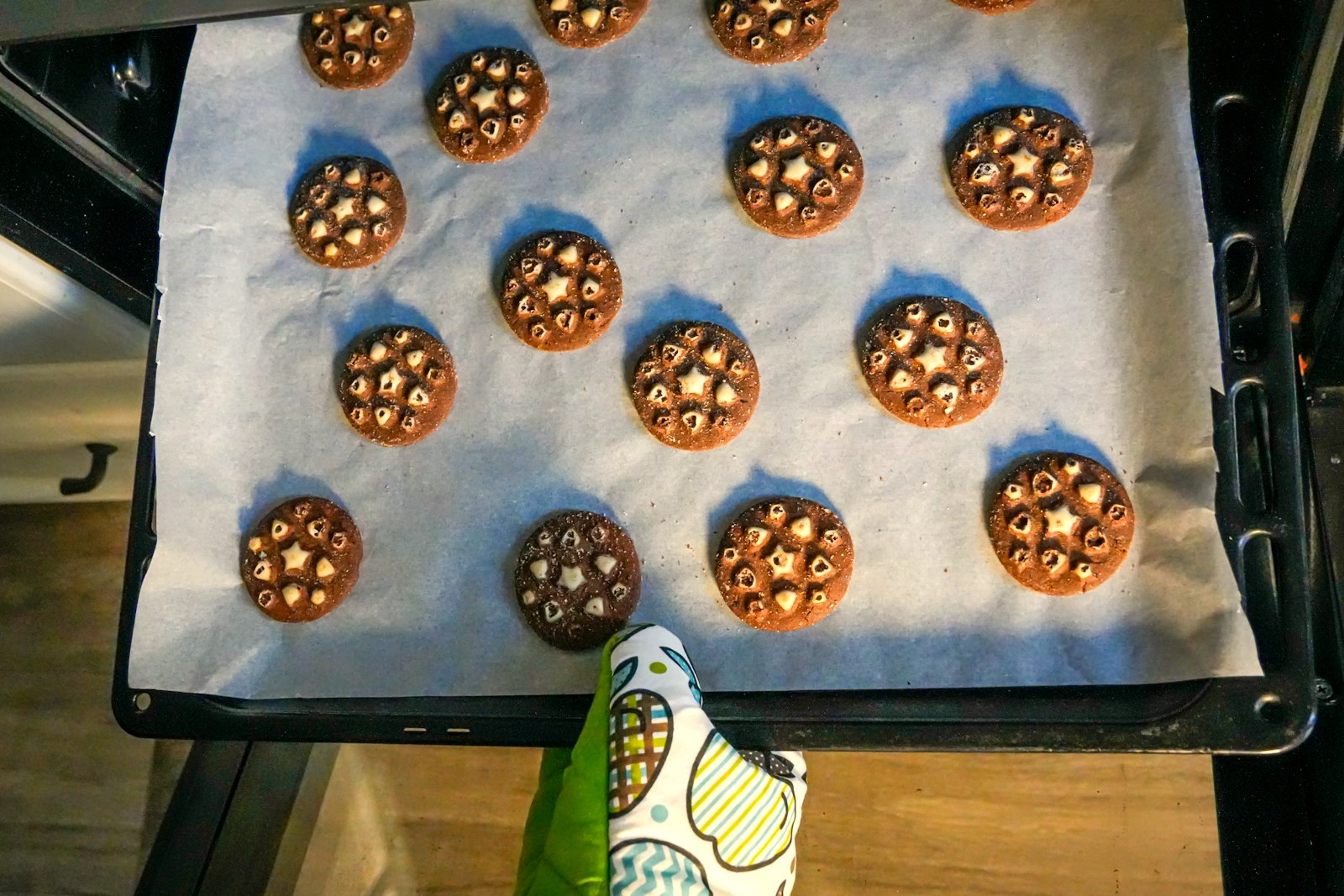


The short version: Etsy allows homemade cookies, but its food policy leaves the legal question to you and your state. Many cottage food laws only cover sales to customers in your own state, and some (New Jersey and Montana among the seven we checked) do not allow shipping cottage food by mail at all. If your state allows mail orders, ask your state agency whether out-of-state buyers are covered before you list. Most of the pages we checked either keep sales in state or do not say, so plan on refusing out-of-state orders until the agency tells you otherwise. If mail orders are not allowed, sell locally with pickup or hand delivery instead.
Checked on Etsy's own policies and help pages, the Homegrown signup page, Hotplate's pricing page and seven state agency cottage food pages (California, Florida, Michigan, New Jersey, Mississippi, Virginia, Montana) on September 18, 2026, with the Etsy help pages and California's 2026 sales limit sheet rechecked September 20, 2026. Rules change, so confirm with your state before you sell. Homegrown customers create an account to order.
Yes, you can sell homemade cookies on Etsy. What your state's cottage food law decides is how those cookies reach the buyer. Most of the laws we checked keep the cookies inside the state, and two of the seven do not allow mail at all. Etsy allows food, and its own help page says you are welcome to run a listing as local pickup or delivery only, so a mail ban does not shut the door by itself. Your state decides whether you can ship it and to whom.
You can sell homemade cookies on Etsy in 2026 as long as your state's cottage food law allows sales by mail or online, and only to the buyers that law covers. Etsy has no rule against cookies. Its food policy says selling food "is generally allowed on Etsy" and then points you to the government rules that decide who can make, package and sell food.
That split matters because most home cookie bakers sell under a cottage food law, the state law that lets you bake certain low-risk foods in your home kitchen without a commercial license. Those laws were written for farmers markets, porch pickup and local delivery. Etsy was built for shipping across the country.
If you want the full setup side, including listings, photos and packaging, the companion guide to selling food on Etsy walks through the shop itself. This page stays on the permission question: whether the law lets you do it at all.
Here is the quick decision path most bakers land on:
Etsy's Food and Edible Items policy is four sentences long, and it hands the legal question back to you. It says selling food is generally allowed, points you to its Seller Handbook, tells you to check USPS and other carriers for food shipping limits, and says to consult an attorney because the laws vary from place to place. The page was last updated May 17, 2020, more than 6 years ago, and it was still the live policy when we loaded it on September 18, 2026.
Etsy's broader shop policy says the same thing in stronger words. By listing a product, you agree you are responsible for complying with all applicable laws for it, including required labels and warnings. Etsy takes no responsibility for the accuracy or labeling of your listings.
What that means for a cookie shop:
Etsy allowing food is not the same as your state allowing it. We loaded Etsy's food policy on September 18, 2026, and it sends every legal question to your local rules. A listing that is fine by Etsy can still break your state's cottage food law.
Your state decides because cottage food is an exemption from state food licensing, and that exemption only covers the sales your state's law describes. Cookies baked in a home kitchen are legal to sell only because a state law says so, under conditions it sets. Step outside those conditions and you are selling unlicensed food.
The conditions that trip up Etsy vendors are almost always about the sale, not the cookie:
Each state writes these rules differently, so two bakers with the same recipe can get opposite answers. Our cottage food laws by state guide lists every state if yours is not in the table below. The rule: check your own state's agency page, not a blog, before you list, and verify your state's current rules again whenever the law changes.
Of the seven state agency pages we read on September 18, 2026, four allow mail orders under the cottage food rules (Virginia only to buyers inside Virginia), one allows sales only inside the state and does not say whether mail is allowed, and two do not allow shipping cottage food at all. None of the seven said a home baker could ship cookies to buyers in other states. The table shows what each page says in its own words.
Scroll sideways to see every column.
| State (agency) | Online orders | Shipping by mail | Out-of-state buyers | Yearly sales cap | Etsy fit |
|---|---|---|---|---|---|
| California (Dept. of Public Health) | Yes, direct sales by phone or internet | Yes, mail or third-party delivery | Page does not say; ask your county | $88,878 Class A, $177,756 Class B for 2026 | Possible for California buyers |
| Florida (Dept. of Agriculture and Consumer Services) | Yes, on your website | Yes, mail order allowed | Page does not say; ask the department | $250,000 | Possible for Florida buyers |
| Michigan (Dept. of Agriculture & Rural Development) | Yes, if the buyer can talk to you first | Yes, if the buyer can talk to you first | Page does not say | $50,000 ($75,000 if products cost $250+) | Possible for Michigan buyers, if buyers can reach you before they order |
| Mississippi (Dept. of Health) | Advertise online; sale direct to consumer | Not stated | No: "sold only in Mississippi" | $35,000 | Poor |
| New Jersey (Dept. of Health) | Yes, online orders and payments | No USPS, FedEx or DHL | No, products must be handed over in person | $50,000 | No |
| Virginia (Dept. of Agriculture and Consumer Services) | Yes, by internet or phone, to Virginia buyers (since July 1, 2026) | Yes, by mail or delivery service, inside Virginia | No, sold and delivered "only ... within the Commonwealth" | Not listed for baked goods | Possible for Virginia buyers |
| Montana (Dept. of Public Health and Human Services) | Advertise online; cottage food sale face to face | Cottage food: no USPS, UPS or FedEx. Local Food Choice Act: delivery of pre-arranged orders inside Montana | No, both paths keep every sale inside Montana | Not listed | No |
We checked every row on that state agency's own cottage food page on September 18, 2026. Virginia's row uses the state's July 2026 home food processing FAQ, which reflects House Bill 402. Montana's row also uses the state code for its Local Food Choice Act and the health department's guidance on that law. California's caps are the inflation-adjusted figures on the California Department of Public Health (CDPH) 2026 adjusted gross annual sales limit sheet, which we loaded on September 20, 2026; the statute itself still reads $75,000 and $150,000, and the state raises both every year with the California Consumer Price Index. "Page does not say" means the page did not address it; it does not mean out-of-state sales are allowed. Rules change, so check your state's page again before you ship anything.
The mail-order states have their own pages too: the California Department of Public Health cottage food page, the Florida Department of Agriculture and Consumer Services cottage foods page and the Michigan Department of Agriculture & Rural Development cottage food FAQ. The stricter pages spell out their limits. The New Jersey Department of Health cottage food FAQ says you may take online orders and payments but may not send products through common carriers like USPS, FedEx or DHL. The Mississippi State Department of Health cottage food FAQ says cottage food may be sold only in Mississippi. Virginia changed its rules on July 1, 2026, when House Bill 402 took effect. The state's July 2026 home food processing FAQ now says you can sell baked goods "by phone, through the internet, or at any location" and deliver them "in person, by mail, or by delivery service." The same FAQ says the products "can only be sold and delivered within the Commonwealth," and it still lists "across state lines" as a place they cannot be sold. So a Virginia baker can mail cookies to a buyer in Richmond, but not to one in Maryland.
The state health department's cottage food FAQ says registered cottage food operations can advertise and coordinate sales online, but the sale must be face to face. USPS, UPS, FedEx and couriers are not allowed, and neither are Amazon, eBay and similar sites where the buyer and seller never meet. Registration is $40 on that same FAQ, whose page footers read February 2018, so confirm the current fee with DPHHS before you register. You pay it again if you move or add new recipes or labels. Montana also has a second path. The Local Food Choice Act lets you sell homemade food with no registration, license or inspection, as long as you sell directly to the person who will eat it, tell them the food has not been inspected, and keep the sale inside Montana. The state's guidance on that law says you can deliver an order if the sale was arranged ahead of time. Neither path allows sales to another state, so out-of-state Etsy orders are still off the table.
If your state allows mail orders only to in-state buyers, you can run an Etsy shop, but every order from another state has to be refused or canceled. Etsy shows your listings to buyers everywhere, so the out-of-state orders will come. The work of turning them away falls on you. Etsy's Help Center page on offering local pickup or delivery, read on September 20, 2026, says Etsy has no built-in pickup tool, but you are welcome to offer pickup or local delivery, and it recommends that your listings and shop policies say plainly that the items are local only. The same page says that if a buyer outside your area does place an order, you must either ship it or refund and cancel it, and that failing to do so can get your selling privileges suspended. Etsy allows a pickup-only listing. What Etsy will not do is stop an out-of-state buyer from ordering one.
Bakers in that position usually handle it like this:
A canceled order costs you less money than you might expect. Etsy's How to Cancel a Sale help page, which we loaded on September 20, 2026, says Etsy automatically credits you for the related listing and transaction fees, and that refunding a buyer credits your transaction and processing fees back to your payment account. So the money comes back. What does not come back is the listing. That same page says canceling a sold-out item does not put the item back in your shop, so you have to renew it yourself before anyone can order another dozen. The cost that is left is your time. You spend it on the message, the cancellation and the buyer who wanted cookies and is not getting them. A few canceled orders a month is annoying. A steady stream means the channel is wrong for your state, and a local ordering page does the same job without the refusals.
In the states we checked, shelf-stable cookies, the kind that are safe at room temperature, are allowed under the cottage food law, and Florida's and New Jersey's approved lists name cookies directly. Chocolate chip, snickerdoodle, oatmeal, peanut butter, shortbread, sugar cookies with royal icing and biscotti are the usual safe ground.
Cookies that tend to fall outside cottage food rules:
The test the states we checked use is whether the food needs to be kept cold to stay safe. If it does, it usually is not a cottage food. New Jersey's cottage food FAQ states that test outright. It defines a cottage food product as a "non-TCS food," which it defines in turn as "a food which will not support the growth of disease-causing bacteria" and one that "does not need time and temperature controls to remain safe for consumption." The Florida Department of Agriculture and Consumer Services cottage foods page does not put it in those words. It lists "cakes, pastries and cookies" among twelve approved categories and describes the whole list as foods that "present a low risk of foodborne illness." Virginia's July 2026 home food processing FAQ adds that "the determination of whether a product meets the exemption ultimately depends on the recipe of that specific product," which is why two cookies that look alike can land on opposite sides of the line. Our list of what foods you can sell under cottage food laws covers the common categories, and California's Department of Public Health keeps an approved foods list that its page links to. Read your own state's approved list before you bake a recipe for sale.
Shipping raises the bar further. A cookie that is fine on a market table for three hours may arrive stale, broken or melted after three days in a mailer. Here is how the common cookie types usually sort out:
Scroll sideways to see every column.
| Cookie type | Usually allowed as cottage food? | Ships well by mail? |
|---|---|---|
| Chocolate chip, oatmeal, peanut butter | Yes | Yes, if sealed in pairs |
| Shortbread and biscotti | Yes | Yes, the sturdiest option |
| Sugar cookies with royal icing | Yes | Yes, with padding between layers |
| Soft-baked or stuffed cookies | Yes, if the filling is shelf stable | Risky after 2 to 3 days |
| Chocolate-dipped cookies | Yes | Not in summer heat without cold packs |
| Cream cheese frosted or filled | Usually no | No |
Crisp, sturdy cookies travel. Soft-baked, frosted and chocolate-dipped cookies are a gamble in summer.
You need five things in place before your first Etsy cookie listing, and none of them come from Etsy. They come from your state, your county and your own kitchen.
Plan on this taking a week or two, not an afternoon. Registration processing times vary by state, and a label printer order can take days. The bakers who skip these steps usually find out from a customer complaint, which is the worst possible way to learn the rules.
A cookie label for an Etsy order needs the same information as a label at a farmers market, because the law follows the cookie, not the sales channel. The exact wording is set by your state, and the parts overlap heavily across the state pages we read.
What those pages ask for, in some combination:
New Jersey's cottage food FAQ spells its own version out: the common name of the product, the ingredients in descending order by weight, a "Contains" line listing the major allergens, your full name plus business name and permit number, your town followed by "NJ", and the sentence "this food is prepared pursuant to N.J.A.C. 8:24-11 in a home kitchen that has not been inspected by the Department of Health." Notice what is not on it: New Jersey never asks for net weight. That is the reason to work from your own state's list rather than a generic one.
The home kitchen statement is the line people get wrong. Rhode Island, for example, requires the sentence "Made by a Cottage Food Business Registrant That is Not Subject to Routine Government Food Safety Inspection" in at least ten-point type, according to the Rhode Island Department of Health cottage food FAQ. Virginia does not ask for a home kitchen line at all. Its state exemption FAQ requires the front of the package to carry the statement "NOT FOR RESALE - PROCESSED AND PREPARED WITHOUT STATE INSPECTION," together with your name, physical address or post office box number and telephone number, and "the date the food product was processed." The phone number and the batch date are two parts most other state lists never mention. Your state's version will read differently, so copy it from the state page, not from another baker's label. Your state sets both the wording and the list of parts, and it can change them, so read its current label rules before you print a run of labels.
On Etsy, the buyer only sees your photos and description until the box arrives, so the physical label is the one place the legal information reaches them. Our cottage food labeling requirements guide goes line by line through what most states ask for.
Etsy takes $2.73 from a $24 dozen. That is the $0.20 listing fee, a $1.56 transaction fee and $0.97 in US payment processing, before the fees it also charges on whatever you collect for shipping. That math uses Etsy's Fees and Payments policy as we loaded it on September 18, 2026: a $0.20 listing fee per item and a 6.5% transaction fee on the item price plus shipping and gift wrap.
Payment processing is a separate Etsy charge that varies by the country of your bank account. Etsy publishes the rate by country in its Help Center, not in the Payments policy itself. That Help Center page, What are Payment Processing Fees for Selling on Etsy, loaded September 20, 2026, lists 3% + $0.25 per order for a United States bank account, taken from the total sale price including shipping and any sales tax. On a $24 dozen with no shipping that is $0.97.
Scroll sideways to see every column.
| Platform | Subscription | Trial | Platform fee | Card processing | Customer pays on a $24 dozen | Vendor pays on a $24 dozen | Vendor pays on 50 orders a month |
|---|---|---|---|---|---|---|---|
| Etsy | None required; one-time set-up fee may apply | None | $0.20 listing fee + 6.5% transaction fee on item and shipping | 3% + $0.25 for a US bank account, on the full order including shipping, paid by the vendor | $24 plus shipping | $2.73 plus 9.5% of shipping | $136.50 plus 9.5% of shipping |
| Hotplate | $0 | None | 5% + $0.55; you choose whether the customer pays it at checkout or you pay it | 2.9% + $0.30, paid by the vendor | $25.75, or $24 when the vendor covers the fee | $1.00 to $1.05, or $2.75 if you absorb the 5% + $0.55 | $50.00 to $52.50 (customers pay $87.50 in Hotplate fees), or $137.50 when you cover it yourself |
| Homegrown | $10/mo billed annually, or $12.50/mo billed monthly | 7 days, no charge until day 8 | $0, 0% commission, no shopper fee | 2.9% + $0.30, paid by the vendor | $24 | $1.00 | $60.00 on the annual plan ($62.50 monthly) |
We checked Etsy's Fees and Payments policy, Hotplate's pricing page and the Homegrown signup page on September 18, 2026. The $24 dozen is a worked example, not a survey result: the median of the 30 whole-dozen cookie listings on Homegrown that day was $21, and $24 is the even $2-a-cookie price just above it. Hotplate does not say what amount its vendor processing is charged on. Its own example shows a $1.27 processing fee on a $30.00 subtotal that also has a $3.00 tip, which is a little over 2.9% + $0.30 on the subtotal plus the tip ($1.26). With no tip, a $24 dozen costs the vendor $1.00 if processing runs on the subtotal and $1.05 if it runs on the $25.75 the customer is charged, so we show both. Card processing is charged one order at a time and rounded to the cent, so every 50-order figure here is 50 times the per-order fee. Hotplate lets the vendor choose who pays its 5% + $0.55 fee. If you pay it, the $1.75 fee plus $1.00 processing on the $24 charge comes to $2.75 a dozen. Etsy also charges an Offsite Ads fee of 15% on orders that come from its outside ads, or 12% once a shop passes $10,000 in yearly sales, and you can only opt out while you are under $10,000. That fee is capped at $100 per order. Sales tax and tips are left out of every row.
On one dozen the fee gap looks small. Across 50 orders a month with card processing counted on both sides, Etsy takes $136.50 ($88 of listing and transaction charges, then $48.50 of processing) compared with $60.00 on Homegrown's annual plan ($10 subscription plus $50.00 in processing), and Etsy's number grows with every dollar of shipping you charge. For the full Etsy fee picture, including ads, see our Etsy fees breakdown for food sellers.
If your state keeps cookie sales inside the state or face to face, the ordering system you need is a local one, and that is what a Homegrown storefront does. It is $10 per month billed annually with no percentage fees beyond standard payment processing, and customers order and pay online, then pick up from your porch, your farmers market booth, or get delivery inside the radius you set. Every sale lands where most cottage food laws want it: close to home.
Compare that to the options cookie bakers usually try first:
For a cookie baker, the useful parts are prepaid pre-orders so you bake exact counts, pickup windows, local delivery with your own radius, and a customer list you keep. What it does not do: Homegrown does not ship cookies by mail, so it will not help you reach buyers in other states. It does not check your state's rules for you. Your storefront is listed on the Homegrown marketplace, but plan on most orders coming from people you send to your own link. Customers create a Homegrown account to place a first order, and you pay the 2.9% + $0.30 card processing on each order with no pass-through to the customer.
On the seven state pages we checked, shipping cookies outside what the state allows puts the sale outside the cottage food exemption, which means you are selling food made in an unlicensed kitchen. The Mississippi State Department of Health cottage food FAQ puts it plainly: "Illegal operations are subject to enforcement to cease operations and a monetary fine up to $1000.00." In those states the exemption is the only reason home-baked cookies are legal to sell, so losing it is not a small paperwork issue.
What the state pages we checked say can follow:
The realistic risk for a small baker is not a raid. It is a complaint from one customer or one competitor that triggers a look at how you sell. The fix is cheap: stay inside the lines your state drew, and if you outgrow them, move up to a licensed kitchen instead of stretching the exemption. Penalties are set state by state and we only read seven pages, so look up what your own state says it enforces before you assume the worst case or the best one.
Shipping cookies inside your state works best with sturdy cookies, a two-day or faster service, and packing that stops them from moving at all. Cookies that can slide around in the box break far more easily than cookies packed snug.
A packing routine that holds up:
Price shipping as its own line and count the tin, padding and heat-seal bags in it. On Etsy the 6.5% transaction fee applies to the shipping charge too. Say you charge $12 to ship a $24 dozen, which is our number, not Etsy's: that shipping adds another $0.78 in Etsy fees, bringing listing and transaction fees to $2.54. Add US payment processing of 3% + $0.25 on the $36 order and Etsy's total is $3.87. A dozen picked up at your door carries none of that.
For what those ingredients and supplies actually cost per batch, our cost per dozen cookies breakdown runs the numbers.
A commercial kitchen makes sense once you want to ship cookies to other states, sell wholesale to shops, or outgrow your state's sales cap. At that point the cottage food exemption stops fitting, and you are running a licensed food business instead.
Signs it is time to look:
Options range from renting hours at a shared commercial kitchen to building a licensed kitchen at home, where your state allows it. New Jersey's FAQ tells bakers who want to mail products to use a commercial kitchen and get a retail food license from the local health department. It is a real step up in cost and paperwork, so most home cookie bakers stay local for their first year or two and only move when the numbers are already there.
Most small cookie vendors sell locally: pre-orders for porch pickup, a farmers market table, and custom orders for parties and holidays. Five more local channels sit behind those three, including a coffee shop that pays $12.00 on a $24 dozen and a monthly cookie club billed up front, and where to sell cookies puts the fee next to each one. Those channels fit inside the cottage food rules on all seven state pages we checked, and they skip shipping costs and broken cookies.
In a pull of the Homegrown catalog on September 18, 2026, 252 of the 2,485 products listed by 288 vendors had "cookie" in the name, from 96 different vendors. That count includes cookie cakes, cookie pops and dog cookies. Counting only whole-dozen cookie listings (half dozens, three-dozen boxes, cupcakes and cake pops left out), the 30 listings sold by the dozen came from 10 vendors and ranged from $7 to $45, with a median of $21.
A local playbook that fits cottage food rules:
If your state is one of the many that keep cookie sales in state or face to face, you can set up a Homegrown storefront for local cookie pre-orders and send your regulars one link. It takes orders and payment up front for pickup or local delivery, which is the kind of sale cottage food laws were written for. The how to sell cookies from home guide covers pricing, packaging and holiday rushes.
In some states you can sell homemade cookies on Etsy without a license, because cottage food laws in states like Florida exempt home bakers from a food permit. Other states require a cottage food permit or registration first, like New Jersey. Montana gives you a choice: a $40 cottage food registration, or its Local Food Choice Act, which needs no registration but keeps every sale inside Montana and direct to the buyer. Even where no license is needed, the rules on shipping and out-of-state buyers still apply, so check your state's current rules first.
Usually not under a cottage food law. None of the seven state agency pages we checked on September 18, 2026 said home bakers could ship to buyers in other states, and Mississippi and Virginia rule it out directly (Virginia's July 2026 FAQ says sales and delivery happen "only ... within the Commonwealth"), while New Jersey requires an in-person handoff and Montana's cottage food and Local Food Choice Act rules both keep sales inside the state. Shipping cookies across state lines generally means moving production into a licensed commercial kitchen.
No. Etsy's food policy says selling food is generally allowed and tells vendors to follow government rules and consult a legal expert. Its shop policy puts compliance with labels and laws on the vendor. Etsy will let a buyer in any state place an order, so stopping the orders your state does not allow is your job.
Yes. Homemade cookies sold online need the same label your state requires at a farmers market, and it has to be on the package the customer receives. The state pages we read ask for some combination of the product name, your name and address, ingredients, allergens, net weight or count, and a home kitchen statement in the exact wording the state sets. The combination is not the same in every state, so work from your own state's list.
All seven of the state pages we checked allow shelf-stable homemade cookies in some form, but the conditions differ a lot. Virginia's home kitchen exemption, for example, allows online orders and mail delivery, but only to buyers inside Virginia. Caps run from $35,000 a year in Mississippi to $250,000 in Florida on the pages we checked. Verify your state's current rules on its agency site.
For most home bakers, local pickup is the better fit, because it matches what cottage food laws allow and avoids shipping costs and breakage. Etsy works best for bakers whose state permits in-state mail orders and who are willing to refuse out-of-state orders. Etsy's $0.20 listing fee, 6.5% transaction fee and 3% + $0.25 US payment processing also apply to every sale.
These 5 guides pick up where this one stops, from Etsy shop setup to the full list of state cottage food laws. Start with the one that matches your next step.
Selling cookies locally is the legal path in most states, and it is the easiest one to run. Every one of the 7 state pages we checked allows some form of face-to-face or in-state sale, even the ones that ban shipping. When you are ready to take pre-orders for pickup, start your Homegrown storefront and share one link with your regulars.



