
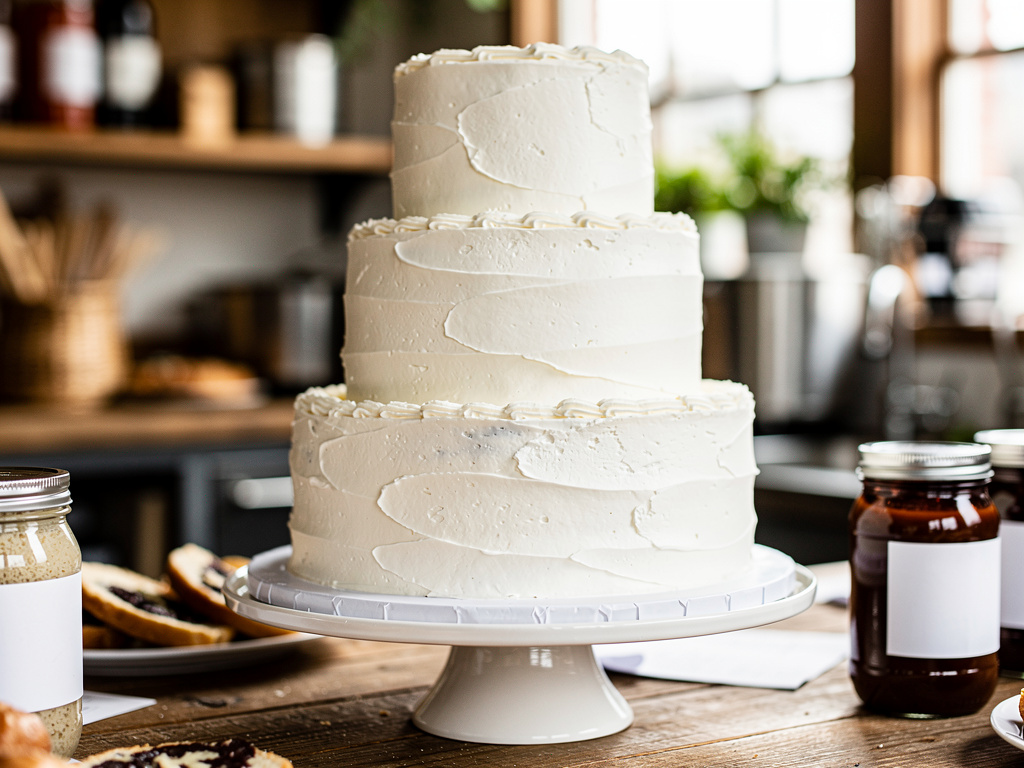


A wedding cake is one of the most profitable things a home baker can make, a single tiered cake can bring in what a dozen dozen cookies would. So it's natural to wonder: can you legally sell wedding cakes from your home kitchen under cottage food law? The answer is a frustrating but important "it depends," and the thing it depends on most is what's actually in and on the cake. A plain buttercream tiered cake is often fine; one with cream cheese frosting, fresh fruit filling, or custard usually isn't. This guide explains what determines whether a wedding cake is cottage-legal, the ingredient traps that push a cake out of bounds, and how to sell wedding cakes the right way.
Important: Cottage food laws are set by each state (and sometimes locality) and vary widely, and this article is general information, not legal advice. Always confirm the specifics with your state or local health department or agriculture agency before selling.
The short version: Whether you can legally sell a wedding cake under cottage food law depends on your state's rules and, critically, on the cake's ingredients. Cottage food law generally allows only shelf-stable, non-perishable foods, so a tiered cake with shelf-stable buttercream is often permitted, while cakes with perishable elements, cream cheese frosting, whipped cream, fresh fruit fillings, custard or cream fillings, or anything needing refrigeration, usually are not, because those are TCS (time/temperature-control-for-safety) foods. Some states also have specific rules or restrictions around wedding or tiered cakes. The safe path is to confirm your state's rules, stick to shelf-stable recipes, and consider a licensed kitchen if you want to offer perishable options.
This guide covers what determines legality, the ingredient traps, state-specific wrinkles, and how to sell wedding cakes properly.
Whether a wedding cake is cottage-legal is determined mainly by whether it's shelf-stable, cottage food law generally permits only non-perishable foods that don't require refrigeration for safety. The cake's ingredients decide which side of that line it falls on.
The core principle:
What "shelf-stable" hinges on:
The single most important thing to understand is that cottage food law cares about shelf stability, not whether something is called a "wedding cake." The exception that lets you bake at home applies to non-perishable foods safe at room temperature, so a wedding cake's legality comes down to whether its specific recipe is shelf-stable or perishable. This is why the same category of product, a tiered celebration cake, can be perfectly legal in one form and prohibited in another. Understanding your permits and their limits is essential, and the U.S. Small Business Administration's guidance on applying for licenses and permits is a useful orientation to why these food rules exist. The rest comes down to knowing which ingredients keep you on the legal side.
The ingredients that push a wedding cake out of cottage food law are perishable ones that require refrigeration, cream cheese frosting, whipped cream, custard or cream fillings, and fresh fruit, because these are TCS foods that aren't safe at room temperature. Knowing them keeps you compliant.
Common perishable elements that usually disqualify a cake:
Generally shelf-stable options (often allowed, verify your state):
Why these distinctions matter:
The ingredient traps are almost always about perishability: cream cheese frosting, whipped cream, custard and cream fillings, mousse, and fresh fruit are the usual culprits that turn a legal cake into an illegal one, because they're TCS foods requiring refrigeration. The frustrating part for bakers is that some of the most popular wedding-cake styles, a cream-cheese-frosted cake, a fresh-berry-filled tier, rely on exactly these perishable elements. If you want to stay within cottage food law, you generally need to build your wedding cakes from shelf-stable components: shelf-stable buttercreams, fondant, and shelf-stable fillings. And remember that a single perishable element disqualifies the entire cake, so a beautiful shelf-stable tiered cake with one custard-filled layer is still a perishable, non-cottage-legal cake. Always verify which specific ingredients your state permits. The frosting lines differ more than most bakers expect: Washington approves a frosting with 3 parts non-perishable ingredients like sugar to 1 part perishable ones by weight, and what 9 states say about selling homemade cake lines those rules up side by side.
Yes, beyond the general shelf-stable rule, some states have specific provisions, restrictions, or gray areas around wedding cakes, tiered cakes, or cakes sold for events, so you must check your state's rules directly. Don't assume the general rule is the whole story.
State-specific wrinkles to check for:
Why you must check directly:
Beyond the universal shelf-stable principle, you have to check your specific state's rules, because some states add provisions, restrictions, or clarifications specifically around wedding cakes, tiered cakes, or cakes sold for events, while others leave them entirely under the general rule. There may be specifics about frostings and fillings, labeling, internal supports, or sales channels that affect what you can legally offer. The only way to know is to confirm with your state or local health department or agriculture agency, don't rely on what other bakers in other states appear to do, since the rules differ so much. General food-safety and labeling principles, which the U.S. Food and Drug Administration's food labeling and nutrition resources cover, provide helpful background, but your specific cottage food rules come from your state. Verify before you take a wedding order.
You sell wedding cakes the right way by confirming your state's rules, sticking to shelf-stable recipes that qualify, being transparent with couples, and considering a licensed kitchen if you want to offer perishable options. Compliance plus clear communication protects you and your clients.
How to sell wedding cakes compliantly:
The two paths forward:
Selling wedding cakes the right way starts with confirming your state's rules, then building your offerings around what's actually legal, generally shelf-stable cakes with buttercream or fondant and shelf-stable fillings. Be upfront with couples about what cottage food law means for their cake, since some may expect a cream-cheese-frosted or fresh-fruit-filled cake you can't legally make; offering appealing shelf-stable alternatives keeps them happy and you compliant. If perishable wedding cakes are essential to the business you want, the honest path is a licensed commercial kitchen rather than stretching cottage food law. Either way, transparency and compliance protect both you and your clients on one of the most important days of their lives.
Once you know what you can legally offer, you need a professional way to take wedding-cake inquiries and orders. Homegrown is $10 a month with no percentage fees beyond standard payment processing, and it gives you a storefront where you present your wedding-cake offerings and take orders professionally.
How it compares to the alternatives:
What Homegrown does well: a professional storefront to present your wedding-cake offerings, take orders and payment cleanly, and manage custom local orders, all at a low flat cost, with a fifteen-minute setup. Always make sure your offerings match your state's cottage food rules. When you're ready to sell wedding cakes professionally, you can set up your storefront today.
The biggest mistakes are assuming any wedding cake is cottage-legal and using perishable frostings or fillings without checking. Because ingredients decide legality, the errors that matter most involve perishability and verification.
Mistakes to avoid:
Getting these right means verifying your state's rules, building shelf-stable cakes, communicating transparently with couples, and going licensed if you want to offer perishable options.
It depends on your state's cottage food law and, critically, on the cake's ingredients. Cottage food law generally allows only shelf-stable, non-perishable foods, so a tiered wedding cake made with shelf-stable buttercream and fondant is often permitted, while cakes with perishable elements (cream cheese frosting, whipped cream, custard or fresh fruit fillings) usually are not, because those are TCS foods requiring refrigeration. Some states also have specific rules around wedding or tiered cakes. Confirm exactly what your state allows with your health department before selling. This is general information, not legal advice.
Because cream cheese is perishable and generally requires refrigeration for safety, which makes a cream-cheese-frosted cake a TCS (time/temperature-control-for-safety) food, and cottage food law generally allows only shelf-stable, non-perishable foods safe at room temperature. The same applies to whipped cream frosting, custard or cream fillings, and fresh fruit, all perishable elements that push a cake outside cottage food law. Shelf-stable buttercreams and fondant are typically allowed instead. If cream cheese frosting is essential to your offerings, operating from a licensed commercial kitchen is the legitimate path. Always verify your state's specific list of allowed and prohibited ingredients.
Generally, wedding cakes built entirely from shelf-stable components: cake with shelf-stable buttercream (like American buttercream), fondant, and shelf-stable fillings (such as certain jams or preserves your state permits). The key is that every element must be non-perishable and safe at room temperature, no cream cheese frosting, whipped cream, custard, mousse, or fresh fruit. A single perishable element disqualifies the whole cake. Because "shelf-stable" specifics and allowed ingredient lists vary by state, confirm exactly which frostings and fillings your state permits before designing your wedding-cake menu. Build your offerings around what's genuinely legal in your state.
Some do, and some don't. Beyond the general shelf-stable rule, certain states add specific provisions, restrictions, or clarifications around wedding cakes, tiered cakes, or cakes sold for events, covering things like allowed frostings and fillings, labeling, internal supports (dowels), or sales channels, while other states leave wedding cakes entirely under the general cottage food rule. Because this varies so much, you can't assume; you must check your specific state's rules with your health department or agriculture agency. Don't rely on what bakers in other states appear to do. Verify directly before taking wedding orders so you know exactly what your state allows.
Be transparent and offer appealing alternatives. Explain that you bake under cottage food law, which means shelf-stable cakes (for example, buttercream rather than cream cheese frosting), and suggest a shelf-stable option that achieves a similar look or flavor, many buttercreams can mimic the appearance couples want. If a perishable cake is truly essential to them and to your business, the legitimate path is operating from a licensed commercial kitchen, which unlocks perishable options. What you should never do is quietly make a perishable cake outside the law. Honest communication plus attractive shelf-stable alternatives keeps couples happy and keeps you compliant and safe.
Only if offering perishable wedding cakes (cream cheese frosting, fresh fruit, custard fillings) is important to your business, or if you want fewer restrictions and higher volume. Many home bakers successfully sell shelf-stable wedding cakes under cottage food law without a commercial kitchen. But if the cakes you want to make rely on perishable elements cottage food law prohibits, a licensed commercial kitchen is the legitimate path rather than stretching the law. It's a bigger step with more cost and requirements, so weigh whether perishable offerings are central enough to your vision to justify it. For many, starting with shelf-stable cottage wedding cakes is the smart first move.
Whether you can legally sell wedding cakes under cottage food law comes down to your state's rules and the cake's ingredients, shelf-stable cakes with buttercream and fondant are often fine, while perishable elements like cream cheese frosting, custard, and fresh fruit usually aren't. Verify your state's rules, build shelf-stable cakes, communicate transparently with couples, and go licensed if perishable options matter. And to present and sell your wedding cakes professionally, set up a Homegrown storefront built for local food vendors.



