
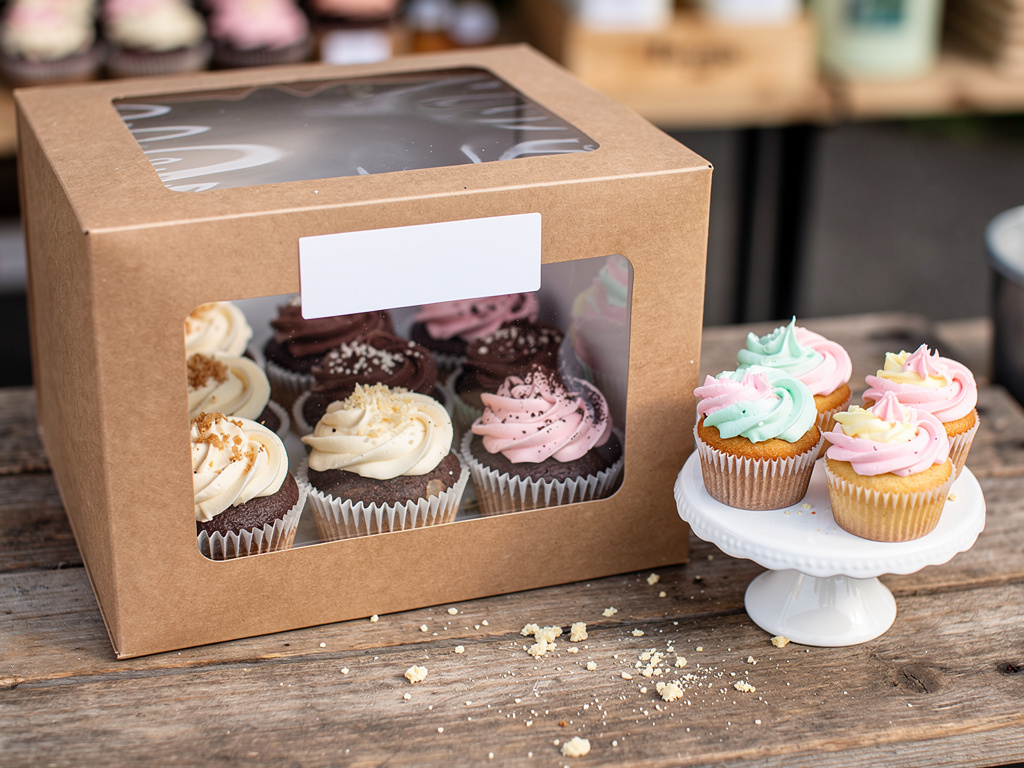


The short version: Yes, you can sell homemade cupcakes from your home kitchen in all 6 states whose agency pages we read for this guide (New York, Georgia, Virginia, North Carolina, Oregon and Wisconsin), as long as the finished cupcake is safe at room temperature. The frosting and filling decide most cases: every state page that names cream cheese frosting, whipped cream, custard or fruit curd treats it as a food that needs, or may need, cold storage, and New York also bars homemade buttercream made with dairy or eggs. The paperwork runs from nothing to file in Wisconsin, Oregon, Virginia and Georgia (Oregon and Georgia still require a food handler course) to a home kitchen inspection in North Carolina, where you cannot have a pet in the house. Selling during the school day falls under a separate federal school snack rule.
Checked October 6, 2026: the cottage food and home processing pages of New York Agriculture and Markets, the Georgia Department of Agriculture, VDACS in Virginia, NCDA&CS in North Carolina, the Oregon Department of Agriculture and Wisconsin DATCP, the USDA school snack rule (7 CFR 210.11), FDA's advice on edible glitter and its allergen page, the Homegrown catalog, and the pricing pages of Homegrown, Hotplate and Square. Rules change, so check your own state agency's page before your first sale. Homegrown customers create an account to place their first order, Homegrown has no drop or countdown release feature, and you should plan on most orders coming from people you send to your own link.
Your cupcakes are the thing people text you about. A neighbor wants two dozen for a baby shower, the PTA wants a tray for the fall carnival, and a friend keeps saying you should sell them at the Saturday market. Before any of that, you want to know one thing: is it legal to sell cupcakes you baked in your own kitchen?
In every state we read for this guide, it is. The cupcake itself is almost never the problem. What goes on top of it and inside it is. This guide walks through six states' rules in their own words, the frostings, fillings and toppings that decide most cases, the paperwork, the label, and where you can sell once you are legal. If your state says yes and you want the selling side (packaging, finding customers, taking orders), the guide to selling cakes and cupcakes from home covers it. Our guide to selling homemade cake reads nine other states, from Texas to Washington.
Yes, in all 6 states whose agency pages we read on October 6, 2026, a baked cupcake that does not need a refrigerator can be made in a home kitchen and sold. Five of them use a cottage food law or a home processing exemption, which is a state rule that lets you make certain low-risk foods at home and sell them without a commercial kitchen. Wisconsin's comes from a court decision, covered below.
Here is where cupcakes stand in each state, in short:
So the real question is rarely "can I sell cupcakes?" It is "can I sell these cupcakes, with this frosting, in my state?" The rest of this guide answers that one.
A cupcake is allowed or refused based on one test: does it have to be kept cold to stay safe? Food safety rules call a food that needs cold holding a "time/temperature control for safety" food, or TCS food. Older rules call it a "potentially hazardous food." The home kitchen rules in the 6 states we read allow only foods that are not TCS, though a few other states allow refrigerated baked goods with extra paperwork.
The baked cupcake almost always passes that test. Flour, sugar, eggs and butter are baked through, and the finished crumb is too dry and sugary for germs to grow in quickly. The trouble starts after the oven. Across the 6 states we read, almost every refusal we found was about a frosting, a filling or a topping, not the baked cupcake itself. The one exception is North Carolina, which says "'Moist' breads/cakes" can require a lab test before approval. Virginia's home food processing exemptions FAQ, revised in July 2026, names the toppings that may make a baked good a TCS food: "cut fruits," "some cheeses, fruit-based fillings or toppings and cream cheese-based frostings."
It also settles the most common buttercream question in one line: "Certain foods, such as buttercream frosting, may be TCS or non-TCS depending on the recipe." A buttercream heavy on powdered sugar is not the same food as one loosened with milk or made with egg whites. That is why one state can allow buttercream and the next can bar it.
Plain cupcakes with a sugar glaze or fondant are the safest bet in all 6 states, though no page we read names either one; cream cheese frosting is ruled out by name in New York and Oregon, North Carolina bars cream cheese fillings, and Virginia flags cream cheese-based frostings as foods that may need refrigeration, judged recipe by recipe. The table shows where the most common frostings and fillings landed, using each agency's own wording.
Scroll sideways to see every state.
| Frosting or filling | New York | Georgia | Virginia | North Carolina | Oregon |
|---|---|---|---|---|---|
| Homemade buttercream | Not allowed if it contains dairy or eggs | Not named; Georgia asks whether the food needs refrigeration | Depends on the recipe | Not named; the test is whether it needs refrigeration | Not named; the test is whether it needs temperature control |
| Cream cheese frosting | Not allowed | Not named; Georgia's test is refrigeration, the same as for buttercream | Named as a food that may be TCS | Homemade cream cheese frosting may need a lab test (pH or water activity); "cream cheese fillings" are listed as high risk | "Cream cheese icings or fillings" listed as TCS |
| Whipped cream, custard, pastry cream | "Cream filled pastries" prohibited | Not named; judged by whether it must be kept cold, as with buttercream | Custard, whipped cream and mousse may not be allowed | "Cream" fillings listed as high risk | Cream, custard and meringue listed as TCS |
| Fruit curd filling | Not on the approved list | Not named | May not be allowed | Silent on curd | No mention of curd |
| Fresh fruit on top | Any product needing refrigeration is prohibited | Not allowed as a garnish | May not be allowed | Silent on garnishes | Chocolate covered strawberries and candied fresh fruit listed as TCS |
Built from each agency's own page, read October 6, 2026. "Not named," "Silent" and "No mention" mean the page we read did not mention it, not that it is allowed. New York also bans tempered chocolate and candy melts for dipping, coating or drizzling; the other pages are silent on them. Wisconsin's page does not list frostings at all; it says only that the finished baked good must not be potentially hazardous. Virginia's wording is "may not be allowed" because it decides by recipe.
The pattern is clear even where a state is silent. If a frosting has cream cheese, whipped cream, custard or curd in it, plan on it being out unless your state's page says otherwise. If it is a buttercream, read your state's exact words, because New York's "no homemade buttercream" is the strictest line among these six. New York's own FAQ says what you can use instead: a frosting "solely composed of shelf stable non-perishable ingredients such as shortening, sugar and commercially produced meringue powder," or "commercially purchased frostings."
"Buttercream is fine everywhere" is not true. The New York Agriculture and Markets list, read October 6, 2026, names "Homemade buttercream/cream cheese frosting containing dairy or eggs" among its prohibited foods, and its approved list says "Cupcakes - No homemade buttercream or cream cheese frostings." A classic butter and powdered sugar buttercream is homemade buttercream with dairy in it.
Mostly no for curd and pastry cream, and it depends for ganache. Filled cupcakes are where many home bakers trip, because the outside looks like a plain frosted cupcake while the inside needs a refrigerator. Four of the 6 states name cream or custard fillings as a problem in so many words.
Here is what the 6 pages say about fillings:
Ganache (chocolate melted into cream) is the gray area. New York rules out a cream ganache without using the word: its allowed frostings contain no "butter, eggs, cream, or cream cheese," and "fluid dairy products" are on its prohibited list. None of the other 5 pages names it. New York's ban on tempered chocolate and candy melts "for dipping/coating/drizzling" rules out a tempered chocolate or candy melt dip or drizzle there. Elsewhere, a ganache that sits out on a cupcake is a question for your state agency, because it is made with cream.
A jam filling is the likeliest yes of the fillings, but it is not automatic. Fruit jams and jellies are on the allowed lists of New York, Georgia, Virginia and North Carolina, and Oregon's FAQ covers them too, so a raspberry jam center is a much smaller question than a lemon curd center. New York allows only jams "made with high acid/low pH fruits," and raspberry is on its list. Virginia names "fruit-based fillings or toppings" among the foods that may count as TCS, and says some jams, such as fig jam, apple butter and banana jam, "MAY NOT be allowed," so a jam center there is judged by its recipe. Ask your agency before you fill with jam.
Fresh fruit on top is out in at least 2 of the 6 states, Oregon rules out chocolate covered strawberries, sprinkles are fine, and glitter is fine only if it is made to be eaten. Toppings get less attention than frostings, and they cause their own problems.
Georgia is the clearest on fresh fruit. Its cottage food FAQ allows fruit baked into the batter, then adds: "The baked goods may not be decorated or garnished with fresh fruits or vegetables." The same goes for frozen fruit used as a garnish. So a strawberry cupcake with diced berries baked inside is fine in Georgia, and a vanilla cupcake with a fresh raspberry on the swirl is not. New York reaches the same result another way: "Any finished food product that requires refrigeration is prohibited."
Glitter is a federal question, not a state one. The FDA has advised home and commercial bakers to avoid non-edible glitter and dust on foods like cakes, cupcakes and cake pops. Its test is the label: "If the label simply says 'non-toxic' or 'for decorative purposes only' and does not include an ingredients list, the product should not be used directly on foods."
Jars sold as "luster dust" or "disco dust" in craft and baking aisles are often not food. FDA's advice, on a page last updated January 4, 2018 and still live on October 6, 2026, is to check for the word "edible" and an ingredient list before any glitter goes on a cupcake.
Not in New York, and probably not without a direct answer from your state elsewhere. Cupcakes soaked in rum, frosted with an Irish cream buttercream or topped with a liqueur glaze are popular for adult parties. New York's home processing page lists "Products containing alcohol" on its prohibited list, with no exception for alcohol that bakes off.
The other 5 states' pages do not mention alcohol in baked goods either way. That silence is not a yes. Alcohol stirred into a frosting or brushed on as a soak after baking is never cooked at all, and that is the part of a boozy cupcake people pay for.
New York's sample label for a chocolate chip cookie lists "vanilla extract (vanilla bean extract, alcohol, sugar)," which suggests vanilla extract in the batter is not what the ban is aimed at. A buttercream made with a few tablespoons of bourbon is a different food. If you want an adult flavor without the question, three routes stay clear of it:
Before you sell any flavor with alcohol in it, email your state agency with the recipe and ask whether it qualifies, and keep the reply with your other records.
All 6 allow a shelf-stable cupcake, and they split on registration, inspection, training and caps. We read each agency's own page on October 6, 2026. Laws change, so verify your state's current rules with its agency before you sell.
Scroll sideways for the inspection, training and cap columns.
| State (agency) | What you file | Home inspection | Training | Yearly sales cap | Where you can sell |
|---|---|---|---|---|---|
| New York (Agriculture and Markets) | A Home Processor Registration Request | No; kitchens are reviewed only on a complaint, and a private well needs a lab water test | None listed | No cap given | Inside New York: farms, farmers markets, craft fairs, home delivery, internet, and wholesale to local shops |
| Georgia (Department of Agriculture) | Nothing; the state license ended July 1, 2025 (an optional ID number can replace your address on labels) | No pre-licensing inspection; complaints still investigated | ANSI accredited food handler course | No limit | Inside Georgia: direct sales, events, online, and stores and restaurants, unless your city or county has opted out of those third-party sales |
| Virginia (VDACS) | Nothing for exempt low-risk foods | No | Not mentioned in the FAQ | Not stated for baked goods | Inside Virginia, to people for their own use, in person, online, by mail or delivery; not to businesses |
| North Carolina (NCDA&CS) | A home processor application | Yes, before any sale | Not mentioned | No cap on the page | Direct to consumers, stores and restaurants, after inspection |
| Oregon (Department of Agriculture) | Nothing | Only on a complaint or safety concern | Food handler training | $52,700 gross | Home, farmers markets, farm stands, online, and some wholesale to stores under OAR 603-025-0320(4); not schools, day cares or restaurants |
| Wisconsin (DATCP) | Nothing, for baked goods sold directly to consumers | No | Not listed | None given | Directly to consumers only; selling wholesale needs a license |
Each row comes from that state's own agency page, read October 6, 2026: New York's Home Processing page, Georgia's cottage food page, FAQ and HB 398 FAQ, Virginia's Home Food Processing Exemptions FAQ (revised July 2026), North Carolina's Home Processor page, Oregon's Cottage Food Exemption FAQ (March 2026) and Wisconsin's Licenses and Homemade Baked Goods page. A cell like "None listed" or "No cap given" means the page we read did not say. Georgia's older Cottage Food FAQ still carries answers that bar restaurant, wholesale and consignment sales; those predate HB 398, whose own FAQ allows sales to grocery stores, restaurants and convenience stores.
Every product has to be "pre-packaged in the home and properly labeled," and "Packaging of food items at an agricultural event (craft fair, farmers' market, etc.) is not permitted." Sales stay inside New York State. A Home Processor registration is tied to your address, so a move means a new request. Checked on the New York Agriculture and Markets Home Processing page, October 6, 2026.
Wisconsin's position comes from a court case, not a law passed for home bakers. Its page explains that a 2017 Lafayette County Circuit Court decision "prohibited enforcement of licensing requirements for home bakers who make baked goods that are not potentially hazardous and sell those items directly to consumers," and it warns that "Ongoing litigation may change the applicability or accuracy" of what it says. The page defines a baked good as one cooked by dry heat above 140°F in an oven, and says "the finished, ready-for-sale product must not be potentially hazardous." That last line is the one a frosted cupcake has to pass.
If your state is not one of these six, the cottage food laws by state guide is the place to start, and the cake guide linked above reads Texas, California, Florida, Michigan, Ohio, Washington, Colorado, Minnesota and Illinois.
Four of these 6 states ask you to file nothing, New York asks for a registration, North Carolina inspects your kitchen first, and Georgia and Oregon require a food handler course. A food handler course is usually a short online class that ends with a certificate you keep on file.
Here is what each state asks for before your first sale:
Two more checks apply almost everywhere. Your city or county may want a business license or a zoning approval for a home business, and a farmers market can set its own rules. Georgia's FAQ says it plainly: a market can still require a Food Sales Establishment License from its vendors even though state law does not.
North Carolina inspects before it approves. Its Home Processor page says "you will need to first have your home kitchen inspected" before selling to stores, restaurants "or directly to consumers," and a kitchen in a garage, basement or separate building on your property does not qualify. Refrigerated products and "Bakery products with cream or cream cheese fillings" can only be made commercially. A very moist cupcake recipe or a homemade cream cheese frosting can also require pH or water activity testing, with the lab's letter sent in alongside your application. A Food Regulatory Specialist contacts you to arrange the inspection "within eight (8) to twelve (12) weeks" of receiving your application, and the page warns it "may take longer than twelve weeks." Checked on the NCDA&CS Home Processor page, October 6, 2026.
In North Carolina it rules you out, in Oregon it adds a line to your label, and the other 4 states' pages do not mention pets. It is the rule most likely to catch a baker off guard, because the dog seems to have nothing to do with the cupcakes.
North Carolina's Home Processor page asks: "Do you have a pet that comes into your home at any time (even if only at night)? If so, you cannot manufacture foods from your home kitchen." The reason given is that a home processor is treated as a food manufacturing facility under the federal manufacturing rules (21 CFR 117 Subpart B), and its checklist says the home must be free of pests "including privately owned pets."
Oregon takes the opposite approach. Pets are allowed in the house, but "a pet cannot be present in the kitchen during times of cottage food preparation," and "a cottage food label must declare that pets are present in the residential dwelling and include the species." So a baker in Portland with a cat adds a pet line naming "cat" to every label.
The 4 states whose label lists we read (New York, Georgia, Virginia and North Carolina) each want your name and address, the product name and the ingredients on the package. Georgia and Virginia also require a line saying the food was made at home or without inspection, and New York asks you to add one. The exact wording differs, so copy your own state's line word for word.
Scroll sideways to compare the label rules.
| State | Name and address | Ingredients and allergens | Home kitchen statement | Extra lines |
|---|---|---|---|---|
| New York | Processor name and full address | Ingredients by weight; all 9 major allergens named | Should add a phrase like "Made in a Home Kitchen," at least 1/16 inch tall | Net quantity of contents |
| Georgia | Name and physical home address (or a state ID number); no P.O. box | Ingredients by weight; allergens per federal rules | "MADE IN A COTTAGE FOOD OPERATION THAT IS NOT SUBJECT TO STATE FOOD SAFETY INSPECTIONS" in capitals, 10-point or larger | Net weight or volume |
| Virginia | Name, physical address or P.O. box, and phone number, on the front | Standard labeling, including ingredients and sub-ingredients | "NOT FOR RESALE" followed by "PROCESSED AND PREPARED WITHOUT STATE INSPECTION" | The date the food was made; net weight |
| North Carolina | Manufacturer name and address | Ingredients by weight; allergens in the list or a "Contains" line, naming the specific tree nut | None listed on the page | Net weight in ounces or pounds plus the gram equivalent; no label needed on orders picked up or delivered; a hand-over from behind a market table may also be exempt, if ingredients are available on request |
From New York's Home Processing page, Georgia's Cottage Food FAQ, Virginia's Home Food Processing Exemptions FAQ, North Carolina's Home Processor page and Oregon's Cottage Food Exemption FAQ, all read October 6, 2026. Georgia's address rule and ID number come from its FAQ and its HB 398 FAQ. Oregon's FAQ points to its labeling rule (OAR 603-025-0325), which we could not load from the state site; the FAQ itself requires a phone number on the label, bars a P.O. box as the address, and adds the pet line covered above. The federal list of 9 major allergens is milk, eggs, fish, crustacean shellfish, tree nuts, peanuts, wheat, soybeans and sesame (FDA, page updated March 11, 2026).
A typical cupcake hits at least three of those allergens before any decoration: wheat in the flour, eggs, and milk in the butter and frosting. Soy in sprinkles or chocolate often makes a fourth. Name each one. Georgia's FAQ adds a detail that matters for nut flavors: say which tree nut, as in "almonds," never just "nuts." In New York, any nuts must be commercially roasted or heat treated, because its prohibited list includes "Any products containing raw nuts."
Custom orders get a break in Georgia and Oregon. Georgia's FAQ says that for "wedding cakes, birthday cakes and other specialty cakes that are custom baked for an individual consumer," the name, address and cottage food statement can go on the box or on an invoice given to the customer, and the customer is expected to ask about allergens when ordering. A custom dozen for a birthday party likely fits; confirm with the Georgia Department of Agriculture before you skip the box label. Oregon's FAQ covers cottage foods that are "not easily packaged (for example, a wedding cake)": you tell the buyer in writing that the food is homemade and not made in an inspected kitchen, and put all the label information "on a receipt or similar document" that goes with the order. For more on wording, type sizes and placement, the cottage food labeling requirements guide goes state by state.
Yes in most of these states, but each cupcake or box has to be packaged and labeled before you leave home in New York, while Virginia and Oregon give you a sign option for single cupcakes and North Carolina may let you skip the label when you hand the cupcake over from behind the table. Single cupcakes sell well at a market table, and they are also the hardest thing to label. Listings priced per cupcake on Homegrown on October 6, 2026 ran from $2.00 to $5.00 each, leaving out a $40 custom decorated cupcake from Daniel's Custom Cakes.
What the 6 pages say about loose or single cupcakes:
A clear dome or a single-cupcake clamshell with a small label on the front of the lid works under every rule on this page, and it keeps the frosting intact in the sun. Budget the container into your price: if each clamshell costs you 40 cents, a $4 cupcake brings in $3.60 before ingredients.
Build your first market menu around 4 flavors that skip every problem ingredient on this page: a vanilla and a chocolate with a frosting your state allows, one with lemon or berries baked into the batter, and one finished with fondant or a sugar decoration. Keep cream cheese and curd flavors for states, kitchens or licenses that allow them. Four flavors also means four labels to print, not twelve.
Usually yes after school or on infrequent school-sponsored fundraiser days, but during the school day a federal rule decides, not your cottage food law. Schools in the National School Lunch Program must hold every food sold to students on campus during the school day to USDA nutrition standards. A grain food has to be at least 50% whole grain by weight or list a whole grain first, which rules out a white-flour cupcake before its sugar is even counted.
The rule is 7 CFR 210.11, often called the Smart Snacks rule. It allows "a special exemption" for food sold "for the purpose of conducting an infrequent school-sponsored fundraiser," and leaves it to each state agency to say how many of those days a school gets. It also defines the school day as "the period from the midnight before, to 30 minutes after the end of the official school day."
Two state rules stack on top. Oregon says cottage foods "may NOT be sold to an institution," and it names schools and day care centers, so an Oregon baker cannot sell cupcakes to the school itself. Georgia points nonprofits to a separate licensing exemption for food sold at an event a nonprofit sponsors (O.C.G.A. § 26-2-21). Local school districts can also be stricter than the federal rule, which 7 CFR 210.11 allows them to be. The guide to selling food at school fundraisers and church events covers working with organizers.
The school day clock runs until 30 minutes after dismissal under 7 CFR 210.11, read on the eCFR on October 6, 2026. A table set up at the bell is inside the school day. Ask the school which fundraiser days your state allows before you bake for one.
You can take orders online in all 4 of the states whose pages address it, and 3 of them keep the sale inside the state. Shipping is a different matter, and frosted cupcakes rarely travel well anyway.
The easiest pattern for cupcakes is to take the order online and hand the box over in person: porch pickup, a market pickup, or local delivery. It keeps the sale inside your state, the frosting out of a shipping box, and the cupcakes fresh. Our guide to taking pre-orders as a home bakery covers order cutoffs and pickup windows.
Oregon's cottage food bakers can sell at home, farmers markets, farm stands, roadside stands and online, with no registration, up to "$52,700 in annual gross sales." Past that, you need a Domestic Kitchen Bakery or Food Processor license and an inspection. Checked on the Oregon Department of Agriculture's Cottage Food Exemption FAQ (March 2026), October 6, 2026.
Vendors on Homegrown listed 33 cupcake products on October 6, 2026, and a full-size dozen ran from $20 to $42, with $31.50 in the middle. That gives a new seller a real range to price against, on top of the cost math in the guide to starting a cupcake business.
In a pull of the Homegrown catalog on October 6, 2026, 33 of the 2,893 products listed by 311 vendors were cupcakes or included cupcakes as an option, from 12 vendors. 29 of them were sold as cupcakes outright, from 10 vendors, led by Simple Cakes with 7 listings and Root to Rise with 6. The other 4 were mixed boxes and menus with a cupcake choice. Buttercream was named in 14 of the 33 listings, cream cheese frosting or icing in 3, and a curd filling or cheesecake flavor in 2. How we counted: we read every product whose name, description or size options included "cupcake," plus listings described as mini cakes or cake cups, and opened each matching vendor's full menu. None of the mini cake listings turned out to be cupcakes, so a cookie baked in a mini cupcake pan, a dog toy named "Cupcake," a fall menu whose description mentions cupcakes but offers none, and the mini cake and mini loaf cake listings were all left out.
Price of a full-size dozen cupcakes, 16 Homegrown listings
Source: Homegrown catalog pull, October 6, 2026. 16 listings from 7 vendors show a price for a full-size dozen or 12-count box; where a vendor has more than one, its highest and lowest are shown. Sweet Rise Bakehouse's one listing runs $20 or $25 a dozen by flavor and is counted at $20. Oven-Fresh Temptations' dozen is $20, or $25 gluten free, and is counted at $20. The median of all 16 is $31.50.
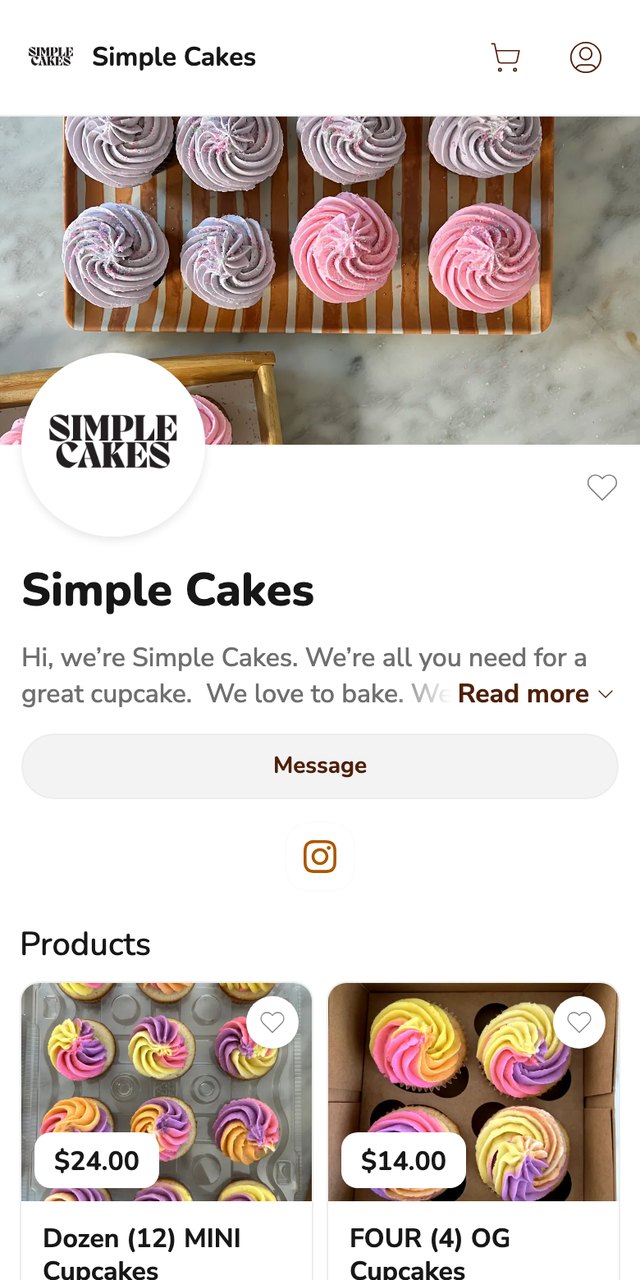
Most listings sell cupcakes in a set count (4, 6, 12, 24), which is how cupcake orders really work: one order, one box, one pickup. About a third of the listings also name the frosting in the listing name or description, often with the recipe ("whipped buttercream," "vanilla cream cheese buttercream"), and Simple Cakes names it in every listing's options. That helps customers, and it also means the frosting you list is the frosting your state's rule is judged against. Simple Cakes goes a step further and prints its permit number in its About section.
Once your frostings pass your state's rules, the next problem is the orders: two dozen vanilla for Saturday, a box of four for a teacher, a mini dozen in pink for a birthday. Homegrown is $10 a month billed annually, with no percentage fees beyond standard payment processing, and gives you one storefront link where a customer picks the flavor and count, pays, and chooses a pickup time.
Compare that to what cupcake bakers usually try first. Hotplate has no monthly plan and is built around timed preorder drops; by default its 5% + $0.55 service fee is added to your customer's total ($2.35 on a $36 dozen), and you pay card processing on top. Square's free online store costs $0 a month and 3.3% + 30¢ per online card payment, but you build the store, pickup options and sales tax setup yourself. Instagram messages cost nothing and turn into a list of "2 dozen, 1 chocolate 1 vanilla, Sunday?" that you match to payments by hand.
This one is wide. Drag it sideways to read every fee.
| Platform | Monthly plan | Trial | Platform or service fee | Card processing | Customer pays on a $36 dozen | Baker pays on a $36 dozen | Baker pays in a month of 50 dozens |
|---|---|---|---|---|---|---|---|
| Homegrown | $10 billed annually ($12.50 billed monthly) | 7 days, no charge until day 8 | $0, 0% commission | 2.9% + $0.30, paid by the baker | $36.00 | $1.34 | $77.20 on the annual plan ($79.70 monthly) |
| Hotplate, default | $0 | n/a, no monthly plan | 5% + $0.55, paid by the customer | 2.9% + $0.30, paid by the baker | $38.35 | $1.34 | $67.20 |
| Hotplate, baker covers the fee | $0 | n/a, no monthly plan | 5% + $0.55, paid by the baker | 2.9% + $0.30, paid by the baker | $36.00 | $3.69 | $184.70 |
| Square Online, Free plan | $0 | n/a, $0 plan | $0 | 3.3% + 30¢ online | $36.00 | $1.49 | $74.40 |
| Square reader at the booth | $0 | n/a, $0 plan | $0 | 2.6% + 15¢ tap, dip or swipe | $36.00 | $1.09 | $54.30 |
Fees from each company's own pricing page, checked October 6, 2026. Hotplate's pricing page says the fee is "your choice" to pay or pass on; its September 1 post "What Hotplate does" says "we charge a fee to your customer" by default and that "80% of Hotplate chefs keep the default as-is." Card processing is figured on the $36 price before tax and tips; a platform that charges it on the full total runs a few cents higher.
To be straight about the numbers: at 50 online dozens a month, Square Online's free plan costs less than Homegrown ($74.40 against $77.20), and Homegrown's $10 plan only comes out ahead of Square Online on fees past about 70 online orders a month on the annual plan (about 87 on the $12.50 monthly plan). Hotplate's default costs you less than either ($67.20, the 2.9% + $0.30 card processing alone), because your customer pays its 5% + $0.55 service fee instead.
What Homegrown does for a cupcake baker:
What it does not do: customers create a Homegrown account to place their first order, there is no drop or countdown release feature, and while your storefront is listed on the Homegrown marketplace, plan on most orders coming from people you send to your own link. Homegrown also does not check your frosting against your state's rules or print your labels. If neighbors already ask you for cupcakes, set up a Homegrown storefront for your cupcakes and send them the link.
Set aside about 3 hours, your recipe cards and your state agency's website, and work through these steps in order. Write down every answer with the date and the page it came from.
If something on your menu fails, you have two honest options: swap it for a frosting or filling your state allows, or make it in a licensed commercial kitchen. Selling the cream cheese frosting "on the side" does not get around the rule, because the frosting is still a food your state has to allow on its own.
In many states, yes. Of the 6 states read for this guide on October 6, 2026, Wisconsin, Oregon, Virginia and Georgia ask you to file nothing to sell cupcakes from home, although Georgia and Oregon require a food handler course. New York asks for a home processor registration and North Carolina inspects your kitchen first. Verify your own state's current rules on its agency page.
Generally no. New York and Oregon rule out cream cheese frosting or icing by name, North Carolina bars cream cheese fillings and may require lab testing on homemade cream cheese frostings, and Virginia lists cream cheese-based frostings among foods that may need refrigeration, deciding by recipe. Georgia's page does not name it; its test is whether the food needs refrigeration. A few states allow refrigerated baked goods with extra paperwork, and our cake guide covers the ones it read, so check your own state.
It depends on the state and the recipe. New York bars homemade buttercream made with dairy or eggs, while Virginia says buttercream "may be TCS or non-TCS depending on the recipe." A buttercream heavy on powdered sugar is the most likely to pass where buttercream is allowed.
Yes, in all 6 states covered here, as long as your cupcakes and paperwork meet your state's home kitchen rules and the market accepts you. In New York each cupcake or box must be packaged and labeled at home, not at the market. Many markets also set their own rules, so ask the manager before your first Saturday.
Yes in the 4 states here whose pages address online sales: New York, Georgia, Virginia and Oregon. New York and Virginia bar sales across state lines outright, and Georgia keeps online sales inside the state. Taking the order online and handing over the box at pickup is the simplest way to stay inside the rules.
Yes after school hours, or on an infrequent school-sponsored fundraiser day your state allows. A sale for your own cupcake business is not a school-sponsored fundraiser. During the school day, the USDA school snack rule (7 CFR 210.11) applies to food sold to students, and the school day runs until 30 minutes after dismissal. Oregon also bars cottage food sales to schools as institutions.
This guide answers whether you can sell, and which cupcakes. These 6 guides cover the parts of a cupcake business it only touches, from pricing a $31.50 dozen to working a school event, and the first one reads 9 more states:
You now know the one question that decides most cupcake rules, which frostings, fillings and toppings to check, and what your state may ask for before the first sale. In 4 of the 6 states here there is nothing to file, so getting legal can come down to an afternoon on the agency page, a food handler course if your state wants one, and a label printed on sheet stock at home. In North Carolina, send your application first, because the state says an inspector usually calls 8 to 12 weeks after it arrives.
Start with 4 flavors that pass, a box of 6 and a box of 12, and one pickup time a week, such as Saturday from 10 to noon. That is enough to learn what sells before you add a mini dozen or a seasonal flavor. When neighbors start asking for a regular order, give them one place to pick the flavor and count, pay, and choose a pickup time, with a Homegrown storefront for cupcake bakers at $10 a month billed annually and no percentage fees beyond standard payment processing.



