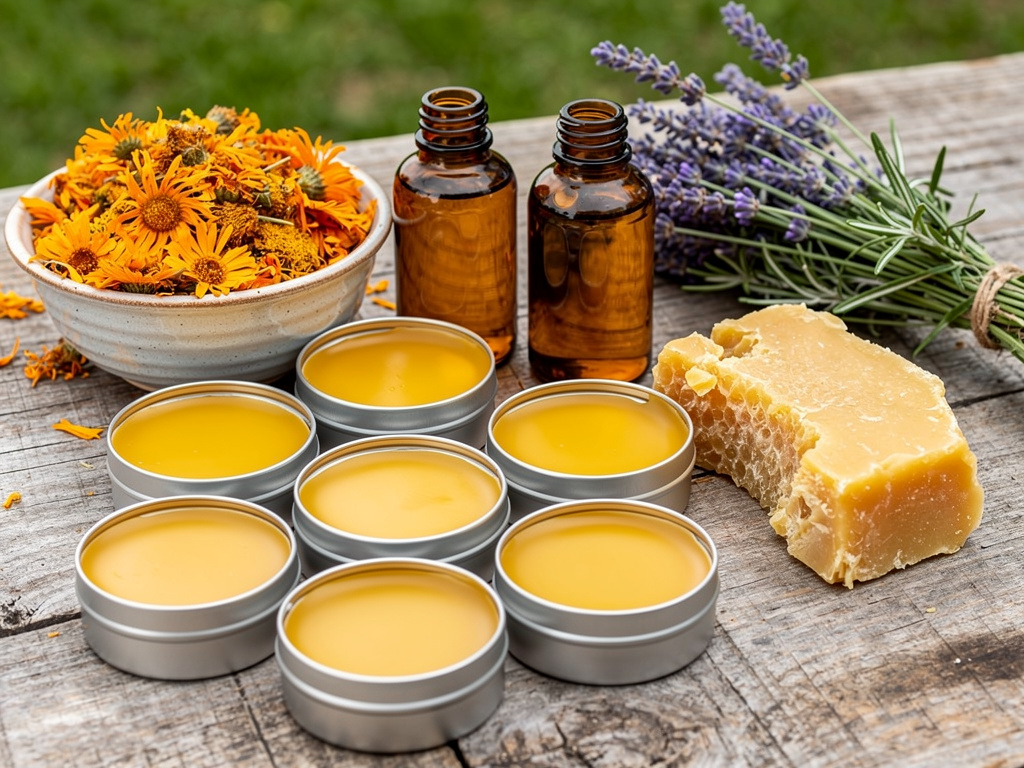


The short version: You can sell herbal salves and infused oils at a farmers market without a cottage food permit, because FDA treats a salve rubbed on the skin as a cosmetic, not a food, and FDA does not license or pre-approve cosmetics. What decides how you are regulated is mostly the words you use, though FDA also weighs why customers buy it and any ingredient known as a remedy: "moisturizes dry skin" keeps a salve a cosmetic, while "relieves muscle soreness," "heals cuts" or "treats eczema" make it a drug under FDA's rules. At supplier prices we loaded today, a 2 ounce tin of calendula salve costs about $3 to $4 in ingredients and the tin, and ten small farm and herb shops we checked charge $10 to $25 for one, with about $15 in the middle. State rules still apply: Florida requires a cosmetic manufacturing permit, and its exemption for vendors with $25,000 or less in yearly sales covers only soaps, lotions, moisturizers and creams, so check your own state before your first market.
Checked on October 10, 2026: FDA's "Is It a Cosmetic, a Drug, or Both? (Or Is It Soap?)" page, FDA's homemade cosmetics fact sheet and labeling guide, the Florida and Missouri pages linked below, supplier prices at Starwest Botanicals, Mountain Rose Herbs, Wholesale Supplies Plus and Plant Therapy, and Homegrown's signup page ($10 a month billed annually, 0% commission, 2.9% + $0.30 card processing paid by you). On Homegrown, customers create an account to place their first order, and there is no drops or countdown release feature.
If you want market regulars to order salves between markets, you can set up a Homegrown storefront and try it free for 7 days.
Herbal salves and infused oils cost little to make and sell for several times that cost at a farmers market. A two-ounce calendula tin costs about $3.04 to $4.00 to make from supplies bought online today and sells for $10 to $25 at the small shops we checked. A 4 ounce bottle of calendula oil sold for $12 to $55 at the four shops we read. At a $15 tin, you keep about 73% to 80% before selling fees, and because salves and oils are not food, you do not need a cottage food permit, a health department food inspection or a commercial kitchen. You need a market spot, liability insurance, a careful label, careful words, and any permit your state or city requires.
The words matter more than most new vendors expect. The same tin of calendula and beeswax is a cosmetic when you sell it for dry hands and a drug when you sell it for sore muscles, cuts or eczema. This guide walks through that line, the label FDA expects, a real cost and price sheet from today's supplier and shop prices, and how to keep your regulars ordering between market days.
A salve is an infused oil thickened with beeswax so it sets firm in a tin, and an infused oil is the same herb-steeped oil left liquid in a bottle. You make the oil first either way, so every salve vendor already has an oil to sell.
A salve is a semi-solid topical product made from infused oil and beeswax. The beeswax gives it a solid-at-room-temperature consistency similar to a thick balm. Customers apply it to skin for moisturizing and softening. Common salves: calendula salve, lavender salve, an all-purpose balm, and a peppermint and eucalyptus balm. Name them for the herb and the feel, not for a health problem; the claims section below explains why a name like "muscle rub" or "healing balm" causes trouble.
An infused oil is a carrier oil (olive, coconut, jojoba, sweet almond) that has been steeped with dried herbs to carry their color and scent into the oil. It is liquid at room temperature (or semi-solid if coconut oil-based). Customers use it as a body oil, massage oil or face oil. Common infused oils: calendula oil, rosemary oil, lavender oil, chamomile oil.
No public sales data ranks salves against infused oils, so judge by what vendors list and by what travels well. In Homegrown's own catalog on October 10, 2026, we counted 7 salve and balm listings against 5 herbal body and hair oils (the count rule is in the catalog box further down). Salves have practical advantages at a market table: they are easier to use (scoop and apply instead of pour and rub), they do not spill in a bag, and a tin feels like a finished gift. Infused oils also sell to customers who make their own skincare and want the oil to add to their own recipes.
You do not need a food permit, and you do not need a license from FDA, but some states do require a permit to make cosmetics; Florida's applies to every cosmetic manufacturer in the state, with an exemption at $25,000 or less in yearly sales that only covers soaps, lotions, moisturizers and creams. FDA's homemade cosmetics fact sheet says "FDA does not license cosmetics firms" and adds that "state or local authorities may require licensing." That second sentence is the one to act on.
Salves and herb-infused oils are cosmetics, not food, as long as they are sold to rub on the skin. Cottage food law covers foods, so it does not apply. Health department food permits do not apply either. You are selling a topical product, not something people eat.
That cuts both ways. A cottage food permit does not cover your salves, so a baker who sells under one cannot fold salves into it. FDA's fact sheet also says "It's not against the law to manufacture cosmetics in your home," as long as you make them somewhere that will not contaminate them.
FDA sorts topical products by intended use, which it reads from what you say the product does, from why customers buy it, and from any ingredient with a well-known therapeutic use. FDA's page Is It a Cosmetic, a Drug, or Both? (Or Is It Soap?) defines a cosmetic as something applied to the body "for cleansing, beautifying, promoting attractiveness, or altering the appearance," and lists "skin moisturizers" by name. A drug is anything intended to treat or prevent disease or "to affect the structure or any function of the body." The same page gives a salve vendor's exact problem as its example: "a massage oil that is simply intended to lubricate the skin and impart fragrance is a cosmetic, but if the product is intended for a therapeutic use, such as relieving muscle pain, it's a drug."
Swipe the table to see how FDA reads each claim.
| Claim Type | Classification | Regulation Level |
|---|---|---|
| "Moisturizes dry skin" | Cosmetic | Cosmetic rules: label, safety records, no premarket approval |
| "Softens rough hands" | Cosmetic | Cosmetic rules: label, safety records, no premarket approval |
| "Soothes minor irritation" | Reads as a drug claim | Close to the wording FDA's skin protectant drug rule uses ("helps relieve minor skin irritation"). Do not use |
| "Relieves muscle soreness" | Drug claim | FDA-regulated as a drug: FDA's own example says relieving muscle pain makes a product a drug. Do not use |
| "Protects chapped or cracked skin" | Drug claim | Skin protectant drug wording under 21 CFR 347.50. Do not use on a cosmetic |
| "Treats eczema" | Drug claim | FDA-regulated as a drug: treating a disease. Do not use |
| "Cures arthritis" | Drug claim | FDA-regulated as a drug: curing a disease. Do not use |
Sources, loaded October 10, 2026: FDA's cosmetic or drug page (content current as of September 11, 2024) and the skin protectant drug labeling rule at 21 CFR 347.50, which lists uses such as "temporarily protects minor cuts, scrapes, burns" and "helps relieve minor skin irritation." A drug has to meet drug rules, including an approved application or an over-the-counter drug monograph and a "Drug Facts" label.
The rule: Describe what the product does to the SKIN, not what it does to a DISEASE or to the body underneath. "Softens rough hands" is safe. The same line runs through lip products, where "temporarily protects chapped or cracked lips" is the exact claim FDA wrote for lip protectant drugs, so selling homemade lip balm as a cosmetic means describing softness and flavor instead. "Heals cracked skin caused by eczema" crosses the line.
Claims count wherever you make them, not just on the tin. FDA's page says intended use is set by "claims stated on the product labeling, in advertising, on the Internet, or in other promotional materials," and also by consumer perception, meaning why a customer buys it. The same page lists a third test: "Ingredients that cause a product to be considered a drug because they have a well-known (to the public and industry) therapeutic use," with fluoride in toothpaste as its example. So careful words and a new name do not clear an ingredient people already buy as a treatment. A table sign that says "for sore muscles," a product name like "Sore Muscle Salve," or an Instagram caption about eczema can each turn a cosmetic salve into an unapproved drug. Several of the small-shop salve pages we read on October 10, 2026 listed cuts, burns, eczema or diaper rash as uses, so do not copy a competitor's wording.
Before your first market, line up a booth, insurance, a compliant label and any state or local permits. Here is the full list:
Florida requires a cosmetic manufacturer permit "for any person that manufactures or repackages cosmetics in this state," under Florida Statutes 499.01(2)(p). A vendor with annual gross sales of $25,000 or less is exempt, but the exempt vendor may only make and sell "soaps ... lotions, moisturizers, and creams," must sell them prepackaged with an FDA-compliant label, must not sell anything adulterated or misbranded, must keep the products stored on the premises where they are made, and must print "Made by a manufacturer exempt from Florida's cosmetic manufacturing permit requirements." on each unit in contrasting color and at least 10-point type. A salve sold as a moisturizer looks like the closest fit, but ask Florida's Division of Drugs, Devices and Cosmetics to confirm before you sell. Florida's FAQ also says a place of residence cannot receive a Chapter 499 permit, so a home vendor who needs the permit, whether above $25,000 in sales or making a product the exemption does not list, needs a separate workspace. Checked October 10, 2026.
Missouri's health department answers this exact question in its food safety FAQ: homemade soaps and "lotion/balms" can be sold at farmers markets as long as they are "not being sold by making health claims as cures or treatments." The same answer says Missouri law bars homemade cosmetics that are adulterated or misbranded, and that the products must appear safe and sanitary. Checked October 10, 2026.
Those are the two states we read today. Rules differ by state and can change, so verify your state's current rules with its health department or the agency that licenses drugs and cosmetics before your first market.
For salves and oils sold as cosmetics, there is no FDA license to get and no FDA approval to wait for. FDA's fact sheet says "FDA does not license cosmetics firms," and FDA's cosmetic or drug page says cosmetic products and ingredients, "with the exception of color additives, do not require FDA approval before they go on the market." Your state may still require a permit, as Florida does, and your city may require a business license.
Three things change the answer:
A herbalism certificate is a fine thing to have, but it is not a license, and it does not change what your label may say. An esthetician license works the same way, since it covers facials and waxing on clients rather than making or selling products, as the guide to which licenses a skincare business actually needs shows with Arkansas's cosmetology law. FDA decides by intended use, not by who made the product.
Even under the $1,000,000 line, two duties apply to every cosmetic business whose name is on the label:
That is also why your label needs a way for customers to reach you, which the labeling section covers.
Any claim that your salve treats, prevents or relieves a health problem, or changes how the body works, turns it into a drug, and one line on a sign can move a $15 tin from cosmetic rules into drug rules. The safe zone is how the product looks, feels and smells on the skin. Here is how the common salve claims sort out, using FDA's own examples from its cosmetic or drug page and its skin protectant rule:
A disclaimer does not fix a drug claim. Plenty of shops print "not intended to diagnose, treat, cure or prevent any disease" under a list of conditions the salve supposedly helps. FDA judges the claim and the customer's reason for buying, so cut the claim and you will not need the disclaimer.
You need kitchen tools you probably already own plus about $97 of supplies for your first 16 tins. The tools melt and measure; the supplies are what you pay for again with every batch. Here is the list with supplier prices we loaded on October 10, 2026.
Swipe left for the cost column.
| Item | Cost | Purpose |
|---|---|---|
| Double boiler (or pot + glass bowl) | Use what you own | Melting beeswax safely |
| Digital kitchen scale | Use what you own | Measuring ingredients by weight |
| Kitchen thermometer | Use what you own | Keeping a heat infusion between 100 and 140 degrees F |
| Glass measuring cups, cheesecloth, a quart jar | Use what you own | Infusing, straining and pouring oils |
| 2 oz metal tins with screw tops | $28.00 for 24 ($1.17 each); $310.99 for 432 ($0.72 each) | Packaging |
| Labels | Price at your label printer | Branding and the FDA label |
| Dried calendula flowers, organic | $12.15 for 4 oz or $37.17 a pound at Starwest; $16.25 for 4 oz or $41.50 a pound at Mountain Rose Herbs | The herb you infuse |
| Extra virgin olive oil | $11.35 a pound, or $70.39 for 7 pounds | Base ingredient |
| Yellow beeswax pastilles | $12.71 a pound, or $54.52 for 5 pounds | Solidifying agent for salves |
| Lavender essential oil | $9.99 for 10 mL, $17.99 for 30 mL, $39.99 for 100 mL | Optional scent |
| First 16 tins | $96.90 before shipping | 4 oz calendula, three 1 pound bottles of olive oil, 1 pound beeswax, 10 mL lavender and 24 tins |
Prices loaded October 10, 2026 from each store's own product page: tins, olive oil and beeswax from Wholesale Supplies Plus, calendula from Starwest Botanicals and Mountain Rose Herbs, lavender from Plant Therapy. Shipping, sales tax and labels are extra. The $96.90 is 12.15 + (3 x 11.35) + 12.71 + 9.99 + 28.00.
You likely already own half of these items if you cook at home. Keep a separate pot, bowl and spoons for salve making if you can; beeswax is hard to scrub out, and FDA expects you to make cosmetics in conditions that will not contaminate them.
You make an herbal salve in three stages: infuse the oil, melt it with beeswax, and pour and label. The infusion takes hours to weeks; the salve itself takes about 30 minutes.
Infuse dried herbs in oil for 1 to 8 hours or more over gentle heat, or for 2 to 6 weeks without a stove. There are two ways to measure. Mountain Rose Herbs' guide to herb-infused oils measures by eye: it fills a clean, dry jar with dried herbs, leaving 1 to 3 inches of space, then covers them with oil by at least an inch. The ratio method from the Herbal Academy's guide to herb-infused oils uses "1 ounce of dried herb(s)" to "10 fluid ounces" of oil. Use the ratio method once you sell, because it makes every batch the same and lets you cost it.
Which method produces the best salve? Mountain Rose Herbs calls its sun-infused folk method its favorite, and the Herbal Academy says its methods yield "fairly similar results." Our pick for a weekly batch is the slow cooker, which the Herbal Academy says makes "a stronger herb-infused oil" than its quicker double boiler method, as long as you keep the oil between 120 and 140 degrees F. Mountain Rose Herbs' quick method is the fastest of the four methods listed above, and it warns "you don't want to deep-fry your herbs," so keep a thermometer in the oil. For a production business, a sensible split is the sun method for small batches and the slow cooker method for regular inventory.
Use dried herbs, not fresh. Mountain Rose Herbs warns that "too much water will cause your oil to go rancid," and water left in an oil is also where mold starts.
Melting the wax, stirring in the oil and pouring takes about 30 minutes for a batch of 4 tins, plus cooling time.
Yield: 1 cup of oil + 1 oz beeswax makes about 8.6 ounces of salve, enough for 4 full two-ounce tins with a little left over. The math: 8 fluid ounces of olive oil at 0.91 grams per milliliter weighs about 7.6 ounces, plus 1 ounce of wax. If you work from the Herbal Academy ratio, 1 ounce of dried calendula in 10 fluid ounces of oil gives you back about 8 fluid ounces after straining (calendula soaks up the rest; that recovery is our working assumption, so weigh your own), which is one batch of 4 tins.
Every salve and oil needs a label with at least 5 things on it. The core elements, from FDA's Cosmetics Labeling Guide:
Do NOT include medical claims on your label. "Moisturizing herbal salve" is fine. "Heals dry skin conditions" is not. Keep "healing" out of the product name too: a name is a claim, and "Calendula Healing Salve" tells a customer the tin heals something.
Federal rules call for five things on a cosmetic label: what it is, how much is inside, the ingredients, who made it with a real address, and a way to report a reaction. Here is each one as it applies to a 2 ounce tin, from FDA's Cosmetics Labeling Guide and homemade cosmetics fact sheet, loaded October 10, 2026:
Two words need care. FDA has not defined "natural" for cosmetics, and "organic" on a cosmetic made from farm ingredients falls under the USDA National Organic Program, not FDA, so only use "organic" the way USDA's rules allow. "Made with calendula grown on our farm" is a fact you can print.
A salve made only from oil and beeswax, with no water, usually lasts six months to a year or more, depending on how you infused the oil, and the clock is the oil going rancid, not mold. Humblebee & Me's preservative FAQ puts it plainly: for "things that are just made from different oils (body butters, lip balms, massage oils, etc.), rancidity is what you're worried about, and you'll generally have a few years before that sets in."
The shelf life changes the moment water gets in. The same FAQ says products with water "are probably only good for a day or two without a broad-spectrum preservative," and "You MUST add a broad-spectrum preservative to recipes that include water." That covers aloe juice, hydrosols, fresh herbs and lotions. FDA's fact sheet says cosmetics do not have to be sterile, but "they must not contain any harmful microorganisms."
Price a 2 ounce calendula salve at $12 to $18, which brackets the $14.98 middle price of the 10 small shops we checked on October 10, 2026 and sits about 3 to 6 times above the $3.04 to $4.00 it costs to make. Their prices ran from $10 to $25.
Price of one 2 ounce calendula salve at 10 small US shops
Source: each shop's own product page, loaded October 10, 2026; one in-stock 2 ounce calendula salve per shop, priced in US dollars, regular price (Brees Farm Herbs had it on sale for $10). Middle price $14.98, average $15.40.
Here is how the cost and price line up, using the supplier prices above. The cost covers herbs, oil, beeswax, essential oil and the tin; labels and your time are extra.
Swipe left for the margin column.
| Product | Production Cost | Selling Price | Margin |
|---|---|---|---|
| 2 oz salve tin, starter supplies | $4.00 | $15 (shops: $10 to $25) | $11.00 kept, 73% |
| 2 oz salve tin, bulk supplies | $3.04 | $15 | $11.96 kept, 80% |
| 2 oz salve tin, your own calendula | $2.46 | $15 | $12.54 kept, 84% |
| 4 oz infused oil | Price your bottle and oil the same way | Four shops: $12, $25, $27.50 and $55 | Depends on the bottle |
| Lip balm tube (0.15 oz) | $0.44 to $0.51, label included | Eight shops: median $4.50 | 89% to 90% |
How we got the costs (October 10, 2026): one batch is 1 oz dried calendula, 10 fl oz olive oil, 1 oz beeswax and 15 drops (about 0.75 mL) of lavender, making 4 tins. Starter supplies: calendula at $12.15 for 4 oz, olive oil at $11.35 a pound, beeswax at $12.71 a pound, lavender at $9.99 for 10 mL, tins at $28.00 for 24. Bulk: calendula at $37.17 a pound, olive oil at $70.39 for 7 pounds, beeswax at $54.52 for 5 pounds, lavender at $39.99 for 100 mL, tins at $310.99 for 432. Per tin at starter prices: herbs $0.76, oil $1.68, wax $0.20, scent $0.19, tin $1.17. Oil prices: The Farming Wife, Rachael Rice, Oshala Farm and Saenz Family Farms, loaded the same day. Lip balm figures are from our lip balm pricing guide, checked September 30, 2026.
The oil is the biggest ingredient cost, not the herbs, because the ratio method uses 10 ounces of oil for every ounce of flowers. A cheaper olive oil from your grocery store will cut the cost per tin if it is fresh and fits your label. The tin is the second biggest cost, and it is where bulk buying pays: $1.17 a tin in a pack of 24 drops to $0.94 in a pack of 48 and $0.72 in a case of 432.
The 2 oz salve tin is the best size to lead with because it is an easy first purchase in the $10 to $20 range, fits in a pocket or purse, and gets used up, which brings customers back for another.
Price by the tin, not by the hour you spent infusing. At $15 a tin and $4.00 in supplies, every tin you sell covers its own ingredients plus about $11 toward your booth fee, insurance and time. At a $30 booth fee, three tins pay for the day's spot.
A gift set of 3 small products (a salve, a lip balm and a small bottle of infused oil) gives holiday shoppers a ready-made present and gives a food customer an easy add-on. Price it from the single prices: a $15 salve plus a $4.50 lip balm is $19.50 before the oil, so a set priced a little under the sum of its parts still keeps your margin and gives the customer a reason to buy three. A kraft box and a ribbon are the only extra costs.
Yes per tin: at $15, a 2 ounce salve that costs $3.04 to $4.00 in supplies keeps about $11 to $12 before fees. The limit is volume, because one tin is a small sale. Here is a worked month for a vendor selling 100 tins, as 50 online orders of two $15 tins:
That month assumes the orders exist. Most small vendors sell far fewer tins in a first season, so start with one batch, sell out, and then make the next. The math only changes in your favor as you buy tins and oil in bulk.
Start with 2 products, a calendula salve and either a lip balm or a lavender salve, then add more as customers ask. There is no public sales ranking for handmade salves, so the lists below are the lineup we suggest and the reasons each one sells, not a sales chart.
Calendula salve is the one to make first, followed by lavender, a gardener's hand salve, a peppermint balm and lip balm.
Add an oil once you have 2 salves selling, starting with calendula, the same herb you already infuse.
If lip balm is that second product, eight US small shops we checked in September 2026 charged a median of $4.50 for a 0.15 ounce tube, and how much to sell lip balm for works out the cost of each tube at three supply sizes. Expand based on customer demand.
In a pull of the Homegrown catalog on October 10, 2026 (2,827 products from 310 vendors), 7 listings were salves or balms for skin or lips, from 5 vendors, and 5 were herbal body or hair oils, from 2 vendors. Five of the 7 were made with tallow rather than plant oils. The single salves and balms were priced $14.00 to $20.00, and the lip balm sold as a 4-pack for $16.00. How we counted: we searched every product name and full description for salve, balm, ointment, infused oil, body oil, calendula, arnica, comfrey, tallow and similar words, read all 51 matches (most were teas, honey, soap or barbecue rubs), then read every product from each body-care vendor. Pet salves, creams, lotions, whipped butters, lotion bars and three hair oils with no description were left out.
Buy dried herbs from an herb supplier, oil and beeswax from a soap and cosmetic supplier, and tins in the biggest pack you can store. Your ingredient quality shows up in your salve, and your sourcing costs decide your margin. Prices below were loaded from each store on October 10, 2026.
Dried herbs: Buy from wholesale herb suppliers like Mountain Rose Herbs, Starwest Botanicals or Frontier Co-op. Organic dried calendula was $37.17 a pound at Starwest Botanicals and $41.50 a pound at Mountain Rose Herbs, with 4 ounce bags at $12.15 and $16.25. At the 1 ounce to 10 fluid ounce ratio, a pound of calendula infuses 160 fluid ounces of oil, which after straining is enough for about 16 batches, or 64 tins. Note that Mountain Rose's 10 pound bag ($395.00) was $2.47 an ounce, more than Starwest's 1 pound bag at $2.32, so bigger is not always cheaper; compare per ounce. If you grow your own herbs, even better: calendula from your garden costs you only the seed and becomes a selling point ("made with calendula grown in my backyard"). Harvest flowers at peak bloom, dry them on a screen in a well-ventilated room until they are crisp, and store them in airtight jars.
Carrier oils: Olive oil works well for salves. Extra virgin olive oil was $11.35 a pound at Wholesale Supplies Plus, or $70.39 for 7 pounds ($10.06 a pound). For a more premium product, use jojoba oil ($21.95 for 14 oz at Lotioncrafter) or sweet almond oil ($15.95 for 15 oz at Lotioncrafter). Coconut oil makes a harder salve that some customers find greasy. For face oils, many makers choose jojoba.
Beeswax: Buy beeswax pastilles or pellets (not blocks; small pieces melt evenly). Yellow beeswax pastilles were $12.71 a pound, or $54.52 for 5 pounds, at Wholesale Supplies Plus. One pound makes 16 batches at 1 ounce of wax per batch. If you know a local beekeeper, buy directly; you may get a better price, and "local beeswax" on your label is a true, local detail.
Essential oils: Buy small bottles of pure essential oil from a supplier that names the plant on the label. Plant Therapy's lavender was $9.99 for 10 mL and $17.99 for 30 mL, and its peppermint was $8.99 for 10 mL. At roughly 20 drops per milliliter (drop size varies by bottle), a 10 mL bottle holds about 200 drops, which lasts about 13 batches at 15 drops. Do not buy fragrance oils marketed as essential oils; a fragrance oil is a different, often synthetic, ingredient, and you may list it as "fragrance" on your label.
Tins and jars: Buy in bulk from a cosmetic packaging supplier. A 2 oz screw-top tin was $1.17 each in a pack of 24, $0.94 in a pack of 48 and $0.72 in a case of 432 at Wholesale Supplies Plus. The bulk pricing alone takes $0.45 off every tin.
The math on sourcing: With bulk supplies, the cost per 2 oz tin of calendula salve breaks down to $0.58 herbs, $1.49 oil, $0.17 beeswax, $0.08 essential oil and $0.72 tin, for $3.04 total. At a $15 selling price, that is an 80% margin. If you grow your own calendula, the cost drops to $2.46 per tin.
Show salves open, smellable and priced. A shopper decides on a salve with their nose and their hands, so the table's job is to get a tester into their hands.
Open one tin of each product for customers to smell and test on their hands. The scent and texture are your sales tools. Put a cup of single-use wooden sticks or cotton swabs next to the testers so nobody double-dips, and swap testers out often. A clean tester keeps your product safe and shows you care about it.
If you sell cottage food products alongside salves, display them together: "Sourdough bread + honey + calendula salve, everything handmade right here in town." Shoppers who stop for bread see the salve on the same table. Keep them on separate trays, and make sure your food permit and market rules allow both at one booth.
Farmers markets are the start, and the same tins sell at craft fairs, holiday markets, gift shops, on Etsy and through your own online store. Each channel charges differently, so here is the full cost of a $30 order (two $15 tins) on the common options, checked October 10, 2026:
Scroll sideways to see every column.
| Way to sell | Monthly plan | Platform fee | Card processing | Customer pays on a $30 order | You pay on a $30 order | You pay in a month of 50 orders |
|---|---|---|---|---|---|---|
| Homegrown | $10 billed annually ($12.50 monthly); 7-day trial, no charge until day 8 | None, 0% commission | 2.9% + $0.30, paid by you | $30.00 | $1.17 | $68.50 ($71.00 on monthly billing) |
| Etsy | $0 (a one-time shop set-up fee may apply) | $0.20 listing + $0.20 for the second tin, plus 6.5% transaction fee | 3% + $0.25 | $30.00 plus shipping | $3.50 (before shipping fees and any Offsite Ads fee) | $175.00 |
| Square Online (Free plan) | $0 | None | 3.3% + 30¢ online | $30.00 | $1.29 | $64.50 |
| Square reader at your booth (Free plan) | $0 | None | 2.6% + 15¢ in person | $30.00 | $0.93 | $46.50 |
| Venmo business profile | $0 | None | 1.9% + $0.10 | $30.00 | $0.67 | $33.50 |
Fees from each company's own pages on October 10, 2026: findhomegrown.com/signup, Etsy's Fees and Payments Policy and payment processing help page, Square's pricing page and Venmo's fees page. Etsy's transaction fee also applies to any shipping you charge, and its Offsite Ads fee is 15% on orders that come from its ads (shops under $10,000 a year can opt out). Venmo takes the payment but gives you no product page, checkout or order list. A Square reader runs on Square's free point-of-sale app, which keeps track of your sales, but it does not take orders between market days unless you also set up Square Online.
The honest read: Square Online's free plan costs a little less than Homegrown at 50 orders a month ($64.50 against $68.50), and Homegrown becomes the cheaper of the two from about 84 orders a month on annual billing. Venmo and a Square reader are cheapest of all at the booth, but neither takes an order between market days on its own. Etsy costs the most per order, but it brings its own shoppers and sells postage labels for the orders you pack and mail yourself, which matters if you want to ship salves across the country.
Give your regulars one link where they can see every salve and reorder for pickup, because a tin lasts a few weeks and the customer who loved it at the market will not wait a month for your next booth day. Etsy charges 6.5% plus listing fees and 3% + $0.25 card processing (about $3.50 on a $30 order) and works for salves on their own, but if you also sell cottage food products, you are splitting your lineup across two platforms. Instagram DMs work for one or two products, but when you have 4 salves, 2 oils, lip balm and a full food lineup, a message thread cannot display that catalog.
Homegrown costs $10 a month billed annually ($12.50 billed monthly) with no commission, plus card processing of 2.9% + $0.30 per order that you pay, and lets you list salves, oils, lip balm and all your food products on one ordering page. A customer ordering sourdough adds a tin of calendula salve without switching platforms. Each salve can carry its sizes or scents as variants with their own prices, the ingredient list goes on every listing, and Homegrown calculates sales tax on each order. Customers order for pickup at your house, farm stand or market booth, or for local delivery within the radius you set.
What it does not do: Homegrown does not help you source herbs, formulate recipes or write your FDA label; this guide covers those. It is built for pickup and local delivery, so it fits local regulars, not customers across the country. Your customers create a Homegrown account the first time they order. There is no drops or countdown release feature. Your storefront is listed on Homegrown's marketplace, but plan on most orders coming from people you send to your own link, like the QR code on your booth sign.
Ready to stop taking salve orders in your DMs? Put your salves, oils and lip balm on one page with a Homegrown storefront ($10 a month billed annually, 0% commission), and print the link on your tins so customers can reorder when the tin runs low.
The same claim rules cover every product you rub on skin, but the making and the paperwork change by product. Here is the short version for the products salve makers add next:
Start with one or two products, make them the same way every time, and sell them somewhere you can talk to customers. A home apothecary that sells topical salves and oils is a cosmetic business, so the steps are short:
"Apothecary" and "herbal medicine" are where new vendors drift into drug claims. A salve sold for burns, eczema or pain, or a tincture sold to treat a cold, is a drug under FDA's definition no matter how small the batch. Keep remedies you make for your own family separate from what you sell, and sell your salves for what they do to the skin.
No. Cosmetic products do not require FDA approval before sale, except for color additives, and FDA does not license cosmetic firms. You need a proper label (identity, net weight, ingredients, business name and address, and a contact for reaction reports) and must avoid drug claims. If you sell herbal salves at a farmers market, describe only cosmetic effects like moisturizing and softening, and leave out ingredients people buy as a treatment, there is nothing to submit to FDA before you sell, though your state may require a permit.
No, cottage food law covers food products only. Salves are cosmetics and fall outside food regulation entirely, so a cottage food permit does not cover them. Cosmetics sold at farmers markets follow different rules: FDA's cosmetic labeling and claim rules, plus any state cosmetic permit (Florida requires one unless you sell $25,000 or less a year and make only the product types its exemption lists).
A properly made salve with only oil and beeswax and no water usually lasts six months to a year or more at room temperature, depending on how you infused the oil. Without water there is little for mold to grow in, so the limit is the oil going rancid, which you will smell. Herb House Apothecary prints a 12 month use-by on its salve, and Mountain Rose Herbs says heat-infused oil keeps up to six months and sun-infused oil up to a year, so date each batch from the method you used. Storing tins cool and dark helps.
No. Claims that a salve treats eczema, relieves muscle pain, heals cuts or cures joint pain make it a drug in FDA's eyes, and drugs need FDA approval or must follow an over-the-counter drug rule. Stick to cosmetic claims about how the product looks, feels and smells on the skin: "moisturizes," "softens," "a rich balm for dry hands." This applies to your label, your table sign, your website and your social posts.
Many farmers markets ask vendors for general liability insurance, and it protects you if a customer has a reaction to an ingredient. FLIP's farmers market policy started at $299 a year on October 10, 2026, but it is written for food vendors, so confirm in writing that any policy covers topical products like salves. Product liability coverage matters for anything people put on their skin.
Lip balm keeps a higher share of its price than salve, about 89% to 90% at a $4.50 tube that costs $0.44 to $0.51 to make with the label included (the salve costs here leave out the label), and it sells on impulse. Calendula salve brings more money per sale, with a $14.98 middle price across 10 shops against $3.04 to $4.00 to make, and customers come back when the tin runs out. The ideal mix to sell at a farmers market includes both: lip balm for volume and salve for revenue.
No. FDA does not license cosmetic firms or herbalists, and a certificate does not let you make health claims. What decides how your salve is regulated is mostly what you say it does, plus why customers buy it and whether an ingredient is known as a remedy, so a certified herbalist and a first-time vendor follow the same label and claim rules.
These six guides answer the next questions salve vendors ask, from lip balm pricing to adding soap or lotion to the same booth: