
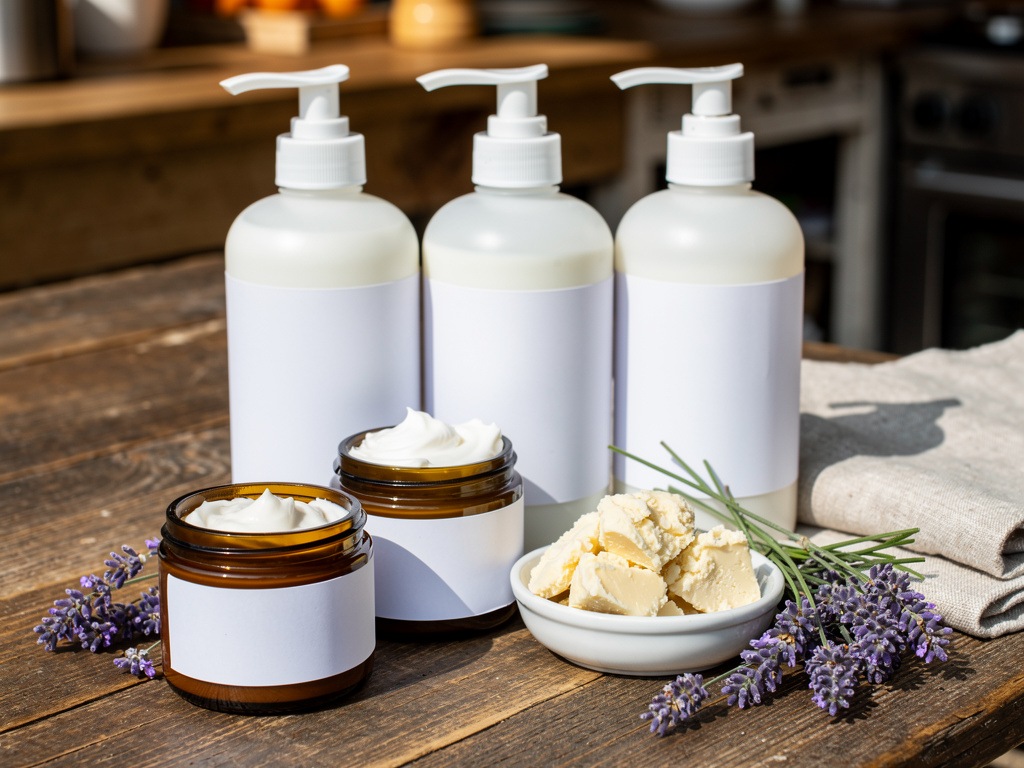


The short version: You can make lotion in your own kitchen and sell it, but the law treats it as an FDA cosmetic, not a cottage food, so the home food permit that covers your bread does not cover your lotion. A pumped lotion is mostly water and needs a broad-spectrum preservative, while a waterless lotion bar or body butter does not, which makes the bar the easier first product. A basic 8 ounce lotion cost $3.18 to make in ingredients and a pump bottle at supplier prices we loaded on October 8, 2026, while nine small US goat milk lotion shops charged $7 to $20 for that size, with $14 in the middle. Your label needs the product name, the net amount, the ingredients from most to least, your name and business address, and a contact for reaction reports, while claims like "heals eczema" or "SPF" turn the bottle into a drug, or a cosmetic that must also meet drug rules.
Checked October 8, 2026: FDA's homemade cosmetics fact sheet and labeling guide, Florida statute 499.01, Missouri's health department FAQ, supplier and shop prices, and the Homegrown, Etsy, Shopify, Square and Venmo fee pages. State and local rules vary, so verify your state's current rules before your first sale. Homegrown has no drops feature, customers create an account to place their first order, and you should plan on most orders coming from people you send to your own link.
You made a batch of lotion for yourself, gave a few bottles to friends, and now the same friends are asking when they can buy more. Or you already sell bread, eggs or honey at a farmers market, and lotion looks like a natural second product for the same table.
Both are good starting points. Lotion is cheap to make, people use it up and come back, and it sits well next to soap, honey and baked goods. It also has more rules than a loaf of bread, because the government treats it as a cosmetic, and it can grow mold in the bottle if you skip one ingredient. This guide covers both halves: how to make a lotion that is safe to sell, and how to label it, price it, sell it and take reorders without living in your messages.
Yes, you can sell homemade lotion from home in the US, because FDA's fact sheet for small businesses says plainly, "It's not against the law to manufacture cosmetics in your home." Lotion counts as a cosmetic. FDA lists "skin moisturizers" by name among the products the cosmetic definition covers, so the rules that apply are cosmetic rules, not food rules. A home vendor making products like body lotion stays clear of FDA registration paperwork until US cosmetic sales average $1,000,000 a year over three years, adjusted for inflation.
That matters if you already sell food. Cottage food laws let you sell low-risk foods like cookies and jam from a home kitchen, and they do not cover anything you put on skin. Our guide on whether you can sell homemade soap walks through the same split for soap, which can land under different rules than lotion depending on how it is made and what the label says. If you are adding body care to a food table, the guide on selling soap, candles and other non-food products at farmers markets covers how those products fit into a market booth.
Here is what being a cosmetic means in practice:
Start with a waterless lotion bar or body butter if you want the simplest first product, and move to a pumped lotion once you are ready to buy a preservative and watch every batch. The difference is water. A pumped lotion is roughly two thirds water held together with an emulsifier, and water is what mold and bacteria need to grow. A lotion bar is just oils, butters and wax, so there is nothing for microbes to live in.
Swipe the table to compare both product types.
| Question | Pumped lotion (water-based) | Lotion bar or body butter (waterless) |
|---|---|---|
| Main ingredients | Water, oil, butter, emulsifying wax, a thickener, preservative | Oils, butters and beeswax or another wax |
| Needs a broad-spectrum preservative? | Yes, every batch | No, as long as it stays dry |
| What goes wrong over time | Mold, yeast and bacteria if the preservative fails | The oils slowly go rancid |
| Equipment | Scale, two heat-safe containers, a stick blender, a thermometer | Scale, one heat-safe container, molds or jars |
| How it feels to the customer | Light, absorbs fast, easy to pump | Richer and slower to sink in |
| Heat at a summer market | Less sensitive to warm days than a whipped butter | Can soften or melt in a hot car or sunny booth |
The preservative and rancidity rows follow Humblebee and Me's preservatives FAQ, read October 8, 2026. The equipment, feel and heat rows are general guidance, not a test result.
You can sell both. The bar is the gentle first step, and the bottle is what many regulars actually want on the bathroom sink.
A water-based lotion needs a broad-spectrum preservative because water lets mold, yeast and bacteria grow, and a bottle that gets a hand or a pump in it every day will be contaminated over time. Marie at Humblebee and Me puts it bluntly in her guide to when a recipe needs a preservative: "You MUST add a broad-spectrum preservative to recipes that include water." She adds that things with water are "probably only good for a day or two" without one.
"Broad-spectrum" means it fights bacteria, yeast and mold, not just one of them. A few things that do not count:
FDA's fact sheet sets the bar: cosmetics "do not have to be sterile, but they must not contain any harmful microorganisms, and the number of aerobic microorganisms per gram must be low." The preservative is how a home vendor meets that bar, and it is a small share of the batch: 1% of the formula below, about 2.3 grams and 21 cents in an 8 ounce bottle.
Milk, aloe vera juice, rose water and other hydrosols all count as water. Humblebee and Me calls them "water plus additional bacterial temptation," and says recipes made with lots of them are "harder (or in the case of milk, impossible) to preserve." Every shop in the price table below sells goat milk lotion, so it is on the market, but do not treat milk like plain water. If you plan a goat milk lotion, pick a preservative whose supplier data covers milk and have a lab run a challenge test before you sell it.
A simple first lotion is about two thirds water, one fifth oil and butter, and the rest emulsifier, thickener and preservative. The cost math below uses the beginner formula from the formulating blog Swift Crafty Monkey, with one preservative option from her list:
She warns that changing the preservative or the emulsifier changes how the lotion has to be made. Optiphen Plus at 1% and BTMS-50 are both on her own lists, so follow her formula exactly before you change anything. Every percentage is by weight, which is why a kitchen scale that reads in grams matters more than any other tool. The making process, in short:
Make a small test batch of 100 to 200 grams before you make a dozen bottles. At the prices in the next table, a failed 200 gram batch costs about $2 in ingredients.
One 8 ounce bottle of the lotion above cost $3.18 to make at supplier prices we loaded on October 8, 2026: $2.28 in ingredients and $0.90 for a bottle with a pump. We figured 227 grams of lotion per bottle (8 ounces by weight) and the price of the 1 pound size of most ingredients (20 ounces for the glycerin).
Scroll sideways for the price and cost columns.
| Ingredient or part | Share of the formula | Grams per bottle | Pack priced | Cost per bottle |
|---|---|---|---|---|
| Distilled water | 66.5% | 151 | 1 gallon, $1.54 | $0.06 |
| Vegetable glycerin | 3% | 6.8 | 20 oz, $7.95 | $0.10 |
| High oleic sunflower oil | 15% | 34.1 | 1 lb, $10.35 | $0.78 |
| Unrefined shea butter | 5% | 11.4 | 1 lb, $12.45 | $0.31 |
| Cetyl alcohol | 3% | 6.8 | 1 lb, $10.45 | $0.16 |
| BTMS-50 emulsifier | 6% | 13.6 | 1 lb, $19.95 | $0.60 |
| Fragrance oil | 0.5% | 1.1 | 1 lb, $25.10 | $0.06 |
| Optiphen Plus preservative | 1% | 2.3 | 1 lb, $42.95 | $0.21 |
| 8 oz bottle with pump | n/a | n/a | 12 sets, $10.83 | $0.90 |
| Total | 100% | 227 | n/a | $3.18 |
Prices loaded October 8, 2026: ingredients from Lotioncrafter except the fragrance (Nurture Handmade's Pumpkin Spice, formerly Nurture Soap), the bottle set from Wholesale Supplies Plus (8 oz clear Boston round with a saddle pump), and distilled water from the Instacart product page for Walmart's Great Value gallon, loaded that day at $1.54. Rows are rounded to the cent; the total is figured before rounding. Labels, shipping on supplies and your time are not included.
Two numbers matter more than the per-bottle cost. Buying one pack of each ingredient plus a dozen bottle sets came to $141.57 before shipping, and a 12-bottle batch uses about $38.18 of that. The oil and the bottles run out after that first batch, so you rebuy them every time. The glycerin, shea butter, cetyl alcohol, BTMS-50, fragrance and preservative each cover close to three batches or more, and the gallon of water covers about two. The biggest ingredient line is the oil at 78 cents, just under the 90 cent bottle, while the preservative runs about 21 cents a bottle and is the one line you never cut.
Small US farm and soap shops charged between $7.00 and $20.00 for an 8 ounce lotion on October 8, 2026. The middle price of the nine we checked was $14.00. All nine sell goat milk lotion, because that is what came up when we searched for small farm shops selling their own lotion, and every price came off the shop's own product page.
Slide right to see each shop's price.
| Shop | Product | Price for 8 oz |
|---|---|---|
| Little Blessings Bath and Body | Goat's Milk Lotion | $7.00 |
| Mother Creations | Goat Milk Lotion | $12.00 |
| Brambles Bend Farms (Tennessee) | Lavender Goat Milk Lotion | $12.99 |
| Rowe Family Farms (Tennessee) | Goat Milk Body Lotion, scented | $13.00 |
| Nelson Farms (Tennessee) | Goat Milk Lotion, flip top | $14.00 |
| Soap-E-Goat | Lavender Goat Milk Lotion | $14.00 |
| Calhoun Farmstead (Pennsylvania) | Goat Milk Lotion, pump | $15.00 |
| Harmony Goat Farm | Unscented Goat Milk Lotion | $15.00 |
| The Shoemaker Homestead Soap and Co | Goat Milk Lotion | $20.00 |
Each price was read from the shop's own product page on October 8, 2026, for an 8 ounce bottle that was in stock. Prices change; check before you copy one.
Price of 8 ounces of lotion at nine small shops
Source: each shop's own product page, October 8, 2026, nine 8 ounce lotions. Bar length is the price divided by the highest price, $20.00.
Seven of the nine sit between $12 and $15. The $7 bottle is the outlier on the low side, and the $20 bottle comes in a glass pump bottle with a 16 ounce size beside it at $35.
Set your lotion price from your own cost first, then check it against what shops near you charge. The nine shop prices above are for goat milk lotion, not a plain water, oil and shea lotion like the one costed here, so check what plain lotions sell for near you too. At a $3.18 cost, an 8 ounce bottle priced at $14 leaves $10.82 before selling fees, a 77% margin, which gives you room for labels, the booth fee and your time. Here is how the cost compares at three prices:
A margin that looks big on one bottle shrinks fast. As an example, a $60 booth fee takes the margin from five or six bottles at $14 ($60 divided by $10.82 is about 5.5), so a slow market can wipe out a day. Count that in before you settle on a price, and do not price to beat the cheapest shop on the table above.
A few pricing habits that work well for lotion:
Weigh your fills instead of eyeballing them. Mother Creations says each bottle is "weighed (never filled by volume)," and Rowe Family Farms lists its 8 ounce bottle at 8.15 ounces net weight. Filling to the exact weight keeps your label honest and your cost per bottle predictable.
A homemade lotion label needs five things: what the product is, how much is in it, the ingredients from most to least, your name and place of business, and a contact where customers can report a bad reaction. FDA's cosmetics labeling guide spells out the first four, and the 2022 federal cosmetics law adds the fifth:
Two words to handle carefully. FDA has not defined "natural" for cosmetics, and its fact sheet says not to use words like "natural" inside the ingredient list, since each ingredient goes by its common or usual name. FDA has no rule for "organic" on cosmetics either; its fact sheet says USDA governs that word for agricultural products under the National Organic Program. Use the plain name, like "shea butter," not "natural shea butter." If you want the word "organic" anywhere on the label, USDA's National Organic Program sets the rules (see its fact sheet on organic cosmetics), so check them before you print.
If you do not want your home address on every bottle, the fix is a real business address, not a P.O. box. FDA also accepts a label without the street line when a current city or phone directory carries your business, but a P.O. box or website alone is not enough.
Any claim that your lotion treats, cures or prevents a condition, or changes how the body works, turns it into a drug in FDA's eyes, no matter what is in the bottle. FDA's page on whether a product is a cosmetic, a drug or both says intended use decides it, and that intended use comes from "claims stated on the product labeling, in advertising, on the Internet, or in other promotional materials." Your Instagram captions and listing descriptions count.
Claims that cross the line on lotion:
Words that stay on the cosmetic side describe how the lotion looks, smells and feels: moisturizes dry skin, softens, smells like lavender, absorbs quickly. "Moisturizing" is fine, because FDA lists skin moisturizers among the products the cosmetic definition covers. When a regular tells you your lotion helped her eczema, thank her in person and leave it off the label and the post.
The 2022 federal cosmetics law, called the Modernization of Cosmetics Regulation Act or MoCRA, lets most small lotion vendors skip FDA registration, product listing and the coming manufacturing rules, but it does not let them skip safety records or reporting serious reactions. The small business line in the law is average US cosmetic sales under $1,000,000 a year over the previous three years, adjusted for inflation, according to the text of 21 U.S.C. 364h.
What a kitchen-table lotion vendor under that line still owes:
What you can skip while you stay under the line: registering your kitchen with FDA, listing each product with FDA, and the manufacturing practice rules FDA is still writing. The exemption does not apply to a few product types, like products that regularly come into contact with the mucus membrane of the eye, so a body lotion is fine but an eye product needs a closer look.
Whether you need a state permit depends on your state, and FDA's own advice is to contact your state and local authorities before you sell. Two states show how far apart the rules can be: one has a permit with a $25,000 exemption line, and one lets home lotion sell at farmers markets as long as it is not adulterated or misbranded and makes no health claims.
Florida requires a cosmetic manufacturer permit, and its drugs and cosmetics office says it does not issue those permits to a home address. Florida statute 499.01 exempts businesses with "annual gross sales of $25,000 or less," but an exempt business may only make soaps, lotions, moisturizers and creams, must sell them prepackaged with an FDA-compliant label, must store them where they are made, and must not sell products that are adulterated or misbranded. The statute sets the line on your annual gross sales, not on lotion sales alone, and an exempt maker must give the state written records of those sales if asked, so if you also sell bread or eggs, ask the state whether those sales count toward the $25,000. Each unit must also carry, in contrasting color and at least 10-point type, the statement "Made by a manufacturer exempt from Florida's cosmetic manufacturing permit requirements." Checked October 8, 2026.
The Missouri health department's food safety FAQ answers this exact question: homemade soaps and lotions can be sold at farmers markets "as long as the soaps and lotion/balms are not being sold by making health claims as cures or treatments." The same answer cites Missouri statute 196.015, which bars homemade cosmetics that are adulterated or misbranded, and says "The items must appear safe and sanitary." Checked October 8, 2026.
Outside the cosmetic rules, the usual small-business steps still apply in most places:
Our guide to selling homemade sugar scrub covers which states add their own permit for another body care product, and much of it carries over to lotion.
Check every batch by keeping a sample from it, watching that sample for changes, and writing down exactly what went in. Humblebee and Me's list of spoilage signs is a good checklist: changes in color, scent or texture, visible mold, or separation. Any one of those means the batch does not get sold, even if it is 12 bottles and $38 of supplies.
A simple batch routine for a home lotion vendor:
Looking only tells you so much. A retained bottle that still looks and smells right can catch spoilage you can see, but it cannot prove the preservative is working against microbes you cannot see. That notebook is also part of your safety record under the 2022 law. If a customer ever reports a reaction, you can show exactly what was in the bottle, where each ingredient came from and when it was made.
Some lotion vendors also pay a lab for a preservative challenge test, which adds bacteria, yeast and mold to a sample to prove the preservative kills them. FDA's fact sheet says it "does not require specific tests" for individual products, but a challenge test is the strongest answer to "how do you know it is safe?" once you settle on a formula you plan to sell for years.
You can sell homemade lotion anywhere you sell in person or online, as long as the label and claims follow the rules above. Pick 2 or 3 of these 5 places to start:
If you already sell beeswax candles or lip balm, a lotion bar uses the same wax and the same booth, and the guide to selling beeswax products at the farmers market covers pricing the candles, lip balm and salves that share that wax.
Regulars can reorder lotion through one storefront link that lists every scent and size with a price, takes payment, and tells you which bottles to fill before pickup day. Lotion is a refill product. A customer who loves your lavender bottle comes back when it runs out, and the vendor who makes reordering easy keeps that customer.
Homegrown is a storefront built for that kind of local reorder, at $10 a month billed annually ($12.50 monthly) with no percentage fees beyond standard payment processing. You list each lotion once with its scents and sizes as variants, each with its own price, and the ingredients on the listing, which suits a product where shoppers ask what is in it. Customers pay when they order, then pick up at your porch, your farmstand or your market booth, or you deliver within a radius you set. Sales tax is calculated at checkout and filed for you, and that matters here because lotion is not a grocery product.
Compare that to the usual alternatives:
What Homegrown does not do: it does not help you formulate, test or label your lotion, and it is built for pickup and local delivery, so a vendor who mostly ships across the country is better served by Etsy or Shopify. It has no drops or countdown release feature for launching a new scent at a set time. Customers create a Homegrown account to place their first order. Your storefront is listed on the Homegrown marketplace, but plan on most orders coming from regulars you send to your own link. Card processing of 2.9% + $0.30 is paid by you, not added to the customer's total.
If your lotion regulars are already texting you for refills, set up a storefront for your lotion on Homegrown and send them one link with every scent on it.
On a $28 order of two $14 bottles, you pay about $0.63 to $0.73 with a Venmo business profile (the higher figure with Tap to Pay), $0.88 on a Square card reader at your booth, $1.11 on Homegrown, $1.11 to $1.28 on Shopify, $1.22 on Square's free online store and $3.31 on Etsy before shipping. Monthly plans change the picture at 50 orders a month.
Scroll sideways to see every column.
| Way to get paid | Monthly plan | Platform or listing fee | Card processing | Customer pays on a $28 order | Vendor pays on a $28 order | Vendor pays in a month of 50 orders |
|---|---|---|---|---|---|---|
| Venmo business profile | $0 | None | 1.9% + $0.10 (2.29% + $0.09 with Tap to Pay) | $28.00 | $0.63 ($0.73 with Tap to Pay) | $31.60 ($36.56 with Tap to Pay) |
| Square card reader at your booth (Free plan) | $0 | None | 2.6% + 15¢ in person | $28.00 | $0.88 | $43.90 |
| Homegrown | $10 billed annually ($12.50 monthly); 7-day trial, no charge until day 8 | None, 0% commission | 2.9% + $0.30, paid by the vendor | $28.00 | $1.11 plus the plan | $65.60 ($68.10 on the monthly plan) |
| Square Online (Free plan) | $0 | None | 3.3% + 30¢ online | $28.00 | $1.22 | $61.20 |
| Shopify Basic | $29 billed yearly ($39 monthly); 3 days free, then $1 a month for 3 months | None with Shopify Payments (2% with another provider) | 2.9% + 30¢ online (3.5% + 30¢ on premium cards) | $28.00 | $1.11 to $1.28 plus the plan | $84.60 to $93.00 ($94.60 to $103.00 on the monthly plan) |
| Etsy, one listing, two bottles | $0 (a one-time shop set-up fee may apply) | $0.20 per bottle sold, plus 6.5% transaction fee; 15% Offsite Ads fee on ad-driven sales | 3% + $0.25 | $28.00 plus shipping | $3.31 before shipping and any Offsite Ads fee | $165.50 |
We checked every fee on each company's own pricing page on October 8, 2026 (Etsy's listing renewal rule is from its Fees and Payments Policy). Fees are figured on the $28 price before sales tax and shipping. Venmo and a card reader take payment, but they do not give customers a menu to order from ahead of pickup day. Square's Tap to Pay on your phone needs no extra hardware, so it costs nothing up front; a Square card reader is a one-time hardware purchase.
The honest read: cash, Venmo and a card reader are the cheapest ways to get paid in person, and Square's free online store is cheaper than Homegrown below about 90 orders a month, on $28 orders against the annual plan. Etsy costs the most per order, because a $0.20 listing renewal on every bottle and 6.5% on top of processing add up on a $14 product. The full breakdown of Etsy fees for small sellers shows how the Offsite Ads fee can push that higher.
Six vendors listed lotion, cream, body butter or tallow balm on Homegrown in a pull of the catalog on October 8, 2026, across 11 listings priced from $7.00 to $34.00. Seven of the 11 name tallow, which is rendered beef fat, in the listing.
In a pull of the Homegrown catalog on October 8, 2026, 11 of the 2,907 products listed by 313 vendors were lotions, creams, body butters or tallow balms sold for skin, from 6 vendors. We searched every product name and full description for lotion, cream, body butter and related words, then read every Health and Wellness listing by vendor; salves, body oils, lip balm and scrubs were left out. Prices ran from $7.00 (a beeswax lotion bar) to $34.00, and the middle price was $20.00. Two of the six vendors sell lotion on the same storefront as their sourdough bread.
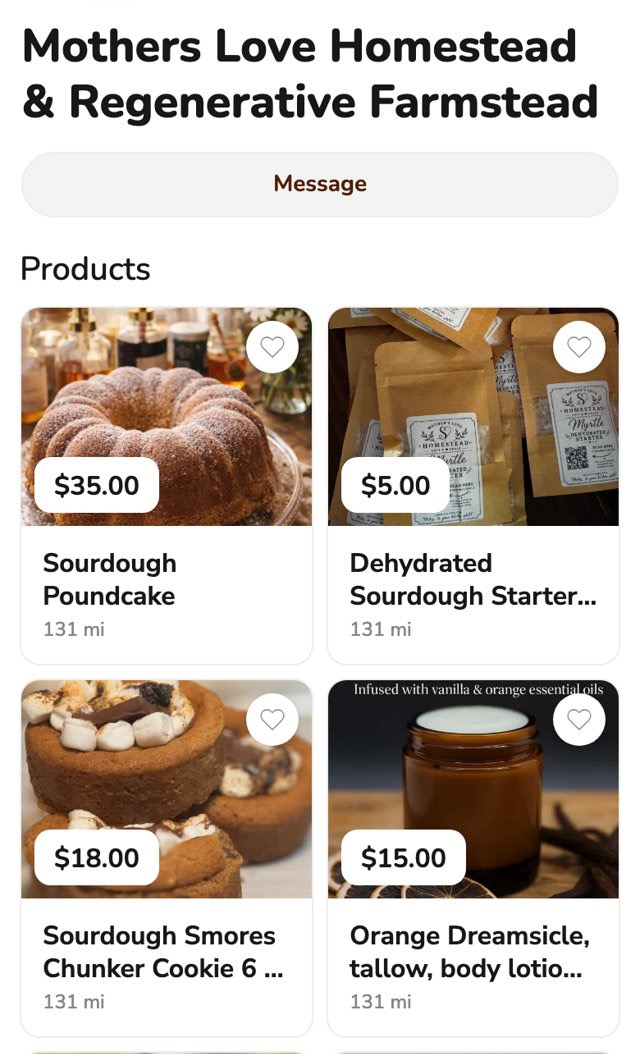
That last point is the useful one for a food vendor. Mothers Love Homestead in Georgia lists sourdough loaves, cookies and goat milk soap beside its tallow lotion and cream, and D&D Bees in Virginia lists honey, sourdough and granola beside a lotion bar and a face cream. Anyone who opens either storefront for bread sees the lotion on the same page. D&D Bees' face cream also names its preservative in the listing, which is the kind of detail that answers a careful shopper's first question.
The catalog also shows how few lotion vendors there are so far: 11 listings out of 2,907 products, from 6 of 313 vendors. If you already sell food and have a lotion your friends keep asking for, add it to a Homegrown storefront next to the products your regulars already buy.
The mistakes that cost new lotion vendors the most are skipping the preservative, making a medical claim, and pricing below their real cost. Each one is easy to avoid once you know about it:
If you also sell herbal salves, use the claim and label rules in this article for them too, and the guide to selling herbal salves at the farmers market covers the rest of that product line.
You do not need a federal license to sell homemade lotion, because FDA does not license cosmetic businesses or approve cosmetics before sale. Some states do require a permit. Florida requires a cosmetic manufacturer permit above $25,000 in annual gross sales, a line the statute does not limit to lotion sales, and does not issue it to homes, and a maker under that line must print "Made by a manufacturer exempt from Florida's cosmetic manufacturing permit requirements." on each unit in contrasting color and at least 10-point type. Check with your state and your city or county before your first sale.
No, cottage food laws cover low-risk foods, and lotion is a cosmetic regulated by the FDA. That means a cottage food permit for bread or jam does not cover lotion. Homemade lotion follows federal cosmetic rules for safety and labeling, plus any state rules for cosmetics.
Seven of the nine goat milk lotion makers we checked, all small US shops, charged $12 to $15 for an 8 ounce homemade lotion on October 8, 2026, with $14 in the middle. A basic 8 ounce bottle costs about $3.18 to make in ingredients and a pump bottle at October 8, 2026 supplier prices. Price from your own cost first, then check local shops.
Yes, any homemade lotion that contains water needs a broad-spectrum preservative that fights bacteria, yeast and mold. Vitamin E and rosemary extract are antioxidants, not preservatives. Waterless lotion bars and body butters do not need one as long as they stay dry.
A homemade lotion label should say what the product is, the net amount, every ingredient listed largest amount first, your name with a street address, city, state and ZIP (the street can be skipped when a current city or phone directory lists your business), and a US address, phone number or website where customers can report a bad reaction. FDA does not accept a P.O. box or website as the business address. Leave out claims about treating skin conditions.
Yes, you can sell goat milk lotion at a farmers market if your state allows home-made cosmetics, the market accepts body care, and the lotion is labeled and free of health claims. Preserving it is the hard part: Humblebee and Me says recipes with lots of water-like ingredients are "harder (or in the case of milk, impossible) to preserve," so pick a preservative whose supplier data covers milk and get a lab challenge test on the finished lotion before you sell. Ask your market whether it needs insurance or a list of ingredients for body care products.
These 6 guides pick up where this one stops. The first two cover the rules for other body care products, the next two cover products that sell beside lotion at the same booth, and the last two cover where and how to sell once your bottles are ready:
Start with one formula, one size and three scents, and get the preservative, label and batch notebook right before you make your first dozen bottles. A test batch of 100 to 200 grams tells you whether the formula works before you put about $38 of supplies into a full 12-bottle run.
Then line up the rest in this order:
Once regulars start asking for refills, give them one link to reorder their scent and pick up on market day. Build your lotion storefront on Homegrown for $10 a month billed annually ($12.50 monthly) with no commission on your sales, and list each scent and size with its own price.



