
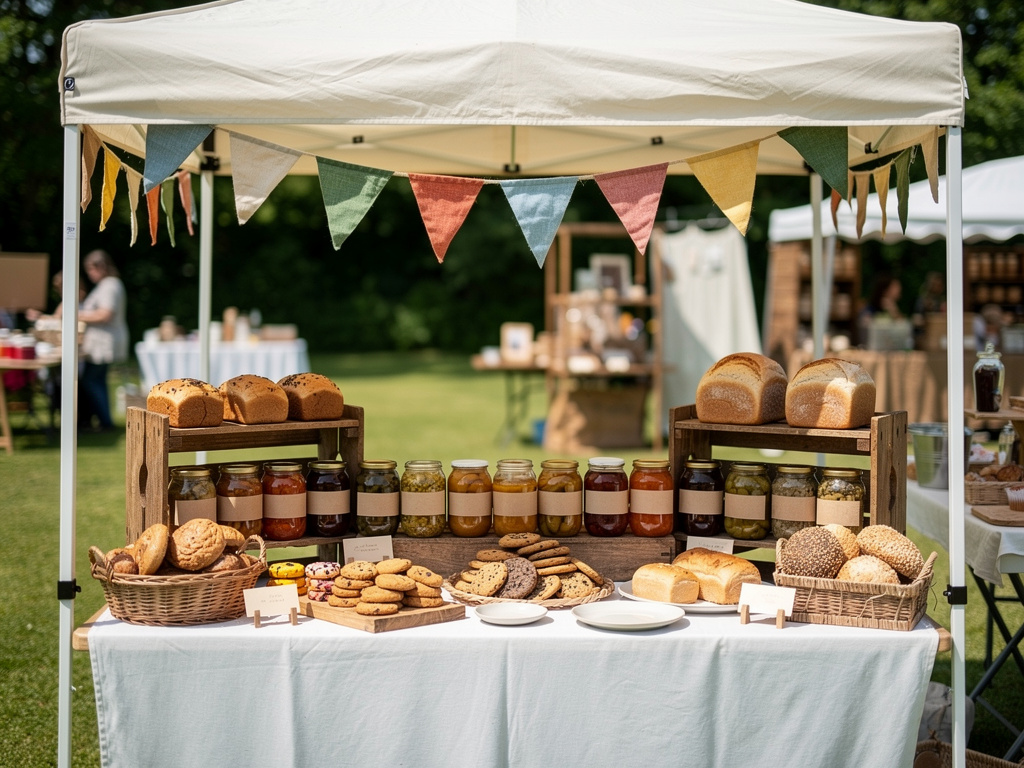


You've got products to sell in person, and two obvious options: a farmers market or a craft fair. They sound similar, both are local events where you set up a booth and sell to a crowd, but they attract different shoppers, in different mindsets, at different rhythms, and one may fit your food far better than the other. Choosing the right venue (or mix) can make the difference between a great sales day and a slow one. This guide breaks down the real differences between craft fairs and farmers markets, which suits which kinds of food, and how to decide where your products will sell best.
The short version: Farmers markets and craft fairs both let you sell in person, but they differ in shopper mindset, frequency, and fit. Farmers markets are usually recurring (often weekly), draw shoppers looking for food and groceries, and build regular, repeat customers, great for consumable food people buy often. Craft fairs are usually occasional events (often seasonal or holiday), draw shoppers looking for gifts, treats, and special items, and offer big one-time crowds, great for giftable, special-occasion, or impulse foods. Which is better depends on your product and goals: recurring food sales favor farmers markets; giftable, special-occasion products favor craft fairs. Many vendors do both. Match the venue to what you sell and how people buy it.
This guide covers the key differences, which food fits which venue, how to decide, and how to succeed at either.
The key differences are shopper mindset, frequency, and atmosphere, farmers markets recur regularly and draw food-and-grocery shoppers, while craft fairs are occasional events drawing gift-and-treat shoppers. These differences shape which fits your food.
Farmers markets, in general:
Craft fairs, in general:
Why these differences matter:
The core differences between farmers markets and craft fairs come down to shopper mindset, frequency, and atmosphere. Farmers markets are typically recurring (often weekly) and draw shoppers in a food-and-grocery mindset, which builds a regular, returning customer base, ideal for food people buy often. Craft fairs are typically occasional, often seasonal or holiday events, drawing shoppers in a gift-and-treat, browsing mindset, and offering big one-time crowds, ideal for giftable and special-occasion items. These aren't rigid rules (some craft fairs recur, some farmers markets have gift shoppers), but the general patterns strongly shape which venue fits your food and goals. Understanding these shopper differences is part of knowing your market, which the U.S. Small Business Administration's guidance on market research supports.
Foods that fit farmers markets best are consumables people buy regularly, fresh baked goods, pantry items, produce-based products, and everyday treats, because the recurring format and food-shopping mindset reward products bought often. Regular purchase is the key.
Foods that thrive at farmers markets:
Why farmers markets suit these foods:
Farmers markets suit foods that people buy regularly, because the recurring, weekly format and the food-and-grocery shopper mindset reward products that become part of a routine. Bread, baked goods, pantry items like jam and granola, produce-based products, and everyday treats all fit naturally: shoppers are there to buy food, and the recurring market lets you turn a first-time buyer into a weekly regular who incorporates your product into their routine. This repeat-purchase dynamic is the farmers market's superpower, seeing the same customers week after week builds the loyalty and habit that drive steady sales for consumable foods. If your product is something people would happily buy often and fold into their weekly food shopping, a farmers market is likely a strong fit.
Foods that fit craft fairs best are giftable, special-occasion, and impulse items, packaged treats, gift sets, confections, and specialty products, because the gift-and-treat mindset and one-time crowds reward products people buy as gifts or splurges. Special-occasion appeal is the key.
Foods that thrive at craft fairs:
Why craft fairs suit these foods:
Craft fairs suit foods that are giftable, special-occasion, or impulse buys, because the gift-and-treat shopper mindset and big one-time crowds reward products people purchase as gifts or splurges. Packaged treats, gift sets, confections, specialty items, and holiday-tied products all fit well: many craft-fair shoppers are actively gift-hunting or in a treating mood, primed to buy something special, indulgent, or giftable that catches their eye. The large event crowds offer high traffic for products with broad appeal, and the browsing atmosphere rewards attractive, giftable presentation. If your product makes a great gift, feels like a special treat, or is an appealing impulse buy, especially with strong presentation, a craft fair (particularly a seasonal or holiday one) is likely a strong fit for reaching lots of gift-minded shoppers at once.
You decide by matching the venue to your product (how people buy it) and your goals (repeat customers vs one-time bursts), and often the answer is to do both, using each for what it does best. Fit and goals guide the choice.
Questions to guide your decision:
Signs of a good fit:
Deciding between the two, or choosing to do both, comes down to matching the venue to how people buy your product and what you want from selling in person. If your product is a consumable people buy regularly and you want to build a base of repeat customers, farmers markets are likely your primary venue. If your product is giftable, special-occasion, or impulse and you want big one-time sales bursts, craft fairs (especially seasonal ones) are likely a strong fit. Many products have both everyday and gift appeal, and many vendors do both, using farmers markets for steady recurring sales and craft fairs for concentrated seasonal bursts, which is often the best of both worlds. Consider your capacity too, and evaluate the specific markets and fairs near you. Thinking through where and how to sell is part of managing your business, which the U.S. Small Business Administration's guidance on managing your business addresses.
Whichever venue you choose, a storefront lets you keep selling to the customers you meet there, long after the event ends. Homegrown is $10 a month with no percentage fees beyond standard payment processing, giving you an online storefront, built for local food vendors, to convert in-person shoppers into ongoing customers.
How it compares to the alternatives:
What Homegrown does well: an online storefront where shoppers you meet at markets and fairs can reorder anytime, configurable to your local area with pickup and delivery, clean payment handling, and a fifteen-minute setup. Hand out your storefront link at events so a one-time craft-fair buyer or a weekly market regular can keep ordering between events. When you're ready to extend your in-person sales online, you can set up your storefront today.
The biggest mistakes are choosing a venue that mismatches your product and not capturing the customers you meet. Because venue fit and follow-through drive results, the errors that matter most involve matching and conversion.
Mistakes to avoid:
Getting these right means matching the venue to your product and goals, capturing the customers you meet, and evaluating specific events, so your in-person selling pays off.
The key differences are shopper mindset, frequency, and atmosphere. Farmers markets are usually recurring (often weekly), drawing shoppers in a food-and-grocery mindset, which builds a regular, returning customer base, ideal for consumable food people buy often. Craft fairs are usually occasional events (often seasonal or holiday), drawing shoppers in a gift-and-treat, browsing mindset, and offering big one-time crowds, ideal for giftable and special-occasion items. These aren't rigid rules (some craft fairs recur, some markets have gift shoppers), but the general patterns strongly shape which venue fits your food and goals. Match the venue to how people buy your product.
It depends on the baked goods and your goals. Everyday baked goods people buy regularly, bread, cookies, pastries, often thrive at farmers markets, where the recurring format and food-shopping mindset let you build repeat customers who fold your product into their weekly routine. Giftable or special-occasion baked goods, decorated items, gift boxes, holiday treats, often do well at craft fairs, where gift-hunting shoppers and big seasonal crowds reward special, giftable products. Many bakers do both: farmers markets for steady weekly sales and craft fairs (especially holiday ones) for concentrated bursts. Match the venue to whether your baked goods are everyday consumables or special-occasion gifts.
Giftable, special-occasion, and impulse foods sell best at craft fairs: packaged treats, gift sets, confections, specialty items, and holiday-tied products. This is because craft-fair shoppers are often gift-hunting or in a treating mood, primed to buy something special, indulgent, or giftable that catches their eye, and the big one-time crowds offer high traffic for products with broad gift appeal. Attractive, giftable presentation shines in the browsing atmosphere. If your product makes a great gift, feels like a special treat, or is an appealing impulse buy, especially at a seasonal or holiday fair, a craft fair is likely a strong fit for reaching many gift-minded shoppers at once.
Consumable foods people buy regularly sell best at farmers markets: bread, baked goods, pantry items like jam and granola, produce-based products, and everyday treats. This is because the recurring (often weekly) format and food-and-grocery shopper mindset reward products that become part of a routine, shoppers are there to buy food, and the regular market lets you turn a first-time buyer into a weekly regular. This repeat-purchase dynamic is the farmers market's strength. If your product is something people would happily buy often and fold into their weekly food shopping, and you want to build a base of loyal repeat customers, a farmers market is likely a strong fit.
Many vendors do both, and it's often the best of both worlds if your product and capacity suit them. Farmers markets give you steady, recurring sales and a base of repeat customers, while craft fairs (especially seasonal or holiday ones) give you big one-time bursts and reach gift-minded shoppers. If your product has both everyday and gift appeal, doing both lets you capture each opportunity, using each venue for what it does best. Just consider your capacity, recurring markets require regular commitment, so make sure you can sustain both without burning out. Evaluate the specific markets and fairs near you for fit, audience, and worth.
Give them a way to reorder after the event, most simply, an online storefront link you hand out at your booth (on a card, sign, or receipt). In-person events are great for meeting customers, but you only sell there when you're present, so capturing those customers with a storefront lets a weekly market regular or a one-time craft-fair buyer keep ordering between events. This turns a single in-person sale into an ongoing relationship and extends the value of every event. Make it easy, an easy-to-remember or scannable link, so shoppers who loved your product at the event can find and reorder it anytime.
Farmers markets and craft fairs both let you sell in person, but they suit different foods: recurring markets favor consumables and repeat customers, while occasional craft fairs favor giftable, special-occasion products and big one-time crowds. Match the venue to how people buy your product and your goals, and consider doing both. And to keep selling to the shoppers you meet at either, set up a Homegrown storefront built for local food vendors.



