
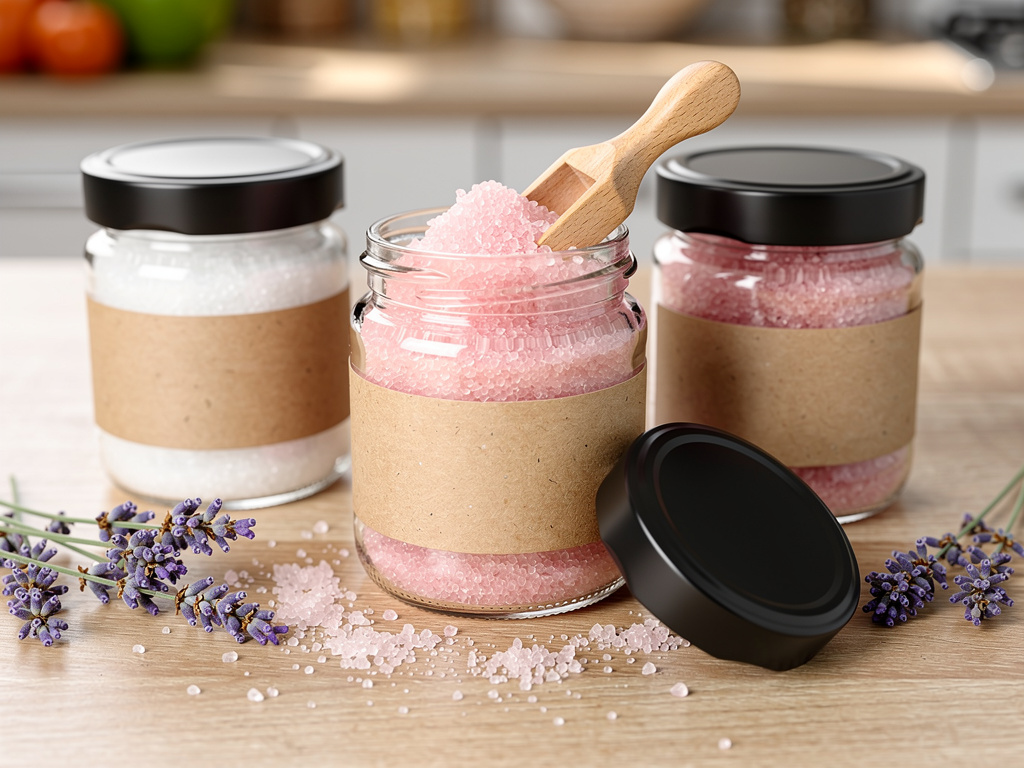


The short version: Yes, you can sell homemade sugar scrub from your own kitchen in the United States, because federal law treats it as a cosmetic and the FDA says it is "not against the law to manufacture cosmetics in your home." You need no FDA approval or license, and a vendor averaging under $1,000,000 a year in cosmetic sales over the past 3 years skips FDA registration and product listing, but you still owe a full label, records showing the scrub is safe, and a report to the FDA within 15 business days if a customer has a serious reaction. Your state is the part that varies: Florida requires a cosmetic manufacturer permit and does not issue it to homes, and its exemption for the smallest vendors, at $25,000 a year or under, lists soaps, lotions, moisturizers and creams but not scrubs. Nevada licenses anyone who makes cosmetics in the state, and from July 1, 2027, a home vendor selling up to $100,000 a year can get a cottage cosmetics license instead.
Checked on the FDA's homemade cosmetics fact sheet, 21 U.S.C. 364a and 364h, Florida Statutes 499.01, the Florida DBPR permit FAQ and Nevada's NRS 585.245 and 585.620, October 8, 2026: rules change, so verify your state's current rules before your first sale. Homegrown prices come from the signup page the same day. Homegrown customers create an account to place their first order, Homegrown has no drops or countdown-timer release feature, and it is built for pickup and local delivery, not shipping.
Sugar scrub looks like the easiest product on a market table. It is sugar, oil and a little scent in a jar, and a first batch takes an afternoon. The rules behind it are simpler than food rules in some ways and stricter in others, and this guide sorts out which is which.
This guide answers the permission question for a small, part-time vendor: what the FDA requires, what it lets you skip, which states add their own permit, and what to do before you sell your first jar. If you already know you are allowed and want to know what to charge, our guide to how much to sell sugar scrub for covers the cost per jar, shop prices and selling fees.
Yes, federal law lets you make and sell sugar scrub in your home kitchen, but your state can still say no or ask for a license, as Florida and Nevada do. The FDA's fact sheet for small businesses says, "It's not against the law to manufacture cosmetics in your home," and adds that "FDA does not license cosmetics firms." What it asks instead is that your scrub is safe and properly labeled.
The catch is that your state or city can still require something. The FDA says so on the same page: "state or local authorities may require licensing or have other requirements you need to know about." That means the answer has three parts:
A part-time vendor selling 20 jars a month at one farmers market faces the same federal rules as a shop selling 2,000 jars a month. At $14 a jar, that shop sells $336,000 a year, still under the $1,000,000 small business line, so both skip the same federal duties, which are covered below.
A sugar scrub is a cosmetic because of what it is used for, not what it is made of. The FDA defines cosmetics as "articles intended to be rubbed, poured, sprinkled, or sprayed on, introduced into, or otherwise applied to the human body...for cleansing, beautifying, promoting attractiveness, or altering the appearance." A scrub is rubbed on the body to clean and smooth skin, so it fits that definition even when every ingredient came from your pantry.
That one fact decides three things for you:
A vendor with 24 jars of jam and 24 jars of scrub on one table is following two different rule books, even when the jam and the scrub share a jar size and a brand.
No, keep "edible," "lickable" and "good enough to eat" off your jar, your listing and your product photos. A scrub that is sold to be eaten is no longer just a cosmetic, and the FDA's small business exemption under 21 U.S.C. 364h does not cover "cosmetic products that are intended for internal use." A scrub that invites people to eat it pulls you toward rules a home vendor is not set up for.
Sugar scrubs invite this mistake because they smell like dessert. Vanilla, cookie, birthday cake and strawberry are common scrub scents. Lip scrubs make it worse, because people do lick their lips.
Here is how to handle it:
Your words decide whether a scrub is a cosmetic, a drug or a soap. The FDA says a product's intended use comes from "claims stated on the product labeling, in advertising, on the Internet, or in other promotional materials." A scrub sold to exfoliate and soften is a cosmetic. A scrub sold to treat a skin condition is a drug, and drugs need FDA approval or a drug monograph before they can be sold.
Three lines are worth knowing:
Changing one word in a $14 jar's listing, from "softens" to "heals," is enough to move it out of the cosmetic lane. Plain scrub listings stay in that lane. The words that keep you there are the plain ones: exfoliates, smooths, softens, polishes, cleanses, smells like. The longer list of words to avoid is in the claims section of our sugar scrub pricing guide, so it is not repeated here.
No, you do not need FDA approval, an FDA license or an FDA inspection before you sell a sugar scrub. The FDA's fact sheet says the law "does not require cosmetic products and ingredients, except for color additives, to be approved by FDA before they go on the market." You are responsible for getting it right, and the FDA can act after a problem shows up.
What "no permission needed" still includes:
The FDA also points small vendors to their state and local offices for the rest. The same federal rules apply to a vendor selling 10 jars a year and one selling 10,000 jars a year. If you are unsure what your state asks for, start with the state health department. Florida's cosmetic permits come from its Department of Business and Professional Regulation, and from July 1, 2027, Nevada's home cosmetics license comes from the State Department of Agriculture. Florida's is a good example of how specific that answer can get.
The FDA does not approve labels in advance, and it does not send you a letter saying your scrub is fine. "Nobody stopped me" is not the same as being in the clear. Checked on the FDA's homemade cosmetics fact sheet, October 8, 2026, which lists its content as current as of November 18, 2025.
A vendor with under $1,000,000 a year in cosmetic sales skips three federal duties: facility registration, product listing and the coming manufacturing practice rules. Under 21 U.S.C. 364h, a business whose "average gross annual sales in the United States of cosmetic products for the previous 3-year period is less than $1,000,000, adjusted for inflation" is a small business. The FDA's own page puts it plainly: "MoCRA exempts certain small businesses from GMP, registration, and product listing requirements." GMP stands for good manufacturing practice, the federal rules for how a facility makes its products.
The exemption does not apply to a business that makes any of four kinds of products, no matter how small: products that regularly touch the mucous membrane of the eye, products that are injected, products meant for internal use, and products meant to change your appearance for more than 24 hours. If you make any of them, even alongside your scrubs, the exemption is gone for everything you make, per 21 U.S.C. 364h(b). An ordinary body or hand scrub is none of those. An "edible" lip scrub can drift toward the internal use line, which is one more reason to drop that word.
Scroll sideways to see every column.
| Federal duty | Small scrub vendor under $1,000,000 | Where it comes from |
|---|---|---|
| Register your kitchen as a facility | Skipped | 21 U.S.C. 364h(a), exempt from 364c |
| List each scrub with the FDA | Skipped | 21 U.S.C. 364h(a), exempt from 364c |
| Follow the FDA's cosmetic GMP rules | Skipped | 21 U.S.C. 364h(a), exempt from 364b |
| Report serious reactions within 15 business days | Still required | 21 U.S.C. 364a(b) |
| Keep reaction records | Still required, for 3 years instead of 6 if you make none of the four product types above | 21 U.S.C. 364a(e)(1) |
| Keep records showing the scrub is safe | Still required | 21 U.S.C. 364d |
| Put a domestic address, phone or web contact on the label | Still required | 21 U.S.C. 364e(a) |
| Full cosmetic label, approved colors, no drug claims | Still required | FD&C Act and 21 CFR 701 |
We read each section of Title 21 on Cornell's Legal Information Institute and the FDA's MoCRA page, both on October 8, 2026. The $1,000,000 line is "adjusted for inflation," so check the FDA's current figure if you are close to it.
For a part-time vendor, the $1,000,000 line is far away. Selling 40 jars a week at $14 comes to $29,120 a year, about 3% of the line.
A serious reaction is one that sends someone to the hospital, causes an infection, or leaves a serious and lasting mark, and you must report it to the FDA within 15 business days. The 2022 law defines a serious adverse event as one that results in death, a life-threatening experience, inpatient hospitalization, a lasting disability, a birth defect, "an infection," or "significant disfigurement (including serious and persistent rashes, second- or third-degree burns, significant hair loss...)." It also counts any reaction that needs a doctor's intervention to prevent one of those outcomes.
What that looks like for a scrub vendor:
Small vendors who make none of the four product types above keep their reaction records for 3 years instead of the standard 6, per 21 U.S.C. 364a(e)(1). A notebook or a spreadsheet with the date, the customer's description, the scent and the batch is enough to start. The contact line on your label is how these reports reach you, which is why the law requires it.
Write a batch code on every jar, even a simple one like 1008-LAV for lavender made on October 8. When a customer calls about a reaction, you can find the other 11 jars from that batch in two minutes instead of guessing which ones to pull.
You show your scrub is safe by keeping records that support it, and the law does not name a specific test you must run. Under 21 U.S.C. 364d, the person whose name is on the label "shall ensure, and maintain records supporting, that there is adequate substantiation of safety." The FDA says vendors "can use relevant safety data that is already available," and that animal testing is not required.
For a simple scrub made of sugar, plant oils and a small amount of fragrance, that record usually looks like this:
If a vendor has not done that work, federal rules ask for a blunt label. Under 21 CFR 740.10, a cosmetic whose safety is not adequately substantiated is misbranded unless its front label carries a warning that ends "The safety of this product has not been determined." No vendor wants that on a jar, which is the practical reason to keep the records.
Water is the biggest safety question for scrubs. The FDA notes that "microbial contamination can pose a health hazard," and a jar used in the shower collects water from wet fingers every time it opens. Scrubs with water, aloe juice or milk in the recipe need a preservative system chosen for that recipe. Oil-only scrubs have less risk but still meet shower water, so a scoop, a "keep water out of the jar" line, and a small jar size all help.
Only colors that the FDA lists for cosmetics can go in a sugar scrub, and several popular kitchen colors are not on that list. The FDA's summary of color additives lists beet powder, turmeric and spirulina extract for coloring food, but none of the three appears in its list of colors approved for cosmetics. If you add them to tint the scrub pink, yellow or green, you are using a color that has not been approved for that use.
Colors the FDA's cosmetic list does include, from its summary page read October 8, 2026:
A few add-in rules ride along with color. Colors can be listed at the end of your ingredient list, in any order, per 21 CFR 701.3(f)(3). Glitter should be mica-based, since mica is on the FDA's cosmetic list. The FDA says the Microbead-Free Waters Act "prohibits the manufacturing, packaging, and distribution of rinse-off cosmetics containing plastic microbeads," so let sugar, salt, coffee grounds or pumice do the scrubbing. Dried flower petals hold water, so they can shorten the life of a jar. A 4 ounce jar needs only a pinch of mica to turn pink.
The FDA leaves licensing to states and cities, and the state rules we could confirm differ a lot, from a permit Florida will not issue to homes to a home license Nevada starts in 2027. The table below covers the four state rules we could confirm from a primary source on October 8, 2026. It is not a list of all 50 states. If yours is not here, call your state health department and ask, "Do I need a permit to make cosmetics at home for sale?"
Slide the table sideways to see each state's rule.
| State | What it requires | Home kitchen allowed? | Sales line | Source |
|---|---|---|---|---|
| Florida | Cosmetic manufacturer permit for anyone making cosmetics in the state. Exempt vendors print a required statement on every jar. | Only under the exemption. The permit itself is not issued to residential areas. | Exempt at $25,000 or less in yearly sales, but only for soaps, lotions, moisturizers and creams | Fla. Stat. 499.01(2)(p) and the DBPR permit FAQ |
| Nevada | A license from the state's Commissioner of Food and Drugs to make cosmetics at any location in the state. From July 1, 2027, home vendors who qualify can get a cottage cosmetics license from the State Department of Agriculture instead. | The current rule covers any location and does not mention homes. From July 1, 2027, yes, that is what the cottage license is for. | Cottage license: gross cosmetic sales of $100,000 or less a year | NRS 585.245 and NRS 585.600 to 585.695 |
| Missouri | No cosmetic permit named. Homemade soaps and lotions can be sold at farmers markets without health claims. | Yes, per the state health department FAQ | None stated | Missouri DHSS food safety FAQ, RSMo 196.015 |
| California | Reporting of products with listed harmful ingredients to the state health department. Separately, a list of banned ingredients, such as formaldehyde, mercury and certain parabens and PFAS, applies to every cosmetic sold in the state. | Not addressed by these laws | Reporting applies only at $1,000,000 or more in yearly cosmetic sales. The ingredient ban has no sales line. | Cal. Health and Safety Code 111792(d) and 108980 |
Each state's statute or agency page was read on October 8, 2026. Local business licenses, home occupation permits and sales tax permits are separate from everything in this table.
Sales lines that change a sugar scrub vendor's paperwork
Source: Fla. Stat. 499.01, NRS 585.620, 21 U.S.C. 364h and Cal. Health and Safety Code 111792(d), all read October 8, 2026. Yearly cosmetic sales in dollars.
Nevada's new law is worth a closer look if you live there. Under Nevada's cottage cosmetics statute, "skin care preparations for the body and hands" count as cosmetics, a home vendor applies for a license with the State Department of Agriculture, and the state may only inspect to look into a product suspected of being adulterated or misbranded or an outbreak of illness. The statute's list of cosmetics does not name lip products, so ask the department whether a lip scrub qualifies. That license starts July 1, 2027, for a person who makes cosmetics at home for sale to individuals and sells no more than $100,000 a year. Until then, NRS 585.245 in the same chapter says "a valid license is required for the manufacturing, compounding, processing or packaging of drugs, devices or cosmetics in any factory, warehouse, laboratory or other location in this State," and that license comes from the state's Commissioner of Food and Drugs, so ask that office what applies to your home kitchen before you sell.
Florida requires a cosmetic manufacturer permit for "any person that manufactures or repackages cosmetics in this state," and it is the clearest no for home kitchens among the states we checked. Florida Statutes 499.01 exempts vendors with "annual gross sales of $25,000 or less," but an exempt vendor may only "manufacture and sell cosmetics that are soaps, not otherwise exempt from the definition of cosmetics, lotions, moisturizers, and creams." Sugar scrub is not named on that list.
The state agency that issues the permit, the Division of Drugs, Devices and Cosmetics, answers the home question directly in its FAQ: "We do not issue our permits to residential areas." Its permit FAQ also says you may need local licenses on top of it. The permit application costs $950, which the form breaks into an $800 biennial application fee and a $150 initial application and on-site inspection fee.
What that means in practice for a Florida scrub vendor:
Florida's rule is easy to miss if you only read FDA guidance. We read Florida Statutes 499.01 on the Florida Senate's 2026 statutes page and the DBPR FAQ and application form on October 8, 2026. Verify your state's current rules before your first sale.
Yes, if your state lets you make and sell scrub from home, and then the market's own rules decide whether there is room for you. The law treats a farmers market sale like any other cosmetic sale, and Missouri's health department answers this exact question for soaps and lotions: they can be sold at farmers markets as long as they "are not being sold by making health claims," according to the Missouri DHSS food safety FAQ. A sugar scrub is not named there, but the statute the FAQ cites, section 196.015 of the Missouri Revised Statutes, bars the sale of any homemade cosmetic that is adulterated or misbranded, and a scrub is a cosmetic.
Before you book a booth, check these five things:
Soap, lip balm and bath bombs often share a booth with scrubs, and our guide to selling non-food products at farmers markets covers permits and displays for that whole table.
Yes, federal law does not stop a small cosmetic vendor from selling online or shipping across state lines, and the same label and safety rules follow the jar. The federal rules covered above travel with the jar wherever it goes. Your state's rules still apply where you make it, and Florida's exemption limits exempt vendors to selling products stored at their own operation.
Practical problems tend to stop scrub shipping before the law does:
Many part-time vendors keep scrubs local: market pickup, porch pickup and delivery inside a few miles. That keeps the jar cool, skips the shipping bill and puts the product in the hands of people who can come back for a refill.
On a $14 jar, card processing costs the vendor about 71 cents on Homegrown and on Shopify, while Etsy's listing, transaction and processing fees come to $1.78 before any ad fee. The difference grows with volume and with the monthly plan, so the table shows a single jar and a month of 50 jars. A $14 price is the median for an 8 ounce jar in our pricing research.
Swipe the table to compare every fee on a jar.
| Platform | Monthly plan | Trial | Platform fee | Card processing | Customer pays on a $14 jar | Vendor pays on a $14 jar | Vendor pays in a month of 50 jars at $14 |
|---|---|---|---|---|---|---|---|
| Homegrown | $10 billed annually ($12.50 monthly) | 7 days, no charge until day 8 | None, 0% commission, no shopper fee | 2.9% + $0.30, paid by the vendor | $14.00 plus sales tax | $0.71 plus the plan | $45.30 |
| Etsy | $0, plus a one-time set-up fee that varies by location | None | $0.20 listing fee per sale plus 6.5% transaction fee, plus 15% if an Offsite Ad made the sale | 3% + $0.25 | $14.00 plus shipping and tax | $1.78 ($3.88 with an Offsite Ad) | $89.00 |
| Shopify Basic | $29 billed yearly ($39 monthly) | 3 days, then $1 a month for 3 months | None with Shopify Payments (2% with another provider) | 2.9% + 30¢ online | $14.00 plus any shipping and tax | $0.71 plus the plan | $64.30 |
We checked Homegrown's signup page, Etsy's fee policy and payment processing table, and Shopify's pricing page on October 8, 2026. Card processing is figured on the $14 price. Etsy charges processing on the total including tax and shipping, so it runs a few cents higher on a real order. Monthly totals use the annual plan prices.
The math behind the 50-jar column: Homegrown is 50 times $0.706 ($35.30, the $0.71 above before rounding) plus the $10 plan. Etsy is 50 times $1.78 with no plan. Shopify Basic is 50 times $0.706 ($35.30) plus the $29 plan.
Once your scrub is legal, the next problem is taking orders without losing a slice of every jar or spending your evenings in direct messages. Homegrown gives you a storefront link where customers pick a scent and size, pay by card and choose a pickup time or local delivery. It costs $10 per month billed annually ($12.50 billed monthly) with no percentage fees beyond standard payment processing, which is 2.9% + $0.30 on each order, paid by you and never added to the customer's total.
Compared with the options scrub vendors usually try:
What fits a scrub business: one listing per scrub with each scent and size as its own variant and price, an ingredients field on every listing so shoppers can check for allergies before they order, sales tax calculated and sent in for you, and a home address that stays hidden until someone buys.
Honest bounds: Homegrown is built for pickup and local delivery, so it is not a fit if you want to ship jars across the country. Customers create a Homegrown account to place their first order. There is no drops or countdown-timer release feature, and no release date to share for one. Your storefront is listed on the Homegrown marketplace, but plan on most orders coming from people you send to your own link. It does not write your label or tell you whether your state needs a permit. That part is still yours.
If your scrubs are labeled and your state's rules are sorted, you can set up your Homegrown storefront in about 15 minutes and send the link to your market regulars this week.
Six scrub listings from three vendors were live on Homegrown on October 8, 2026, and four of them answer two label questions right in the listing. Selah homestead fl lists four 5 ounce sugar body scrubs, three at $12 and a Manuka honey scrub at $14, and each description gives the net weight as "NET WT 5 OZ (142g)" and includes the line "not for human consumption." Living Well Homestead lists a $12 Renewal Hand Scrub in two scents with its key ingredients and directions. Elodie Handmade Soap lists a $2.50 Organic Body Scrub Melt in eight scents, set in kokum butter, with an approximate net weight of 1.8 ounces. We show these listings for their net weight and wording only. A listing does not show whether a vendor holds a state permit or exemption.
In a pull of the Homegrown catalog on October 8, 2026, 6 of the 2,907 products listed by 310 vendors were scrubs, from 3 vendors. Health and wellness products made up 138 of the 2,907, from 22 vendors. Our rule: we searched every listing's name, description and variant names for "scrub," "exfoliat" and "polish," read every hit, and then read all 138 health and wellness listings by name. Soap bars with salt or coffee grounds, sponges and soap savers were not counted as scrubs.
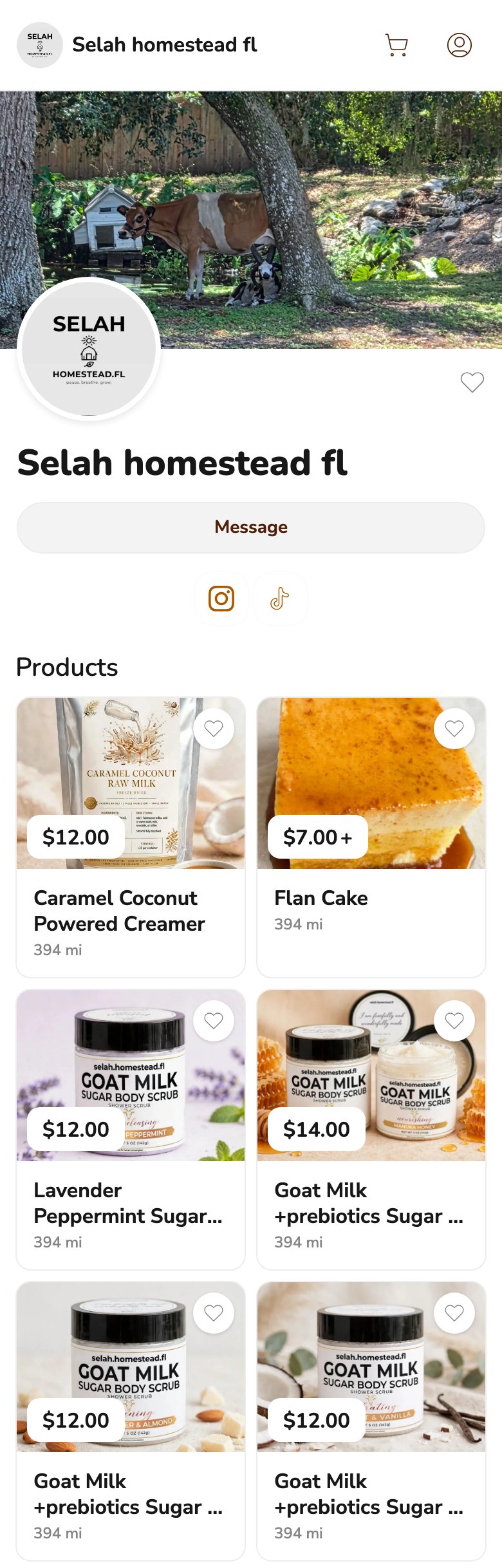
Two things stand out in those listings. The net weight is stated as a weight, which the FDA's labeling guide expects for a semi-solid product, with grams added, and the "not for human consumption" line heads off the edible question before a shopper asks it. Copying both habits into your own listings costs nothing.
Treat every jar like it might be the one a customer calls about. That is not a legal requirement. It is how the federal record rules work out in real life for someone selling 30 to 100 jars a month.
The habits that matter most:
Make your test jars from the same batch you sell and keep one 4 ounce jar from each batch on your own bathroom counter for 6 months. If it smells off or grows spots at month 3, you know your shelf life before your customers do, and you have the record the safety rule asks for.
Go in this order: state check, recipe, label, local paperwork, then your first market or order link. Printed labels and a local business license can take the longest, and doing the state check first means you never print a label you have to redo.
You can open your Homegrown storefront at step 8 and have each scent listed with its own price before your first market day.
You do not need a license from the FDA, which does not license cosmetic businesses. Your state or city may still ask for one. Florida requires a cosmetic manufacturer permit and does not issue it to homes; vendors at or under $25,000 a year in sales are exempt only for soaps, lotions, moisturizers and creams, so ask the state whether your scrub counts. Nevada also requires a state license for making cosmetics anywhere in the state, and starting July 1, 2027, home vendors at or under $100,000 in yearly sales can apply for a cottage cosmetics license instead. Many cities and counties also ask for a general business license.
No. Cottage food laws cover food, and a sugar scrub is a cosmetic because it is applied to the skin to clean and smooth it. Your cottage food registration neither covers nor blocks a scrub, so follow the FDA's cosmetic rules and your state's cosmetic rules instead.
No. The FDA does not approve cosmetics or their labels before sale, except for color additives, which must be on the FDA's list for cosmetics. When people ask whether you can sell homemade sugar scrubs without approval, the answer is yes, as long as the scrub is safe, properly labeled and free of drug claims.
The law does not require it, but many farmers markets and craft fairs ask for proof of liability insurance before they give you a booth. A product liability policy can also cover you if a customer claims your scrub caused a reaction.
Yes. The same FDA label, color and claim rules apply on Etsy as anywhere else, and the FDA reads the claims in your product description the same way it reads your label. On a $14 jar, Etsy's listing, transaction and processing fees came to $1.78 on October 8, 2026, before any shipping or ad fee.
A scrub made with water, aloe juice, milk or another water-based ingredient needs a preservative chosen for that recipe, because mold and bacteria grow where there is water. An oil-only scrub has less risk, but it still meets wet fingers in the shower. A scoop, a small jar and a "keep water out of the jar" line on the label all cut that risk.
More on the rules and the business of handmade body care:
You now know the whole permission picture for a jar of sugar scrub. There is no FDA approval or license to get. A vendor under $1,000,000 a year skips registration, product listing and the coming manufacturing rules. You still owe a full label, a safety record, a reaction log kept 3 years, and a 15-business-day report to the agency if a reaction is serious. Your state check matters most in Florida, where the permit is not issued to homes, and in Nevada, which licenses anyone making cosmetics in the state today and starts a home cottage license July 1, 2027.
The last piece is making it easy for your regulars to order. A customer who loved your lavender scrub at the Saturday market should be able to reorder it on Wednesday without a string of texts. A Homegrown storefront puts every scent and size on one link, takes payment up front and gives you a pickup list before market day. It is $10 a month billed annually, with no commission on your sales, and new vendors get 7 days with no charge until day 8.



