


The short version: Yes, you can sell homemade lip balm made in your own kitchen in the US, because federal law treats it as a cosmetic, FDA does not license cosmetics makers, and making cosmetics at home is not against the law. Three things are different when the product goes on lips: wording like "temporarily protects chapped or cracked lips" or any SPF number makes the tube an over-the-counter drug, some colors that are fine in soap, such as ultramarines, are not allowed on lips, and even a tiny tube needs a name for the product, the net weight in ounces, the ingredients, your business name and address (a street address, unless an up-to-date local directory lists your business there) and a contact for reactions. If your average US cosmetic sales over the past three years are under $1,000,000, adjusted for inflation, you skip FDA facility registration and product listing, as long as you do not also make eye-area products like eyeliner or mascara, or the other three kinds the law names. Your state can add more, and Florida is the clearest case: it requires a $950 cosmetic manufacturer permit unless your annual gross sales are $25,000 or less, and its exemption list does not name lip balm.
Checked October 6, 2026: FDA's cosmetics pages and its color additive summary, the eCFR (21 CFR 70.3, 201.66, 347.50, 700.27, 701.3, 701.10, 701.11, 701.12 and 701.13), the federal cosmetics law, the Florida Statutes and Florida's permit form, California's Safe Cosmetics Program, Missouri's farmers market tax guide, New Jersey's cottage food FAQ, the Homegrown catalog, and the pricing pages of Homegrown, Etsy, Shopify and Square. Verify your state's current rules before your first sale. Homegrown customers create an account to place their first order, Homegrown has no drop or countdown release feature, and you should plan on most orders coming from people you send to your own link.
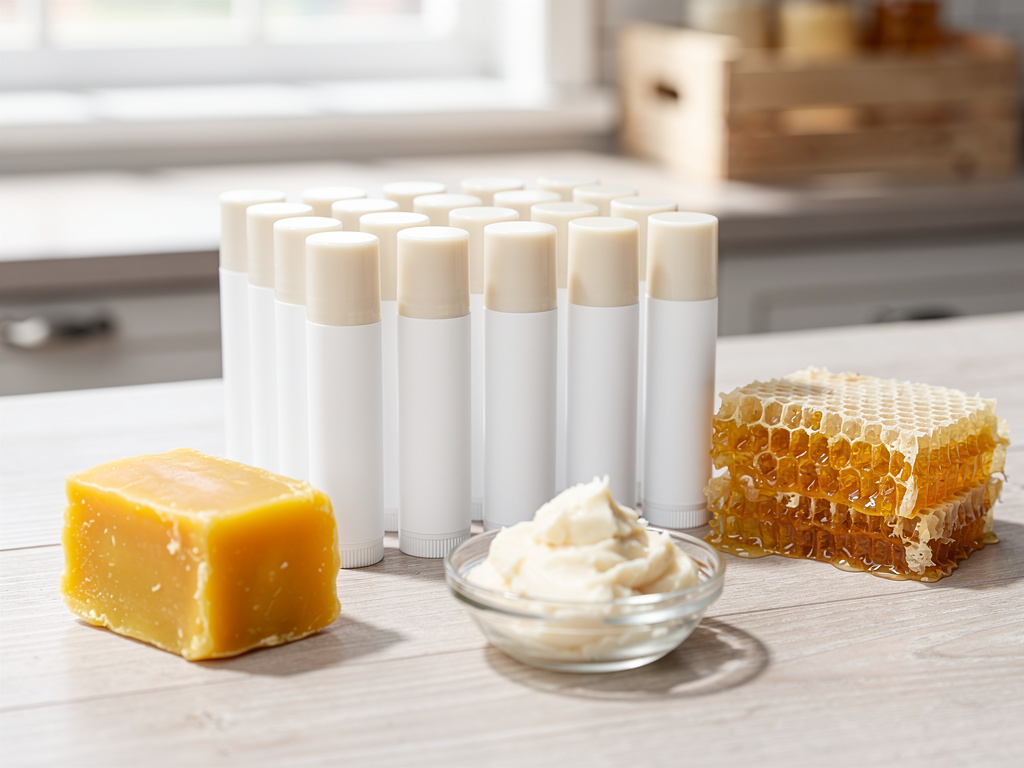
Lip balm is one of the easiest things to make in a home kitchen. Beeswax, a couple of butters, an oil, a flavor, a tray of tubes. That ease is why so many beekeepers, soap makers and homesteaders add it to their market table, and why so many of them ask the same question before the first sale: is this legal?
It is, and the rules are lighter than food rules in some ways and stricter in others. This guide walks through what federal law says, the three places lip balm differs from soap or lotion, what has to fit on a tube that is barely two inches tall, what a few states add, and where to sell once you are ready. If you are still working out what to charge, how much to sell lip balm for is the companion guide, with supply costs per tube and what eight small shops charge.
Yes, you can make and sell lip balm from your own kitchen: FDA's fact sheet for small cosmetics businesses says plainly that "it's not against the law to manufacture cosmetics in your home," and that the agency issues no license to cosmetics firms. You are responsible for making a safe product in a clean space and for a truthful, complete label. Nobody approves your recipe before you sell it, and no federal inspector signs off on your kitchen first.
What federal law expects from a home lip balm maker:
The short answer to "can you sell homemade lip balm" is yes in all 50 states as far as federal law goes. The longer answer depends on your words, your colors, your label and your state, which is the rest of this guide.
Cottage food laws do not cover lip balm because they are food laws, and lip balm is a cosmetic. The federal Food, Drug, and Cosmetic Act defines a cosmetic as something applied to the body "for cleansing, beautifying, promoting attractiveness, or altering the appearance," and FDA's own list of examples includes "skin moisturizers, perfumes, lipsticks." A balm you rub on your lips fits that definition even if it tastes like cake batter.
That means a few things for a vendor who already sells baked goods or honey:
The good news is that cottage food limits, such as rules on where you can sell or whether you can ship, do not follow lip balm either. The bad news is that you have to learn a second set of rules. The Homegrown signup page puts it simply for non-food products: "No food license required."
The exact wording FDA uses for lip medicine is the line to stay away from: "temporarily protects" and "helps relieve" "chapped or cracked lips," and "helps protect from the drying effects of wind and cold weather." Those phrases come from FDA's skin protectant drug rule, 21 CFR 347.50, which spells out what an over-the-counter lip protectant drug can say. The same rule even lets a drug product call itself "lip protectant" or "lip balm," so the product name alone does not decide anything. Your claims do.
FDA decides whether a product is a cosmetic or a drug by its intended use, and it reads that intent from "claims stated on the product labeling, in advertising, on the Internet, or in other promotional materials." Your table sign, your Instagram caption and your product description all count. One phrase on a $5 tube decides whether it is sold under cosmetic rules or drug rules. A drug has to follow drug rules, including the "Drug Facts" panel set by 21 CFR 201.66, and a sunscreen is a drug.
Swipe the table to see all three columns.
| What you write | How FDA is likely to read it | Why |
|---|---|---|
| "Moisturizing lip balm," "softens lips," "smooth, glossy finish" | Cosmetic | Moisturizing and appearance are cosmetic uses; FDA lists skin moisturizers as cosmetics |
| "Beeswax and shea lip balm, vanilla flavor" | Cosmetic | A product name and ingredients make no treatment claim |
| "Temporarily protects chapped or cracked lips" | Drug | This is the indication wording in the skin protectant drug rule, 21 CFR 347.50 |
| "Helps protect from the drying effects of wind and cold weather" | Drug | Also drug-rule wording for lip protectants |
| "SPF 15," "sun protection," "blocks UV" | Drug, or cosmetic and drug | FDA says moisturizers "marketed with sun-protection claims are cosmetic/drug products"; sunscreens follow drug rules |
| "Heals cracked lips," "treats cold sores," "medicated" | Drug | Treating or curing a condition is a drug use |
Wording from 21 CFR 347.50 on the eCFR and from FDA's "Is It a Cosmetic, a Drug, or Both?" page, both read on October 6, 2026. This table shows how the rules read, not a ruling on any one product.
The phrase most home lip balm makers reach for, "protects chapped lips," is close to word for word the claim FDA wrote for lip protectant drugs. Describe what the balm is and how it feels instead: "a soft beeswax balm that keeps lips smooth" says the same thing to a shopper without the drug wording. We read 21 CFR 347.50 on October 6, 2026.
Lip colors are a shorter list because FDA approves each color additive for specific uses, and lips are not counted as "external." Under FDA's definition in 21 CFR 70.3, "externally applied" cosmetics are those applied to the outside of the body "and not to the lips or any body surface covered by mucous membrane." A color approved only for externally applied cosmetics is fine in a soap bar or a body butter and not allowed in your lip balm.
That catches several pigments that home makers buy in sample packs. FDA's color additive summary lists ultramarines (the blues, pinks and violets in many mica blends), ferric ferrocyanide, chromium oxide greens and chromium hydroxide green as approved for "externally applied cosmetics," including the eye area, which leaves out lips.
Slide this table sideways to read each color's approved use.
| Color additive | FDA's approved use for cosmetics | OK in lip balm? |
|---|---|---|
| Mica (21 CFR 73.2496) | Cosmetics generally, including the eye area | Yes, on its own |
| Iron oxides (73.2250) | Cosmetics generally, eye area included | Yes |
| Titanium dioxide (73.2575) | Cosmetics, including the eye area | Yes |
| Carmine (73.2087) | Cosmetics generally, eye area too | Yes |
| Manganese violet (73.2775) | Cosmetics generally, including the eye area | Yes |
| Ultramarines (73.2725) | Externally applied cosmetics, including the eye area | No |
| Ferric ferrocyanide (73.2299) | Externally applied cosmetics, eye area included | No |
| Chromium oxide greens (73.2327) | Externally applied cosmetics and the eye area | No |
From FDA's Summary of Color Additives for Use in the United States (content current as of December 16, 2025), checked October 6, 2026. FDA notes that a few colors approved for external use carry their own allowance for lipsticks in their listing regulation, so read the listing before you rule a color in or out. Colors listed in 21 CFR Part 74, such as the D&C reds, must also come from batches FDA has certified.
A "colored mica" from a craft supplier is often mica coated or blended with other pigments. Blue, purple and green shades are where the problem pigments tend to show up, because ultramarines come in blues, violets and pinks, ferric ferrocyanide is a blue, and chromium oxide is a green. Read the full ingredient list on the supplier's page, and look for the supplier's own "lip safe" label as a starting point, not the final word. These color rules are federal, so they apply in all 50 states, at a booth or online.
A lavender-tinted balm made with a purple mica blend is the classic mistake. A purple mica blend may get its color from ultramarine violet, which FDA approves for externally applied cosmetics only. If the supplier's ingredient list shows ultramarines or ferric ferrocyanide, keep that color for your soap. We checked FDA's color additive summary on October 6, 2026.
You can flavor lip balm, and FDA's label rule lets you list it simply as "flavor" in your ingredients (21 CFR 701.3(a)). The catch is that a lip product gets licked and partly swallowed, so the safety of every flavor oil is your responsibility. FDA's fact sheet says supplier safety data is one way to back up that an ingredient is safe, and that is the place to start.
What to check before a new flavor goes in a tube:
If you sell flavored lip balm into California, there is one more check, covered in the state section below. California has a law that asks companies to report certain flavor ingredients.
Most home lip balm makers do not have to register with the FDA, because the federal cosmetics law of 2022 exempts small businesses with less than $1,000,000 in average yearly US cosmetic sales over the past three years, adjusted for inflation. The exemption, in 21 U.S.C. 364h, covers facility registration, product listing and the manufacturing rules FDA is still writing. FDA's MoCRA page (the law's short name, content current as of August 10, 2026) still lists those manufacturing rules, and fragrance allergen labeling, as rules it must set.
The exemption is lost by a business that makes any of four kinds of product, and the test covers everything you make, not only the balm:
Plain lip balm is in none of the four groups. It touches the lips, not the eye, and it is not meant for internal use even though some gets swallowed. If you also make eyeliner, though, the exemption is gone for the whole business.
Even with the small business exemption, three federal duties stay with you, plus one habit worth keeping, and the first two duties are mostly record keeping. The pricing guide touches on these briefly; here is what each one asks of a vendor pouring 50 tubes at a time.
Write a batch code on the bottom of every tube, like "1006A" for the first pour on October 6, and keep a one-line log of what went into it. It takes seconds per batch, and if one customer reacts to a flavor you will know within a minute which 50 tubes to pull.
Every required line can fit on a standard tube label, because FDA's rules shrink with the package. Five things must be there: what the product is, the net weight, your name and place of business, the ingredients in order of amount, and the contact line for reactions. A cosmetic's front panel on a round container is 40% of its height times its circumference (21 CFR 701.10), so a tube's front panel is tiny, and the type size rules follow.
Here is how the numbers work on a tube, using a generous example. A tube 2 inches tall and 2 inches around gives a front panel of 0.4 × 2 × 2 = 1.6 square inches, far under 5.
Drag the table left to read the rule for each label line.
| Label line | What it says on a tube | The rule that applies to a small tube |
|---|---|---|
| Identity | "Lip balm" on the front | Must be on the front panel (21 CFR 701.11) |
| Net weight | "Net wt. 0.15 oz" (grams may be added) | Ounces required; a metric figure "may also appear" (701.13(r)); type at least 1/16 inch on a front panel of 5 square inches or less (701.13(i)); the bottom-30% placement rule is waived at that size (701.13(f)) |
| Ingredients | "Ingredients: beeswax, shea butter, coconut oil, flavor" | Descending order of amount; "flavor" allowed (701.3(a)); type can be 1/32 inch when the package has less than 12 square inches of label surface (701.3(p)) |
| Name and place of business | Your business name, street, city, state, ZIP | A P.O. box or website is not enough, per FDA's fact sheet (701.12); the street address can be left off only if your business is listed at that address in a current city or phone directory (701.12(d)) |
| Reaction contact | A phone number, address or website | Required since December 29, 2024 (21 U.S.C. 364e) |
Rules read on the eCFR, at Cornell's Legal Information Institute copy of the US Code, and on FDA's small business fact sheet on October 6, 2026. Florida's exempt makers add one more line, covered in the next section.
Two lesser-known allowances help lip balm in particular. FDA's net quantity rule lets a decorative "boudoir-type" cosmetic container, such as the "pencil" kind or one holding a quarter ounce or less, treat a tear-away tag or tape as its front panel and put the required label information there, with the net weight type still sized to the container itself (21 CFR 701.13(e)(1)). A 0.15 ounce tube is under a quarter ounce, but a plain tube may not count as a decorative container, so do not lean on this one alone. The ingredient rule also allows a "firmly affixed tag, tape, or card" when there is not enough room on the package (701.3(b)).
The simplest setup is one wraparound label that uses the small type sizes. If you sell sets, a card or a backing tag can carry the full ingredient list for every flavor in the set, with the identity and net weight still on each tube.
Of the states we checked for this guide, Florida is the one with a permit just for making cosmetics, so look up whether your own state has one, and many cities and counties require a business license of some kind. FDA's fact sheet says "state or local authorities may require licensing or have other requirements," and it sends you to your state and to the Small Business Administration. Two states show what that can look like for lip balm.
Florida requires a cosmetic manufacturer permit, and the state's permit form lists a fee of $950: an $800 non-refundable two-year application fee plus a $150 first inspection fee. Under Florida Statutes 499.01(2)(p), a maker with annual gross sales of $25,000 or less is exempt, but only to "manufacture and sell cosmetics that are soaps, not otherwise exempt from the definition of cosmetics, lotions, moisturizers, and creams." Lip balm is not named. A balm sold to moisturize lips may well count as a moisturizer, but the statute does not say so, so call Florida's Division of Drugs, Devices and Cosmetics (850-717-1800, the number on its permit form) before you rely on it. The statute's paperwork rule counts "all sales of cosmetic products at any location, regardless of the types of products sold," so a maker who also sells food or candles should ask the same office whether those sales count toward the $25,000. Exempt makers must also sell only prepackaged, labeled products stored where they are made, and print "Made by a manufacturer exempt from Florida's cosmetic manufacturing permit requirements." on each unit in contrasting color, at least 10-point type. We read the 2026 statute and the permit form on October 6, 2026.
That last Florida line is a real label problem on a lip balm tube. That sentence is 11 words, and at 10-point type it takes up a large share of a tube label, so a Florida maker may need to move the ingredient list to a tag or a set card to make room.
California's Safe Cosmetics Program has two reporting laws. The first applies to companies with $1,000,000 or more in yearly worldwide cosmetic sales. For the second, the Cosmetic Fragrance and Flavor Ingredient Right to Know Act (in effect since January 1, 2022), the program's page lists only two criteria and no sales figure: your company name is on a cosmetic label sold in California, and the product contains a fragrance or flavor ingredient on its Reportable Ingredients List. If you sell flavored lip balm to California customers, email SafeCosmetics@cdph.ca.gov and ask whether you need to report. We read the program's page on October 6, 2026.
Outside those two, the common local requirements are a business license from your city or county, a home occupation permit if your zoning requires one for a home business, and a state sales tax permit. None of these are lip balm rules. They are the same paperwork a candle maker or a woodworker needs.
Usually yes, in states that have a sales tax: lip balm is ordinary merchandise, while many foods are taxed at a lower rate or not at all. Missouri's Department of Revenue tax matrix for farmers markets (effective March 27, 2023) is a useful example of how a state draws the lines. It lists "Hand crafted items" as taxable, soap made from store-bought ingredients as taxable, and soap made from ingredients the seller grew as exempt.
Lip balm is not on Missouri's list at all. A beekeeper whose balm is mostly their own beeswax is in exactly the kind of gap the guide means when it says it "may not necessarily cover every situation," and Missouri invites businesses to request a letter ruling for a definite answer. Other states draw their own lines, so check your state revenue department's page on what it calls tangible personal property.
What this means at the booth and online:
For the full walk-through on permits and filing, sales tax at farmers markets covers the booth side.
Each of these four popular versions adds its own rule, and SPF adds the most. Plain beeswax lip balm is the easiest product to sell legally; every step away from it is worth checking first.
Scroll sideways for the source behind each version.
| Version | What changes | Source |
|---|---|---|
| SPF lip balm | Becomes a sunscreen drug (or cosmetic and drug), with Drug Facts labeling and drug rules; in Florida it also needs an over-the-counter drug manufacturer permit | FDA, "Is It a Cosmetic, a Drug, or Both?"; Florida permit form DBPR-DDC-206 |
| CBD lip balm | FDA says no cannabis ingredient is currently prohibited or restricted by cosmetic regulation, but it must not make the product unsafe, and any soothing or pain claim is a drug claim; state hemp rules and market rules vary | FDA's cannabis Q&A, content current as of July 16, 2024 |
| Tallow lip balm | Beef tallow must not be "prohibited cattle material"; it must come from cattle inspected and passed for human consumption, or test at no more than 0.15% insoluble impurities, and makers using cattle material keep records for 2 years showing it is not prohibited material | 21 CFR 700.27 |
| Tinted lip balm | Only colors approved for lips; no ultramarines or ferric ferrocyanide; certified colors from certified batches | 21 CFR 70.3(v); FDA color additive summary |
All four sources loaded on October 6, 2026. Check your state's current rules for hemp products before you sell anything with CBD.
The tallow rule comes from FDA's mad cow rules, and for a small maker the practical step is a supplier statement or your own rendering notes showing the fat came from cattle inspected and passed for human consumption, such as fat from a USDA- or state-inspected processor, filed with your safety records. Tallow from uninspected or farm-slaughtered animals counts as prohibited material unless a lab test shows no more than 0.15% insoluble impurities, under 21 CFR 700.27. If you render tallow yourself from a local farm's fat, keep a note of which processor it came from and how you rendered it.
Yes, at any farmers market or craft fair that accepts body care products, and the market's own rules matter more than any law here. Some farmers markets limit how much of a booth can be non-food, ask that you make what you sell, or cap the number of soap and body care vendors. Craft fairs are usually more open to cosmetics. Ask the manager for the vendor rules before you apply. Once a market says yes, the seven places to sell lip balm compares that booth with six others, from a gift shop paying $2.50 a tube to a four-tube order on your own link that keeps $4.78 of each $5 tube.
Booth habits that keep a lip balm table clean and legal:
If you keep bees, selling beeswax products at a farmers market covers the beekeeper's version of this table, with candles and wraps beside the balm.
Yes, you can sell homemade lip balm online and ship it, because federal cosmetic rules apply the same way to a tube you ship to another state as to one you hand over at your booth. The label, the claims and the color rules travel with the tube, and your product description counts as labeling for claims, so "heals cracked lips" in an Etsy listing is a drug claim just as it would be on the tube.
What changes online is cost and handling. Etsy charges a $0.20 listing fee (renewed at $0.20 after each sale), a 6.5% transaction fee on the price plus shipping, and payment processing of 3% + $0.25 for a US bank account, figured on the total including tax and shipping. Etsy may also charge a 15% Offsite Ads fee on an order that came from one of its ads, if your shop sold under $10,000 in the past year (12% above that).
Shipping practicalities:
On a $15 order for a set of three tubes, card processing on Homegrown costs the vendor $0.74, Shopify costs $0.74 on a standard card and $0.83 on a premium card (3.5% + 30¢), Square Online's free plan costs $0.80, a Square reader at the booth costs $0.54, and Etsy costs $1.88 before shipping. The bigger difference is the monthly plan, so the table shows a month of 50 orders as well.
This one is wide. Drag it sideways to read every fee.
| Platform | Monthly plan | Trial | Platform fee | Card processing | Customer pays on a $15 order | Vendor pays on a $15 order | Vendor pays in a month of 50 orders at $15 |
|---|---|---|---|---|---|---|---|
| Homegrown | $10 billed annually ($12.50 billed monthly) | 7 days, no charge until day 8 | $0, 0% commission | 2.9% + $0.30, paid by the vendor | $15.00 | $0.74 | $46.75 on the annual plan ($49.25 monthly) |
| Etsy | $0 (a one-time set-up fee may apply) | n/a, no monthly plan | $0.20 listing + 6.5% transaction fee | 3% + $0.25 on the total with tax and shipping | $15.00 plus shipping | $1.88 | $93.75, before shipping, tax and any Offsite Ads fee |
| Shopify Basic | $29 billed yearly ($39 monthly) | 3 days, then $1 a month for 3 months | $0 with Shopify Payments (2% with another provider) | 2.9% + 30¢ online (3.5% + 30¢ on premium cards) | $15.00 | $0.74 | $65.75 on the yearly plan ($75.75 monthly) |
| Square Online, Free plan | $0 | n/a, $0 plan | $0 | 3.3% + 30¢ online | $15.00 | $0.80 | $39.75 |
| Square reader at the booth | $0 | n/a, $0 plan | $0 | 2.6% + 15¢ tap, dip or swipe | $15.00 | $0.54 | $27.00 |
Fees from each company's own pricing or fee pages, checked October 6, 2026 (Etsy's from its Fees & Payments Policy and its payment processing help page). Card processing is figured on the $15 price before tax. The set of three is listed as one product, so Etsy charges one $0.20 renewal per order.
What the vendor pays on one $15 lip balm order
Source: pricing and fee pages of each company, checked October 6, 2026. Per-order fees only; monthly plans not included. Shopify's $0.74 is on a standard card.
At 50 online orders a month, Square Online's free plan costs less than Homegrown ($39.75 against $46.75), because its plan costs $0 a month. Homegrown's $10 plan only comes out ahead of it on fees past about 167 orders a month. The choice between them comes down to the rest of the setup, which is the next section.
Lip balm is a small, cheap product that people run out of and want again in the same flavor, which makes it a reorder product more than an impulse one. Homegrown is $10 a month billed annually, with no percentage fees beyond standard payment processing, and it gives you one storefront link where a regular can pick their flavor, pay and choose a pickup time at your next market or porch pickup.
Compare that to the alternatives a lip balm vendor usually tries. On Etsy, a $15 set costs you $1.88 in fees before shipping, and the order arrives by mail, not at your next market. Square's free online store costs $0 a month, but you set up the store, the pickup options and the sales tax yourself. Taking orders through Instagram messages costs nothing and turns into a list of "two vanilla, one mint" notes you have to match to payments by hand.
What Homegrown does for a lip balm vendor:
What it does not do: customers create a Homegrown account to place their first order, there is no drop or countdown release feature, and while your storefront is listed on the Homegrown marketplace, plan on most orders coming from people you send to your own link. Homegrown also does not check your labels, approve your claims or file anything with the FDA or your state. If you already have a few regulars asking for the same flavor every month, set up a Homegrown storefront for your lip balm and send them the link.
Two vendors sell lip balm on Homegrown today, with 9 listings between them, out of 2,892 products from 311 vendors. That is a thin field, which means a new lip balm vendor near you is unlikely to have a competitor on the same storefront marketplace.
In a pull of the Homegrown catalog on October 6, 2026, 9 of the 2,892 products listed by 311 vendors were lip balm. Buttercup Balm lists 8 of them at $4.99 each, a plain unflavored tube and seven flavor groups (mocktail, essential oil, coffee, summer, coconut, sweets and mango) with 54 flavors among the seven groups. Mixtapes and Tallow sells its tallow and beeswax lip balm in bundles of 4 tubes for $16.00. How we counted: we read every product whose name or description included "lip," "chapstick" or "balm" (51 matches), then read the name of every health, craft and home product (324 listings), and counted only products sold for lips. Tallow body balms, salves and lemon balm herb were left out.
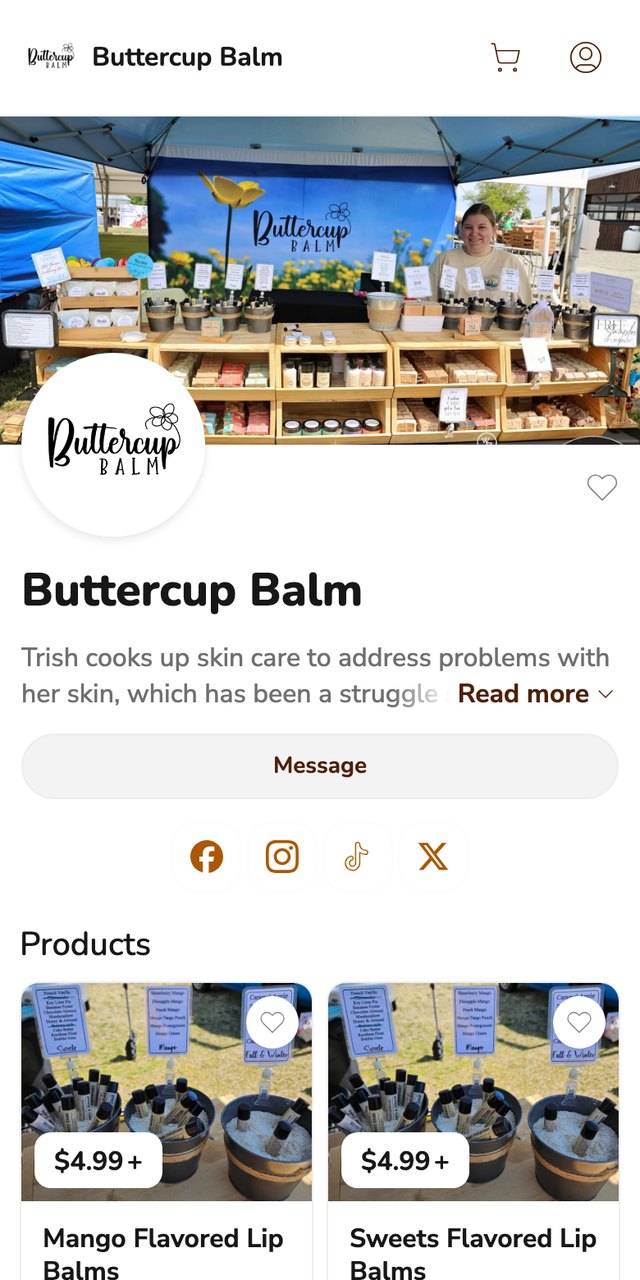
Both shops sell lip balm in a way that suits reordering. Buttercup Balm groups dozens of flavors into a handful of listings, so a regular finds their flavor in a few taps. Mixtapes and Tallow sells only bundles, which raises the order size. On September 30, 2026 a hand count of 2,761 products, using a wider word search, found 2 lip balm listings, one from Mixtapes and Tallow and one from a vendor that is not in today's count, so treat today's number as a snapshot.
The mistakes that cause problems are mostly about words, colors and missing label lines, not about the recipe. Here are the ones to check before your first market:
The fix for most of these is to write your label, your sign and your listing text once, check them against this list, and reuse the same words everywhere.
Seven steps take you from a recipe to a legal first sale, and most of the waiting is on labels and permits, not pouring. Here is the order that saves rework:
Launch with an unflavored tube and three flavors, not twelve. Four labels is a small first print run, you learn which flavor sells before you buy more flavor oil, and an unflavored option catches the shoppers who say they react to fragrance.
You do not need an FDA license to sell homemade lip balm, because FDA does not license cosmetics firms. Your state or city may still require a license or permit. Florida requires a cosmetic manufacturer permit unless your annual gross sales are $25,000 or less, and its exemption list does not name lip balm, so confirm with the state first. Many cities also require a general business license, and states with a sales tax require a seller's permit.
No. Cottage food laws cover certain foods made at home, and lip balm is a cosmetic under federal law, even when it is flavored like candy. You can still sell it from home, but under FDA's cosmetic rules and any state cosmetic rules, not your cottage food registration.
No. FDA does not approve cosmetics or their ingredients before they are sold, except for color additives, which must be approved for the use you put them to. Small makers with under $1,000,000 in average yearly US cosmetic sales over three years, adjusted for inflation, are also exempt from FDA facility registration and product listing, unless they also make eye-area products like eyeliner or the other kinds the law excludes.
Not without turning it into a drug. "Temporarily protects chapped or cracked lips" is the wording FDA's skin protectant drug rule (21 CFR 347.50) sets for lip protectant drugs, which must follow drug labeling rules. Describe how your lip balm feels and what is in it instead, such as "a soft beeswax balm that keeps lips smooth."
Plain mica is approved by FDA for cosmetics generally, which includes lip products. Many colored mica blends also contain ultramarines or ferric ferrocyanide, which FDA approves only for externally applied cosmetics, a category that excludes the lips. Read the supplier's full ingredient list before a color goes into lip balm.
Yes, as long as it meets the same FDA cosmetic label and claim rules as at a market. On a $15 set, Etsy's listing, transaction and payment processing fees come to about $1.88 before shipping, checked October 6, 2026, and Etsy's Offsite Ads fee can add 15% (12% once a shop has passed $10,000 in yearly sales) on an order that came from one of its ads.
These guides cover the parts of a lip balm business this one only touches:
A tube with cosmetic wording, lip-approved colors and a complete label is ready for a market table. The next step is a place for regulars to reorder their flavor, and a Homegrown storefront for lip balm vendors gives you one link for $10 a month billed annually.



