
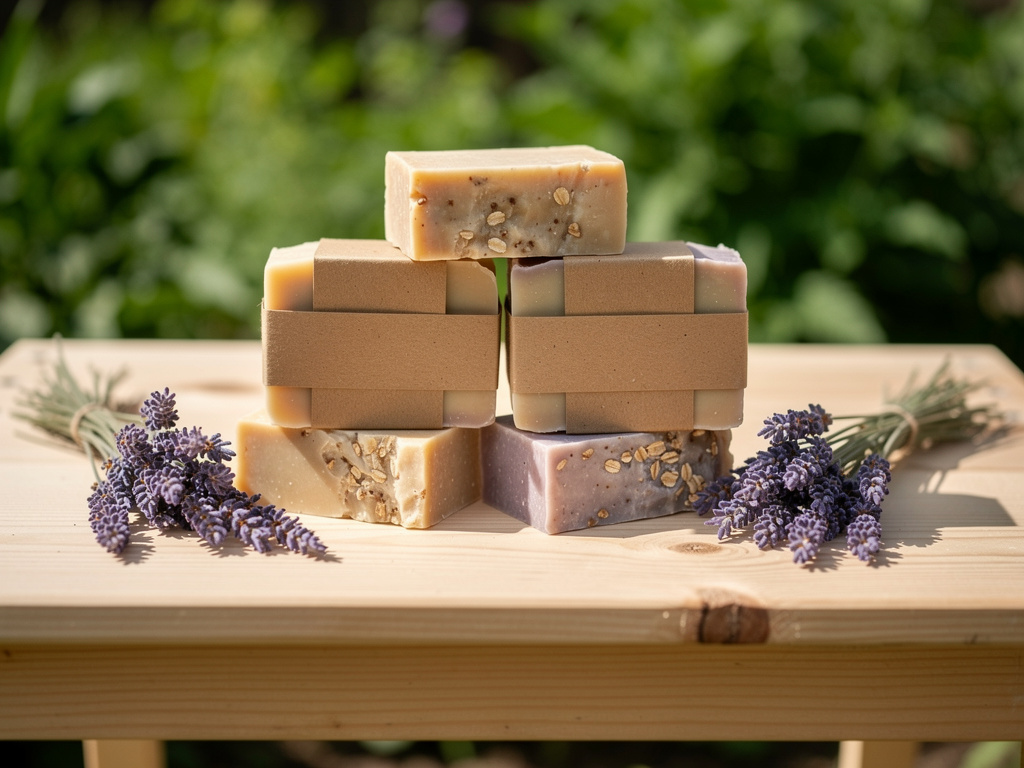


The short version: Yes, you can sell homemade soap from your own home, and no federal license is needed to make it in your kitchen. What you are allowed to say about it decides which rules apply: a bar made from oils and lye and sold only as soap is "true soap" and falls under the Consumer Product Safety Commission, while a bar sold as moisturizing, deodorizing or scented to make you smell nice is a cosmetic under the FDA. A bar sold as antibacterial or as a fix for acne or eczema is a drug, and a home kitchen cannot legally sell a drug without meeting drug rules. Under the 2022 federal cosmetics law, a business averaging under $1,000,000 a year in US cosmetic sales skips FDA registration, but it still keeps safety records, reports serious reactions and puts a contact line on the label. States add their own layer: Florida wants a cosmetic manufacturer permit once a cosmetics business passes $25,000 a year in gross sales, and a set sentence on the label below that line.
Checked on the FDA's soap, cosmetics and small business pages, 21 U.S.C. 364h, Florida Statutes 499.01, the California Safe Cosmetics Program page and findhomegrown.com/signup, September 24, 2026: the key rules below came off those sources that day, and the fee table and both label tables name their own sources and check dates. Product laws change, so verify your state's current rules on its own agency page before you sell a bar. On the ordering side, Homegrown is $10 a month billed annually, customers create a Homegrown account to place a first order, and there is no timed drop or countdown release feature.
A neighbor bought three bars of your lavender soap last month, a friend wants a dozen for holiday gifts, and the farmers market has an open table. Before you print a single label, you want to know whether this is legal. It is, and soap has no cottage food permit, sales cap or federal license to clear before you sell it.
The law does not care what you call it. It cares what the bar is made of and what you say it does. The same cold process bar can be true soap on one label, a cosmetic on the next, and a drug on a third, and each one comes with a different agency and a different label. This guide sorts 12 common soap products and label phrases into those three buckets, plus two label words that change nothing, walks through the 2022 federal cosmetics law in plain words, and shows two state rules that prove "check your state" is real advice.
Yes, you can sell homemade soap from your own home, and no federal agency issues a license to do it. The FDA's fact sheet for small businesses, read on September 24, 2026, says plainly that it is not against the law to make cosmetics at home and that the FDA does not license cosmetics businesses.
That does not mean there are no rules. It means the rules sit on the product and the label instead of on your kitchen. Three questions decide your answer, and they are worth separating before anything else:
This page is the permission half of selling soap. For the recipe, the curing time and the booth setup, the companion guide on how to make and sell soap at the farmers market covers the making side once you know which rules you are under. Everything below assumes your soap is made safely and cured fully, because every rule that follows is about what happens after the bar leaves your kitchen.
Soap follows product law instead of food law, so the cottage food rules that govern your cookies and jam do not apply to it at all. Cottage food laws let you sell low-risk foods from a home kitchen, and soap is not food. The University of Nebraska's cottage food law FAQ answers the question directly: homemade lotions and other personal care products cannot be sold under cottage food rules because they fall under the FDA. Lotion adds one step soap never needs, a broad-spectrum preservative for the water in the bottle, and how to sell lotion from home walks through it along with a $3.18 cost for an 8 ounce bottle.
That swap changes more than the agency name. Here is what it means for a home soap vendor:
If you already sell food at the same table, keep the two paperwork trails apart. A bar of soap and a loaf of bread can share a booth, but they answer to different agencies. A serious reaction to a cosmetic soap has to be reported to the FDA within 15 business days, which is a rule no loaf of bread ever triggers.
A bar is true soap only when it meets all 3 conditions in the FDA's definition at the same time, and most bars sold as soap in stores do not. The FDA's soap FAQ, current as of August 20, 2024 and loaded again on September 24, 2026, lists them this way:
Meet all three and your bar is regulated by the Consumer Product Safety Commission, not the FDA. The FDA's own pages send true soap makers to that agency with their questions.
The FDA also notes that "today there are very few true soaps on the market," because most body cleansers are synthetic detergent products. That is good news for a cold process or hot process soap maker. A 4.5 ounce bar made from olive oil, coconut oil and lye, sold with a plain name like "Lavender Soap," is exactly what the definition describes.
The words on your label, your sign and your online listing decide the category, and a single word like "moisturizing" or "antibacterial" is enough to move a bar out of true soap. The FDA says intended use comes from your claims, from what customers expect, and from ingredients with a well-known medical use. The table below sorts 12 products and label phrases you will see at any craft fair into the three buckets, plus the two front-of-package words that change nothing.
Scroll sideways to see every column.
| What is on the label or listing | Category | Why it lands there |
|---|---|---|
| "Lavender Soap," made from oils and lye, no other claims | True soap | Soap salts do the cleaning, and it is sold only as soap |
| "Goat Milk Soap," made from oils, goat milk and lye | True soap, if sold only as soap | The test looks at what cleans and what you claim; the milk does not change it by itself |
| Liquid castile soap made with potassium hydroxide, sold as soap | True soap | Potassium hydroxide is an alkali, so the result is still soap salts |
| "Moisturizing Shea Butter Bar" | Cosmetic | The FDA names moisturizing the skin as a cosmetic use |
| "Deodorizing Charcoal Bar" | Cosmetic | Deodorizing the body is a cosmetic use |
| "Leaves your skin smelling like a garden" | Cosmetic | Making the user smell nice is a cosmetic use |
| Melt and pour bar on a base with sodium lauryl sulfate | Cosmetic | A synthetic detergent is doing some of the cleaning |
| Bath bomb or sugar scrub | Cosmetic | It cleanses or beautifies but is not made of soap salts |
| "Antibacterial Hand Soap" | Drug | The FDA says soaps marketed as antibacterial are drugs |
| "Acne Bar" or "clears breakouts" | Drug | Treating a skin condition is a drug use |
| "Eczema Relief Soap" | Drug | Treating a skin condition is a drug use |
| "Aromatherapy Sleep Bar" | Drug | The FDA's own example: a scent sold to help you sleep is a drug |
| "All Natural" or "Organic" on the front | No change | The FDA has no definition for either word; the USDA regulates "organic" |
Every row applies the FDA's soap FAQ and its "Is It a Cosmetic, a Drug, or Both? (Or Is It Soap?)" page, both checked on September 24, 2026. A bar can be a cosmetic and a drug at once, and then it has to meet both sets of rules.
A drug claim does not have to be on the wrapper to count. The FDA says claims in advertising, on the internet and in other promotion set a product's intended use, so "great for eczema" in an online listing, a hashtag or a chalkboard sign at your table can turn a true soap into an unapproved drug. Describe the scent, the oils and the feel of the lather. Leave health conditions out.
Melt and pour soap is regulated as a cosmetic whenever the base contains synthetic detergents, even if you only add color and scent at home. The FDA's second condition for true soap is that soap salts do all of the cleaning, and a detergent in the base breaks that condition no matter what you do after you melt it.
Some melt and pour bases are made mostly of true soap, and others add detergents to make them lather faster or melt cleaner. The only way to know is to read your supplier's ingredient list before you pick a base. Detergent names to look for include:
Whether you melt 2 pounds of base a week or 20, the base decides the category. If the base is a cosmetic, your finished bar is a cosmetic, and your label needs the full ingredient list covered later in this guide. The name on the label is the business the law holds responsible. The FDA's summary of the 2022 federal cosmetics law defines the "responsible person" as the manufacturer, packer or distributor whose name appears on the label, so buying the base from a supplier does not move the responsibility off you.
Melt and pour is still a perfectly legal way to sell soap. A detergent base simply puts you in the cosmetic column from day one, which means two things. First, your label carries an ingredient list. Second, any color you add has to be an FDA-approved color additive for that use, since the FDA says color additives in cosmetics need approval, and some approved colors may only be used from batches certified in the FDA's own labs. A small melt and pour line with a handful of FDA-approved colors can meet both rules with one careful label per product.
Each of the 3 categories answers to a different agency and carries a different workload, and true soap carries the lightest of the three. The table lines them up side by side so you can see what moving one column to the right costs you.
Swipe the table sideways for the rest of the columns.
| Requirement | True soap | Cosmetic soap | Drug soap |
|---|---|---|---|
| Who regulates it | Consumer Product Safety Commission; label rules under the Federal Trade Commission's packaging rules | FDA | FDA |
| Approval before you sell | None | None, except color additives | Premarket approval or a matching over-the-counter drug monograph |
| Label basics | Product name, net weight, business name and address | Product name, net weight, ingredient list in descending order, business name and address, a contact for reaction reports | "Drug Facts" panel with active ingredients listed first |
| FDA registration and product listing | Not covered | Required unless you qualify as a small business | Required under drug registration rules |
| Serious reaction reports | Not covered by the cosmetics law | Within 15 business days, with a copy of the label | Under drug rules |
| Color additives | Not covered by FDA color rules | Must be FDA-approved for the intended use, and some colors must come from FDA-certified batches | Under drug rules |
Sources: the FDA's soap FAQ, its cosmetic-or-drug page, its small business fact sheet and its page on the 2022 cosmetics law, plus the Federal Trade Commission's packaging rules at 16 CFR Part 500, all checked on September 24, 2026.
The drug column is the one to stay out of. The FDA says a drug must either receive approval through a new drug application or follow a published monograph for its category, and acne treatments are one of the categories with a monograph. A home kitchen cannot practically meet drug manufacturing rules, which is why the claims in the last section matter so much.
For a part-time vendor selling an $8 bar, the practical choice is between the first two columns. True soap means a shorter label and no FDA paperwork at all. Cosmetic soap means an ingredient list, a contact line and a few recordkeeping duties, in exchange for the freedom to call your bar moisturizing or to use a detergent base.
Most home soap businesses do not have to register with the FDA, because the 2022 law exempts small businesses averaging under $1,000,000 a year in US cosmetic sales. The Modernization of Cosmetics Regulation Act of 2022, usually shortened to MoCRA, made facility registration and product listing mandatory for most cosmetics companies, with a carve-out for small ones.
The exact line is in the statute. Under 21 U.S.C. 364h, a small business is one whose "average gross annual sales in the United States of cosmetic products for the previous 3-year period is less than $1,000,000, adjusted for inflation." Small businesses are not subject to the registration and listing section or to the manufacturing practice section of the law.
The exemption disappears if you make any of these four kinds of products, even alongside your soap:
For a home soap maker, two points follow. First, true soap is not a cosmetic, so the 2022 law does not reach it at all. Second, the line is far above a typical market business. Selling 2,000 bars a year at $8 comes to $16,000, which is 1.6% of the small business line. The FDA's registration page adds that businesses not required to register may still do it voluntarily, but voluntary filings have to complete every mandatory field.
A small cosmetic soap business still owes 4 duties under the 2022 law even after it skips registration, and none of them is hard once you know about them. The small business exemption covers registration, listing and manufacturing practice rules only.
Here is what stays on your plate if your soap is a cosmetic:
The contact line is the newest of the four, required only since December 29, 2024, so older label templates may not have it, and it is the easiest to fix, even for a business doing $16,000 a year. A website address or an email on the back of the wrap covers it.
Two more rules are still being written. The FDA's MoCRA page, last updated August 10, 2026, still lists manufacturing practice rules and fragrance allergen labeling as regulations the agency has to establish. Small businesses are exempt from the manufacturing rules, but the allergen labeling rule has no small business carve-out in the statute, so check the FDA page again before your next label print run.
A true soap label needs 3 things: the product name, the net weight, and your business name and place of business. A cosmetic soap label needs those plus an ingredient list and a contact for reaction reports. The table below puts the two checklists side by side.
Swipe sideways to compare the two labels.
| Label element | True soap | Cosmetic soap |
|---|---|---|
| Product name | "Soap," which can include an oil name like "Olive Oil Soap" | The common name of the product, in bold on the front panel |
| Net weight | Required, in both ounces and grams (for example Net Wt. 4 oz (113 g)), on the front panel within the bottom 30% of the label, and never more than the bar actually weighs | Required, on the front panel within the bottom 30% of the label |
| Business name and place of business | Street address, city, state and ZIP; the street can be dropped if you are listed in a public directory | Same, and the FDA says a P.O. box or a website alone is not enough |
| Ingredient list | Not required | Required, in descending order of predominance, by common or usual name |
| Contact for reaction reports | Not required | Required since December 29, 2024 |
| Florida exempt business statement | Not required | Required for exempt Florida businesses, in 10-point type |
True soap rules come from the Federal Trade Commission's packaging rules at 16 CFR Part 500 and the Handcrafted Soap and Cosmetic Guild's summary of them. Cosmetic rules come from 21 CFR 701, the FDA's small business fact sheet and 21 U.S.C. 364e. All checked on September 24, 2026.
The Handcrafted Soap and Cosmetic Guild's page on soap label requirements adds two details that trip up new soap makers. The name cannot oversell a minor ingredient, so a bar with 0.1% shea butter cannot be called "Shea Butter Soap." And an ingredient list on a true soap is optional, so adding one does not turn the bar into a cosmetic. If you add one, list every ingredient or word it informally, like "made with olive and coconut oils," because a partial list that looks complete can mislead a customer.
For cosmetic labels, 21 CFR 701.3 lets you list ingredients above 1% in order, then ingredients at 1% or less in any order, then colors. The FDA's fact sheet also says not to put words like "natural" inside the ingredient list itself, because ingredients go by their common or usual names.
Weigh a fully cured bar before you print, then label under that weight. A cold process bar keeps losing water after it is cut, and the guild's label page warns that net weight may never be more than what is actually in the wrap. No federal rule requires a date on that same label, but a made-on month and a batch code help, and our guide to how long homemade soap lasts sets out the best-by dates we would print for each kind of bar. If a 4.5 ounce bar settles at 4.3 ounces by market day, a label reading "Net Wt. 4 oz (113 g)" stays accurate on market day.
There is no federal soap license, but your state and city can still require a business license, a sales tax permit or, in Florida, a cosmetic manufacturer permit once gross sales pass $25,000 a year. The FDA's fact sheet says outright that state or local authorities may require licensing and sends small businesses to their state and to the Small Business Administration for those answers.
Florida Statutes section 499.01, 2026 edition, requires a cosmetic manufacturer permit for anyone who makes cosmetics in the state, and exempts a business with annual gross sales of $25,000 or less. An exempt business may only make and sell soaps that count as cosmetics, lotions, moisturizers and creams, sold prepackaged with the FDA label information and stored where they are made, so a cosmetic outside that list, such as a bath bomb or a sugar scrub, is not covered by the exemption. Each unit must carry, in contrasting color and at least 10-point type, the sentence "Made by a manufacturer exempt from Florida's cosmetic manufacturing permit requirements." The state can ask for written proof of your yearly sales and can inspect on a complaint. For sugar scrub vendors, whose product sits outside that exempt list, the state's permit office adds that it does not issue permits to residential areas, which our guide on whether you can sell homemade sugar scrub walks through step by step. The permit is written for cosmetics, so it reaches soap sold with cosmetic claims or made on a detergent base.
The California Department of Public Health says California is the only state that requires companies to report harmful ingredients used in cosmetics. Under the Safe Cosmetics Act, reporting applies to a company with $1,000,000 or more in worldwide cosmetic sales whose products contain an ingredient on the state's reportable list. A second law on fragrance and flavor ingredients, in effect since January 1, 2022, lists its criteria on the same page without a sales figure, so a California soap maker using fragrance should email the program at SafeCosmetics@cdph.ca.gov and ask.
Outside those two examples, these are the local permits to check:
Rules change every legislative session, so verify your state's current rules on its own agency page before you sell your first bar.
Yes, soap sells at farmers markets and craft fairs across the country, and the extra rules come from the market itself rather than from soap law. A market decides who gets a table. Some markets limit non-food vendors, some ask for a certificate of liability insurance, and some ask to see your labels or your sales tax permit with the application. If you add earrings or bracelets to the same table, the application stays the same but the product rules change, from what you can legally stamp 925 to the lead limit on kids' pieces, as the guide to selling homemade jewelry explains.
Before you apply, gather these:
The sign matters more than it looks. The same FDA rule that covers your online listing covers a chalkboard that says "helps with dry skin conditions," so read your sign with the drug column of the earlier table in mind. For the booth side of it, the guide to selling non-food products at the farmers market covers market rules, pricing and display for soaps, candles and crafts.
In a pull of the Homegrown catalog on August 14, 2026, 33 of the 1,804 products listed by 219 vendors were soaps, from bars to liquid castile, sold by 6 vendors. All 33 sat in the Health and Wellness category, which held 119 products from 15 vendors. Several of those product names use face and body wording, which is exactly where the label words in this guide start to matter.
Craft fairs work the same way, with one difference: juried fairs judge the product and its presentation, so a clean, compliant label is part of what gets you in. Markets and fairs are two of seven places a legal bar can go, and where to sell soap covers the other five, including consignment shops that usually keep 30 to 50 percent and gift shops that pay about half of retail.
Yes, you can sell homemade soap online and ship it, and the federal rules are the same online as at a market table. Nothing in the FDA soap and cosmetics pages reviewed for this guide limits a home soap maker to customers in one state. That is the opposite of the usual food rule: the University of Nebraska's cottage food FAQ notes that in most cases the only way to sell homemade food across state lines is to go commercial.
What changes online is how many places your claims live. The FDA counts claims made on the internet when it decides a product's intended use, so these all count:
A listing that says "Charcoal Soap, great for acne" is a drug listing, even if the wrap on the bar says only "Charcoal Soap." Keep the online copy and the label saying the same thing.
The label rules follow the bar into the box. For a cosmetic, the contact line for reaction reports can be a website, which suits an online business well. Florida's permit follows where the soap is made, while California's reporting program covers cosmetics sold in California, so a customer in Los Angeles brings California's page into play wherever you make the bars. If you ship, weigh a boxed 4 ounce bar before you set shipping prices, because the box and padding count toward the postage weight, and that shapes whether single bars or three-bar sets make sense to sell online.
Once your bars are legal and labeled, the next question is where customers order them, and on an $8 bar the per-bar fees in this table run from 36 cents to $1.21. The table uses the $8 price the goat milk soap pricing guide lands on for a 4 to 5 ounce bar, and shows every fee on every row.
This one is wide. Drag it sideways to read every column.
| Platform | Subscription | Trial period | Platform fee | Card processing | Customer pays on an $8 bar | Vendor pays on an $8 bar | Vendor pays on 50 bars at $8 |
|---|---|---|---|---|---|---|---|
| Homegrown | $10/mo billed annually, $12.50/mo billed monthly | 7 days, no charge until day 8 | $0, 0% commission | 2.9% + $0.30 | $8.00 | $0.53 | $36.60 |
| Square Online, Free plan | $0/mo per location | n/a on the Free plan | $0 | 3.3% + $0.30 online | $8.00 | $0.56 | $28.20 |
| Square reader at the market, Free plan | $0/mo per location | n/a on the Free plan | $0 | 2.6% + $0.15 tap, dip or swipe | $8.00 | $0.36 | $17.90 |
| Shopify Basic | $29/mo billed yearly, $39/mo billed monthly | 3 days, then $1/mo for 3 months | $0 with Shopify Payments, 2% with another payment provider | 2.9% + $0.30 online, standard cards | $8.00 | $0.53 | $55.60 |
| Etsy | None; $0.20 listing fee per bar sold | n/a | 6.5% transaction fee on the price plus shipping, and 15% on sales from Offsite Ads | 3% + $0.25 | $8.00 plus any shipping you charge | $1.21 | $60.50 |
Homegrown, Square, Shopify and Etsy figures come from each company's own pricing page, checked on September 24, 2026. The 50-bar column uses annual billing where there is a choice; on monthly billing Homegrown is $39.10 and Shopify Basic is $65.60. Etsy's column assumes no shipping charge and no Offsite Ads sale, and Etsy says it may also charge a one-time shop set-up fee shown at signup. Card processing is figured on the $8 price, and the customer column is before any sales tax.
At 50 bars a month, Square's Free plan costs the least in this table, both online and in person, and Homegrown costs about $8 more a month than Square Online. Square's online rate is 3 cents a bar higher than Homegrown's, so that monthly gap closes at about 312 bars a month. Homegrown earns that gap in a different place. It is $10 a month on annual billing, with no percentage fees beyond standard payment processing, and it gives you a storefront built for a small batch schedule, where regulars reserve bars from your next cure before the batch is ready and pick them up at the market or your door. Your Homegrown payout ledger lists every sale, fee and payout, which covers your online orders; Florida can ask an exempt business for its cosmetic sales at every location, so keep a record of your market sales too. Etsy takes 6.5% of each sale plus its 3% + $0.25 processing and a $0.20 listing fee, which is $1.21 of every $8 bar. Shopify Basic starts at $29 a month on yearly billing before processing, the biggest fixed cost in the table.
What Homegrown does not do matters too. It does not check your labels or your claims, and it does not file anything with the FDA or your state. Customers create a Homegrown account to place their first order. Your storefront is listed on the Homegrown marketplace, but plan on most orders coming from people you send to your own link.
The mistakes below mostly start with 1 word on a label or listing, not with the soap itself, and the rules in this guide make each one easy to spot:
None of these needs a lawyer to fix. They need a careful read of your own label, sign and listings against the tables above, done once before your first sale and again whenever you add a product. If the product you add is a laundry powder, the label changes: it needs the net weight in ounces and grams and a boxed caution warning for the washing soda, and a word like antibacterial turns it into a pesticide the EPA must register, as our guide to selling homemade laundry soap from home explains.
Going from first batch to first legal sale takes 7 steps, and most of them are one-time work you do before your first market. Put them in this order so nothing gets printed twice:
Once step 7 is done, the soap is ready to sell and the question becomes how people order it between markets. A Homegrown storefront lets regulars reserve bars from a batch that is still curing and pay ahead, so you know how many to wrap and label before pickup day. It runs $10 a month billed annually, and you can set up your soap storefront at findhomegrown.com/signup in about 15 minutes once your labels are done.
No federal license exists for making soap at home, and the FDA says it does not license cosmetics businesses. Your state or city may still require a general business license, a sales tax permit or a home occupation permit. Florida adds a cosmetic manufacturer permit for cosmetic soaps once gross sales pass $25,000 a year, with an exemption and a required label sentence below that line.
No. True soap, meaning oils plus lye with a plain cleaning-only label, is not an FDA product at all; it falls under the Consumer Product Safety Commission. Cosmetic soaps need no FDA approval either, except for any color additives, which must be approved for their use. Only a soap sold with a drug claim, like acne or antibacterial, needs drug approval or a matching monograph.
Yes. Goat milk soap made with oils and lye, with nothing on the label beyond cleaning, meets the FDA's definition of true soap, because the test looks at what does the cleaning and what you claim rather than at the milk. It becomes a cosmetic if you market it as moisturizing, and a drug if you say it treats eczema or another skin condition. The label follows whichever category your words put it in.
Yes, melt and pour soap is legal to sell from home. If the base contains synthetic detergents, the finished bar is a cosmetic, so the label needs a full ingredient list in descending order, a business address and a contact line for reaction reports. Read your supplier's ingredient list before choosing a base so you know which label you are printing.
No federal or state rule checked for this guide requires insurance to sell homemade soap. Some farmers markets and craft fairs require a certificate of liability insurance with the application, and a policy protects you if a customer reports a reaction. Ask each market for its requirement before you apply.
You can use "natural" on the front of the package, since the FDA has no definition for it, but the claim still has to be truthful and it cannot appear inside the ingredient list. "Organic" is regulated by the USDA's National Organic Program, not the FDA, so check the USDA's rules before printing it. Neither word changes whether your soap is true soap or a cosmetic.
These six pick up where this guide stops, from the recipe to the price tag.
With the label settled and the claims cleaned up, the rest is getting bars to the people who want them. A Homegrown storefront runs $10 a month on the annual plan with 0% commission and no percentage fees beyond standard payment processing, and regulars can reserve your next batch before it finishes curing. Start your homemade soap storefront at findhomegrown.com/signup and keep every bar you sell on one list.



