


The short version: You can sell handmade soap and bath products at a farmers market without a cottage food permit, because soap is not food, but the words on your label decide who regulates it. A bar made from oils and lye and sold only as soap falls under the Consumer Product Safety Commission, a bar sold as moisturizing or to make you smell nice is an FDA cosmetic, and an antibacterial or acne bar is a drug. A basic cold process batch with 28 ounces of oils makes about 8 bars for $12.91 to $19.09 in oils, lye, water and lavender essential oil, or $1.61 to $2.39 a bar before a box, and each bar needs 4 to 6 weeks on a curing rack. The 54 soap listings on Homegrown are priced $5 to $12 at their base price, with a middle price of $7.
Checked on October 19, 2026: the FDA's soap and small business pages, the CPSC's soap guidance, 21 U.S.C. 364h, Florida Statutes 499.01, Nevada's NRS 585, supplier prices at Wholesale Supplies Plus, Nurture Soap and Walmart, ACT's soap maker insurance page, the Homegrown catalog, and the pricing pages of Homegrown, Etsy and Square. Rules change, so verify your state's current rules before you sell. Homegrown customers create an account to place their first order, and Homegrown has no drops or countdown release feature.
Handmade soap is one of the easiest non-food products to add to a farmers market table. A bar of cold process soap costs about $1.61 to $2.39 in oils, lye, water and essential oil at today's supplier prices, and soap listed on Homegrown has a middle price of $7 a bar. Soap is not food, so the cottage food permit, the health inspection and the commercial kitchen that a baker deals with do not apply to it. What does apply is a set of labeling rules that changes with the words you print, plus a state permit in some states, including Florida and Nevada, and this guide walks through both.
If you already sell bread, jam or honey, soap fills out the table and gives a shopper one more thing to pick up on the way out. If soap is your whole business, the same steps get you from your first batch to your first market. Every supplier and platform price below was loaded on October 19, 2026, and figures quoted from our other guides carry the date those guides checked them. Every federal and state rule links to the agency page or legal text it came from.
While your first batch cures for 4 to 6 weeks, you can set up a Homegrown storefront, so regulars can order and pay for bars before market day and pick them up at your booth.
Soap sells well at a farmers market because a shopper can see it, smell it and hold it before buying, it is priced for an impulse buy, and every bar gets used up. A $7 bar is an easy add-on for someone who came for vegetables, and a customer who likes the scent comes back when the bar runs out.
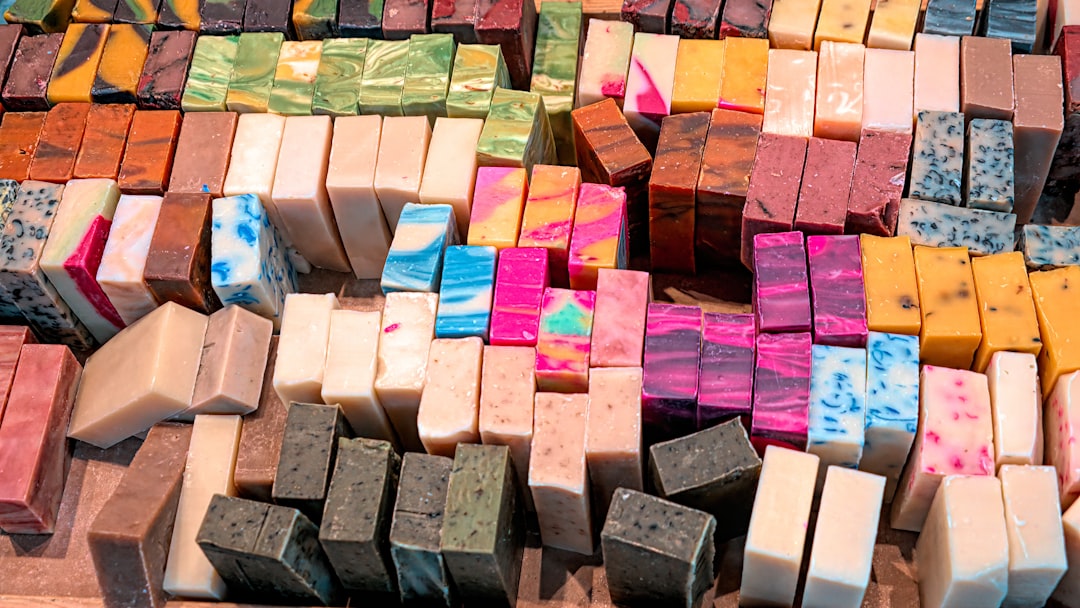
Handmade soaps with natural colors, swirl patterns and botanical tops (dried lavender, rose petals, oatmeal) stand out on a market table. Shoppers stop to look, pick up a bar and smell it, and that is a sales pitch you never have to say out loud. A table of upright bars in many colors, like the one in the photo at the top of this page, reads from across the aisle.
Soap is an everyday product that fits almost any shopper who walks past your table. Unlike a niche food product, a bar of soap does not depend on dietary preferences, food allergies or cooking habits, so it fits the vegetable shopper, the coffee shopper and the parent with a stroller. That makes it a natural add-on for a customer who came for something else.
Soap is an easy $6 to $10 gift that looks like more than it costs. A shopper buys one bar for themselves and a second one for a sister or a neighbor. That gift appeal is also why boutiques, consignment shops and holiday craft fairs stock soap, and the section on where else to sell handmade soap, further down this guide, gives the range on a $7 bar, from the full $7.00 at your booth to half that from a gift shop.
A bar of soap gets used up in a few weeks, so a customer who loves a scent comes back for it. Artisan Shopper weighed handmade bars over a month and found about 6.5 grams used per shower, so a 5 ounce bar (about 142 grams) would last about 22 days for one person showering once a day. That is a faster repeat cycle than jam or honey, which sit in a pantry for months.
Yes, you can sell homemade soap, bath bombs, shower steamers and sugar scrubs at a farmers market, and the FDA's fact sheet for small businesses and homemade cosmetics says it is not against the law to make cosmetics in your home and that the FDA does not license cosmetics firms. What you have to get right is which category each product falls in, because that decides your label and whether a state permit applies.
Here is the short list of what decides the rules for each product you bring:
Food rules do not carry over. Soap, bath bombs and scrubs are not cottage food, so the sales caps, food labels and kitchen rules in your state's cottage food law do not cover them. The rules for selling homemade soap go deeper on each federal rule, from reaction reports within 15 business days to the contact line cosmetic labels have needed since December 29, 2024.
No federal permit is needed to make or sell soap, and the federal cosmetics law excuses small cosmetics businesses from FDA registration, but your state or city may require a permit, and the label you print decides which federal agency's rules you follow. The table below sorts each product by who regulates it, using the FDA's soap pages and the CPSC's soap guidance as loaded on October 19, 2026.
True soap is not a cosmetic under federal law, so the CPSC regulates it, while scented, moisturizing and drug-claim bars fall under the FDA. The FDA's frequently asked questions on soap says a product is regulated as soap only when it is made mostly of "alkali salts of fatty acids" (what you get when you combine fats or oils with lye), those salts alone do the cleaning, and it is "labeled and marketed only for use as soap." A product that meets all three is regulated by the Consumer Product Safety Commission, not the FDA. If it is sold for moisturizing the skin, making the user smell nice or deodorizing the body, it is a cosmetic. If it is sold to kill germs or treat acne or eczema, it is a drug.
Swipe the table to see all four columns.
| Product | Who regulates it | What the label needs | Federal permit or registration |
|---|---|---|---|
| True soap: oils plus lye, sold only as soap ("Lavender Soap, 4.5 oz") | CPSC | The CPSC says it has no specific requirements for soaps; children's soap needs a tracking label, third-party lead testing and a Children's Product Certificate | None |
| Bar sold as moisturizing, scented to make you smell nice, or deodorizing | FDA, as a cosmetic | Cosmetic label: product name, net weight, ingredients in descending order, name and place of business, and a contact for reaction reports | No FDA approval; registration and listing unless you average under $1,000,000 a year in US cosmetic sales |
| Melt and pour bar from a base with synthetic detergent | FDA, as a cosmetic | Cosmetic label, even if it says "soap" | Same as above |
| Bar sold as antibacterial, or to treat acne or eczema | FDA, as a drug (possibly drug and cosmetic) | Drug labeling under the FDA's drug rules | Firm registration and product listing with the FDA, plus the drug rules for that category |
| Bath bomb sold to scent and color a bath | FDA, as a cosmetic | Cosmetic label | Same as a cosmetic bar |
| Shower steamer sold to scent a shower | Not settled in the FDA and CPSC pages we read; ask the FDA | Ask the FDA which label applies | Ask the FDA |
| Sugar scrub | FDA, as a cosmetic | Cosmetic label | Same as a cosmetic bar |
Sources, all loaded October 19, 2026: the FDA's soap FAQ (content current as of August 20, 2024), the FDA's "Is It a Cosmetic, a Drug, or Both? (Or Is It Soap?)" page, the FDA's small business fact sheet, 21 U.S.C. 364h for the $1,000,000 small business line, and the CPSC's soap business guidance. The FD&C Act defines a cosmetic as something "rubbed, poured, sprinkled, or sprayed on" the body "for cleansing, beautifying, promoting attractiveness, or altering the appearance," which is why bath bombs and scrubs land on the cosmetic side.
The rule: If your bar is oils plus lye and you sell it only as soap, it is true soap and the CPSC regulates it. Once your label or sign says it moisturizes, scents you or deodorizes, the FDA treats it as a cosmetic, and once it claims to kill germs or treat a skin condition, it is a drug. "Lavender soap" is a name. "Lavender soap that leaves your skin soft and smelling like lavender all day" is a cosmetic claim. "Antibacterial acne bar" is a drug claim, so stay off that side entirely.
Ingredients can move a bar too. The CPSC's soap business guidance says that since the 2022 federal cosmetics law, "inclusion of ingredients commonly recognized as having cosmetic properties may classify the product as a cosmetic even if no cosmetic claims are made," and suggests asking the FDA if you are unsure. A label that meets the cosmetic standard covers you either way, so it is the safer label to print.
To sell soap at a farmers market you need the market's vendor application, the insurance the market asks for, a correct label on every bar, and any local business license or seller's permit your city and state require. Here is the checklist:
You do NOT need a cottage food permit, a health department kitchen inspection, a commercial kitchen or FDA approval for soap. FDA registration only comes up for cosmetics, and the 2022 federal cosmetics law exempts businesses that average under $1,000,000 a year in US cosmetic sales (adjusted for inflation) from facility registration and product listing, under 21 U.S.C. 364h. That exemption does not cover products that regularly come into contact with the mucous membrane of the eye in normal use, are injected, are taken internally, or change your appearance for more than 24 hours, and it does not excuse you from reporting serious reactions.
Of the two state cosmetic laws we read on October 19, 2026, both leave true soap out of the state definition of a cosmetic (Florida's is in Florida Statutes 499.003; in Nevada it lasts only until July 1, 2027, when its cottage cosmetics definition adds bath soaps) and both license businesses that make cosmetics. That matters for scented and moisturizing bars, bath bombs and scrubs.
Florida Statutes 499.01 requires a cosmetic manufacturer permit for anyone who makes cosmetics in Florida, but exempts a manufacturer with annual gross sales of $25,000 or less. An exempt manufacturer may only make and sell "soaps, not otherwise exempt from the definition of cosmetics, lotions, moisturizers, and creams," must sell them prepackaged with an FDA-compliant label and stored where they were made, and must print "Made by a manufacturer exempt from Florida's cosmetic manufacturing permit requirements" on each unit in contrasting color and at least 10-point type. Bath bombs and scrubs are not on that list, so ask the state before you sell them under the exemption.
Nevada's NRS 585 says "Cosmetic shall not include soap," and today requires a state license to manufacture cosmetics in any location in Nevada. A new cottage cosmetics law takes effect July 1, 2027: a person making cosmetics at home with gross sales of $100,000 a year or less will need a cottage cosmetics license from the State Department of Agriculture. That law's own definition of a cosmetic, in NRS 585.610, lists bath preparations and bath soaps, so from July 1, 2027 a home soap or bath bomb maker in Nevada needs that license.
Other states can have their own rules, and the FDA's fact sheet says state or local authorities may require licensing. Call your state's health or agriculture department and your city clerk before your first market.
A cosmetic soap label needs five things: what the product is, its net weight, its ingredients from most to least, the name and street address of the business, and a domestic address, phone number or website where a customer can report a bad reaction. A true soap sold only as soap falls under the CPSC, which says it has no specific soap requirements, but printing the same five things costs you nothing and keeps you covered if a word on your sign tips the bar into cosmetic territory.
Here is what each line needs, from the FDA's small business fact sheet and the federal cosmetics law:
Print labels before market day; a kraft window box that shows the label and the bar is $0.36 each in a pack of 50. A label is also where drug claims sneak in. Keep the words to scent, color, texture and how the bar feels. "Gentle," "creamy lather" and "smells like a pine forest" are fine on a cosmetic. "Heals," "treats," "antibacterial" and "clears breakouts" are drug words. The FDA's page on the 2022 cosmetics law says a serious reaction to a cosmetic has to be reported to it within 15 business days, with a copy of the label, so keep a log of every complaint you hear at the booth.
You make cold process soap by mixing oils with a lye and water solution until it thickens, pouring it into a mold, letting it set for 1 to 2 days, cutting it into bars, and curing the bars for 4 to 6 weeks. This guide uses cold process because it gives you full control over the oils, colors, scents and swirl designs, and the finished bar is smooth enough to photograph well.
The six tools priced below cost $95.33 at prices loaded on October 19, 2026; add a heat-safe pitcher and bowl you keep only for soap. Bramble Berry's beginner guide to cold process says to keep soap equipment for soap only, never for food, and to use heat-safe glass, plastic or stainless steel, never aluminum, because aluminum reacts with lye.
Slide the table sideways for every price.
| Item | What we priced | Price |
|---|---|---|
| Digital kitchen scale | Mainstays 6.6 lb scale, 0.1 g steps, Walmart | $12.53 |
| Immersion blender (stick blender) | Hamilton Beach 2-speed, Walmart | $29.98 |
| Soap mold | Nurture Soap 2.5 lb Basic Soap Mold (wood box plus silicone liner) | $35.00 |
| Safety goggles | Wholesale Supplies Plus goggles | $6.58 |
| Nitrile gloves | Wholesale Supplies Plus, 2 pieces (100 for $16.24) | $0.48 |
| Thermometer | Wholesale Supplies Plus candle making thermometer | $10.76 |
| Heat-safe pitcher and bowl | Stainless steel, glass or heat-safe plastic, used only for soap | Not priced |
| Total | 6 priced items | $95.33 |
Prices loaded October 19, 2026 from walmart.com, nurturesoap.com and wholesalesuppliesplus.com, before tax and shipping. With a 100-glove box instead of 2 gloves, the total is $111.09. The mold's silicone liner holds 31.5 ounces of oils and makes 9 full 1-inch bars, per Nurture's product page, so the 28-ounce recipe below fits with room to spare.
This recipe uses 28 ounces of oils and makes 8 bars a little over an inch thick (about 1 1/8 inches), with a batch cost of $12.91 to $19.09. Nurture's liner for this mold is 9 inches long and takes 31.5 ounces of oils for 9 full 1-inch bars. With 28 ounces of oils the loaf still runs the full 9 inches but sits a little lower. The batch makes about 41 ounces of batter, so cutting the loaf into 8 bars gives you about 5 ounces a bar before the cure.
Always run your recipe through a lye calculator before mixing. Each oil needs a different amount of lye: From Nature With Love's saponification chart lists 0.135 ounces of lye per ounce of olive oil, 0.183 for refined coconut oil and 0.128 for shea butter. That adds up to 4.14 ounces of lye to turn every drop of these oils into soap. This recipe uses 3.9 ounces, which leaves about 6% of the oil unreacted (soapmakers call this the superfat) so the bar is gentler on skin.
Swipe to see both price columns.
| Ingredient | Quantity | Cost at bulk sizes | Cost at 1 lb sizes |
|---|---|---|---|
| Olive oil, pomace | 16 oz | $4.81 (7 lb for $33.68) | $7.16 (1 lb) |
| Coconut oil, 76 degree | 8 oz | $1.92 (8 lb for $30.71) | $2.88 (1 lb for $5.76) |
| Shea butter, ultra refined | 4 oz | $1.81 (5 lb for $36.12) | $2.08 (1 lb for $8.30) |
| Sodium hydroxide (lye) | 3.9 oz | $1.83 (2 lb for $14.99) | $1.83 (2 lb for $14.99) |
| Distilled water | 8 oz | $0.09 (1 gallon for $1.47) | $0.09 |
| Lavender 40/42 essential oil (optional) | 1 oz from the jug, or a 1 fl oz bottle | $2.45 (1 oz of the 15.5 oz jug for $38.05) | $5.05 (1 fl oz bottle) |
| Natural colorant (optional) | About 1 tsp | French green clay, 4 oz jar for $6.50; a teaspoon is a small share of it, not counted here | |
| Total | $12.91 | $19.09 | |
| Cost per bar (8 bars) | $1.61 | $2.39 | |
Oils from Wholesale Supplies Plus, lye, essential oil and clay from Nurture Soap, and water from Walmart, all loaded October 19, 2026. A kraft window soap box adds $0.36 a bar (50 for $17.95 at Wholesale Supplies Plus), for $1.97 to $2.75 a bar boxed. Leave out the essential oil and the batch is $10.46 to $14.04. Nurture lists its smallest lavender bottle in fluid ounces and its 3.7, 7.6 and 15.5 oz sizes in plain ounces, so the bulk column prices 1 listed ounce from the jug.
Buy olive oil in the 7 lb jug once you know you will make five or more batches. It is the biggest line in this recipe, $4.81 of the $12.91 bulk batch, and the 1 lb bottle costs $7.16 for the same 16 ounces, so five batches from bottles cost $35.80 against $33.68 for the jug.
Cold process takes 1 to 2 hours of hands-on work, then 4 to 6 weeks of waiting while the bars sit on a rack. Wear goggles, gloves, long sleeves and closed shoes, and keep kids and pets out of the room.
Total production time: 1 to 2 hours of active work, then 4 to 6 weeks of curing on the rack. Bramble Berry's guide says cold process soap is technically safe to use after a few days and still recommends 4 to 6 weeks of cure in a cool, dry place with good airflow.
Use cold process if you want smooth, swirled bars and can plan 6 weeks ahead, and use hot process if you like a rustic look and want the soap to finish turning into soap within hours. Hot process does not let you skip the cure. Classic Bells says hot process "only speeds saponification" and "does not shortcut the rest of the cure time," because water still has to leave the bar.
Scroll right to compare the two methods.
| Factor | Cold process | Hot process |
|---|---|---|
| When it is safe to use | Sources differ: 1 to 6 hours in Kevin Dunn's lab test, one or two days per Classic Bells, a few days per Bramble Berry | Within a few hours of the cook |
| Cure before selling | 4 to 6 weeks, until the weight stops dropping | Still cure to a stable weight; in one test, hot process bars lost 8% of their weight over four weeks, but Classic Bells says hot process usually starts with more water and can take longer to dry |
| Design control | High: the batter stays fluid, so swirls, layers and embeds are easy | Lower: the cooked soap is thick, so designs are chunkier |
| Look | Smooth and polished | Rustic and textured |
| Scent | Added at trace, while the batter is still strongly alkaline | Added after the cook, once the soap cools below 180 degrees F, or the scent can vaporize |
| Equipment | Pitcher, stick blender, mold | The same, plus a slow cooker you keep only for soap |
| Best for | Vendors who want polished, swirled bars for display | Vendors who like a rustic look or want to add scent to finished soap |
Sources loaded October 19, 2026: Classic Bells' soap curing page, Crafter's Choice's "Some Like it Hot: HP vs CP Soaping" (Kevin Dunn's lab test of cold process, hot process and a hybrid method) and Modern Soapmaking's crockpot hot process tutorial.
The practical difference: Kevin Dunn's test, published by Crafter's Choice, found cold process soap is only about 10% of the way to finished soap at heavy trace, while hot process soap is cooked until the reaction is complete. Over four weeks, his cold process bars lost 14% of their weight and the hot process bars lost 8%, and he recommends curing all three methods to a stable weight before packaging, because soap is sold by weight. That was one test, with the same 308 grams of water in each soap, and Dunn only says the cure is "presumably" shorter for hot process. Classic Bells says hot process soap is usually made with more water than cold process, so it can take longer to dry, and some soapmakers cure cold process bars for at least 4 weeks and hot process bars for at least 6. Cure both kinds to a stable weight.
A common hybrid approach: Use cold process for your display bars (lavender, charcoal, swirled designs) and hot process for plain utility bars where looks matter less. The split is about looks and design control, not speed: both kinds of bars still cure to a stable weight before they go on the table.
One more consideration: Hot process finishes saponification during the cook, which Classic Bells puts at a few hours. For cold process the sources differ: Kevin Dunn's lab measured 1 to 6 hours, Classic Bells says one or two days and Bramble Berry a few days. None of it changes when you can sell, because both kinds cure to a stable weight first. The cook has its own risk: Modern Soapmaking warns that pouring hot lye water into really hot oils in a heated crockpot makes "a huge, super hot mess." Modern Soapmaking says to add fragrance, honey or goat milk only after the soap cools, because very hot soap scorches sugars and vaporizes scent.
No soap is made without lye, but you can make bars without handling lye yourself by using a melt and pour base. The base manufacturer has already done the lye step: Crafter's Choice lists sodium hydroxide in the common-name ingredients of its Pro Base Clear. You melt the base, add color and scent, pour it into molds, and the bars are ready once they cool.
There is a catch for selling. Crafter's Choice's Pro Base Clear lists sodium laureth sulfate among its ingredients and says its detergent content is 10 to 15%. The FDA's frequently asked questions on soap say that if a product contains synthetic detergents, "it's a cosmetic, not a soap," so a melt and pour bar made from a base like that gets a cosmetic label even though you can still call it soap. Here is how melt and pour compares for a market vendor:
Price a standard 4 to 5 ounce bar of cold process soap at $6 to $10, with $7 as a safe starting point: 42 of the 54 Homegrown soap listings we counted sat between $6 and $10 on October 19, 2026, and the middle price was $7. At $7, the $1.61 to $2.39 of oils, lye, water and essential oil in the recipe above is 23% to 34% of the price, before the box, the booth fee and your time.
Swipe for each product's cost and price.
| Product | Materials cost | Price | Where the numbers come from |
|---|---|---|---|
| Standard bar (4 to 5 oz) | $1.61 to $2.39, or $1.97 to $2.75 in a kraft box | $6 to $10, middle price $7 | Recipe above; 54 Homegrown soap listings |
| Specialty bar (goat milk, charcoal) | About $1.74 for goat milk soap with milk from your own goats, box included | $7.00 to $10.50 at eight small goat farms | Our goat milk soap pricing guide |
| Bath bomb (4 to 5 oz) | About $1.10 for a 5 oz bomb with its shrink bag | $6 to $8 suggested; median $7.50 for a single bomb of any size at eight small shops | Our bath bomb pricing guide |
| Shower steamer (1 to 3.25 oz) | Not costed here | $3.00 to $6.50; median $4.98 at six small shops | Six shops' own product pages, October 19, 2026 |
| Sugar scrub (8 oz jar) | About $2.18, with $0.98 of that in the jar and lid | $12 to $16 suggested; median $14.00 at five small shops | Our sugar scrub pricing guide |
| Gift set (three goat milk bars) | About $5.22 for three goat milk bars at $1.74 each, with milk from your own goats, box included | $24 to $25 suggested for three 4.5 oz goat milk bars | Our goat milk soap pricing guide |
Recipe costs and shower steamer prices loaded October 19, 2026. The goat milk, bath bomb and sugar scrub figures are quoted from our own pricing guides as they read on October 19, 2026, which checked suppliers and shops on October 12, October 5 and October 6, 2026. Materials do not include your time, the booth fee or insurance.
The standard bar at $7 to $8 is the sweet spot: low enough for an impulse buy, high enough that the box, the booth and your hours are covered. If your bars are made with goat milk, the goat milk soap pricing guide compares that range with eight small goat farms, which charged $7.00 to $10.50 a bar, with a median of $7.51, when that guide checked them on October 12, 2026.
Price by the ounce once you sell more than one size. Here is a quick way to set every price on your table:
For the full cost-per-bar math with labor and overhead, see cost per bar of soap.
Soap on Homegrown is listed at $5 to $12 a bar at its base price, and the middle price is $7. That comes from a pull of every product on the Homegrown catalog on October 19, 2026, counted by hand from names, descriptions and label text.
In a pull of the Homegrown catalog on October 19, 2026, 54 of the 2,921 products listed by 327 vendors were single soaps for washing the face and body, from 8 vendors. We counted on words only (the product name, the description, the vendor's name or legible label text), read every product of each soap vendor, and left out liquid, whipped, hair, dish and laundry soaps and custom orders. At each listing's base price, prices ran from $5 to $12 (one African black soap listing also offers a $15 large size), the middle price was $7, and 42 of the 54 were between $6 and $10.
Soap listings on Homegrown by price, October 19, 2026
Source: Homegrown catalog pull, October 19, 2026, 54 soap listings from 8 vendors. Bar widths are each count divided by 18.
A listing price is not a sale, so read this as what vendors ask, not what shoppers pay. Four things stand out:
Start with lavender, a citrus scent and an oatmeal or goat milk bar, each priced like your standard $7 bar. Those are the scents and bases the soap vendors on Homegrown list most: of the 8 soap vendors in our October 19, 2026 pull, 4 list a lavender bar, 4 list a citrus bar (lemon, orange, lime or grapefruit), 4 list a goat milk bar, 3 list an oat bar and 3 list a mint bar. That shows what vendors choose to make, not a sales ranking, so treat your first season as the real test.
These four make a safe year-round core, and each is listed by 2 to 4 of the 8 soap vendors on Homegrown:
Rotate one or two of these in by season, and price them above your standard bar when the extra ingredients cost more:
Start with three: lavender, a citrus scent and an oatmeal or goat milk bar, then add a seasonal bar once those sell. Three scents keep the table simple while you learn what your market buys, and two batches of each give you 48 bars from the recipe above.
Bath bombs, shower steamers and sugar scrubs are the easiest next products, because they use a few of the same supplies and sell to the same shopper. Bath bombs and sugar scrubs are cosmetics under the FDA's definition, so each needs a cosmetic label from day one. None of the FDA or CPSC pages we read on October 19, 2026 says which agency covers a shower steamer, so ask the FDA before you label one, as the CPSC's soap guidance suggests for any product you are unsure about.
Steamers and bath bombs are where drug claims creep in. The FDA's "Is It a Cosmetic, a Drug, or Both?" page says a fragrance sold to make you more attractive is a cosmetic, but one sold with aromatherapy claims that it will help you sleep meets the definition of a drug, and a product sold to relieve muscle pain is a drug too. Name the scent, not the symptom. In Florida, the $25,000 permit exemption lists soaps, lotions, moisturizers and creams, not bath bombs, so ask the state before you add them.
Display soap so shoppers can smell one open bar of every scent, see every price without asking, and read the ingredients if they have allergies. A table of upright bars on two or three levels shows more scents in less space than bars lying flat.
Bring a small QR code card that links to your online storefront and set it beside the sniff bars. A shopper who walked away from a $7 bar can still order it from home that night, and the card does the asking for you.
Beyond the farmers market, handmade soap sells at craft fairs and holiday markets, through your own online storefront with pickup or local delivery, on marketplaces like Etsy and Amazon Handmade, and wholesale to boutiques, gift shops, consignment shops and salons. Craft fairs, your own storefront and marketplaces sell to the person who will use the bar at your full retail price, and boutiques, gift shops, consignment shops and salons sell through a business that pays you less per bar, often about half.
Our guide to the seven places handmade soap sells walks through what each one pays you on the same $7 bar, from $7.00 in cash at your booth to $3.50 from a gift shop buying wholesale.
Give your soap customers one link where they can reorder their scent between market days, and pick a way to take those orders that does not eat the margin on a $7 bar. Soap customers come back: at about 22 days for a 5 ounce bar for one person showering daily, your best customers run out every few weeks. Managing those reorders through Instagram DMs means confirming scent, size, quantity and pickup in a string of messages for every order.
Here is what three common options cost on a $21 order of three $7 bars, checked on each company's pricing page on October 19, 2026:
Scroll sideways to see all eight fee columns.
| Platform | Monthly plan | Trial | Platform fee | Card processing | Customer pays on a $21 order | You pay on a $21 order | You pay in a month of 50 orders |
|---|---|---|---|---|---|---|---|
| Homegrown | $10 billed annually ($12.50 billed monthly) | 7 days, no charge until day 8 | None, 0% commission | 2.9% + $0.30, paid by you | $21.00 | $0.91 plus the plan | $55.45 ($57.95 on monthly billing) |
| Etsy | None required; a one-time set-up fee may apply | None listed | $0.20 listing fee for each bar sold (three bars here) plus 6.5% transaction fee | 3% + $0.25 | $21.00 plus any shipping | $2.85 | $142.25 |
| Square Online, Free plan | $0 per location | Not needed | None | 3.3% + 30¢ online | $21.00 | $0.99 | $49.65 |
| Square Online, Plus plan | $49 per location | 30 days | None | 2.9% + 30¢ online | $21.00 | $0.91 plus the plan | $94.45 |
Checked October 19, 2026 on findhomegrown.com/signup, Etsy's Fees and Payments Policy and payment processing help page, and Square's online store plans page. Etsy's fees are figured on the $21 before shipping and sales tax; its 6.5% transaction fee also applies to shipping, and its processing fee to shipping and tax, and Offsite Ads add 15% (12% once a shop passes $10,000 in yearly sales) on orders they bring in. Square's 30-day trial is for Plus and Premium. The "Customer pays" column leaves out sales tax, which is added on top where it applies.
Homegrown costs $10 a month billed annually ($12.50 billed monthly) with no percentage fees beyond standard payment processing of 2.9% + $0.30 per order, and it lets you list soap, bath bombs, sugar scrubs and all your food products on one ordering page. A customer ordering sourdough adds a bar of lavender soap and a gift set without switching platforms. Each scent or size can be its own option with its own price, and the signup page says sales tax is handled for soap, candle and craft vendors' online orders, collected and sent in only for the products that need it. At checkout, customers pick pickup or local delivery, and the signup page offers a printable QR code for your booth sign so a market shopper can find the page later.
Etsy works if you want to ship soap across the country, but on a local pickup order its fees take $2.85 of every $21, more than three times Homegrown's $0.91. Square's Free plan costs $0 a month, so it comes out cheaper in a month of 50 orders ($49.65 against $55.45), and it offers pickup and local delivery too. What Homegrown adds is a listing on its local marketplace and sales tax handled for the products that need it.
Homegrown does not help you formulate recipes, calculate lye amounts or design labels, which is what this guide is for. Customers create a Homegrown account to place their first order, Homegrown has no drops or countdown release feature, and while your storefront is listed on the Homegrown marketplace, plan on most orders coming from people you send to your own link.
Selling at markets or a farm stand? Let customers order ahead online. The easiest way to take local soap orders between markets and get paid before pickup is an online storefront, so a regular who runs out of lavender on a Tuesday does not have to wait for Saturday. See the best platform to sell food from home if you also sell food, or set up a Homegrown storefront in about 15 minutes ($10/mo, 0% commission).
The most common mistakes are selling bars before they finish curing, printing drug claims on a sign, and skipping a state permit, and each one is cheap to avoid. Here is the list to check before your first market:
No. The FDA's soap FAQ says a cosmetic and its ingredients do not need FDA approval before they go on the market, except for color additives, and a bar that meets the definition of true soap is regulated by the CPSC, not the FDA. You still need a correct label, and you must avoid drug claims such as "kills germs" or "treats acne," because those bring the FDA's drug rules into play.
Yes. Sodium hydroxide (lye) is caustic and can burn skin, and Bramble Berry's guide warns that alkali burns are extremely dangerous for the eyes. Wear goggles and gloves, add lye to water (never the reverse), and work in a ventilated room with no kids or pets nearby. According to the FDA, when soap is made properly, no lye remains in the finished product.
Plan on 6 to 8 weeks from your first batch to your first market. The batch takes 1 to 2 hours, it rests in the mold for 1 to 2 days, and the bars cure for 4 to 6 weeks before you weigh, label and pack them. Make several batches during that first cure so you have more than one scent ready on market day.
Yes, as long as your market allows it, so ask your market manager first, because some markets have rules about non-food products next to food. Keep soap on its own table or its own end of the table, away from anything a customer will eat. The two products also answer to different rules: your soap follows cosmetic or CPSC labeling, and your food follows your state's cottage food law. A shopper who came for bread can add a bar of soap without walking to another booth.
Bring enough of each scent that the table still looks full late in the day. With the recipe in this guide, two batches each of three scents gives you 48 bars, which is $336 at $7 if every bar sold. You will not sell them all, and that is fine: a cured bar kept cool, dark and dry usually holds its quality for six months to a year, according to our guide on how long homemade soap lasts, so leftovers go to the next market.
Your market may require it, and a policy with products coverage protects you if a customer has a reaction to a bar you sold. ACT's soap maker policy for handmade beauty businesses was $515 a year on October 19, 2026, with a Handcrafted Soap & Cosmetics Guild membership included, or from $49 per event for its short-term ACT Go policy. ACT's own limits table lists ACT Go's "Products Completed Operations Aggregate" as "Excluded," so it would not cover a claim about a bar you sold. FLIP's farmers market policy starts at $299 a year but is built for food vendors, so if you sell food and soap, ask your insurer in writing whether one policy covers both.
Yes. Essential oils come from plants and cost more: Nurture Soap listed 1 fluid ounce of Lavender 40/42 essential oil at $5.05 and Bulgarian lavender at $8.90 on October 19, 2026, while the 85 fragrance oils it had in stock ran $2.25 to $7.35 a fluid ounce, with a middle price of $3.75. Nurture tests both kinds in cold process soap and prints the results on each oil's page, along with an IFRA maximum for soap (30% for its Lavender 40/42). Be careful with "all natural" on your label: the FDA says the laws it enforces have no definition of "natural" or "organic," and using only plant ingredients does not make a product safe.
Your soap is done curing when its weight stops dropping. Makesy's test weighed bars daily and treats a bar as cured once it weighs the same three days in a row, and Classic Bells suggests weighing a fresh bar every few days for 6 to 8 weeks. A fully cured bar is also harder: Classic Bells says evaporation makes a bar shrink a little, harden and dissolve more slowly in water. Skip the old tongue "zap test": Modern Soapmaking advises against it because it can burn.
Each of these goes deeper on one step in this guide, and each one was checked against live sources in September or October 2026:
Ready to take soap orders between markets? Set up your Homegrown storefront for $10 a month, add your scents with their own prices, and print the QR code for your booth.



